
Reviewed · TOKYO TOURS
Tokyo: A Half-Day Trip Bus Tour in the Morning
Tokyo can feel impossible to size up on a first visit. This half-day bus tour makes a smart first pass, linking the Imperial Palace outer grounds, Asakusa, and Tokyo Tower without asking you to decode Tokyo’s train system before breakfast. A licensed English-speaking guide rides with you, and the bus handles the gaps between sights.
I especially like the cool, air-conditioned bus in hot weather and the way the tour gives you both guided context and free time. The visit to Senso-ji ends with time on Nakamise shopping street, so you can stay for snacks or souvenirs if you wish. The main tradeoff is simple: you see the Imperial Palace only from outside, and three major stops in roughly four hours leave no room for a leisurely exploration of each area.
Key points to know before booking
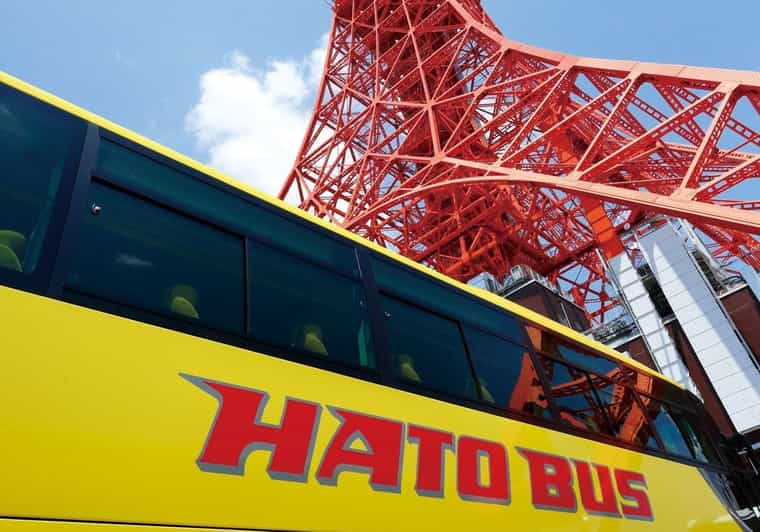
- Three classic sights in one short outing: Visit the Imperial Palace outer garden, Tokyo Tower, and Senso-ji.
- A licensed English-speaking guide: Guides including Aki, Kumiko, Yuko, and Atsushi have been praised for clear explanations, humor, and useful cultural details.
- Hybrid bus transport: The bus saves time across a spread-out city and has air conditioning, a welcome feature in summer.
- Free time at Asakusa: After the temple visit, you can browse Nakamise, eat, and continue exploring independently.
- No entry to the Imperial Palace: You walk around the outer area and Nijubashi Bridge, but the palace interior and East Gardens are not included.
- Good value at $40: Entrance fees, transport during the tour, and guiding are included, though hotel pickup and drop-off are not.
Why this Tokyo bus tour works for a first look
Tokyo is not one compact sightseeing district. The Imperial Palace sits near the center, Tokyo Tower rises south of it, and Asakusa lies well to the northeast. Seeing all three independently takes planning, transfers, and time spent checking platforms and exits.
This tour cuts through that problem. You board a hybrid bus at either the Hato Bus Tokyo office or the Hato Bus meeting point near Shinjuku Station East Exit, then ride between the sights while your guide explains what you are seeing. The route is practical rather than slow and atmospheric. You will not spend the whole day wandering side streets, but you will get a clear introduction to three very different parts of Tokyo.
The pace is helped by a sensible mix of walking and free time. The Imperial Palace stop lasts about 40 minutes, Tokyo Tower about 40 minutes, and Senso-ji about an hour, with road time between them. The full outing is described as four hours, or up to 270 minutes depending on the departure option and schedule, so check the exact start and finish times when booking.
The tour is conducted in English. Guide quality is a major part of its appeal. Aki has been described as funny and welcoming, Kumiko as especially strong on Japanese history and culture, and guides such as Yuko, Azumi, Kiki, Makoto, and Atsushi have also received praise for their clear explanations and friendly care. Your guide will vary, but the format gives you more than a driver pointing out buildings from the window.
More early starts in Tokyo:
- Tokyo: Sumo Morning Practice Viewing Tour
★ 4.8 · 570 reviews - Tokyo: Sumo Morning Training Visit
★ 4.4 · 370 reviews - Tokyo: Sumo Morning Practice Tour at Sumida City
★ 4.8 · 308 reviews
Starting in Shinjuku or central Tokyo
The choice of departure point matters. One option is near Shinjuku Station East Exit, and another is the Hato Bus Tokyo office. Your meeting point depends on the option you book, so do not assume every departure leaves from the same place.
There is no hotel pickup or drop-off. You need to reach the meeting point yourself, which keeps the price low but means you should allow time to find the correct Hato Bus location. If you are staying in Shinjuku, the East Exit departure can be especially convenient. One person also found an ending at Tokyo Station useful for making an immediate onward train connection, but the planned return point can vary by option, so confirm it before arranging a tight connection.
The bus is an important part of the experience. Tokyo traffic can be slow, yet a reserved sightseeing coach is still easier than changing trains several times with a group. The hybrid vehicle is described as comfortable and eco-friendly, and its air conditioning has been particularly welcome in August and during temperatures above 35 degrees Celsius.
You will need to manage a few steps when getting on and off the bus. The activity is listed as wheelchair accessible, but that note about steps is worth taking seriously if you have limited mobility. Ask about the specific vehicle and boarding arrangement before you commit.
Imperial Palace outer garden and Nijubashi Bridge
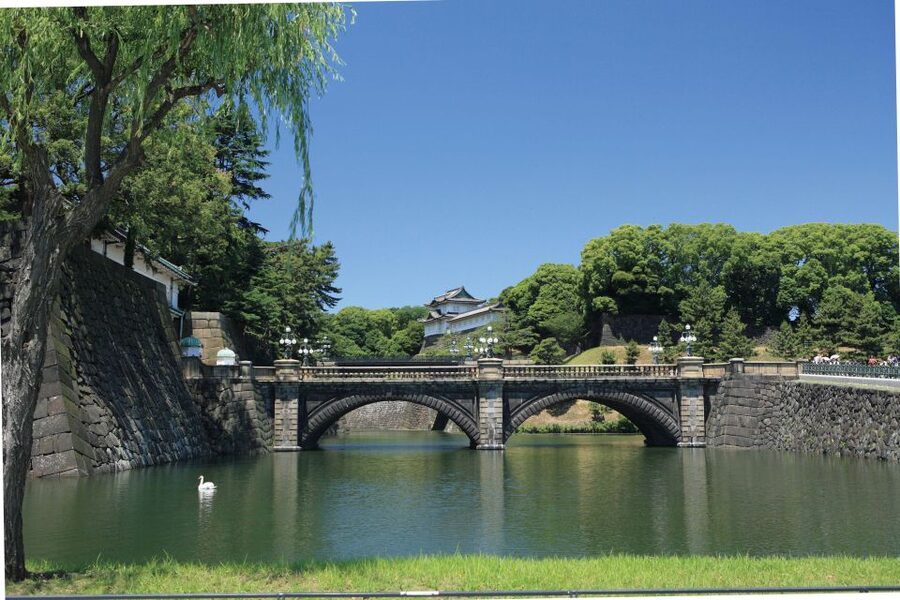
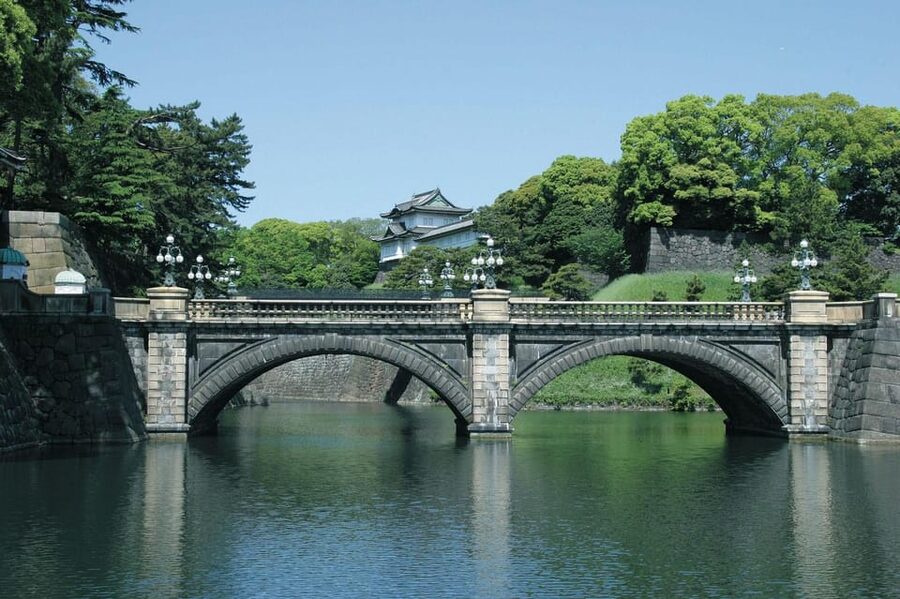
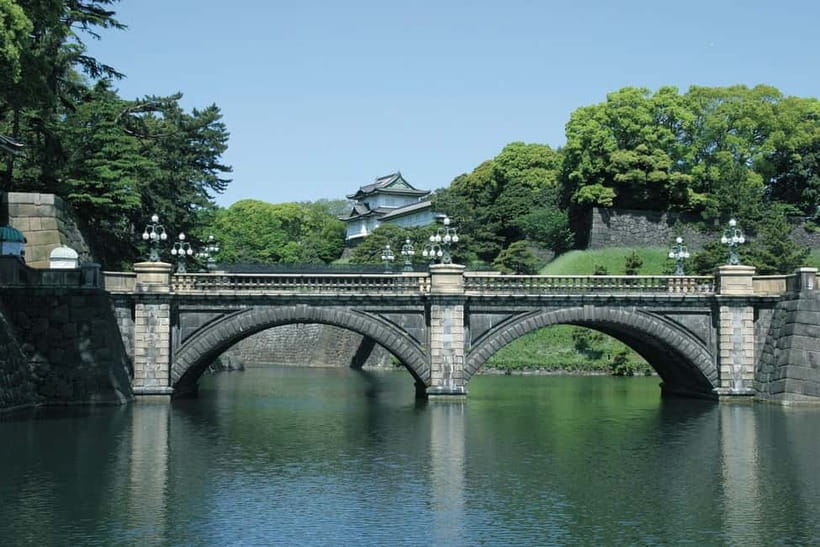
The first stop introduces you to Tokyo’s imperial center without pretending that you are entering the palace itself. You get off near the Imperial Palace Outer Area, see the statue of Masashige Kusunoki, and walk toward the Nijubashi Bridge area.
Nijubashi is one of Tokyo’s familiar postcard views, with the bridge and historic palace grounds framed by open space and stone walls. Your guide can put the area into context, including the role of the emperor and the changes Tokyo has seen around this central site. A past guide, Kumiko, was praised for using older photographs and historical details to show how the area has changed.
This is a photo stop and short orientation walk, not a palace tour. Entry to the Imperial Palace itself is not allowed on this outing, and the East Gardens are excluded. That distinction matters because the word palace can create the wrong expectation. You will see the outer garden and architectural setting, but not royal rooms or a long garden visit.
The 40-minute timing is about right for a first introduction. You can take photographs, listen to the explanation, and walk around the Nijubashi area without using up the morning or afternoon. If imperial architecture is your main reason for visiting Tokyo, you will need a separate visit for more extensive grounds and gardens.
Tokyo Tower from 150 meters up
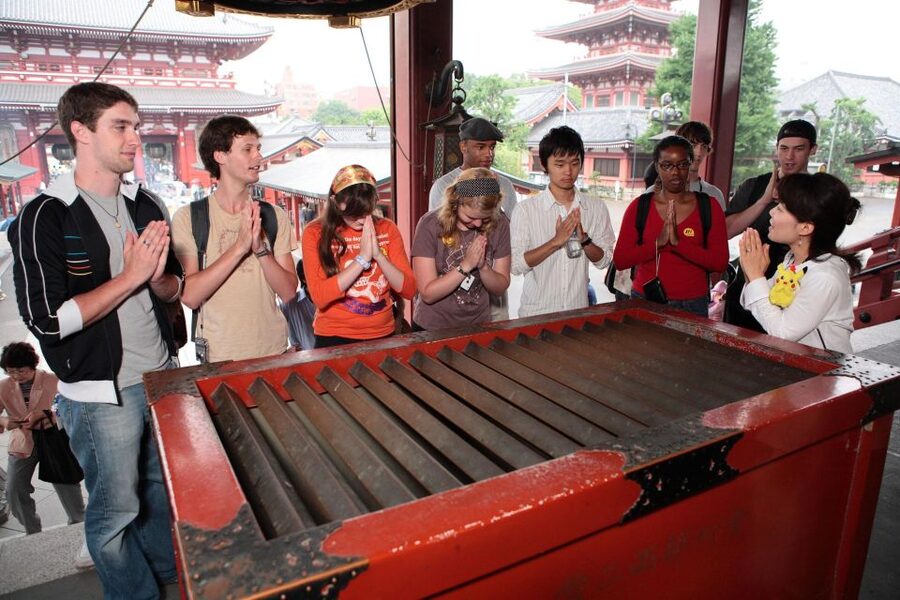
The next stop is Tokyo Tower, one of the city’s best-known symbols. The tour includes admission to the main observatory, where you look out from 150 meters above the ground.
This stop gives you the broad city view that the palace area cannot. Tokyo spreads in every direction, and on a clear day you may even spot Mount Fuji. Weather controls the quality of the view, so cloudy or hazy conditions can limit what you see. The tower remains worthwhile for its height and design, but you should keep expectations tied to visibility.
You have about 40 minutes here. That is enough to reach the main observatory, take photographs, and look around, but it is not a long tower visit. The schedule does not suggest time for an extended meal, extra exhibitions, or a slow exploration of the surrounding district.
The stop works well as a contrast with the Imperial Palace. First you see Tokyo through its imperial past, then you look across the modern city from above. That contrast is one of the tour’s strongest features. You get an easy visual sense of the city’s scale without spending half a day working out how to reach a high viewpoint on your own.
The tower can be busy. One account described the crowds as heavy but still found the view worthwhile. If you dislike waiting or prefer quiet observation decks, this may be the least relaxed portion of the outing. The advantage is that admission is already included, so you do not have to make a separate booking or pay another entrance fee during the tour.
A few more Tokyo half-days to weigh up
- Half-day Tokyo Afternoon Tour by Hato Bus
★ 4.0 · 269 reviews - Half-day Tokyo Morning Tour by Hato Bus
★ 4.0 · 220 reviews - Old and Nostalgic Tokyo: Half-Day Yanaka Walking Tour
★ 4.9 · 30 reviews - Kyoto Arashiyama Bamboo forest & Garden Half-Day Walking Tour
★ 5.0 · 413 reviews
Senso-ji, Asakusa, and Nakamise street
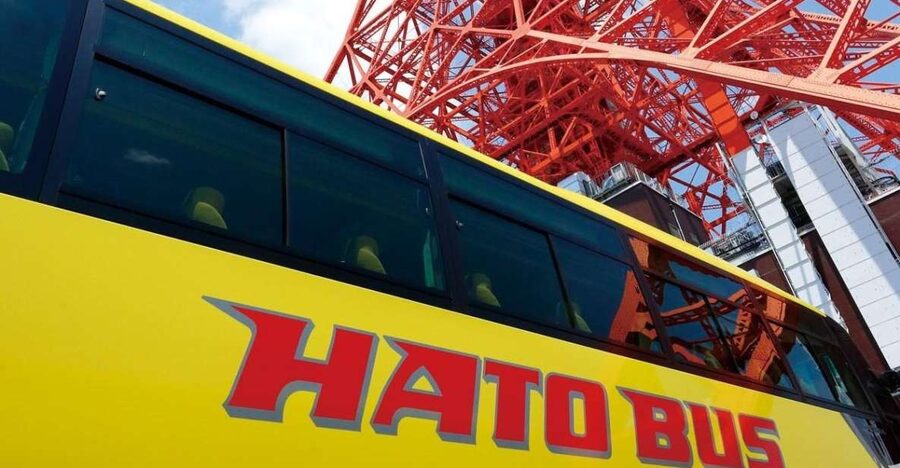
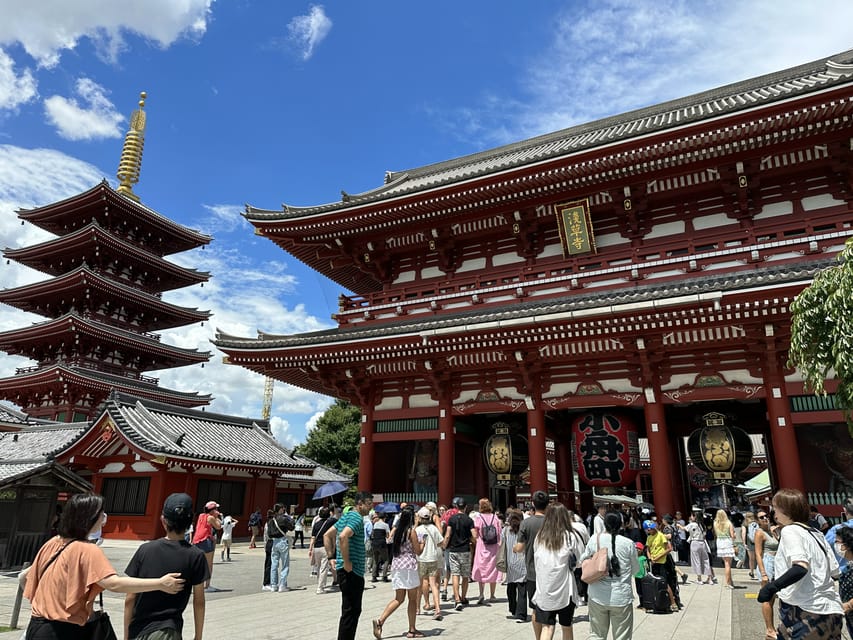
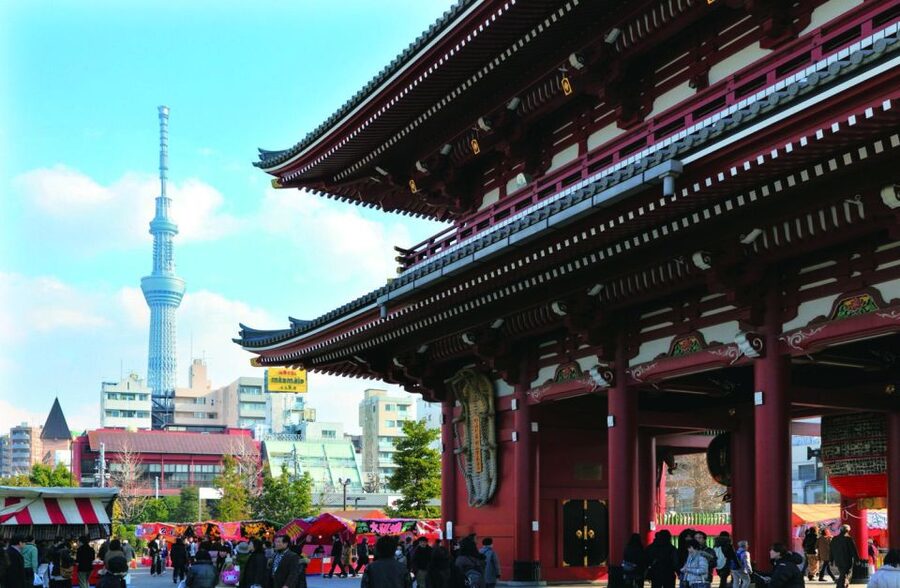
Senso-ji, also called Asakusa Kannon Temple, is the tour’s longest stop and arguably its most textured. It is Tokyo’s oldest temple, and the approach gives you a look at traditional religious architecture, Buddhist customs, and everyday souvenir culture in one place.
Your guide leads a visit around the temple and explains details of its craftsmanship and traditions. You can learn how Buddhist temples differ from Shinto shrines, how to pray, and why certain parts of the complex matter. Guides have also used this stop to explain the Buddha, temple customs, and Japanese greetings in a way that makes the setting easier to understand.
After the guided portion, you get free time. This is important. Senso-ji is not a quick photograph from the bus window, and the hour gives you a chance to move at your own pace. You can take pictures, return to a detail you missed, browse the shops, or simply watch the flow of people through the temple grounds.
Nakamise is a traditional shopping street stretching about 200 meters through the temple approach. It is a good place for small souvenirs and local snacks, with food and shopping paid separately. One useful practical point is to carry cash, since some of the market businesses may be cash only.
This final stop can also work as a launching point for your own afternoon or evening in Asakusa. If you want more time in the district, you may choose not to return to the bus after the scheduled meeting time, but do not assume that is permitted without checking with the guide. The official tour returns to its starting point, and leaving the group could affect your transport plans.
The main weakness here is group cohesion. One person found it easy to lose sight of the guide at the last stop. Senso-ji can be crowded, and the area has many paths and shops, so listen carefully to the meeting instructions before taking free time. Keep the guide’s contact or group details handy if they are provided.
What the guide adds to the experience
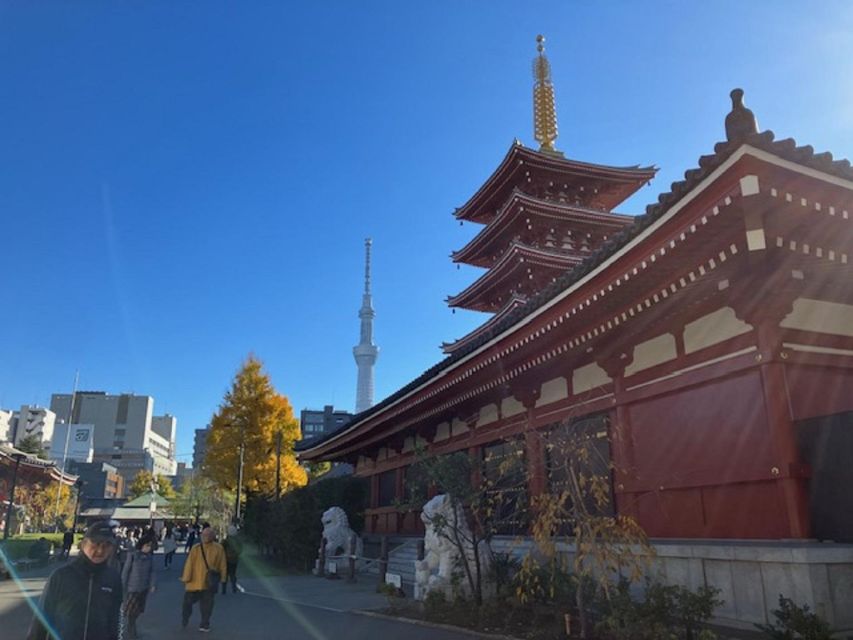
The bus gets you from place to place, but the guide turns the route into a lesson in Tokyo. The strongest feedback has centered on guides who combine facts with warmth rather than delivering a dry speech.
Aki has been noted for humor, making people feel included, and even explaining how she put on her own kimono and obi. Kumiko has been praised for connecting Japanese history to familiar customs and for explaining the difference between temples and shrines. Yuko added simple Japanese phrases, while other guides have helped with photographs, practical directions, and questions during the walk.
Guide assignments change, so you cannot book a particular personality based on these examples. Still, the repeated pattern is useful: this is not simply transport with a recorded narration. You should expect a live English presentation, cultural explanations, and help getting oriented at each site.
The guide can also make the tight schedule feel less hurried. Instead of arriving at Senso-ji and wondering what you are looking at, you receive a basic framework before your free time begins. That is especially helpful if this is your first day in Japan or your first visit to Tokyo.
Is $40 a fair price?
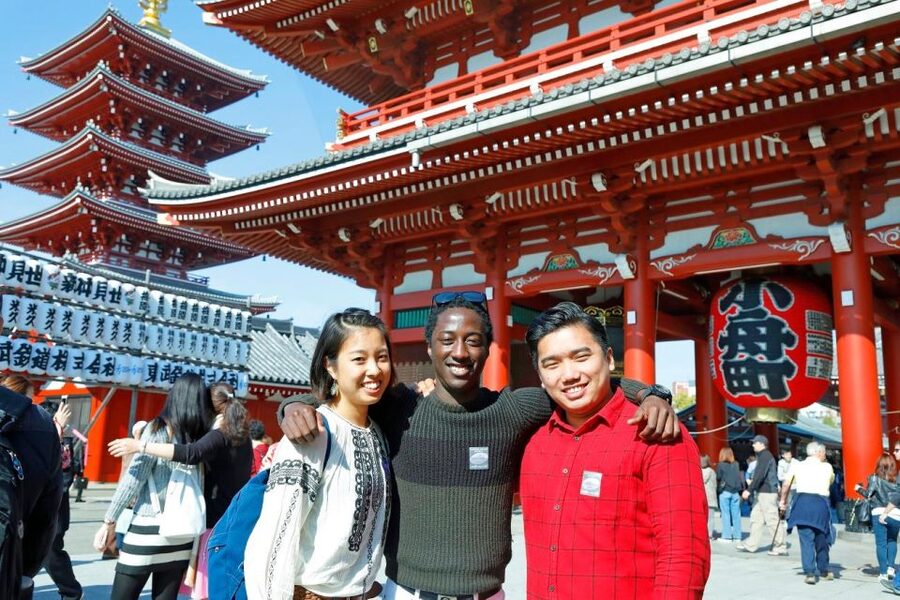
At $40 per person, this is a strong value for a first-day overview. You receive bus transport between three major sights, an English-speaking guide, and entrance fees for Tokyo Tower. The price also removes the small but real cost of buying separate admissions and the mental cost of planning a cross-city route.
The value is highest if you want orientation. You can see three famous places quickly, learn what makes each one different, and then return later to the area that interests you most. A solo visitor or couple may find the bus especially useful because a taxi between all three areas would cost far more, while independent public transport still requires time and attention.
The value is lower if you already know Tokyo well or want long visits at one site. Forty minutes at the Imperial Palace area and Tokyo Tower is enough for highlights, not detailed study. Senso-ji receives more time, but even there you will only get a first look at Asakusa.
All entrance fees listed for the tour are included. Meals, snacks, souvenirs, and hotel transportation are not. At Nakamise, plan to pay for food and shopping yourself, and bring cash as a precaution.
Who should book this tour?
I would suggest this tour to you if:
- You have only a short stay in Tokyo.
- You want to see major sights before choosing where to return.
- You prefer a guide to explain customs and history in English.
- You are staying near Shinjuku and want a simple starting point.
- You would rather ride between districts than manage several train changes.
- You are visiting Japan for the first time.
It also suits families with children old enough to manage the walking and bus steps. Children under six can ride free, but they do not receive their own seats, so consider that carefully before booking for a toddler or preschooler.
You may prefer independent sightseeing if you want to linger at the Imperial Palace gardens, spend several hours at Tokyo Tower, or explore Asakusa without a fixed timetable. You should also think twice if crowds and a group schedule make you uncomfortable. The tour is organized, but Senso-ji and Tokyo Tower can be busy.
Cancellation is free up to 24 hours before departure, and the reserve-now-pay-later option helps if your schedule is still changing. When booking, enter your first and last name within 20 characters. A middle name can be omitted if necessary.
My recommendation for a first Tokyo day
Book this half-day tour if your priority is to get your bearings fast and see three famous Tokyo sights without logistical fuss. The route has a good rhythm: imperial grounds for context, Tokyo Tower for the view, and Senso-ji for traditional culture, shopping, and food.
Do not book it expecting entry into the Imperial Palace or an in-depth visit to every stop. Think of it as a well-priced introduction, with a live guide and comfortable transport doing the hard connecting work. For many first-time visitors, that is exactly enough structure to make the rest of Tokyo easier to enjoy.
FAQ
How long does the Tokyo bus tour last?
The activity is described as lasting four hours, with the duration also listed as up to 270 minutes. Check the available start time and exact schedule for your chosen departure.
Where does the tour start?
There are two possible starting options: the Hato Bus Tokyo office and the Hato Bus meeting point near Shinjuku Station East Exit. The meeting point can vary by booking option.
Does the tour enter the Imperial Palace?
No. The tour visits the Imperial Palace outer area, including the statue of Masashige Kusunoki and the Nijubashi Bridge area. Entry to the palace itself and the East Gardens is not included.
What sights are included?
The tour visits the Imperial Palace outer garden, Tokyo Tower, and Asakusa Kannon Temple, also known as Senso-ji.
Is Tokyo Tower admission included?
Yes. Admission to the main observatory at 150 meters is included.
Is hotel pickup available?
No. Hotel pickup and drop-off are not included. You need to reach the selected meeting point yourself.
Is the tour conducted in English?
Yes. The tour has a live, nationally certified English-speaking guide and is conducted in English.
Can young children join the tour?
Children from age zero to under six can travel free, but they do not receive a seat. You will also need to manage a few steps when boarding and leaving the bus.
More 1-Day Tours in Tokyo
- Mt Fuji and Hakone 1-Day Bus Tour Return by Bullet Train
★ 5.0 · 26,383 reviews - 1-Day Tokyo Bus Tour
★ 5.0 · 14,250 reviews - Mt Fuji & Hakone Cruise, Drum Show Bullet Train 1 Day from Tokyo
★ 4.0 · 7,413 reviews - Tokyo: DisneySea 1-Day Passport
★ 4.5 · 2,726 reviews
Just added around Tokyo
- Private Arrival Transfer : Narita International Airport to Central Tokyo City★ 4.5 · 12 reviews
- Narita Airport(NRT): Private Transfer to Tokyo/Yokohama 1-9pax★ 5.0 · 47 reviews
- Private Transfer from Narita Airport to Yokohama Port and City★ 4.5 · 17 reviews
- [Narita Airport Terminals 1, 2] 40-60km Sawara Itako Historic Bike Tour★ 5.0 · 13 reviews
- 3 Day Japan Highlights Tour: Tokyo, Mt.Fuji, Nara, Kyoto, Osaka★ 5.0 · 22 reviews
- Small Town in the Big City: Tasting Tokyo’s Kichijoji★ 5.0 · 195 reviews
- Small Town in the Big City: Tasting Tokyo’s Kichijoji★ 5.0 · 16 reviews
- The 10 Tastings of Tokyo With Locals: Private Street Food Tour★ 5.0 · 48 reviews
Tokyo Tours, compared.

Mt Fuji and Hakone 1-Day Bus Tour Return by Bullet Train
Read our review →
teamLab Planets TOKYO Digital Art Museum Entry Ticket
Read our review →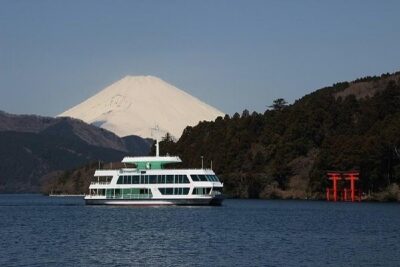
Mt Fuji & Hakone Cruise, Drum Show Bullet Train 1 Day from Tokyo
Read our review →
Sumo Show Experience with Chicken Hot Pot and a Photo
Read our review →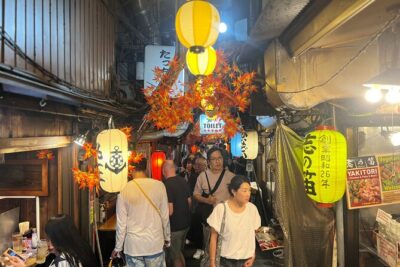
Shinjuku Food Tour (13 Dishes at 4 Local Eateries)
Read our review →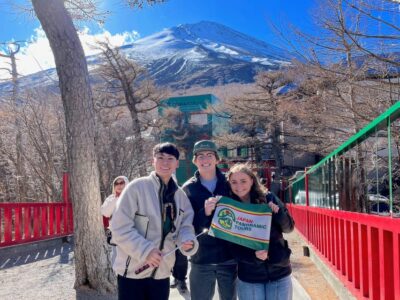
Tokyo Mt Fuji 5th St & Hakone Cruise Bus Tour w/Bullet Train
Read our review →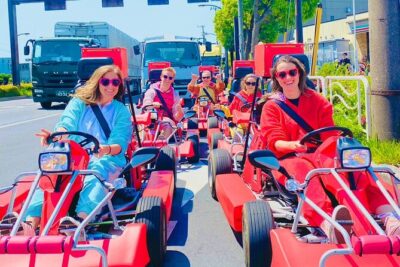
Flagship 2-Hours Official Street Go-Kart Tour – Tokyo Bay Shop
Read our review →Browse the lists this tour appears in