
Reviewed · TOKYO TOURS
Tokyo: Sumo Morning Practice Tour at Sumida City
Tokyo’s sumo morning practice gives you something a tournament cannot: a close look at the daily work behind the spectacle. You sit near the ring, watch wrestlers repeat demanding drills, and see their surprising flexibility and speed at close range. I especially like the authentic setting and the question period with the stable master. The main drawback is simple: you sit cross-legged on the floor for about 1.5 hours, with no chairs and no bathroom break.
I also like the calm, careful way the guides prepare you for the stable’s rules. Guides such as Yoko, Yukiko, Tadashi, Kiyomi, and Yuriko have helped visitors understand what is happening without turning practice into a stage show. Expect a very early start, a 15 to 20 minute walk, and a little uncertainty over your exact view if another group is present.
Key points to know before booking
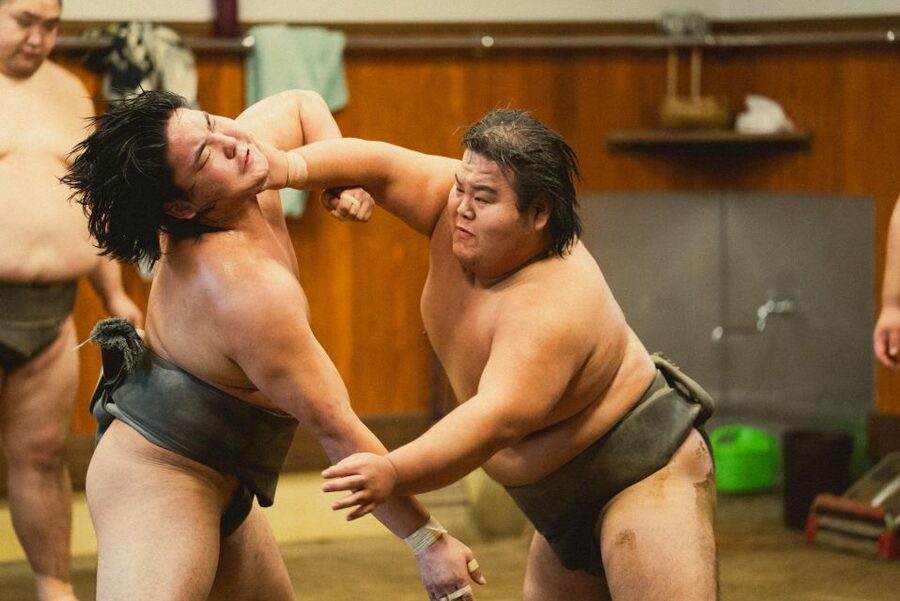
- Watch real morning training: See wrestlers work through stretches, drills, and bouts from close to the ring.
- Ask the stable master questions: The final conversation can explain daily life, training, and the customs behind sumo.
- Sit on the floor: There are no chairs, and you must remain quiet during practice.
- Meet at Oshiage Station at 7:15 a.m.: The tour begins at 7:30 a.m., followed by a walk to the stable.
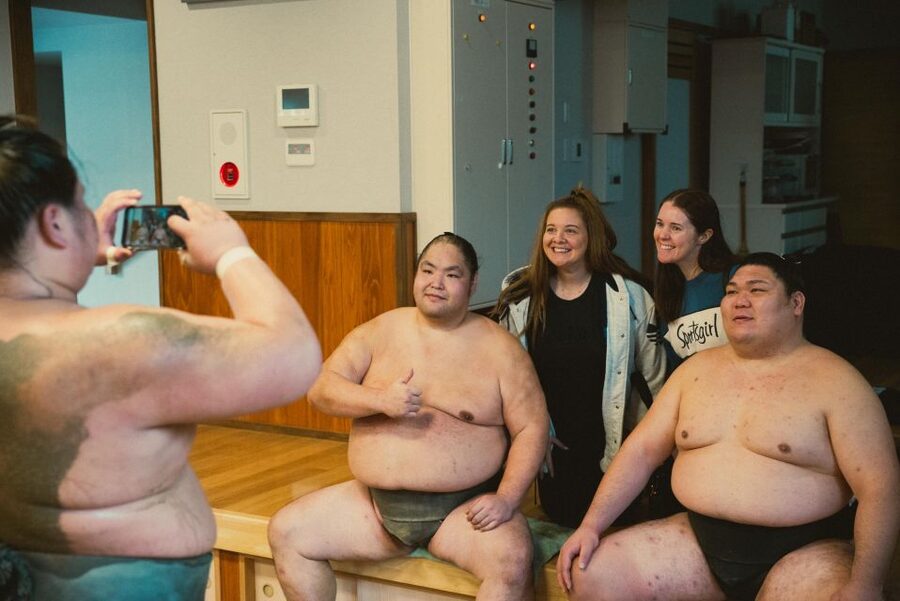
- Photos may be possible: You can sometimes take a picture with the wrestlers, but no flash, shutter sounds, or social media uploads are allowed.
- Check the calendar early: Practice tours do not run in March, July, or November, when major tournaments take place outside Tokyo.
Why morning practice feels different from a tournament
A sumo tournament is polished, public, and easy to understand as a sporting event. Morning practice is more like entering a working gym. The wrestlers are not performing for an audience, and that difference matters.
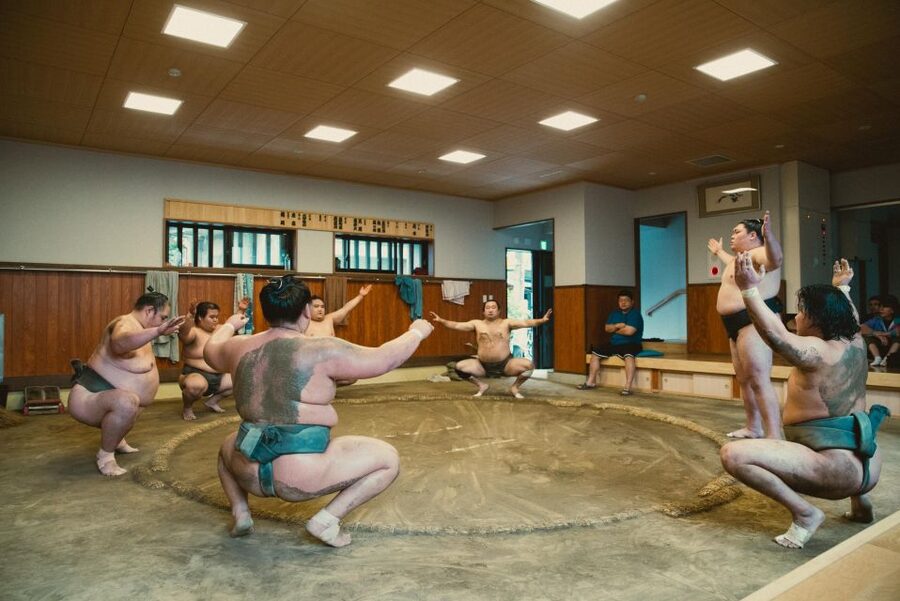
You watch them prepare their bodies, repeat movements, and face one another in short, intense bouts. The sheer size of the wrestlers is striking, but so are their balance, agility, and ability to move quickly. One useful surprise is how much of sumo depends on flexibility and control rather than weight alone.
The practice also gives you a look at the discipline behind the matches seen on television. Sumo includes formal rituals, respect for the ring, and strict behavior around the stable. Your guide explains these points and tells you how to sit, when to stay silent, and when photos are allowed.
This is not a theatrical show with narration running every minute. At times, the most respectful thing you can do is simply watch. That quiet makes the experience feel more genuine, though it also means you should not expect constant entertainment or a steady flow of English explanation.
More Sumo Experiences in Tokyo
- Tokyo: Sumo Show Experience with Chicken Hot Pot and a Photo
★ 4.8 · 6,678 reviews - Tokyo: Sumo Show and Dining Experience
★ 4.8 · 2,742 reviews - the SUMO show
★ 5.0 · 1,960 reviews
Meeting at Oshiage and walking to the stable
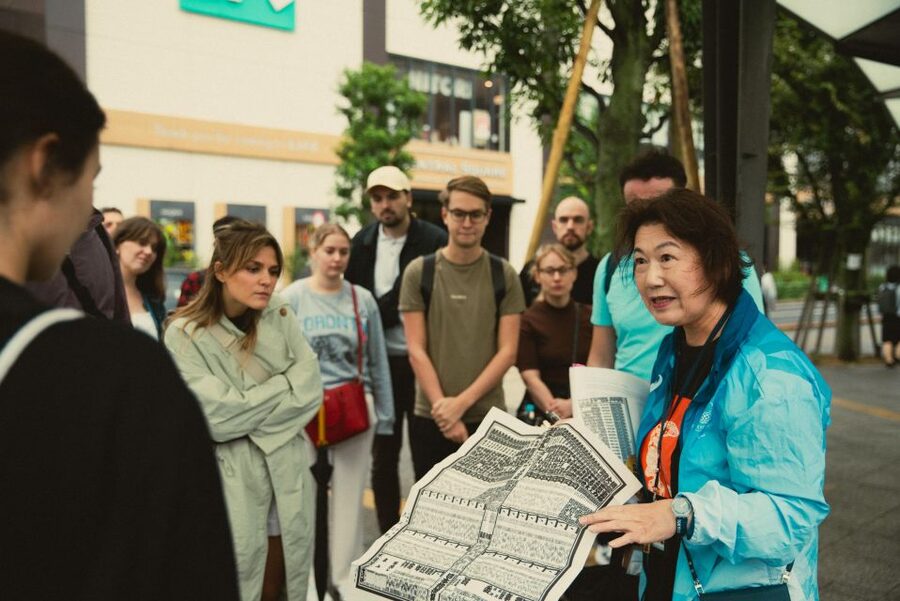
You meet at 7:15 a.m. at the A1 Exit of Oshiage Station, also called Tokyo Metro Oshiage, Skytree Mae, or Toei-Asakusa Line Oshiage. The tour officially starts at 7:30 a.m.
Tokyo Skytree Town is nearby, and the meeting area is convenient if you are staying around Skytree. The walk to the stable takes about 15 to 20 minutes. That is not difficult for most people, but it is worth adding to your morning plan, especially in hot weather or rain.
The early meeting time is one of the tour’s practical costs. You need to leave your hotel with enough time to find the correct station exit, not just the station itself. One past organizational issue involved confusion between the suggested arrival time and the actual meeting time, so I would arrive a little early and confirm the guide before setting off.
Wear shoes that come off easily. You will remove them before entering the stable, and a rainy walk can leave your feet damp. A small towel is useful in wet weather. Large bags, luggage, food, hats, sunglasses, and baby strollers are not allowed.
If you are late, contact the provider first. You may be given the stable’s address, but do not enter on your own, ring the doorbell, or disturb the wrestlers. Wait outside until the guide comes to meet you.
Inside the stable: quiet rules and close views
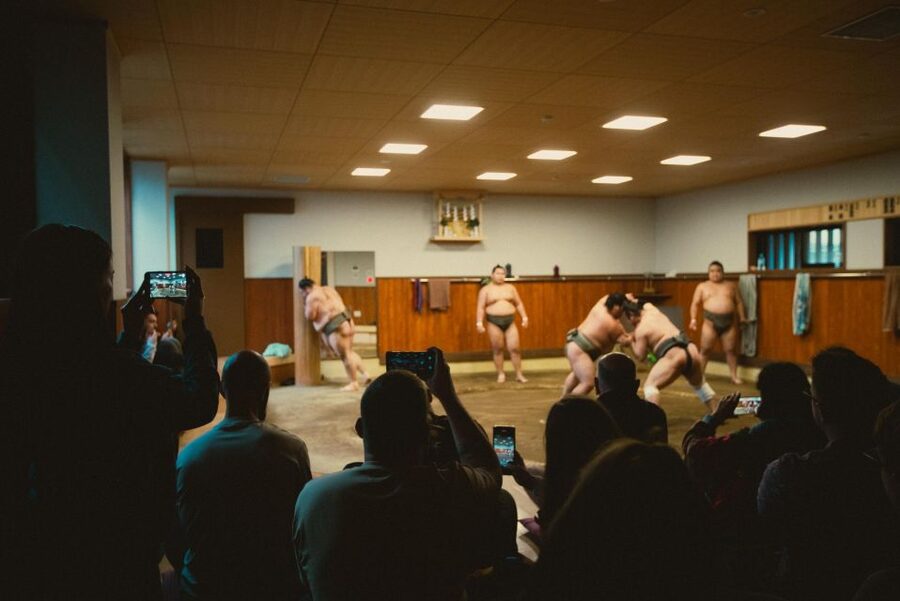
A sumo stable is a place of training and daily life, not a normal attraction. Once inside, you need to watch silently and follow the guide’s instructions. The wrestlers require concentration, and even small distractions can change the atmosphere.
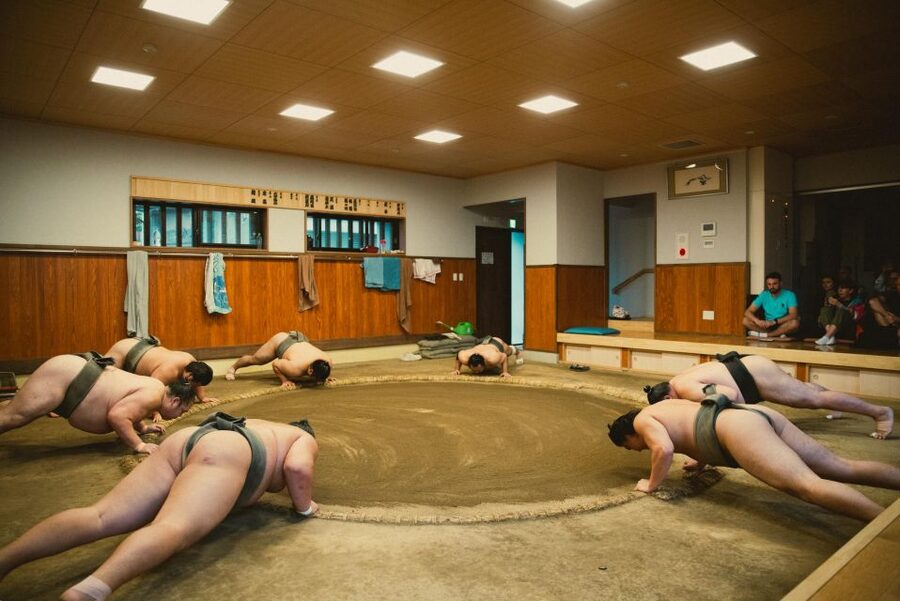
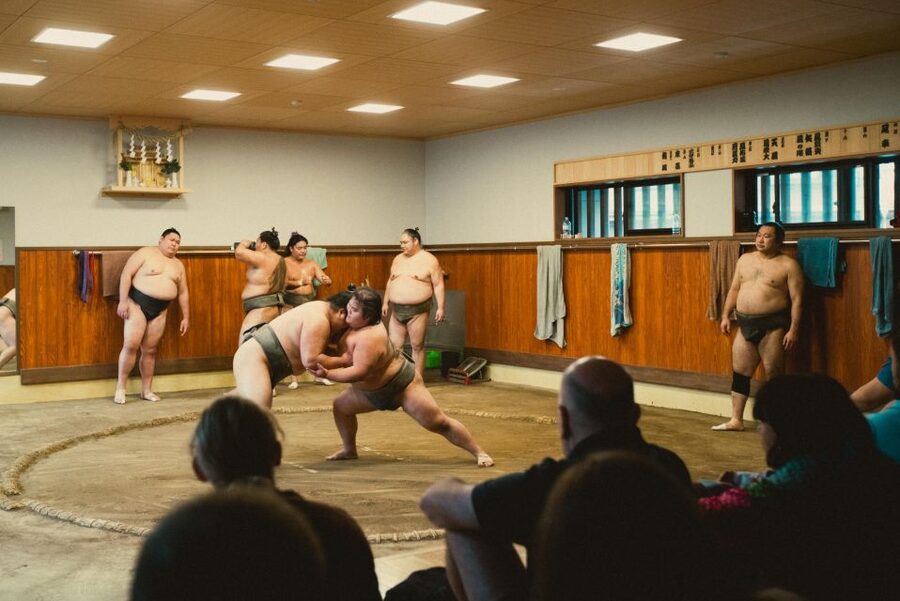
The viewing area is close to the ring, often close enough to appreciate the sound and force of each movement. Seating can vary. Some people get an excellent front position, while others sit farther back or may need to adjust their posture to see clearly. A second group or a visiting athletic team can affect the view on a particular morning.
Some tours have rotated seating so people can change their angle. That is helpful, but it is not something to count on. If a clear view matters greatly to you, arrive on time, listen carefully when the guide arranges seating, and be prepared to sit or kneel quietly.
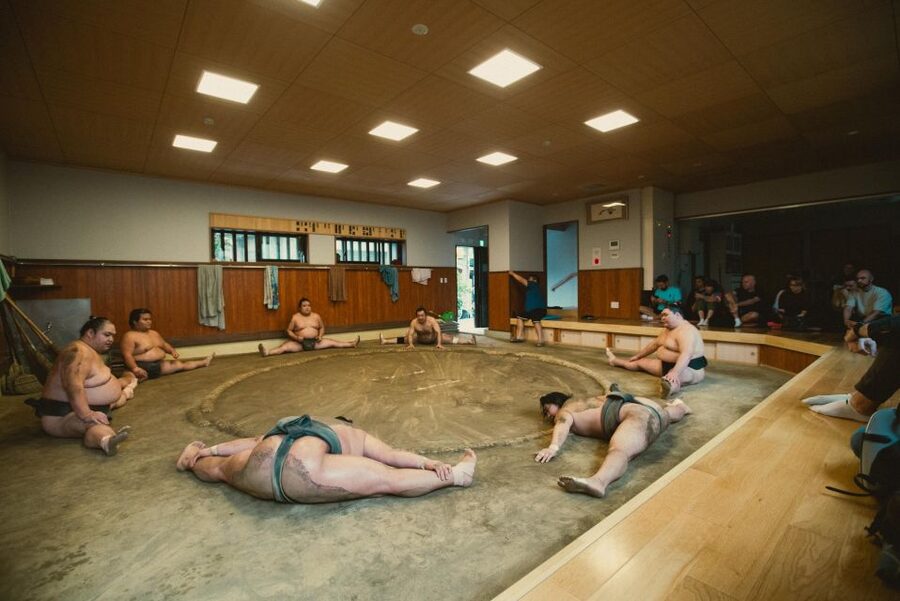
The biggest physical issue is the floor. You sit cross-legged for approximately 1.5 hours, and there are no chairs in the stable. People with mobility limitations may find this difficult, and the activity is not suitable for them. Children must be at least six years old and able to remain quiet and still. If a child becomes noisy or keeps moving around, the family may be asked to leave the stable.
You also cannot use the bathroom during practice. Use the restroom at the station before meeting the group. This sounds minor, but it is one of the most important details for a two-hour morning activity.
What you actually see during the 1.5-hour practice
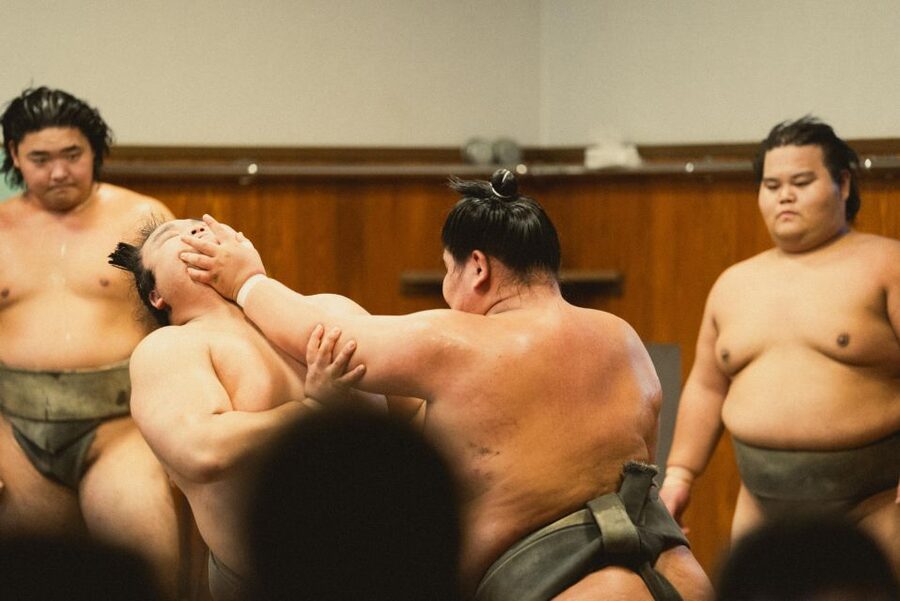
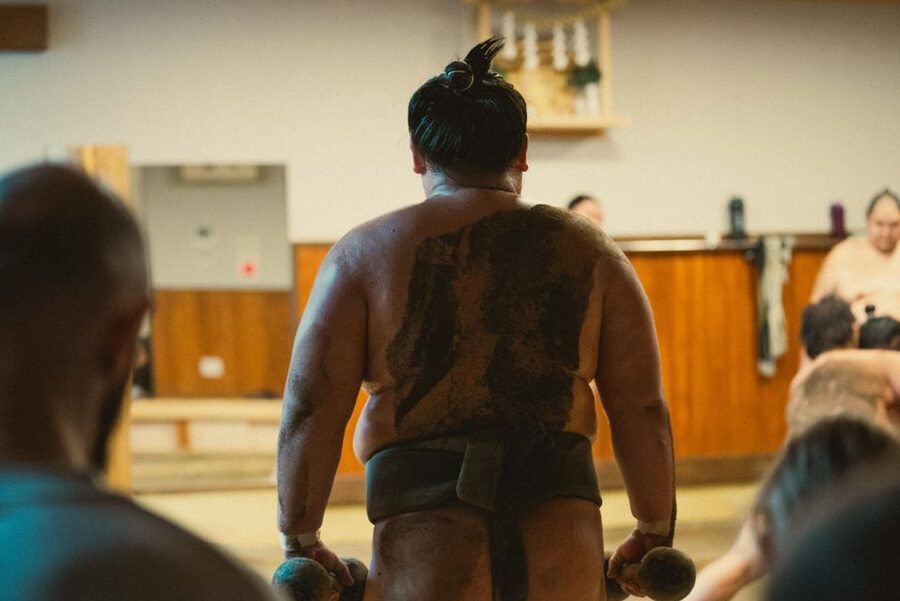
The most rewarding part is watching the wrestlers work without a showy presentation. You might see stretching, strength work, technical drills, and one-on-one bouts. The practice can vary by day, so do not assume every session will have the same intensity or length.
One morning may include several hard-fought matches. Another may feel lighter, especially around a major tournament period. A May visit, for example, was described as having less intense training and no full fight. You are paying for access to a real practice session, not a guaranteed program of bouts.
The wrestlers you see may be trainees rather than the best-known names in the sport. That does not make the session less worthwhile. In fact, it can help you focus on the work itself: how they prepare, how they use technique, and how much effort goes into a movement that looks simple from the stands.
The setting is intimate enough to make the wrestlers’ physical presence impossible to ignore. You can see how large they are, then watch them move with speed and flexibility that challenges the usual image of a heavy athlete. The contrast is one of the strongest reasons to choose this activity.
A guide may provide a leaflet or explain the basic rules before practice begins. The quality of the spoken explanation can vary. Some guides, including Yoko and Yukiko, have been praised for giving clear context and explaining the connection between sumo, religion, respect, and ritual. On another morning, the guide’s voice was difficult to hear in a larger group. Stay close enough to hear and ask for clarification if needed.
More sumo mornings and shows:
- Tokyo Shinjuku Sumo Show & Experience with Photo
★ 5.0 · 1,750 reviews - Tokyo: Sumo Show and Experience in Shinjuku
★ 4.8 · 1,001 reviews - Tokyo: Sumo Tournament Tour with Chair Seat Tickets
★ 4.6 · 753 reviews - Tokyo:Luxury Sumo Show Experience & Japanese cuisine & Drink
★ 4.7 · 577 reviews
The stable master’s question period
After practice, the stable master may answer questions from the group. This is often the most useful part for anyone who wants to understand sumo beyond the action in the ring.
You can ask about training, the wrestlers’ daily lives, traditions, and the way the stable operates. The answers add human detail to what you have just watched. You may also learn that one of the wrestlers in front of you has a notable record or reputation.
The time can be generous, but the exact length depends on the morning. Some groups have about 30 minutes for questions and photos after roughly 1.5 hours of practice. You should not assume that every visit will follow those numbers exactly.
This conversation is also where the guide’s role matters. A strong guide translates cultural details into plain English and helps the group ask useful questions. Tadashi, Kiyomi, Yoko, Yuriko, and Yukiko have each been singled out for being helpful, friendly, or clear. The best guides also explain what you are seeing before and after the practice rather than interrupting it.
Photos with wrestlers and strict camera rules
A photo with the wrestlers may be possible after training. It is a pleasant extra, but it is not the main reason to book. The chance depends on the stable and the morning’s schedule, so treat it as a bonus rather than a promise.
During practice, photos and videos are allowed only without flash or shutter sounds. You cannot upload the images to social media. This rule protects the wrestlers’ focus and the private nature of the training space.
Keep your camera ready but discreet. Do not use a flash, call attention to yourself, or move around while the wrestlers are working. The guide will tell you when photography is appropriate.
The farewell can be memorable. On one visit, the wrestlers stood and gave the group a friendly goodbye as people left. Small moments like this help explain why the stable feels like a real workplace rather than a staged attraction.
How much value do you get for $116?
At $116 per person, this is not a cheap morning activity. You are not getting transportation, breakfast, drinks, or a full-day tour. The price covers the English-speaking guide and entrance to the stable, with about two hours devoted to the experience.
I think the value depends on what you want from Tokyo. If you only want to see sumo once and are satisfied with a tournament atmosphere, the cost may feel high. If you want close access to daily training, cultural explanation, and a chance to ask the stable master questions, the price is easier to justify.
The experience is also difficult to arrange independently. You cannot simply walk into a stable, and you must follow the rules about arrival, silence, photography, and entry. The guide handles that bridge between visitor and training space.
There are limits. Your view may not be perfect, practice may be lighter than expected, and the guide’s commentary may be hard to hear in a larger group. One person felt the tour was overpriced, and another felt that a shorter practice made the cost harder to accept. Those are fair concerns.
For someone with a strong interest in Japanese culture, traditional sport, or behind-the-scenes experiences, I consider the price reasonable. For a casual sightseer on a tight budget, I would compare it with other Tokyo activities before booking.
When this tour fits your Tokyo plans
This works best early in your visit, when you still have energy for a 7:15 a.m. meeting, or on a morning when you plan to explore the Skytree area afterward. The return point is near 1-chōme-8-21 Oshiage, so you can continue sightseeing in the neighborhood once the tour ends.
The tour is a good match for adults, older children, and anyone curious about how a traditional sport is practiced outside a major tournament. It also suits people who prefer small cultural encounters to large attractions.
I would not choose it for a toddler, anyone who cannot sit on the floor, or anyone who needs a bathroom break during the practice. It is also a poor fit if you want to talk, take unrestricted photos, or move around for better views.
Book ahead once the schedule opens. Morning practice dates are usually known one to two months in advance, and reservations are then accepted. Check close to two months before your preferred date, while remembering that no tours run in March, July, or November because Grand Sumo tournaments take place outside Tokyo.
Practical preparation for a respectful visit
A few simple choices make a real difference:
- Wear easy-to-remove shoes and clean, comfortable socks.
- Use the restroom before meeting the guide.
- Bring a small towel if rain could make the walk wet.
- Leave luggage and large bags at your accommodation.
- Avoid hats, sunglasses, food, and drinks inside the stable.
- Prepare to sit quietly and cross-legged for about 1.5 hours.
- Keep your phone silent and disable camera shutter sounds.
- Do not post photos or videos from the stable on social media.
The tour is only two hours, but the early start and walking time make it feel like a full morning commitment. Plan breakfast for afterward unless you eat before the meeting, since food and drinks are not included.
Should you book the sumo morning practice tour?
I would book this if you want to see sumo as a disciplined daily practice rather than only as a dramatic match. The close view, quiet setting, and stable master’s question period offer access you will not get by watching a bout on television.
Go in with realistic expectations. You may watch trainees, the practice may be lighter than expected, and seating may not give everyone the same view. You must also accept the floor seating and strict rules.
For me, the strongest reason to choose this is the chance to watch real training at close range, then ask questions in the place where the wrestlers live and work. If your body can handle the floor and you respect the silence, this is one of Tokyo’s more distinctive cultural mornings.
FAQ
Where does the tour meet?
Meet at the A1 Exit of Oshiage Station, Tokyo Metro Oshiage, also called Skytree Mae, or Toei-Asakusa Line Oshiage. The meeting time is 7:15 a.m., and the tour starts at 7:30 a.m.
How long does the activity last?
The total duration is about two hours. The route includes a 15 to 20 minute walk to the sumo stable, approximately 1.5 hours of practice, and time for questions or photos.
How far is the stable from the meeting point?
The stable is about a 15 to 20 minute walk from the station meeting point.
Can I use the bathroom during practice?
No. You should use the restroom before joining the tour because you cannot leave for the toilet during the practice.
Are chairs provided?
No. There are no chairs in the sumo stable, and you should be able to sit cross-legged on the ground for approximately 1.5 hours.
Can children join?
The minimum age is six. Children must remain quiet and still during practice. Children who are noisy or keep moving may be asked to leave the stable.
Can I take photographs?
You may take photos and videos without flash or shutter sounds. You cannot upload photos or videos from the stable to social media, and a photo with the wrestlers may be possible after practice.
Does the tour run all year?
No. Morning practice and tours do not run in March, July, or November because Grand Sumo tournaments take place outside Tokyo during those months.
More Morning in Tokyo
- Tokyo: Sumo Morning Practice Viewing Tour
★ 4.8 · 570 reviews - Tokyo: Sumo Morning Training Visit
★ 4.4 · 370 reviews - Tokyo Sumo Morning Practice Tour at Stable
★ 5.0 · 298 reviews - Tokyo Ryogoku Sumo Morning Practice + Photo Shoot with Wrestlers
★ 4.5 · 277 reviews
Just added around Tokyo
- Private Arrival Transfer : Narita International Airport to Central Tokyo City★ 4.5 · 12 reviews
- Narita Airport(NRT): Private Transfer to Tokyo/Yokohama 1-9pax★ 5.0 · 47 reviews
- Private Transfer from Narita Airport to Yokohama Port and City★ 4.5 · 17 reviews
- [Narita Airport Terminals 1, 2] 40-60km Sawara Itako Historic Bike Tour★ 5.0 · 13 reviews
- 3 Day Japan Highlights Tour: Tokyo, Mt.Fuji, Nara, Kyoto, Osaka★ 5.0 · 22 reviews
- The 10 Tastings of Tokyo With Locals: Private Street Food Tour★ 5.0 · 48 reviews
- Small Town in the Big City: Tasting Tokyo’s Kichijoji★ 5.0 · 195 reviews
- Small Town in the Big City: Tasting Tokyo’s Kichijoji★ 5.0 · 16 reviews
Tokyo Tours, compared.

Mt Fuji and Hakone 1-Day Bus Tour Return by Bullet Train
Read our review →
teamLab Planets TOKYO Digital Art Museum Entry Ticket
Read our review →
Mt Fuji & Hakone Cruise, Drum Show Bullet Train 1 Day from Tokyo
Read our review →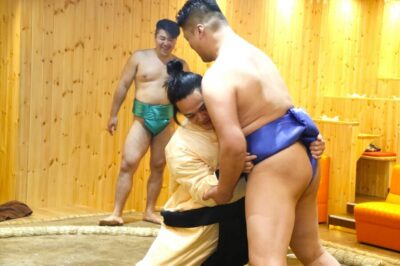
Sumo Show Experience with Chicken Hot Pot and a Photo
Read our review →
Shinjuku Food Tour (13 Dishes at 4 Local Eateries)
Read our review →
Tokyo Mt Fuji 5th St & Hakone Cruise Bus Tour w/Bullet Train
Read our review →
Flagship 2-Hours Official Street Go-Kart Tour – Tokyo Bay Shop
Read our review →Browse the lists this tour appears in