
Reviewed · TOKYO TOURS
Tokyo Ryogoku Sumo Morning Practice + Photo Shoot with Wrestlers
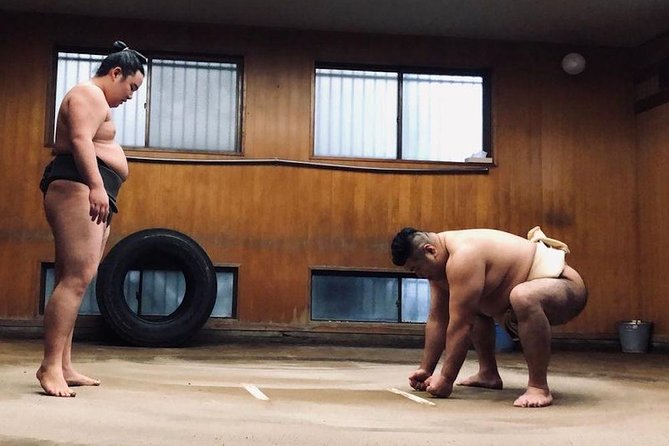
Morning sumo practice is not a stage show. You sit just a few feet from wrestlers as they stretch, drill, and face one another in serious training. The room is quiet, the work is physical, and the sense of routine is stronger than any tourist display. For a close look at Japan’s national sport, this is far more personal than watching from the seats at a tournament.
I like the genuine training setting, where you see the wrestlers work without a performance built for an audience. I also like the small-group format, with a maximum of seven people and a local guide who can explain the customs, rankings, rules, and daily life that are easy to miss on your own.
The main drawback is the amount of sitting and silence. You may spend more than an hour on the floor, often without a chair or a bathroom break, and seating is first come, first served. The photo session is also not guaranteed, since each stable decides what visitors may photograph.
Key points to know before booking
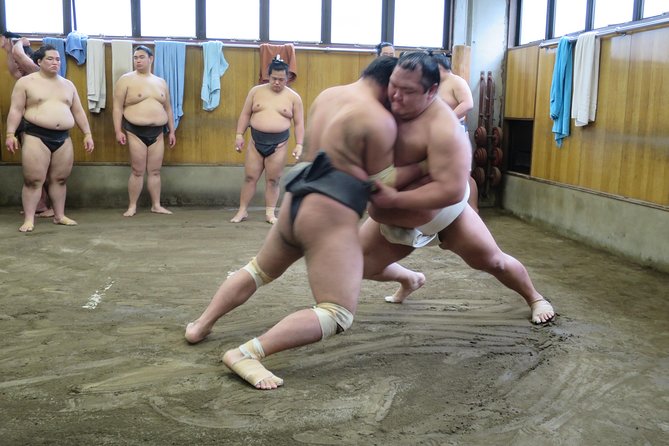
- Watch real morning practice: The wrestlers train for upcoming bouts, including warm-ups, exercises, and bouts between stablemates.
- Meet at the correct Ryogoku station: Use the JR Station East Exit, not Ryogoku Station on the Oedo Line.
- Expect tatami floor seating: Most stables do not provide chairs, and late arrivals may be placed several rows back.
- Keep the room quiet: The stable may restrict photographs, conversation, movement, and bathroom visits during practice.
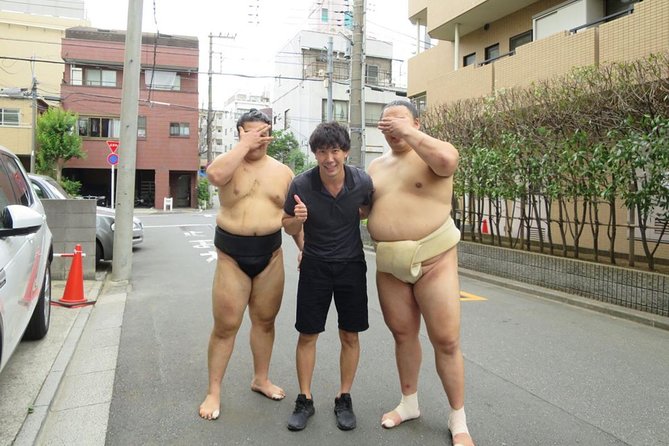
- Photos may follow practice: Wrestlers may pose with visitors, but the stable has the final say.
- Allow extra time: Practice can run longer than the estimated two hours, or the stable can change or cancel the session at short notice.
Why morning practice beats a standard sumo photo stop
Sumo is often presented through tournament highlights, colorful images, and short cultural demonstrations. Those have their place, but they can make the sport look like a polished show. At a stable, you see the less glamorous part: repetition, strain, waiting, correction, and discipline.
The wrestlers are not putting on a special routine for your group. They are working through their regular morning practice. You might see warm-ups and general exercises, followed by actual practice bouts where wrestlers test their techniques against one another.
That difference matters. You can watch how the session changes in pace, how the athletes conserve energy, and how intensely they focus even when the room is full of spectators. The experience gives you a clearer sense of sumo as a demanding sport, not simply a traditional spectacle.
It is also a rare opportunity. Access to a stable is difficult to arrange without local help, and the rules of each stable can change. The tour handles the introduction and the walk from the station, while your guide explains what you are seeing and how to behave.
More Sumo Experiences in Tokyo
- Tokyo: Sumo Show Experience with Chicken Hot Pot and a Photo
★ 4.8 · 6,678 reviews - Tokyo: Sumo Show and Dining Experience
★ 4.8 · 2,742 reviews - the SUMO show
★ 5.0 · 1,960 reviews
Meeting at JR Ryogoku Station at 8:00 a.m.
Your meeting point is beneath the JR Ryogoku Station East Exit, near Re.Ra.Ku Ryogoku Ekimae. The guide holds a red or orange MagicalTrip board. Be very careful here: Tokyo has two Ryogoku stations, and the meeting point is at the JR station, not the Ryogoku stop on the Oedo subway line.
I would arrive early. The tour starts at 8:00 a.m., and the instructions ask you to meet 10 minutes before the start. A delay of more than 15 minutes can mean losing your place without a refund or rescheduling.
This strict start time is understandable. The group must enter the stable together, and late visitors can disturb the wrestlers. Still, the station area can be confusing, so check your route the night before and confirm that your train arrives at JR Ryogoku rather than the nearby subway station.
The guide gives a short introduction before the walk. The quality of this part depends on the guide. Guides named in past sessions include Mayu, Masao, Ayaka, and Yumiko. Strong guides have explained the rules of sumo, the number and ranking of stables, the wrestlers’ way of life, and the meaning of the exercises. A less organized guide may give only a brief explanation, so it is worth asking questions before entering the stable.
The five to 30 minute walk through Ryogoku
After meeting, you walk with the guide to the stable available that day. The walk can take around five to 30 minutes, depending on which stable is hosting the visit.
That variable walk is one reason not to plan a tight activity afterward. You are not always going to the same building, and the stable’s schedule and availability control the route. The walk also gives you a short look at Ryogoku, Tokyo’s sumo district, before the main event.
The tour is built around access, not sightseeing. You will not spend the morning touring a large museum or visiting several major attractions. The value lies in getting through the stable door and understanding what happens inside.
Inside the stable: close, quiet, and very traditional
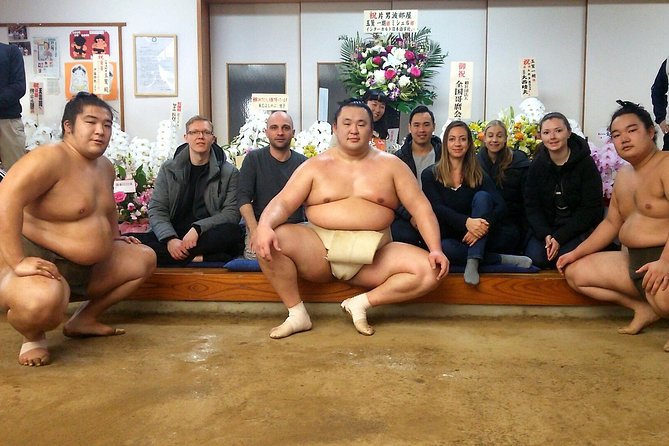
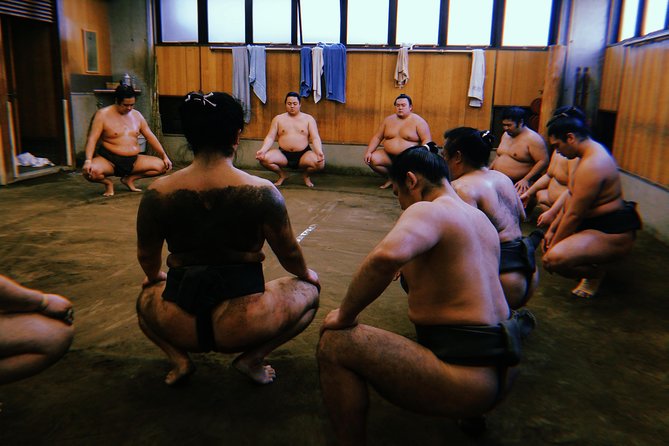
Once inside, you sit in the permitted tatami areas and watch the practice from close range. Most stables do not normally offer chairs, so expect to sit on the floor for an hour or more. Some sessions last about an hour and 20 minutes, while others continue for two hours.
This is the part that requires the most preparation. Wear clothing that allows you to sit comfortably, and consider your knees, hips, and back. You may not be allowed to use the toilet during practice, so go before the session begins.
The stable’s rules come first. You may be told to wear a mask, sit in a certain way, avoid talking, and wait until the practice ends before taking photographs. Other rules may apply on the day. All areas except the designated tatami sections are off-limits.
The silence can feel unusual at first. You are close enough to see the wrestlers clearly, but you cannot treat the room like a sports arena. There is no cheering, casual conversation, or moving around to find a better angle once practice is underway.
That restraint is part of the experience. You are watching a working environment, not interrupting it. The quiet also lets you notice details such as the sequence of exercises, the intensity of the bouts, and the respect built into the room.
More sumo mornings and shows:
- Tokyo Shinjuku Sumo Show & Experience with Photo
★ 5.0 · 1,750 reviews - Tokyo: Sumo Show and Experience in Shinjuku
★ 4.8 · 1,001 reviews - Tokyo: Sumo Tournament Tour with Chair Seat Tickets
★ 4.6 · 753 reviews - Tokyo:Luxury Sumo Show Experience & Japanese cuisine & Drink
★ 4.7 · 577 reviews
What you may see during practice
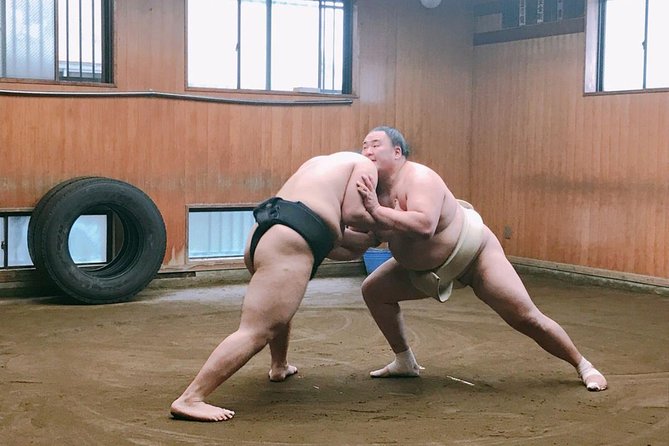
The exact session varies, but you can expect a mixture of warm-ups, physical exercises, technique work, and practice bouts. The training is serious and can be intense. Some visitors are surprised by how much wrestling they see, since the morning may include full bouts rather than only stretching and drills.
You may also see familiar wrestlers if you follow professional sumo. The tour does not promise specific athletes, however, and you should not book it expecting a particular champion.
The guide may write notes or quietly explain what is happening, as Yumiko reportedly did during one session. In other cases, the guide may give most of the explanation before or after practice because conversation inside the stable is restricted.
This is where expectations matter. If you want a detailed lesson on sumo’s origins, hierarchy, rules, and stable life, tell the guide early. Some guides offer a full cultural explanation, while the main focus for others is simply getting you inside and keeping the group within the stable’s rules.
Photographs with wrestlers after practice
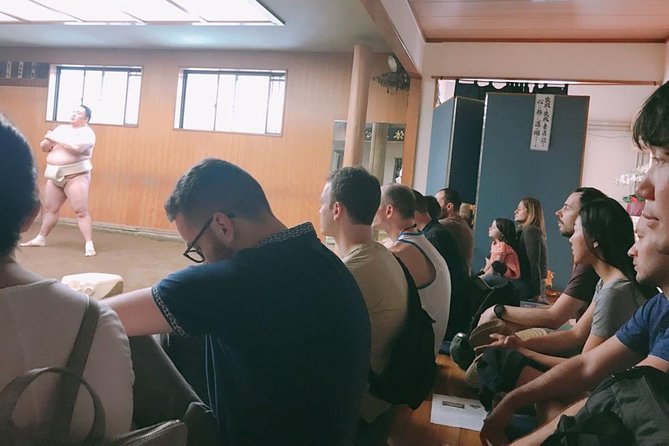
The experience includes tour photos, and some sessions finish with wrestlers posing for photographs with visitors. This can be a memorable personal touch, especially after sitting quietly through a demanding practice.
But you should treat the photo opportunity as a possibility, not a promise. The stable decides if visitors may photograph the wrestlers during practice or take posed photos afterward. A change in the wrestlers’ condition, an injury, or a different stable policy can remove the photo portion.
Do not assume that a camera or phone is always welcome. Follow the guide’s instructions exactly. The stable has the right to refuse visitors who break its rules, and the published conditions say that such a refusal does not qualify for a refund.
If photos are allowed, wait for the guide to explain when and where. The point is to leave with a good memory without turning a working stable into a photo set.
A short Ryogoku walk and the return to the station
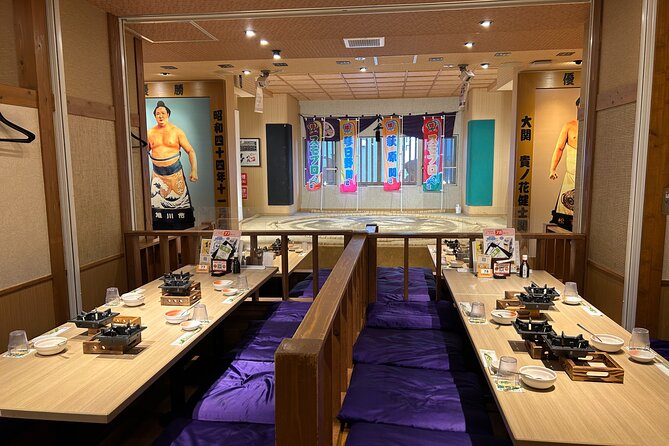
After practice, the guide walks with you through Ryogoku and may point out the sumo character of the neighborhood. The stated itinerary includes about 10 minutes at Ryogoku Kokugikan, the district’s major sumo venue, before the group returns to the station.
The post-practice walk is brief, so do not mistake it for a full neighborhood tour. It is a small cultural add-on after the stable visit. One session also included a side trip to Ekōin, a temple connected with honoring the dead, but that stop should not be treated as guaranteed.
The tour ends back at the original meeting point. There is no lunch included, although one past session included hot pot food as an extra experience. Plan your own breakfast and lunch rather than counting on food during the tour.
Is $98.16 a fair price?
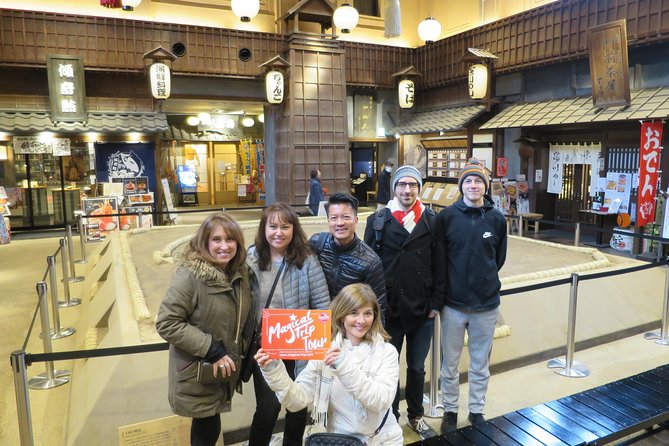
At $98.16 per person, this is not a cheap way to watch sumo. You are paying for the local arrangements, the guide, access to a stable, and the difficulty of organizing the visit independently.
The value is strongest if you care about context and access. A guide can explain what you are seeing, help you follow the stable’s etiquette, and arrange entry that is not straightforward for an independent visitor. A small group of no more than seven also feels more manageable than a large bus tour.
The value is weaker if you only want a quick glimpse of wrestlers or a guaranteed photo. The practice may be shorter than expected, you may sit in the back, and photography may be restricted. There is also no promise of a particular stable, a specific wrestler, lunch, or a fixed training sequence.
Seating is first come, first served. If your group arrives late, you may sit two or three rows from the front. Even arriving on time does not guarantee the best position if another group gets there first.
For a sumo fan, the price can make sense because the main attraction is access to authentic training. For a casual visitor comparing this with a tournament ticket, museum visit, or free neighborhood walk, the cost requires more thought.
Who will enjoy this experience most?
I would recommend it to anyone with a strong interest in sumo, Japanese customs, sports training, or behind-the-scenes access. It also works well as a solo activity because you must sit quietly during practice, and the small group gives you a built-in guide and companions.
It suits adults and older children, but only people aged 12 and over may enter the stable. Children under 12 will be denied entry without a refund.
This is less suitable for anyone who cannot sit on the floor for a long period. It is also a poor choice if you need a flexible morning schedule, dislike early starts, or expect a fully scripted sightseeing tour with constant commentary.
Summer needs extra care. Tokyo can be hot and humid, so bring water and wear a hat for the walk and time outdoors. The stable itself may feel different, but the heat can make the early start more demanding.
Timing changes and the risk of cancellation
Sumo stables can change their schedule at the last minute because of tournament plans or the wrestlers’ condition. The operator may ask you to change the date or time, and the tour can be canceled if practice is suddenly changed or called off. In that case, the booking is fully refunded.
The practice can also run longer than planned. The advertised duration is about two hours, but the stable controls the end time. Keep the rest of your morning open, especially if you have a timed museum entry, train, or restaurant booking.
Normal cancellation is free up to 24 hours before the start time. Cancellations or changes made within 24 hours are not refunded. The activity also has a poor-weather cancellation policy, offering a different date or full refund if the operator cancels for that reason.
How to get the most from the visit
Arrive at the JR East Exit early, with your mobile ticket ready. Confirm the station name before leaving your hotel, since the Oedo Line station is the wrong place.
Use the bathroom before meeting the guide, bring water, and dress for floor sitting. Avoid scheduling anything immediately afterward because the walk and practice length can change.
Listen carefully to the stable rules, even if you see other people behaving differently. The policy may not look identical for every group on every day, but your guide’s instructions are the safest guide to what is allowed.
Before entering, ask for a short explanation of the practice structure, the stable, and any terms you may hear. A good guide can help you understand the physical work and hierarchy instead of leaving you to watch silently without context.
Should you book the Ryogoku sumo morning tour?
Book it if you want to see real sumo training at close range and you are willing to accept strict etiquette, floor seating, variable timing, and uncertain photo access. The strongest part is the practice itself: intense, quiet, and far more genuine than a staged demonstration.
Skip it if you need guaranteed photographs, comfortable chairs, a fixed schedule, or a full sightseeing program. At $98.16, this is a focused experience, not an all-purpose Ryogoku tour.
For a sumo fan, I would make room for it. For everyone else, book only if the chance to observe an ordinary morning inside a stable matters more to you than convenience.
FAQ
Where does the tour meet?
You meet at Re.Ra.Ku Ryogoku Ekimae beneath the JR Ryogoku Station East Exit in Sumida City, Tokyo. The guide holds a red or orange MagicalTrip board.
Which Ryogoku station should I use?
Use JR Ryogoku Station. Do not go to Ryogoku Station on the Oedo Line, since it is a different station.
What time does the tour start?
The tour starts at 8:00 a.m. You should meet the guide 10 minutes before the official start time.
How long does the experience last?
The estimated duration is about two hours. Practice may last longer than expected, so allow extra time afterward.
How old must participants be?
Only people aged 12 and over may enter the sumo stable. Children under 12 cannot join and will not receive a refund.
Will I sit on a chair during practice?
You may have to sit on the floor because most stables do not provide chairs. Seating is usually on tatami flooring.
Can I take photographs during practice?
Photography depends on the stable’s rules. The stable may prohibit photographs during training and may also decide if posed photos with wrestlers are allowed.
Are photos with the wrestlers guaranteed?
No. Wrestlers may pose for photos after practice, but the stable has the final decision.
Is food included?
No. The tour does not include lunch or other food as a standard part of the experience.
Can I cancel for a refund?
You can cancel for a full refund up to 24 hours before the local start time. Cancellations or changes made less than 24 hours before the start are not refunded.
More Morning in Tokyo
- Tokyo: Sumo Morning Practice Viewing Tour
★ 4.8 · 570 reviews - Tokyo: Sumo Morning Training Visit
★ 4.4 · 370 reviews - Tokyo: Sumo Morning Practice Tour at Sumida City
★ 4.8 · 308 reviews - Tokyo Sumo Morning Practice Tour at Stable
★ 5.0 · 298 reviews
Just added around Tokyo
- Private Arrival Transfer : Narita International Airport to Central Tokyo City★ 4.5 · 12 reviews
- Narita Airport(NRT): Private Transfer to Tokyo/Yokohama 1-9pax★ 5.0 · 47 reviews
- Private Transfer from Narita Airport to Yokohama Port and City★ 4.5 · 17 reviews
- [Narita Airport Terminals 1, 2] 40-60km Sawara Itako Historic Bike Tour★ 5.0 · 13 reviews
- 3 Day Japan Highlights Tour: Tokyo, Mt.Fuji, Nara, Kyoto, Osaka★ 5.0 · 22 reviews
- Small Town in the Big City: Tasting Tokyo’s Kichijoji★ 5.0 · 195 reviews
- Small Town in the Big City: Tasting Tokyo’s Kichijoji★ 5.0 · 16 reviews
- The 10 Tastings of Tokyo With Locals: Private Street Food Tour★ 5.0 · 48 reviews
Tokyo Tours, compared.

Mt Fuji and Hakone 1-Day Bus Tour Return by Bullet Train
Read our review →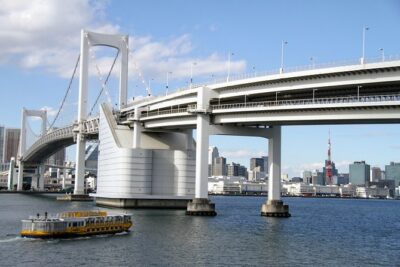
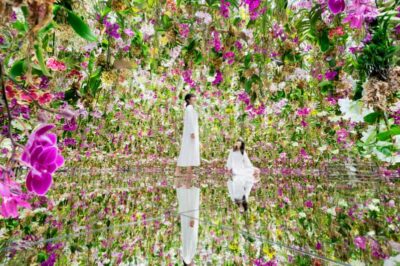
teamLab Planets TOKYO Digital Art Museum Entry Ticket
Read our review →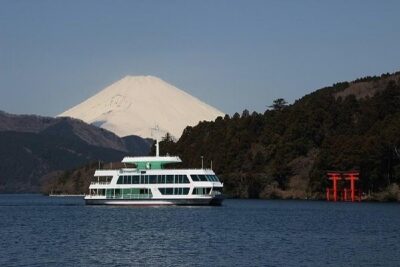
Mt Fuji & Hakone Cruise, Drum Show Bullet Train 1 Day from Tokyo
Read our review →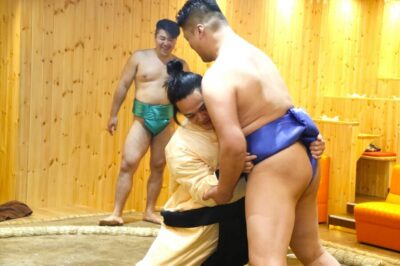
Sumo Show Experience with Chicken Hot Pot and a Photo
Read our review →
Shinjuku Food Tour (13 Dishes at 4 Local Eateries)
Read our review →
Tokyo Mt Fuji 5th St & Hakone Cruise Bus Tour w/Bullet Train
Read our review →
Flagship 2-Hours Official Street Go-Kart Tour – Tokyo Bay Shop
Read our review →Browse the lists this tour appears in