
Reviewed · KAMAKURA TOURS
Kamakura Private Tour: Temples, Nature, and the Great Buddha
Kamakura’s best surprise is how quickly you leave the train station and enter a wooded world of Zen temples, fox shrines, and mountain paths. This private five-hour walk links quiet Jochiji with Zeniarai Benten, Sasuke Inari, the Great Buddha, Hasedera, and Yuigahama Beach.
I like the personal pace, which lets a guide such as Yumi, Yu, Teiko, or Noriko adapt the route to your interests. I also like that the three major admission fees are included, while the main drawback is clear: this is a mountain hike, not an easy town stroll, with at least 5 km of walking and uphill sections.
Key points to know before booking
- A forest route connects the temples: The Kamakura Hiking Trails add a real outdoor element between the cultural stops.
- The tour ends at the sea: After shrines, temples, and the Great Buddha, you finish near Yuigahama Beach and Hase Station.
- Your guide can shape the day: Private groups can slow down, take breaks, or adjust the plan when weather, heat, or mobility become concerns.
- Three entrance fees are included: Jochiji, Kotoku-in, and Hasedera are covered in the price.
- Comfortable shoes are essential: The mountain pass can be strenuous, slippery in bad weather, and difficult for anyone with a knee or other leg injury.
- The value depends on group size: At $98.44 per person, the price is easier to justify for two or more people who want guiding, cultural context, and route planning in one package.
Why this Kamakura route works so well
Kamakura is an easy day trip from Tokyo, but its sights are spread across a surprisingly broad area. You can visit the Great Buddha on your own, of course, but connecting northern temple grounds, mountain paths, hillside shrines, Hasedera, and the coast takes planning.
This tour handles that structure on foot. You meet your English-speaking guide at Kita-Kamakura Station, walk south through temple country and the hills, then finish at Hase Station. The route gives you a sense of Kamakura as a town with sacred sites woven into its forests and neighborhoods, rather than as a single famous statue with a few nearby attractions.
The private format is the key advantage. Your guide can explain the difference between Buddhist temples and Shinto shrines, show you how to behave at each site, and answer the questions that arise as you walk. Guides including Yoko, Yumi, Yu, Teiko, Naho, Noriko, Naho, and Takami have been praised for clear English, warmth, local knowledge, and thoughtful pacing.
The exact guide is not guaranteed, but the strong pattern is useful. This experience works best when you want conversation and explanation, not just a person pointing toward the next gate.
A few more Kamakura half-days to weigh up
- Tokyo: Kamakura & Enoshima Day Trip including Temple Tickets
★ 4.5 · 1,375 reviews - From Tokyo: Kamakura & Enoshima 1-Day Bus Tour
★ 4.5 · 189 reviews - Kamakura Historical Walking Tour with the Great Buddha
★ 5.0 · 129 reviews
Starting at Jochiji Temple in Kita-Kamakura
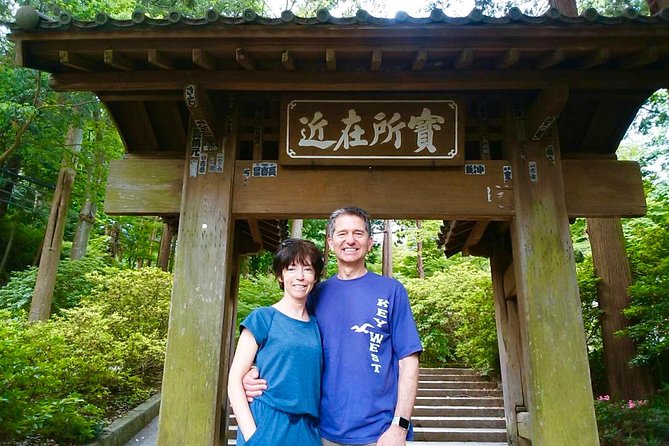
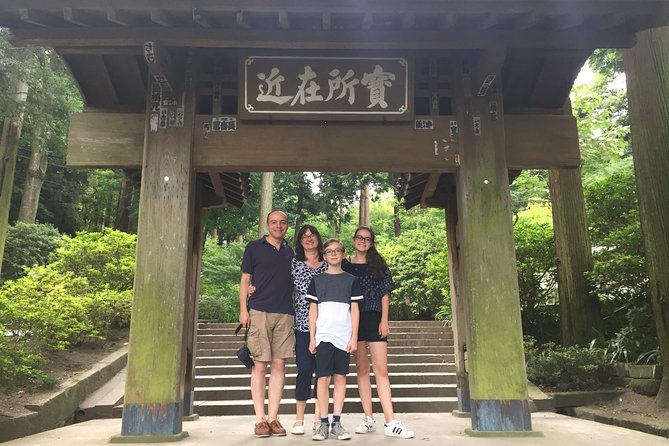
Jochiji is a calm beginning. Built in 1281 by Hojo Tokiyori to honor his young son, this Zen temple sits among trees away from Kamakura’s busiest sightseeing streets.
You have about 25 minutes here, with admission included. Expect a quiet stroll through temple grounds, wooded paths, and traditional structures rather than a huge, showy complex. That makes Jochiji a good first stop because it sets the tone for the day: reflective, green, and tied closely to Kamakura’s medieval past.
The guide’s explanation adds value here. Without context, a Zen temple can look like a series of attractive gates and buildings. With guidance, you begin to notice the religious purpose of the grounds and the different customs associated with Buddhist sites.
The short visit also preserves energy for the hike. Do not expect a long, unhurried temple study at every stop. The route covers a lot in five hours, so your guide has to keep the group moving.
Walking the Kamakura Hiking Trails
The trail section is the tour’s biggest point of difference. You spend roughly 40 minutes among the hills, crossing a mountain pass and enjoying the woods around Kamakura.
This is not a flat paved walk. The total route covers at least 5 km, and the uphill sections can feel strenuous in hot, humid weather. One group needed extra breaks in temperatures around 95°F, or 35°C, and another had to use a taxi after a participant injured a knee. Those details matter more than the cheerful phrase walking tour.
Wear shoes you can trust. Bring water, protect yourself from the sun, and allow extra patience if rain has made the trail slippery. The tour requires moderate physical fitness, and poor weather can change the route or cancel the experience.
The reward is a side of Kamakura you could easily miss alone. The wooded path gives you a break from city streets and connects religious sites in a way that feels more local and less like a checklist. On a clear day, the combination of forest, hillside views, and old shrines is one of the strongest parts of the experience.
Entering Zeniarai Benten through the hillside

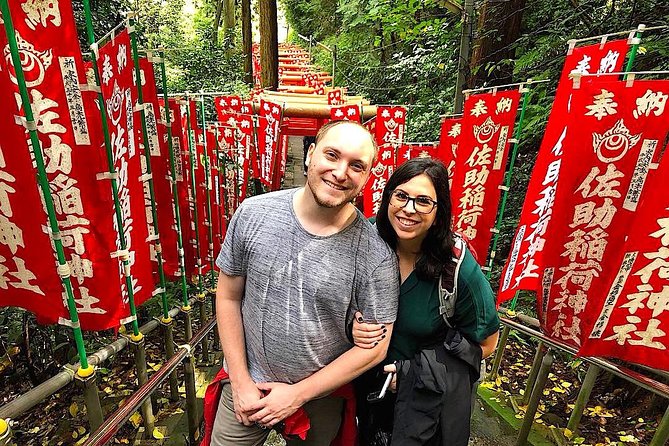
After the trail, you reach Zeniarai Benten Ugafuku Shrine. The approach itself is memorable: a mysterious opening in the hillside, framed by a torii gate, leads into the shrine area.
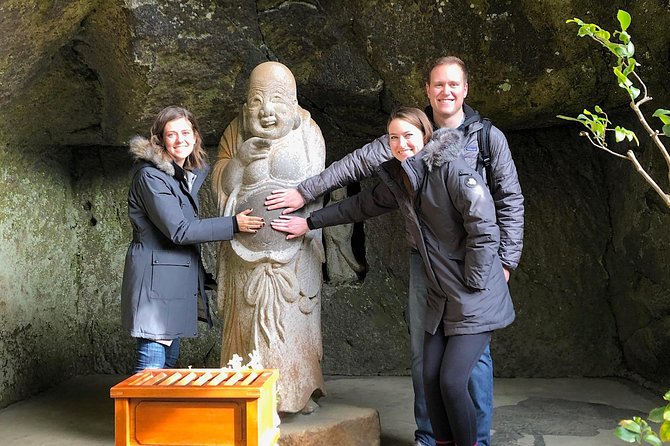
You have about 25 minutes here, and there is no separate admission fee. The shrine is associated with a popular custom of washing money, a detail that gives the visit an immediate, hands-on quality. Your guide can explain the practice and the shrine’s place in Kamakura’s religious traditions.
This is also a good example of why a guide helps. The entrance and setting are unusual, but the meaning behind the rituals is not always obvious if you simply walk through, take a photo, and leave. A guide can explain what you are seeing without turning the stop into a lecture.
The space may feel more enclosed than the open temple grounds earlier in the day. If you dislike low or uneven routes, ask your guide about the approach and take your time.
Same base, a completely different sort of day:
- Kamakura Walking Tour – The City of Shogun
★ 5.0 · 100 reviews - Kamakura 4hr Private Trip with Government-Licensed Guide
★ 5.0 · 58 reviews - When Emperors Reigned and Shoguns Ruled
★ 5.0 · 43 reviews - From Tokyo: Kamakura Full Day Tour with a Local Expert Guide
★ 4.6 · 43 reviews
Sasuke Inari and the fox legend
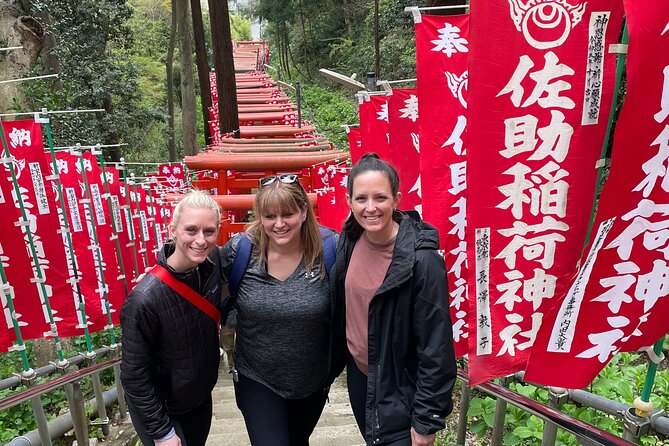
Sasuke Inari Shrine is a smaller, more atmospheric stop. Its story centers on Minamoto Yoritomo, Kamakura’s first shogun, who was said to receive advice in a dream from a white fox named Inari before a battle.
You spend around 20 minutes here. The fox connection gives the shrine a distinct character, and the visit breaks up the larger temple stops with something more intimate and story-driven.
I find this kind of stop especially useful for families and curious first-time visitors. The legend is easy to remember, and it opens a door to understanding how Japanese religious traditions often blend sacred places, folklore, natural settings, and historical figures.
Do not expect the same scale as the Great Buddha or Hasedera. Sasuke Inari is valuable for its mood and story, not for grand architecture. The mountain route also means your energy level may affect how much you appreciate it.
Meeting the Great Buddha at Kotoku-in
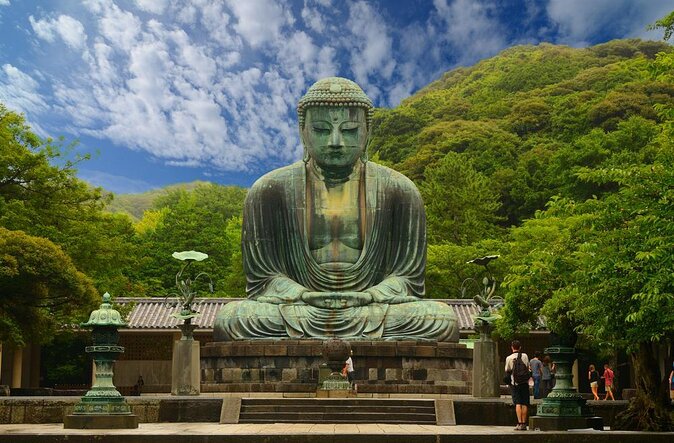
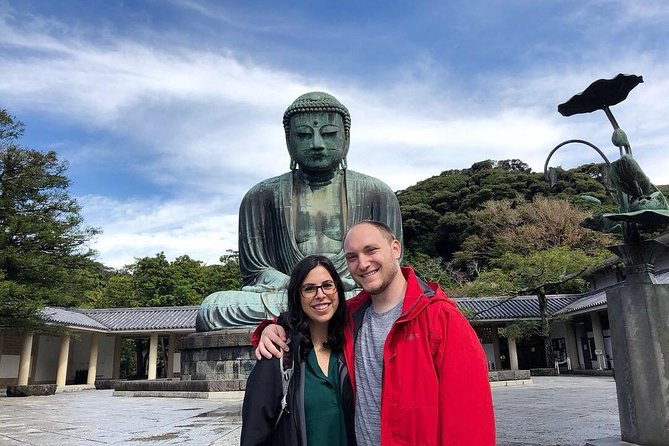
Kotoku-in contains Kamakura’s headline attraction, the bronze Great Buddha. The statue is 13.35 meters tall and weighs about 121 tons, with the present bronze form dating from 1252.
Admission is included, as is the entrance to the statue area. The visit lasts about 20 minutes, enough to take in the scale, learn about the statue, and photograph it without consuming the whole afternoon.
This is the most familiar stop, but it still earns its place. After walking through forest and visiting smaller religious sites, the statue provides a dramatic change in scale. It also gives the day a clear focal point.
Some tours and independent visits allow you to see the inside of the statue for a small additional fee, but that detail is not guaranteed as part of this experience. Ask your guide what is available on the day. The grounds can be busier than the earlier stops, so do not expect the same quiet atmosphere you found at Jochiji or Sasuke Inari.
Hasedera’s gardens and ocean views
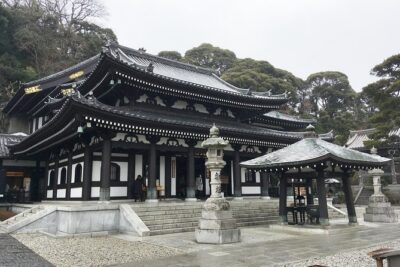
Hasedera sits partway up Mount Kamakura, and its hillside position gives it one of the route’s finest outlooks. From the temple grounds, you can look south toward the ocean and Yuigahama Beach.
The visit lasts about 30 minutes, with admission included. The setting combines religious buildings, gardens, and elevation, so it feels like both a cultural stop and a scenic viewpoint. In June and July, hydrangeas are an added draw, though the exact condition of the flowers depends on the season.
After the mountain trail, Hasedera can feel like a well-earned reward. The stairs and slope still require effort, so anyone managing a knee problem or limited stamina should speak up early. Guides have adapted routes for older participants and families, and the private format makes that kind of change more realistic.
Hasedera is also one of the places where a guide’s cultural explanation matters most. The grounds are attractive enough to occupy you on their own, but learning about Buddhist practices and local traditions gives the visit more substance.
Finishing beside Yuigahama Beach
The final stop is Yuigahama Beach, where you have about 15 minutes to relax and look out across the water. Because the beach faces south, you can see the sun over the ocean from this point.
This is a smart ending after a demanding walk. The mood changes from temple gardens and wooded paths to open coastal air, and you finish near Hase Station. The guide usually accompanies the group toward Kamakura Station as well, which helps if you are unsure about the return train.
In summer, an open-air market called Umi-no-ie operates along the beach. Food and drinks are not included, so plan to pay separately if you want refreshments. Lunch is also not included, although guides have arranged well-liked local restaurants for some groups and can help with a reservation.
The beach stop is brief. Think of it as a pause and a scenic finish, not a beach day.
How much value do you get for $98.44?
The listed price is $98.44 per person, with a minimum booking of two people. That means a pair pays at least $196.88 before any optional hotel pickup or other personal costs.
That is not a bargain-priced self-guided walk. You are paying for a private English-speaking guide, route planning, cultural interpretation, participant photos, taxes, and admission to Jochiji, Kotoku-in, and Hasedera. For a couple or small family that wants a tailored day, the price can be fair, especially if navigating Kamakura’s trails and scattered sights would be stressful.
The cost becomes easier to defend when you use the private format well. Ask questions, request a slower pace, and discuss your interests before setting out. Several guides have arranged lunch, helped with train connections, and adjusted plans for weather, children, or older family members. Those personal touches are part of the value, even though lunch and transport remain extra.
Hotel pickup is available for an additional 8,000 yen per person. Private taxis, cars, buses, food, and drinks are not included. The tour can be extended for 1,000 yen per person per additional half hour, payable in cash.
Weather, families, and fitness
This tour is best in cool or mild weather. Rain can lead to a revised route using trains, buses, and city streets, while poor weather may result in a different date or a full refund. The mountain path may also be skipped when conditions are unsafe.
Heat is the bigger challenge. In summer, the pass and hillside temple grounds can demand frequent breaks. Start with realistic expectations and avoid treating the five-hour duration as five hours of continuous sightseeing. The route includes walking between stops, pauses, and time for explanations.
Families can do well here if children are comfortable walking. A guide can make the historical stories accessible to younger visitors, and one family with 11-year-old twins found the pace and explanations suitable for both children and adults. Still, the route is not ideal for a stroller or anyone who cannot manage uneven, uphill walking.
The private setup helps groups with mixed abilities, but it does not remove the physical demands. If you have a recent injury, serious mobility concern, or poor tolerance for heat, consider asking for a less strenuous custom plan before booking.
Getting there and getting back
You meet at Kita-Kamakura Station in Yamanouchi, Kamakura. The station is near public transportation, and the tour does not include hotel pickup unless you pay the additional fee.
The end point is Hase Station. That is convenient for continuing around Kamakura, catching a train, or spending more time near the beach and Hasedera. Guides have also helped groups find the correct trains and accompanied them toward Kamakura Station, a useful service after a long day.
Bring cash for optional transport, food, drinks, and any extension. The tour itself includes its stated entrance fees, but not every cost that may arise if weather, fatigue, or personal plans change the route.
Free cancellation is available up to 24 hours before the start time. Changes or cancellations inside that window are not refunded, and the experience may be canceled in poor weather with the choice of another date or a full refund.
Who should book this private walk?
I would choose this tour if you want Kamakura’s major sights plus a quieter forest route, and if you value a guide’s explanations more than independent flexibility. It suits couples, families, and small groups who want to ask questions and adjust the pace.
It is also a good choice for a first visit from Tokyo. The route covers the places most people hope to see, but it adds shrines and trails that are harder to connect without local help.
I would hesitate if your main goal is a relaxed, flat stroll. The mountain pass, stairs, heat, and five-kilometer minimum make this a moderate outing. You should also reconsider if you want to spend long periods at each temple, since the route covers seven stops in roughly five hours.
FAQ
How long does the Kamakura private tour last?
The tour lasts approximately five hours. It can be extended for 1,000 yen per person per additional half hour, payable in cash.
Where does the tour start?
The meeting point is Kita-Kamakura Station in Yamanouchi, Kamakura, Kanagawa.
Where does the tour finish?
The scheduled end point is Hase Station. The guide usually accompanies the group toward Kamakura Station as well.
Is this a private tour?
Yes. Only your own group participates in the activity.
How much walking is involved?
You will walk at least 5 km, including a mountain pass and uphill sections. Comfortable walking shoes are essential.
What fitness level is required?
A moderate level of physical fitness is required. The mountain route may be strenuous, particularly in hot or humid conditions.
Are entrance fees included?
Yes. Admission to Jochiji Temple, Kotoku-in, or the Great Buddha, and Hasedera Temple is included.
Is hotel pickup included?
No. Hotel pickup and drop-off are not included, but pickup can be arranged for an additional 8,000 yen per person.
Are food and drinks included?
No. Food and drinks are not included. Any lunch, snacks, or drinks you purchase are paid for separately.
What happens if the weather is poor?
The experience requires good weather. If it is canceled because of poor weather, you will be offered another date or a full refund. Rain may also lead to a modified route using public transportation and streets.
Should you book it?
Book this tour if you want Kamakura explained as a living religious town, not just a collection of famous photo stops. The Great Buddha and Hasedera are the anchors, but the forest trail, fox shrine, money-washing tradition, and ocean finish give the day its character.
At $98.44 per person, it makes the most sense for a small group that will use the guide’s flexibility. Wear proper shoes, avoid the hottest part of summer if possible, and be honest about your fitness. If you can handle the hills, this is a strong half-day introduction to Kamakura with just enough structure and plenty of room for personal attention.
Just added around Kamakura
- When Emperors Reigned and Shoguns Ruled★ 5.0 · 43 reviews
- First time in Kamakura? Enjoy a Tour of All Must-sees!★ 5.0 · 15 reviews
- Your Own HANKO Name Seal Activity in Kamakura.★ 5.0 · 24 reviews
- Kamakura Bamboo Forest and Great Buddha Private Tour★ 5.0 · 12 reviews
- Kamakura 4hr Private Trip with Government-Licensed Guide★ 5.0 · 58 reviews
- Kamakura Walking Tour – The City of Shogun★ 5.0 · 100 reviews
- Exciting Kamakura – One Day Tour from Tokyo★ 5.0 · 40 reviews
- Kamakura Tours Half Day or Full Day Tours with a local guide.★ 5.0 · 12 reviews
Kamakura Tours, compared.
Kamakura & Enoshima Day Trip including Temple Tickets
Read our review →
Kamakura Historical Walking Tour with the Great Buddha
Read our review →
Kamakura 4hr Private Trip with Government-Licensed Guide
Read our review →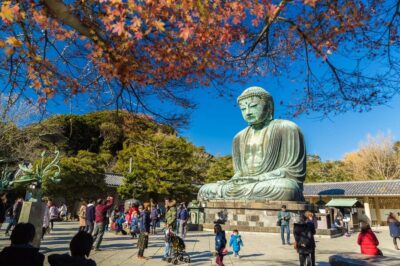
Kamakura Full Day Tour with a Local Expert Guide
Read our review →
Browse the lists this tour appears in