
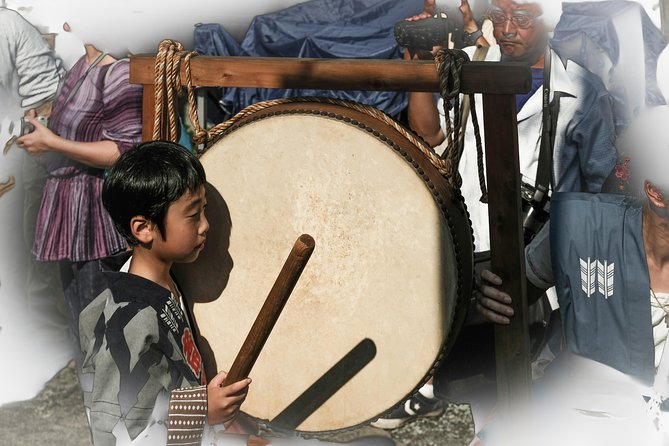
Reviewed · KAMAKURA TOURS
When Emperors Reigned and Shoguns Ruled
Kamakura is where Japan’s samurai government took shape, Zen Buddhism gained ground, and old shrines still share streets with snack shops and modern commuters. This private four-hour walk brings that story to life through Tsurugaoka Hachimangu, the Great Buddha, and Hasedera, with guide Virgil adding historical context and taking photos along the way.
I like the private format, especially for families, solo visitors, and groups with different walking speeds. I also like the route’s mix of grand religious sites and everyday Kamakura, from Wakamiya Main Street to Komachidori’s sweets and souvenir stalls. The main consideration is cost: at $108.99 per person, admission, food, and transportation are extra, so the value depends on how much you want personal guidance.
Key points to know before you book
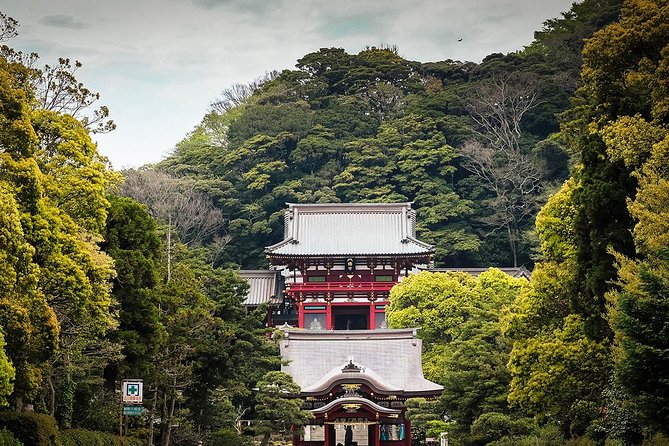
- A private Kamakura history walk: Only your group participates, with room to ask questions and adjust the pace.
- Virgil brings the shogunate period into focus: The tour connects shrines, samurai rule, and Zen Buddhism instead of treating each stop as a separate photo opportunity.
- A photographer guide is part of the experience: Virgil can take photos of you, useful for solo visitors and families who want everyone in the frame.
- The route mixes culture and daily life: You move from a shrine and Buddhist temples to Kamakura’s main shopping street.
- The tour finishes at Hase Station: You begin near Kamakura Station and end on the Enoden Line, so you do not return to your starting point.
- Expect extra costs: Entry to Kotoku-in and Hasedera, meals, drinks, and transportation are not included.
Why Kamakura works so well for a half-day
Kamakura makes a good break from Tokyo because its history is concentrated in a walkable town. From 1185 to 1333, it served as the center of Japan’s shogunate government under Minamoto Yoritomo and his successors. That period changed the country’s political order, giving military rulers and samurai far more influence.
The tour uses that period as its main thread. You are not simply led from one famous statue to the next. You learn why a Shinto shrine mattered to the first shogun, how Buddhism developed alongside samurai rule, and why Kamakura remains a major religious center.
I especially like the way this route moves between formal monuments and ordinary streets. A shrine courtyard may be quiet and ceremonial, while the next stop puts you among shops selling sweets, snacks, and souvenirs. That contrast gives you a better sense of Kamakura as a living town rather than an outdoor museum.
The four-hour length is useful if you have a limited day in the area. It is long enough to cover the major sights, but short enough to fit around a wider Tokyo schedule. The listed stop times add up to about three hours and 40 minutes, leaving the rest for walking, transfers, explanations, photographs, and brief pauses.
A few more Kamakura half-days to weigh up
- Tokyo: Kamakura & Enoshima Day Trip including Temple Tickets
★ 4.5 · 1,375 reviews - From Tokyo: Kamakura & Enoshima 1-Day Bus Tour
★ 4.5 · 189 reviews - Kamakura Historical Walking Tour with the Great Buddha
★ 5.0 · 129 reviews
Starting along Wakamiya Main Street
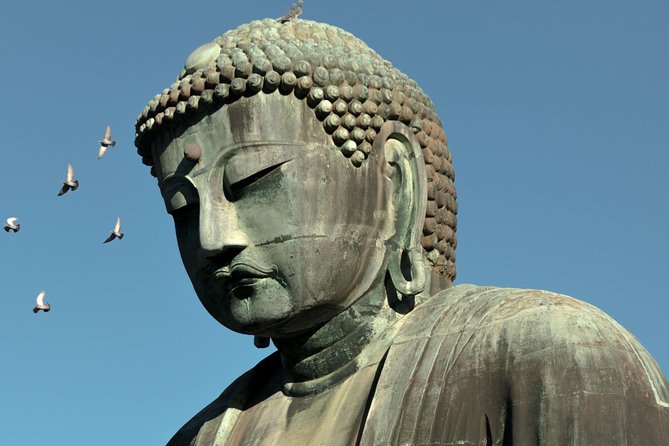
You meet near Kamakura Station at 1-chome-1-15 Onarimachi. The first stretch follows Wakamiya Main Street toward the main shrine. It is only about 20 minutes, but it helps you get your bearings and introduces the town’s central axis.
This is a useful opening because you begin with Kamakura as it is today. You see a main local street, people moving through town, and the approach to one of Japan’s best-known Shinto shrines. Virgil can explain the historical setting before you reach the more formal grounds.
Do not expect a major sightseeing stop here. The value is in the transition. You shift from the station area into Kamakura’s older religious center, with the guide setting up the story before the first large site.
Tsurugaoka Hachimangu and the first shogun
Tsurugaoka Hachimangu receives about 50 minutes. The shrine was built by Minamoto Yoritomo in the 12th century and is regarded as one of Japan’s three most important Shinto shrines.
This is the clearest place to begin understanding the Kamakura Period. Yoritomo was not simply a military commander passing through town. He established a new style of government in which the shogun and samurai families held real political power. The shrine reflects that connection between religious authority, military leadership, and the ruling house.
You can expect time to look at the shrine grounds while Virgil explains the symbolism and historical figures tied to the site. His strength, based on the experience described by past customers, is making the broader story understandable through anecdotes rather than delivering a dry list of dates. He is also praised for clear English, patience, and a warm manner.
The shrine can be busy at popular times, particularly on Sundays and long weekends. A private guide helps here because you can ask where to pause and how much time to spend, though the group cannot control crowd levels. If you want a quiet, meditative visit with no talking, this tour may feel more guided than you prefer.
Admission to the shrine is listed as free. That keeps the first major stop simple, though donations or special areas may have separate arrangements that are not part of the tour price.
Komachidori for snacks and modern Kamakura
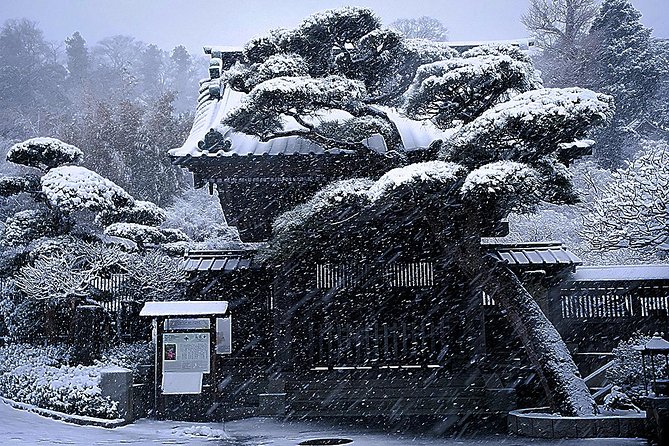
The route then spends about 50 minutes on Kamakura Komachidori. This famous shopping street is lined with shops and stalls selling sweets, snacks, and souvenirs.
Komachidori gives the tour a needed change of pace. After learning about shoguns and religious institutions, you can watch contemporary Japanese life unfold around you. It is also the most natural place to ask Virgil about food, customs, and the practical side of the town.
Food and drinks are not included, so this is where you may want to budget for a small purchase. The route does not promise a meal, and lunch is not included. Some past outings with Virgil have included a soba lunch, but you should not assume that is part of this booking. Ask about timing if eating is important to you.
The street can be crowded, and 50 minutes may pass quickly if you stop at several shops. That is a benefit for curious browsers, but less useful if you want a long sit-down meal or serious shopping. The private format lets you explain your priorities, though the overall route still has several major stops to cover.
Same base, a completely different sort of day:
- Kamakura Private Tour: Temples, Nature, and the Great Buddha
★ 5.0 · 121 reviews - Kamakura Walking Tour – The City of Shogun
★ 5.0 · 100 reviews - Kamakura 4hr Private Trip with Government-Licensed Guide
★ 5.0 · 58 reviews - From Tokyo: Kamakura Full Day Tour with a Local Expert Guide
★ 4.6 · 43 reviews
Meeting the Great Buddha at Kotoku-in
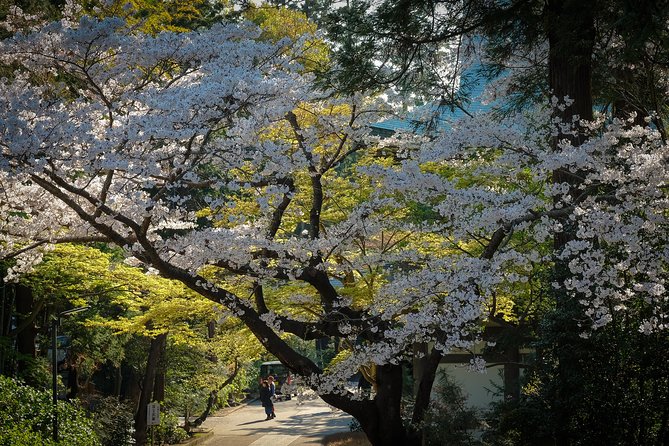
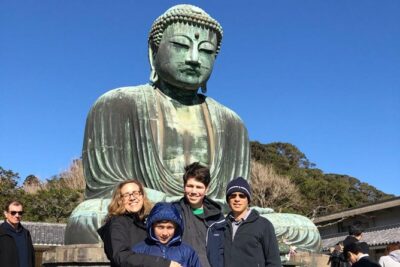
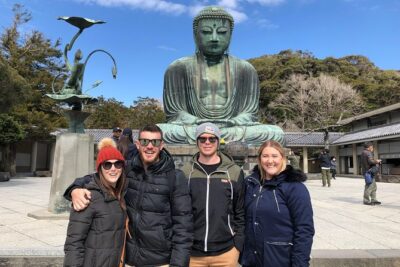
Kotoku-in is allotted 40 minutes and contains Kamakura’s famous Great Buddha, a giant bronze image of Amida Buddha dating from the 13th century.
The statue is the tour’s most recognizable sight, but the guide’s explanation is what gives it weight. You can learn how the image fits into Kamakura’s Buddhist tradition and why a statue of this scale was created during a period marked by political change, war, and new religious movements.
Forty minutes is enough to see the statue, take photographs, and hear the main explanation. It may feel short if you want to linger, study every detail, or enter the statue if that option is available on the day. The tour does not promise extended free time here.
Admission is not included. This is one of the costs you should add to the advertised $108.99 price. Transportation between attractions is also not included, although the experience uses public transportation as needed. The guide can help with the route, but you should still expect to pay your own fares.
For solo visitors, the photographer-guide arrangement is particularly handy at the Great Buddha. You do not have to rely on a stranger to take a quick photograph, and families can get a picture with everyone present.
Hasedera’s gardens, caves, and Kannon
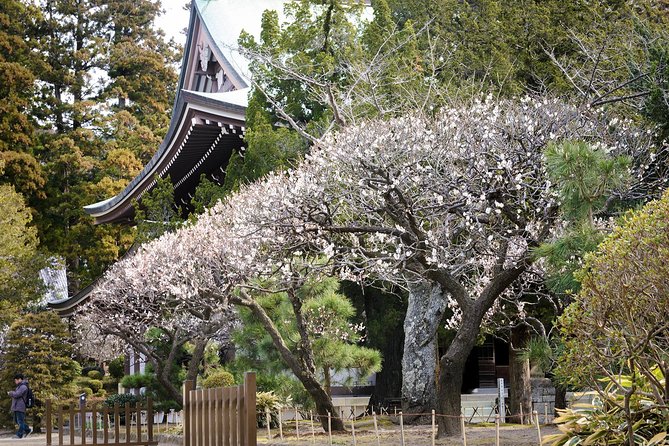
The final major stop is Hasedera, with about one hour and 20 minutes. This is the longest portion of the tour, and it earns that time because the temple spreads over several levels and includes gardens, ponds, caves, and an ancient 11-headed statue of Kannon, the Goddess of Mercy.
Hasedera offers more variety than a single courtyard. You can move through different spaces, pause beside the ponds, and take in the temple’s layered setting. The caves add a darker, more enclosed contrast to the open grounds, while the Kannon image gives Virgil another chance to explain Buddhist beliefs and artistic traditions.
This stop is likely to be the most rewarding for visitors who enjoy gardens, religious art, and quiet detail. It also asks the most from your legs. The temple extends over multiple levels, and the full visit is not just a flat walk from gate to statue. Anyone with a slow pace should tell Virgil at the start. His flexibility and patience are repeatedly praised, and a private tour gives him more room to adapt than a large group outing would.
Admission to Hasedera is extra. Since it is the longest stop, this is not a place to rush through simply to avoid the entry fee. If you are already paying for a guided experience, take advantage of the explanation and allow yourself time to enjoy the gardens.
Finishing at Hase Station
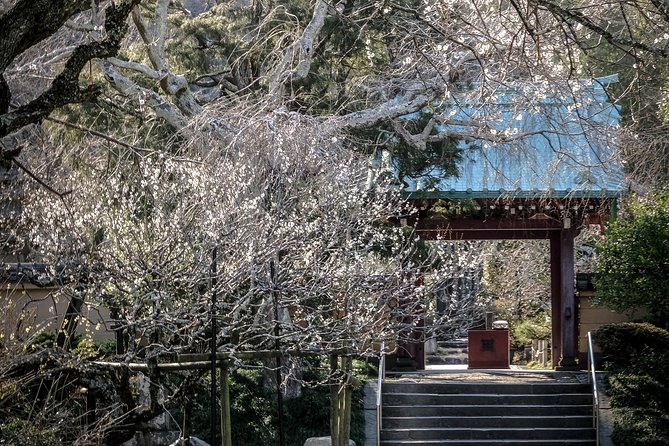
The tour ends at Hase Station, 2 Chome-14 Hase, on the Enoden Line. That ending is practical if you plan to continue around the coast or return toward Kamakura by train. It also means you should not expect a ride back to Kamakura Station or your hotel.
Hotel pickup and drop-off are not included. You are responsible for reaching the starting point and continuing onward from Hase Station. The meeting points are near public transportation, and the guide can assist with public transit during the outing, but fares remain your responsibility.
Before booking, check your day’s plans. If you need to return to Kamakura Station for luggage or a reservation, leave time after the tour. If you are heading elsewhere on the Enoden Line, ending at Hase may fit your schedule very well.
What the private guide adds
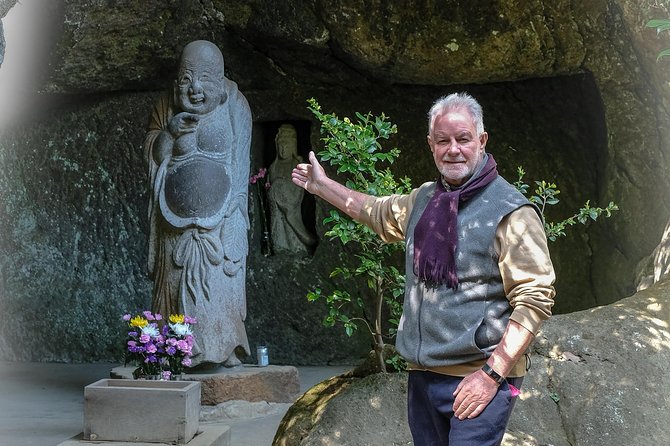
The strongest feature here is not simply the number of sights. It is the ability to shape the pace around your group. A solo visitor can ask frequent questions without holding anyone up. Parents can pause when children need a break. A family with teenagers can spend more time on stories, photographs, or food.
Virgil is described as an experienced guide with clear English and Spanish ability. He is also praised for historical insight, kindness, patience, and photography. One family found that he handled questions from four teenagers with ease. Another group appreciated his help after getting lost and his flexibility when walking slowly.
That does not mean every moment will feel customized without your input. Tell him what interests you: samurai politics, Shinto practice, Buddhist art, photography, food, or modern Japanese life. The more specific you are, the more useful a private guide can be.
The photographer role is a real advantage for solo visitors and couples. Still, bring your own phone or camera and make sure it has enough battery. The guide can take pictures, but the tour does not specify professional prints, edited images, or a separate photography package.
Is $108.99 a good value?
At $108.99 per person, this is not the cheapest way to see Kamakura. You pay for a private experience for up to eight people, a local guide, a photographer guide, and a tour host. You also pay separately for the Great Buddha and Hasedera, food, drinks, and transportation.
For one person, the price is easier to question because private guiding costs more when divided by only one visitor. For a couple or family, the value improves, especially if you care about photos and do not want to organize train connections and site order yourself. Groups of up to eight can also benefit from the private structure, though the listing does not state a sliding price by group size.
The best value comes from the historical interpretation and flexibility. If you would be happy reading signs, following a map, and visiting independently, you may prefer to save the money. If you want the Kamakura Period explained clearly and want help making the most of a short visit, the cost is more defensible.
Free cancellation is available if you cancel at least 24 hours before the local start time. Changes or cancellations inside that window are not accepted for a refund.
Who should book this Kamakura walk?
I would choose this tour for a first visit to Kamakura, especially if you are staying in Tokyo and have only one day for the town. It suits solo visitors, couples, families, and groups that want a relaxed pace without strangers joining them.
It is also a strong match for anyone interested in the connection between samurai rule, Shinto, and Buddhism. Children and teenagers may respond well to the stories, photographs, shopping street, and Great Buddha, while adults can focus on the political and religious background.
I would think twice if you want a long independent visit at each site, a food-focused tour, or a completely flat and effortless walk. The route covers several religious sites, includes temple levels and walking between stops, and leaves meals and admissions to you.
Should you book it?
Book this private Kamakura tour if you want the town’s major sights tied together by a clear story. Virgil’s patient manner, strong command of Japanese history, flexibility, and photography make the experience especially useful for families and solo visitors.
Skip it if your priority is the lowest possible cost or maximum time inside each attraction. For everyone else, the combination of Tsurugaoka Hachimangu, Komachidori, the Great Buddha, and Hasedera gives you a sound first look at Kamakura, with enough personal attention to make the four hours feel purposeful.
FAQ
How long does the Kamakura tour last?
The tour lasts approximately four hours.
Where does the tour start?
It starts near Kamakura Station at 1-chome-1-15 Onarimachi, Kamakura, Kanagawa 248-0012, Japan.
Where does the tour end?
It ends at Hase Station of the Enoden Line, at 2 Chome-14 Hase, Kamakura, Kanagawa 248-0016, Japan.
Is this a private tour?
Yes. Only your group participates, with a maximum group size of eight people.
What sites are included in the route?
The route includes Wakamiya Main Street, Tsurugaoka Hachimangu Shrine, Kamakura Komachidori, Kotoku-in and its Great Buddha, and Hasedera Temple.
Are entrance fees included?
Admission to Wakamiya Main Street and Tsurugaoka Hachimangu is listed as free. Admission to Kotoku-in and Hasedera is not included.
Are food, drinks, and lunch included?
No. Food, drinks, and lunch are not included.
Is transportation included?
No. Transportation to and from the attractions is not included. The tour begins and ends near public transportation.
Can I choose the start time?
Yes. Several start times are available, so you can choose a preferred option when booking.
Just added around Kamakura
- First time in Kamakura? Enjoy a Tour of All Must-sees!★ 5.0 · 15 reviews
- Your Own HANKO Name Seal Activity in Kamakura.★ 5.0 · 24 reviews
- Kamakura Bamboo Forest and Great Buddha Private Tour★ 5.0 · 12 reviews
- Kamakura 4hr Private Trip with Government-Licensed Guide★ 5.0 · 58 reviews
- Kamakura Walking Tour – The City of Shogun★ 5.0 · 100 reviews
- Exciting Kamakura – One Day Tour from Tokyo★ 5.0 · 40 reviews
- Kamakura Tours Half Day or Full Day Tours with a local guide.★ 5.0 · 12 reviews
- Buddha, Bamboo & Zen – Bespoke Kamakura Private Walking Tours★ 5.0 · 25 reviews
Kamakura Tours, compared.
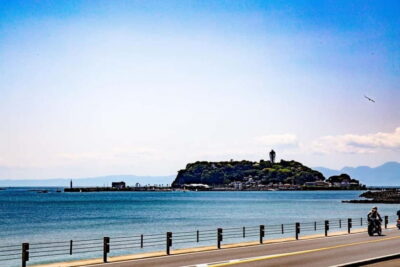
Kamakura & Enoshima Day Trip including Temple Tickets
Read our review →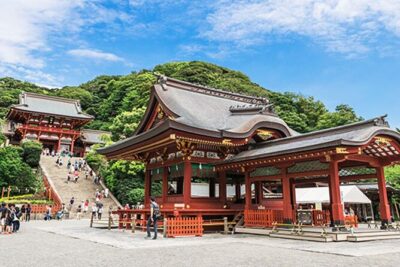
Kamakura Historical Walking Tour with the Great Buddha
Read our review →
Kamakura Private Tour: Temples, Nature, and the Great Buddha
Read our review →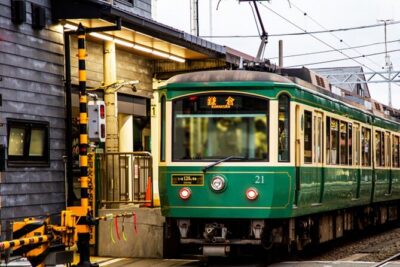
Kamakura 4hr Private Trip with Government-Licensed Guide
Read our review →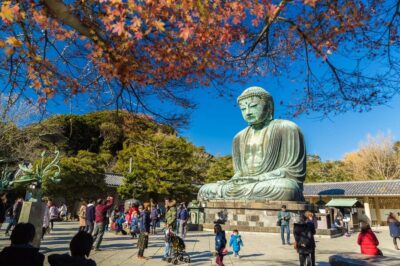
Kamakura Full Day Tour with a Local Expert Guide
Read our review →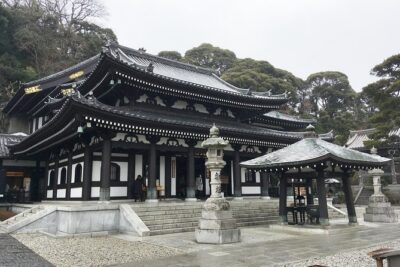
Browse the lists this tour appears in