
Reviewed · KAMAKURA TOURS
Kamakura 4hr Private Trip with Government-Licensed Guide
Kamakura packs a remarkable amount into a small coastal city: a giant bronze Buddha, old Zen temples, wooded trails, shrines, bamboo, and the sea. This private four-hour tour lets you choose two or three priorities instead of following a fixed route. Guides such as Shinji, An, Yoshi, Hiro, and Mr. Goto have helped families, older visitors, photographers, and first-time Japan visitors shape the day around their interests.
I like the one-to-one format, especially when Kamakura is crowded during cherry blossom season or New Year. I also like meeting near Kamakura Station, where a guide can help you understand the local trains and avoid wasting time finding the right platform or temple entrance. The main catch is that four hours goes quickly, and one pair felt the tour ended early enough that another stop could have been added.
Key points at a glance
- Pick only two or three sights: Build the outing around the Great Buddha, Hasedera, bamboo, Zen temples, the beach, or another listed attraction.
- A real walking tour: You meet the guide on foot in the designated Kamakura area, with public transport used between distant stops.
- Private attention: Only your own group participates, so the guide can adjust the pace, explain religious customs, and answer your questions.
- Strong guide feedback: Shinji is praised for patience, An for practical help, Hiro for family-friendly teaching, and Mr. Goto for excellent English and visual materials.
- Extra costs matter: Your train fares, local transport, admission tickets, lunch, and personal purchases are not included.
- Best for a focused first visit: It works well when you want help choosing among Kamakura’s many temples rather than attempting them all.
Why a private Kamakura visit works
Kamakura is easy to underestimate. It is close enough to Tokyo for a day trip, yet its sights are spread among several train stations, side roads, hills, and temple grounds. A map may show a short distance, but choosing the right order can make the difference between a calm morning and a rushed series of train changes.
This tour gives you a local guide and a broad menu of possible stops. You are not expected to visit all 18 places listed. In four hours, a sensible plan is two major sights and perhaps one smaller stop, depending on your pace, transport, and interest in photos or lunch.
The private setup is valuable for families and mixed-age groups. One family with parents over 70, a husband, and a tween found it easier to move through cherry blossom crowds with a dedicated guide. Another family used the time for Japanese practice, questions about Shinto and Buddhism, and a traditional lunch. The guide can slow down for a child, allow a photographer more time, or keep the group moving when the heat rises.
You should also know what this is not. It is not a private car tour. You walk and use public transportation, and the listed price does not cover your fares or admissions. That keeps the outing closer to ordinary life in Kamakura, but it requires comfortable shoes and a little planning.
More licensed-guide days in Kamakura:
- Tokyo 6hr Private Tour with Government-Licensed Guide
★ 5.0 · 3,902 reviews - Tokyo 4hr Private Tour with Government-Licensed Guide
★ 5.0 · 1,394 reviews - Kyoto 6hr Private Tour with Government-Licensed Guide
★ 5.0 · 1,369 reviews
Meeting near Kamakura Station
The usual start is a meeting with your guide at Kamakura Station. This is a practical choice. You can arrive by train, meet without searching for a hotel lobby, and begin with a clear plan for the day.
The tour information also says pickup is offered, while the detailed conditions describe an on-foot meetup within a designated Kamakura area. Treat that as something to confirm before booking, especially if you are staying in Tokyo or Yokohama and expect door-to-door service. The tour does not include private transportation.
One guide, Isao, met a group at its Yokohama hotel and accompanied them by subway and train to Kita-Kamakura, then through Kamakura and back. That kind of help may be possible in practice, but the standard description centers on meeting within Kamakura, so do not assume hotel pickup is included.
Train delays can happen. Shinji waited patiently for families delayed by a train accident, and another family arrived late because of a similar problem. Send accurate arrival details and keep your guide’s contact information handy. The four-hour clock still matters, so a late start can reduce the number of stops.
Tsurugaoka Hachimangu, Kamakura’s ceremonial center
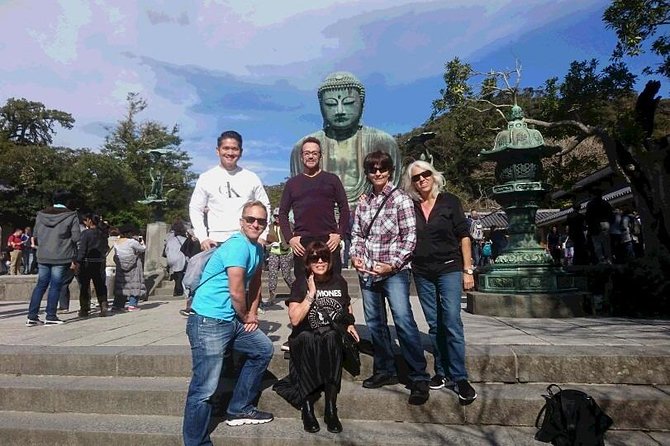
Tsurugaoka Hachimangu is a strong choice for visitors who want Kamakura’s political and samurai story. The shrine honors Hachiman, associated with Emperor Ojin and with the Minamoto family, whose leaders helped make Kamakura a center of power.
The approach gives you a useful sense of scale and ceremony. It is also a good place for your guide to explain basic Shinto customs before you visit more Buddhist temples. The scheduled stop is brief, listed at about 10 minutes, so ask in advance if you want time for a slower walk, photographs, or prayer.
Crowds can change the experience. New Year is especially busy, with the first three days drawing large numbers of people. A guide who knows the timing can help you visit before lines become severe. During cherry blossom season, the shrine area can also be busy, but the private format helps you move with less confusion.
The Great Buddha at Kotoku-in
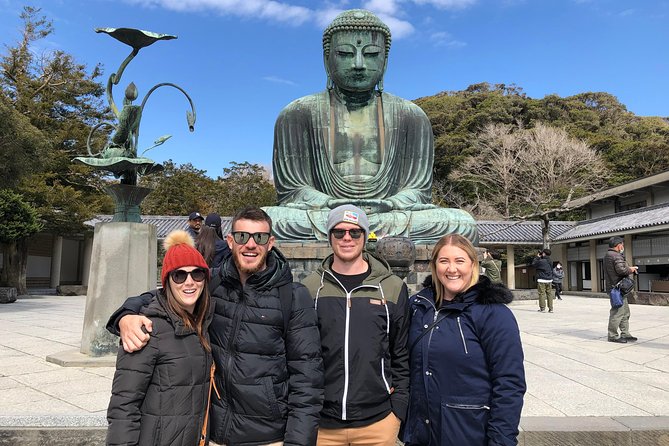
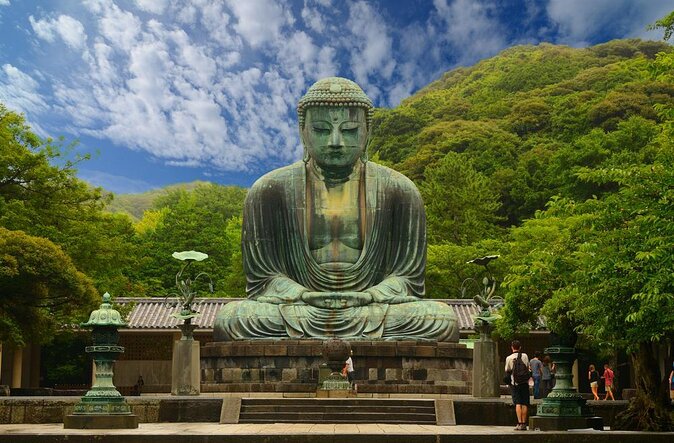
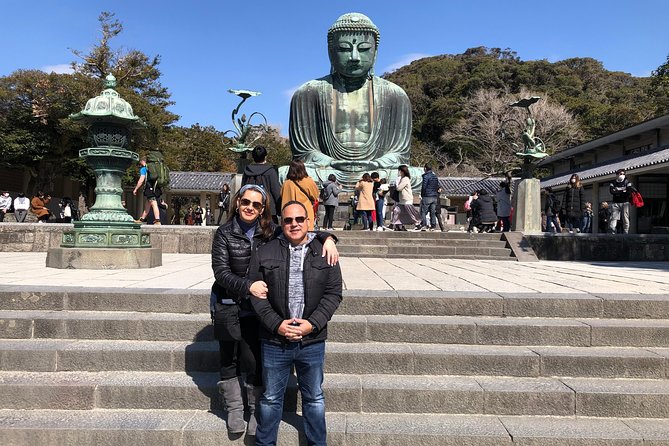
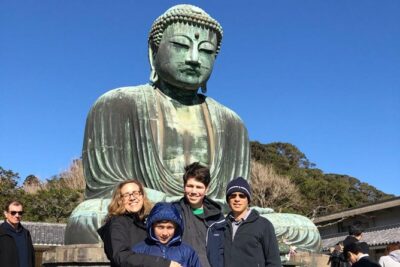
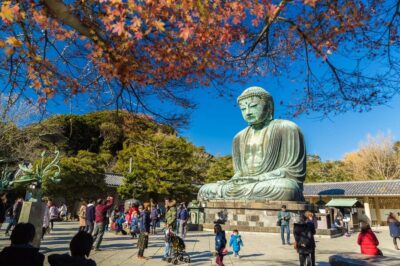
For many first-time visitors, the Great Buddha is the must-see. The bronze Amida Buddha at Kotoku-in measures 11.4 meters high and has long been Kamakura’s second-tallest Buddha after the statue at Todaiji in Nara.
The scale is the point. Even a short visit gives you a memorable visual anchor, and a guide can explain the statue’s religious meaning rather than leaving you with only a photograph. The listed visit is about 10 minutes, which is enough for a quick look but not much more.
Admission is extra. That is easy to overlook because some itinerary entries show no ticket cost while the Great Buddha and many temples list admission as not included. Budget for entrance tickets separately, and remember that the guide’s entry fees are covered only for sights specifically listed in the expected stops, not your own admissions.
If you want the Great Buddha, tell the guide early. It is one of the clearest priorities for a first visit, and pairing it with Hasedera makes geographic sense.
A few more Kamakura half-days to weigh up
- Tokyo: Kamakura & Enoshima Day Trip including Temple Tickets
★ 4.5 · 1,375 reviews - From Tokyo: Kamakura & Enoshima 1-Day Bus Tour
★ 4.5 · 189 reviews - Kamakura Historical Walking Tour with the Great Buddha
★ 5.0 · 129 reviews - Kamakura Private Tour: Temples, Nature, and the Great Buddha
★ 5.0 · 121 reviews
Hasedera and the view above Kamakura
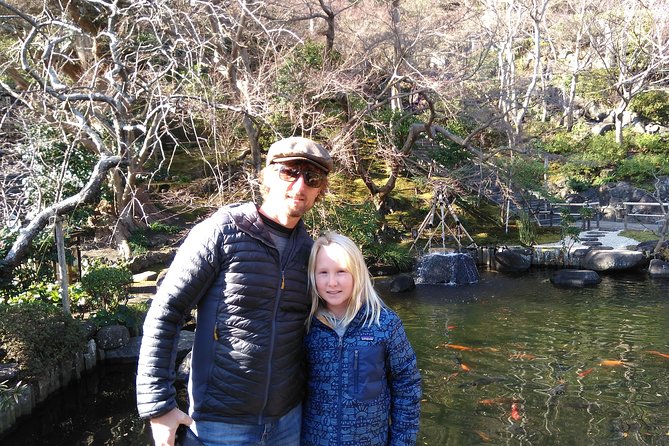
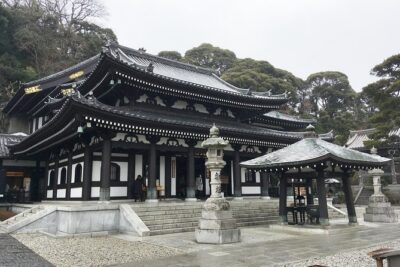
Hasedera is known for its eleven-headed Kannon, a 9.18-meter gilded wooden statue associated with mercy. The temple also offers a high viewpoint over Kamakura, making it a good match for visitors who want both religious art and scenery.
The climb and slopes deserve attention. The tour description highlights the view from the highest point, but the scheduled stop is only about five minutes. That is a very short official estimate for a temple where you may want time to look around, take photographs, and absorb the setting.
Hasedera is best for you if you enjoy gardens, religious sculpture, and a little uphill walking. It may be less suitable as a rushed stop for anyone with mobility concerns or a strong wish to explore every corner. The experience is private, so discuss pace and stairs before setting the route.
Hokokuji’s compact bamboo grove
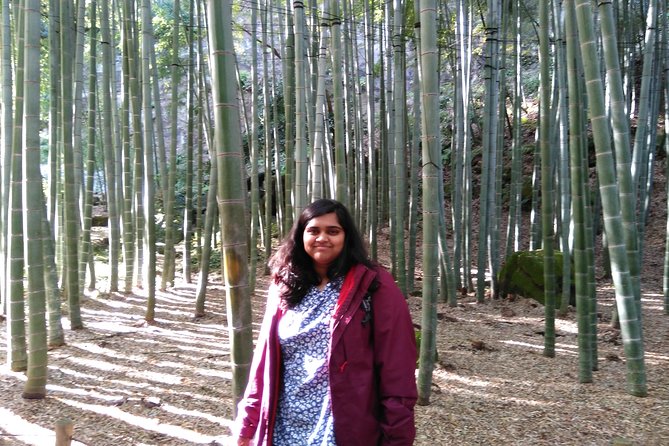
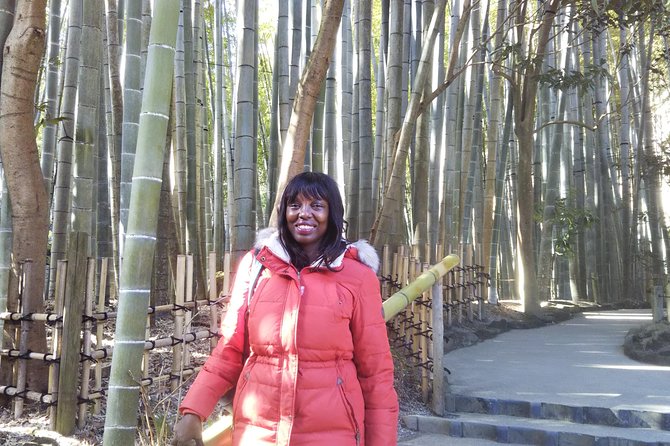
Hokokuji is a small temple famous for its bamboo grove of more than 2,000 dark green stalks. Narrow paths pass through the grove behind the main hall, and the setting feels very different from the open approach to Tsurugaoka Hachimangu or the broad view at the Great Buddha.
The listed time is about 15 minutes, with admission extra. That makes Hokokuji an efficient choice if you want a distinct visual stop without committing half a day to temple hopping. One couple also included matcha and Japanese sweets as part of its Kamakura outing, and bamboo is a natural place to ask your guide about tea customs.
The drawback is simple: a small grove can feel rushed when it is busy. You should not expect a long forest walk. Choose it for atmosphere, photographs, and a short cultural pause.
Kita-Kamakura’s Zen temple route
If quiet temple grounds matter more to you than famous landmarks, ask about the Kita-Kamakura area. Engakuji, Kenchoji, Jochiji, Tokeiji, Jufukuji, and Eishoji each offer a different angle on Zen and Kamakura’s religious past.
Engakuji is ranked second among Kamakura’s five great Zen temples and was founded in 1282 by the regent Hojo Tokimune. Kenchoji is ranked first and was founded in 1253, making it the oldest Zen temple in Kamakura. These are not interchangeable stops, even if a short tour may force you to choose one.
Jochiji is ranked fourth, while Jufukuji is third. Tokeiji is a small branch temple of the Engakuji school, and Eishoji is the only surviving nunnery in Kamakura. Those details give your guide useful material for explaining how different Buddhist schools and temple networks fit together.
A guide can also help you decide based on mood. Engakuji and Kenchoji suit a first visit focused on major temples. Jochiji, Tokeiji, Jufukuji, or Eishoji may suit you better if you want a quieter, more specific stop. Entry fees are extra at these temples.
Small temples for a slower pace
Kamakura has plenty of lesser-known choices on the list, and a private tour lets you favor them if you have already seen the famous sights.
Zeniarai Benten is known for coin washing. The shrine’s name refers to washing money, and local belief says money washed in its spring will multiply. It is free to enter and takes about 15 minutes in the suggested plan, making it an easy addition for visitors who enjoy unusual customs.
Meigetsuin is called the Hydrangea Temple because hydrangeas bloom across its grounds. It belongs to the Rinzai Zen sect and dates to 1160. Seasonal flowers can shape the appeal, so ask your guide how the current conditions may affect your visit. Admission is extra.
Ankokuronji and Myohonji are Nichiren temples in the southeastern hills. Ankokuronji is tied to Nichiren’s arrival in Kamakura around 1253, while Myohonji was founded in 1260. These stops are better for you if you want religious context and wooded temple approaches instead of only the city’s headline sights.
Jomyoji and Zuisenji lie in the eastern hills. Jomyoji is the fifth of Kamakura’s five great Zen temples, while Zuisenji sits at the back of a narrow valley surrounded by wooded hills. Both require admission, and the short suggested times mean you should choose them for a focused visit, not a long ramble.
Hiking trails, Enoshima, and the coast
The city is surrounded by the ocean to the south and wooded hills elsewhere. Hiking trails connect temples through those hills, and a short trail segment can add fresh air and a change of pace to a temple-heavy itinerary.
The suggested hiking stop is about 15 minutes and free. That is enough for a taste, not a serious hike. Be clear with your guide if you want walking through the woods, since trails and temple routes may affect how many other sites fit into the four hours.
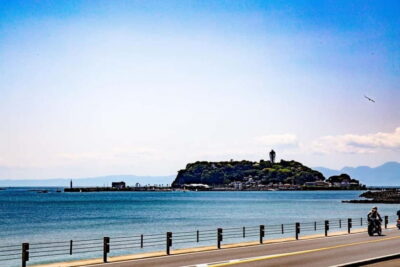
Enoshima offers another type of Kamakura outing. The island is a short train ride west and is linked to the mainland by a bridge. It has a shrine and other attractions, with free entry listed for the stop itself.
Enoshima is a good choice if you want the coast, a little more movement, and a break from temples. Hiro helped one family add the beach and Enoshima to its plan, along with a local restaurant and explanations of Shinto and Buddhist practices. The tradeoff is time. A train ride to the island and back leaves less room for central Kamakura sights.
How much can you really see in four hours
The biggest planning mistake is trying to select too much. The full menu includes 18 possible stops, but the tour allows two or three activities. The individual time estimates range from five to 15 minutes, and those figures do not turn the entire list into a realistic route because trains, walks, lines, and temple entrances take time.
For a first visit, I would build one of these simple plans:
- Classic Kamakura: Tsurugaoka Hachimangu, the Great Buddha, and Hasedera.
- Temple and bamboo: The Great Buddha, Hasedera, and Hokokuji.
- Zen focus: Kita-Kamakura with Engakuji and one smaller Zen temple.
- Coast and culture: One major temple, the beach, and Enoshima.
- Quiet and seasonal: Meigetsuin, Zeniarai Benten, or a southeastern temple, depending on opening conditions and your interests.
The best plan depends on your starting point and how much walking you want. Tell the guide your top priority, your walking pace, and any food requests before the meeting. Guides have arranged restaurant stops, traditional meals, matcha activities, and train help for past groups, but lunch and all personal costs are extra.
Guides who add value
The guide quality is the main reason to pay for this experience instead of going alone. The overall score is 4.9 from 58 ratings, with 100 percent recommending it, and the strongest praise centers on patience, flexibility, local explanations, and help with transport.
Shinji is a particularly good fit for families or anyone worried about delays. He has been patient with children, handled late trains, and added a matcha and Japanese sweets workshop for one family. An has helped with trains and restaurant suggestions while explaining temples in a warm, personal way.
Hiro is a strong match for families who want conversation as well as sightseeing. He helped a child practice Japanese, discussed Shinto and Buddhism, and included a traditional floor-level restaurant meal at the family’s request.
Mr. Goto is worth requesting if available when clear English and visual explanation matter to you. He used a booklet of images to explain history and religious symbols, answered many questions, and allowed a photographer time to work.
The supplier is Japan Guide Agency, and the guide assigned to you may be someone else. English ability can vary. One person found the guide friendly and flexible but wished communication in English had been stronger. If detailed historical discussion is important, state that when booking and ask about guide availability.
Price, inclusions, and practical value
At $108.99 per person, this is not the cheapest way to see Kamakura. You still pay for public transport, admissions, lunch, and personal expenses, and the tour does not include a private vehicle.
The value comes from time and judgment. If you are comfortable navigating Japanese trains, reading temple maps, and choosing two or three sites yourself, you can spend less independently. If you have only one Kamakura visit, a family group, older relatives, a photographer, or a strong interest in religious detail, the guide can prevent wrong turns and help you use the short day well.
Group discounts may improve the per-person cost for larger parties. The tour is private, and you cannot combine multiple tour groups. Most people can participate, and service animals are allowed. Since this is a walking experience, plan for ordinary city walking, temple paths, and possible hills.
Free cancellation is available up to 24 hours before the start time for a full refund. Cancellations or changes inside that window are not accepted for a refund.
Who should book this Kamakura tour
Book it if you want a personal route rather than a bus tour. It is especially useful for first-time visitors, families, older groups who need a flexible pace, photographers, and anyone who wants a guide to explain Shinto, Buddhism, samurai connections, and local customs in plain language.
It also suits a short Tokyo or Yokohama stay when you cannot afford to lose an hour to transport confusion. The station meeting point and public transit format keep the outing grounded in real Japanese travel rather than sealing you inside a vehicle.
Skip it if you want a long hike, a full-day temple crawl, or a no-cost outing. The four-hour limit is firm enough that you may feel the day ended early if your group moves fast. Set your priorities before you meet the guide, and ask about the exact pickup point, admissions, and guide language ability.
Should you book it?
I would book this tour for a first Kamakura visit when the Great Buddha, Hasedera, and one carefully chosen third stop are enough. The private guide format earns its price through flexible pacing, train help, and explanations that turn attractive temples into meaningful places.
I would not book it expecting to cover the entire city. Choose two or three sights, tell the guide what matters most, and leave room for walking between them. Done that way, this is a practical and personal introduction to Kamakura, with enough choice to fit a family, a photographer, a temple fan, or someone who simply wants to see the coast and eat well.
FAQ
How long is the Kamakura tour?
The experience lasts approximately four hours.
Is the tour private?
Yes. Only your own group participates, and multiple tour groups cannot be combined.
Where do I meet the guide?
The standard arrangement is an on-foot meetup with the guide within the designated Kamakura area, commonly near Kamakura Station. The tour information also mentions pickup, so confirm the exact meeting arrangement before booking.
How many sights can I choose?
You can customize the tour around two or three sites from the listed options.
What attractions can I request?
Options include Tsurugaoka Hachimangu Shrine, the Great Buddha at Kotoku-in, Hasedera Temple, Hokokuji Temple, hiking trails, Enoshima, Engakuji, Kenchoji, Zeniarai Benten, Meigetsuin, Ankokuronji, Jomyoji, Zuisenji, Myohonji, Jochiji, Tokeiji, Jufukuji, and Eishoji.
Is transportation included?
No. The tour uses public transportation and walking, but transportation fees are not included. Private transportation is also not included.
Are entrance fees included?
No, your entrance fees are not included. The guide’s entry fees are covered only for sights listed under the expected stops.
Is lunch included?
No. Lunch and other personal expenses are not included. You can discuss a restaurant request with your guide.
Can children and older adults join?
Most travelers can participate, and the tour is private, so your guide can adjust the pace to your group. It remains a walking tour, with some temple and hill routes requiring care.
What is the cancellation policy?
You can cancel at least 24 hours before the local start time for a full refund. Cancellations or changes made less than 24 hours before the start time are not accepted for a refund.
Just added around Kamakura
- When Emperors Reigned and Shoguns Ruled★ 5.0 · 43 reviews
- First time in Kamakura? Enjoy a Tour of All Must-sees!★ 5.0 · 15 reviews
- Your Own HANKO Name Seal Activity in Kamakura.★ 5.0 · 24 reviews
- Kamakura Bamboo Forest and Great Buddha Private Tour★ 5.0 · 12 reviews
- Kamakura Walking Tour – The City of Shogun★ 5.0 · 100 reviews
- Exciting Kamakura – One Day Tour from Tokyo★ 5.0 · 40 reviews
- Kamakura Tours Half Day or Full Day Tours with a local guide.★ 5.0 · 12 reviews
- Buddha, Bamboo & Zen – Bespoke Kamakura Private Walking Tours★ 5.0 · 25 reviews
Kamakura Tours, compared.
Kamakura & Enoshima Day Trip including Temple Tickets
Read our review →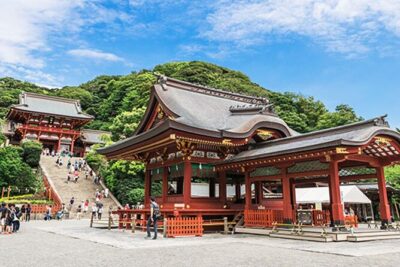
Kamakura Historical Walking Tour with the Great Buddha
Read our review →
Kamakura Private Tour: Temples, Nature, and the Great Buddha
Read our review →
Kamakura Full Day Tour with a Local Expert Guide
Read our review →
Browse the lists this tour appears in