
Reviewed · KAMAKURA TOURS
First time in Kamakura? Enjoy a Tour of All Must-sees!
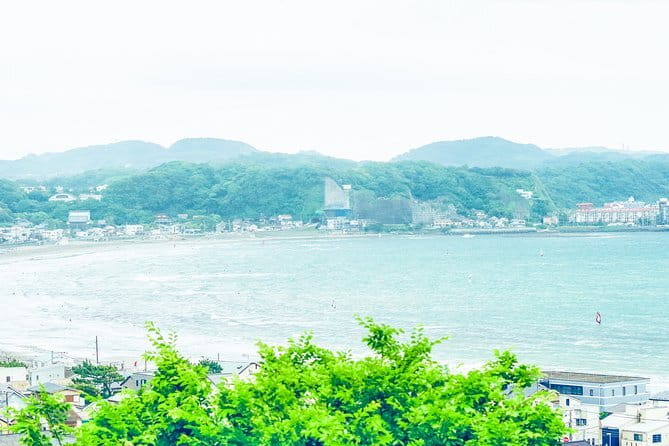
Kamakura packs temples, shrines, gardens, food stalls, and a giant bronze Buddha into one very walkable historic town. This private seven-and-a-half-hour tour takes you from quiet temple gardens to Komachi Street and the coast-facing Hasedera area, giving you a useful first look at the city without forcing you to plan every train and stop yourself.
I like the one-guide-to-one-group format, especially for a first visit. I also like the mix of major sights and local food time: you get the Great Buddha and Tsurugaoka Hachimangu, but also a chance to ask where to eat along Komachi Street. The main drawback is the pace. You will walk a lot, admission fees and food cost extra, and seven stops can feel tiring before the day is over.
Key points to know before booking
- Seven major stops in one day: The route includes Jomyo-ji, Hokoku-ji, Komachi Street, Tsurugaoka Hachimangu, Meigetsuin, the Great Buddha, and Hasedera.
- A genuinely private setup: Only your group takes part, so you can ask questions and request small changes without keeping up with strangers.
- Food time is built in: Komachi Street gives you a chance to sample Kamakura specialties and ask your guide for eating suggestions.
- Expect extra costs: The tour price is $143.71 per person, while about 5,300 yen per person is estimated for transport, admissions, and a meal, plus an optional 660 yen cost.
- Walking is a major part of the day: Comfortable clothing and shoes are essential.
- Guide quality matters: Akira, Yoshi, and Rumi are named in past tour experiences, with praise for patience, preparation, and local knowledge.
Why this route works for a first day in Kamakura
Kamakura is easy to underestimate. On a map, the temples and shrines can look close together, but the day involves trains or local transport, station changes, temple grounds, slopes, stairs, and time spent finding the right entrance. A guide removes much of that friction.
This route also gives you a broad sample of Kamakura. You see a tea garden, a bamboo grove, a shopping street, a major Shinto shrine, a hydrangea temple, a famous Buddha, and a flower-filled temple complex. It is not a slow, single-theme visit. It is a survey of the town’s main sights.
That makes the tour useful if you have only one day in Kamakura or want to decide which places deserve a return visit. You will not get unlimited time at every temple, but you will leave with a clear sense of the town’s character.
The day starts at 9:00 a.m. outside Kamakura Station and ends back at the same meeting point. The meeting point is near public transportation, but you should arrive early. If your train is late and you miss the start, the guide may not be able to provide the full route.
A few more Kamakura half-days to weigh up
- Tokyo: Kamakura & Enoshima Day Trip including Temple Tickets
★ 4.5 · 1,375 reviews - From Tokyo: Kamakura & Enoshima 1-Day Bus Tour
★ 4.5 · 189 reviews - Kamakura Historical Walking Tour with the Great Buddha
★ 5.0 · 129 reviews
Jomyo-ji begins the day with matcha and a garden
The first stop is Jomyo-ji Temple, with about 40 minutes planned. Its appeal is calm rather than spectacle. You can sit with matcha and look across a Japanese garden, making this a gentle opening before the busier parts of the day.
The matcha experience is a meaningful touch because it gives you more than a quick photograph. You have a chance to pause and notice the design of the garden, the quiet of the temple setting, and the simple rhythm of Japanese tea culture.
Admission is not included, and the supplied cost estimate lists entrance fees separately. Ask your guide early in the day how the payments will be handled, and carry cash because some stops do not accept credit cards.
Forty minutes is enough for a look and a drink, but not for an unhurried stay. If gardens are your main interest, you may wish the schedule allowed more time here.
Hokoku-ji offers Kamakura’s bamboo pause
Hokoku-ji is next, with about 20 minutes planned. The temple is known for its bamboo grove, described as containing roughly 2,000 bamboo plants. The tall green stalks create a very different mood from the open shrine approaches and shopping streets later in the day.
This is one of the easiest places on the route to appreciate in a short visit. You walk into a compact, enclosed setting and quickly get the visual effect. It is also a strong photo stop, though the limited time means you should avoid lingering too long if you want to keep the day on schedule.
Admission is extra. The stop pairs well with Jomyo-ji because both offer garden-focused experiences, but they do not feel identical. Jomyo-ji is about tea and a composed garden view. Hokoku-ji is about the height, texture, and shade of the bamboo.
Komachi Street is your best food and shopping break
The tour then moves to Kamakura Komachidori, the street running between Kamakura Station and Tsurugaoka Hachimangu. About one hour is set aside here, and this is where the tour becomes most useful for anyone who wants help choosing what to eat.
Komachi Street is lined with restaurants and souvenir shops. Some local foods are associated closely with Kamakura and may not be easy to find elsewhere, so this is a good place to ask your guide for direct suggestions instead of choosing at random.
The tour does not cover your meal. The estimated food cost is 1,000 yen per person, though your actual spending depends on what you choose. You may want to save some appetite for this stop rather than eating before the tour begins.
One hour is enough to browse and have a light meal, but it is not a long shopping session. If you want a slow look at every shop, you may need to return after the tour. The private format helps here: if you have dietary concerns or want a certain kind of snack, you can explain that to your guide.
Same base, a completely different sort of day:
- Kamakura Private Tour: Temples, Nature, and the Great Buddha
★ 5.0 · 121 reviews - Kamakura Walking Tour – The City of Shogun
★ 5.0 · 100 reviews - Kamakura 4hr Private Trip with Government-Licensed Guide
★ 5.0 · 58 reviews - When Emperors Reigned and Shoguns Ruled
★ 5.0 · 43 reviews
Tsurugaoka Hachimangu brings the grand scale
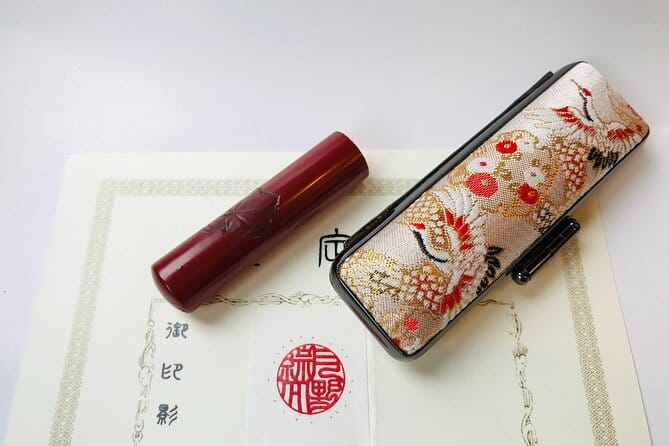
Tsurugaoka Hachimangu receives about 45 minutes. This is Kamakura’s major shrine, with more than 1,000 years of history and strong links to the samurai government that ruled from Kamakura. The shrine was worshiped by the Genji during the Kamakura era, giving the site an important connection to the city’s political past.
The scale changes the feel of the morning. After the smaller gardens and bamboo grove, you encounter a broader religious complex with a major approach and open spaces. A guide can help explain the difference between this Shinto shrine and the Buddhist temples elsewhere on the route.
There is no admission charge listed for this stop. Even so, remember that some areas visited during the day require payment, and the full estimated admission total is separate from the booking price.
The planned 45 minutes should let you see the main parts without turning the stop into a long visit. If you want time for quiet prayer, detailed photographs, or every side path, the schedule may feel tight.
Meigetsuin rewards a slower eye

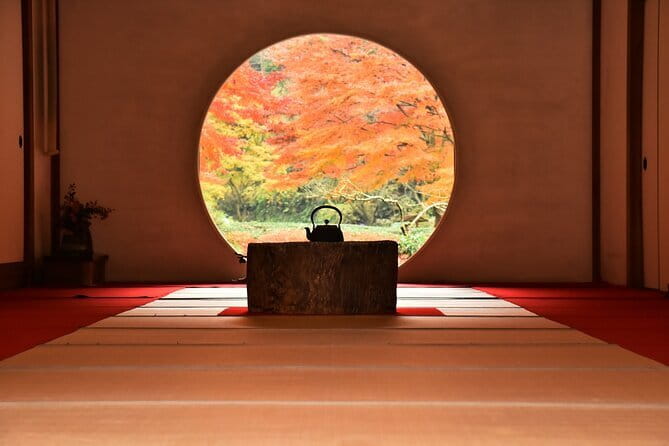
Meigetsuin, often called the Hydrangea Temple, gets about 30 minutes. Its best-known feature is a large round window framing a garden. The effect depends on stillness and careful looking, not a long list of attractions.
This may become one of your favorite stops if you enjoy garden composition and restrained temple spaces. One past experience particularly singled out Meigetsuin as a favorite, along with the Great Buddha. The temple is also famous for hydrangeas, although the appeal of the flowers depends on the season.
Admission is extra. Thirty minutes gives you time to see the round window and the main garden view, but it is a short visit for anyone interested in plants or seasonal details.
This is another place where a guide can add value by explaining what you are looking at and why the window matters. One useful caution: one experience found the guide quiet and mostly reactive, answering questions rather than offering a steady flow of information. If you want more explanation, ask direct questions as you go.
The Great Buddha is the day’s visual anchor
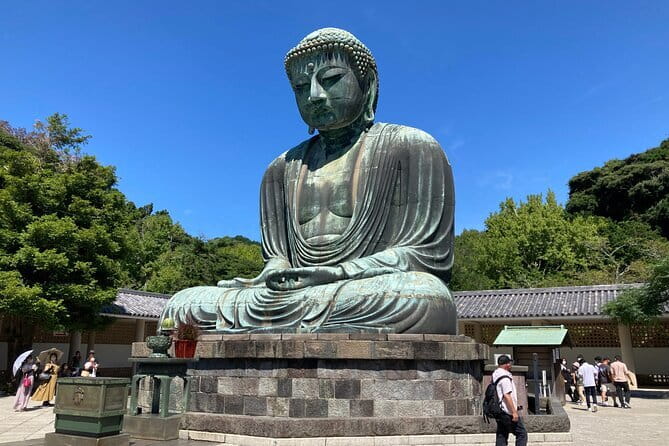
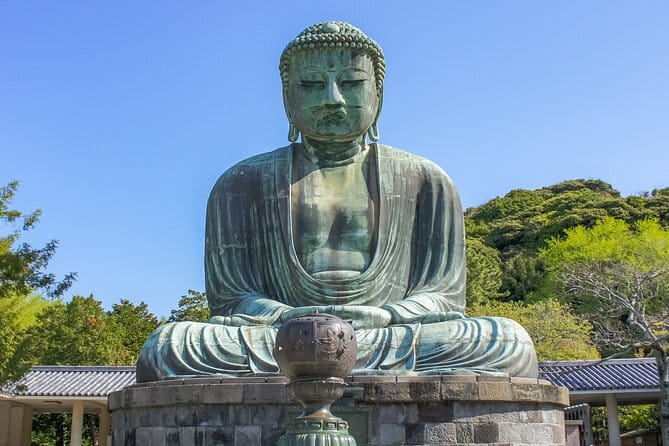
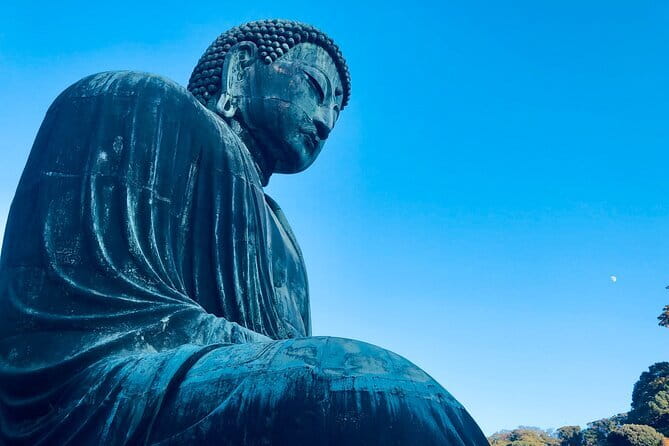
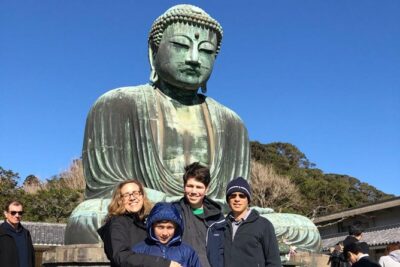
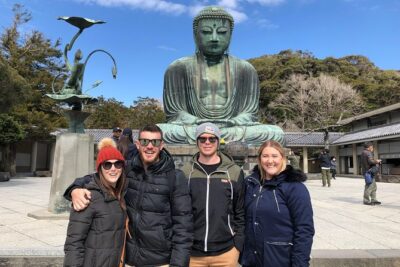
Kotoku-in is home to the Great Buddha of Kamakura, a bronze statue more than 11 meters tall. About 35 minutes is planned here, making it one of the most important stops despite its short duration.
The scale is immediately impressive, and the statue gives the day a clear centerpiece. You can also go inside the Buddha, an optional experience with a listed cost of 660 yen per person. That small add-on is worth considering if you enjoy unusual architectural details and want more than an exterior photograph.
Admission to Kotoku-in is not included. The statue is a major draw, so the grounds can feel like a quick stop when you might prefer to stay longer. Still, 35 minutes is enough to see the statue, consider the setting, and decide if you want the optional interior visit.
The Great Buddha also helps break up the temple and garden sequence. After several detailed sites, this is a straightforward, powerful sight that does not need much decoration.
Hasedera closes with flowers, views, and uphill walking
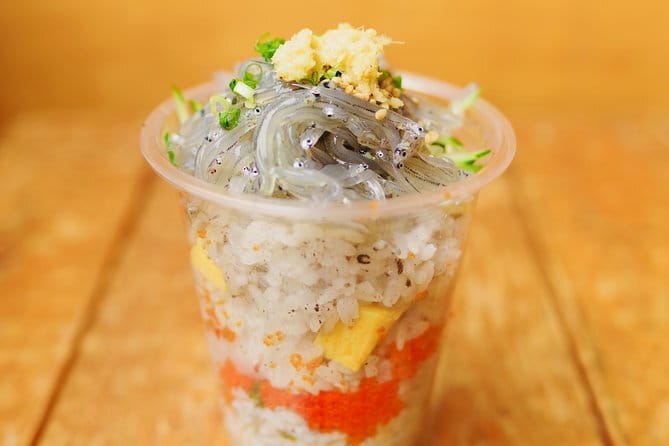
Hasedera gets the final 45-minute visit. It is also called the Flower Temple because plants provide interest throughout the year. The grounds are large, and the route includes climbing as you walk through the complex.
This is a good final stop because it combines religious buildings, gardens, seasonal plants, and movement. You are not simply standing in front of one object. You walk through a varied temple setting and see several different areas.
The drawback is fatigue. By this point, you have already covered six stops, shopping, food, and transport. Hasedera’s climb can feel demanding if you are not used to walking for most of a day. Wear shoes with firm soles and avoid treating this as a dressy outing.
Admission is extra. Because the temple is large, 45 minutes may feel brief, especially if you want to explore every garden area. The route gives you an introduction, not an exhaustive visit.
What the private guide changes
A private tour is most valuable here because Kamakura has many small decisions. You may need help choosing between food stalls, understanding temple customs, keeping track of admission costs, and adjusting the order when weather or closures affect the route.
The named guides in past experiences include Akira, Yoshi, and Rumi. Akira was praised for answering questions and making special accommodations for an unusual travel situation. Yoshi arrived with a printed itinerary, explained the day at the start, waited patiently when a train was delayed, and adjusted the plan when asked. Rumi was praised for explaining the temples and shrines.
Those details point to the best use of the private format: speak up. Tell your guide if you want more history, more food time, fewer shops, or a slower pace. One experience found the guide too quiet, so do not assume every guide will fill every minute with commentary without prompting.
The tour is private for your group only. It does not include a private van, pickup, or drop-off service. Transportation happens through public transit or other arrangements covered by the day’s estimated expenses.
The real price is higher than $143.71
The listed booking price is $143.71 per person. That covers the private guide and the guide’s necessary tour expenses, but it does not cover everything you will spend during the day.
The estimated additional cost is 5,300 yen per person, broken down as:
- 900 yen for transportation
- 2,650 yen for admission fees
- 1,000 yen for a meal
- 660 yen for an optional experience
The optional 660 yen appears to relate to an add-on such as entering the Great Buddha. Confirm the exact use with the provider before booking if this matters to your budget.
That makes the value question fairly simple. For one person or a couple, the total can feel high compared with using public transport and visiting independently. For a family or small group, the private guide cost may make more sense, especially when group discounts apply and you value having one person manage the route.
You are paying for time saved, private attention, local food suggestions, and the ability to ask for adjustments. You are not paying for luxury transport or all-inclusive entry. Since the tour does not include a private van, hotel pickup, meals, or admissions, budget beyond the headline price.
Walking, weather, and cash need attention
Wear comfortable clothes and shoes. The schedule includes temple grounds, station-to-site walking, public transportation, and climbing at Hasedera. The tour is not designed for a slow, seated day.
Bring cash. Some places do not accept credit cards, and you may need cash for admissions, food, transport, or small purchases. The provider specifically warns that customers cover costs incurred at the sites.
Weather can change the plan. If conditions are poor, transportation, destinations, and routes may be changed. Temporary closures can also lead to replacement stops. That flexibility protects the day, but it means you should not treat every stop as guaranteed in every circumstance.
The experience starts at 9:00 a.m. at Kamakura Station and returns there. Confirmation is sent within 48 hours of booking, subject to availability. Free cancellation is available until 24 hours before the start time. After that point, the payment is not refunded, and late changes are not accepted.
Who should book this Kamakura tour?
I would choose this tour if you are visiting Kamakura for the first time, have one main day available, and want someone else to organize a full route. It is especially useful for families, small groups, and anyone who wants a private guide rather than a large scheduled group.
It also suits you if food is part of your sightseeing. The Komachi Street stop is not just a quick pass through a shopping road. It gives you a practical chance to ask about local dishes and choose where to spend your meal money.
I would hesitate if you prefer long, quiet visits at each temple. Seven stops in 7.5 hours is a lot. Independent visitors who already know Kamakura may prefer choosing two or three sites and staying longer.
The tour has a 4.8 rating, with 100 percent recommending it, but the most useful takeaway is more specific: guides can make the day smoother, yet the experience depends partly on how actively you engage. Ask questions, request adjustments, and be honest about your walking pace.
FAQ
Where does the tour start and finish?
The tour starts at Kamakura Station at 9:00 a.m. The activity ends back at the same meeting point.
How long does the tour last?
The tour lasts approximately 7 hours and 30 minutes.
Is this a private tour?
Yes. Only your group participates, and a private guide is included.
Does the price include admission fees?
No. Admission fees are not included. The estimated admission cost is 2,650 yen per person.
Is food included?
No. Meal costs are separate. The estimated meal cost is 1,000 yen per person.
Is transportation included?
The guide’s necessary tour expenses are included, but your own transportation costs are not. The estimated transportation cost is 900 yen per person. A private van is not included.
Do I need to bring cash?
Yes, you should bring cash because some of the places visited do not accept credit cards.
Can I cancel for a full refund?
You can cancel for a full refund up to 24 hours before the experience start time. Cancellations or changes made less than 24 hours before the start are not accepted for a refund.
Should you book it?
Book this tour if you want a well-packed first look at Kamakura, personal guide attention, and help with local food choices. The strongest reasons are the private format, the range of sights, and the patient, prepared service reported from guides such as Yoshi, Akira, and Rumi.
Skip it if you want to set your own slow pace or keep costs as low as possible. The walking is substantial, several fees come later, and each stop gets a limited window. For a first-time visit with only one day, though, this is a practical way to see Kamakura’s essential sights without spending your morning sorting out the route yourself.
Just added around Kamakura
- When Emperors Reigned and Shoguns Ruled★ 5.0 · 43 reviews
- Your Own HANKO Name Seal Activity in Kamakura.★ 5.0 · 24 reviews
- Kamakura Bamboo Forest and Great Buddha Private Tour★ 5.0 · 12 reviews
- Kamakura 4hr Private Trip with Government-Licensed Guide★ 5.0 · 58 reviews
- Kamakura Walking Tour – The City of Shogun★ 5.0 · 100 reviews
- Exciting Kamakura – One Day Tour from Tokyo★ 5.0 · 40 reviews
- Kamakura Tours Half Day or Full Day Tours with a local guide.★ 5.0 · 12 reviews
- Buddha, Bamboo & Zen – Bespoke Kamakura Private Walking Tours★ 5.0 · 25 reviews
Kamakura Tours, compared.
Kamakura & Enoshima Day Trip including Temple Tickets
Read our review →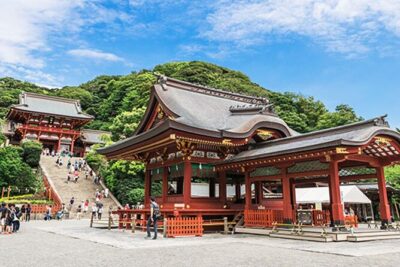
Kamakura Historical Walking Tour with the Great Buddha
Read our review →
Kamakura Private Tour: Temples, Nature, and the Great Buddha
Read our review →
Kamakura 4hr Private Trip with Government-Licensed Guide
Read our review →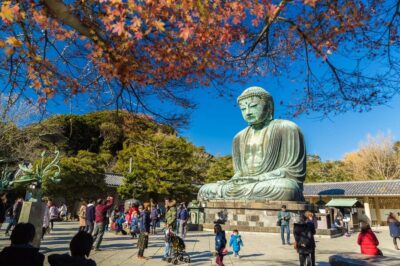
Kamakura Full Day Tour with a Local Expert Guide
Read our review →
Browse the lists this tour appears in