
Reviewed · TAKAYAMA TOURS
Knife Making Experience in Samurai Sword Town
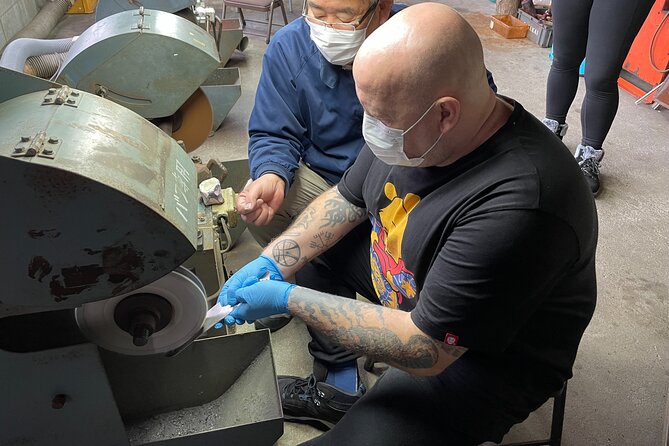
Seki is Japan’s sword town, and this experience lets you work with steel instead of simply looking at it behind glass. With Sumio, Yoshi, and Hiro guiding you, you polish, sharpen, engrave, and assemble a personal Damascus kitchen knife, then test it on fresh vegetables.
I like the small-group attention and the way the day links hands-on craft with Seki’s sword history. The signed certificate, Japanese lunch, and limited-time mini knife souvenir add real value. The main consideration is price: at $316.27 per person, this is a serious splurge for a five-hour outing.
Key points at a glance
- Make a working Damascus kitchen knife: You handle the polishing, sharpening, engraving, and assembly rather than watching a demonstration only.
- Learn from veteran bladesmiths: Sumio, Yoshi, and Hiro bring more than 50 years of experience to the instruction.
- Explore Seki’s sword tradition: The Swordsmith Museum explains why this Gifu city became a major center for Japanese sword making.
- See today’s cutlery trade: Gifu Cutlery Hall presents Seki’s modern production and long metalworking tradition.
- Take home useful keepsakes: Your knife comes with a signed certificate, and a handcrafted mini knife is included while supplies last.
- Finish with local culture: Seki Zenko-ji Temple adds a quieter historical stop after the workshop.
Why Seki is the right place to make a Japanese knife
Seki City began making swords as early as the 13th century. That long connection to blades still shapes the town, but Seki is not only a place for samurai stories. It is also one of Japan’s major cutlery-producing areas, with the highest cutlery production volume in Japan.
That makes the setting important. You are not taking a generic craft class in a tourist district. You are making a knife in the city where swordsmithing helped form a living metalworking tradition.
The activity begins at Sekitomioka Station in Gifu Prefecture at 10:30 a.m. It ends back at the same meeting point. The outing lasts about five hours, and pickup is offered. If you are coming from Kyoto, the activity information estimates roughly 1.5 to 2 hours by train, so this works best as a planned day trip rather than a casual add-on.
More Samurai and Ninja Experiences in Takayama
- Ninja Experience in Takayama – Basic Course
★ 5.0 · 62 reviews - Seki: Samurai Knife Making Experience at the Knife Museum
★ 5.0 · 61 reviews - Ninja Experience in Takayama – Basic Course
★ 4.6 · 59 reviews
The knife workshop: two hours with steel, tools, and patient instruction
The main event takes place at the Knife Museum. The museum displays unusual knives from around the world, giving you a quick sense of how many forms a blade can take before you begin your own work.
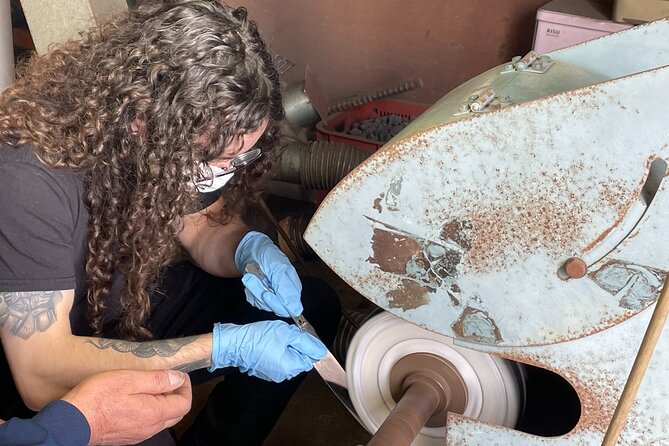
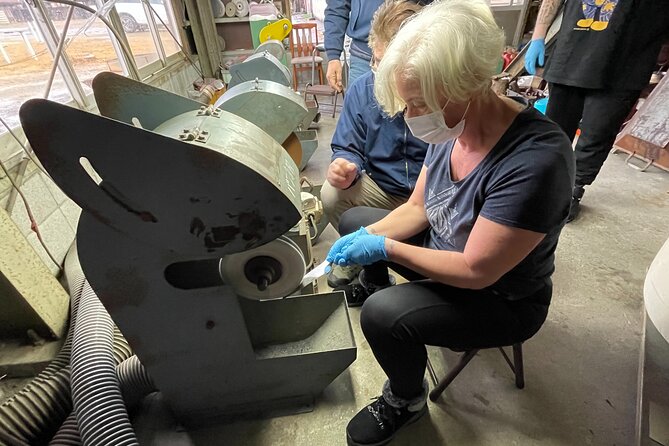
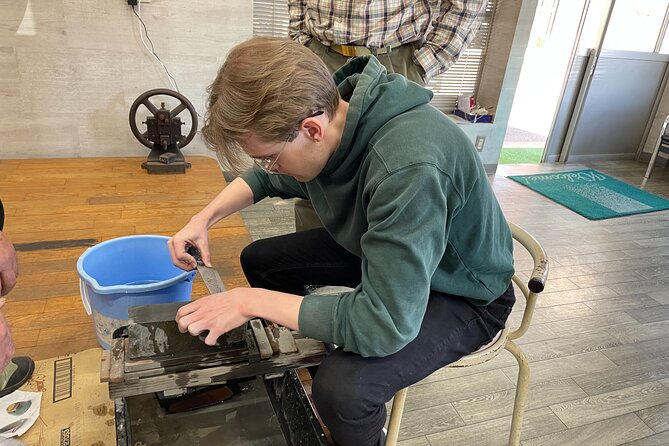
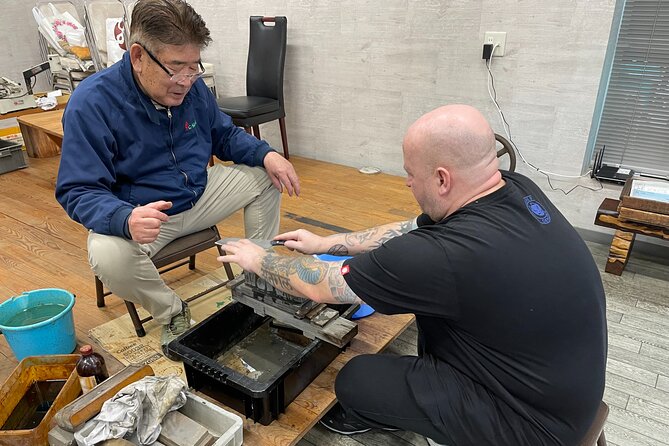
The making session focuses on a professional-style Damascus kitchen knife. Damascus steel is known for its layered appearance, so the finished blade should have a distinctive pattern rather than a plain, single-color surface. Your role is hands-on. You sharpen and polish the blade, add engraving, and help with assembly.
That order matters. A knife class can sometimes mean decorating an already finished object. Here, the work is tied to the knife’s final function. You are not simply painting a handle or stamping your name on a souvenir. You are shaping the finish and edge of a tool you can use in your kitchen.
Sumio, Yoshi, and Hiro guide the process. The instruction is clear, and the small-group format means you can get help when a step needs care. One useful detail from the experience is that the two brothers, Sumio and Yoshi, are especially passionate about knife making. Their humor and easy manner help keep the workshop from feeling stiff or overly formal.
You should expect to work carefully rather than rush. Sharpening and polishing reward patience, and engraving is a personal touch that makes the knife your own. At the end, you test the blade’s sharpness on fresh vegetables. That simple test gives the class a satisfying finish because you see the result in practical use.
The workshop is listed as two hours, with admission included. For anyone who likes cooking, tools, design, or traditional craft, this is the part that justifies the high price. You leave with an object made through your own effort, not just something selected from a shop shelf.
A Japanese lunch breaks up the workshop
A Japanese lunch is included during the experience. The supplied details do not specify the menu, so you should not book this expecting a particular dish or restaurant.
Still, lunch has practical value in a five-hour activity. It gives you a pause between the workshop and the remaining visits, and it keeps the day from feeling like one long block of instruction. It is also part of the appeal for someone who wants a cultural outing rather than a strictly technical knife class.
If food allergies or dietary needs matter to you, confirm arrangements with MOST JAPAN before booking. The available information confirms lunch, but not special menu options.
The Seki Swordsmith Museum puts the craft into context
After the workshop, you visit the Seki Swordsmith Museum for about an hour. This is where the day’s larger story comes into focus.
The museum explains samurai and Japanese sword history, along with Seki’s role in sword production. You have already handled a blade in the workshop, so the museum visit can make the tools, techniques, and care behind Japanese metalwork easier to appreciate.
I like this pairing. If you only visit a sword museum, the craft can feel distant. If you only make a knife, you may enjoy the activity without understanding why Seki matters. Putting the two together gives you both the historical setting and a practical connection.
The museum is included in the tour price. The schedule allows one hour, enough for a focused visit without making the day feel like a museum marathon. If your main interest is the workshop, this stop adds useful context without taking over the outing.
More samurai and ninja sessions in Takayama:
- Gifu Samurai Sword Town;Japanese Damascus Knife Making Experience
★ 5.0 · 27 reviews - Ninja experience in Takayama – Special Course
★ 4.9 · 13 reviews - Tokyo: Samurai Restaurant Show Ticket with 2 Drinks
★ 4.5 · 1,307 reviews - Kyoto Samurai Experience
★ 5.0 · 1,294 reviews
Gifu Cutlery Hall shows Seki’s modern side
The 30-minute visit to Gifu Cutlery Hall is shorter and more commercial in feel. Seki is described as one of the three cutlery-producing regions in the world, and the hall shows the scale of its present-day cutlery industry.
This stop helps correct a common impression of Japanese blades. Seki is not frozen in the age of samurai. Its skills and techniques continue through modern cutlery production. The hall gives you a chance to see that broader industry after working on a single knife yourself.
Thirty minutes is enough for a quick look, but not for a long, detailed museum visit. I would treat it as a compact final stop for browsing and understanding Seki’s place in the cutlery world, not as the main reason to book the experience.
Seki Zenko-ji Temple adds a quieter finish
The final listed stop is Seki Zenko-ji Temple, with about 1 hour and 30 minutes allocated. The temple’s foundation dates to the mid-18th century. Its Great Bell and the tour of the Kaidan are noted as important features tied to Japanese history and tradition.
You can try ringing the bell, adding a simple physical moment to what has otherwise been a day of careful handwork and museum viewing. The temple changes the rhythm of the tour. Instead of ending with another display of knives, the day closes with a place of religious and cultural importance.
This is also where the schedule may feel a little full for some people. The workshop already demands concentration, and the museum visits ask you to absorb more information. If you prefer a fast-moving cultural day, the variety will suit you. If you want a long, relaxed knife-making class with no interruptions, the added stops may feel like a tradeoff.
What the $316.27 price includes
At $316.27 per person, this is not a budget activity. You are paying for several parts at once:
- About five hours of private touring for your group
- A guided Damascus knife-making session
- Admission to the Knife Museum
- Admission to the Seki Swordsmith Museum
- A Japanese lunch
- Your finished personalized knife
- A signed certificate of completion
- A handcrafted mini knife souvenir, while available
- Visits to Gifu Cutlery Hall and Seki Zenko-ji Temple
The finished knife is the key value. If you would happily spend a large amount on a quality Japanese kitchen knife anyway, the class makes the purchase more memorable and personal. You also get the story of how you polished, sharpened, engraved, and assembled it.
If you mainly want to tour museums, the cost is harder to justify. The museum visits are worthwhile, but the price makes sense because the workshop and knife are the center of the day. I would book this for the making process, with the historical stops as an added benefit.
The mini knife souvenir is described as a limited-time bonus, so do not treat it as guaranteed forever. The certificate, however, is part of the stated experience and is signed.
Group size, transport, and timing
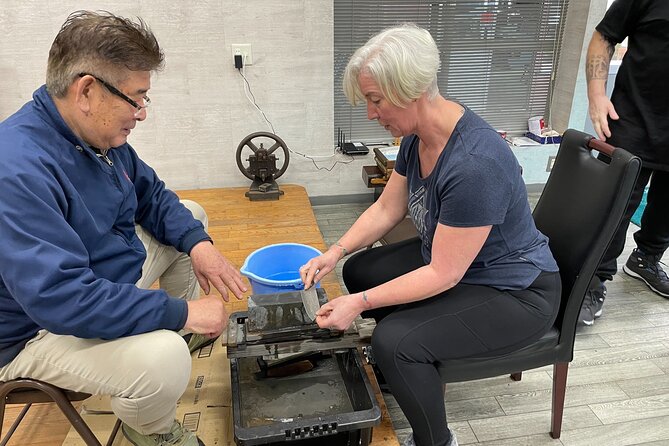
This is a private activity, meaning only your group participates. That matters in a workshop. You can ask questions without competing with a large class, and the instructors can pay closer attention to sharpening, polishing, and engraving.
The meeting point is Sekitomioka Station, Hidase, Seki, Gifu 501-3911, Japan. The activity begins at 10:30 a.m. and returns to the meeting point. Pickup is offered, but you should confirm the exact pickup arrangement when you book.
The activity is near public transportation, and most people can participate. The timing requires planning if you are coming from Kyoto, since the train journey is estimated at 1.5 to 2 hours each way. Give yourself a comfortable margin for the morning connection. Arriving late can cut into a workshop where every minute matters, even though the hosts have shown flexibility when someone was delayed.
Confirmation is provided when you book. Free cancellation is available if you cancel at least 24 hours before the local start time. Changes or cancellations made inside that window are not accepted and are not refunded.
Who will enjoy this most
I would put this high on the list for:
- People who cook and want a knife with a personal story
- Fans of samurai culture and Japanese swords
- Visitors interested in traditional crafts
- Anyone who prefers making something to collecting photographs
- Couples, families, or private groups looking for a focused cultural day
- People willing to pay more for personal instruction and a finished object
You do not need to be a knife expert. The activity is designed around guided steps, and most people can participate. Still, you should be comfortable with a hands-on craft session and willing to follow careful instructions.
This may not suit you if you want a cheap souvenir, a short demonstration, or a relaxed museum-only outing. Five hours is a substantial commitment, and the train ride from Kyoto makes it a full day. The price also makes it a poor match for anyone who is not especially interested in knives or craft.
The strongest part is the personal attention
The most consistently praised feature is the instructors’ warmth and focus. Sumio, Yoshi, and Hiro are not presented as distant demonstrators. They host the day, explain the process, share their experience, and keep the mood friendly.
That personal attention is especially useful during the knife work. Polishing and sharpening are not tasks you want to handle without guidance. The small-group setup lets you slow down, ask for help, and understand why each step matters.
The family connection between the brothers adds another layer. Their passion gives the class a sense of continuity, while Hiro helps complete the welcoming team. You get technical instruction, but also conversation and humor, which can make a demanding craft session feel more relaxed.
A few practical limits to keep in mind
The available details do not give the exact knife dimensions, handle material, steel specification beyond Damascus, or shipping rules for taking the blade home. If you are flying onward, ask the provider how to pack and transport your finished knife before you book.
The schedule also does not list the exact order of lunch in relation to the stops. The broad plan is clear, but the day may be arranged around workshop timing and local conditions.
Finally, the mini knife is a limited-time bonus. Its availability can change. Think of it as a pleasant extra, not the reason to pay for the tour.
Should you book the Seki knife-making day?
Book it if you want to make and keep a working knife, not just admire Japanese blades. The combination of a private workshop, veteran instructors, Seki’s sword museums, a Japanese lunch, a signed certificate, and a possible mini knife creates a full cultural day.
I would especially recommend it for a special occasion or for someone who already values good kitchen tools. At $316.27, the activity needs to deliver more than entertainment, and the personalized knife gives it that lasting value.
Skip it if your budget is tight, your schedule cannot handle a long day from Kyoto, or your interest in knives is only mild. For the right person, though, this is a rare chance to connect a modern kitchen tool with Seki’s centuries-old blade-making tradition, and to take home something you helped finish yourself.
FAQ
Where does the experience begin?
It begins at Sekitomioka Station in Hidase, Seki, Gifu 501-3911, Japan.
What time does the activity start?
The start time is 10:30 a.m.
How long does the experience last?
The total duration is approximately five hours.
Where does the activity end?
The activity ends back at the meeting point at Sekitomioka Station.
Is pickup available?
Pickup is offered. Confirm the specific pickup details when booking.
Is this a private tour?
Yes. Only your group participates in the activity.
What kind of knife will I make?
You will make a professional Damascus kitchen knife.
What work do I do on the knife?
You will take part in polishing, sharpening, engraving, and assembly, then test the finished blade on fresh vegetables.
What is included besides the knife workshop?
The experience includes a Japanese lunch, Knife Museum admission, Seki Swordsmith Museum admission, a signed certificate, and visits to Gifu Cutlery Hall and Seki Zenko-ji Temple.
Can I cancel for a full refund?
Yes, if you cancel at least 24 hours before the experience start time. Cancellations or changes made less than 24 hours before the local start time are not accepted or refunded.
Just added around Takayama
- Private Afternoon Cycling Tour in Hida-Furukawa★ 5.0 · 109 reviews
- Gifu Samurai Sword Town;Japanese Damascus Knife Making Experience★ 5.0 · 27 reviews
- Private-group Morning Cycling Tour in Hida-Furukawa★ 5.0 · 105 reviews
- Short Morning Cycling Tour in Hida★ 5.0 · 17 reviews
- Magome & Tsumago Nakasendo Full-Day Private Trip with Government-Licensed Guide★ 5.0 · 20 reviews
- Magome & Tsumago Nakasendo Trail Day Hike with Government-Licensed Guide★ 5.0 · 38 reviews
- Frozen fall trekking★ 5.0 · 21 reviews
- Explore Kiso Valley : Magome – Tsumago Mountain Trail Walk★ 5.0 · 33 reviews
Takayama Tours, compared.
World Heritage Shirakawa-go Morning Guided Tour
Read our review →
World Heritage Shirakawa-go & Two Local Experience
Read our review →
Kanazawa/Takayama: Shirakawago & Takayama Private Day Tour
Read our review →![Departing from Takayama [Regular sightseeing bus] World Heritage Sites Shirakawago and Gokayama Ainokura](https://media3.thejapanesetraveller.com/wp-content/uploads/departing-from-takayama-regular-sightseeing-bus-world-heritage-sites-shirakawago-and-gokayama-ainokura-400x267.jpg)
Departing from Takayama [Regular sightseeing bus] World Heritage Sites Shirakawago and Gokayama Ainokura
Read our review →
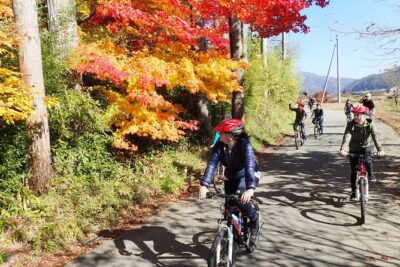
Private Afternoon Cycling Tour in Hida-Furukawa
Read our review →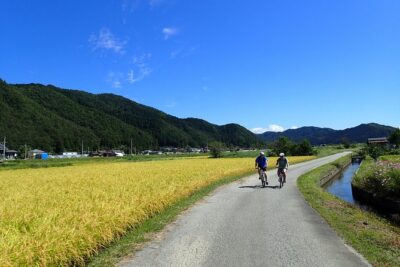
Private-group Morning Cycling Tour in Hida-Furukawa
Read our review →
Onigiri and miso soup making at a buddhist temple
Read our review →Browse the lists this tour appears in