
Reviewed · NAGOYA TOURS
Nagoya Half-day Private Custom Tour with National Licensed Guide
Nagoya’s great strength is its mix of samurai landmarks, Shinto worship, industry, and modern city life. This private four-hour tour lets you choose two or three sights instead of being pushed through a fixed route. Guides such as Todd Miura, Elvis, Toshie, Hiroshi, and Tomoko Tabata have led different outings, so your experience depends partly on the guide assigned to your date.
I like the freedom to build a route around your interests, and I like having someone explain customs at places such as Atsuta Jingu rather than simply pointing at a shrine gate. The guide can also help with subway tickets and local orientation. The catch is time: four hours disappears quickly, especially since transportation and entrance fees are extra and the tour is primarily on foot.
Key points to know before booking
- Choose two or three Nagoya sights: The menu includes Nagoya Castle, Atsuta Jingu, Tokugawa Garden, Osu Shopping Street, Toyota museums, art museums, viewpoints, and more.
- Expect a walking-based outing: Pickup means meeting your guide on foot within a designated Nagoya area, not riding in a private vehicle.
- The guide shapes the day: Past tours have included Todd Miura, Elvis, Toshie, Hiroshi, Tomoko Tabata, Yuumi, Masami, and Matt.
- Allow for extra costs: Subway or train fares, admission tickets, lunch, and personal purchases are not included.
- The tour suits first-time visitors: A private guide can explain shrine manners, castle history, and city layout while helping you avoid getting lost.
- Plan carefully around four hours: Nagoya Castle plus a garden or tower is realistic. Three distant museums may feel rushed.
Why this private Nagoya tour works
Nagoya is easy to underestimate. Many people know it as the home of Toyota, but the city also offers a major castle, one of Japan’s important shrines, old merchant streets, traditional gardens, ceramics, sword culture, and a modern skyline.
The trouble is that these sights do not all fit naturally into one short walk. Nagoya Castle is north of the central shopping districts. Atsuta Jingu is farther south. The Toyota museums sit in different parts of the city, while Tokugawa Garden and the Tokugawa Art Museum belong together on the eastern side.
That is where a private guide helps. You can explain what matters to you before the tour, then settle on a practical pair or trio of stops. If you want the main historical sights, choose Nagoya Castle and Atsuta Jingu. If you prefer design and industry, consider the Toyota Commemorative Museum and Noritake no Mori. For a gentler day, pair a garden with a museum or shopping street.
The price is $108.99 per person. That is not a cheap sightseeing walk, especially for one person, but the value improves as your group grows because the service is private and group discounts are offered. You are paying for planning, interpretation, and personal attention rather than a ticket bundle.
More licensed-guide days in Nagoya:
- Nagoya Full-day Private Custom Tour with National Licensed Guide
★ 5.0 · 61 reviews - Tokyo 6hr Private Tour with Government-Licensed Guide
★ 5.0 · 3,902 reviews - Tokyo 4hr Private Tour with Government-Licensed Guide
★ 5.0 · 1,394 reviews
Nagoya Castle and the golden roof ornaments
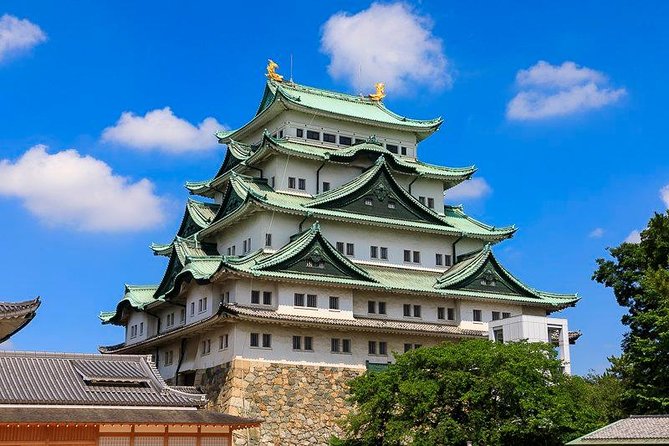
Nagoya Castle is the clearest choice for a first visit. Its roofline is marked by golden shachihoko, mythical creatures with a tiger’s head and carp’s body. They give the castle an instantly recognizable profile and provide a useful introduction to the Tokugawa era.
The castle is tied to Ieyasu Tokugawa, the first shogun, and to Nagoya’s growth as a major castle town. A guide can connect the buildings and grounds to the city’s political role instead of leaving you with a few photographs and a name.
You should be realistic about the suggested timing. The schedule gives the castle a 15-minute stop, but that is enough only for a quick look or an exterior-focused visit. One family specifically wished for more time at the castle after fitting in Tokugawa Garden and MIRAI TOWER during four hours.
If the castle is your priority, tell the guide before the tour and make it one of only two main stops. Admission is not included. The grounds and access details can also affect how much time remains for other sights.
Tomoko Tabata has used an iPad to provide historical background connected with Nagoya Castle. That sort of visual help can be useful when you want to understand a rebuilt site, rather than simply admire it. Another outing focused on the castle, a Japanese garden, and the city center, showing how well the castle works as the anchor for a half-day route.
Atsuta Jingu, a shrine in the city
Atsuta Jingu gives you a very different view of Nagoya. The shrine was founded in the eighth century and occupies a large wooded area within the metropolitan city. It is described as the second-highest-ranking shrine in Japan.
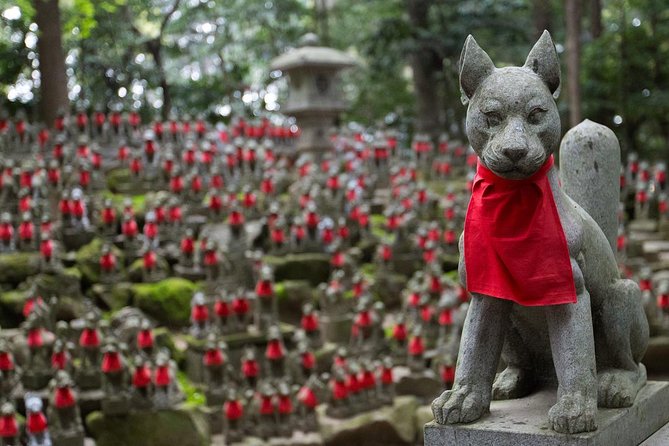
The main value here is not ticking off a building. It is learning how a Shinto shrine functions. A guide can show you the basic process of purification and prayer, and explain details such as omikuji fortune slips. One guide also introduced a fountain associated with beautiful skin, a small detail that can make the visit feel connected to local practice rather than a formal lecture.
Admission is free, but the visit still benefits from a guide who can explain what you are seeing and how to behave. The suggested stop is 15 minutes, though you may want more if you enjoy quiet wooded grounds or want time for a careful visit.
Atsuta Jingu pairs naturally with Nagoya Castle if you want the city’s two strongest traditional sights. The drawback is distance. Since the tour does not include a private vehicle, time spent using trains or the subway reduces time at the sites. A guide can help with tickets and directions, but public transport is still part of the day.
Gardens and museums for a slower pace
Tokugawa Garden is a good choice if you want a break from major monuments. It is a Japanese garden arranged around a pond, following the style used for daimyo estates during the Edo period. The suggested visit is 10 minutes, but that is a quick sampling rather than a full garden stroll.
The nearby Tokugawa Art Museum deserves more time. Its collection contains more than 12,000 items and is housed on the former Ōzone Shimoyashiki compound in Nagoya. The suggested stop is 20 minutes, which lets you see a portion of the collection but not study every room.
These two sights make a sensible pair. The garden gives you space and scenery, while the museum provides objects and context connected with the Tokugawa world. You should still check the admission cost and decide which one matters most if your group includes people with different interests.
Shirotori Garden offers another quiet option. This traditional Japanese garden covers about 3.7 hectares and is designed to give you a taste of older Japan. The description refers to scenery changing with tidal flows, adding an unusual water element to the garden experience. Admission is not included, and the suggested stop is 20 minutes.
The Nagoya City Art Museum is a better fit for modern and international art. Its permanent collection includes Surrealist artists and works by artists such as Sean Scully and Kansuke Yamamoto. The listed stop is only 10 minutes, so I would choose it only if you already know the collection interests you.
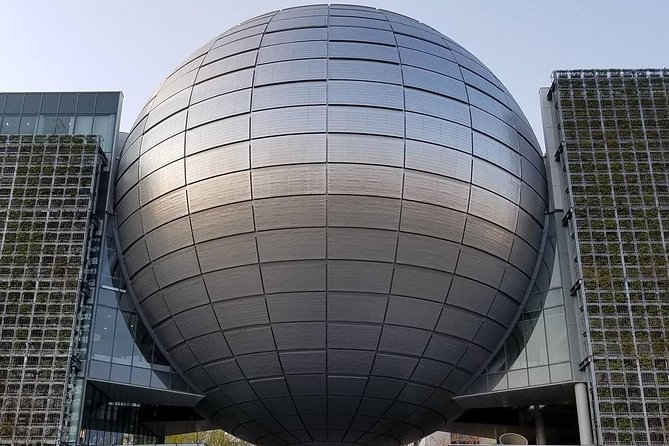
The Nagoya City Science Museum offers a different kind of indoor visit. It has a planetarium described as the largest in the world and presents the experience of moving through the universe like an astronaut. The suggested stop is 15 minutes, which may be enough for a quick look but not a full museum session. Admission costs extra.
A few more Nagoya half-days to weigh up
- Kyoto Arashiyama Bamboo forest & Garden Half-Day Walking Tour
★ 5.0 · 413 reviews - Miyajima Half-day Trip Historical Walking Tour
★ 5.0 · 284 reviews - Half-day Tokyo Afternoon Tour by Hato Bus
★ 4.0 · 269 reviews - Naha, Okinawa: Kerama Islands Half-Day Whale Watching Tour
★ 4.4 · 241 reviews
Toyota, Noritake, and Nagoya’s working identity
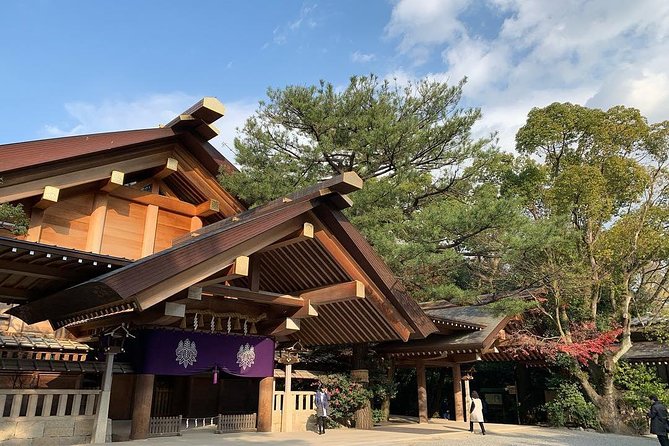
Nagoya’s industrial side is one of the best reasons to choose a custom tour. The Toyota Commemorative Museum of Industry and Technology traces the company’s development and its connection with the city. The museum was established in 1994, one hundred years after Toyota founder Toyoda Kiichiro’s birth.
This is not simply a car display. The museum’s name points to industry and technology, so it can help you understand how manufacturing shaped the region. A past half-day route paired the museum with Atsuta Jingu, creating a useful contrast between old religious tradition and modern production.
The suggested visit is 20 minutes, but that is a quick introduction. If Toyota is your main reason for visiting Nagoya, ask to spend most of the tour there and use the guide to explain what you are seeing.
Noritake no Mori is another strong choice for design and craftsmanship. Noritake began in 1904 and became one of Japan’s best-known tableware names. The site connects ceramics, Japanese craftsmanship, and Nagoya’s industrial growth.
One guide, Yuumi, prepared pictures and diagrams before taking a group to Noritake. That preparation matters because the site makes more sense when you understand how Noritake relates to the city, not just the appearance of the finished porcelain. The suggested stop is 10 minutes, so request more time if the museum and gardens are your main interest.
Noritake is a particularly good choice for a group with a focused interest. A custom tour does not require you to spend your short stay visiting the castle simply because it is famous.
Osu, Shikemichi, and central Nagoya
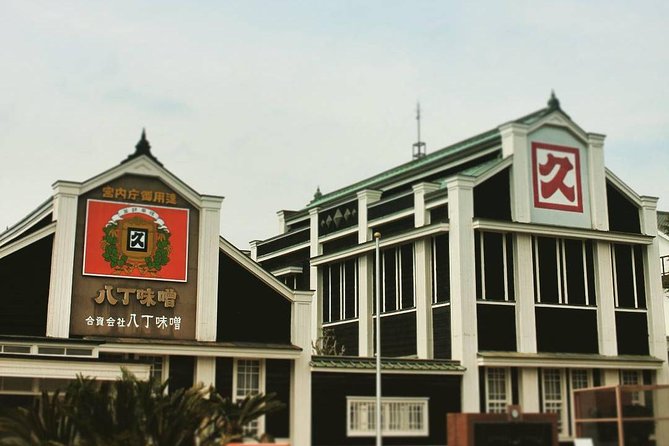
Osu Shopping Street gives you a change of pace. The area once served as Nagoya’s leading entertainment quarter and later developed into a collection of shopping arcades with electrical goods, second-hand clothing, and other stores.
The suggested visit is 20 minutes, and admission is free. That makes Osu easy to add to a central-city route, though you should not expect a long shopping session in that time. Use it for orientation, a snack, or a look at the city’s everyday commercial side.
Shikemichi is better for older streets and merchant-town atmosphere. It lies west of the Horikawa River and was built in 1610, when the town of Kiyosu moved to Nagoya. The free 20-minute stop offers a glimpse of the castle town’s merchant roots.
Wakamiya Hachimansha Shrine is another free central stop. Its enshrined figures include Emperor Nintoku, Emperor Ojin, and Takeuchinosukune. The shrine also has a connection with the Tokugawa family. It is a sensible addition if you want a smaller religious site rather than the large grounds of Atsuta Jingu.
The Nagoya Sword Museum, also called Nagoya Sword World, is in the Sakae district. It displays up to 200 Japanese swords, including National Treasures and Important Cultural Properties. The suggested visit is only 10 minutes, so I would not combine it with several museums unless you are satisfied with a quick introduction.
City views from MIRAI TOWER and Sky Promenade
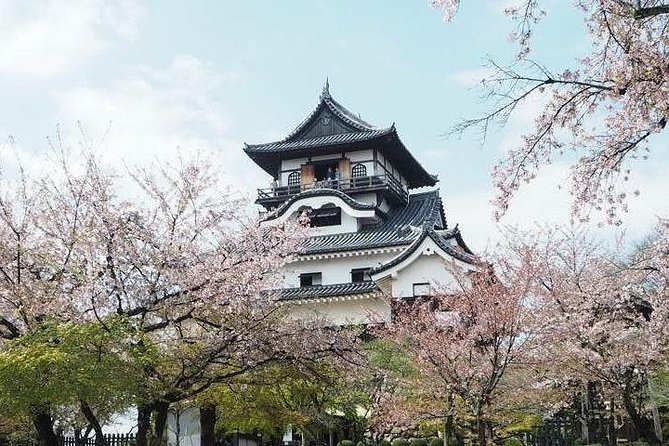
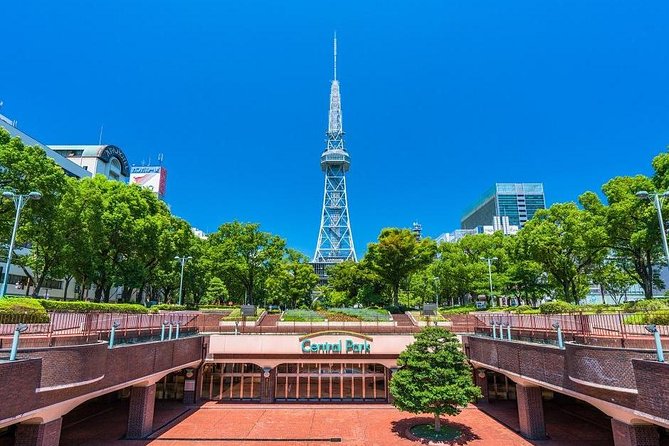
For a modern Nagoya picture, choose the Chubu Electric MIRAI TOWER. Formerly known as Nagoya TV Tower, it is a central city landmark. Admission is extra, and the suggested stop is 15 minutes.
The tower pairs well with Osu or another central stop because it shows you the city from above and then lets you return to street level. It is less useful if your main goal is traditional Japan and you have only four hours.
Sky Promenade offers another high viewpoint from Midland Square, a 47-floor, 247-meter building in the central Chubu region. The 20-minute stop is aimed at city views rather than an extended visit.
A previous four-hour route combined Nagoya Castle, Tokugawa Garden, and MIRAI TOWER. That is a full schedule, but it shows what is possible when the sights are selected with care. You should avoid adding far-flung museums to the same plan.
Walking, trains, and the four-hour limit
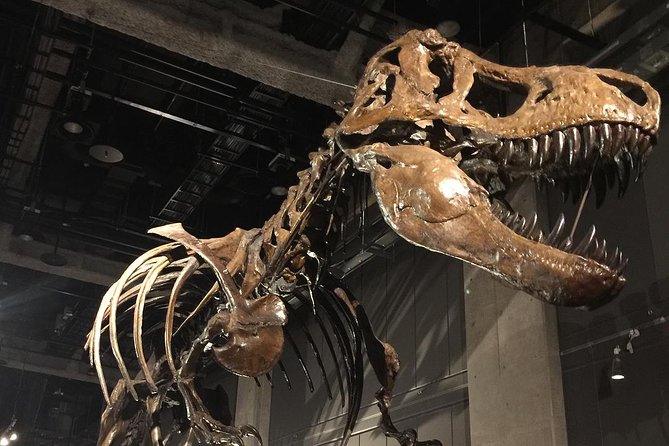
This is a walking tour, and pickup is on foot within a designated Nagoya area. There is no private vehicle. You pay transportation fees separately, and one outing lost considerable time to buying train tickets.
That detail matters. Nagoya is spread out, so a route that looks perfect on paper can become rushed once you add station walks, transfers, ticket purchases, and lunch. Keep your plan simple.
I would use these combinations:
- Nagoya Castle and Atsuta Jingu for a traditional introduction
- Atsuta Jingu and Toyota Commemorative Museum for culture plus industry
- Tokugawa Garden and Tokugawa Art Museum for a focused historical route
- Noritake no Mori and the Toyota museum for design and manufacturing
- Osu, Shikemichi, and MIRAI TOWER for central Nagoya
The guide can help you navigate the subway, which is a real benefit if you are unfamiliar with Japanese ticket machines or station layouts. Still, the guide cannot remove the travel time. Start early if possible, especially during hot weather. One guide helped a family adjust its start time and met them near a cruise ship, while another accommodated a last-minute pickup change at the Aichi Prefectural Art Theater. Those examples show useful flexibility, but you should confirm your meeting point in advance.
The tour can work for families and for people using wheelchairs, but it remains a walking and public-transport experience. A guide named Todd assisted a family with wheelchair users. If mobility is a concern, tell the operator before booking and keep the route compact.
The guide is the main value
The sightseeing menu is useful, but the guide makes the difference. You are not buying entry to a single attraction. You are paying for help choosing, reaching, and understanding several parts of Nagoya.
Guides named in past outings include Todd Miura, Elvis, Toshie, Hiroshi, Tomoko Tabata, Yuumi, Masami, and Matt. Todd has led routes involving the castle, gardens, MIRAI TOWER, Atsuta Jingu, and Toyota. Elvis contacted a group before arrival to shape its itinerary and helped with the subway. Toshie explained the castle and shrine in a friendly, personal way.
Tomoko’s use of an iPad for castle context is a useful example of preparation. Yuumi’s diagrams for Noritake show the benefit of matching the guide’s preparation to your interests. Matt has explained purification, prayer, omikuji, and other shrine customs in an interactive way.
You should not assume you will receive a particular guide unless that is confirmed. The quality of the experience can vary with the match between your interests and your assigned guide, so send clear preferences before the day.
Who should book this Nagoya experience?
This tour suits you if you have only a few hours in Nagoya, want a private outing, or prefer conversation and explanation to a fixed bus route. It is especially useful for cruise passengers, families, first-time visitors, and groups that want to focus on a special interest such as Toyota, ceramics, gardens, or samurai history.
It is less suitable if you want to spend several hours inside one museum. It is also a poor fit if you dislike walking, need a private vehicle, or expect admission tickets and transport to be bundled into the price.
At $108.99 per person, the strongest value comes when you use the guide’s planning well. Choose two major sights, state your priorities, and leave room for transit. Free cancellation is available up to 24 hours before the start time, but changes or cancellations inside that window are not accepted.
Should you book it?
Book this tour if you want Nagoya explained by a local guide and you are willing to make choices. The best plans are focused: Nagoya Castle with Atsuta Jingu, Toyota with Noritake, or Tokugawa Garden with the Tokugawa Art Museum.
Skip it if you want a low-cost attraction pass, a private car, or an unhurried museum day. For most short stays, though, the private format offers something a standard group route cannot: you can spend your limited time on the parts of Nagoya that genuinely interest you.
FAQ
How long does the Nagoya private tour last?
The tour lasts approximately four hours.
How many sights can I choose?
The tour includes a customizable itinerary covering two or three sites from the listed choices.
Is the tour private?
Yes. Only your group participates, and multiple tour groups cannot be combined.
Is transportation included?
No. Transportation fees are not included, and the tour does not provide a private vehicle. The experience is primarily on foot, with public transportation used as needed.
Are entrance fees included?
Generally, no. Entrance fees are extra. Guide entry fees are covered only for sights listed under the tour’s What to Expect information.
Where does pickup take place?
You meet the guide on foot within a designated area of Nagoya. Pickup does not mean transportation in a private vehicle.
Is the tour conducted in English?
The experience includes a licensed local English-speaking guide.
Can I cancel for a full refund?
Yes, if you cancel at least 24 hours before the experience start time. Cancellations made less than 24 hours before the start time are not refunded, and changes inside that period are not accepted.
Just added around Nagoya
- Walking Small-Group Nagoya City Tour★ 5.0 · 13 reviews
- Nagoya Endoji Food and Cultural Tour★ 5.0 · 12 reviews
- Pub Crawl in Nagoya★ 5.0 · 15 reviews
- Sumo Tournament Experience in Nagoya★ 5.0 · 12 reviews
- Nagoya Street Food Walking Tour of Osu★ 5.0 · 28 reviews
- Private Full-day Nagoya City Tour★ 5.0 · 22 reviews
- Specialties of Nagoya Food Tour★ 5.0 · 12 reviews
- Nagoya: 2026 Hida Takayama Shirakawa-go Light-up Winter Tour★ 3.5 · 16 reviews
Nagoya Tours, compared.
![Hiking the Historic Nakasendo Trail [1 Day Tour from Nagoya]](https://media3.thejapanesetraveller.com/wp-content/uploads/hiking-the-historic-nakasendo-trail-1-day-tour-from-nagoya-400x267.jpg)
Hiking the Historic Nakasendo Trail [1 Day Tour from Nagoya]
Read our review →
Nagoya Highlight Tour guided by a friendly local
Read our review →
Japanese Traditional Sweets making and Tea Ceremony
Read our review →
Magome-juku, Tsumago-juku & Ena-kyo 1d Bus Tour from Nagoya
Read our review →
Nagoya Full-day Private Custom Tour with National Licensed Guide
Read our review →Browse the lists this tour appears in