
Reviewed · TOKYO TOURS
Official Street Go-Kart Tour – Akihabara
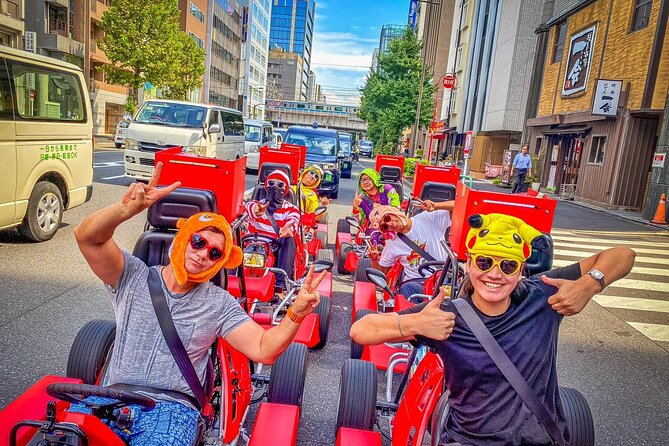
Driving a small go-kart through central Tokyo is about as far from a normal sightseeing bus as you can get. You follow a guide through Akihabara, Ginza, and Tokyo Station, dressed in a costume inspired by comics, games, or anime. It is playful, a little strange, and surprisingly memorable.
I like two things here. First, the route packs several very different parts of Tokyo into roughly one to one and a half hours. Second, the lead guide keeps the group together, gives road instructions, and takes photos so you can concentrate on driving. The main catch is serious: you must bring the correct Japanese driving documents, and this is not a ride-along activity for children or non-drivers.
Key points to know before booking
- You drive on public Tokyo roads: This is a real driving experience, not a closed go-kart track.
- The small group has a maximum of six people: That gives the lead guide a manageable group to direct through traffic.
- Night departures are especially atmospheric: Akihabara and Ginza look best when their signs and shop lights are glowing.
- A physical International Driving Permit is essential: It must follow the 1949 Geneva Convention format, with limited exceptions for certain countries.
- Costumes and kart hire are included: Mario and Nintendo-themed clothing is not allowed because of copyright restrictions.
- The tour returns to its Akihabara starting point: You do not need to arrange transport back from another part of Tokyo.
What driving through Tokyo actually feels like
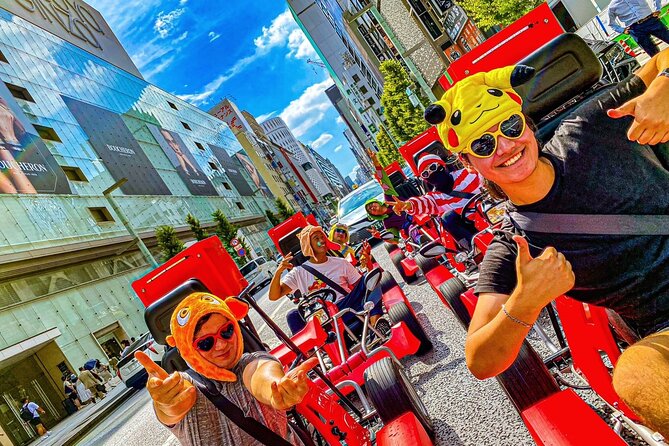
The appeal is not simply the kart. It is the odd sensation of seeing Tokyo from a very low seat while moving through ordinary city traffic. You are not peering down from a bus window. You are part of the road scene, following a lead driver and watching signals, lanes, and nearby traffic.
That also explains why this activity can feel stressful at first. The safety briefing is an important part of the experience, and some people need a few minutes to settle into the kart. Once you become comfortable, the route is easier to enjoy, especially with a guide who gives clear instructions and keeps the group close.
The guides receive especially strong praise for their road management and friendly manner. Sam, Khan, Billy, Julian, Johnny, Mada, and Gyula are among the guides specifically praised for helping people feel safe, giving directions, taking photos, and explaining sights during stops at red lights. Your guide will depend on the departure, but the role is the same: lead from the front, watch the group, and help you handle the city roads.
You should expect a fun outing with a small dose of adrenaline, not a quiet sightseeing tour. If you dislike driving in unfamiliar traffic, this may not be the best use of your time in Tokyo. If you like unusual city experiences, it offers a view of the capital that a standard walking tour cannot provide.
More anime and pop-culture days in Tokyo:
- Tokyo Go Kart: Asakusa, Skytree, and Akihabara **IDP MUST**
★ 5.0 · 988 reviews - Tokyo Studio Ghibli Museum and Ghibli Film Appreciation Tour
★ 4.5 · 421 reviews - Akihabara Anime & Game Adventure Walking Tour (Group or Private)
★ 5.0 · 404 reviews
Starting in Akihabara with a costume and safety briefing
The meeting point is in Akihabara at the HULIC Akihabara Building, listed at Japan, 101-0021 Tokyo, Chiyoda City, Sotokanda 4-chōme 12-9. Confirm the exact address and departure time carefully before setting out. The meeting information has caused confusion for some people because the operator may use more than one nearby meeting location.
At the shop, you receive the kart and costume rental included in the price. Lockers are available, and practical storage aids such as a zip bag for your passport and driving documents have been provided. You should still keep your required documents physically with you, since a digital copy is not enough.
The karts are single-seaters. Every person in your party must drive independently, and the minimum age is 18. There is no passenger seat for a child, partner, or friend who does not hold the required license.
Wear closed footwear. Skirts and long dresses are a poor choice because of the kart seating and driving position. You also need to tell the operator in advance about any hearing or mobility impairment. The activity asks for a moderate level of physical fitness, though the supplied information does not give a specific accessibility arrangement.
The briefing may feel formal compared with the playful costume theme. That is appropriate. You are heading onto public roads, so listen carefully to the guide’s hand signals, spacing instructions, and traffic directions. Several people who felt nervous at the start later found the driving much smoother once they were on the route.
One important costume note: you can choose character-style clothing, but Mario, Nintendo-themed costumes, and items suggesting those characters are not permitted. The experience uses the fun of pop culture without allowing those protected character designs.
Tokyo Station: red brick and a quick city view
One route stop gives you a view of Tokyo Station’s Marunouchi Station building. Its restored red-brick exterior is one of the city center’s most recognizable architectural sights, and it provides a sharp contrast to the glowing signs and comic shops of Akihabara.
You do not come here for a long architectural visit. The value is the change of setting. Within a short drive, you move from Akihabara’s electronics and anime identity toward the formal business and transport district around Marunouchi.
The kart route lets you see the station as part of the city rather than as an isolated monument. That is useful if your Tokyo schedule is tight and you want to connect several central districts in one outing. Still, keep your expectations realistic: this is a passing viewpoint, not a guided tour inside the station building or a chance to study its details at leisure.
The guide may point out sights while the group is stopped at a red light. That small touch adds context without turning the activity into a lecture. You can listen, look around, and enjoy the spectacle while remaining ready to move when traffic does.
Ginza: Tokyo’s polished shopping district
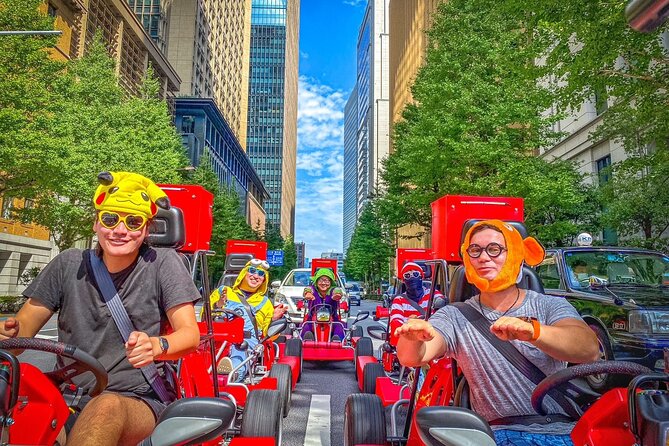
The route continues through Ginza, the city’s best-known upmarket shopping and dining quarter. Department stores, boutiques, galleries, restaurants, cafés, and nightspots give this part of Tokyo a more polished feel than Akihabara.
Ginza is particularly effective after dark. The illuminated streets make the costume-clad karts more noticeable, and several people who chose evening departures described the lights as a major part of the appeal. You may also find the night air more comfortable than the heat of a daytime departure, though the tour depends on good weather.
This section is less about stopping to shop and more about seeing Tokyo’s commercial heart from the road. You will not have time to browse department stores or sit down for a meal, and food and drinks are not included. Think of Ginza as a moving city scene, with the kart providing the unusual vantage point.
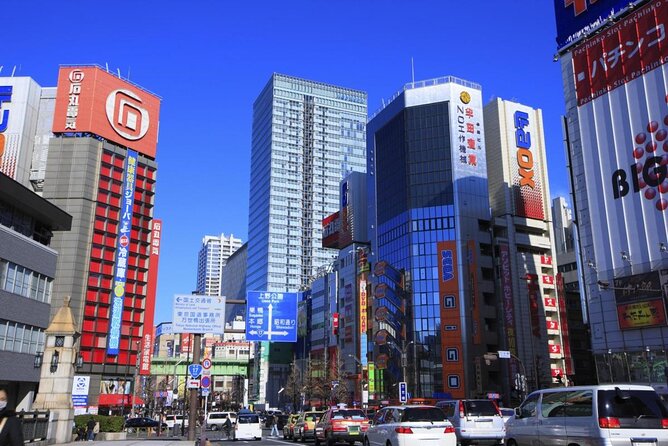
The contrast between Ginza and Akihabara is one of the route’s strongest features. Ginza presents Tokyo as refined and high-end. Akihabara presents it as playful, digital, and devoted to games and animation. Tokyo Station adds grand civic architecture between the two.
More karting in Tokyo:
- Flagship 2-Hours Official Street Go-Kart Tour – Tokyo Bay Shop
★ 5.0 · 4,974 reviews - Official Street Go-Kart in Shibuya
★ 5.0 · 3,435 reviews - Shibuya Official Street Go-Kart in Shibuya Annex
★ 5.0 · 972 reviews - Tokyo: Asakusa, Skytree & Akhihabara Go-Kart City Experience
★ 4.7 · 761 reviews
Returning through Akihabara, the tour’s natural finale
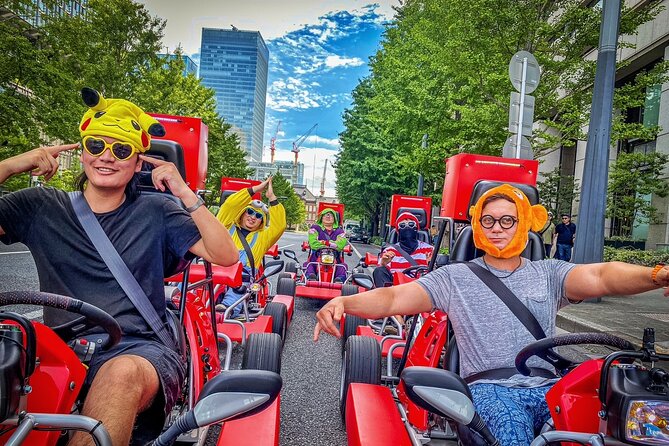
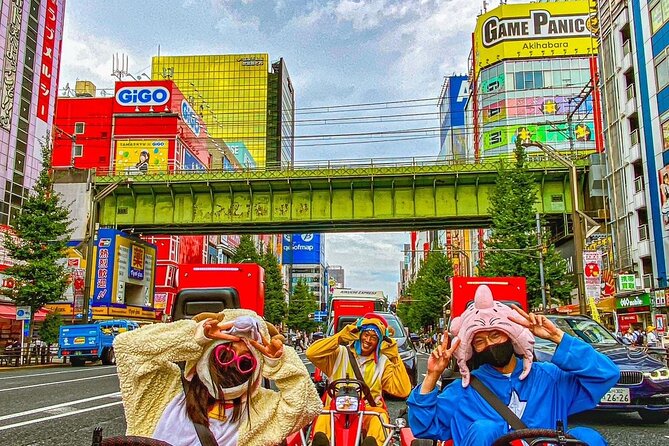
The final part takes you through Akihabara, the district most closely linked with Japanese anime, games, electronics, and related pop culture. Here the costume makes the most sense. You are driving through the very district associated with the interests that inspired the clothing.
Akihabara can be fun on foot, but walking only shows you one street at a time. The kart route gives you a short circuit through the area, then returns to the starting point. You can continue exploring on foot afterward, which makes the central meeting location useful.
Do not expect a full neighborhood tour. The operator describes the route as a drive through the anime and game center, not a shop-by-shop explanation. If you want arcades, stores, cafés, or specialty shopping, plan a separate visit before or after the drive.
The return to the same meeting point simplifies the day. You do not need to find a distant end location or collect belongings from another district. The activity ends back where it began.
Why the guide matters on this route
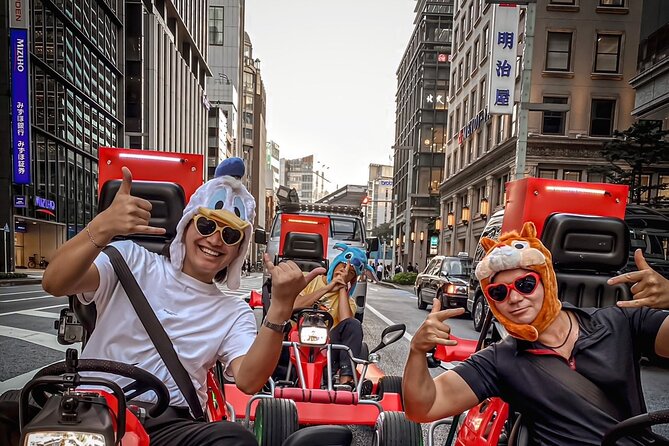
The guide is not just there to lead a line of karts. On public roads, the guide helps set the pace, keeps the group together, and gives instructions at turns and traffic lights. That makes a big difference if you are driving in Tokyo for the first time.
Past participants have singled out Sam, Khan, Billy, Julian, Johnny, Mada, and Gyula for being attentive, professional, funny, or especially clear. A strong guide can ease the nerves of a first-time driver and make the whole group feel more coordinated.
The photo service is another practical plus. Guides take pictures during the outing, so you do not have to handle your phone while driving. The experience is visually unusual, and having someone else capture the costumes, karts, and Tokyo streets means you can keep both hands focused on the road.
The maximum group size is six. That is small enough for the lead driver to monitor the group more easily than on a large tour. Group bookings should be made together rather than as separate reservations, since separate bookings do not guarantee that everyone will be placed in the same departure.
Price, timing, and what you receive
At $61.02 per person, the tour is priced as a short activity rather than a full-day sightseeing program. The cost includes the kart, fuel surcharge, costume rental, lead guide, and taxes and handling charges.
I consider that reasonable if you specifically want the driving experience. You are paying for the equipment, guide, road route, costume, and photo opportunities, not for admission to attractions or a meal. Compared with simply walking through Akihabara, it costs more, but it also gives you a distinct activity and a quick look at several central districts.
The approximate duration is one hour to one hour and 30 minutes. The difference matters because road conditions and the pace of the group can affect the total time. Build a little space into your schedule rather than booking a train connection or timed attraction immediately afterward.
Full coverage insurance costs an additional ¥1,000 per person. It is not included in the advertised price, so ask about it when booking or at the shop if you want that added protection.
Food, drinks, and hotel pickup are not included. You need to reach the Akihabara meeting point on your own, although the location is near public transportation.
The driving permit rules are not optional
This is the most important practical point. Every driver must carry a physical International Driving Permit issued under the 1949 Geneva Convention, along with a physical passport.
A normal home-country license is not enough. Licenses from countries not covered by the 1949 Geneva Convention, including China, Indonesia, Mexico, Qatar, and Saudi Arabia, are not accepted for this activity in Japan.
There are specific exceptions. Drivers with licenses issued in Switzerland, Germany, France, Taiwan, Belgium, or Monaco need a Japanese translation from the Japan Automobile Federation, also known as JAF. Those drivers must carry the physical domestic license and the official physical translation.
Do not assume a permit from a different international agreement will work. The operator can ask for your license-issuing country through the booking chat, and you should resolve the question before arriving. One of the worst ways to lose the value of this booking is to show up without the correct document and be unable to drive.
Is daytime or nighttime the better choice?
The activity offers several departure times, so you can fit it around your plans. The strongest case for a night departure is visual. Ginza’s lights, Akihabara’s signs, and Tokyo’s illuminated streets create the setting most people picture when they imagine a go-kart ride through Tokyo.
Night driving can also add more excitement, which is not automatically a benefit for everyone. If you are already uneasy about public-road driving, daylight may help you see the route more clearly and feel less rushed. The supplied information does not promise a particular route variation by time, so choose based on your comfort and the kind of city view you want.
Weather matters. The operator requires good weather and may cancel for poor conditions. If that happens, you are offered another date or a full refund. For your own schedule, avoid placing an important reservation immediately after the tour in case the weather changes the plan.
Who will enjoy this most
I would recommend it to adults who enjoy hands-on activities, city lights, Japanese pop culture, and a little controlled excitement. It works well for couples, friends, and families whose members are all at least 18 and legally able to drive in Japan.
It is also a good choice for someone who has visited Tokyo before and wants a new way to see familiar districts. The route is short, but the combination of costume, kart, guide, and public streets changes the feel of a standard city outing.
I would hesitate to recommend it to anyone who dislikes traffic, feels uncomfortable driving unfamiliar roads, or wants a slow cultural tour. It is not suitable for children, non-drivers, or anyone hoping to ride as a passenger. Skirts, long dresses, and open footwear also make poor practical choices.
You can cancel for a full refund up to 24 hours before the start time. Changes or cancellations inside that window are not accepted for a refund, except when poor weather causes the operator to cancel.
Should you book the Akihabara Street Go-Kart Tour?
Book it if you want an unusual Tokyo story to take home, have the correct driving documents, and accept that the first few minutes may feel more intense than expected. The strongest parts are the guide-led group, the compact route through three distinct districts, the included costume, and the hands-free photo help.
Skip it if you want a relaxed sightseeing ride, cannot obtain the required permit, or are hoping to bring a child along. At $61.02, it is good value for a memorable driving activity, but not a substitute for a detailed tour of Tokyo Station, Ginza, or Akihabara.
For the best fit, reserve everyone in your group together, confirm the meeting point, bring your physical documents, wear closed shoes, and consider an evening departure for the city lights. With those details handled, this is a lively, tightly organized way to see central Tokyo from a very different seat.
FAQ
How long does the Official Street Go-Kart Tour last?
The approximate duration is one hour to one hour and 30 minutes.
Where does the tour start?
It starts at the HULIC Akihabara Building in Sotokanda, Chiyoda City, Tokyo, listed as 4-chōme 12-9, postal code 101-0021.
Where does the tour finish?
The activity ends back at the meeting point in Akihabara.
What places does the route visit?
The route includes views of Tokyo Station’s Marunouchi Station building, Ginza, and Akihabara.
Is a guide included?
Yes. A lead guide drives a kart with the group and provides directions along the route.
What driving permit do I need?
You need a physical International Driving Permit issued in the format of the 1949 Geneva Convention, plus your physical passport.
Are there exceptions to the International Driving Permit rule?
Yes. Drivers with licenses from Switzerland, Germany, France, Taiwan, Belgium, or Monaco need their physical domestic license and an official Japanese translation from JAF.
Can children or non-drivers ride along?
No. The karts are single-seaters, and every participant must be at least 18 years old and hold a valid license for driving in Japan.
Are costumes included?
Yes. The costume rental fee is included. Mario and Nintendo-themed costumes, clothing, and related items are not permitted.
What is the cancellation policy?
You can cancel at least 24 hours before the start time for a full refund. Cancellations or changes made less than 24 hours before the start time are not accepted, and poor-weather cancellations offer a different date or a full refund.
Just added around Tokyo
- Private Arrival Transfer : Narita International Airport to Central Tokyo City★ 4.5 · 12 reviews
- Narita Airport(NRT): Private Transfer to Tokyo/Yokohama 1-9pax★ 5.0 · 47 reviews
- Private Transfer from Narita Airport to Yokohama Port and City★ 4.5 · 17 reviews
- [Narita Airport Terminals 1, 2] 40-60km Sawara Itako Historic Bike Tour★ 5.0 · 13 reviews
- 3 Day Japan Highlights Tour: Tokyo, Mt.Fuji, Nara, Kyoto, Osaka★ 5.0 · 22 reviews
- Small Town in the Big City: Tasting Tokyo’s Kichijoji★ 5.0 · 16 reviews
- The 10 Tastings of Tokyo With Locals: Private Street Food Tour★ 5.0 · 48 reviews
- Small Town in the Big City: Tasting Tokyo’s Kichijoji★ 5.0 · 195 reviews
Tokyo Tours, compared.
Mt Fuji and Hakone 1-Day Bus Tour Return by Bullet Train
Read our review →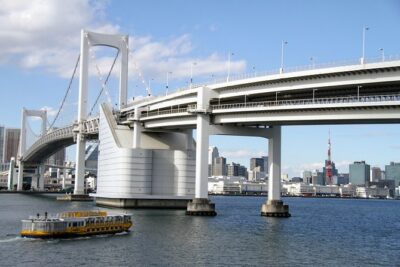
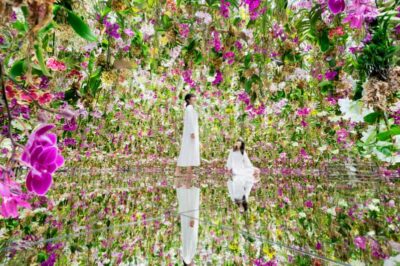
teamLab Planets TOKYO Digital Art Museum Entry Ticket
Read our review →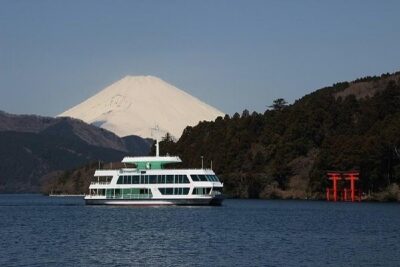
Mt Fuji & Hakone Cruise, Drum Show Bullet Train 1 Day from Tokyo
Read our review →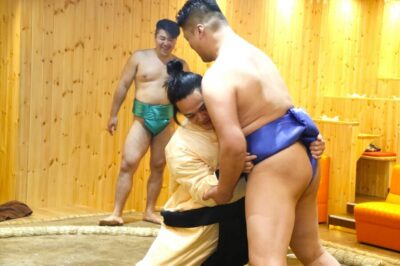
Sumo Show Experience with Chicken Hot Pot and a Photo
Read our review →
Shinjuku Food Tour (13 Dishes at 4 Local Eateries)
Read our review →
Tokyo Mt Fuji 5th St & Hakone Cruise Bus Tour w/Bullet Train
Read our review →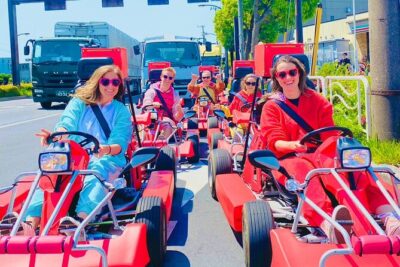
Flagship 2-Hours Official Street Go-Kart Tour – Tokyo Bay Shop
Read our review →Browse the lists this tour appears in