
Reviewed · TOKYO TOURS
Shibuya Official Street Go-Kart in Shibuya Annex
Shibuya Crossing is the star here, but you do not simply watch the famous intersection from a pavement corner. You drive across it in a small kart, guided through real Tokyo traffic. That mix of sightseeing, nerves, and sheer oddness makes this one of the city’s most unusual outings.
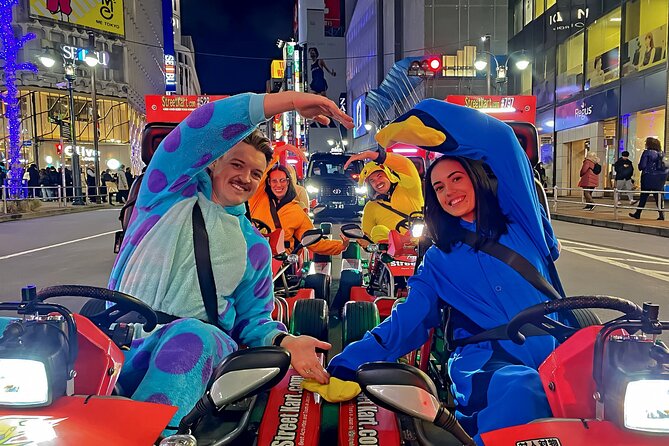
I like the small group of up to six, since a guide can keep a close eye on the line and help you settle in. I also like the included costume rental and guide-taken photos, which give the ride a playful look without requiring you to carry a camera while driving.
The main catch is serious: you need the correct legal driving documents before arrival. The ride can also feel rushed in some time slots, and exhaust, rain, traffic, and public attention are part of the deal.
Key points to know before you book
- Shibuya Crossing is the main event: You cross the famous intersection from different angles, with time to take in the crowds and bright signs.
- The route links three Tokyo districts: You drive through Shibuya, Harajuku, and Omotesando, including Omotesando’s quieter backstreets.
- A guide leads the whole ride: Staff provide instruction, manage the group, and take photos during the outing.
- The karts are single-seaters: Every participant drives, so there is no ride-along option for children or non-drivers.
- Night rides add neon and attention: Evening departures can make the city look especially striking, but you still drive alongside ordinary traffic.
- Your paperwork matters more than the costume: Most drivers need a physical 1949 Geneva Convention IDP, a passport, and a valid domestic license.
What this Shibuya street kart ride is really like
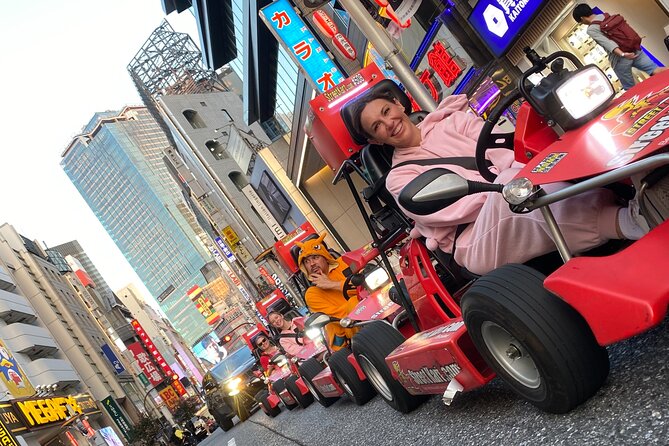
This is not a closed-course go-kart session. You drive on public roads in Tokyo, following a lead guide in another kart. The experience lasts about 1 hour 30 minutes, with roughly one hour listed for the kart rental itself. The remaining time covers check-in, paperwork, instructions, costume selection, and getting the group ready.
That distinction matters. You are not racing, and this is not built around speed. You are part of a small moving line on city streets, with the guide setting the pace. The fun comes from the setting: crossing a world-famous intersection, passing fashion districts, and seeing people react as you go by.
You will need moderate physical fitness and enough attention to follow traffic instructions. The driving is described as easy to handle by many customers, but the setting can feel intimidating at first. You must watch the guide and the kart ahead, especially around busy roads and intersections.
The tour has a 4.9 rating from 972 reviews and a 99 percent recommendation rate. That points to a strong overall experience, though it should not hide the practical downsides. One customer found the ride rushed, another complained about a cancelled booking and an unresolved refund, and a few practical issues, including exhaust and bad weather, deserve attention before you pay.
More karting in Tokyo:
- Flagship 2-Hours Official Street Go-Kart Tour – Tokyo Bay Shop
★ 5.0 · 4,974 reviews - Official Street Go-Kart in Shibuya
★ 5.0 · 3,435 reviews - Official Street Go-Kart Tour – Akihabara
★ 5.0 · 1,578 reviews
Starting at Shibuya Annex
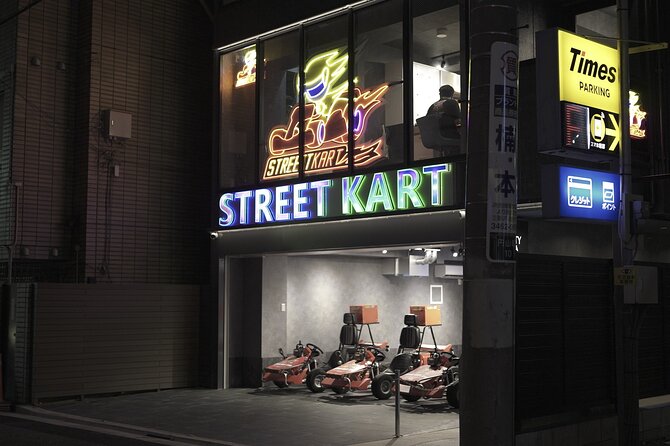
The meeting point is Street Kart Shibuya Annex at 1011 Maruyama-Cho, Shibuya, Tokyo 150-0044. It is near public transportation, though the immediate area has some adult-oriented businesses and love hotels. That may surprise you if you expect a polished storefront beside the main Shibuya shopping streets.
Allow time to find the shop and complete the check-in process. Arriving late is a poor gamble. One customer missed the assigned time, had to reschedule, and was fortunate to take the ride later. Changes made less than 24 hours before the start are not accepted, so build in a buffer.
The staff handle the paperwork and give an instructional video or briefing before you set off. This is where the small-group format helps. Guides such as Cole, Abrar, Tomas, and Newaz have been praised for clear instructions, patience, and attention to safety, though the specific guide on your date is not guaranteed.
You then choose from available costumes. The costumes are part of the fun and help create the cartoonish look that makes the activity so recognizable. There is one firm limit: Mario, Nintendo-themed outfits, and clothing or props suggesting those characters are not permitted because of copyright restrictions.
Wear flat, closed shoes. Do not wear a long, flowing skirt or dress. You will be seated in an open kart, so practical clothing is more useful than anything elaborate.
Shibuya Crossing from the driver’s seat
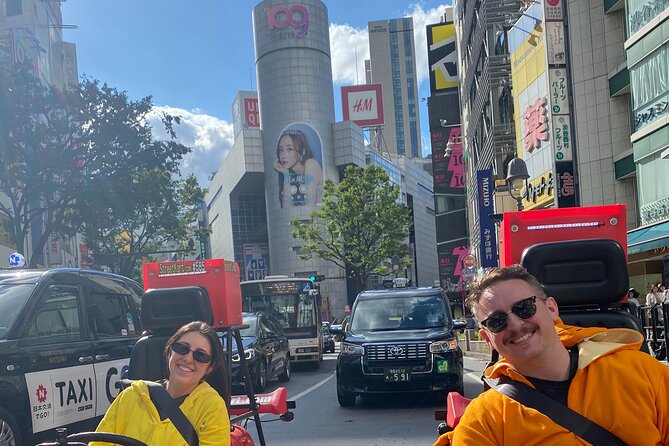
The first major highlight is Shibuya Crossing. From the pavement, you usually watch a wave of people spread across the road. From a kart, you experience the intersection in a different way, with traffic signals, surrounding buildings, waiting cars, and crowds all becoming part of the scene.
The route crosses the intersection from different angles, and some departures pass through it several times. Night rides are especially atmospheric, with neon signs and illuminated buildings around you. Several customers described crossing Shibuya at night as the high point of the outing.
You should expect attention. People may stare, wave, or record you as you pass. That is not a side effect to ignore. It is part of the public spectacle, and you need to be comfortable being noticed in a silly costume while operating a vehicle.
The guide keeps the group together and controls the pace. You are not supposed to race or pull away. One useful detail from the ride format is that the group may stop and rotate positions, allowing everyone a chance at the front and back of the line. The front gives you the clearest view of the guide and route. The back offers a different view of the group and surrounding streets.
This section is exciting, but it is not a quiet sightseeing stop. You will need to focus on driving, so do not expect to study every sign or building. Think of it as a moving city experience rather than a guided architecture tour.
Harajuku and Tokyo pop culture
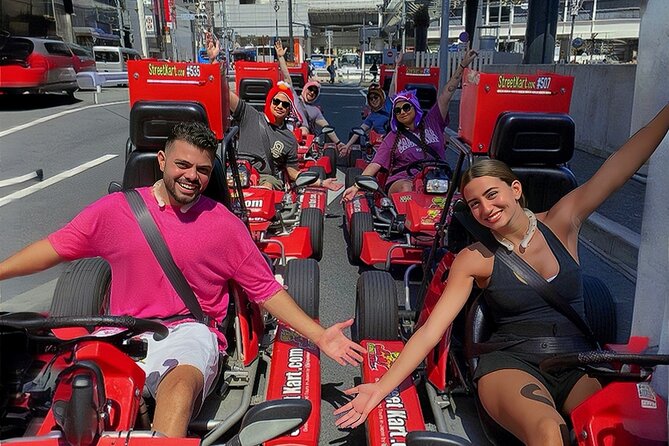
After Shibuya, the route reaches Harajuku, long associated with Japanese pop culture and fashion. The appeal here is the changing street view. You move through a district known for youthful style, shops, and eye-catching street scenes rather than stopping at a single attraction.
The kart gives you a broad view as you pass. You see the district in motion, with the guide managing turns and traffic while you take in the streets. This is a useful contrast with Shibuya Crossing. Shibuya is concentrated drama at one intersection. Harajuku is about the feel of a district unfolding around you.
Do not expect a long stop for shopping or walking. The activity is designed to be speedy, leaving you plenty of time for other Tokyo plans. That makes it easy to fit into a busy day, but it also means the sightseeing is fairly quick.
The route is best for someone who wants a taste of several districts without spending half a day on a standard bus tour. You get a memorable view of Harajuku, but you will still need to return on foot if you want to explore its shops, lanes, or food spots properly.
A few more Tokyo half-days to weigh up
- Mt Fuji and Hakone 1-Day Bus Tour Return by Bullet Train
★ 5.0 · 26,383 reviews - 1-Day Tokyo Bus Tour
★ 5.0 · 14,250 reviews - Tokyo: TOKYO SKYTREE® Admission ticket
★ 4.5 · 11,192 reviews - Tokyo: teamLab Planets TOKYO Digital Art Museum Entry Ticket
★ 4.6 · 9,779 reviews
Omotesando, from polished avenues to backstreets
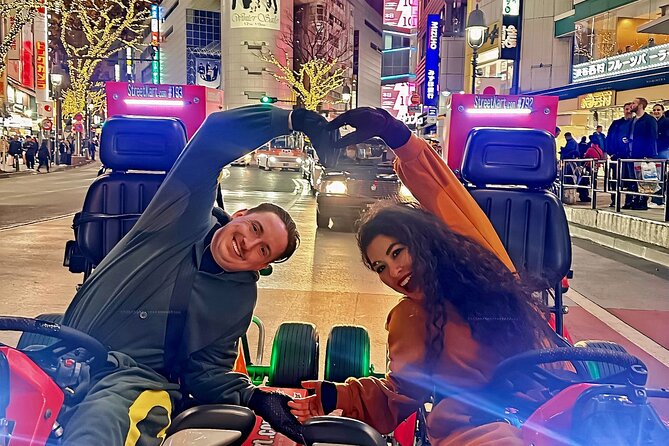
The ride continues to the meeting point of Harajuku’s pop-fashion energy and Omotesando’s more mature style. That contrast gives this part of the route its character. One moment feels youthful and playful; the next has a more polished, design-focused city feel.
You also drive through Omotesando’s backstreets. This is a valuable touch because the main avenue can feel formal and grand, while the smaller roads show a quieter side of the area. You do not need a long explanation to notice the change. The buildings, traffic, and street rhythm shift as the route moves away from the main road.
The drawback is that the guide’s commentary appears to be secondary to driving and group control. This is not a history-focused walking tour. You get visual context and a lively route, but you should book a separate Harajuku or Omotesando walk if detailed local stories are your priority.
Safety, traffic, and what the ride feels like
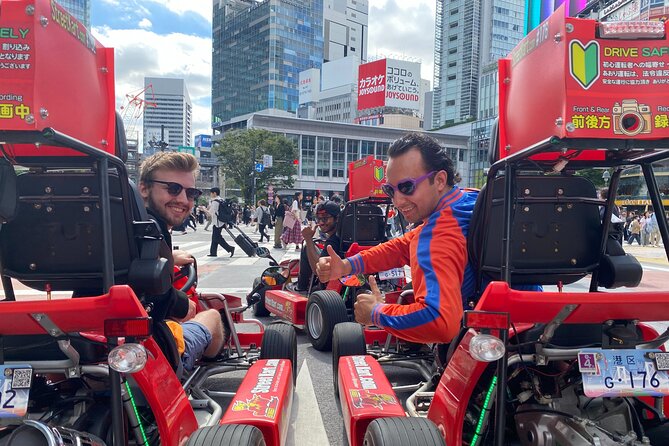
The most repeated praise centers on the guides. Customers describe staff as patient, friendly, professional, and careful. The guide leads in a kart, gives instructions, monitors the line, and takes photos. That support is important because driving in Tokyo traffic can feel daunting even at a modest pace.
The karts are not described as high-speed machines. The experience is more about moving through the city than pushing the vehicle. Still, you are driving alongside real traffic, so this is not a passive sightseeing activity.
You may encounter exhaust in your face. One customer called this the main drawback. Rain can also affect the ride. The tour requires good weather, and the provider may cancel in poor conditions, offering another date or a full refund. If the ride operates in light rain, you should expect a wet, cold, or less comfortable outing. One family still enjoyed a rainy session, but that does not mean the conditions will suit everyone.
A guide may take plenty of photos during the trip, and the included tour photo data is a useful bonus. You can also pay extra to rent an action camera. The camera rental fee and micro SD card are not included, so check the added cost before choosing that option. A phone is not a good substitute while driving, since your attention belongs on the road.
Full coverage insurance costs an additional ¥1,000 per person. It is not included in the advertised price. Read the insurance terms at check-in and decide how much extra protection you want before setting off.
The driving documents are the real booking hurdle
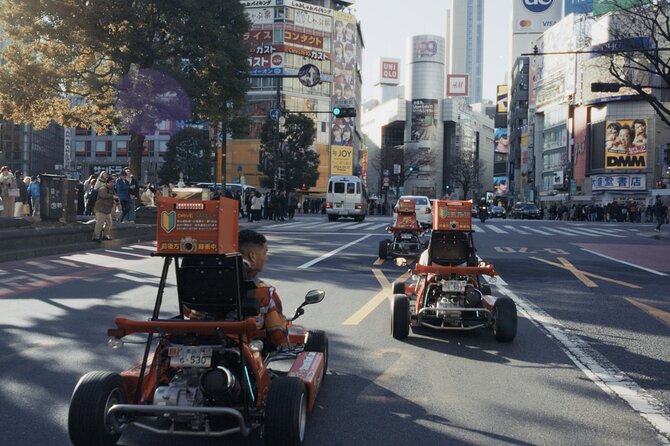
Do not treat the license rules as a minor detail. Every driver needs special documents to drive legally in Japan, and your ordinary home-country license alone is not accepted.
For most countries, you need:
- A physical International Driving Permit issued under the 1949 Geneva Convention
- The IDP booklet, not a digital copy
- Your physical passport
- Your valid domestic driving license
The IDP must be issued by the same country that issued your domestic license. You cannot obtain a valid one online while already traveling.
Drivers from Switzerland, Germany, France, Taiwan, Belgium, and Monaco need an official Japanese translation of their license from the Japan Automobile Federation, rather than an IDP. You must carry the physical domestic license, the official translation, and your passport.
Licenses from countries not covered by the 1949 Geneva Convention, including China, Indonesia, Mexico, Qatar, and Saudi Arabia, are not permitted for this activity in Japan. The provider says it will message you within 24 hours of confirming the booking with the exact documents required for your license-issuing country.
I would still check the rules before booking and confirm them in writing. A document problem discovered on the day can mean you cannot drive, and the 24-hour cancellation deadline may already have passed. This is the single most important step in deciding if the tour is right for you.
All drivers must be at least 18. Karts are single-seaters, so children and non-drivers cannot ride along. If you have any hearing or mobility impairment, you must tell the provider in advance.
Is $69.64 a fair price?
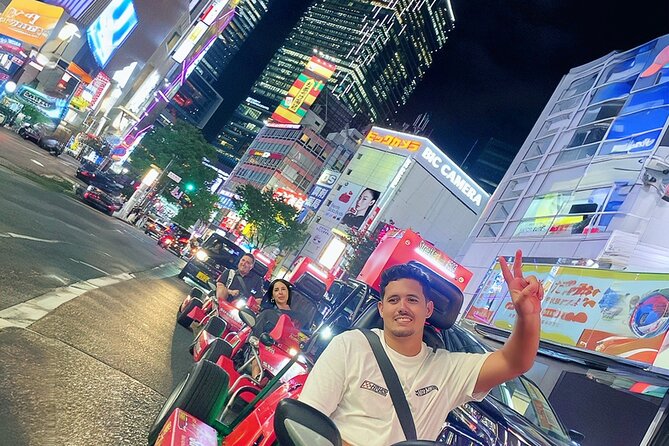
At $69.64 per person, the cost is reasonable if you value the unusual setting and the included extras. You receive about an hour of kart rental, a lead guide, costume rental, taxes and fees, and photo data from the guide. You are paying for an activity, not just transport between sightseeing stops.
The value is strongest for couples, friends, and families with adult children who want a shared memory. The photos matter here because taking your own pictures while driving would be unsafe and impractical. The small group also gives the outing a more personal feel than a large coach excursion.
The value is weaker if you mainly want detailed sightseeing or a relaxed view of Tokyo. You will cover several districts quickly, and you must remain focused on the road. Add the ¥1,000 insurance option, possible action camera and micro SD costs, and the time spent arranging an IDP or translation.
The price also does not protect you from every disappointment. A rushed session can make the hour feel short, and the activity may not suit you if you dislike traffic, rain, exhaust, or public attention. I would compare the cost with your priorities, not with the price of a normal walking tour.
Who should book this experience?
I would recommend it to you if you:
- Are at least 18 and already have the correct driving documents
- Want an unusual way to see central Tokyo
- Enjoy playful, slightly theatrical activities
- Are comfortable driving near ordinary city traffic
- Like the idea of being seen and photographed
- Have a free evening for neon-lit Shibuya
- Are traveling with friends or adult family members
I would skip it if you want a calm tour, dislike attention, have not secured the required documents, or are hoping for a fast race. It is also a poor fit for anyone who needs a child passenger seat or plans to rely on a domestic license alone.
Book everyone in your group together. The operator warns that separate bookings do not guarantee that you will ride together. That small planning detail can decide whether the outing feels social or awkward.
Booking, cancellation, and weather notes
You can cancel for a full refund up to 24 hours before the local start time. Inside that window, the payment is not refunded, and changes are not accepted.
Bad weather is treated differently. If the provider cancels because conditions are unsafe, you can choose another date or receive a full refund. The tour ends back at the Shibuya Annex meeting point, so you can plan dinner or another activity afterward, but leave yourself enough time in case the session runs late.
Should you book the Shibuya street kart tour?
If you have the legal paperwork ready, I think this is a strong choice for a memorable Tokyo afternoon or evening. The best parts are clear: Shibuya Crossing, a small group, patient guides, costumes, and photos that capture the strange sight of you driving through one of the world’s most famous city districts.
Just set the right expectations. This is not racing, a full sightseeing tour, or a guaranteed polished production from start to finish. It is a guided public-road outing that can be noisy, rushed, rainy, smoky, and wonderfully ridiculous.
Book it for the experience of being part of Tokyo’s street scene, not for speed or detailed commentary. If that sounds like your kind of fun, secure the driving documents first, book your whole group together, and choose an evening slot if you want the brightest Shibuya views.
FAQ
How long does the Shibuya street kart experience last?
The experience lasts approximately 1 hour 30 minutes. The listed kart rental portion is one hour, with the remaining time used for check-in, instruction, preparation, and returning the equipment.
Where does the tour start and finish?
The tour starts and finishes at Street Kart Shibuya Annex, 1011 Maruyama-Cho, Shibuya, Tokyo 150-0044. The activity ends back at the meeting point.
What areas does the route visit?
The route includes Shibuya Crossing, Harajuku, and Omotesando. It also passes through Omotesando’s backstreets.
Do I need an International Driving Permit?
Most drivers need a physical IDP issued under the 1949 Geneva Convention. The IDP must come from the same country that issued your domestic license. You must also carry your physical passport and domestic license.
Do drivers from Germany, France, Switzerland, Taiwan, Belgium, or Monaco need an IDP?
No. Drivers from those countries need an official Japanese license translation from the Japan Automobile Federation. They must carry the physical domestic license, official translation, and passport.
Can I use only my domestic driving license?
No. A domestic license alone is not accepted as legal documentation for this activity in Japan.
Can children or non-drivers ride in the karts?
No. The karts are single-seaters. Every participant must be at least 18 years old and hold the documents required to drive legally in Japan.
Are costumes included?
Yes. Costume rental is included, but Mario and Nintendo-themed costumes or related clothing and items are not permitted.
What happens if it rains or the weather is poor?
The experience requires good weather. If the provider cancels because of poor conditions, you will be offered another date or a full refund. If the tour runs in rain, you should be prepared for a colder and less comfortable ride.
Just added around Tokyo
- Private Arrival Transfer : Narita International Airport to Central Tokyo City★ 4.5 · 12 reviews
- Narita Airport(NRT): Private Transfer to Tokyo/Yokohama 1-9pax★ 5.0 · 47 reviews
- Private Transfer from Narita Airport to Yokohama Port and City★ 4.5 · 17 reviews
- [Narita Airport Terminals 1, 2] 40-60km Sawara Itako Historic Bike Tour★ 5.0 · 13 reviews
- 3 Day Japan Highlights Tour: Tokyo, Mt.Fuji, Nara, Kyoto, Osaka★ 5.0 · 22 reviews
- Small Town in the Big City: Tasting Tokyo’s Kichijoji★ 5.0 · 195 reviews
- Small Town in the Big City: Tasting Tokyo’s Kichijoji★ 5.0 · 16 reviews
- The 10 Tastings of Tokyo With Locals: Private Street Food Tour★ 5.0 · 48 reviews
Tokyo Tours, compared.
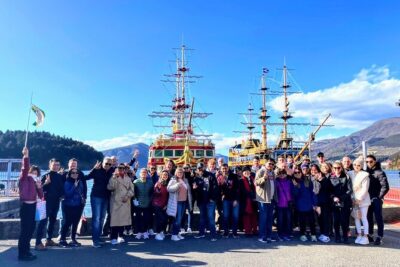
Mt Fuji and Hakone 1-Day Bus Tour Return by Bullet Train
Read our review →
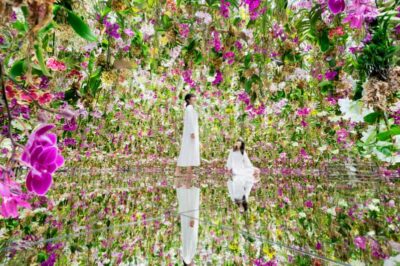
teamLab Planets TOKYO Digital Art Museum Entry Ticket
Read our review →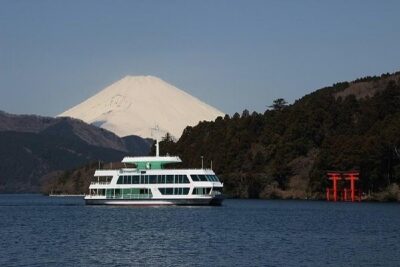
Mt Fuji & Hakone Cruise, Drum Show Bullet Train 1 Day from Tokyo
Read our review →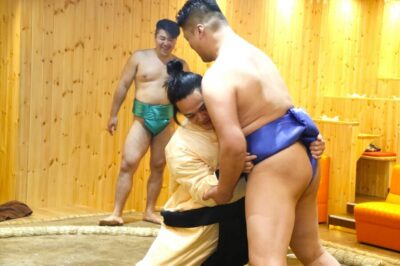
Sumo Show Experience with Chicken Hot Pot and a Photo
Read our review →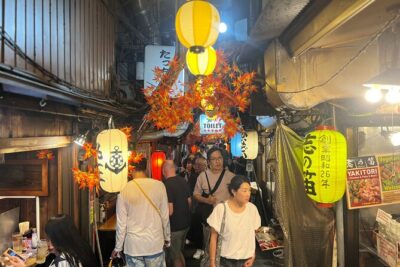
Shinjuku Food Tour (13 Dishes at 4 Local Eateries)
Read our review →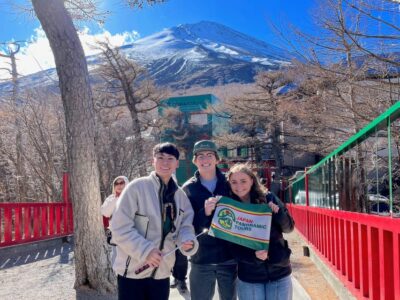
Tokyo Mt Fuji 5th St & Hakone Cruise Bus Tour w/Bullet Train
Read our review →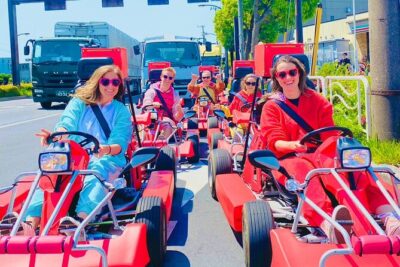
Flagship 2-Hours Official Street Go-Kart Tour – Tokyo Bay Shop
Read our review →Browse the lists this tour appears in