
Reviewed · OSAKA TOURS
Osaka: Private Ceramic Painting Workshop
The most memorable part of this private ceramic workshop is not just painting a plate. It is the setting: you meet at JR Teradacho Station and walk through a non-touristy corner of southern Osaka to a century-old house. The route gives you a look at old Showa-era Osaka before you sit down with Anna and make something by hand.
I like two things right away. First, you get real creative freedom, from Mount Fuji and sushi to cherry blossoms or a kanji character of your choice. Second, the class works well for visitors who want conversation as much as instruction, with English, Spanish, Catalan, and Japanese available. The main consideration is practical: your painted piece takes about a month and a half to arrive, and shipping costs extra.
Key points to know before booking
- A local walk comes before the art class: Meet Ryo at the north exit of JR Teradacho Station and pass through a part of Osaka that rarely appears in standard sightseeing plans.
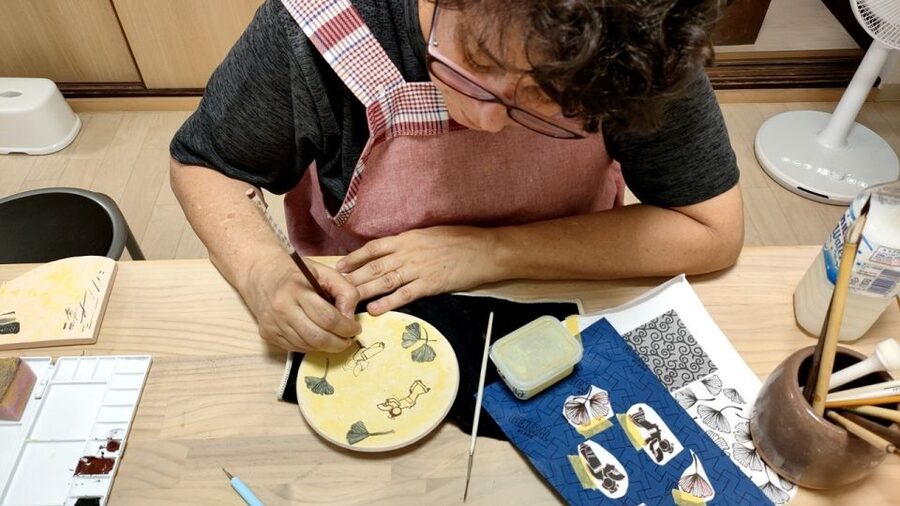
- You paint a Shigaraki-clay dish: Choose Japanese patterns, familiar cultural images, or a kanji character, then work with guidance from Anna and the workshop team.
- The class is fully private: Your group gets the studio time to itself, which leaves room for questions, conversation, and a slower pace.
- Two handmade gifts are included: Take home a small traditional-pattern dish and a sakura-shaped chopstick holder on the day of the workshop.
- Your main plate must be fired and shipped: Allow roughly one and a half months, and budget separately for postage.
- Language choice is unusually good: Instruction is offered in English, Spanish, Catalan, or Japanese, with Spanish and Catalan a rare feature among Osaka ceramic activities.
Meeting Ryo at Teradacho Station
The experience begins at the north exit of JR Teradacho Station. Look for a guide holding a sign with the studio name, Ceramics Tocoton. This detail matters in a busy Japanese city, where a clear station meeting point saves you from guessing which exit to use.
Ryo has handled the pickup for some groups, and the walk to the studio has become part of the charm. You are not being rushed straight into a workshop room. Instead, you have time to chat while moving through southern Osaka, a part of town described as showing the city’s old Showa character.
That route is useful for setting expectations. This is not a glossy craft shop in a famous sightseeing district. The studio sits in a residential, non-touristy area. You may find the surroundings more rewarding if you enjoy seeing ordinary streets and older buildings, but you should not book this expecting a major attraction or a polished cultural center.
Keep your arrival punctual. If you expect to be more than 15 minutes late, contact the provider. More than 15 minutes late counts as a no-show, so leave enough time to reach Teradacho Station and find the correct exit.
More hands-on workshops in Osaka:
- Sushi Making Osaka Roll and Authentic Japanese Sushi Class
★ 5.0 · 1,220 reviews - Matcha Making Class in Osaka with Authentic Japanese Sweets Set
★ 5.0 · 509 reviews - Osaka: Ramen and Gyoza Cooking Class in Dotonbori
★ 5.0 · 378 reviews
Entering a century-old Osaka house
The workshop takes place in a century-old house in the southern part of the city. That house gives the class a sense of place that a modern rental room would not provide. You are spending part of your Osaka day in a lived-in, older setting rather than a generic activity venue.
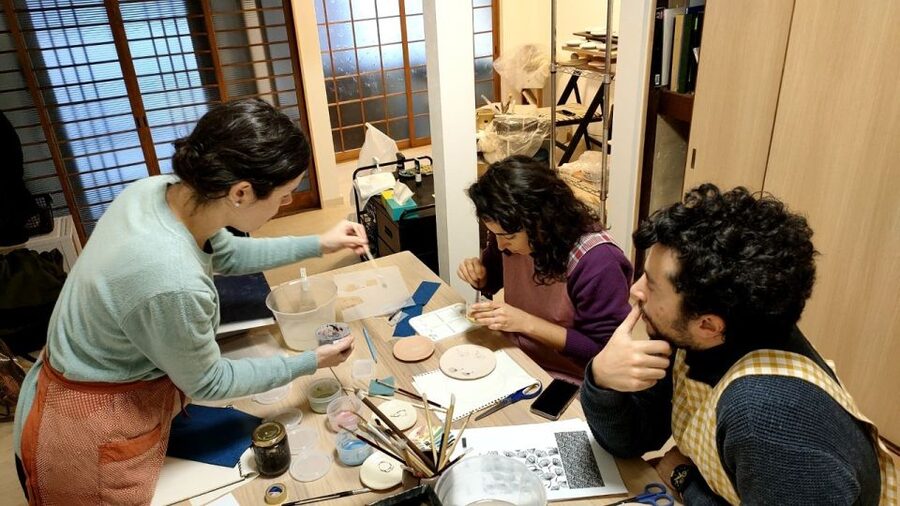
Anna welcomes you at the studio and leads the ceramic painting. The class is private, so you are not sharing the table with a large tour group. That makes it easier to ask about Japanese patterns, request help with a difficult line, or talk about daily life and culture while you work.
Several people who have taken the class describe the welcome as personal and relaxed. One useful detail is that tea may be served at the end. This is not listed as a formal inclusion, so I would treat it as a pleasant possibility rather than something to book around.
There is also a small gallery upstairs where Anna’s Japanese ceramics may be available to buy. Any purchase there is separate from the $61 class price. It can be a nice extra look at finished work, but the heart of the experience remains the piece you paint yourself.
Choosing a Japanese design for your dish
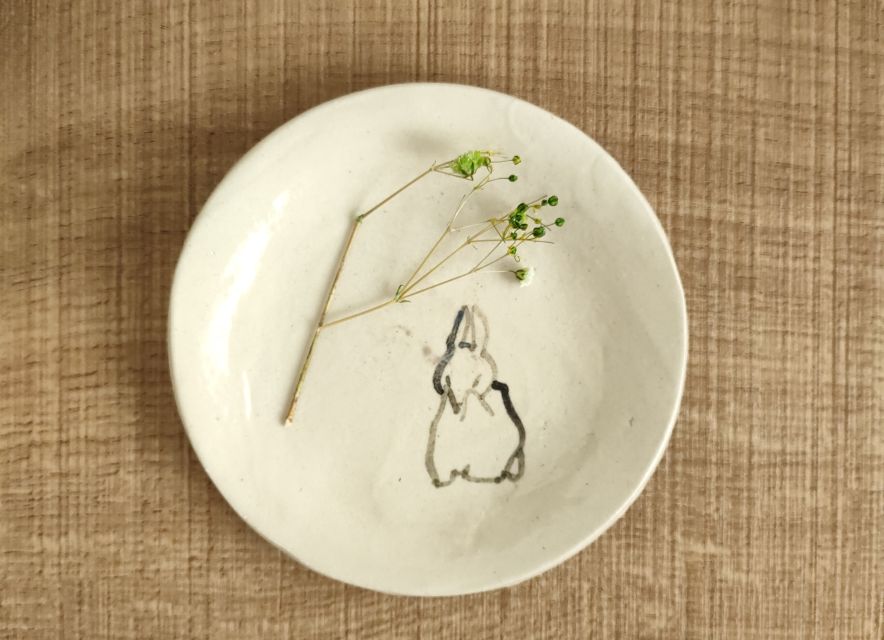
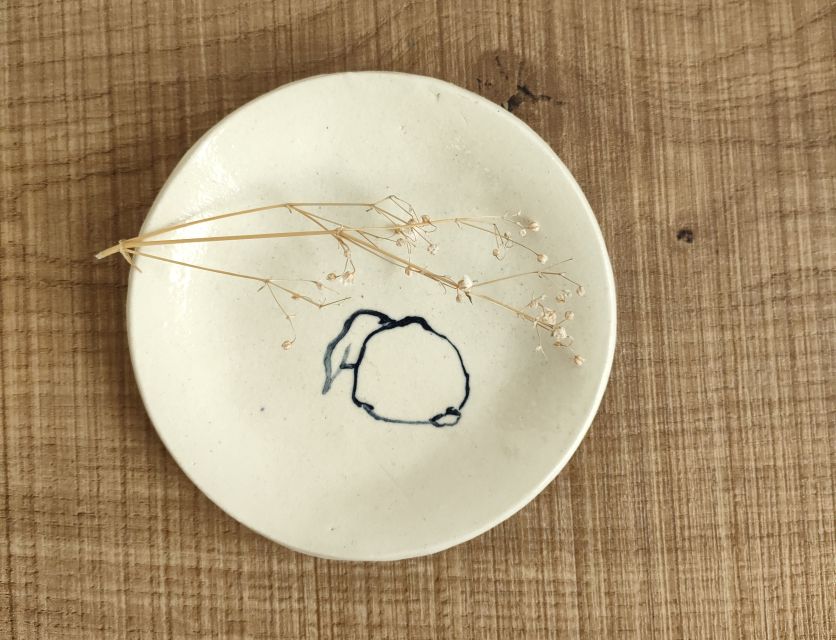
The main project is a ceramic dish made from clay from the Shigaraki area. Shigaraki is known in Japan for pottery, so the material gives the class a direct link to Japanese ceramic tradition rather than using an unconnected craft blank.
You can select a traditional design or paint an image tied to Japan. The choices listed include:
- Mount Fuji
- Sushi
- A sakura tree
- Other Japanese cultural images
- A kanji character or desired word
This range makes the class suitable for different kinds of artists. You might want a recognizable travel souvenir, such as Mount Fuji, or prefer a simple symbol with a more personal meaning. If you want kanji, decide ahead of time what word you hope to use and confirm the meaning with the instructor before painting.
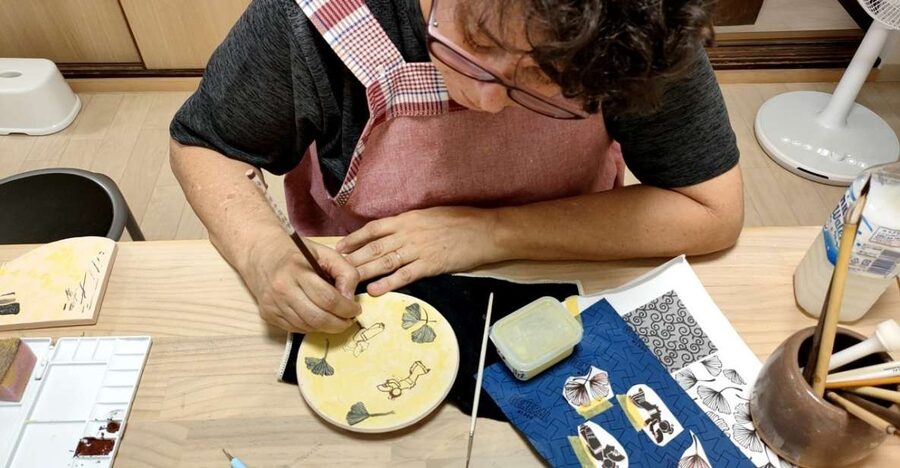
The class uses a brush and ceramic paints. You do not need to arrive with formal art training. Anna and the other instructors guide you through the process and help if you run into trouble. The private format is especially useful here because instruction can focus on your design instead of a whole room moving at one pace.
You should still keep your expectations sensible. This is a two-hour painting workshop, not a full ceramics apprenticeship. The supplied information focuses on painting a prepared dish, not throwing clay on a wheel or shaping a vessel from scratch. If your ideal pottery lesson involves making the object itself, this activity may feel limited. If you want a manageable creative project during a Japan trip, the format makes good sense.
Why the private format matters
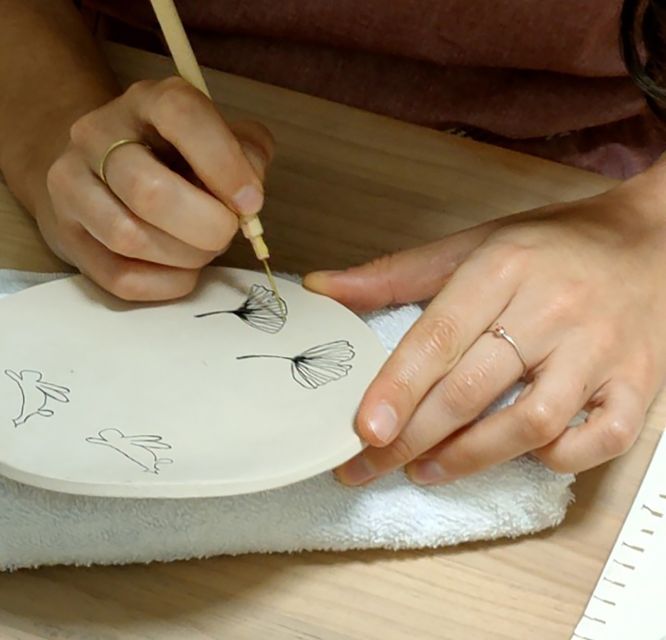
A private class changes the mood. You can take your time choosing a design and ask questions without worrying about holding up strangers. If your group has mixed levels of confidence, one person can work carefully while another experiments more freely.
The activity is also suited to conversation. The class is built around painting, but the cultural exchange is part of its appeal. You can talk with the instructor about Japanese patterns, ceramics, and aspects of Osaka while your dish takes shape.
That combination may suit you better than a quick demonstration. You are not only watching someone make pottery. You are given a task, receive help, and leave with an object connected to your own decisions. One participant described being allowed extra time to finish, which suggests the teaching style can be patient. I would not assume unlimited time, though, so arrive ready to use the two-hour session well.
Language choice is another strong point. English, Spanish, Catalan, and Japanese are available. Spanish and Catalan are particularly unusual advantages for this type of activity in Osaka. If you prefer to discuss art and culture in one of those languages, this may be a better fit than a class taught only in English or Japanese.
A few more Osaka half-days to weigh up
- Osaka Go Karting Tour with Funny Costume
★ 5.0 · 2,658 reviews - Osaka Castle: Museum and Tower Entry Ticket
★ 4.5 · 2,380 reviews - Osaka: Shinsekai Food Tour with 13-15 Dishes at 5 Eateries
★ 4.8 · 2,204 reviews - Osaka Food Tour: 13 Dishes at 5 Local Eateries
★ 5.0 · 2,149 reviews
The handmade gifts you take home
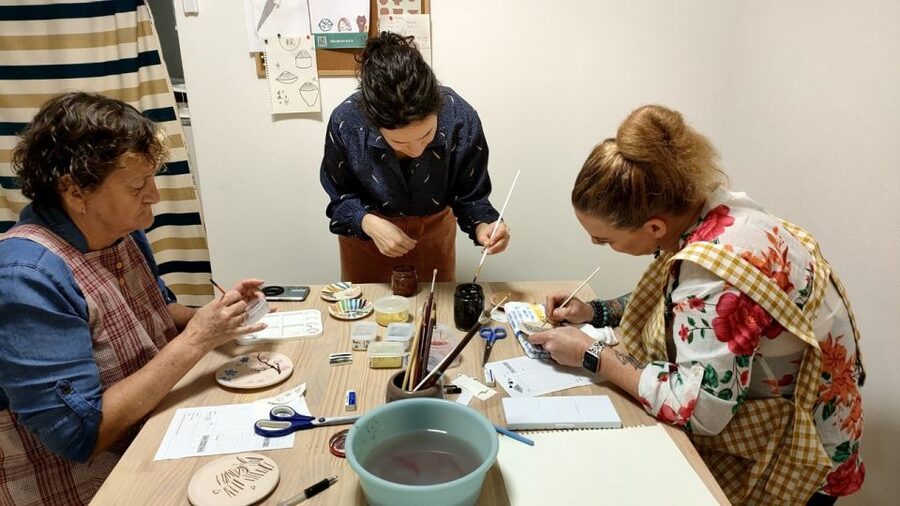
The $61 price includes more than the class materials. You receive a small dish with a traditional Japanese pattern and a sakura-shaped chopstick holder. These are handmade for your use and can go home with you on the day of the workshop.
That is helpful because your main painted dish does not leave with you. The gift gives you an immediate physical reminder of the class while your own work is being fired and prepared for shipping.
The gifts also make the activity easier to recommend to couples, friends, and families with older children. Each person can have a small Japanese object in hand before leaving. Children under five are not suitable for the activity, and the listed age restriction is worth taking seriously in a studio where brushes, paint, and breakable ceramics are in use.
The chopstick holder shaped like a sakura flower is a particularly practical souvenir. It is small, light, and easy to pack. The traditional-pattern dish is also more useful than a purely decorative trinket, though you should pack any ceramic carefully if you carry it home.
Firing, shipping, and the wait for your artwork
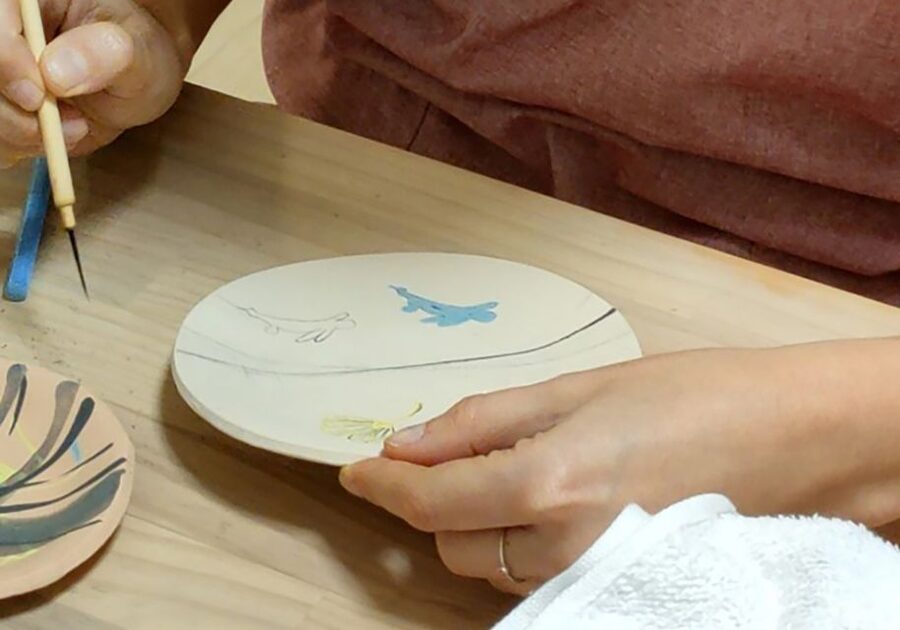
After you paint the dish, it needs to be fired. The finished piece is then sent to your home, with delivery taking about one and a half months. Shipping is not included in the advertised price.
This is the most important logistical point. Do not plan to use your dish during the rest of your Japan trip, and do not assume you can carry the finished piece back in your suitcase. You will need to provide a home shipping address and pay the postage separately.
The wait is not necessarily a flaw. Firing is what turns the painted work into a finished ceramic object, and a delayed souvenir can be a pleasant reminder of Osaka after you return home. Still, the extra cost means the headline price is not the entire expense. If you are comparing this with a class where you take a finished item immediately, include the shipping fee in your decision.
I would also take a photo of your design before leaving. The image will not replace the dish, but it gives you a record while the piece is being completed and shipped.
What the two hours feel like
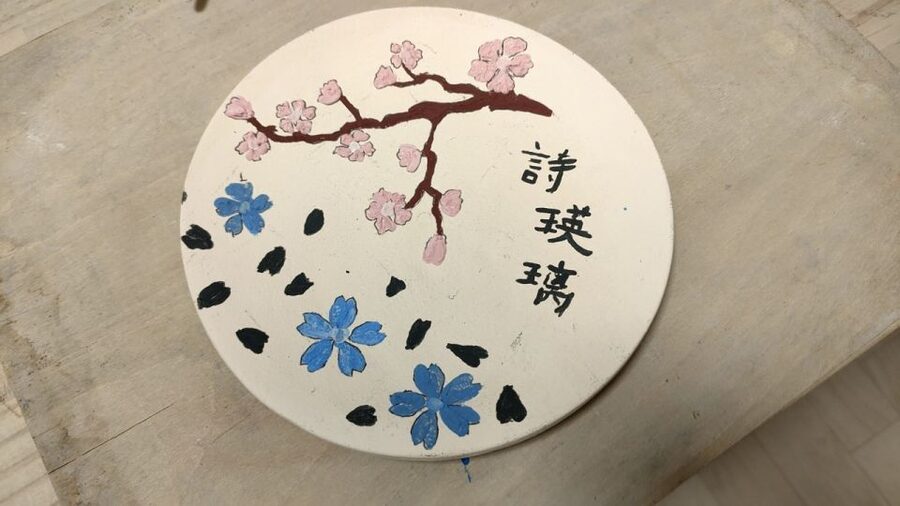
The exact timing of each stage is not set out minute by minute, but the experience has a clear rhythm. You meet at the station, walk with the guide to the house, settle into the studio, and receive instruction before painting your dish.
The walk provides a gentle start. It also means you should wear comfortable shoes and allow time for the station meeting. The activity is listed as two hours, so the route and class together should be treated as a planned block in your Osaka schedule.
At the worktable, you choose your design and begin painting with a brush. The instructors explain the approach and offer help as you go. You can create a familiar Japanese image, use traditional patterns, or write a kanji word.
The strongest part of the schedule is its lack of a large-group rush. You can talk while painting, and the studio atmosphere may feel more like being welcomed into a local home than attending a formal lesson. Tea may follow the work, and you may have time to look at the upstairs gallery.
Still, creative work always moves at different speeds. If you know you tend to fuss over every detail, choose a design that you can finish within the session. A simple sakura branch or bold Mount Fuji outline may be a wiser choice than an intricate scene.
Is $61 a fair price?
At $61 per person, the class is not the cheapest way to buy a Japanese souvenir. It includes an instructor, materials, station pickup, a private two-hour class, and two handmade gifts. The main dish is also fired and shipped later, although postage is extra.
I see the value in the private setting and the local access. You are paying for time with an instructor, help with your own design, and a visit to an older Osaka house in a neighborhood beyond the standard route. The class also gives you a souvenir with a personal story, not just an object chosen from a store shelf.
The value is strongest for people who care about conversation and hands-on making. If you mainly want a finished ceramic item at the lowest price, shopping may be better. If you want the experience of creating a dish and learning about Japanese culture as you work, $61 is reasonable, provided you remember the additional shipping fee.
The included gifts improve the deal. You leave with two small handmade pieces even though your painted dish stays behind for firing. That detail takes some of the sting out of the waiting period.
Who should book this Osaka workshop?
I would recommend this class to couples, friends, solo visitors, and families with children aged five or older who enjoy making things. It is also a strong choice if you have already seen Osaka’s major sights and want a quieter activity in a local neighborhood.
Language can guide your decision. English speakers have access to instruction, but Spanish and Catalan speakers get a rare advantage here. Japanese is also available, making the class flexible for mixed-language groups.
The private format helps people who feel shy about art. You do not have to be talented. Interest and willingness to try matter more, and the instructor can help when your design becomes difficult.
I would be more cautious if your schedule is tight or if you leave Japan before you can arrange delivery. The workshop is not in the center of the most familiar sightseeing areas, the meeting time must be respected, and the finished dish takes roughly six weeks to arrive.
Practical booking advice
Book this as a two-hour anchor in your Osaka day, not as a quick stop between major attractions. Start by checking the available starting times, then plan your route to JR Teradacho Station’s north exit with a cushion for delays.
Cancellation is free up to 24 hours before the activity, and you can reserve now and pay later. Those terms help if your Osaka plans are still shifting, but they do not remove the need to arrive on time once the day is fixed.
Bring an idea for your design, but keep it flexible. A simple image is easier to complete than a complicated scene. If you want to use kanji, prepare your preferred word and discuss it with the instructor so the character and meaning are right.
Finally, remember the shipping fee. The class price covers the materials and the later firing process, but not delivery to your home.
Should you book it?
Book this workshop if you want a personal souvenir, a small look at non-touristy Osaka, and an easygoing class where you can talk while working. The combination of a private group, multilingual instruction, a century-old house, Shigaraki clay, and handmade gifts gives the experience more substance than a simple paint-and-leave activity.
Skip it if you need to take your main creation home immediately, dislike scheduled meeting points, or want to make pottery from raw clay rather than paint a prepared dish. For everyone else, the class offers a thoughtful way to spend two hours and bring a piece of your Osaka experience home later.
FAQ
Where does the ceramic workshop meet?
Meet at the north exit of JR Teradacho Station in Osaka. Look for a guide carrying a sign with the studio name, Ceramics Tocoton.
How long does the activity last?
The workshop lasts two hours. Check the available starting times when booking.
What languages are available?
Instruction is available in English, Catalan, Spanish, and Japanese. Spanish and Catalan are unusual options for a ceramic activity in Osaka.
What will I paint?
You will paint a ceramic dish made with clay from the Shigaraki area. Possible designs include Mount Fuji, sushi, a sakura tree, traditional patterns, Japanese cultural images, and a kanji character or word.
Can I take my painted dish home the same day?
No. Your dish must be fired first and is shipped to your home afterward. Delivery takes about one and a half months, and shipping costs are not included.
What is included besides the class?
The price includes the instructor, materials, pickup from Teradacho Station, a small dish with a traditional Japanese pattern, and a sakura-shaped chopstick holder.
Can young children join the workshop?
Children under five are not suitable for this activity.
Just added around Osaka
- Discover Real Osaka: A Cultural Walk with Food & Drink★ 5.0 · 13 reviews
- From Osaka/Kyoto: Kyoto & Nara Day Trip with Optional Lunch★ 4.5 · 79 reviews
- Osaka 6hr Private Walking Tour with Government Licensed Guide★ 5.0 · 174 reviews
- Private Airport transfer Kansai Intl. Airport(KIX) to OSAKA CITY★ 4.5 · 12 reviews
- Osaka: Namba Local Food Walking Tour (Taste 15 Dishes)★ 5.0 · 20 reviews
- Osaka Delights: Traditional Japanese Food Tour★ 4.5 · 33 reviews
- From Osaka or Kyoto: Kyoto and Nara 1-Day Bus Tour★ 3.5 · 141 reviews
- 1 Day Takoyaki Making and Osaka Castle Walking Tour★ 5.0 · 15 reviews
Osaka Tours, compared.


Shinsekai Food Tour with 13-15 Dishes at 5 Eateries
Read our review →
Osaka Food Tour: 13 Dishes at 5 Local Eateries
Read our review →
Hungry Osaka Street Food Tour:15 Tastings & 3 Drinks with a Local
Read our review →



Hotspots & Hidden Gems Walking Tour Private or Group
Read our review →Browse the lists this tour appears in