
Reviewed · OSAKA TOURS
Osaka: Temple Tour and Traditional Calligraphy Lesson
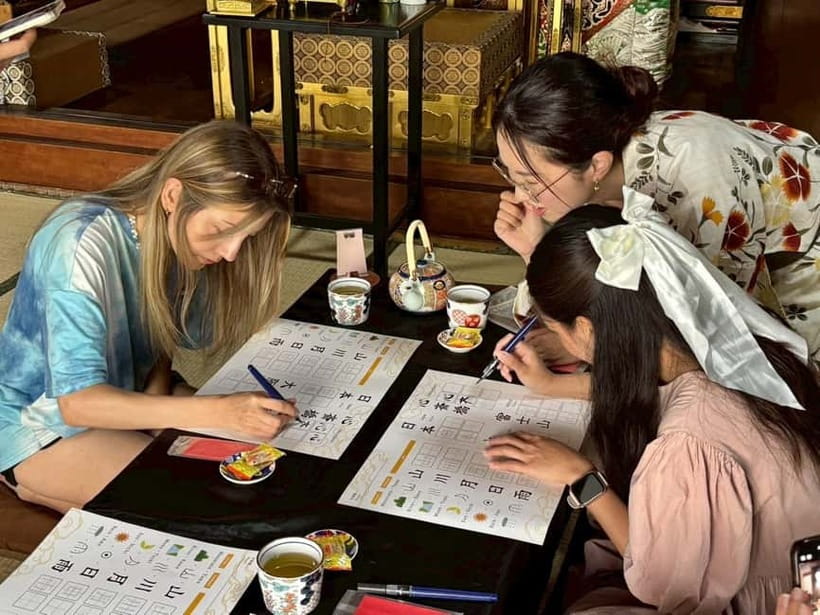
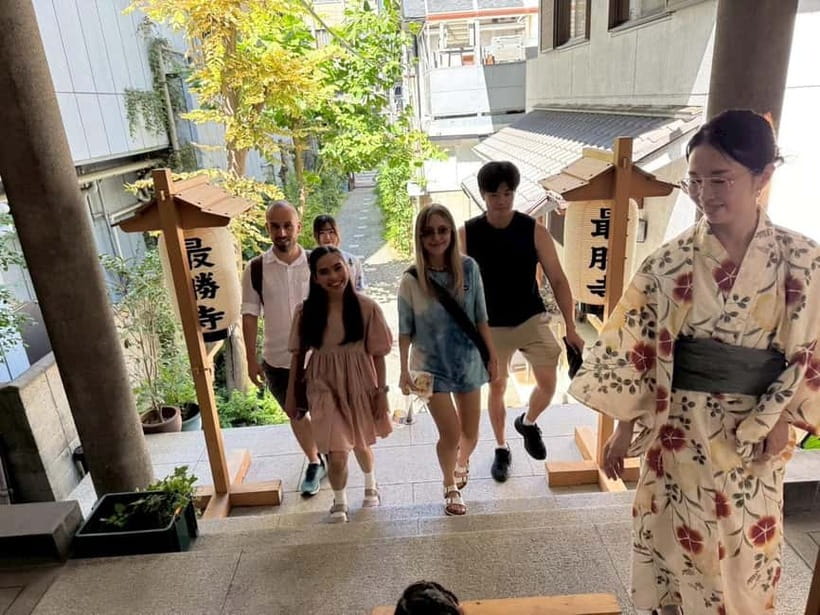
The best part of this one-hour experience is the setting: you practice Japanese calligraphy inside Saishoji Temple, a quiet Zen temple only three minutes from Yotsubashi Station. After a short lesson on Osaka and temple customs, you slow down, focus on your breathing, and let the brush do the talking.
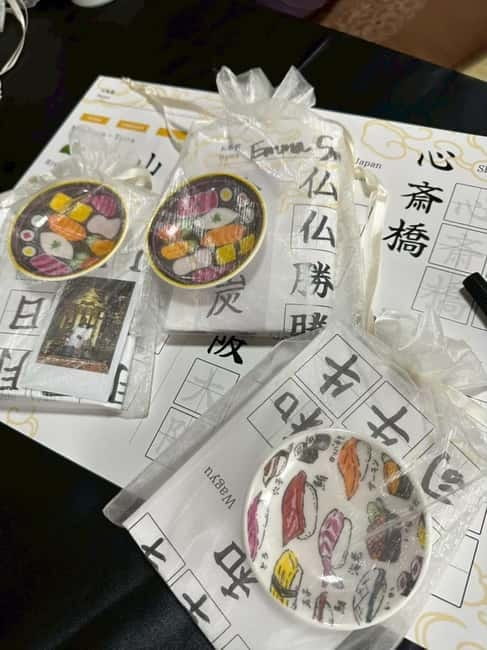
I like two things here. First, the session gives you a real cultural activity rather than a quick photo stop. Second, you leave with a mini shikishi bearing your chosen kanji, a kanji name card with its meaning, and a small ceramic plate. The main consideration is time: at just one hour, this is an introduction, not a full temple retreat.
Key points
- A temple setting near Yotsubashi Station: Reach Saishoji Temple in three minutes from Exit 4, or walk from Shinsaibashi and Namba.
- A calm start with breathing meditation: Use simple meditation to settle your mind before taking up the brush.
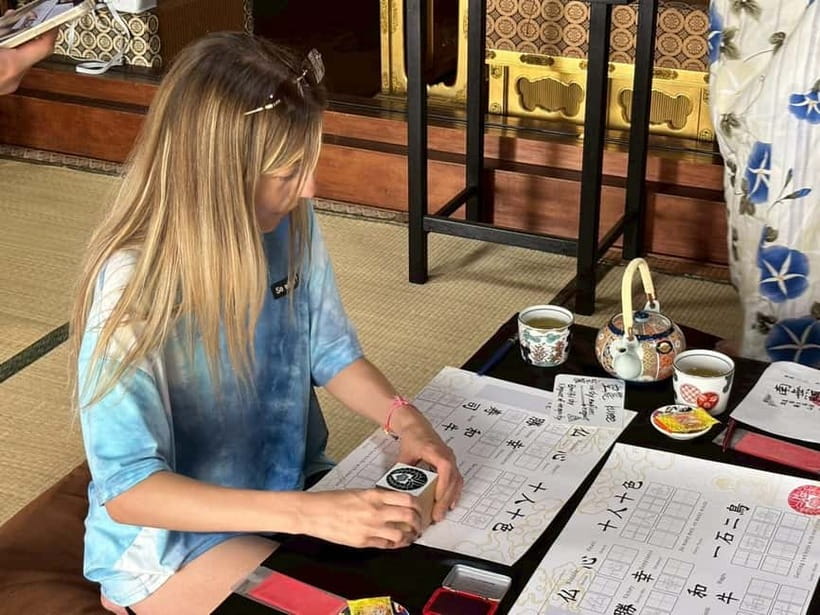
- Beginner-friendly calligraphy: Learn basic brush technique, then write one favorite kanji on a mini shikishi.
- More than handwriting practice: The session includes Japanese history, language, cultural expressions, and explanations of temples and shrines.
- Personal keepsakes included: Take home a kanji name card and an 8-centimeter ceramic plate, along with your calligraphy.
- Good value at $20: The fee covers instruction, materials, cultural activities, and interaction with resident monks.
Why this small temple experience works in central Osaka
Osaka is easy to enjoy at street level. You can eat around Dotonbori, shop through Shinsaibashi, and follow the crowds around Namba. But that energy can wear you out. Saishoji Temple offers a sharp change of pace without sending you across the city.
The temple is in Kitahorie, close to the shopping and entertainment districts. That location matters. You can fit the activity between sightseeing stops, use it as a quiet break in the middle of a busy day, or schedule it near your arrival and departure from the Shinsaibashi area.
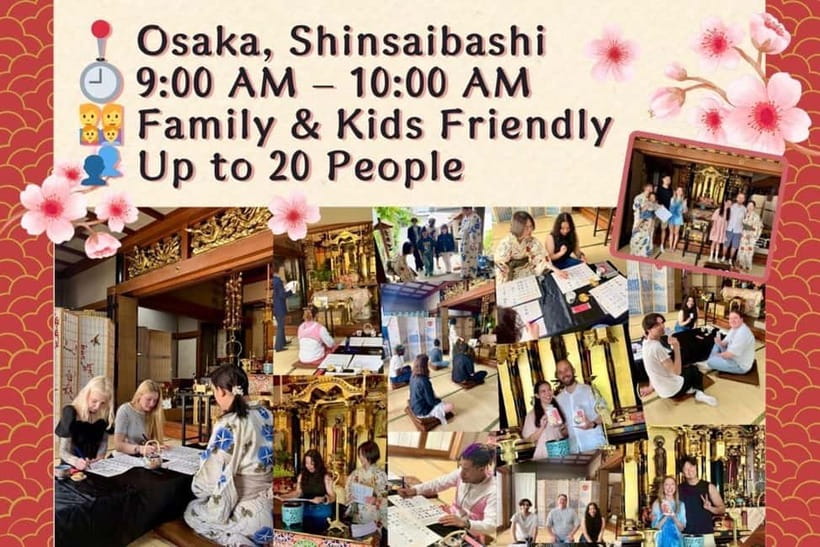
I also like the scale. This is not presented as a large stage show with a long line of people waiting for their turn. Small groups allow the English-speaking instructor to give personal help, which is especially useful when you are holding a calligraphy brush for the first time.
The atmosphere is part of the lesson. Calligraphy requires a slower hand than most visitors expect. You must control the brush, watch the ink, and give each stroke room. In an ordinary classroom, that can feel like a craft exercise. In a temple, with a short meditation beforehand, it becomes a more thoughtful encounter with Japanese culture.
More hands-on workshops in Osaka:
- Sushi Making Osaka Roll and Authentic Japanese Sushi Class
★ 5.0 · 1,220 reviews - Matcha Making Class in Osaka with Authentic Japanese Sweets Set
★ 5.0 · 509 reviews - Osaka: Ramen and Gyoza Cooking Class in Dotonbori
★ 5.0 · 378 reviews
Arriving at Saishoji Temple in Kitahorie
The meeting point is Saishoji Temple, at 1-6-18 Kitahorie, Nishi-ku, Osaka. From Yotsubashi Station on the Osaka Metro Yotsubashi Line, use Exit 4 and allow about three minutes on foot.
You can also walk about ten minutes from Shinsaibashi Station on the Midosuji Line, or about fifteen minutes from Namba Station. This makes the experience practical for visitors already exploring central Osaka, though Yotsubashi is the easiest arrival point.
Give yourself enough time to find the temple without rushing. The activity is built around quiet attention, and arriving breathless or late works against that mood. The provided meeting point and map are useful, particularly because a temple visit in a city neighborhood may not look like a large sightseeing attraction from the street.
The experience is conducted in English. That is important if you want explanations of the historical and cultural points rather than only a demonstration. The language lesson is designed for beginners and advanced learners, so you do not need prior Japanese study to take part.
The opening lesson: Osaka, temples, shrines, and useful language
The first part introduces the history of Shinsaibashi, Yotsubashi, and Osaka Castle. This gives the calligraphy session a local frame instead of treating Japanese culture as a collection of disconnected symbols.
You also learn the difference between Japanese temples and shrines. That basic distinction helps throughout your trip. Japan has both Buddhist temples and Shinto shrines, and understanding the difference makes later visits more meaningful. Here, the explanation comes before the hands-on work, so you have a better sense of the place you are entering.
The lesson also includes conversational phrases and idiomatic cultural expressions. Do not expect a full Japanese class in one hour. Think of it as practical language seasoning: enough to help you notice how communication and manners fit into daily life.
I find this opening especially useful for first-time visitors. A calligraphy brush, a kanji character, and a temple can look beautiful without being understood. A short explanation of their place in Japanese culture gives you a better reason to pay attention.
Zazen meditation and the value of slowing down
The meditation portion is simple and purposeful. You are guided to clear your mind and focus on breathing before beginning the calligraphy.
That step may sound small, but it changes the pace of the session. You are not asked to produce a perfect character at once. Instead, you first settle your attention, then move into an activity that rewards patience.
The experience is not sold as an extended religious training session, and the one-hour format limits how long you can meditate. Still, it offers a brief pause from Osaka’s noise. If you enjoy quiet reflection, this may become the most memorable part. If you prefer constant activity, the slow pace could feel less exciting.
The feedback from the session consistently points to this calm quality. People who came alone were able to relax, and first-time participants found the staff polite and reassuring. That suggests the meditation works as an accessible introduction rather than something intimidating or overly formal.
A few more Osaka half-days to weigh up
- Osaka Go Karting Tour with Funny Costume
★ 5.0 · 2,658 reviews - Osaka Castle: Museum and Tower Entry Ticket
★ 4.5 · 2,380 reviews - Osaka: Shinsekai Food Tour with 13-15 Dishes at 5 Eateries
★ 4.8 · 2,204 reviews - Osaka Food Tour: 13 Dishes at 5 Local Eateries
★ 5.0 · 2,149 reviews
Learning the brush before choosing your kanji
Once you begin calligraphy, the instructor leads you through the basics. You practice the brush and the form of the characters before writing one favorite kanji on a mini shikishi.
A shikishi is a small, firm Japanese art board often used for writing or artwork. Your finished piece is compact enough to pack in your luggage, but it feels more personal than a mass-produced souvenir because you choose the character and create the writing yourself.
You do not need beautiful handwriting. In fact, beginners should expect uneven lines and a learning curve. The point is to understand the brush, ink, pressure, and rhythm. Clear instructions make the process approachable, even if you have never held a calligraphy brush.
The staff’s patient manner is one of the strongest reasons this works for solo participants. You can attend alone without needing a partner to make the activity feel comfortable. Families can also work through the exercise together, with each person creating a different character.
The written kanji has meaning, so choosing one can become part of the experience. You might select a character connected to a personal goal, a family name, a feeling, or a value you want to remember from Japan. The supplied information does not list a fixed set of characters, so ask the instructor what your preferred choice means before you commit it to the shikishi.
Matcha and interaction with resident monks
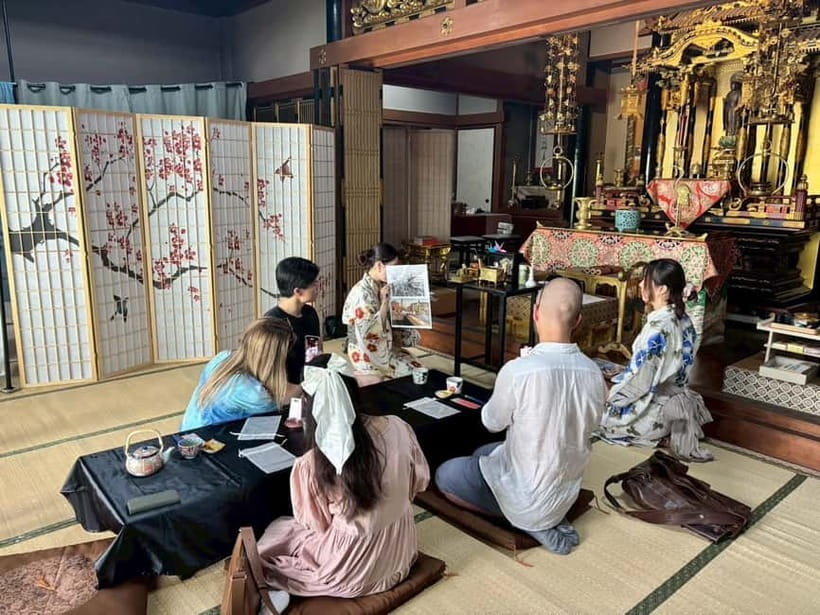
The cultural program also includes a traditional matcha tea ceremony and interaction with resident monks. These elements add context to the brushwork and meditation.
The tea ceremony is not just another item to check off. It gives you a chance to observe the measured movements and attention to detail that appear across many Japanese arts. Paired with calligraphy and meditation, it shows how focus can shape ordinary actions.
Your time with the monks also helps keep the experience connected to the temple itself. You are not simply borrowing a Japanese theme for a craft class. The setting, the religious tradition, and the people who maintain the space all form part of the lesson.
Because the entire session lasts one hour, the exact balance of meditation, calligraphy, tea, history, and conversation may feel brisk. You should book this expecting a compact introduction. If you want long meditation, detailed temple architecture, or advanced calligraphy training, you will need more time elsewhere.
What you take home for $20
At $20 per person, the price is modest for a guided cultural activity in central Osaka. The fee includes the Japanese history and language lesson, materials for the activities, cultural instruction, and interaction with resident monks.
The keepsakes improve the value. You receive your kanji name card and its meaning, a small ceramic plate measuring eight centimeters in diameter, and the mini shikishi with your chosen kanji. These are useful reminders because they connect the object to something you learned and wrote yourself.
The ceramic plate is small, so do not expect a full serving dish or a major piece of pottery. Its value is as a compact gift and memory. Likewise, the calligraphy is a personal souvenir, not professional artwork.
Compared with a longer food tour or a full-day cultural class, this activity gives you less time and fewer destinations. But it also asks for less money and less of your schedule. For $20, the combination of instruction, materials, temple access, meditation, and handmade souvenirs is strong value.
Who should book this experience
I would recommend it most to:
- First-time visitors who want a gentle introduction to Japanese customs
- Solo visitors looking for an activity that feels comfortable alone
- Families who want a hands-on cultural experience
- People curious about kanji, calligraphy, or Japanese language
- Visitors staying near Shinsaibashi, Yotsubashi, or Namba
- Anyone needing a quiet break from Osaka’s shopping and food districts
It is also a good choice for visitors who like taking home something they made. The mini shikishi has more meaning than a standard souvenir because you select the character and write it with instruction.
You may want to skip it if your main goal is a long temple tour, a detailed study of Buddhist practice, or advanced calligraphy. The hour passes quickly, and the experience covers several subjects. It gives you a taste of each rather than a specialist lesson in one.
Practical details that affect your choice
The activity is led in English, and the instructors are described as experienced and attentive. That makes it suitable even if you have no Japanese language ability.
The advertised duration is one hour. Starting times vary, so check availability when booking. The location is easy to reach by Osaka Metro, with Yotsubashi Station closest to the temple.
The activity allows free cancellation up to 24 hours before the start time for a full refund. You can also reserve now and pay later, which helps if you are still arranging your Osaka schedule.
Wear something that lets you sit and work comfortably. The supplied details do not specify a dress code or seating arrangement, so ask the provider if you have particular mobility or clothing concerns. Plan to keep your finished calligraphy flat and protected during the rest of your day.
Should you book Saishoji Temple calligraphy?
Book it if you want a short, affordable cultural pause in central Osaka. The strongest parts are the peaceful temple setting, careful instruction, breathing meditation, and the chance to create a personal kanji souvenir.
The experience succeeds because it does not rely on spectacle. You slow down, listen, practice, and leave with a better sense of how language, art, and religious tradition meet in Japan. Its main limit is the one-hour schedule, which means every part is brief.
For $20, I consider it a smart choice for a first calligraphy lesson, a solo afternoon activity, or a calm stop between Shinsaibashi and Namba. Book it when you want to do something with your hands and your attention, not just take another photograph.
FAQ
Where does the temple calligraphy experience take place?
It takes place at Saishoji Temple, 1-6-18 Kitahorie, Nishi-ku, Osaka, 550-0014, Japan.
How far is Saishoji Temple from Yotsubashi Station?
The temple is about a three-minute walk from Exit 4 of Yotsubashi Station on the Osaka Metro Yotsubashi Line.
Can I walk there from Shinsaibashi or Namba?
Yes. Saishoji Temple is about ten minutes from Shinsaibashi Station and about fifteen minutes from Namba Station.
How long does the activity last?
The experience lasts one hour.
What language is used during the experience?
The instructor teaches in English.
What activities are included?
The program includes a Japanese history and language lesson, breathing meditation, basic calligraphy, writing a favorite kanji on a mini shikishi, and a traditional matcha tea ceremony. It also includes interaction with resident monks.
What do I receive as a souvenir?
You receive a kanji name card with its meaning, a mini shikishi featuring your chosen kanji, and a small ceramic plate measuring eight centimeters in diameter.
How much does the experience cost?
The listed price is $20 per person.
Can I cancel or pay later?
You can cancel up to 24 hours in advance for a full refund. The booking option also allows you to reserve your place and pay later.
Just added around Osaka
- Discover Real Osaka: A Cultural Walk with Food & Drink★ 5.0 · 13 reviews
- Osaka 6hr Private Walking Tour with Government Licensed Guide★ 5.0 · 174 reviews
- Private Airport transfer Kansai Intl. Airport(KIX) to OSAKA CITY★ 4.5 · 12 reviews
- From Osaka/Kyoto: Kyoto & Nara Day Trip with Optional Lunch★ 4.5 · 79 reviews
- Osaka: Namba Local Food Walking Tour (Taste 15 Dishes)★ 5.0 · 20 reviews
- Osaka Delights: Traditional Japanese Food Tour★ 4.5 · 33 reviews
- Badminton in Osaka & Kyoto with Locals!★ 5.0 · 15 reviews
- From Osaka or Kyoto: Kyoto and Nara 1-Day Bus Tour★ 3.5 · 141 reviews
Osaka Tours, compared.


Shinsekai Food Tour with 13-15 Dishes at 5 Eateries
Read our review →
Osaka Food Tour: 13 Dishes at 5 Local Eateries
Read our review →
Hungry Osaka Street Food Tour:15 Tastings & 3 Drinks with a Local
Read our review →



Hotspots & Hidden Gems Walking Tour Private or Group
Read our review →Browse the lists this tour appears in