
Reviewed · TOKYO TOURS
Private Tour Through the Tokyo National Museum & Ukiyo-e
Ueno Hill tells a compact story of Japan. In 150 minutes, you move from a quiet wooden temple stage and a shrine linked to the Tokugawa Shogunate into the Tokyo National Museum, where samurai armor and colorful ukiyo-e prints give that story a human face.
I like the private format, which gives you room to ask questions and request extra time with favorite objects. I also like the route itself: Kiyomizu Kannondo and Ueno Toshogu add outdoor history before the museum visit, so the collection makes more sense.
The main consideration is pace. The museum is large, and a two-and-a-half-hour tour cannot cover everything. One guest wanted more focused guidance inside the galleries, so tell your guide early which objects or sections matter most to you.
Key points to know before you book
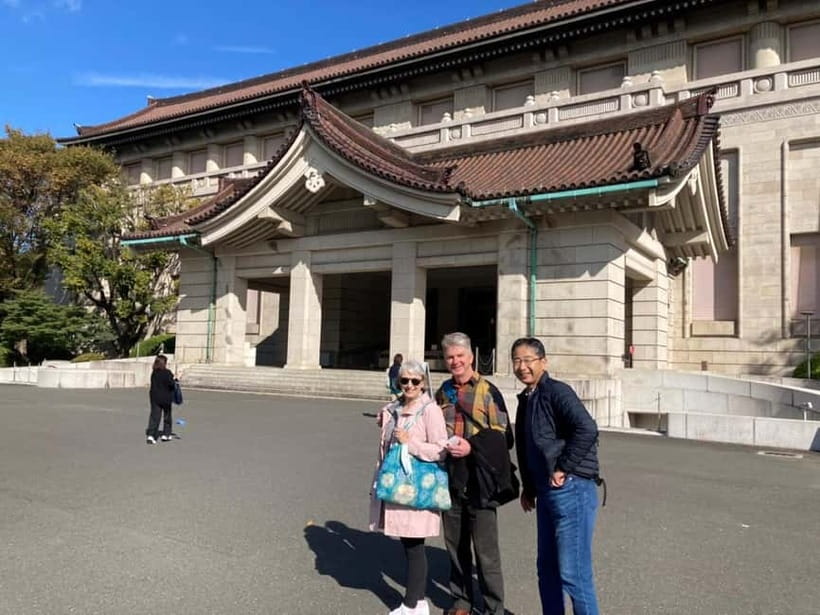
- See three very different sides of Ueno: a temple, a Tokugawa-era shrine, and Japan’s leading national museum.
- Expect a truly private group: Your English-speaking guide can answer questions and adjust the pace for your party.
- Look for samurai armor and ukiyo-e: These are among the most appealing museum subjects on the route.
- Get a broad historical frame: The tour explains how Ueno Hill changed from Kaneiji Temple grounds and an Edo-period public space after the Meiji Restoration and the Battle of Ueno.
- Allow for outdoor walking: Comfortable shoes, water, a hat, and sunscreen are sensible.
- Pay for context, not just admission: At $74 per person, the value depends on how much you want interpretation and personal attention.
Starting at Family Mart, not inside Ueno Park
Your meeting point is in front of the Family Mart Ueno Park Branch, facing the street. It is not inside Ueno Park, an important detail in a busy Tokyo neighborhood where a small mistake can cost you several minutes.
The tour ends at the Tokyo National Museum, so you finish where the longest portion takes place. That is handy if you want to continue through the museum afterward, although the guided portion itself ends there.
The experience lasts 150 minutes. That is long enough for a clear introduction to Ueno and a meaningful museum visit, but not long enough for every building and gallery. I would arrive ready to walk and keep your expectations focused: this is a guided introduction, not an all-day museum study.
Because the group is private, you can use the opening minutes well. Tell the guide if you care most about Japanese art, samurai culture, religious buildings, ukiyo-e, or family-friendly pacing. One guest specifically asked to spend time in two museum areas, and the guide made room for that request.
More museums and galleries in Tokyo:
- Tokyo: teamLab Planets TOKYO Digital Art Museum Entry Ticket
★ 4.6 · 9,779 reviews - Tokyo: Samurai Ninja Museum Guided tour and Experience
★ 4.6 · 1,010 reviews - Ninja Experience (Family Friendly) at Samurai Ninja Museum TOKYO
★ 5.0 · 441 reviews
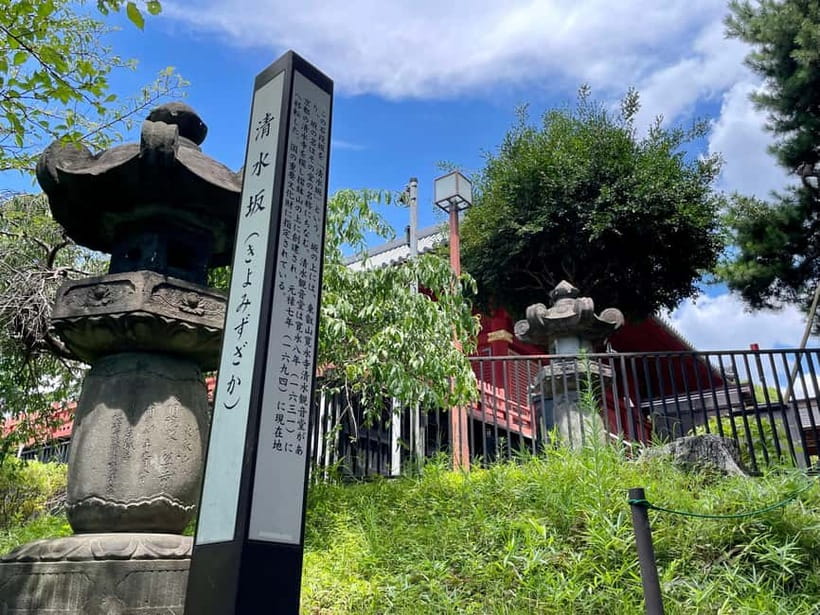
Kiyomizu Kannondo and the wooden stage
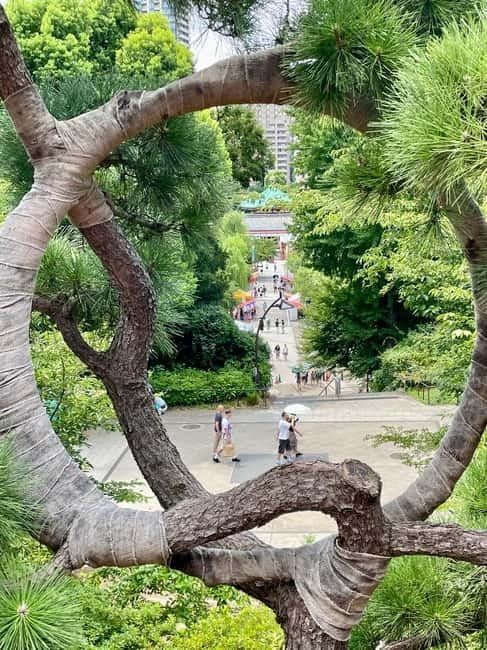
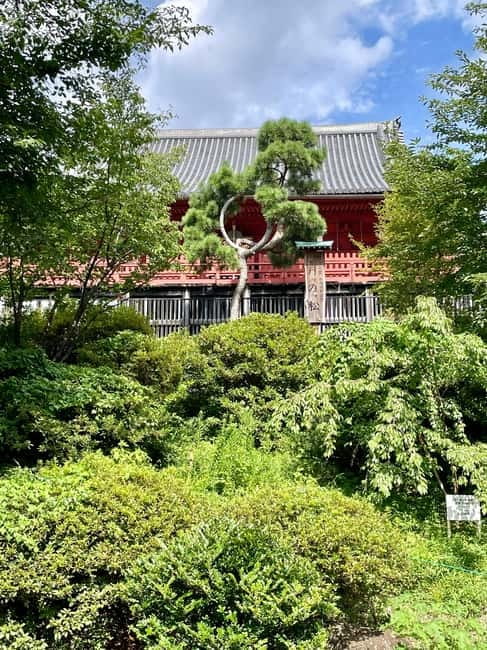
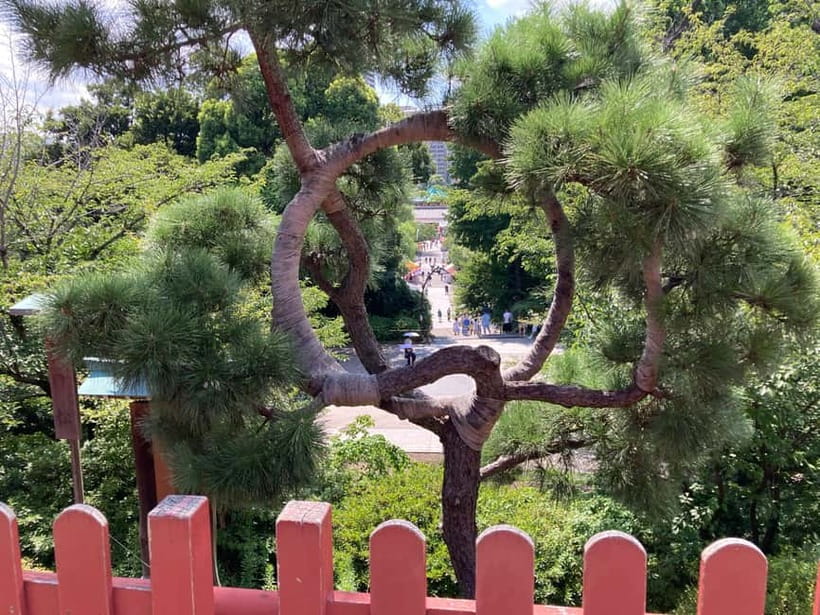
The first stop is Kiyomizu Kannondo, a temple with a wooden stage and a view across Ueno Park. It is a pleasant change from Tokyo’s hard city edges, especially if you want a quiet pause before entering the museum.
The temple is connected in name and design to Kyoto’s famous Kiyomizu-dera, but this visit is not about making a grand comparison. The useful part is the setting. From the stage, you can look over the park and hear how this part of Ueno once belonged to the large grounds of Kaneiji Temple.
Your guide helps turn an attractive photo stop into a history lesson. Ueno was not always simply a public park with museums and paths. Its religious role, its use as a public gathering place during the Edo period, and the fighting during the Battle of Ueno all shaped what you see today.
This is also where the tour’s outdoor walking begins to matter. There may be uneven surfaces, steps, and a need to stand while listening. The experience is not suitable for wheelchair users or people with mobility impairments, so consider that limitation before booking.
Ueno Toshogu and the Tokugawa connection
From Kiyomizu Kannondo, the route continues to Ueno Toshogu Shrine. The shrine has ties to the Tokugawa Shogunate, the military government that ruled Japan for much of the Edo period.
That connection gives the stop more weight than a quick shrine photograph. Your guide can place the architecture and grounds within the political world of the Tokugawa family, then explain how Ueno’s religious and public roles changed over time.
I like the contrast between this stop and the museum. At the shrine, you are reading history through a living religious site and its setting. Inside the museum, you will read it through objects that have been collected, preserved, and displayed.
The shrine is listed for guided sightseeing and photo time. It is not presented as a long ceremonial visit, so expect an efficient stop rather than an extended private ritual. Bring a camera, but remember that flash photography is not allowed during the experience.
Entering the Tokyo National Museum
Admission to the Tokyo National Museum is included, which removes one common nuisance from a museum visit. The museum is the main event, and the guide’s role here is to give you a path through a collection that can otherwise feel very broad.
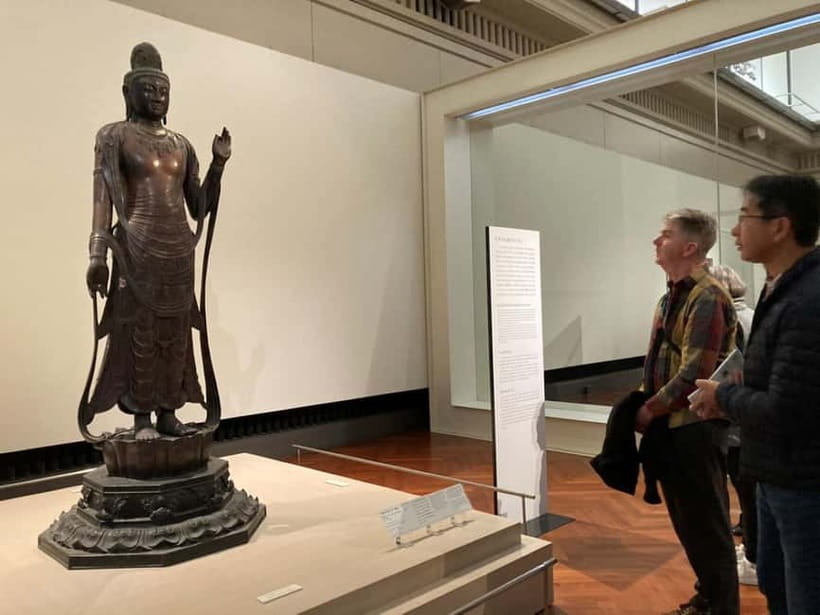
You can expect to see objects such as samurai armor and colorful ukiyo-e woodblock prints. Those subjects work well for a first visit because they connect visual detail with everyday life, warfare, fashion, theater, and ideas about status.
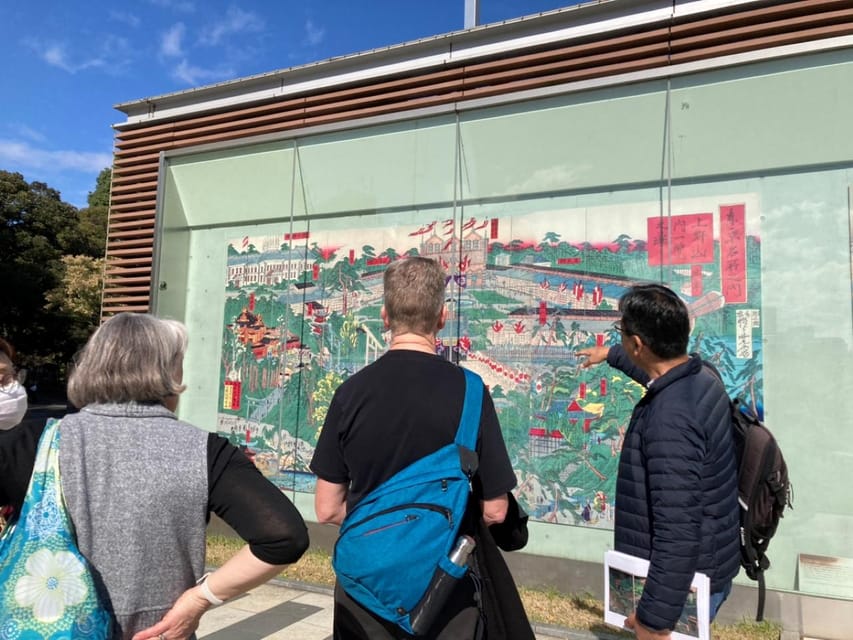
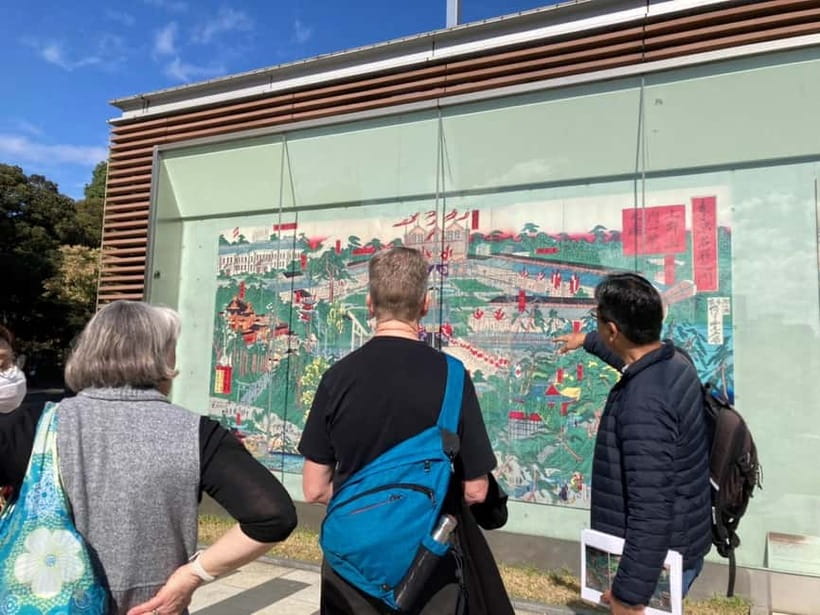
Ukiyo-e deserves particular attention. These woodblock prints are not just attractive images for a souvenir shop. Their strong lines, repeated colors, and scenes of people and places show how printed art reached a wide audience. A guide can help you notice the difference between simply admiring a print and understanding what its subject meant in Japanese society.
Samurai armor offers another useful entry point. Armor is both protective equipment and a display of rank, craft, and identity. With a guide beside you, you can ask about details that might otherwise pass unnoticed.
The museum portion can be the strongest part of the tour if you make your interests clear. Masahito, one guide praised for giving ample time and answering questions, was able to focus on two areas requested by his group. That is a good model for using a private tour: arrive with one or two priorities rather than hoping to see everything.
There is one fair warning. The museum is large enough that a short visit may feel selective. A guest looking for more targeted explanations of individual objects found the indoor guidance less focused than hoped. That does not make the tour a poor choice, but it means you should speak up if you want object-by-object attention.
A few more Tokyo half-days to weigh up
- Mt Fuji and Hakone 1-Day Bus Tour Return by Bullet Train
★ 5.0 · 26,383 reviews - 1-Day Tokyo Bus Tour
★ 5.0 · 14,250 reviews - Tokyo: TOKYO SKYTREE® Admission ticket
★ 4.5 · 11,192 reviews - Mt Fuji & Hakone Cruise, Drum Show Bullet Train 1 Day from Tokyo
★ 4.0 · 7,413 reviews
What the Ueno story adds to the museum
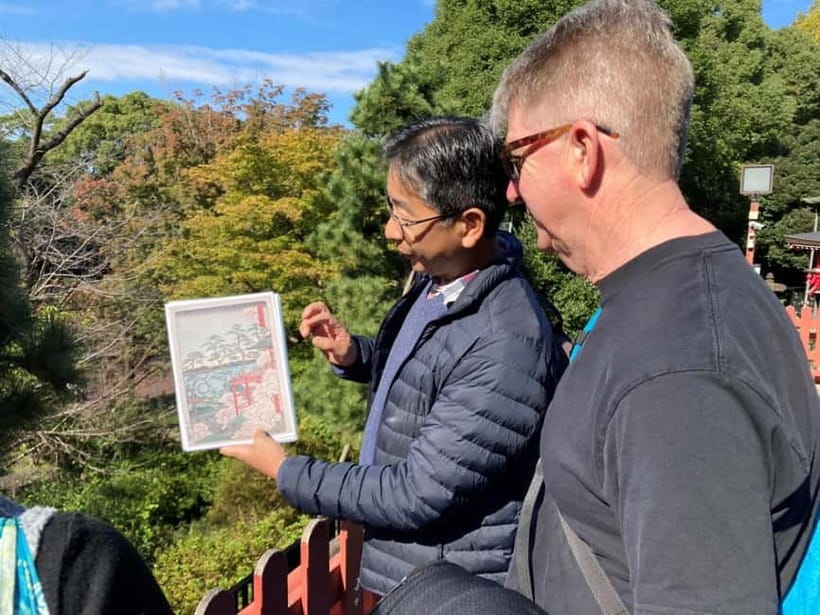
The outdoor stops are not filler before the museum. They provide the sequence that makes the visit easier to understand.
Ueno Hill was once part of the grounds of Kaneiji Temple. During the Edo period, it also became a popular public space. The Meiji Restoration brought major political and social change, and the Battle of Ueno left another mark on the area.
By the time you reach the museum, you have already seen places connected to religion, power, public life, and conflict. That helps you place Japanese art in a wider setting. You are not looking at samurai armor as an isolated object, or at ukiyo-e as a colorful print without context.
The tour also shows how old places can retain one purpose while gaining another. A shrine remains a shrine, a temple remains a temple, and the park remains a place for people to gather. Yet the surrounding area has changed greatly. That mix of continuity and change is one of the most useful ideas to carry through Tokyo.
The guides and the private-tour difference
The experience is conducted in English by a live guide. Several named guides have led it, including Shigeru, Hattori Yutaka, Mieko, and Masahito. Their styles differ, but the strongest pattern is clear: the best results come when you ask questions and state what you want to see.
Shigeru was also able to suggest a lunch venue, which can be useful if you want to continue your Ueno visit after the museum. Hattori Yutaka helped with photographs and made an effort to keep his group comfortable. Mieko explained the area from its earlier period through to the present.
The private setup matters most for families and people with a specific interest. One guide was praised for being patient with children, while another arranged a comfortable break during the tour. You are not locked into the pace of a large group, and that can make the difference between a pleasant museum visit and a tiring one.
Still, private does not guarantee the same style from every guide. If you want a detailed art lesson, say so. If you prefer a wider story about Ueno, say that instead. The tour can serve both purposes, but your opening conversation helps determine which one you receive.
Is $74 per person a fair price?
At $74 per person, this is not the cheapest way to walk through Ueno. You are paying for museum admission, a private English-speaking guide, and the ability to ask for a personal pace over 150 minutes.
The price makes the most sense for:
- First-time visitors who want a clear introduction to Ueno
- Families who benefit from patience and flexible timing
- People interested in Japanese history but unsure how to approach the museum
- Visitors who want to connect temples, shrines, political change, and art
- Anyone who would rather ask questions than read every museum label alone
The value is less clear if you already know the Tokyo National Museum well or prefer to spend several hours exploring galleries independently. You may get more from a self-guided visit if your priority is quantity.
Admission is included, and the private format is the central benefit. A small party can find the per-person cost easier to justify than a solo visitor. For families or friends sharing the guide, the personal attention may be worth more than a standard group tour, especially if children or a specialist interest are involved.
The free cancellation window is up to 24 hours before the start, and you can reserve now and pay later. Those terms help if your Tokyo schedule is still shifting, but the core booking decision remains simple: do you want a guide to shape the visit, or do you want maximum museum time on your own?
Practical advice for a smoother visit
Wear comfortable shoes. The route includes outdoor stops in Ueno and a museum visit, so standing and walking are part of the experience.
Bring water, sunscreen, and a hat. The park sections may feel easy, but weather can make even a short walk tiring. A camera is welcome, though flash photography is not allowed, and smoking is not permitted.
If you have children, mention their ages and interests at the start. The tour has worked well for families when guides have adjusted the pace and included breaks, but the walk and museum time still require attention.
Before you enter the museum, name two things you most want to see. You may be interested in ukiyo-e, samurai armor, or another area of Japanese art. With limited time, a short wish list is more useful than trying to cover every gallery.
The tour is in English only. If you need another language, this is not the right match based on the stated arrangement.
Who should book this Ueno tour?
You should book it if you want a well-shaped introduction to Ueno rather than a quick collection of photo stops. The route gives you a temple view, a Tokugawa-linked shrine, and a major museum, all tied together by the story of Ueno Hill.
I would especially recommend it to first-time visitors, families, and anyone who wants to ask questions about Japanese history without joining a large group. The 4.7 rating from 17 bookings fits the experience’s strongest qualities: attentive guides, clear historical explanation, and useful flexibility.
You should skip it if your main goal is a long, quiet museum session or a specialist study of ukiyo-e. In that case, spend the full day at the museum and explore at your own speed.
For most visitors, the best approach is to treat this as a strong first look. Let the guide give you the framework, choose a few objects to study, then remain at the museum after the tour if you want more time.
FAQ
Where does the tour meet?
Meet in front of the Family Mart Ueno Park Branch. It faces the street and is not inside Ueno Park.
Where does the tour finish?
The tour finishes at the Tokyo National Museum.
How long does the experience last?
The tour lasts 150 minutes, or two and a half hours.
Is museum admission included?
Yes. Admission to the Tokyo National Museum and access to Kiyomizu Kannondo are included.
Is the tour private and what language is offered?
Yes. It is a private-group tour with a live English-speaking guide.
Is the tour suitable for wheelchair users?
No. The experience is not suitable for wheelchair users or people with mobility impairments.
Just added around Tokyo
- Private Arrival Transfer : Narita International Airport to Central Tokyo City★ 4.5 · 12 reviews
- Narita Airport(NRT): Private Transfer to Tokyo/Yokohama 1-9pax★ 5.0 · 47 reviews
- Private Transfer from Narita Airport to Yokohama Port and City★ 4.5 · 17 reviews
- [Narita Airport Terminals 1, 2] 40-60km Sawara Itako Historic Bike Tour★ 5.0 · 13 reviews
- 3 Day Japan Highlights Tour: Tokyo, Mt.Fuji, Nara, Kyoto, Osaka★ 5.0 · 22 reviews
- The 10 Tastings of Tokyo With Locals: Private Street Food Tour★ 5.0 · 48 reviews
- Small Town in the Big City: Tasting Tokyo’s Kichijoji★ 5.0 · 195 reviews
- Small Town in the Big City: Tasting Tokyo’s Kichijoji★ 5.0 · 16 reviews
Tokyo Tours, compared.

Mt Fuji and Hakone 1-Day Bus Tour Return by Bullet Train
Read our review →

teamLab Planets TOKYO Digital Art Museum Entry Ticket
Read our review →
Mt Fuji & Hakone Cruise, Drum Show Bullet Train 1 Day from Tokyo
Read our review →
Sumo Show Experience with Chicken Hot Pot and a Photo
Read our review →
Shinjuku Food Tour (13 Dishes at 4 Local Eateries)
Read our review →
Tokyo Mt Fuji 5th St & Hakone Cruise Bus Tour w/Bullet Train
Read our review →
Flagship 2-Hours Official Street Go-Kart Tour – Tokyo Bay Shop
Read our review →Browse the lists this tour appears in