
Reviewed · TOKYO TOURS
Professional Ramen & Gyoza with Ramen Chef in a restaurant!
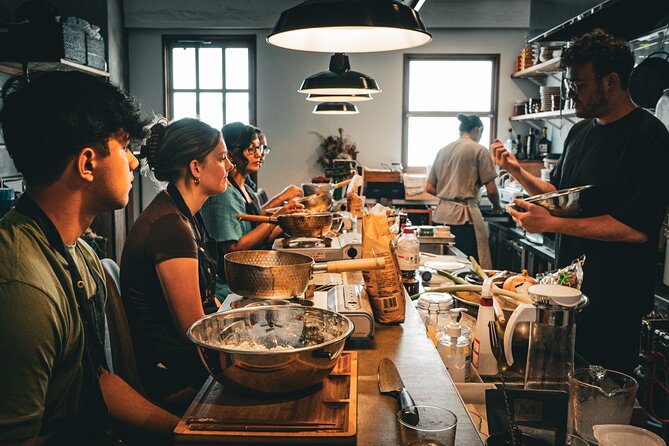
Making ramen from scratch is far more work than dropping noodles into broth, and this four-hour Meguro class lets you handle nearly every important step. You make noodles, prepare ramen components, fold gyoza, and eat the results in the same restaurant kitchen.
I like the small maximum group of six, which gives the bilingual chefs time to correct your technique. I also like the professional setting: this is a working restaurant kitchen, not a casual demonstration in someone’s home. The main drawback is the price, $159.18 per person, so you should enjoy active cooking to get your money’s worth.
Key points at a glance
- Restaurant kitchen setting: Work with kitchen-grade equipment at Baba Ramen in Meguro.
- From flour to bowl: Make ramen noodles from scratch and prepare the other parts of a restaurant-quality meal.
- Gyoza included: Fold and cook Japanese dumplings as part of the hands-on session.
- Small group instruction: The class accepts a maximum of six people, allowing more personal help.
- Recipes for later: Take home a cooking e-book so you can try the dishes again.
- Dietary requests possible: Vegetarian, vegan, gluten-free, and pork-free options may be available with advance notice.
What makes this ramen class different
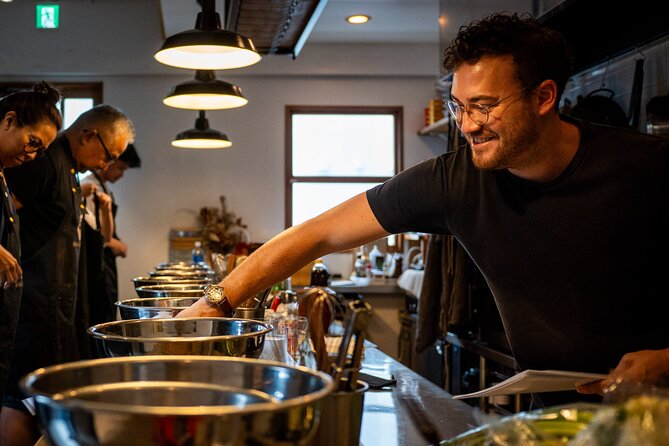
Tokyo offers plenty of food activities, but many cooking classes take place in private homes or focus on a short demonstration. Baba Ramen uses an actual restaurant in Meguro, giving the session a practical, workmanlike feel.
That matters because ramen is built from several separate parts. The noodles, broth, seasoning, toppings, and gyoza each need attention. You do not simply watch a chef assemble a bowl. You take part in the process and gain a clearer sense of why a good bowl takes time and effort.
The class is taught in English and Japanese by local chefs. Andrew is named as part of the teaching team, while Eric, Jae, and Leo have also been part of the instruction. The tone is professional but friendly, with explanations about ramen’s background, preparation methods, and dining etiquette.
You should expect to be busy. One of the clearest themes from the class experience is that this is not a sit-back-and-sample activity. You may work with hot pans and oil, roll out noodles, handle fresh ingredients, and help with preparation from start to finish.
More places to eat in Tokyo:
- Tokyo Bar Hopping Tour in Shinjuku (All-You-Can-Drink + Dinner)
★ 5.0 · 3,587 reviews - Tokyo: Sumo Show and Dining Experience
★ 4.8 · 2,742 reviews - Tokyo: Samurai Restaurant Show Ticket with 2 Drinks
★ 4.5 · 1,307 reviews
Arriving at Baba Ramen in Meguro
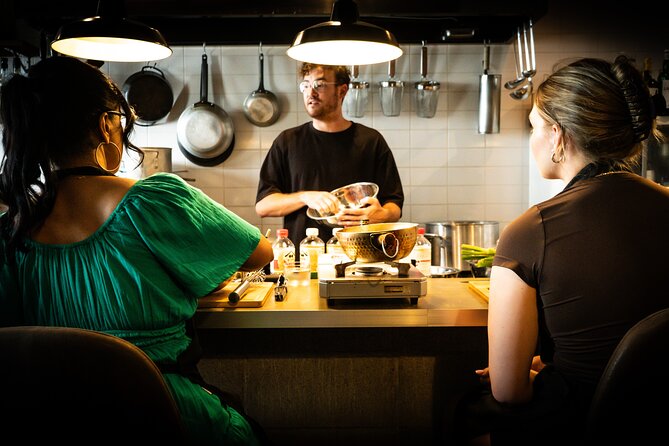
The meeting point is Baba Ramen Cooking Meguro, at 3-chōme-7-32 Shimomeguro, Meguro City, Tokyo 153-0064. The class begins at 9:00 am, and the activity ends at the same location.
The venue is near public transportation, which makes it practical to reach from other parts of Tokyo. Still, I would give yourself enough time to find the address and settle in. A morning class leaves little room for a missed train or a wrong turn.
The restaurant setting is part of the appeal. You are working in a compact, purpose-built space rather than a large tourist venue. That can make the class feel more personal, but it also means you should be ready for an active kitchen environment.
The small group limit is important here. With no more than six people, the chefs can watch how you work and offer corrections. That is especially useful when rolling noodles, handling dough, or folding gyoza. In a much larger class, you might spend more time waiting or watching someone else take the lead.
The opening lesson: ramen is a process, not a shortcut
The session begins with instruction about ramen and the work behind it. You learn about the ingredients, the broad varieties of ramen, and the etiquette connected with eating it.
This cultural context adds value, but it does not replace the cooking. The class keeps you involved, with explanations tied to the task in front of you. You learn why each part matters while handling the ingredients yourself.
The chefs also explain ways to reduce preparation time at home without giving up too much flavor. That is useful because restaurant-style ramen can demand a long preparation period. The practical lesson is simple: fresh ingredients help, but good ramen still takes work.
You may leave with a new respect for the bowl you order at a ramen shop. A finished serving can look simple, yet the process behind it involves several layers and careful timing. The class makes that effort visible.
Making noodles from flour
The most distinctive part of the class is making the ramen noodles from scratch. This gives you a hands-on task that many general Japanese cooking classes do not include.
You work with the dough and roll it into noodles under the chefs’ direction. The technique matters, and the small group lets the instructors help you adjust your method. If you have never made noodles before, expect a learning curve rather than instant perfection.
The reward is that you can say you made the noodles in your bowl. That connection changes the meal at the end. You are not just tasting a recipe prepared by someone else. You have seen one of the hardest parts of ramen preparation and taken part in it.
The class also covers the different components that make up the finished dish. One detailed account described learning to make all five layers from fresh ingredients, including the noodles. The exact order and pace can vary, but the important point is that the session treats ramen as a complete dish rather than a noodle-and-soup shortcut.
A few more Tokyo half-days to weigh up
- Mt Fuji and Hakone 1-Day Bus Tour Return by Bullet Train
★ 5.0 · 26,383 reviews - 1-Day Tokyo Bus Tour
★ 5.0 · 14,250 reviews - Tokyo: TOKYO SKYTREE® Admission ticket
★ 4.5 · 11,192 reviews - Tokyo: teamLab Planets TOKYO Digital Art Museum Entry Ticket
★ 4.6 · 9,779 reviews
Preparing restaurant-style ramen
After the noodle work, the class moves through the other ramen components. You learn how the parts come together and how the chefs balance the finished bowl.
Two broth options are available, allowing you to choose according to taste. The exact choices are not specified in the booking details, so you should ask the provider if you need to know the options before reserving.
The chefs explain preparation methods and flavor choices as you work. This helps you understand how ramen can vary from one bowl to another. The lesson is not limited to one fixed style, even though the food is presented as authentic, restaurant-quality Japanese ramen.
The restaurant kitchen gives this section a useful edge. You can see and use professional equipment rather than only hearing about commercial cooking. That does not mean you will become a ramen chef in four hours, but it does give you a clearer picture of the pace and tools involved.
You should also expect some physical work. The class includes hot pans and oil, and one family described handling tasks such as breaking chicken bones and working around cooking equipment. Those details make the experience feel genuine, but they also mean this is not the best choice for anyone wanting a gentle, low-effort food tour.
Folding and cooking gyoza
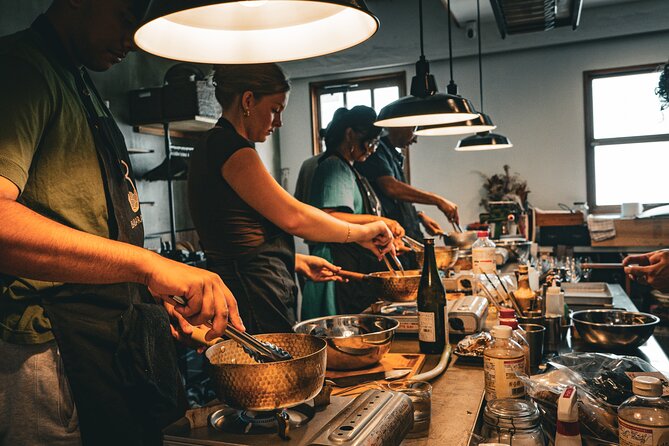
Gyoza provides a welcome change from noodle preparation. You learn how to make the dumplings and take part in the folding and cooking process.
Folding gyoza looks easy until you try to make consistent pleats. The chefs can guide your technique, and the small class size means you are less likely to be left on your own. The task is social and practical, with plenty of room to compare your dumplings with the ones made by the rest of the group.
The gyoza also adds variety to the meal. Ramen alone would make a satisfying class, but preparing dumplings gives you another Japanese cooking skill to take home. It is an especially useful addition for home cooks because gyoza can be adapted with different fillings and folded in batches.
At the end, you eat both the ramen and gyoza you helped prepare. The portions are described as generous, so you should arrive ready for a substantial lunch. The food is not a small tasting menu designed to keep you moving through other Tokyo attractions. Plan for the meal to be part of the main event.
The chefs and teaching style
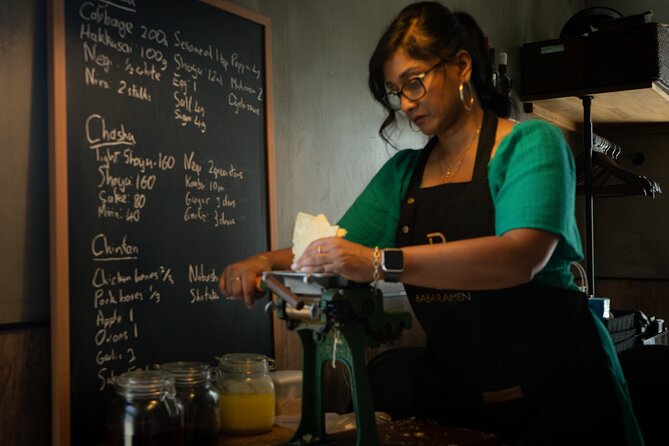
The instructors are bilingual in English and Japanese, which makes the class accessible to English-speaking visitors. Their role is not just to give instructions. They explain technique, answer questions, offer cultural background, and keep the group moving.
Andrew is associated with the class, and Eric, Jae, and Leo are also named among the team. The teaching style is warm and upbeat, with an emphasis on participation. That matters when a class lasts around four hours. A stiff or overly formal approach could make a long kitchen session tiring.
You should also know that the quality of the experience partly depends on the group. With a maximum of six people, the class is small, but you will still be cooking alongside others. If the group is lively and willing to participate, the morning can feel like a shared meal with a cooking lesson attached.
The instructors appear to keep people involved throughout. That is a strong point for anyone who wants to learn by doing. It may be less appealing if you prefer a quiet, private lesson with a chef focused only on you.
How much value do you get for $159.18?
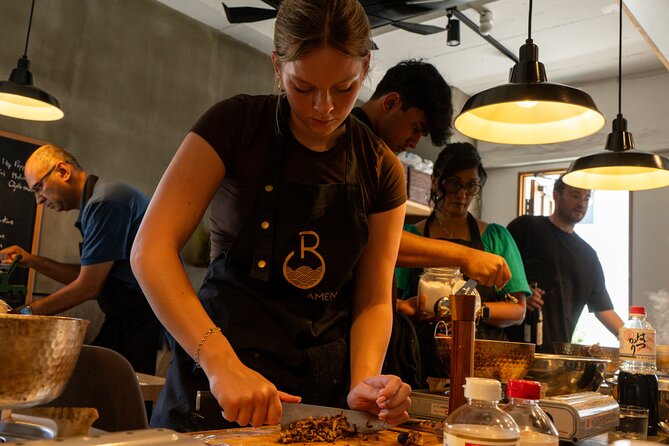
At $159.18 per person, this is not a cheap lunch. You can buy a bowl of ramen in Tokyo for far less, and even a casual meal with gyoza will cost only a fraction of the class price.
The value comes from the instruction and the amount of work included. You get about four hours, a restaurant setting, professional equipment, hands-on preparation, a full ramen and gyoza meal, and a cooking e-book for later use. You are paying for an activity, a meal, and a skill rather than food alone.
I think the price makes the most sense for people who actively enjoy cooking classes. If you only want to eat excellent ramen, visit a ramen shop. If you want a memorable food activity and hope to recreate the dish at home, the cost is easier to justify.
The e-book strengthens the value. You can refer back to the recipes after returning home, and one solo participant had already begun making a shoyu tare at home. That kind of follow-through is where the class earns more of its price.
Still, be realistic. The e-book does not remove the work involved. Fresh ingredients, time, and patience remain part of the recipe. You may learn useful shortcuts, but restaurant-quality ramen is not likely to become a ten-minute weekday meal.
Dietary needs and family suitability
Vegetarian and vegan options may be available, along with gluten-free and pork-free versions. You must add the request when booking, and the alternatives are subject to availability.
Do not wait until the morning of the class to mention an allergy or dietary restriction. Advance notice gives the team a chance to prepare suitable ingredients and explain what can be changed. If you have several food allergies, contact the provider before booking so you understand what can be accommodated.
The class can work well for families. A family with five people found the format engaging because everyone took part in the cooking. The chefs have also accommodated a 1.5-year-old child, though the kitchen includes hot pans and oil, so parents need to judge carefully whether the setting is right for their young child.
For older children and teenagers who enjoy cooking, the hands-on format can be a good fit. They will not simply sit through a lecture. For very young children, the heat and pace may require close supervision.
Service animals are allowed. The venue is near public transportation, and the mobile ticket makes it easy to keep the booking details on your phone.
Timing, effort, and what to wear
The class starts at 9:00 am and lasts approximately four hours. That puts the meal around late morning or midday, depending on the exact pace of the group.
I would avoid scheduling a tight appointment immediately afterward. Cooking involves several stages, and a small group may move at a different speed from another session. Give yourself a little breathing room before your next Tokyo plan.
Come ready to work. You may handle dough, hot cookware, oil, and fresh ingredients. The information provided does not specify a dress code, so practical clothing is the sensible choice. Avoid anything you would dislike getting splashed or dusted with flour.
The weather policy is worth noting. The experience requires good weather, and a cancellation caused by poor weather results in either another date or a full refund. The provider also requires a minimum number of participants. If that minimum is not met, you are offered another date or experience, or a full refund.
Who will enjoy this most?
This class suits you if you:
- Like cooking as much as eating
- Want to learn a Japanese dish you can try at home
- Prefer small groups to large demonstrations
- Enjoy cultural explanations alongside practical instruction
- Want to make noodles from scratch
- Have about four hours free in the morning
It is also a strong choice for families, couples, solo food lovers, and small groups of friends. Solo participants can fit into the small class and still receive help with the cooking.
You may want to skip it if you are looking for a quick activity, a low-cost meal, or a purely observational food tour. The class asks you to work, and the price is high if you do not care about the preparation.
Booking and cancellation details
Confirmation is provided at booking. You can cancel for a full refund up to 24 hours before the local start time. Cancellations or changes made less than 24 hours before the start are not refunded or accepted.
Because the class can be affected by weather and minimum attendance, avoid booking it as the one activity that must happen on a fixed morning. If your Tokyo schedule is tight, leave room for a date change.
Should you book Baba Ramen?
I would book this class if you want more than a bowl of noodles. The strongest reasons are the restaurant kitchen, the small group, the amount of hands-on work, and the chance to make noodles and gyoza yourself.
The $159.18 price is the main question. It is a lot for a meal, but reasonable for a four-hour cooking lesson that includes professional equipment, chef instruction, a full meal, and recipes for home use. You get the most value if you return home and actually make the dishes again.
Book it for a food-focused morning in Tokyo, especially if you enjoy learning through your hands. Skip it if you only want a quick taste of ramen or need a budget activity. For the right kind of cook, this is an unusually practical way to understand why a simple-looking bowl can demand so much skill and time.
FAQ
Where does the ramen and gyoza class take place?
The class takes place at Baba Ramen Cooking Meguro, at 3-chōme-7-32 Shimomeguro, Meguro City, Tokyo 153-0064, Japan.
What time does the class begin?
The start time is 9:00 am.
How long does the experience last?
The activity lasts approximately four hours.
What is included in the cooking class?
You make ramen noodles from scratch, prepare restaurant-style ramen, and make gyoza. The class also includes instruction from bilingual local chefs, use of professional kitchen equipment, and a cooking e-book for home use.
How many people can join the class?
The maximum group size is six travelers.
Are dietary alternatives available?
Vegetarian, vegan, gluten-free, and pork-free options may be available. You must request them in advance, and all alternatives are subject to availability.
Can I cancel for a full refund?
Yes. You can cancel at least 24 hours before the local start time for a full refund. Cancellations or changes made less than 24 hours before the start are not accepted or refunded.
Does the class finish at the same place where it starts?
Yes. The activity ends back at the Baba Ramen meeting point.
Just added around Tokyo
- Private Arrival Transfer : Narita International Airport to Central Tokyo City★ 4.5 · 12 reviews
- Narita Airport(NRT): Private Transfer to Tokyo/Yokohama 1-9pax★ 5.0 · 47 reviews
- Private Transfer from Narita Airport to Yokohama Port and City★ 4.5 · 17 reviews
- [Narita Airport Terminals 1, 2] 40-60km Sawara Itako Historic Bike Tour★ 5.0 · 13 reviews
- 3 Day Japan Highlights Tour: Tokyo, Mt.Fuji, Nara, Kyoto, Osaka★ 5.0 · 22 reviews
- Small Town in the Big City: Tasting Tokyo’s Kichijoji★ 5.0 · 195 reviews
- Small Town in the Big City: Tasting Tokyo’s Kichijoji★ 5.0 · 16 reviews
- The 10 Tastings of Tokyo With Locals: Private Street Food Tour★ 5.0 · 48 reviews
Tokyo Tours, compared.

Mt Fuji and Hakone 1-Day Bus Tour Return by Bullet Train
Read our review →

teamLab Planets TOKYO Digital Art Museum Entry Ticket
Read our review →
Mt Fuji & Hakone Cruise, Drum Show Bullet Train 1 Day from Tokyo
Read our review →
Sumo Show Experience with Chicken Hot Pot and a Photo
Read our review →
Shinjuku Food Tour (13 Dishes at 4 Local Eateries)
Read our review →
Tokyo Mt Fuji 5th St & Hakone Cruise Bus Tour w/Bullet Train
Read our review →
Flagship 2-Hours Official Street Go-Kart Tour – Tokyo Bay Shop
Read our review →Browse the lists this tour appears in