
Reviewed · TOKYO TOURS
Sake Tasting Masterclass in Shinjuku (8+ Varieties with a Pro)
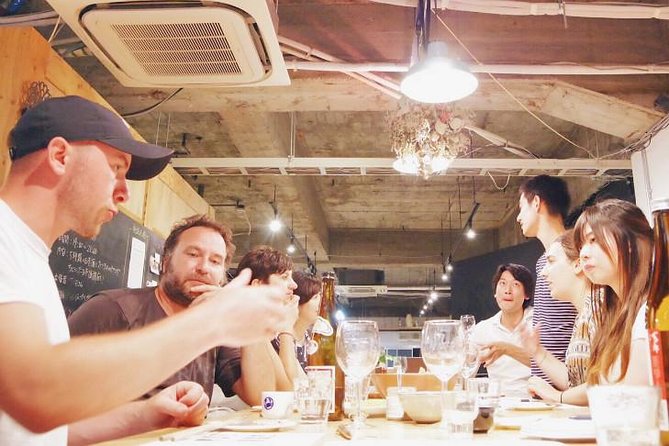
The most useful thing about this Shinjuku class is that it turns sake from a puzzling restaurant list into something you can actually choose. In two hours, a sake sommelier explains brewing, labels, serving styles, flavor profiles, and food pairings while you taste at least six varieties, often closer to nine or ten.
I like the small maximum of eight people, which gives you room to ask questions, and I like the practical focus on ordering and buying sake in Japan. Guides such as Max, Joe, Tadashi, Andrea, Megan, and Cassy are repeatedly praised for making the lesson lively rather than stiff. The main caution is simple: this is a generous tasting, not a token sip. Eat beforehand, drink water, and expect to feel the alcohol.
Key points to know before booking
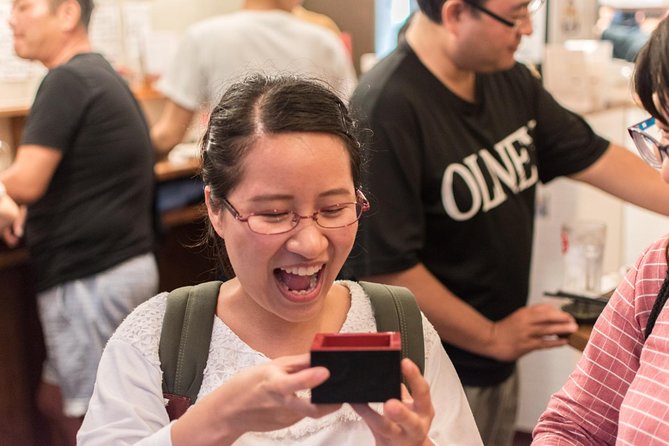
- A real tasting, not just a drink stop: You learn sake basics, brewing methods, labels, styles, and food matching.
- Usually more than six pours: Some sessions reach nine or ten varieties, so the afternoon can become quite boozy.
- Small groups matter: The maximum is eight people, and smaller sessions make it easier to ask questions.
- Useful Tokyo advice: Guides share tips for buying sake and ordering it at restaurants, along with local food suggestions.
- Snacks are included: They are selected to match the sake, but they do not replace lunch.
- A good first-day activity: The information helps you make better sake choices during the rest of your Japan trip.
What happens in the two-hour Shinjuku class
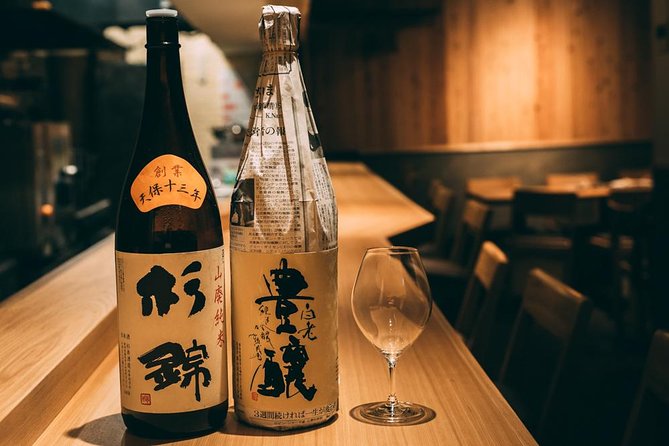
The meeting point is Ushinobi Shinjuku, a wagyu and sake venue in Nishishinjuku, at the Wagyu & SakeNSK Building, 201, 1-chōme-22-1 Hyakuninchō, Shinjuku City. The start time is 1:00 pm, and the experience finishes back at the same place.
The setting puts you in the right mood. You are not being led through a formal museum lecture. You sit with a small group, meet the guide, and begin learning through the sake in front of you. Since the activity stays in one location, you do not lose time moving between bars or restaurants.
I would still check the exact meeting point carefully before leaving your hotel. One booking experience involved confusion because the venue differed from the stated location, and the person initially went to the wrong place. The practical fix is to check your confirmation and map pin on the day, rather than relying only on the venue name.
The class covers Sake 101. That includes how sake is brewed, how its production has changed, what common terms mean, and how to read a label. You also learn why two bottles made from the same basic ingredients can taste so different.
The teaching is aimed at mixed experience levels. If you know nothing about sake, you can start with the broad ideas: dry or sweet, light or full-bodied, fragrant or restrained, modern or traditional. If you already drink sake, the session gives you more precise language for comparing bottles and asking better questions.
More Sake Tastings in Tokyo
- Tsukiji: Outer Market Walking Tour & Sake Tasting Experience
★ 4.9 · 81 reviews - Tsukiji: Unlimited Sake Tasting Experience
★ 4.9 · 67 reviews - Unlimited Sake Tasting with Sushi Omakase tasting in Tokyo
★ 4.0 · 44 reviews
Learning how rice, water, and brewing shape the bottle
Sake can seem confusing because the label often contains unfamiliar Japanese terms, and the drink does not fit neatly into the categories used for wine or beer. The class helps you connect the terminology to what you taste.
You will learn about brewing techniques and the role of rice. The point is not to memorize every technical detail. It is to notice how production choices affect aroma, texture, sweetness, acidity, and finish.
The tasting chart is one of the most useful parts. You create your own notes as you sample, recording what you smell and taste and deciding which styles suit you. That makes the class more practical than simply drinking a line of small pours and trying to remember them later.
Guides have different personalities and teaching styles, but the strongest pattern is clear. Max is praised for combining expertise with humor and energy. Joe is described as both entertaining and especially helpful with the finer points of sake. Tadashi receives praise for being prepared and for offering recommendations around Tokyo and beyond.
Andrea is noted for explaining how sake can feel modern or traditional, light or full-bodied. Megan is praised for patiently answering questions. Cassy is described as warm and fun. The guide you receive is not guaranteed, so you should book for the structure of the experience rather than for one particular host. If a certain guide matters to you, you can ask the provider, but the supplied information does not promise a specific assignment.
Expect six to ten sake samples
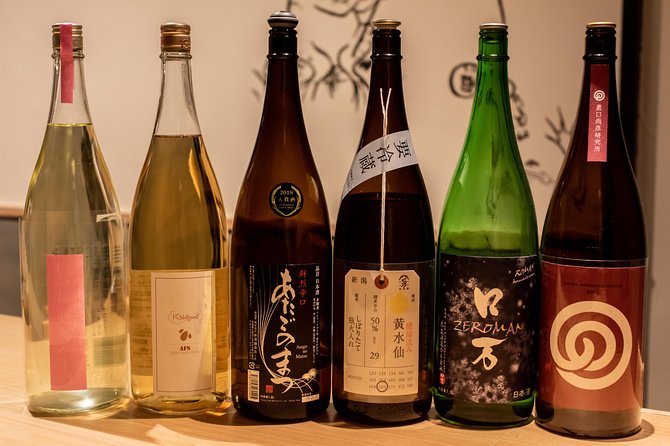
The advertised experience says you will sample more than six types. In practice, several sessions reached nine or ten. That range is good news if you want variety, but it is also the main reason to treat the class as a substantial alcohol experience.
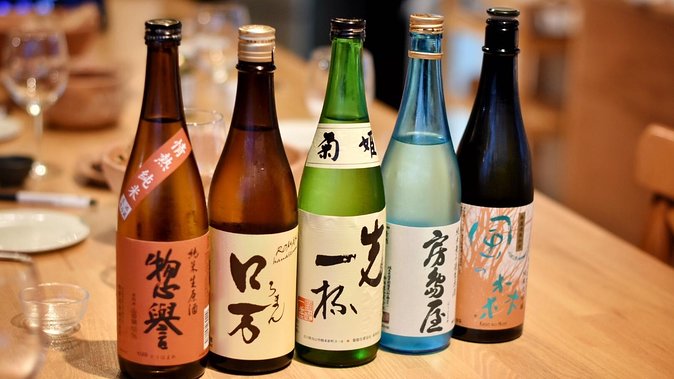
The samples are selected to show contrasts. You may find that one sake is crisp and easy to drink, another has a fuller feel, and another has a more pronounced aroma or a sweeter finish. The goal is not to crown one bottle as the best. It is to help you find the style you personally like.
That matters in Japan because sake menus can be hard to judge from price or name alone. Once you have compared several types side by side, terms such as Junmai or Junmai Daiginjo begin to mean something more than decoration on a menu. One attendee later felt confident ordering a Junmai Daiginjo on an ANA flight, which is exactly the sort of small victory this class can give you.
The tasting is generous enough that beginners should plan sensibly. One first-time drinker found ten tastings too much and felt the information came quickly. Another person ran out of time to eat before the class and became intoxicated fast. Those are not minor details. Have a proper meal first, pace yourself, and use water during the session.
The minimum drinking age is 20. Anyone under that age cannot take part in the alcohol tasting.
Snacks show why sake belongs at the table
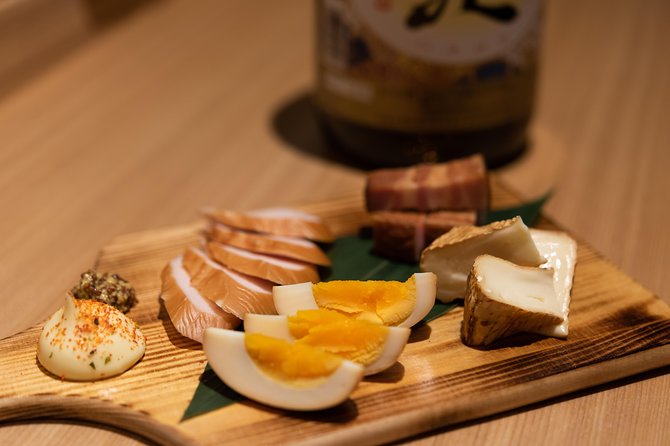
Beverages and locally sourced snacks are included. The snacks are chosen to complement the sake, so you can see how the drink changes when paired with food rather than tasting it on its own.
This is valuable because many people first encounter sake as a warm drink served with a single dish. The class presents it as a broad dining partner. A lighter style may suit one bite, while a richer or more aromatic sake may work better with another.
Do not arrive expecting a full meal. The included food is specifically described as snacks, not lunch or dinner. If you book the 1:00 pm class, eat before you arrive. That protects you from becoming tipsy too soon and lets you pay attention to the lesson.
The food pairing also gives you a useful way to remember what you liked. Rather than saying only that a sake was good, you can think, I preferred this style with savory food or that lighter bottle worked better as a first pour. It turns a vague preference into something you can use later.
More sake tastings around Tokyo:
- Tokyo: 7 Kinds of Sake Tasting with Japanese Food Pairings
★ 4.9 · 37 reviews - From Tokyo: Mount Fuji, Cruise and Sake Tour
★ 3.9 · 36 reviews - Historic Kanda Sake Tasting at Tokyo’s Oldest Shop (1596)
★ 4.9 · 33 reviews - Casual Japanese sake tasting and snack experience, Kabukicho
★ 4.7 · 31 reviews
Why the eight-person limit improves the experience
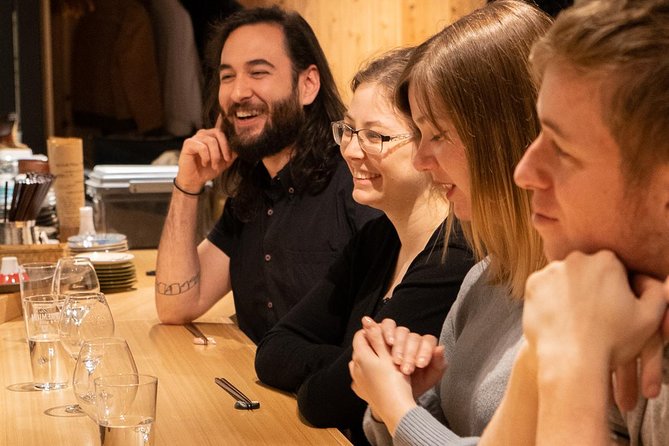
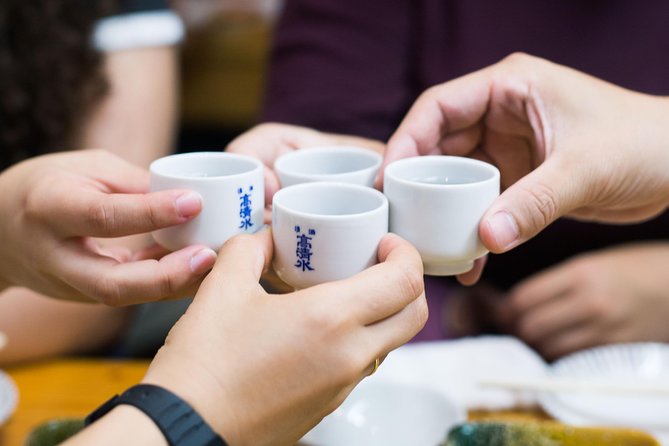
The maximum group size is eight, and some sessions are smaller. That limit changes the feel of the afternoon.
In a large tasting, you may hear a speech, take a few sips, and leave with unanswered questions. Here, you have a better chance to ask what a label means, explain that you prefer dry drinks, or compare your notes with the person beside you.
One session with six people was described as intimate and easy for questions. Another booking became a private tasting because only one person had reserved that day. The activity went ahead, giving that participant unusually personal attention from Joe.
You should not assume every date will be private. Still, the small-group design is a genuine strength. It suits solo visitors, couples, and small groups who enjoy meeting new people without being placed in a large party.
The social side is part of the appeal. You taste with old friends or new ones, and the casual format makes it easier to talk about preferences without feeling tested. A sake class can sound formal, but this one is built around conversation, snacks, and a steady series of pours.
The guide’s local advice can shape the rest of your trip
The class is not limited to what happens at the table. The guides also share tips for ordering and buying sake in Tokyo.
That advice is useful at the right moment in a Japan itinerary. You may soon face a long sake list with little English explanation, or enter a shop with bottles from regions you have never heard of. The tasting gives you a few questions to ask and some vocabulary to use.
Guides have also offered suggestions for the rest of a visitor’s time in Japan, especially around food. Joe is described as a real food enthusiast who shared recommendations beyond the class. Tadashi also received praise for offering ideas for Tokyo and other parts of the country.
You should treat these suggestions as an extra benefit, not the main product. The core experience is the tasting and lesson. But if you take notes, you may leave with more than a favorite sake. You may also have a better sense of where to eat and what to order next.
This is why I would consider booking it early in your trip. The class gives you two hours of useful groundwork before you start ordering sake in izakayas, restaurants, and department-store food halls. Booking it near the end of your visit still works, but you will have less time to use what you learn.
Is $72.29 a fair price?
At $72.29 per person, this is not the cheapest way to drink sake in Tokyo. You could order several glasses at a bar for less, especially if you already understand the categories and labels.
The comparison is not quite fair, though. The price includes a two-hour guided lesson, at least six sake samples, often nine or ten, snacks, a tasting chart, and personal advice from a sake expert. You are paying for context and comparison, not just liquid.
I think the value is strongest for first-time drinkers and curious food lovers. If the class helps you avoid ordering bottles or glasses you dislike for the rest of your trip, the practical benefit grows. It is also a good choice for couples who want an activity with more substance than a standard bar visit.
The value is weaker if you are looking for a full meal, a brewery tour, or a quiet tasting with very little instruction. It is also less attractive if you do not drink alcohol or if you are uncomfortable with several pours in two hours.
The 99 percent recommendation rate and five-star score from 271 ratings indicate strong overall satisfaction, but you should still pay attention to the one recurring concern: the pace and volume can be demanding for a beginner. A high rating does not remove the need to eat first.
Practical details that affect your afternoon
The class lasts about two hours and begins at 1:00 pm. It starts and ends at the Shinjuku meeting point, with no hotel pickup, drop-off, or transportation between attractions.
The venue is near public transportation, but you are responsible for getting there. Allow time to locate the correct building, especially because one person had trouble with the stated location. Keep the confirmation available on your phone, since the booking provides a mobile ticket.
Food restrictions should be sent to the provider at least a week before the date. That advance notice matters because the snacks are selected to pair with the sake and may need adjustment.
Cancellation is free up to 24 hours before the start time for a full refund. Cancellations or changes made within 24 hours are not accepted for a refund, and the cut-off follows Tokyo local time.
Who will get the most from this class?
I would recommend it to you if you want to understand sake rather than simply drink it. It suits a beginner who feels lost in front of a Japanese menu, a regular sake drinker who wants better tasting language, or a food-focused visitor looking for a social afternoon in Shinjuku.
It is particularly useful for anyone starting a Japan trip. You can carry the new vocabulary into restaurants, ask for styles you enjoyed, and use the take-home references mentioned by one attendee when choosing bottles later.
Couples and small groups should find the format comfortable. Solo visitors can also fit in well, since the tasting encourages conversation and one-person bookings may still proceed.
I would hesitate if you want a full lunch, need a very slow lesson, or expect only a few small samples. If you are new to alcohol, plan around the tasting carefully. Eat first, drink water, and remember that the educational part does not make the alcohol disappear.
Should you book the Shinjuku sake masterclass?
Yes, if you have two hours, enjoy Japanese food and drink, and want to leave Tokyo able to order sake with some confidence. The combination of guided comparison, snacks, label advice, and a group capped at eight gives the experience a clear purpose.
Book it early in your trip if possible, and make a meal part of your plan. Go in expecting a lively class with real pours, not a museum-style talk. If Max, Joe, Tadashi, Andrea, Megan, or Cassy leads your session, you may get a particularly memorable personality, but the main value comes from the format itself.
For a visitor who wants practical knowledge, a social setting, and a broad taste of sake in central Tokyo, $72.29 is a reasonable spend. Just keep your afternoon free, bring your appetite, and pace yourself.
FAQ
Where does the sake tasting take place?
The meeting point is Ushinobi Shinjuku at the Wagyu & SakeNSK Building, 201, 1-chōme-22-1 Hyakuninchō, Shinjuku City, Tokyo 169-0073, Japan.
What time does the experience start?
The class starts at 1:00 pm.
How long does the sake class last?
The experience lasts approximately two hours.
How many sake varieties will I taste?
You will taste more than six varieties. Some sessions include around nine or ten different sakes.
Are food and drinks included?
Yes. Sake and snacks are included. The snacks are not a full-size meal.
What is the minimum drinking age?
The minimum drinking age is 20.
How large is the group?
The activity has a maximum of eight participants. Some sessions may be smaller, and a single booking has been accommodated.
Can I cancel for a full refund?
Yes. You can cancel at least 24 hours before the start time for a full refund. Cancellations or changes made less than 24 hours before the experience are not refundable.
More Food Tours in Tokyo
- Tokyo: Shinjuku Food Tour (13 Dishes at 4 Local Eateries)
★ 5.0 · 6,603 reviews - Tokyo Tsukiji Fish Market Food and Culture Walking Tour
★ 5.0 · 3,184 reviews - Tokyo: Shinjuku Food Tour (15 Dishes and 4 Eateries)
★ 4.9 · 2,033 reviews - Tokyo: Tsukiji Fish Market Food and Walking tour
★ 5.0 · 1,724 reviews
More Drinks-Led Nights in Tokyo
- Tokyo Bar Hopping Tour in Shinjuku (All-You-Can-Drink + Dinner)
★ 5.0 · 3,587 reviews - Best of Shinjuku: Izakaya Food Tour (4 Stops, 14+ Tastings)
★ 5.0 · 1,863 reviews - Tokyo: Shinjuku Local Bar and Izakaya Guided Walking Tour
★ 4.9 · 1,794 reviews - Shibuya Meltdown Nightlife Tour: All-You-Can-Drink Bar Hopping
★ 5.0 · 1,058 reviews
Just added around Tokyo
- Private Arrival Transfer : Narita International Airport to Central Tokyo City★ 4.5 · 12 reviews
- Narita Airport(NRT): Private Transfer to Tokyo/Yokohama 1-9pax★ 5.0 · 47 reviews
- Private Transfer from Narita Airport to Yokohama Port and City★ 4.5 · 17 reviews
- [Narita Airport Terminals 1, 2] 40-60km Sawara Itako Historic Bike Tour★ 5.0 · 13 reviews
- 3 Day Japan Highlights Tour: Tokyo, Mt.Fuji, Nara, Kyoto, Osaka★ 5.0 · 22 reviews
- Small Town in the Big City: Tasting Tokyo’s Kichijoji★ 5.0 · 195 reviews
- Small Town in the Big City: Tasting Tokyo’s Kichijoji★ 5.0 · 16 reviews
- The 10 Tastings of Tokyo With Locals: Private Street Food Tour★ 5.0 · 48 reviews
Tokyo Tours, compared.
Mt Fuji and Hakone 1-Day Bus Tour Return by Bullet Train
Read our review →
teamLab Planets TOKYO Digital Art Museum Entry Ticket
Read our review →
Mt Fuji & Hakone Cruise, Drum Show Bullet Train 1 Day from Tokyo
Read our review →
Sumo Show Experience with Chicken Hot Pot and a Photo
Read our review →
Shinjuku Food Tour (13 Dishes at 4 Local Eateries)
Read our review →
Tokyo Mt Fuji 5th St & Hakone Cruise Bus Tour w/Bullet Train
Read our review →
Flagship 2-Hours Official Street Go-Kart Tour – Tokyo Bay Shop
Read our review →Browse the lists this tour appears in