
Reviewed · TOKYO TOURS
Tokyo: Traditional Geisha Experience Show & Japanese Dinner
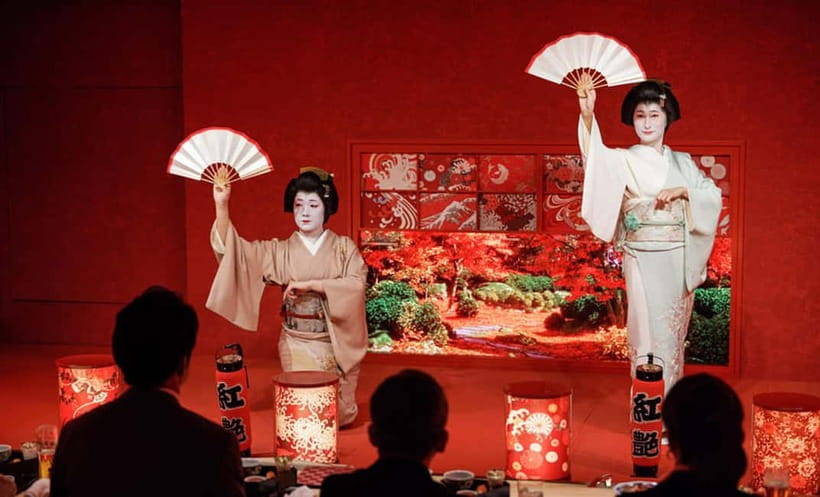
The most unusual part of this Tokyo evening is the setting: Benitsuya’s intimate tatami room is normally closed to first-time visitors without a special introduction. I like the close-up geisha performance, with graceful dance and live shamisen music, and I like that you are not simply watching from a distant stage. You also get time for games, questions, and photos.
I also like the thoughtful meal, built around seasonal Japanese ingredients and Kyoto-style kaiseki presentation. The main consideration is the price, $141 per person, and the short 90-minute schedule. This is a special cultural evening rather than a long dinner, so diners looking for a large meal or a full-night program may find it brief.
Key points to know before booking
- A rare public geisha experience: Benitsuya welcomes first-time visitors without a private introduction.
- A true tatami-room setting: You sit in a traditional zashiki room with crimson walls and Japanese decor.
- Dinner changes with the season: The multi-course kaiseki meal uses seasonal ingredients and delicate presentation.
- You take part, not just watch: Ozashiki games and conversation give the evening a friendly, interactive side.
- English support is available: Staff help explain the program and make questions easier to ask.
- The location is unusually convenient: Benitsuya is one minute from Shimbashi Station, on the sixth floor of Grand Hammer.
Entering Benitsuya near Shimbashi Station
Benitsuya is on the sixth floor of Tokyo’s Grand Hammer building, just one minute from Shimbashi Station. From the station, use west exit 7 and look for Shimbashi SL Square. After entering the building marked Grand Hammer, follow the directions to the sixth floor and Benitsuya, written in Japanese as 紅艶.
That simple location matters. You do not need to set aside an entire evening for a distant cultural venue or work out a complicated transfer. The meeting point is in central Tokyo, and the short walk from the station makes this a practical choice before or after other plans in the Shimbashi area.
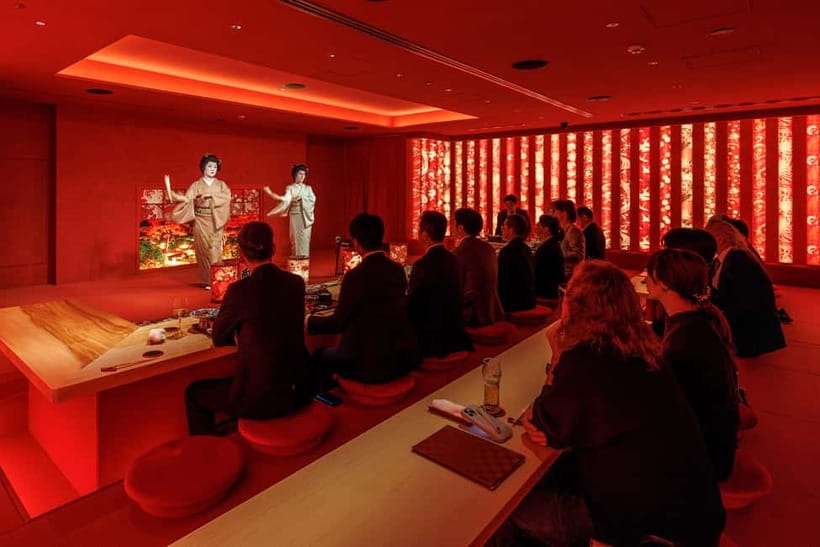
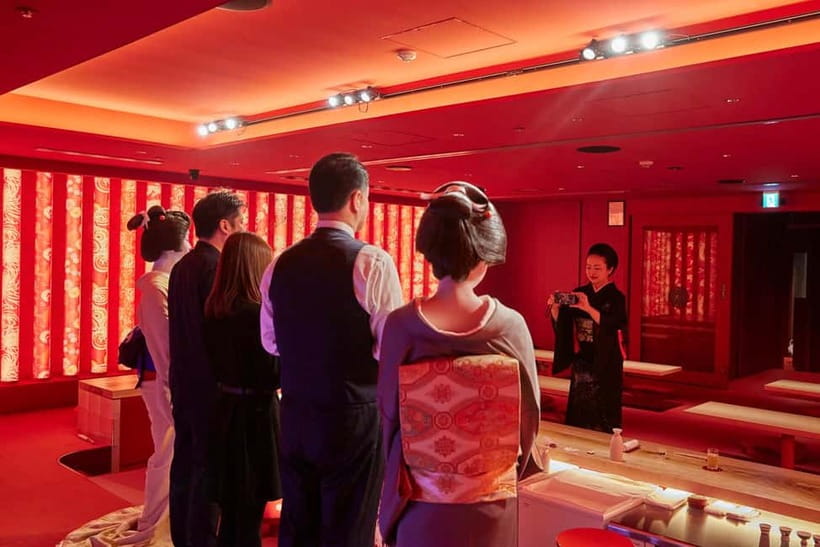
The room itself sets the tone. You enter a zashiki, a traditional Japanese room with tatami flooring, crimson walls, and classic decorative touches. This is not a large theater built for crowds. The design is meant to give the performance a more personal feel, with the geisha close enough for you to notice the detail in the costume, movement, and music.
You should plan to arrive ready for a cultural setting rather than a casual restaurant meal. Smoking is not allowed, and flash photography is prohibited. Those rules protect the calm atmosphere and prevent bright flashes from interrupting the performance or photos.
More geisha-district evenings:
- Asakusa: Geisha Performance and Tea House Experience
★ 5.0 · 52 reviews - Kyoto Geisha Walking Tour: Gion District & Hidden Gems
★ 4.7 · 3,273 reviews - Kyoto: Gion Magical Night Walking Tour with Geisha Trivia
★ 4.9 · 2,393 reviews
A Kyoto-style kaiseki dinner with changing seasonal dishes
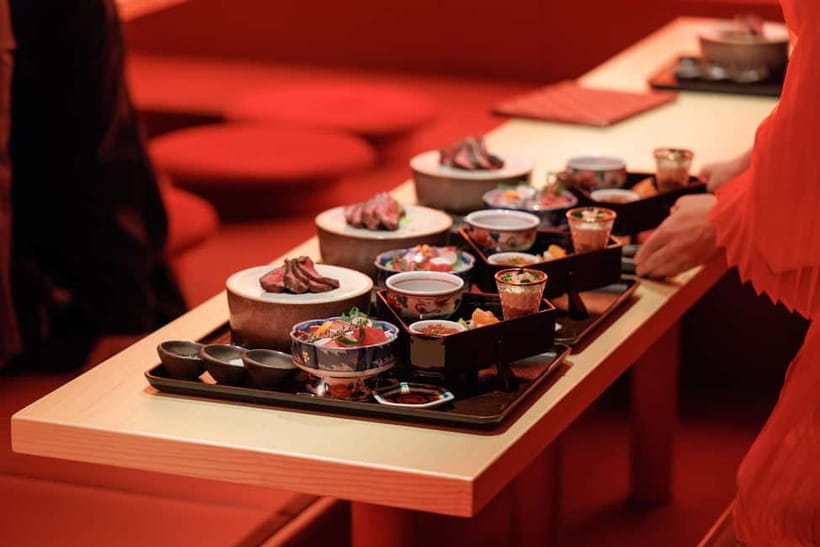
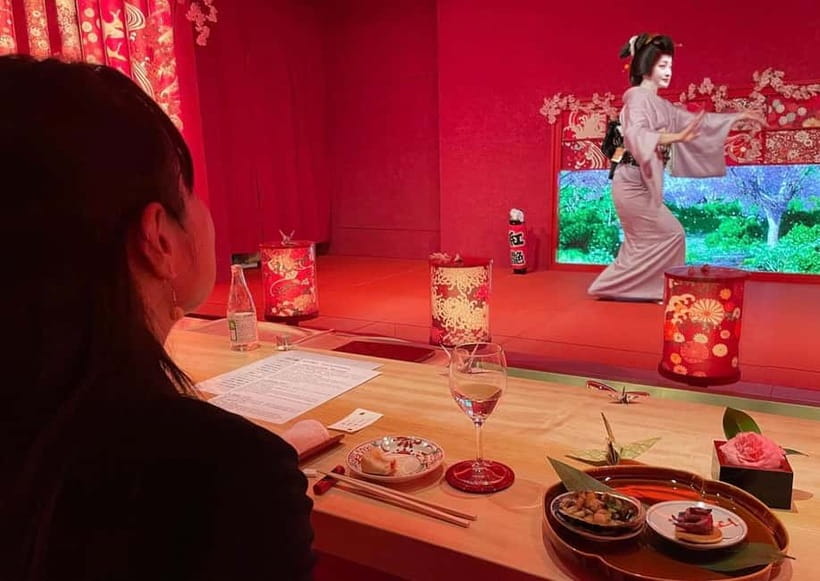
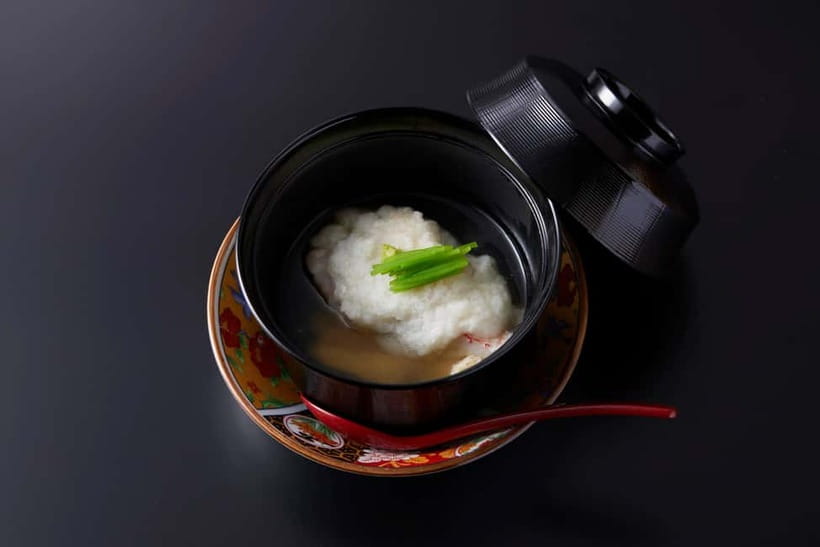
The meal is a multi-course kaiseki dinner inspired by Kyoto cuisine. Kaiseki is valued for balance, seasonality, careful arrangement, and the use of small portions rather than one large central dish. Here, the menu changes according to the time of year, so the exact dishes are not fixed.
That changing menu is part of the appeal. You are not ordering from a standard list designed to look the same every night. Instead, the food highlights seasonal Japanese ingredients and delicate presentation. The supplied details do not name each course, so you should not book expecting a particular fish, dessert, or regional specialty.
I like that the food is part of the cultural experience rather than an afterthought. The evening asks you to notice how the meal looks, how it is served, and how it fits with the room and performance. The price includes food, drinks, the entrance fee, and tip, which makes the $141 cost easier to judge. You are paying for a complete cultural program, not just a dinner reservation.
Two recent verified bookings praised the meal as fresh and delicious, and one specifically described the atmosphere as excellent. That matches the basic strength of this format: a carefully presented Japanese meal gives you something to enjoy even during the quieter moments between performances.
Still, keep your expectations sensible. A 90-minute cultural program is not designed as a long, leisurely banquet. The course lineup changes, and the portion style is part of kaiseki dining. If you have food allergies, tell the operator when booking. That is especially important when the menu is seasonal and not fully specified in advance.
Drinks are included, but the available choices are not listed. If you need details about a particular drink, ask before booking rather than assuming a specific sake, beer, wine, or soft drink will be served.
Watching dance with live shamisen music
The centerpiece is a live geisha performance in the zashiki room. You watch traditional dances accompanied by live shamisen music, a distinctive Japanese string instrument with a bright, rhythmic sound.
The small-room format changes the experience. On a large stage, you may notice the broad shape of a dance. In this setting, you can pay attention to controlled hand movements, posture, costume, and the careful pace of the performance. The atmosphere is formal, but not distant.
The performance also offers a useful introduction to the role of geisha as traditional performing artists. Dance and shamisen music are not added as quick entertainment between dinner courses. They are the reason the evening exists, and the intimate room lets you see how much skill goes into a restrained performance.
English-speaking staff help you follow what is happening. The information does not identify individual staff or geisha by name, so you should not expect a named guide-led lecture. Instead, the support is practical: staff can help explain the activity, translate questions, and keep the evening comfortable for people unfamiliar with Japanese customs.
Photography is allowed, but flash photography is not. Keep your camera or phone ready for the designated photo time, and avoid raising it during the dance unless staff indicate that photography is fine. This small bit of courtesy matters in a quiet room.
Ozashiki games make the evening more personal
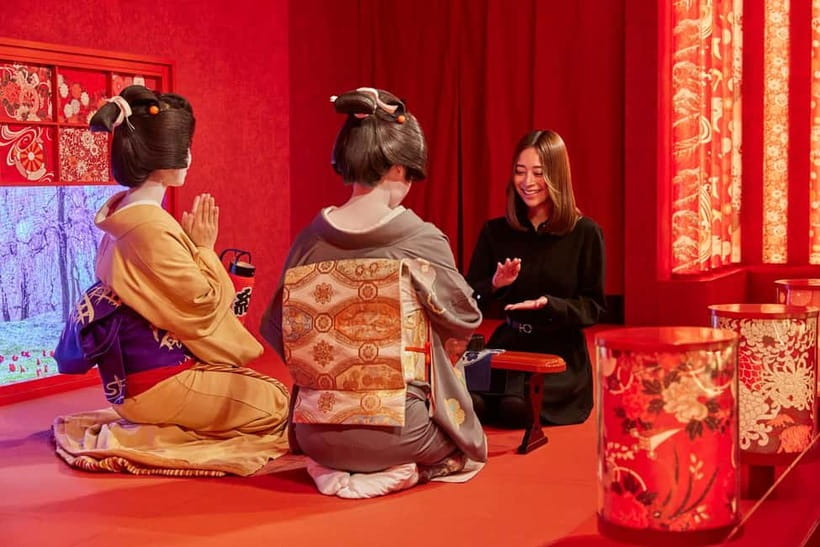
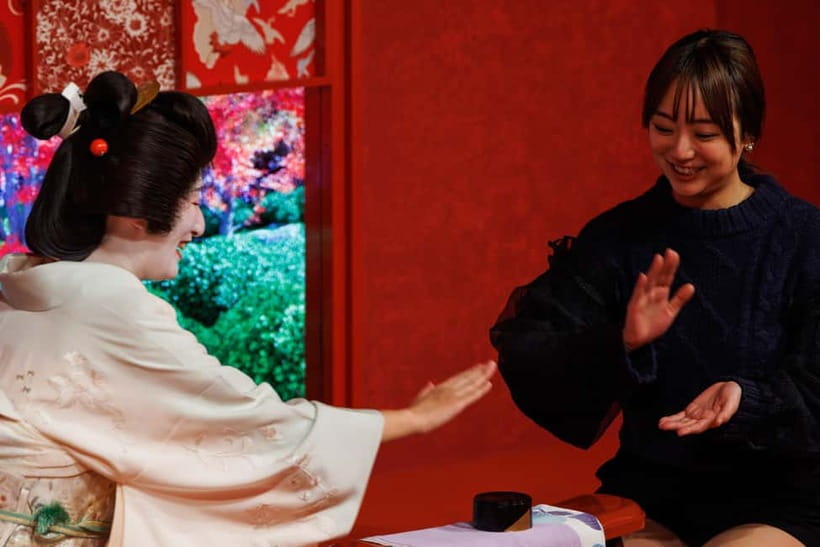
After the performance, you get to play traditional ozashiki games. These games are linked to the social world of the geisha room and are designed to be enjoyed with the performers, not watched from the sidelines.
This is one of the strongest reasons to choose this experience over a standard cultural show. The games give the evening an easy, playful turn after the formal dance and music. You do not need previous knowledge of Japanese customs to take part. English-speaking staff are there to explain what to do.
You also have a chance to converse with the geisha. You can ask about their art, lifestyle, and culture, with staff helping when language creates a barrier. That question-and-answer time is valuable because it gives you a more direct connection to the people practicing these traditional arts.
Keep the tone respectful. A geisha encounter is not a costume photo opportunity alone. The performance, music, games, and conversation all belong to a long-standing artistic tradition. The setting invites curiosity, but it also calls for attention to the instructions about photography and interaction.
The social part may be especially useful for first-time visitors who want more than a passive show. It also makes the activity suitable for people who are curious about Japanese culture but do not speak Japanese. You have enough structure to feel guided, yet enough interaction to avoid feeling like you are simply watching a demonstration.
More dinners out in Tokyo:
- Tokyo Bar Hopping Tour in Shinjuku (All-You-Can-Drink + Dinner)
★ 5.0 · 3,587 reviews - Tokyo: Sumo Show and Dining Experience
★ 4.8 · 2,742 reviews - Sumida River: Japanese Traditional Yakatabune Dinner Cruise
★ 4.6 · 779 reviews - Tokyo Bay Yakatabune Dinner/Day Cruise with Japan Show and Drinks
★ 4.5 · 473 reviews
Photos with geisha in formal kimono
The evening ends with time for photos with the geisha. This is a memorable souvenir, especially because the photo is taken in the traditional room rather than against a generic backdrop.
The geisha’s elegant kimono, the crimson walls, and the tatami setting give the pictures a strong sense of place. Since flash photography is prohibited, use the available room lighting and follow staff directions. You may want to clear space on your phone before arriving.
The photo time is a useful finale because it gives you a relaxed moment after the performance and games. It also avoids the awkwardness of trying to interrupt the program for a picture. Let the staff organize the process, and remember that the evening is built around a live artist, not only a portrait session.
What the $141 price really covers
At $141 per person, this is not a budget dinner. The value depends on how much you want a rare cultural encounter and how you compare it with other Tokyo entertainment.
Your fee includes the multi-course dinner, drinks, entrance, and tip. More important, it includes access to a venue that is normally not open to first-time visitors without an introduction. That access is a major part of the cost. You are also paying for a live performance, staff support in English, interactive games, conversation, and photos.
I would consider the price reasonable for a special-occasion evening if you are interested in traditional Japanese arts. It combines food and performance in one convenient place, which can be more efficient than paying separately for dinner and a cultural show.
The value is weaker if you mainly want a filling meal, a long night out, or a broad survey of Japanese culture. Ninety minutes passes quickly, and the menu is seasonal rather than selectable. You should choose this for the access and interaction, not simply for the amount of food.
The overall rating is 4.2 from 59 reviews, while the two most recent verified ratings supplied for this experience gave full marks. Their strongest points were consistent: the geisha were described as friendly and talented, the dance felt beautiful, the meal tasted fresh, and the room created a memorable atmosphere. Those are the parts I would place at the center of your decision.
Who will enjoy this 90-minute cultural evening
This experience fits you best if you want a compact, polished introduction to traditional Japanese performance. It works well for a first visit to Tokyo, a special evening, or a trip where you want one activity that combines dining, music, dance, and personal interaction.
It is also a good fit if you feel uncertain about how a geisha experience works. The English-speaking staff provide support, and the program has a clear shape: arrive, dine, watch the performance, play games, speak with the geisha, and take photos.
You may want to skip it if you dislike formal dining, cannot eat a menu that changes with the season, or prefer a large stage show with more spectacle. The experience is intimate and refined, not loud or theatrical in the modern sense.
It is not available to anyone under 20. Groups with younger family members need to choose another activity. Wheelchair access is available, though you may still want to confirm any specific mobility needs when booking.
Timing, cancellation, and practical details
The full program lasts 90 minutes, with starting times shown according to availability. Since the evening is short, arrive at the correct building and floor without delay. Shimbashi Station’s west exit 7 is the key landmark, and Grand Hammer is directly by SL Square.
The price includes tip, so you do not need to plan an extra gratuity for the performers or staff. Food and drinks are included as well, but the exact seasonal menu and drink selection are not published in the supplied details.
You can cancel up to 24 hours in advance for a full refund. A reserve-now, pay-later option is also available, which helps if your Tokyo schedule is still changing.
Remember the basic house rules: no smoking and no flash photography. Tell the operator about food allergies at the time of booking, and note the age limit of 20 and older.
Should you book Benitsuya?
Book this if you want rare access to a traditional geisha setting and value personal interaction more than a long meal. The close dance performance, live shamisen, seasonal kaiseki courses, ozashiki games, and photo time give you several distinct parts in one 90-minute program.
I would especially recommend it for a first-time visitor who wants an easy introduction with English support. The Shimbashi location keeps the logistics simple, and the included dinner, drinks, tip, and performance make the price easier to justify for a special night.
Think twice if your priority is quantity, a low-cost dinner, or a full evening of entertainment. The menu changes, the program is brief, and the atmosphere depends on quiet attention. For the right audience, though, Benitsuya offers a rare chance to see traditional Japanese arts at close range and take part in them respectfully.
FAQ
Where is the geisha experience held?
It is held at Benitsuya, on the sixth floor of Tokyo’s Grand Hammer building. The building is one minute from Shimbashi Station, west exit 7, directly in front of Shimbashi SL Square.
How long does the experience last?
The activity lasts 90 minutes. Starting times depend on availability.
What is included in the price?
Food, drinks, the entrance fee, and tip are included in the $141 per-person price.
Is dinner included?
Yes. You receive a multi-course kaiseki dinner inspired by Kyoto cuisine. The dishes change with the season.
Is English support available?
Yes. English-speaking staff are available to guide you and help with interaction during the program.
Can I take photos with the geisha?
Yes. Time is provided for memorable photos with the geisha in kimono. Flash photography is not allowed.
Can children attend?
No. The experience is not available to anyone under 20.
Is the venue wheelchair accessible?
Yes. The activity is listed as wheelchair accessible. Inform the operator about any specific needs when booking.
More Shows in Tokyo
- Mt Fuji & Hakone Cruise, Drum Show Bullet Train 1 Day from Tokyo
★ 4.0 · 7,413 reviews - Tokyo: Sumo Show Experience with Chicken Hot Pot and a Photo
★ 4.8 · 6,678 reviews - the SUMO show
★ 5.0 · 1,960 reviews - Tokyo Shinjuku Sumo Show & Experience with Photo
★ 5.0 · 1,750 reviews
More Places to Eat in Tokyo
- Tokyo: Samurai Restaurant Show Ticket with 2 Drinks
★ 4.5 · 1,307 reviews - Tokyo: Shinjuku Bar Hopping with All-You-Can-Drink & Dinner
★ 4.9 · 440 reviews - Tokyo Dinner Cruise & Tradition Show & Drinks & Tokyo Tower
★ 4.7 · 315 reviews - Tokyo Bay: Traditional Japanese Yakatabune Dinner Cruise
★ 4.7 · 243 reviews
Just added around Tokyo
- Private Arrival Transfer : Narita International Airport to Central Tokyo City★ 4.5 · 12 reviews
- Narita Airport(NRT): Private Transfer to Tokyo/Yokohama 1-9pax★ 5.0 · 47 reviews
- Private Transfer from Narita Airport to Yokohama Port and City★ 4.5 · 17 reviews
- [Narita Airport Terminals 1, 2] 40-60km Sawara Itako Historic Bike Tour★ 5.0 · 13 reviews
- 3 Day Japan Highlights Tour: Tokyo, Mt.Fuji, Nara, Kyoto, Osaka★ 5.0 · 22 reviews
- Small Town in the Big City: Tasting Tokyo’s Kichijoji★ 5.0 · 195 reviews
- Small Town in the Big City: Tasting Tokyo’s Kichijoji★ 5.0 · 16 reviews
- The 10 Tastings of Tokyo With Locals: Private Street Food Tour★ 5.0 · 48 reviews
Tokyo Tours, compared.

Mt Fuji and Hakone 1-Day Bus Tour Return by Bullet Train
Read our review →

teamLab Planets TOKYO Digital Art Museum Entry Ticket
Read our review →
Mt Fuji & Hakone Cruise, Drum Show Bullet Train 1 Day from Tokyo
Read our review →
Sumo Show Experience with Chicken Hot Pot and a Photo
Read our review →
Shinjuku Food Tour (13 Dishes at 4 Local Eateries)
Read our review →
Tokyo Mt Fuji 5th St & Hakone Cruise Bus Tour w/Bullet Train
Read our review →
Flagship 2-Hours Official Street Go-Kart Tour – Tokyo Bay Shop
Read our review →Browse the lists this tour appears in