
Reviewed · TAKAYAMA TOURS
Seki: Samurai Knife Making Experience at the Knife Museum
Seki’s best souvenir is not something you pick from a shelf. It is the knife you polish, sharpen, assemble, and mark with your own name. At the G. Sakai Knife Museum, master craftsman Sumi and instructor Yoshi guide you through the process, while Hiro handles transport and English interpretation.
I like two things here: you learn a useful sharpening skill, and you get a real kitchen knife rather than a decorative trinket. I also like the generous mix of food and culture, from a Japanese lunch to the swordmaking visit. The main caution is time. The knife work can run well beyond the stated schedule, and the choice of blade shapes and handle styles is not unlimited.
Key details that make this day special
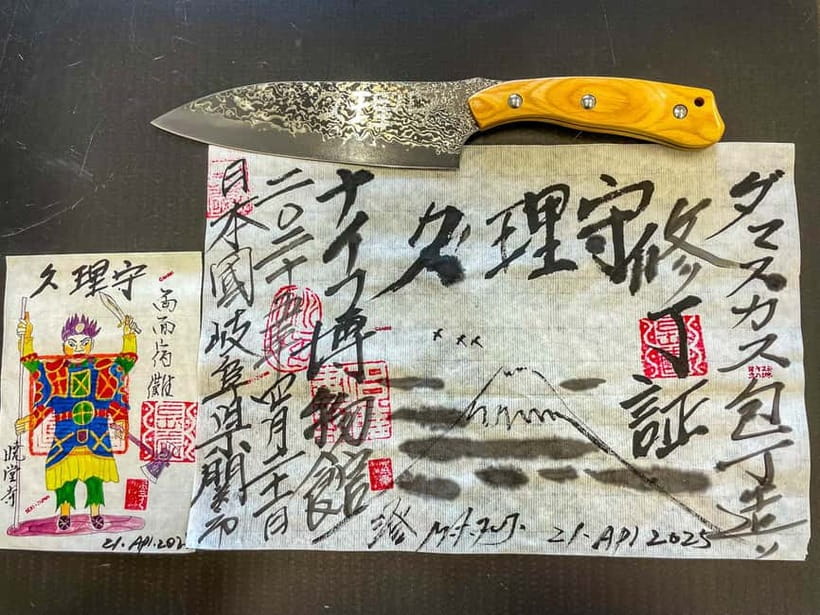
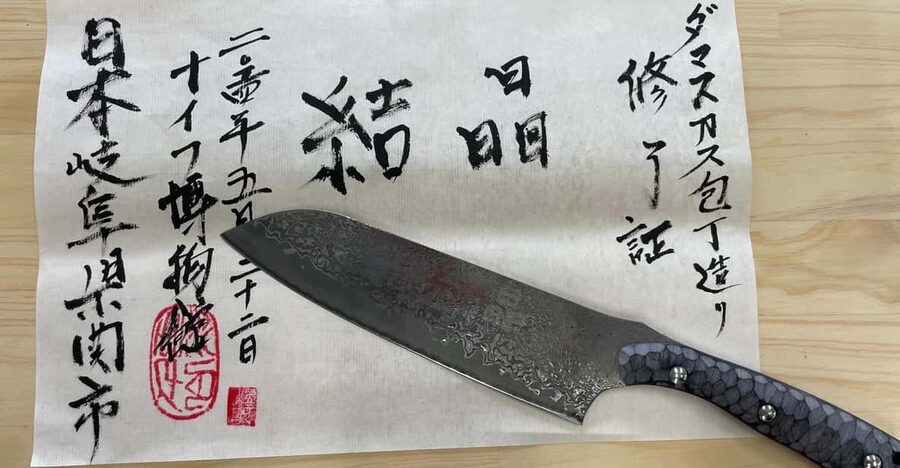
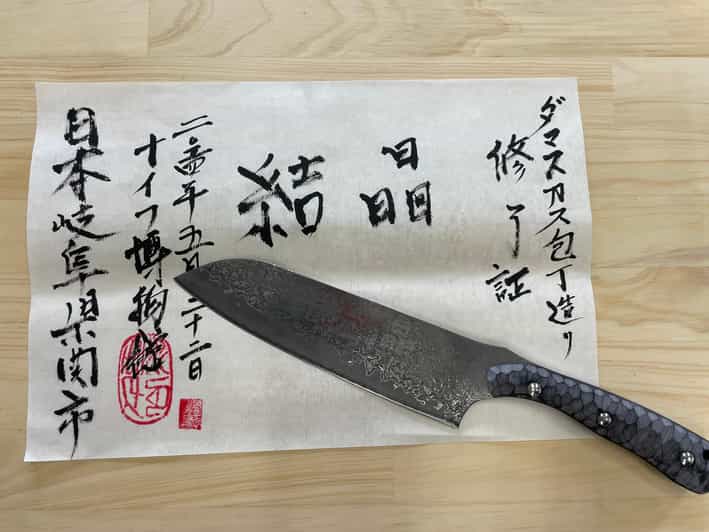
- A knife with your name on it: Your name can be written in kanji or kana and applied to the blade using a special technique.
- Hands-on work, not a quick demonstration: You polish, etch, assemble, and sharpen the knife under close guidance.
- A test you can taste: Fresh local vegetables let you feel how cleanly your finished blade cuts.
- Three-person local team: Hiro guides and translates, while Sumi and Yoshi teach the knife work.
- Lunch with Japanese character: Depending on the day, you may have sushi, eel, or another local meal, with sushi prepared by a veteran chef.
- A compact group: The experience is limited to five participants, which matters during the workshop.
Why Seki is the right place for knife making
Seki City sits in Gifu Prefecture, in central Japan, and has made blades since the Kamakura period, from 1185 to 1333. Local iron sand, charcoal, and clean water gave smiths the basic materials needed for traditional forging. That long connection still shapes the city today.
You are not simply visiting a shop that sells Japanese knives. You are entering part of G. Sakai’s factory, one of Japan’s best-known knife makers, then visiting another site tied to Japanese sword production. The setting gives the activity a useful sense of place. Seki is known for working steel, not just displaying it behind glass.
The city also makes a good counterpoint to Kyoto or Tokyo. It is less polished for sightseeing and more industrial in feel. That is part of the appeal. You see a working blade town, learn why Japanese cutlery has such a strong reputation, and return with something made for daily use.
From Kyoto, the trip takes roughly 1.5 to 2 hours by train. That makes Seki possible as a day trip, though it is too far for a casual side visit between major Kyoto sights. Plan this day because you care about the craft, not because you have a spare hour.
More Samurai and Ninja Experiences in Takayama
- Ninja Experience in Takayama – Basic Course
★ 5.0 · 62 reviews - Ninja Experience in Takayama – Basic Course
★ 4.6 · 59 reviews - Knife Making Experience in Samurai Sword Town
★ 5.0 · 29 reviews
Meeting Hiro at Sekitomioka Station
The day begins at Sekitomioka Station on the Nagaragawa Railway. The meeting time is 10:06 AM, timed to the train’s arrival. Hiro picks you up by car and handles the local driving, which is a major part of the value.
Seki’s museums and workshops are not arranged for an easy walk from a central railway station. Without a local ride, you would spend time solving connections and finding places that are out of the way. Hiro also provides English or Japanese guidance and translates during the workshop, so you can ask questions rather than simply watch.
The group is capped at five people. That is a good size for a practical craft class. You need room at the workbench, and the instructors need time to check your polishing and sharpening. Hiro has also been flexible with drop-offs, including taking participants to Gifu Station instead of Mino-Ota Station when that made the return trip simpler. Confirm your return plan on the day, but the point is clear: transport is not an afterthought here.
The advertised meeting time and train connection matter. Arrive ready to go, since a rural station is not the place to assume another taxi will appear immediately.
Choosing and shaping your Seki knife
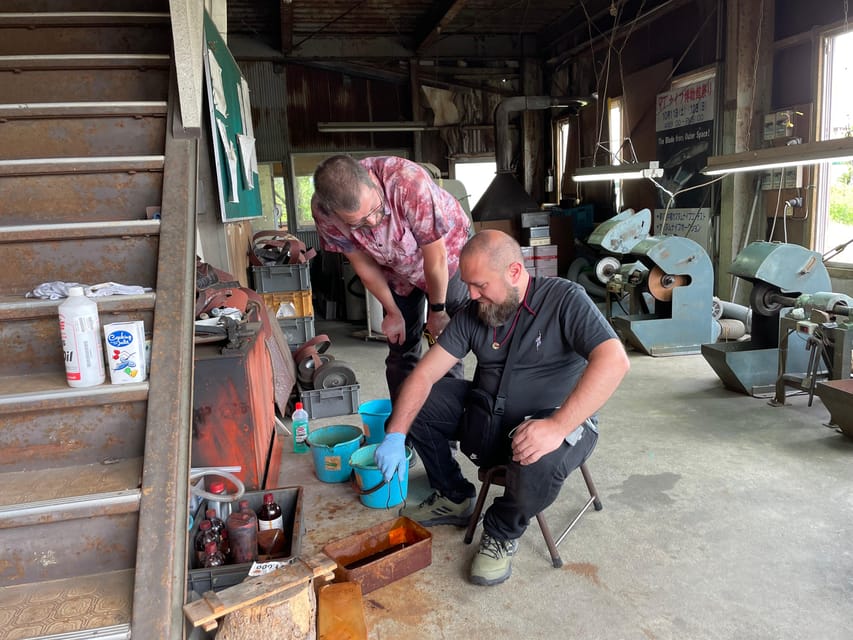
At the G. Sakai Knife Museum workshop, you begin with a prepared blade blank rather than forging a glowing piece of steel from raw materials. That distinction is important. This is a detailed finishing and assembly experience, not a full blacksmithing course.
You can choose from available knife shapes and handle colors or styles. The selection is useful, though not especially broad, so if you have a firm preference for a particular chef’s knife or camping knife, keep an open mind. Past participants have made chef’s knives and camping knives, with the final style depending on the blanks available that day.
The process can include:
- Polishing the blade
- Etching or writing your name on it
- Fitting the handle and other parts
- Sharpening the edge
- Checking the finished knife on fresh vegetables
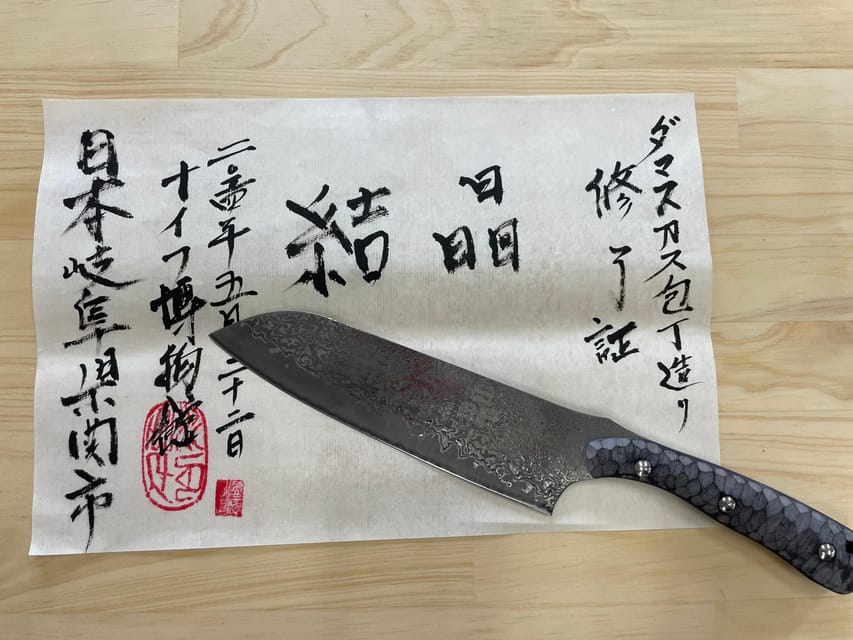
The name-marking step adds the personal touch. Hiro can help turn your name into kanji or kana and explain the meaning of the characters. You are not just selecting a souvenir with a stock design. You are making a small decision about how your name will appear on a Japanese blade.
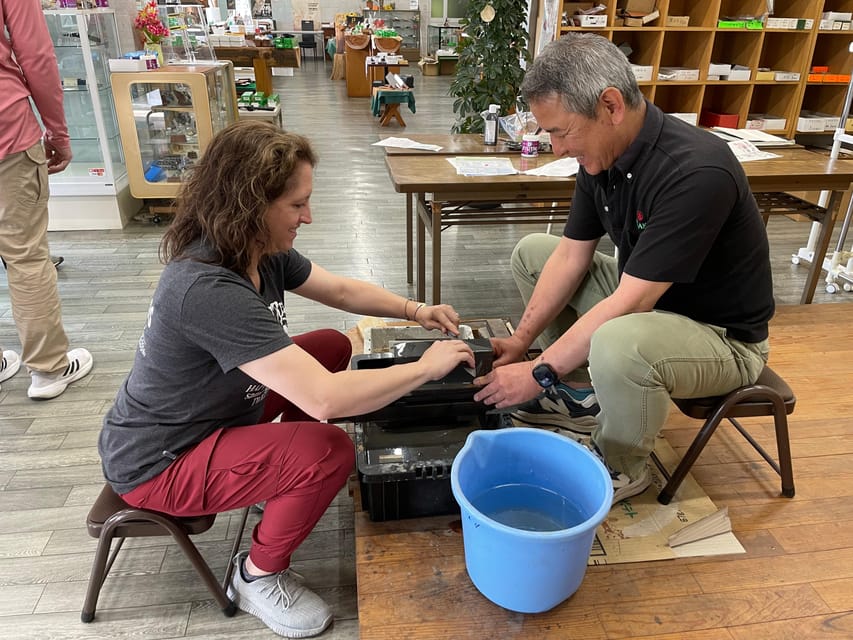
Sumi has more than 50 years of knife-making experience, and that matters most when you are handling the sharpening stone. The instructors are patient, but you still need to pay attention. A knife can look finished while its edge remains uneven. The lesson gives you a skill you can use later on your own kitchen knives or those belonging to friends and family.
Expect the workshop to take time. Some sessions have run from about 11 AM until 4 PM, longer than the listed 2.5-hour estimate. That is not ideal if you need a tightly timed evening train, but it is a benefit if you want careful instruction and plenty of room for questions. This is craft work, not an assembly line.
Testing the edge with fresh vegetables
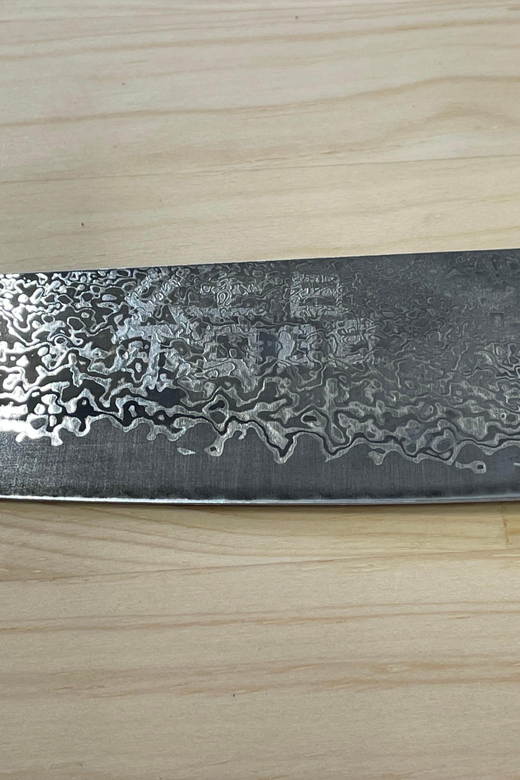
The final test is practical. You cut fresh vegetables and feel how the blade moves through them. That simple step turns the activity from a polishing lesson into a lesson about knife performance.
A sharp Japanese kitchen knife should cut cleanly without heavy force. You can notice the difference immediately when slicing produce. Some participants have also tested their blades on a water bottle, though vegetable cutting is the stated part of the experience. Either way, the point is not a theatrical stunt. It is a chance to connect the work you just did with the tool’s actual purpose.
This is also where the workshop earns its price. You are not merely told that the knife is sharp. You handle it, test it, and leave with a better idea of how an edge feels. The knife is useful at home, but it is not a mass-produced item you grabbed in an airport shop.
Use normal care when packing it for your trip home. The experience includes a samurai kitchen knife set, and some participants have also received a chopping board, a mini knife, key rings, a certificate, or other small gifts. The exact extras can vary, so treat those as possible additions rather than guaranteed inclusions.
More samurai and ninja sessions in Takayama:
- Gifu Samurai Sword Town;Japanese Damascus Knife Making Experience
★ 5.0 · 27 reviews - Ninja experience in Takayama – Special Course
★ 4.9 · 13 reviews - Tokyo: Samurai Restaurant Show Ticket with 2 Drinks
★ 4.5 · 1,307 reviews - Kyoto Samurai Experience
★ 5.0 · 1,294 reviews
Japanese lunch after the workshop
After the knife work, Hiro takes you to a local restaurant for lunch. The meal is included, and the food is more than a filler between museum stops.
Several meal styles have been available, including sushi and eel. Sushi has been prepared by a chef with more than 20 years of experience, while another account refers to a chef with 43 years of sushi-making experience. You may also have a choice among three meal types. Ask Hiro about the choices that day.
The lunch works well because it connects to the morning’s activity. You have just made a kitchen knife, and now you sit down to a meal where Japanese food preparation matters. You can also use your new knife skills as a way to notice the clean cuts and careful presentation on the plate.
Do not assume the restaurant serves only sushi. Eel and other options have been part of the day. If you have strong food preferences, ask about the available meal before ordering. The lunch is one hour in the planned schedule, though the workshop’s longer timing can affect the overall pace.
The Knife Museum inside G. Sakai’s factory
The Knife Museum is located in part of the G. Sakai factory. After lunch, you see unusual and rare knives and learn how Seki’s cutlery tradition developed.
The museum is best understood as a working manufacturer’s collection rather than a large, formal museum filled with long exhibit halls. One participant felt the name museum was a little generous, while still finding the shop and collection impressive. That is a fair expectation to set.
You will likely get more from this stop if you already care about knives. The collection can help you compare blade types, uses, and forms, and the adjoining shop offers knives ranging from small pocket souvenirs to hunting and kitchen models. It is a tempting place to spend extra money, so decide before the day how much luggage space and budget you have.
The visit also gives context to your own knife. You can see the difference between a finished commercial product and the one you worked on. Your blade will not be a completely forged-from-scratch sword, but you will understand the finishing steps in a more direct way.
Samurai swords and the Blacksmith Museum
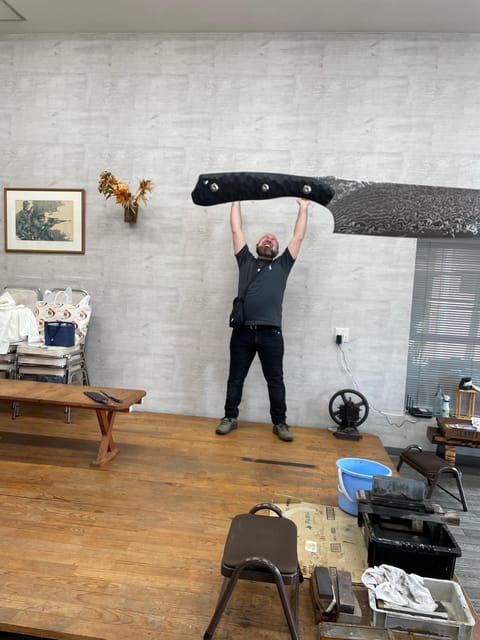
The final cultural stop is the Seki Swordsmith Museum, also described through the day as a sword factory or artisan katana showroom. Here you learn about Japanese samurai swords and Seki’s place in that tradition.
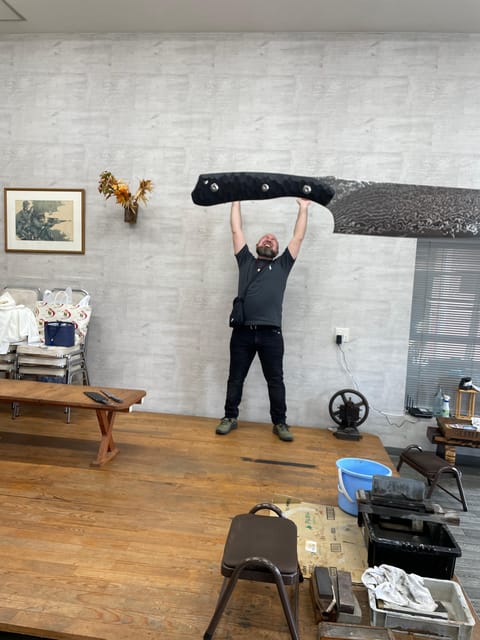
The visit is more than a display of old weapons. You may see swords brought from around the world for repair and adjustment, and you may have a chance to speak with a katana specialist. Some sessions have included the opportunity to hold an actual sword, though that should be treated as dependent on the day and the staff.
This stop broadens the morning lesson. Kitchen knives and samurai swords are not the same product, but both depend on careful work with steel, edge geometry, polishing, and tradition. You leave with a clearer idea of why Seki remains associated with blades of many kinds.
The museum visit is scheduled for about one hour. It is a good ending because it shifts your attention from making your own small knife to the larger craft tradition behind it.
What the $322 price includes
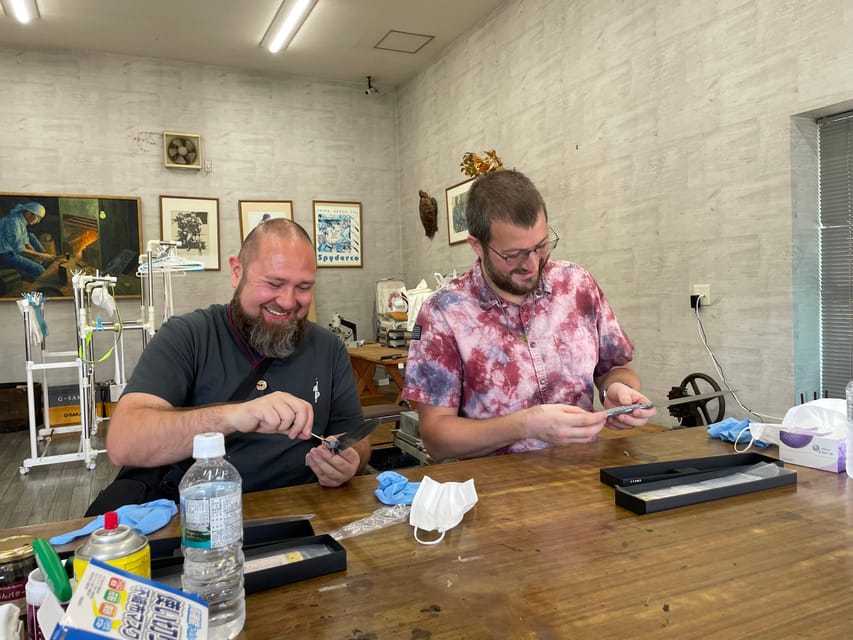
At $322 per person, this is an expensive day trip. You are paying much more than you would for a museum ticket and a standard cooking souvenir. The question is what you value.
The price includes the knife set, lunch, museum admission, local transportation, an English or Japanese guide, and the knife-making instructor. It also buys a small group and a full day of help in a place that is difficult to organize independently. Hiro’s pickup and translation are especially useful because the workshop and sword site are not simple central-city stops.
I consider the price reasonable for someone who wants a personal craft experience and a high-quality usable object. The knife itself has lasting value, and the sharpening instruction continues to be useful after Japan. You are also paying for access to craftspeople, not just for an object.
It is less appealing if you mainly want a sightseeing day in Gifu or a cheap souvenir. The workshop takes most of the day, the museum portion is modest, and the trip from Kyoto requires a real time commitment. A knife enthusiast, cook, or culture-focused visitor will get more from it than someone who has little interest in tools.
Timing, age, and practical planning
The experience lasts one day and is limited to participants aged 18 and older. Children under 18 cannot join, so this is not a family activity for younger children.
Build in extra time after the workshop. The stated workshop length is 2.5 hours, but actual sessions can run much longer, sometimes until around 4 PM. That may push the return later than expected. If you have a dinner reservation, long-distance train, or evening flight, leave a generous buffer.
Wear clothing that allows you to work comfortably and focus on hand tasks. The provided information does not specify a dress code or accessibility details, so ask the operator if you have mobility or workshop-related concerns.
The tour offers free cancellation up to 24 hours before departure and a reserve-now, pay-later option. Availability and starting times should still be checked for your date. English and Japanese guiding are available.
Who will enjoy this most
I would choose this for you if you enjoy food, craft, Japanese culture, or objects with a story. It works especially well for cooks who want to understand sharpening instead of simply buying another knife.
Couples can make matching or contrasting knives, and small groups benefit from the patient instruction. It also suits someone visiting Japan for the first time who wants a day away from the standard Kyoto and Tokyo route. The road through central Japan becomes part of the experience.
I would hesitate if you dislike hands-on work, have a strict schedule, or expect a full traditional forging lesson. You start with a blade blank, then finish and personalize it. That is still meaningful work, but it is different from heating steel in a forge and shaping it from raw stock.
Should you book the Seki knife experience?
Book it if you want a practical souvenir, personal contact with Japanese craftspeople, and a full day built around Seki’s blade tradition. The strongest parts are the patient instruction from Sumi and Yoshi, Hiro’s transport and translation, the chance to sharpen your own knife, and the excellent lunch.
Skip it if $322 feels too high for a knife and guided day, or if your Japan schedule cannot absorb a potentially long workshop. For the right person, this is not just a visit to a museum. It is a day of making, eating, asking questions, and carrying home a tool that reminds you how it came to be yours.
FAQ
Where does the experience begin?
You meet at Sekitomioka Station on the Nagaragawa Railway at 10:06 AM, when the train arrives. The driver picks you up by car.
How long does the experience last?
It is planned as a one-day experience. The listed workshop lasts about 2.5 hours, lunch takes about one hour, and the Swordsmith Museum visit takes about one hour. The knife work can run longer than the planned schedule.
What do I make during the workshop?
You make and personalize a Japanese kitchen knife from a prepared blade blank. The work includes polishing, name marking, assembly, and sharpening.
Can I put my name on the knife?
Yes. You can write your name on the blade using a special technique. Hiro can help translate your name into kanji or kana.
Do I get to test the knife?
Yes. You test the finished knife by cutting fresh vegetables and checking how the edge feels and performs.
Is lunch included?
Yes. Lunch at a local restaurant is included. Available meals can include sushi, eel, and other Japanese options.
What else do I visit besides the workshop?
You visit the G. Sakai Knife Museum and the Seki Swordsmith Museum. The second stop focuses on Japanese samurai swords and Seki’s swordmaking tradition.
Can children join?
No. The experience is not suitable for children under 18.
How many people are in the group?
The group is limited to five participants.
What languages are available?
The experience offers English and Japanese guiding. Hiro provides English interpretation during the local visits and workshop.
What is included in the price?
The price includes a samurai kitchen knife set, lunch, museum entry tickets, transportation, an English or Japanese guide, and an instructor for the knife-making session.
Can I cancel for a refund?
You can cancel up to 24 hours in advance for a full refund. A reserve-now, pay-later option is also available.
More Museums in Takayama
- Tokyo: teamLab Planets TOKYO Digital Art Museum Entry Ticket
★ 4.6 · 9,779 reviews - Osaka Castle: Museum and Tower Entry Ticket
★ 4.5 · 2,380 reviews - Tokyo: Samurai Ninja Museum Guided tour and Experience
★ 4.6 · 1,010 reviews - Kyoto: Tea Museum Tickets and Matcha Grinding Experience
★ 4.9 · 739 reviews
Just added around Takayama
- Private Afternoon Cycling Tour in Hida-Furukawa★ 5.0 · 109 reviews
- Private-group Morning Cycling Tour in Hida-Furukawa★ 5.0 · 105 reviews
- Short Morning Cycling Tour in Hida★ 5.0 · 17 reviews
- Gifu Samurai Sword Town;Japanese Damascus Knife Making Experience★ 5.0 · 27 reviews
- Magome & Tsumago Nakasendo Full-Day Private Trip with Government-Licensed Guide★ 5.0 · 20 reviews
- Magome & Tsumago Nakasendo Trail Day Hike with Government-Licensed Guide★ 5.0 · 38 reviews
- Frozen fall trekking★ 5.0 · 21 reviews
- Explore Kiso Valley : Magome – Tsumago Mountain Trail Walk★ 5.0 · 33 reviews
Takayama Tours, compared.

World Heritage Shirakawa-go Morning Guided Tour
Read our review →
World Heritage Shirakawa-go & Two Local Experience
Read our review →
Kanazawa/Takayama: Shirakawago & Takayama Private Day Tour
Read our review →![Departing from Takayama [Regular sightseeing bus] World Heritage Sites Shirakawago and Gokayama Ainokura](https://media3.thejapanesetraveller.com/wp-content/uploads/departing-from-takayama-regular-sightseeing-bus-world-heritage-sites-shirakawago-and-gokayama-ainokura-400x267.jpg)
Departing from Takayama [Regular sightseeing bus] World Heritage Sites Shirakawago and Gokayama Ainokura
Read our review →

Private Afternoon Cycling Tour in Hida-Furukawa
Read our review →
Private-group Morning Cycling Tour in Hida-Furukawa
Read our review →
Onigiri and miso soup making at a buddhist temple
Read our review →Browse the lists this tour appears in