
Reviewed · TOKYO TOURS
Shinjuku Tokyo: Authentic Japanese Home-Style Culinary Class
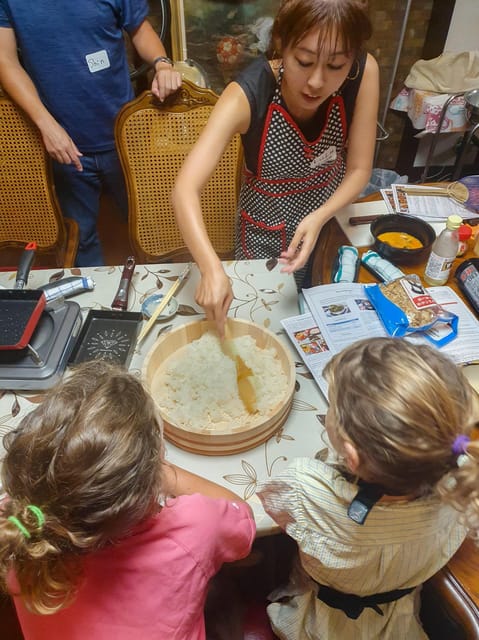
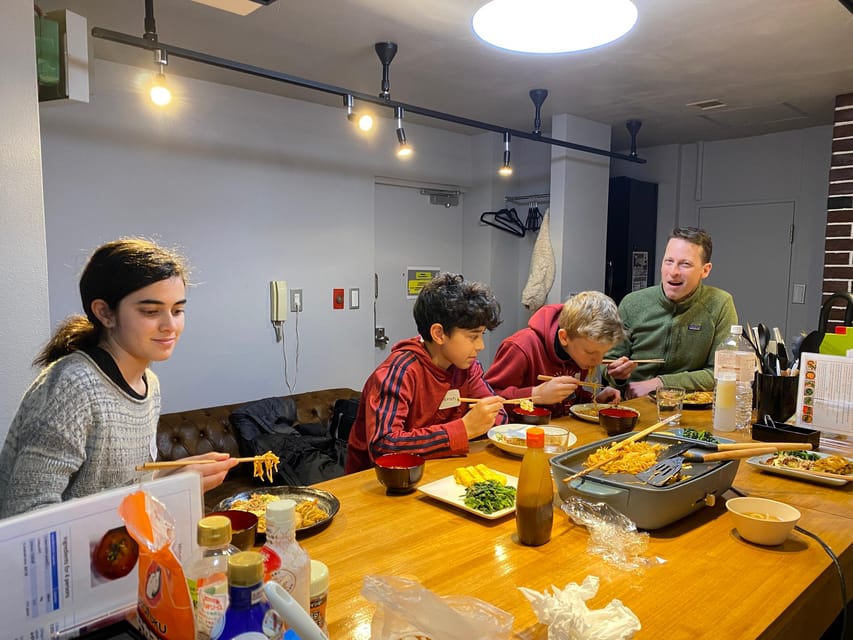
The most appealing part of this class is that you cook familiar Japanese dishes in a small kitchen setting, rather than simply watching a chef work. In about 150 minutes, you prepare several dishes, learn how common ingredients are used, and sit down to eat a proper meal near central Shinjuku.
I like the choice of menus, especially the chance to make takoyaki, rolled sushi, or a traditional gozen set. I also like the personal attention: hosts such as Kana, Lulu, Kayo, Miyuki, and Chieko are praised for clear English, patience, and practical help. The main consideration is that the exact kitchen address arrives after booking, and menu choice may be limited if another group joins your session.
Key points at a glance
- Four main menus: Choose okonomiyaki and yakisoba, gyoza and takoyaki, rolled sushi and teriyaki, or a traditional gozen set.
- A real hands-on meal: You chop, shape, roll, pan-fry, grill, and plate several dishes before eating them.
- Near Shinjuku: The class takes place in a kitchen studio in or around one of Tokyo’s most convenient central districts.
- Good for families: Children from age seven have taken part, with hosts adjusting the lesson so everyone can help.
- Dietary requests are possible: Vegetarian, vegan, and allergy-related needs can be discussed in advance.
- Generous food portions: The menus include several dishes, side items, soup, or rice, so this is both a lesson and a substantial meal.
Why this class works better than a standard restaurant meal
Tokyo gives you endless chances to eat Japanese food. It gives you fewer chances to understand how that food is prepared in an ordinary home kitchen.
That distinction matters. At a restaurant, you can taste okonomiyaki or gyoza, but you may never learn how the batter should look, how the filling is handled, or how to balance sauces and toppings. Here, you get a working lesson that connects the dish on your plate with the ingredients and methods behind it.
The setting near Shinjuku also makes this a practical choice. You do not need to spend half a day reaching a remote cooking school. The studio is in or around central Tokyo, though you should wait for the exact address and directions after booking. One person had trouble finding the entrance because the address led to the wrong part of the building, so read the arrival instructions carefully and keep the organizer’s contact details handy.
The class is taught in English. Several hosts receive especially strong praise for explaining ingredients, answering questions, and making the session comfortable. The specific instructor can vary, so you may meet Kana, Lulu, Kayo, Miyuki, Chieko, Mika, Aki, Erica, or another member of the team.
More hands-on workshops in Tokyo:
- Sushi Making Tokyo Roll and Authentic Japanese Sushi Class
★ 5.0 · 3,971 reviews - Tokyo: Roll and Authentic Sushi Making Class in Asakusa
★ 4.9 · 1,957 reviews - Tokyo Shinjuku Chopsticks Making Class
★ 5.0 · 1,763 reviews
Four menus that cover the Japanese home kitchen
You choose a menu when booking if you or your group are the only participants that day. If another group attends the same class, the available menu may not be entirely up to you. That small condition is worth noticing if you have your heart set on one particular dish.
Okonomiyaki and yakisoba
This is the best pick if you want two casual Japanese favorites in one sitting.
Okonomiyaki begins with batter and chopped cabbage. Other ingredients are added before the mixture is cooked on a teppan-style grill and finished with sauces and toppings. The fun lies in turning simple ingredients into something much more substantial than they first appear.
Yakisoba adds stir-fried noodles, vegetables, and usually seafood or pork, all coated in a sweet-savory sauce. Together, the two dishes give you a good lesson in griddle cooking, sauce balance, and timing.
A side dish completes the set. This menu is a smart choice for first-time visitors who want food associated with Japanese festivals, casual restaurants, and everyday comfort cooking.
Gyoza and takoyaki
This menu has the most playful cooking tasks.
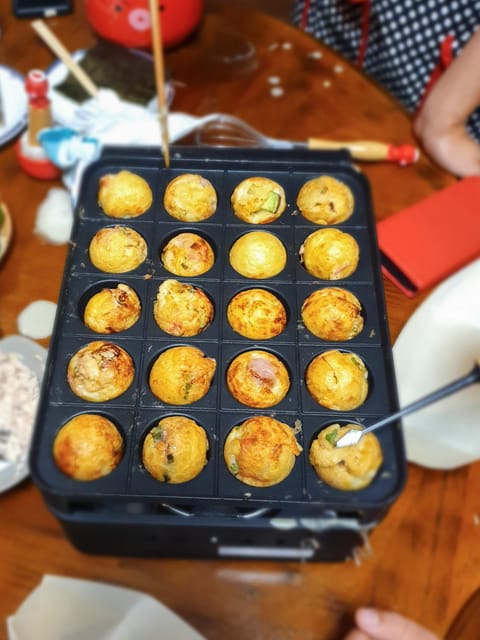
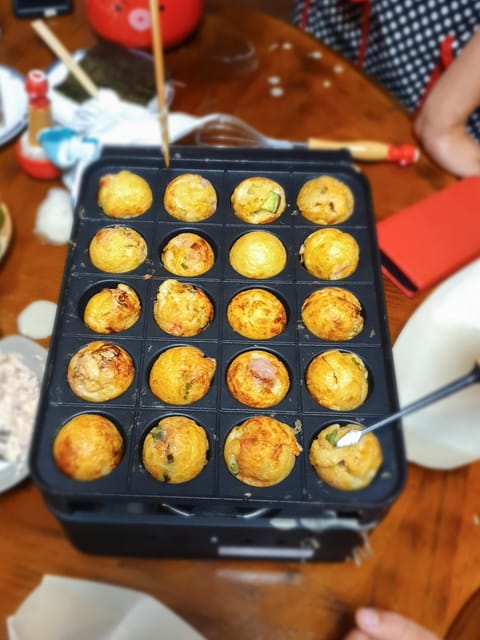
Japanese gyoza are pan-fried dumplings with a crisp base. You learn how the dumplings are prepared and cooked, then eat them fresh rather than letting them sit in a restaurant kitchen. The second dish, takoyaki, is made in a special molded pan. The small round snacks are closely linked with Osaka and summer festivals in Japan.
Takoyaki can be tricky at first because the pieces must be shaped in the pan as they cook. That makes this menu entertaining for adults and children alike. It also gives you a dish you may not often have the chance to make outside Japan.
Choose this set if you want the most interactive session. It may be less suited to someone seeking a quiet, formal lesson, since the shaping and turning work keeps your hands busy.
A few more Tokyo half-days to weigh up
- Mt Fuji and Hakone 1-Day Bus Tour Return by Bullet Train
★ 5.0 · 26,383 reviews - 1-Day Tokyo Bus Tour
★ 5.0 · 14,250 reviews - Tokyo: TOKYO SKYTREE® Admission ticket
★ 4.5 · 11,192 reviews - Tokyo: teamLab Planets TOKYO Digital Art Museum Entry Ticket
★ 4.6 · 9,779 reviews
Rolled sushi and teriyaki
This menu offers a neat introduction to sushi preparation without requiring advanced fish-cutting skills.
You roll and slice your own sushi, then pair it with yellowtail fish or chicken teriyaki. Miso soup is included, giving the meal a familiar Japanese structure: rice-based food, a savory main dish, soup, and supporting flavors.
The class is not simply about assembling sushi. It also helps you understand how teriyaki sauce works and how soup fits into a Japanese meal. If you want recipes you can repeat at home, this is one of the most practical choices.
Several participants have taken home instructions for sushi and miso soup and felt able to recreate them later. Ask about your preferred teriyaki option when arranging the class, especially if you have dietary restrictions.
Traditional gozen set
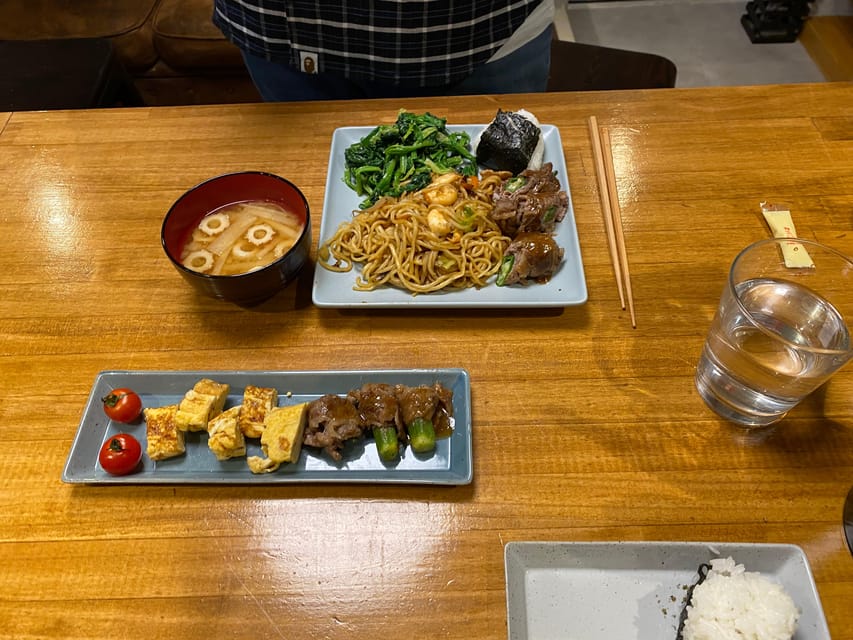
The gozen menu is the most rounded option. It includes a meat plate, a fish plate, a side dish, miso soup, and an onigiri rice ball.
This set shows how a Japanese home meal can bring several modest dishes together instead of relying on one large main course. You get different textures, cooking methods, and ingredient types on the same table.
It is the menu I would choose if you want context as well as cooking. The class can also discuss adjustments. One group selected the gozen meal and requested chicken teriyaki, which the host accommodated.
A requested menu
A custom menu can also be discussed. The information provided does not promise that every request can be accepted, so contact the host before booking if you want something outside the four main choices.
This option could be useful for a group with a strong food preference or a specific dish in mind. Give the host plenty of notice for allergies, vegetarian requirements, vegan meals, or other restrictions.
What the 150-minute session feels like
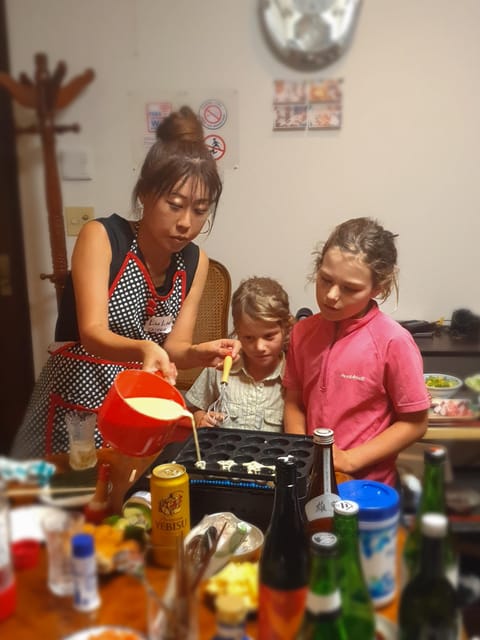
The experience lasts about two and a half hours. Ingredients are prepared ahead of time, which keeps the lesson moving and allows you to focus on the cooking rather than waiting for basic setup.
Expect an introduction to the selected dishes and ingredients, followed by guided preparation. The exact balance between demonstration and hands-on work can vary with the group. Most of the class is interactive, but one participant who enjoys cooking would have preferred to do more of the work instead of watching parts of the process.
That is a fair point. A class must keep several dishes on schedule, and the instructor may step in for techniques that require speed or precision. If you want to cook every component from start to finish, tell the host at the beginning. The smaller and more private the session, the easier it is to ask for extra turns.
You may prepare food such as batter, noodle dishes, dumplings, sushi rolls, soup, grilled items, and rice balls, depending on the menu. At the end, the food is plated and eaten together. Some hosts also take photographs and send recipes afterward, though these extras may depend on the instructor and session.
The meal can be surprisingly filling. The menu combinations include several dishes and side items, not just a single recipe sample. You may want to avoid scheduling an elaborate lunch immediately afterward.
The instructors make the difference
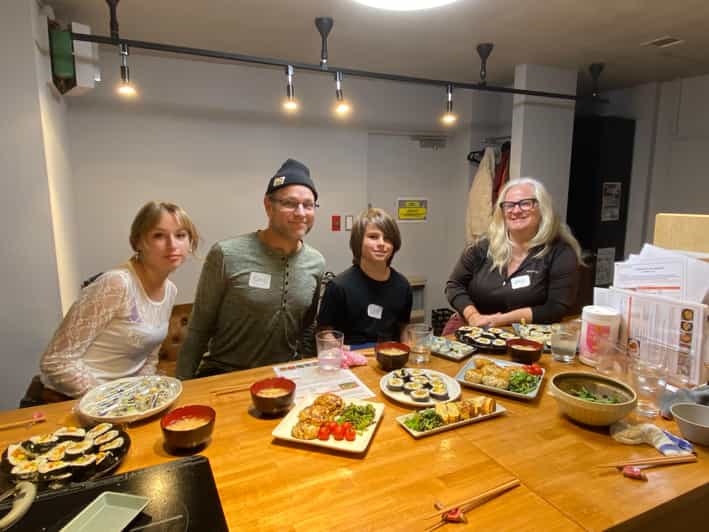
The food matters, but the host shapes the whole experience.
Kana is praised for friendly conversation, strong English, and answers to many questions. Lulu is noted for adapting menus, sharing cultural information, helping with plating, providing recipes, and offering suggestions about Tokyo and other Japanese cities. Kayo has been described as patient and clear when explaining techniques.
Chieko is another name to look for. She teaches traditional recipes and techniques, and has worked with assistants such as Yuki. Miyuki has led warm, good-humored sessions that combine cooking with cultural background.
You may also meet Mika, who explains Japanese ingredients and how they are used, or Aki and Erica, who have guided family groups through the steps. Since the team is not limited to one instructor, the tone may differ slightly from one date to another.
The common thread is direct help in English. You can ask why an ingredient is used, how a dish fits into Japanese food culture, or how to repeat a technique at home. That turns the class into more than a recipe demonstration.
A good choice for children and mixed-skill groups
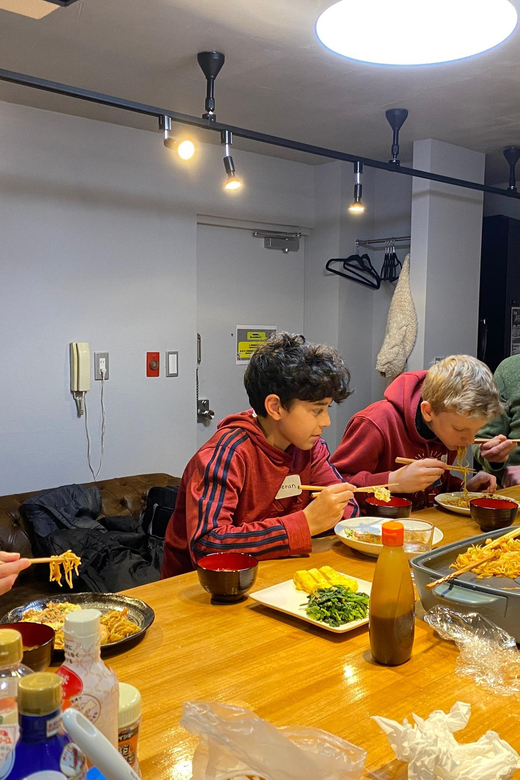
This class suits families better than many cooking workshops.
Children between seven and twelve have taken part successfully, and teenagers have enjoyed it as a highlight of a larger Japan trip. The menu choices also help families find a dish that matches different comfort levels. Takoyaki and gyoza offer tactile work, while sushi rolling and onigiri are approachable for younger cooks.
At the same time, experienced home cooks are unlikely to be bored. The hosts explain ingredient use and traditional methods, and you can ask about small details that restaurants rarely discuss.
The main thing to manage is expectation. This is a guided group activity, not an open kitchen where every person controls every step. Children may need help with hot pans, grills, and precise techniques. The instructors can make the process accessible, but adults remain responsible for deciding what each child should handle.
Dietary needs and food allergies
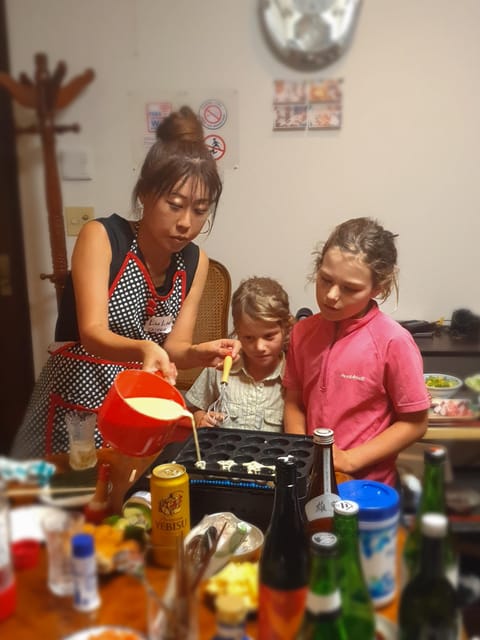
The class is designed to discuss dietary preferences, including vegetarian and vegan choices. Food allergies should be reported in advance so the host can consider which menu and ingredients will work.
This advance notice is important in Japanese cooking. Soy, seafood, fish stock, wheat, and other common ingredients can appear in sauces, soup, fillings, and toppings. Do not wait until you arrive if an allergy affects your meal.
The hosts have adjusted dishes for vegetarians and worked around individual allergies. Still, the available alternatives depend on the menu and the specific request. Ask what can be changed before you finalize your plans.
Is $88 a fair price?
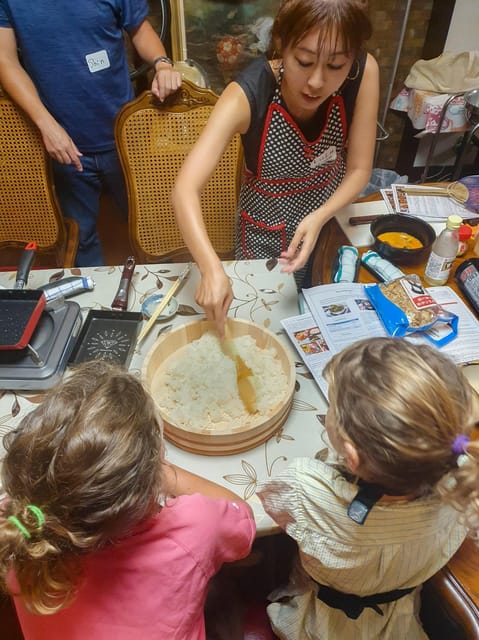
At $88 per person, this is not a cheap meal. You can eat many Japanese dishes in Tokyo for much less.
The value comes from the combination of food, instruction, kitchen use, ingredients, tools, cultural explanation, and time with an English-speaking host. All fees and taxes, cooking equipment, ingredients, and drinking water are included. You are paying for a meal you help create, not just a plate brought to your table.
For a family or couple, the price also buys a shared activity. You leave with techniques and recipes that can be repeated at home. That gives the class more lasting value than a one-time restaurant lunch, especially if you already enjoy cooking.
The price is harder to justify if you mainly want to eat and have little interest in preparation. Tokyo has better value for a simple meal. Pick this class when the process is part of the appeal.
Location, timing, and planning tips
The studio is in or around Shinjuku, one of the most convenient areas in central Tokyo. The exact address is sent after booking, so do not assume the initial location details are enough for arrival.
Allow time to read the message carefully. One participant lost time because the building entrance was unclear and had to call the organizer. Another group experienced a location change, which the organizers handled by arranging a taxi payment to the new location.
The stated duration is 150 minutes, and starting times depend on availability. Plan the class as a main activity rather than squeezing it between two timed attractions. You will get more from it if you arrive ready to cook and stay for the shared meal.
Private transportation is not included. You are responsible for getting to the studio. Since the precise address is supplied after booking, use that information to check your route from your hotel or from Shinjuku Station.
Cancellation is flexible up to 24 hours before the activity for a full refund. You can also reserve now and pay later, which helps if your Tokyo schedule is still taking shape.
What you take home besides a full stomach
The strongest practical feature is repeatability.
The menus are built around recognizable dishes rather than obscure restaurant specialties. You can make sushi rolls, miso soup, teriyaki, okonomiyaki, yakisoba, gyoza, takoyaki, or onigiri again in your own kitchen, depending on the class you choose.
The hosts explain ingredients in plain terms and often share recipes after the class. That is especially useful for visitors who shop at Japanese supermarkets after returning home, or who want to introduce family and friends to the food they enjoyed in Japan.
You also gain a better sense of how a Japanese meal is assembled. A side dish, soup, rice, fish, and meat plate each have a role in the gozen menu. Sauces and toppings change the character of simple ingredients. These are small lessons, but they make future restaurant meals easier to understand.
Should you book the Shinjuku cooking class?
Book it if you want a personal, food-focused activity with actual cooking and a substantial meal. It is especially well suited to families, couples, first-time visitors to Japan, and anyone who wants recipes that can be made again at home.
Choose the menu carefully. Pick gyoza and takoyaki for hands-on fun, sushi and teriyaki for useful home skills, okonomiyaki and yakisoba for casual Japanese favorites, or gozen for a broad look at a traditional meal.
Skip it if you want a purely educational demonstration, a formal chef-led school, or the lowest-cost way to eat lunch. The class includes some watching, the address arrives later, and menu choice may be shared with another group.
For most food-loving visitors, $88 is reasonable because the experience combines instruction, culture, cooking, and lunch in one compact session. Send allergy and dietary details early, follow the arrival instructions closely, and arrive ready to put your hands to work.
FAQ
Where does the Japanese cooking class take place?
It takes place at a kitchen studio in or around Shinjuku, Tokyo. The exact address is provided after booking, so you should wait for the organizer’s message before planning your route.
How long does the class last?
The class lasts about 150 minutes, or two and a half hours. This includes cooking the dishes and eating the meal you prepare together.
What menus can I choose from?
The main options are okonomiyaki and yakisoba with side dishes, gyoza and takoyaki with side dishes, rolled sushi with teriyaki and miso soup, and a traditional gozen set. You may also request another menu for discussion with the host.
Can I choose my menu on the day?
You can select a menu when booking if you or your group are the only participants that day. If another group joins the class, you may not be able to choose the menu.
Is the class taught in English?
Yes. English is the listed language for the activity, and the instructors explain cooking methods, ingredients, and cultural information in English.
Can vegetarians and vegans take part?
The class is designed to accommodate dietary preferences, including vegetarian and vegan requests. Contact the host in advance to discuss the available menu adjustments.
What should I do if I have a food allergy?
Tell the host about your allergy before the class. The menu and possible alternatives can then be discussed in advance.
What is included in the price?
The $88 price includes all fees and taxes, cooking tools, ingredients, and drinking water. Private transportation is not included.
Can I cancel or pay later?
You can cancel up to 24 hours in advance for a full refund. The activity also offers reserve now and pay later booking.
Just added around Tokyo
- Private Arrival Transfer : Narita International Airport to Central Tokyo City★ 4.5 · 12 reviews
- Narita Airport(NRT): Private Transfer to Tokyo/Yokohama 1-9pax★ 5.0 · 47 reviews
- Private Transfer from Narita Airport to Yokohama Port and City★ 4.5 · 17 reviews
- [Narita Airport Terminals 1, 2] 40-60km Sawara Itako Historic Bike Tour★ 5.0 · 13 reviews
- 3 Day Japan Highlights Tour: Tokyo, Mt.Fuji, Nara, Kyoto, Osaka★ 5.0 · 22 reviews
- Small Town in the Big City: Tasting Tokyo’s Kichijoji★ 5.0 · 195 reviews
- Small Town in the Big City: Tasting Tokyo’s Kichijoji★ 5.0 · 16 reviews
- The 10 Tastings of Tokyo With Locals: Private Street Food Tour★ 5.0 · 48 reviews
Tokyo Tours, compared.

Mt Fuji and Hakone 1-Day Bus Tour Return by Bullet Train
Read our review →

teamLab Planets TOKYO Digital Art Museum Entry Ticket
Read our review →
Mt Fuji & Hakone Cruise, Drum Show Bullet Train 1 Day from Tokyo
Read our review →
Sumo Show Experience with Chicken Hot Pot and a Photo
Read our review →
Shinjuku Food Tour (13 Dishes at 4 Local Eateries)
Read our review →
Tokyo Mt Fuji 5th St & Hakone Cruise Bus Tour w/Bullet Train
Read our review →
Flagship 2-Hours Official Street Go-Kart Tour – Tokyo Bay Shop
Read our review →Browse the lists this tour appears in