
Reviewed · TOKYO TOURS
Tokyo: Calligraphy Workshop Craft Your Own Art in Asakusa
Japanese calligraphy is more than writing a few attractive characters. In this 90-minute Asakusa workshop, you learn how pressure, speed, and brush angle change each stroke, then turn that practice into a personal piece of art. Instructor Mei leads the class in English and gives beginners room to work at their own pace.
I like two things here: you use both a traditional brush and a modern fude pen, and you get plenty of practice before making your final artwork. The main consideration is that the class is short, so it suits a first taste of calligraphy rather than anyone seeking serious long-term training.
Key points at a glance
- Mei teaches in English: Expect clear explanations, patient correction, and background on shodo and Japanese culture.
- Practice comes before the final piece: You work on brush control, stroke order, and basic techniques before choosing characters.
- Two writing tools add variety: Traditional brushes give you the classic feel, while the fude pen offers more control.
- Your artwork is the souvenir: You leave with a finished piece, with options such as a scroll, fan, or hard-backed square noted during the class.
- Small groups keep it personal: The workshop accepts no more than 10 people, making individual help more likely.
- Asakusa makes a handy setting: The meeting point is the Tokyo Tourist Lounge Asakusa, on the fifth floor of its building.
Why this Asakusa calligraphy class is worth your time
Asakusa is one of Tokyo’s best areas for a traditional cultural activity. The district is known for old temples, souvenir shops, and streets filled with reminders of earlier Tokyo. A calligraphy class fits the setting well, but the bigger advantage is the change of pace.
Tokyo can be noisy, crowded, and fast. For 90 minutes, you sit down and focus on one black line at a time. The exercise has a quiet, almost meditative quality. You are not simply watching a demonstration or posing in a costume. You are learning a craft with your own hands.
The class costs $38 per person. I consider that fair value because the fee covers instruction, materials, both writing tools, and the artwork you take home. It is also a useful choice on a rainy day, when an outdoor sightseeing plan may lose its appeal.
The price is less attractive if you already have strong calligraphy skills and expect advanced instruction. The workshop is aimed at beginners, so much of the class covers foundations. For most first-time visitors, though, that is exactly where the value lies.
More hands-on workshops in Tokyo:
- Sushi Making Tokyo Roll and Authentic Japanese Sushi Class
★ 5.0 · 3,971 reviews - Tokyo: Roll and Authentic Sushi Making Class in Asakusa
★ 4.9 · 1,957 reviews - Tokyo Shinjuku Chopsticks Making Class
★ 5.0 · 1,763 reviews
Meeting Mei at the Tokyo Tourist Lounge Asakusa
The meeting point is the Tokyo Tourist Lounge Asakusa, located on the fifth floor of the building. You will need to make your way inside and upstairs, so allow enough time to find the building before the scheduled start.
The setting is practical rather than grand. Do not expect a temple hall or a traditional Japanese house. What matters here is the focused classroom atmosphere and the small group size. With a limit of 10 participants, Mei can watch how you hold the brush and offer help when a stroke goes wrong.
Mei is the central reason this class feels approachable. Her English instruction covers the practical steps as well as the cultural background. She explains the origins and importance of Japanese calligraphy, then turns that information into simple tasks you can follow.
You will not need previous experience. The class is designed for people who have never held a calligraphy brush, and the teaching style allows you to make mistakes without feeling rushed. That makes it suitable for adults, children, couples, friends, and solo visitors.
First lesson: brush control and stroke order
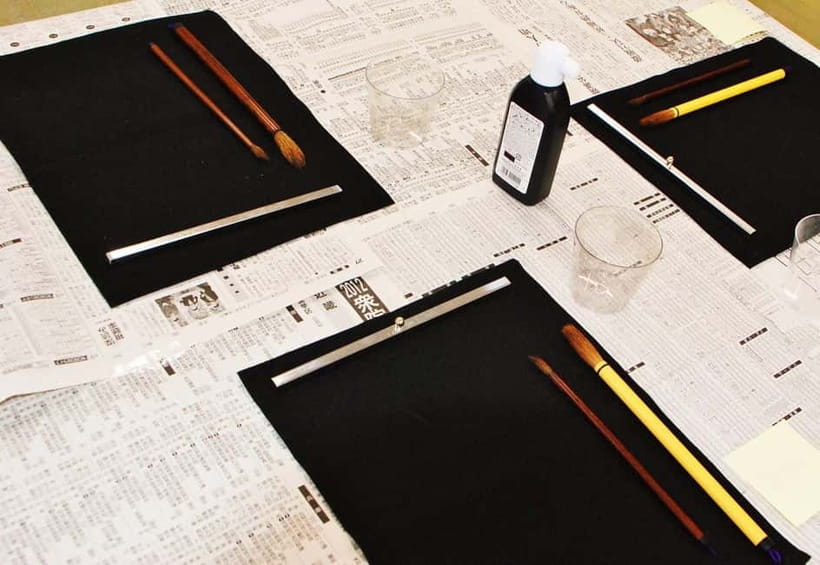
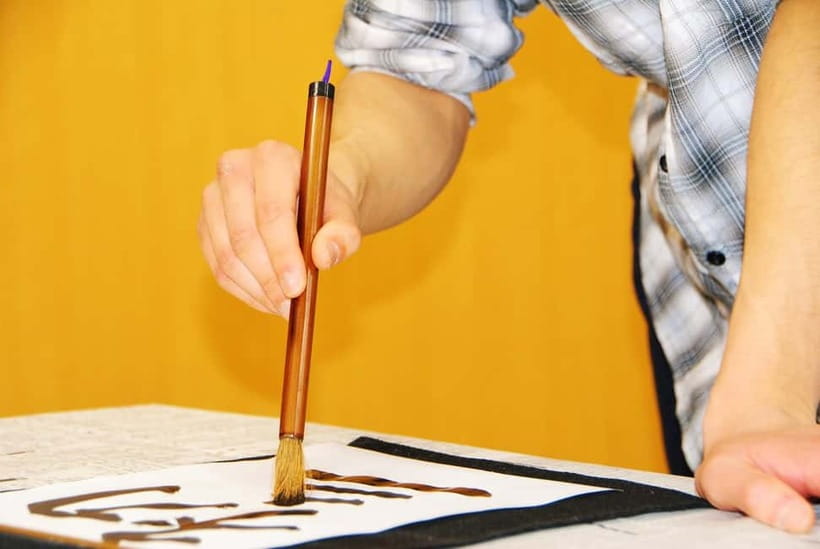
The workshop begins with the basics. You practice how to hold and move the brush, how much pressure to use, and how to control the start and finish of each stroke.
This matters because Japanese characters are built from a set order of movements. A character may look simple on the page, but its balance depends on the direction, length, and weight of each line. If you rush, the character can look cramped. If you press too hard, the stroke becomes heavy. If you lift the brush too soon, the line may appear weak.
Mei breaks those ideas into manageable exercises. You repeat individual strokes before trying complete characters. That practice time is one of the strongest parts of the experience. You are not pushed straight toward a final product that may feel beyond your ability.
The templates are also useful. They give you a guide to follow while you learn the shapes, and they make the class less intimidating for beginners. You can focus on the motion of the brush rather than worrying about remembering every character from scratch.
I especially like this part for anyone who enjoys hands-on learning. A talk about calligraphy may give you cultural facts, but repeating the strokes helps you understand the discipline in a direct way.
Traditional brush versus modern fude pen
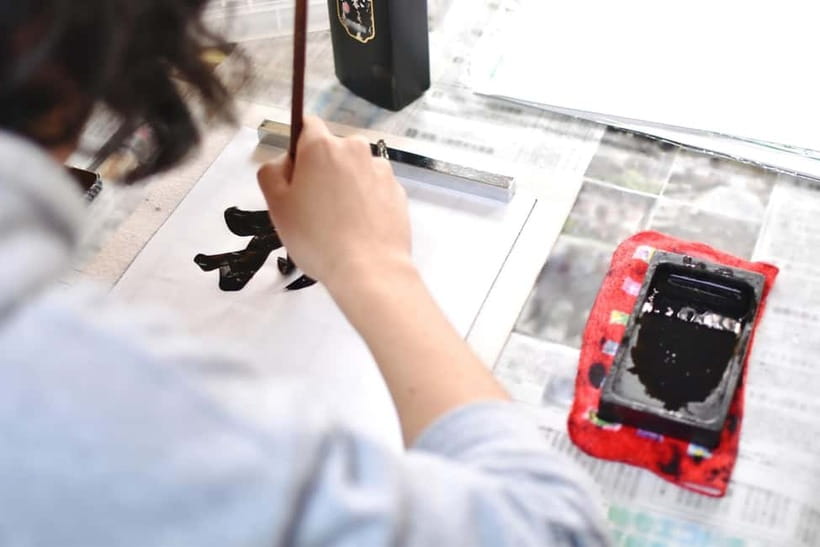
The class uses two tools, and each gives you a different feel.
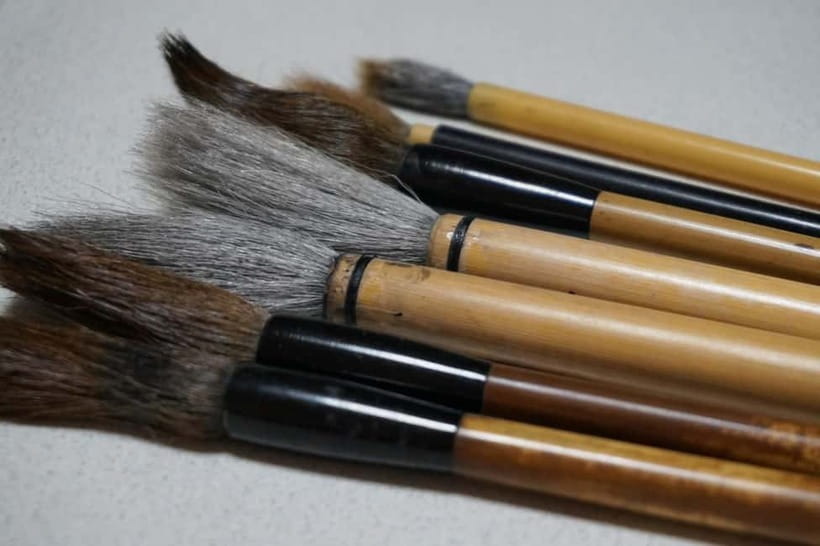
The traditional brush is soft and responsive. It spreads when you press down and narrows when you lift. That makes it expressive, but it also takes practice. Your hand must stay steady, and your pressure must change as the stroke moves.
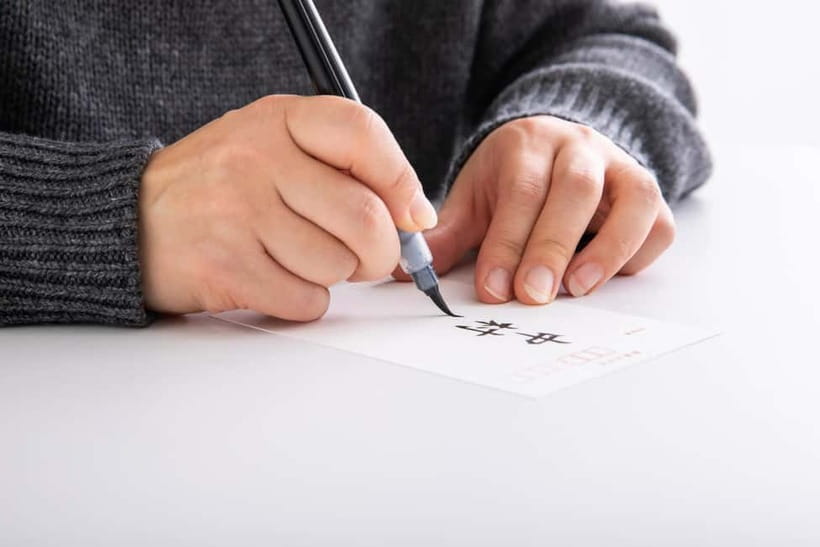
The fude pen is more familiar to many beginners. It has a brush-style tip but offers added precision and control. You can use it to refine your movements or create a cleaner result without managing ink and bristles in quite the same way.
Using both tools keeps the lesson from becoming too difficult too soon. You get the classic experience of brush writing, then a more forgiving way to continue practicing. The comparison also shows why calligraphy is a skill rather than simple decorative handwriting.
Do not expect the fude pen to replace the traditional brush. The point is to experience both. The brush gives you a better sense of the art form, while the pen can help you produce a finished design that you feel proud to take home.
A few more Tokyo half-days to weigh up
- Mt Fuji and Hakone 1-Day Bus Tour Return by Bullet Train
★ 5.0 · 26,383 reviews - 1-Day Tokyo Bus Tour
★ 5.0 · 14,250 reviews - Tokyo: TOKYO SKYTREE® Admission ticket
★ 4.5 · 11,192 reviews - Tokyo: teamLab Planets TOKYO Digital Art Museum Entry Ticket
★ 4.6 · 9,779 reviews
Choosing your characters and creating the final artwork
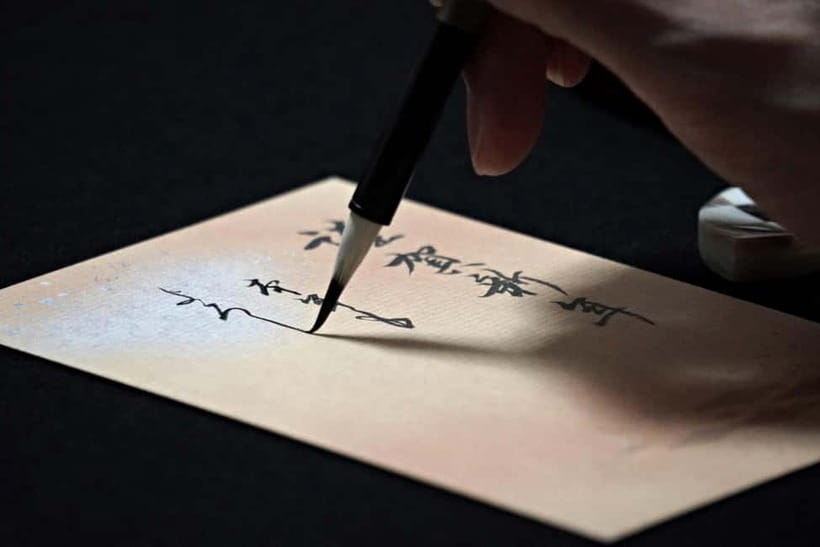
After practicing the basic strokes, you move on to characters of your choice. The supplied information does not list a fixed menu of words, so the exact choices may depend on the workshop format and what you want to write.
This is an important personal touch. Instead of receiving an identical souvenir, you create something with meaning for you. You might choose a character connected to a personal value, a name, or an idea you want to remember from Japan. If you are unsure, Mei can guide you toward a suitable option.
You first practice the character several times. This gives you a chance to adjust the proportions and become comfortable with the stroke order before using your final material.
The finished piece may be made on a scroll, fan, or hard-backed square, according to the experience described by participants. Those formats are more memorable than a loose practice sheet. A scroll makes a natural wall decoration, while a fan or board is easier to pack in a suitcase.
Keep in mind that this is your own artwork, not a professional piece produced by an expert. Small variations and imperfect lines are part of the point. You are taking home evidence of what you learned, not buying a mass-produced souvenir.
The cultural side of shodo
The class also introduces the meaning behind Japanese calligraphy, known as shodo. Mei explains how the writing connects with Japanese culture and why patience, focus, and careful movement matter.
That context gives the activity more weight. Without it, you might spend an hour copying shapes without understanding why the process is valued. With it, the repeated strokes become a lesson in attention and restraint.
The workshop has a calm rhythm. You sit, watch, practice, receive help, and try again. That can feel refreshing in the middle of a busy Tokyo schedule. It is also a good way to add variety to a trip that otherwise consists of temples, shopping, food stops, and long walks.
You do not need to approach the class as a spiritual exercise. It works just as well if you are interested in art, Japanese writing, or making a souvenir. Still, the quiet concentration is one of its most appealing qualities, especially if you have spent the morning in crowded Asakusa.
What makes the small group format useful
A group of up to 10 people is small enough for instruction to feel personal, while large enough for the class to have a social side. You can watch how other beginners handle the same task and see different approaches to the final artwork.
The size also matters when you need correction. Calligraphy is hard to assess from a written explanation alone. Mei can see if you are holding the brush too tightly, moving too quickly, or using uneven pressure.
The experience is conducted in English. That is helpful for technical instruction, since terms such as stroke order and brush control need clear explanation. It also lets you ask about the cultural background rather than simply copying a model.
The workshop is wheelchair accessible. Transportation to the venue is not included, so you arrange your own way to the Tokyo Tourist Lounge Asakusa. The meeting point is specific, but you should still check the exact starting time and allow time to reach the fifth floor.
Who should book this activity
I would recommend this workshop to you if you:
- Want a cultural activity that is active rather than a simple demonstration
- Have no calligraphy experience but would like to try a traditional Japanese art
- Prefer a small group and English-speaking instruction
- Want a personal souvenir you make yourself
- Need an indoor plan for a rainy day
- Enjoy crafts, drawing, handwriting, or quiet creative work
- Are visiting Asakusa and want an activity beyond sightseeing
It also works well for families and mixed-ability groups. The pace allows you to practice, and Mei can help adjust the task to your skill level. One important detail is that the class is not limited to serious art students. It is designed to be friendly to first-timers.
You may want to choose something else if you want a long, formal course in Japanese calligraphy. Ninety minutes is enough to learn the basics and finish a piece, but not enough to develop advanced technique.
Timing, access, and practical planning
The advertised duration is 90 minutes, with the workshop described elsewhere as lasting one to one and a half hours. Some sessions may run longer, so avoid scheduling a tight appointment immediately afterward.
You do not need to bring previous knowledge or experience. Traditional brushes and a fude pen are provided, along with the instruction needed to use them. Your final calligraphy artwork is included.
The activity is wheelchair accessible. Transportation is not included, so plan your route to the Tokyo Tourist Lounge Asakusa independently. Since the meeting point is on the fifth floor, check the building details before you leave your hotel.
The group limit is 10 people. That is a useful balance: small enough for help from Mei, but not so private that the activity becomes expensive. The class also offers free cancellation up to 24 hours ahead for a full refund, and you can reserve now and pay later. Those terms are useful if your Tokyo schedule may change.
Is $38 a good price for 90 minutes?
At $38, the workshop is priced above a casual museum visit but below many longer guided cultural activities. You receive teaching, materials, access to two types of writing tools, and a finished souvenir.
The strongest value comes from the instruction. A cheap brush-writing session can leave you copying a character without knowing how it is built. Here, the practice with stroke order and brush pressure gives you a basic skill you can continue using after the class.
The artwork adds value, too. You are not leaving with only a photograph. You take home something tied to your own effort, and the format may be suitable for display.
The limitation is the fixed time. If you need repeated correction or want to create several pieces, 90 minutes may feel brief. You should book it for an introduction and a memorable activity, not as a complete course.
My verdict: book it if you want to make something
I would book this Asakusa calligraphy workshop if you want a quieter, creative break from Tokyo sightseeing. Mei’s patient English instruction, the useful practice templates, the choice of traditional brush and fude pen, and the personal artwork make it more worthwhile than a quick brush-writing photo opportunity.
The best reason to go is simple: you participate. You learn why the strokes matter, make mistakes, improve with guidance, and finish with a piece that records your time in Japan.
Skip it only if your schedule is already packed or you want advanced calligraphy training. For a first lesson, a rainy-day plan, or a meaningful souvenir that you make yourself, $38 is a sensible use of 90 minutes in Asakusa.
FAQ
Where does the calligraphy workshop meet?
The meeting point is the Tokyo Tourist Lounge Asakusa, located on the fifth floor of the building.
How long does the workshop last?
The activity lasts about 90 minutes, or between one and one and a half hours.
Is the class suitable for beginners?
Yes. No previous calligraphy experience is required, and the workshop teaches basic brush control, stroke order, and calligraphy techniques.
Is the instruction in English?
Yes. The instructor teaches in English.
What materials are used?
You use traditional calligraphy brushes and a modern fude pen, also known as a brush pen.
What do I take home?
You create and take home your own calligraphy artwork. Available formats described for the workshop include a scroll, fan, or hard-backed square.
Just added around Tokyo
- Private Arrival Transfer : Narita International Airport to Central Tokyo City★ 4.5 · 12 reviews
- Narita Airport(NRT): Private Transfer to Tokyo/Yokohama 1-9pax★ 5.0 · 47 reviews
- Private Transfer from Narita Airport to Yokohama Port and City★ 4.5 · 17 reviews
- [Narita Airport Terminals 1, 2] 40-60km Sawara Itako Historic Bike Tour★ 5.0 · 13 reviews
- 3 Day Japan Highlights Tour: Tokyo, Mt.Fuji, Nara, Kyoto, Osaka★ 5.0 · 22 reviews
- Small Town in the Big City: Tasting Tokyo’s Kichijoji★ 5.0 · 195 reviews
- Small Town in the Big City: Tasting Tokyo’s Kichijoji★ 5.0 · 16 reviews
- The 10 Tastings of Tokyo With Locals: Private Street Food Tour★ 5.0 · 48 reviews
Tokyo Tours, compared.

Mt Fuji and Hakone 1-Day Bus Tour Return by Bullet Train
Read our review →

teamLab Planets TOKYO Digital Art Museum Entry Ticket
Read our review →
Mt Fuji & Hakone Cruise, Drum Show Bullet Train 1 Day from Tokyo
Read our review →
Sumo Show Experience with Chicken Hot Pot and a Photo
Read our review →
Shinjuku Food Tour (13 Dishes at 4 Local Eateries)
Read our review →
Tokyo Mt Fuji 5th St & Hakone Cruise Bus Tour w/Bullet Train
Read our review →
Flagship 2-Hours Official Street Go-Kart Tour – Tokyo Bay Shop
Read our review →Browse the lists this tour appears in