
Reviewed · YOKOHAMA TOURS
Tokyo: Authentic Sumo Wrestling Experience with Lunch
A morning beside a real sumo ring is the heart of this experience. You watch wrestlers train at close range, learn why they stamp, squat, push, and slap, then try those movements yourself. If you are willing, you can also step into the ring for a friendly bout with a rikishi.
I especially like the ringside access and the chance to share chanko-nabe lunch at a table once used in the stable. The guides, including Masao, Charlie, and Mayu on different departures, add clear English explanations without making the sport feel like a museum display.
The main consideration is physical access. Parts of the stable are not suitable for wheelchairs or strollers, and the optional match can be demanding. The tour also starts strictly on time, so arriving late means missing the group without a refund.
Key points at a glance
- Watch morning practice from directly beside the ring, rather than seeing sumo only in a stadium.
- Enter the ring for training drills or a friendly bout, but only if you want to participate.
- Make chicken dumplings for chanko-nabe, then eat lunch with the wrestlers.
- Explore a real stable used officially until 2022, including the practice space, bath, and dining room.
- Meet at Shin-Kawasaki Station, about 10 minutes from Yokohama and 20 minutes from Tokyo Station.
- Receive tour photos, a T-shirt, and a wrestler handprint as keepsakes.
Why this sumo experience feels different
Many Tokyo visitors encounter sumo through a tournament, a museum, or a television clip. Those options show the sport from the outside. This four-hour visit gives you a look at the daily work behind it: the early exercises, the strict customs, the shared meals, and the close physical contact that makes sumo so unusual.
The location is a real sumo stable, officially used until 2022. That detail matters. You are not simply watching a staged demonstration in a rented event room. You walk through a working-style space with a dining room, bath, and practice area, then sit near the ring as training begins.
The tone is friendly and light. The wrestlers demonstrate movements and explain them through action, while your guide supplies the cultural and sporting context. You will learn enough to understand what you are seeing, but you do not need prior knowledge of sumo.
I see this as a particularly good choice if you want an activity that mixes culture, food, conversation, and a bit of comedy. The humor comes naturally when visitors attempt exercises designed for highly trained athletes.
More sumo mornings and shows:
- Tokyo: Sumo Show Experience with Chicken Hot Pot and a Photo
★ 4.8 · 6,678 reviews - Tokyo: Sumo Show and Dining Experience
★ 4.8 · 2,742 reviews - the SUMO show
★ 5.0 · 1,960 reviews
Getting from Shin-Kawasaki Station to the stable
Your meeting point is just outside the only ticket gate at Shin-Kawasaki Station, in front of the Kiyoken shumai shop. Look for a guide holding a red or orange MagicalTrip sign. The map pin points to Kiyoken, which makes the location easier to find.
The tour is near Tokyo without being in central Tokyo itself. Shin-Kawasaki is about 20 minutes from Tokyo Station and roughly 10 minutes from Yokohama Station, making this a practical morning outing from either base.
You need to be punctual. The group leaves at the scheduled time, and missing the departure means you cannot join later, reschedule, or receive a refund. I would allow extra time for the train and station navigation, especially if you are carrying luggage or traveling with children.
The guide leads the group to the stable. The supplied information does not promise a particular type of transfer, so you should follow the meeting instructions rather than assume a private vehicle or taxi is included.
Entering a real sumo stable
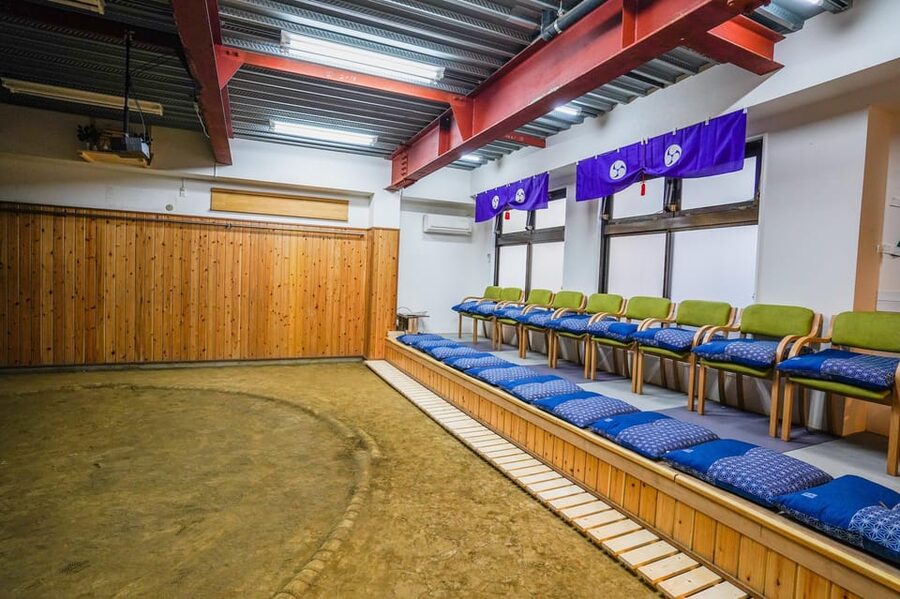
The first part sets the scene. Your guide explains the lifestyle and customs of the sumo world, then points out the rooms that shape a wrestler’s day. You see the dining room, bath, and practice area, which helps explain why a stable is more than a gym.
Sumo wrestlers train, eat, rest, and live within a demanding shared routine. You do not need a long lecture to understand the basic idea. Seeing the physical spaces gives the explanation weight, especially when the guide connects them to the wrestlers’ daily schedule and rank structure.
Past departures have used visual aids such as photographs, videos, and presentation slides. That is useful if sumo is new to you. Terms such as rikishi, stable, bout, and ranking can otherwise become a blur during a fast introduction.
The guide also explains the sport’s rules and the levels within the sumo pyramid. You learn what ends a match, how wrestlers use balance and position, and why the opening movements matter. Guides have included Masao, Charlie, Mayu, Jim, and Fuji, depending on the departure, with English used throughout.
Watching practice from the edge of the ring
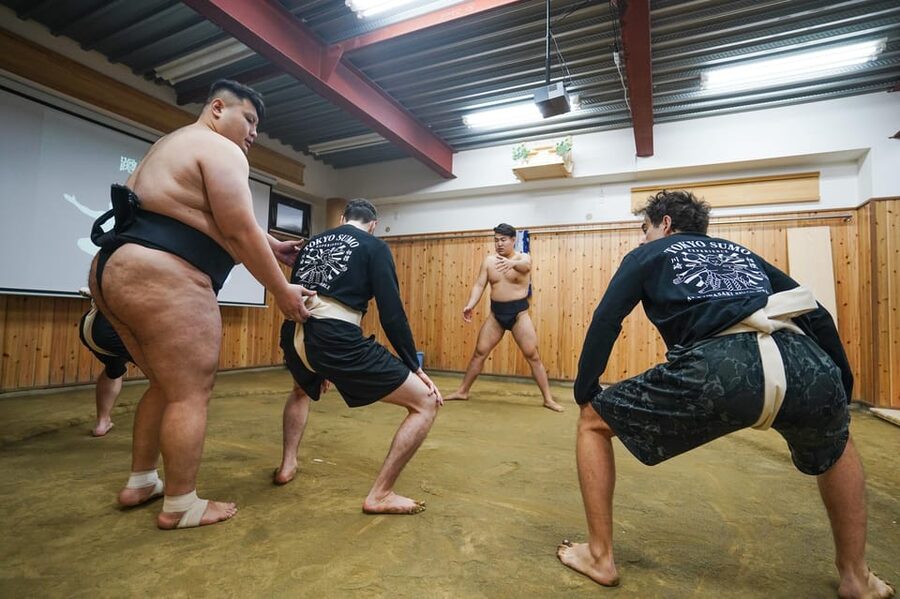
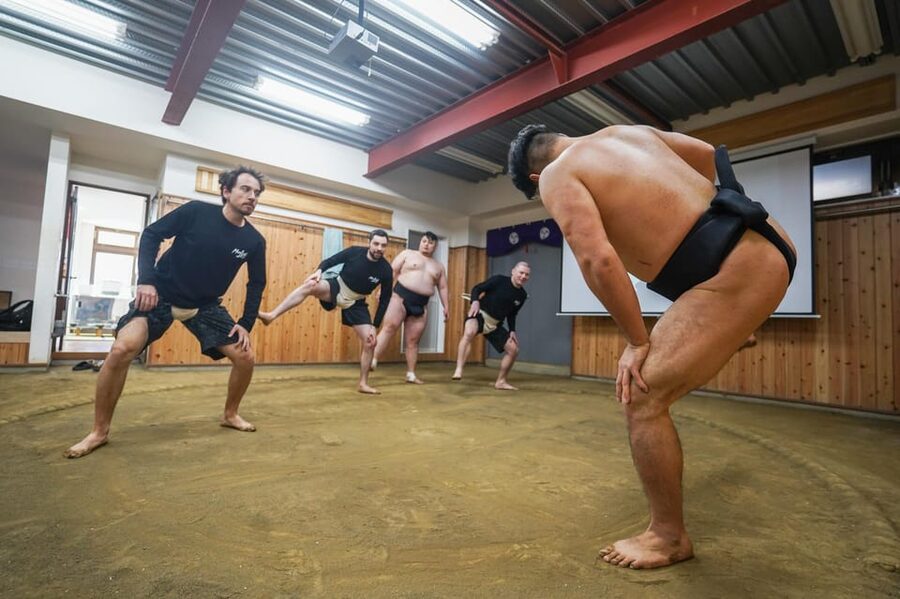
The strongest part of the visit is the morning training session. You take a seat immediately in front of the sumo ring and watch the wrestlers warm up and work through their drills.
The guide explains how practice begins and what the different movements do. You see the repeated stamping, squatting, pushing, and stretching that build balance and power. These exercises can look simple until you understand how much control they demand.
The close seating changes the mood. A stadium match is dramatic, but a practice room lets you notice the repetition and effort behind the spectacle. You are close enough to see the scale of the wrestlers and the force behind each movement, while still being given an explanation of the purpose.
There is a quiet, disciplined quality to this section. It is not a performance designed around constant entertainment. At times, the pace may feel slow at the beginning, especially if you expect an immediate match. Give it time. The later hands-on section makes the opening training easier to appreciate.
More lunch stops in Japan:
- Bike Tour Exploring North Kyoto plus Lunch
★ 5.0 · 1,087 reviews - Tokyo: Mt.Fuji & Lake Kawaguchiko 1-Day Bus Tour w/Optional Lunch
★ 4.5 · 839 reviews - Osaka/Kyoto: Arashiyama, Nara & Fushimi Inari Shrine w/Lunch
★ 4.4 · 754 reviews - Kyoto Zen Meditation & Garden Tour at a Zen Temple with Lunch
★ 5.0 · 441 reviews
Trying the movements yourself
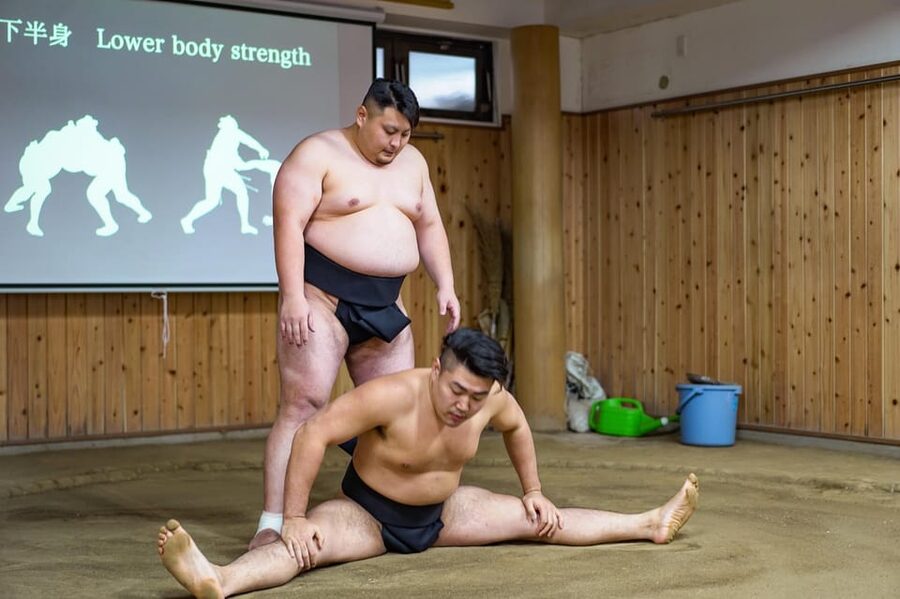
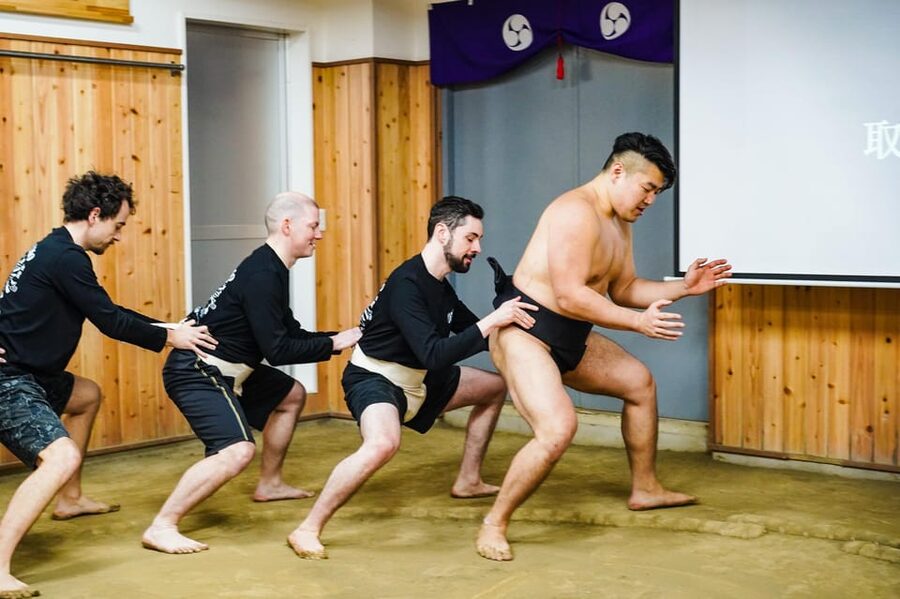
After watching the wrestlers, you can attempt some of the exercises. The guide demonstrates the actions, and the wrestlers help show how they work.
This is where the tour becomes playful. You will quickly learn that a low stance, wide balance, or controlled push is harder than it looks. The wrestlers are patient and good-humored, but the contrast between a visitor’s effort and a trained rikishi’s strength is impossible to miss.
Participation is optional. That is important for families and mixed groups, since not everyone will want to enter the ring. You can watch the demonstrations and still get plenty from the visit.
The activity is not a fitness class, but it is physical. Anyone with heart problems, high blood pressure, a cold, or a pre-existing medical condition should not book it. The experience is also not recommended if you have mobility problems. Some areas are inaccessible to wheelchairs and strollers, and a private tour is suggested for people with walking difficulties.
Learning the rules before the friendly bout
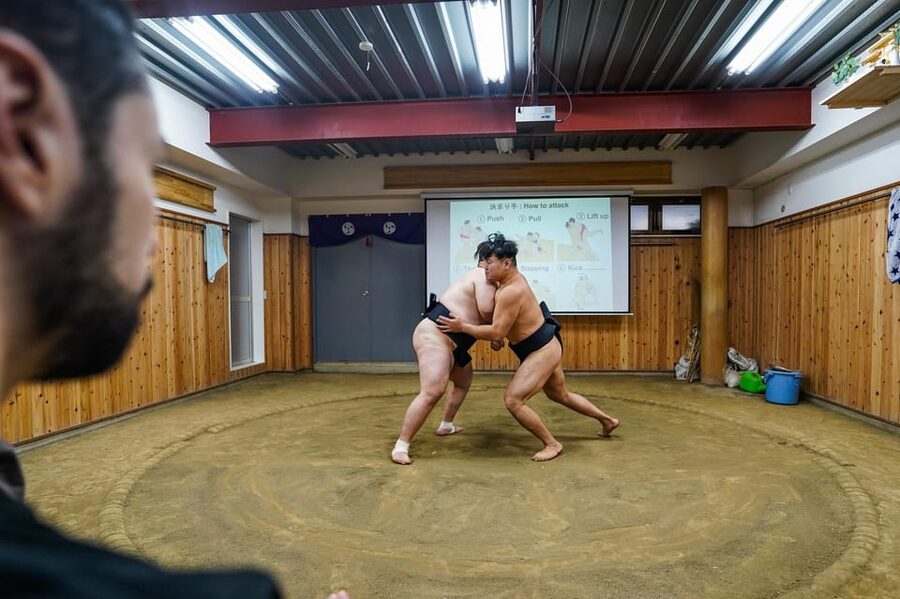
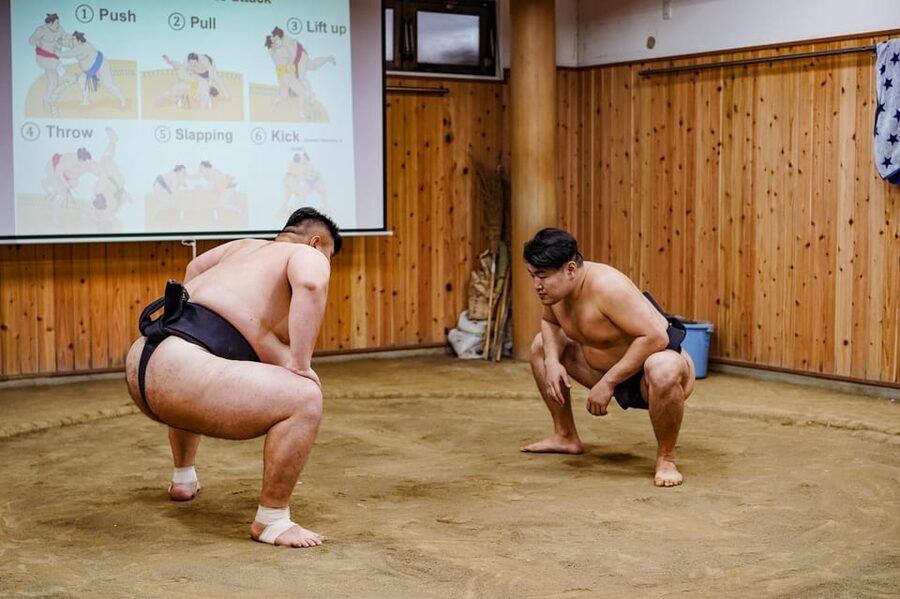
Before anyone challenges a wrestler, the guide explains how a proper sumo match starts. You learn the basic rules, moves, and techniques, then watch the rikishi demonstrate a bout.
This explanation is one of the tour’s best features because it gives meaning to the match. Sumo is not simply about being the biggest person in the room. Foot placement, balance, timing, and the ability to force an opponent out of the ring all matter.
Then comes the memorable option: you can face a sumo wrestler yourself. The bout is presented as a real match, but the tone is friendly, and the wrestlers adjust to the participant. You should still expect to lose quickly. That is part of the fun, and it gives you a direct sense of the strength and control required in the sport.
You do not have to wear yourself out for the sake of a photograph. If you prefer, watch someone else take the challenge. If you do step in, listen closely to the guide and wrestler, follow the instructions, and treat the ring with respect.
For many people, this is the moment they remember most. It is funny, physical, and humbling without being harsh.
Making chicken dumplings for chanko-nabe
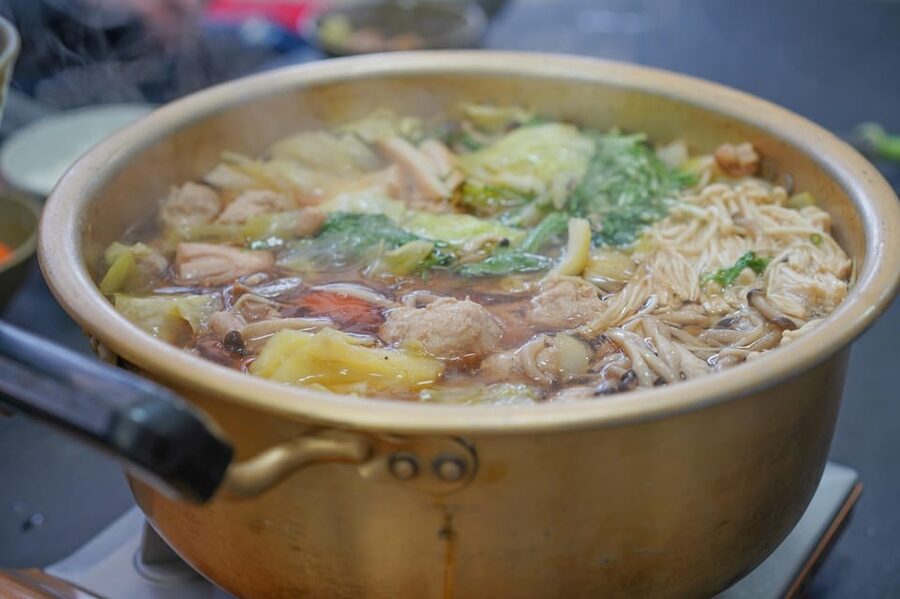
After the training and bouts, the group prepares lunch. You help make chicken dumplings for chanko-nabe, the hot-pot dish closely associated with sumo wrestlers.
The food is more than a convenient meal. Chanko-nabe is part of the sumo lifestyle and helps explain how wrestlers support their large, powerful bodies. Making the dumplings gives you something practical to do, while the shared pot creates a natural change of pace after the physical activity.
You eat around a table actually used in the sumo room. That small detail makes lunch feel connected to the place rather than tacked onto the end of a tour.
The dish has been praised for its flavor, especially the soup. Vegetarian food has been arranged when requested in advance, but you must tell the operator at least one day before the tour. Same-day requests cannot be handled, and the kitchen is not controlled by MagicalTrip, so allergy-free preparation and substitutions cannot be guaranteed.
Additional food and drinks are not included. The provided lunch is included, but you should not assume that every dietary need can be met.
Conversation, photographs, and keepsakes
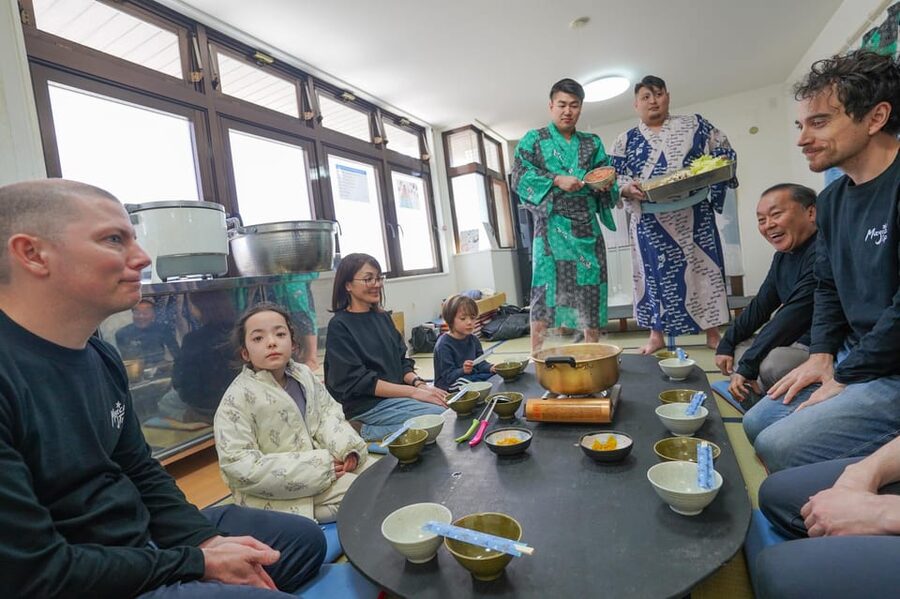
Lunch is also your chance to ask questions directly. The wrestlers join the meal, so you can learn about training, sumo customs, and life in the stable in a relaxed setting.
English-speaking guides help keep the conversation moving. The wrestlers are described as friendly, funny, and patient, which matters because the social part of the tour is as important as the demonstrations. You are not just watching athletes from a distance.
Photography is included, and the tour provides photos from the experience. You may also take pictures with the wrestlers and make a memorial handprint on paper. Some departures have included yukata or kimono dress-up photographs, though you should confirm what is offered on your date rather than assume every departure includes the same setup.
A T-shirt is included as well. There has been a sales pitch for additional items such as T-shirts or kimono at the end of at least one departure. That may not bother you, but it is worth knowing if you prefer a tour with no retail moment.
Is $166 a fair price?
At $166 per person, this is not a cheap add-on activity. The price needs to be judged against what you are actually getting: a four-hour English-guided visit, access to a real stable, a ringside practice session, direct contact with wrestlers, a hands-on food experience, lunch, photographs, and a T-shirt.
You are paying for access that is difficult to arrange independently. A sumo tournament ticket would show you official competition, but it would not give you a tour of the training space, a lesson in the exercises, a shared meal, or the chance to enter the ring.
The value is strongest if you want active participation and personal contact. It is weaker if you only want to watch sumo quietly or if you dislike group activities. You may also feel the cost is high if you do not plan to take part in the exercises or bout.
For a family, couple, or small group looking for one special Tokyo-area activity, the package makes sense. The combination of culture and physical fun gives the morning more depth than a simple demonstration.
Who should book this experience?
I would recommend it to first-time sumo viewers, families with older children, couples, and anyone who likes food-based cultural activities. You do not need to know the rankings or rules in advance. The explanations are designed to bring beginners along.
It also suits people who want to leave central Tokyo for a few hours. The Shin-Kawasaki meeting point is relatively easy to reach from both Tokyo and Yokohama, but you should still plan the train journey carefully.
You should think twice if you have mobility limits, heart problems, high blood pressure, a cold, or another medical condition. The stable is not fully accessible, and the physical portions are not suitable for everyone.
I would also skip it if you want a formal, silent sporting event. This is interactive, social, and occasionally silly. Its appeal comes from trying the movements, asking questions, eating together, and laughing at the inevitable mismatch between visitor and rikishi.
Should you book the sumo stable visit?
Book it if you want to understand sumo as a daily practice, not just a tournament sport. The ringside training, stable tour, chanko-nabe lunch, and optional bout form a well-balanced four hours, and the English guidance helps you follow every stage.
I would treat the bout as an option, not the sole reason to pay. Even if you never enter the ring, you still get the training session, cultural explanation, lunch, questions with wrestlers, photos, and keepsakes. Make dietary requests at least a day ahead, arrive early at Shin-Kawasaki, and wear something comfortable for movement.
The strongest case for booking is simple: this gives you access, context, and contact in one morning. If that sounds better than sitting in the back of a stadium trying to understand what is happening, it is a worthwhile splurge.
FAQ
Where does the tour meet?
Meet just outside the only ticket gate at Shin-Kawasaki Station, in front of the Kiyoken shumai shop. The guide holds a red or orange sign marked MagicalTrip.
How long does the experience last?
The activity lasts four hours, including the stable visit, sumo practice, demonstrations, participation, and lunch.
How far is Shin-Kawasaki from Tokyo?
Shin-Kawasaki is about 20 minutes from Tokyo Station and about 10 minutes from Yokohama Station.
Is the tour conducted in English?
Yes. The tour includes a live English-speaking guide.
Can I wrestle with a sumo wrestler?
Yes, participants who wish to do so can challenge a rikishi in a friendly sumo bout. Participation is optional.
Do I have to take part in the physical exercises?
No. You can watch the demonstrations and practice, but you do not have to enter the ring or wrestle.
Is lunch included?
Yes. Lunch with the sumo wrestlers is included, including chanko-nabe and the activity of making chicken dumplings.
Can dietary requests be arranged?
You must provide dietary requests or allergy information at least one day before the tour. Allergy-free food and substitutions cannot be guaranteed, and requests made on the day cannot be accommodated.
Is the stable wheelchair accessible?
Some locations on the tour are not accessible by wheelchair or stroller. The experience is not recommended for people with mobility issues.
What is included besides lunch?
The tour includes the guide, stable visit, lunch with sumo wrestlers, tour photos, and a T-shirt. Additional food and drinks are not included.
Just added around Japan
- Private Transfer from Narita Airport to Yokohama Port and City★ 4.5 · 17 reviews
- Private Arrival Transfer : Narita International Airport to Central Tokyo City★ 4.5 · 12 reviews
- Narita Airport(NRT): Private Transfer to Tokyo/Yokohama 1-9pax★ 5.0 · 47 reviews
- [Narita Airport Terminals 1, 2] 40-60km Sawara Itako Historic Bike Tour★ 5.0 · 13 reviews
- 3 Day Japan Highlights Tour: Tokyo, Mt.Fuji, Nara, Kyoto, Osaka★ 5.0 · 22 reviews
- All must-sees in 3 hours – Nara Park Classic Tour! From JR Nara!★ 5.0 · 108 reviews
- Private Nara Tour and Sake Tasting (Departing from Kyoto/Nara)★ 5.0 · 40 reviews
- Hammer a Pattern on Your Ring Workshop★ 5.0 · 57 reviews
Yokohama Tours, compared.

Authentic Sumo Experience in Tokyo: Enter the Sanctuary
Read our review →
EVO, WRX, Skyline – JDM Night Run to Daikoku Car Meet
Read our review →


R34Skyline Daikoku PA Fast & Furious Private Experience
Read our review →
Guided Cup Noodles Museum Tour & Make Your Own Cup
Read our review →
Daikoku & Tokyo JDM Night Tour in R34 or TopSecret R35 GT-R
Read our review →
【R34 GTR Over 400 hp】Tokyo: Private Daikoku Tour in R34 GTR
Read our review →Browse the lists this tour appears in