
Reviewed · TOKYO TOURS
Tokyo: Calligraphy Workshop & Original T-Shirt Creation
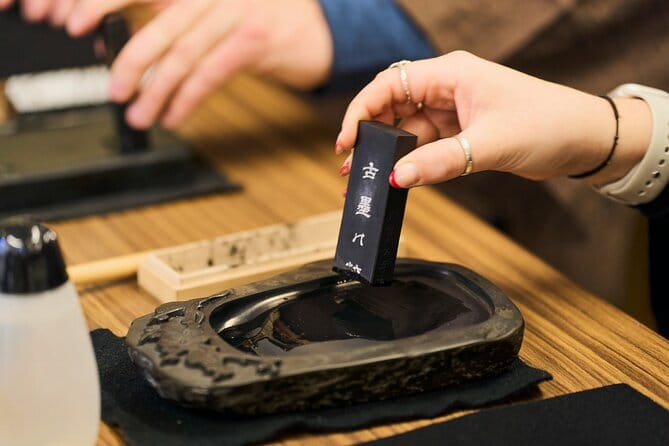
The most memorable part of this Shinjuku workshop is not simply writing Japanese characters. You grind a solid inkstick by hand, practice with authentic brushes, then turn your name into kanji and create a piece of art. The process is slow and calming, a welcome change from Tokyo’s quick pace.
I like two things right away: the personal instruction from a professional calligrapher, and the chance to take home work you made yourself. English-speaking guides such as Hiromi, Aki, Naoto, and Erico help explain the lesson, while the calligrapher focuses on technique. The main consideration is cost: the $30 class includes supplies and paper artwork, but the original T-shirt costs extra and some people find the final shirt less polished than they hoped.
Key points to know before booking
- You make ink from a solid inkstick, adding a quiet, hands-on ritual before the brushwork begins.
- Your name becomes kanji, with attention given to character meaning, order, and placement.
- A professional calligrapher leads the class, while an English-speaking guide translates and explains cultural details.
- The class lasts two hours and is limited to 10 people, though some sessions may be much smaller.
- Your paper artwork is included, while the custom T-shirt is an optional extra.
- Children can take part, making this a useful family activity as well as an art lesson.
A quiet Japanese art lesson in the middle of Shinjuku
Tokyo is full of noise, screens, trains, and bright signs. This workshop offers a different rhythm. For two hours, you sit with ink, paper, and a brush, paying attention to pressure, movement, and breathing. Calligraphy becomes less about producing a perfect character and more about learning how each stroke begins and ends.
The class takes place in Shinjuku, near Okubo Station. That location makes it easy to add to a day in western Tokyo, but the meeting point is on a city street rather than at a famous sightseeing landmark. You meet your guide outside the FamilyMart Okubo Station South Exit Store at 1-23-21 Hyakunincho, Shinjuku-ku.
Look for a guide holding a sign marked Local Guide Stars. The meeting point is specific, so save the map link before leaving your hotel and allow enough time to find the south exit. A convenience store is a practical landmark, but it is still worth checking the station exit carefully before you go.
More hands-on workshops in Tokyo:
- Sushi Making Tokyo Roll and Authentic Japanese Sushi Class
★ 5.0 · 3,971 reviews - Tokyo: Roll and Authentic Sushi Making Class in Asakusa
★ 4.9 · 1,957 reviews - Tokyo Shinjuku Chopsticks Making Class
★ 5.0 · 1,763 reviews
Changing into workwear and preparing the ink
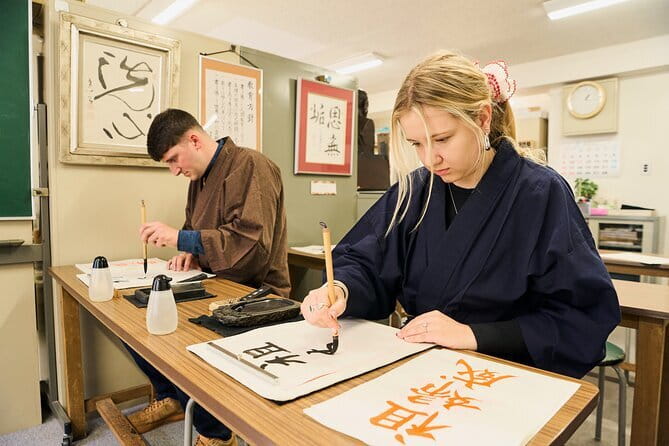
The workshop begins with a small change of pace, and a change of clothes. You put on traditional Japanese workwear before starting the lesson. This is not just a costume photo opportunity. It helps signal that the next two hours are about sitting down, focusing, and working with care.
The first hands-on step is grinding a solid inkstick. You add water and work the stick against an inkstone until you have usable ink. It is a simple task, but it slows the room down. You feel the ink develop rather than opening a bottle and rushing straight to the brush.
I like this part because it gives you a better sense of the craft. Calligraphy is not only the visible black line on paper. It also includes the preparation of the materials, the texture of the ink, and the condition of your mind before the first stroke.
The guides explain the process in English, and the calligrapher adds instruction about Japanese writing and the development of the characters. Past teaching sessions have included explanations of how Japanese alphabets evolved, how characters are formed, and why stroke order matters.
Learning brush control before writing kanji
Before you attempt your name, the calligrapher shows you basic brush techniques. You practice how to hold and move the brush, how much pressure to use, and how to shape individual strokes. This matters because a brush does not behave like a pencil. Small changes in pressure alter the width and character of the line.
The class is designed for beginners, and you do not need to know Japanese. The English-speaking guide translates the instruction and helps explain the meaning behind the characters. Guides have included Hiromi, Aki, Naoto, Erico, Nono, Mayuko, and others, depending on the session.
The teaching style appears patient and personal. In a group of no more than 10, the calligrapher can look at each person’s work and suggest ways to improve. Some classes have had only one student, which creates a very different experience from a full group. You get more individual attention, but you may also feel more pressure because every attempt is easy to see.
That is part of the appeal. You are not handed a souvenir and sent on your way. You make several attempts, notice what changes when you alter your grip, and gradually gain a little control. The results may be uneven. That is normal, and the class treats the practice as part of the experience rather than expecting professional work from a first-time student.
Turning your name into meaningful kanji
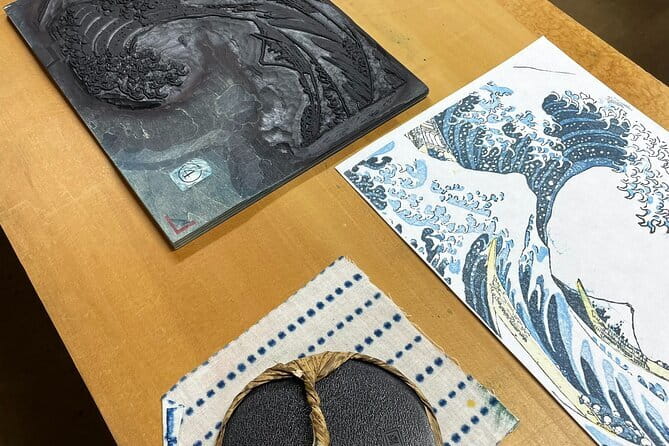
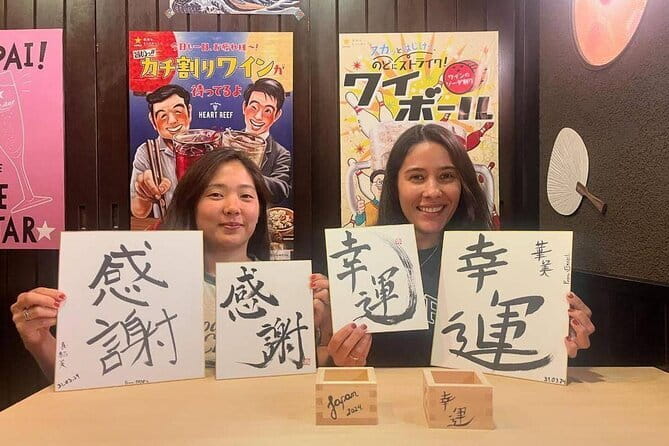
The most personal stage is choosing kanji for your name. Japanese names and foreign names do not always have a direct one-to-one translation, so the process involves selecting characters with suitable sounds or meanings. The calligrapher helps you understand what the characters represent and how they work together.
You may also choose another word or idea that matters to you. The class allows freedom in the choice of kanji, within the guidance of the teacher. That makes the final work more than a standard souvenir. You are deciding what you want the characters to express, then learning how to write them.
This is also where the cultural explanation becomes especially useful. A character is not simply a decorative symbol. Its meaning, pronunciation, shape, and placement all matter. The instructor explains how characters should be ordered next to each other and gives you a better sense of why a Japanese name cannot always be created by translating each letter directly.
I would treat this as a language and culture lesson with an art project attached. You will not become fluent in Japanese during two hours, but you will leave with a more informed understanding of how written characters carry meaning.
A few more Tokyo half-days to weigh up
- Mt Fuji and Hakone 1-Day Bus Tour Return by Bullet Train
★ 5.0 · 26,383 reviews - 1-Day Tokyo Bus Tour
★ 5.0 · 14,250 reviews - Tokyo: TOKYO SKYTREE® Admission ticket
★ 4.5 · 11,192 reviews - Tokyo: teamLab Planets TOKYO Digital Art Museum Entry Ticket
★ 4.6 · 9,779 reviews
Creating the paper artwork to take home

Once you have practiced, you create your final artwork on paper. The instructor guides your brushwork and offers corrections, but your hand makes the piece. The supplies used during the class are included, and the completed artwork is yours to take home.
Paper is the better choice if you want the most traditional result or if you are watching your spending. Several people have chosen not to add the shirt and still received a carefully prepared version of their name on paper. If your suitcase has limited space, this is also the easier souvenir to pack.
Do not expect every character to look perfect. Calligraphy is difficult to grasp quickly, and the charm is partly in seeing your own beginner’s hand. The teacher may also create a neater version of your name for you, giving you both a personal attempt and a more polished keepsake.
One small limitation is that the information provided focuses on paper and T-shirts. If you specifically want a scroll, you should not assume it is available. The T-shirt is the main alternative to paper, and a scroll is not listed as an option.
Adding your kanji to an original T-shirt
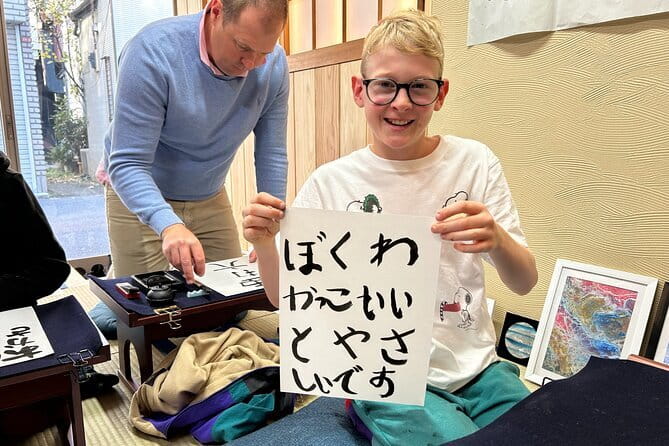
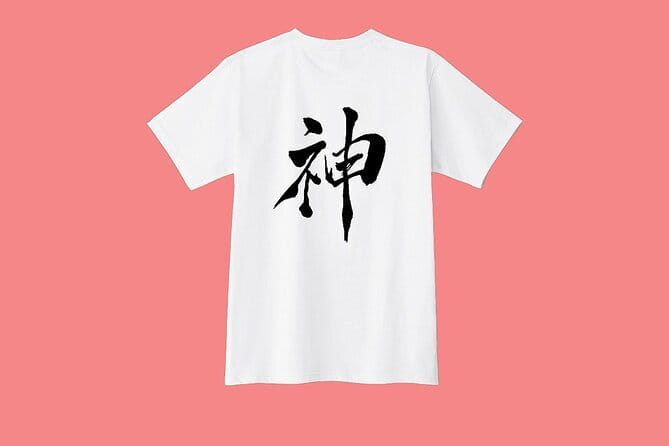
The optional T-shirt turns the lesson into a wearable souvenir. Instead of keeping your kanji on paper, you write it directly onto a shirt and create an original piece to take home. This is a fun choice for families, couples, or anyone who wants a souvenir that feels more personal than a shop purchase.
The shirt is not included in the $30 price. One person described it as quite expensive, so check the additional charge before you commit. That extra cost is the clearest drawback of the experience, especially if you are booking for several people.
There is also a practical point about expectations. Your first calligraphy attempt may be charming rather than flawless. On a sheet of practice paper, that is easy to accept. On a T-shirt, the permanent nature of the result can feel more demanding. I would choose the shirt if you like handmade souvenirs and do not mind visible imperfections. Choose paper if you want a lower-cost and more forgiving finish.
Some shirts are completed for later delivery, so check the current arrangements when booking if the timing of the finished item matters to you. The activity information confirms that the original T-shirt is an added item, but it does not specify a standard delivery schedule.
What the two-hour schedule feels like
The class is compact enough to fit into a Tokyo sightseeing day. You meet at the Okubo Station south exit, go to the workshop in Shinjuku, change into workwear, prepare the ink, practice brush techniques, choose your kanji, and complete your artwork.
The order makes sense. You begin with preparation, move into basic skills, and only then attempt the final design. That structure protects beginners from being asked to create a finished character before they understand the brush.
A two-hour session gives you time to slow down without taking over your whole day. It is long enough for real instruction, yet short enough to combine with Shinjuku sightseeing, shopping, or a meal nearby. Starting times vary, so check availability when selecting your date.
The group limit is 10 people. That is small enough for individual help, though the exact feel depends on how many people book your time. If your priority is one-on-one teaching, a quieter session may suit you best, but no particular session size can be guaranteed.
The value of $30 in Tokyo
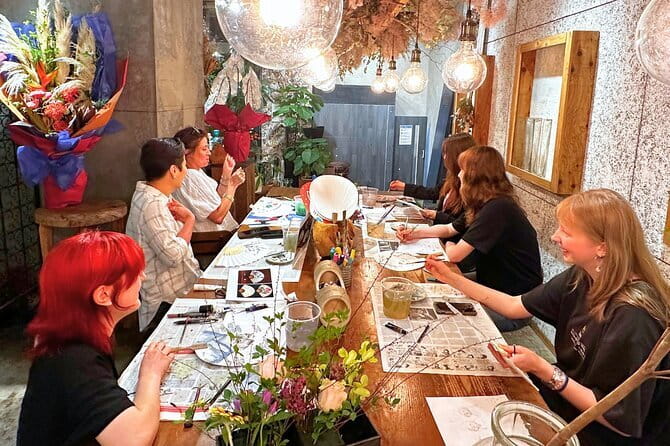
At $30 per person, this is a fair price for a two-hour guided activity that includes an English guide, calligraphy supplies, instruction, and artwork to take home. You are paying for teaching and access to professional tools, not just for a quick craft demonstration.
The value improves if you care about cultural context. The lesson covers ink preparation, brush handling, stroke order, the evolution of Japanese writing, and the meaning of kanji. Those details make the experience more substantial than painting a random symbol onto a souvenir.
The value is less clear if your only goal is a finished T-shirt. The shirt costs extra, and your own calligraphy may look rough. In that case, compare the total price before booking. If you view the shirt as a bonus to a guided cultural lesson, the cost is easier to justify.
The reserve-now-and-pay-later option can help if your Tokyo schedule is still changing. Free cancellation is available up to 24 hours in advance for a full refund. Those terms add flexibility, but you should still check the exact conditions at booking.
Who will enjoy this calligraphy workshop
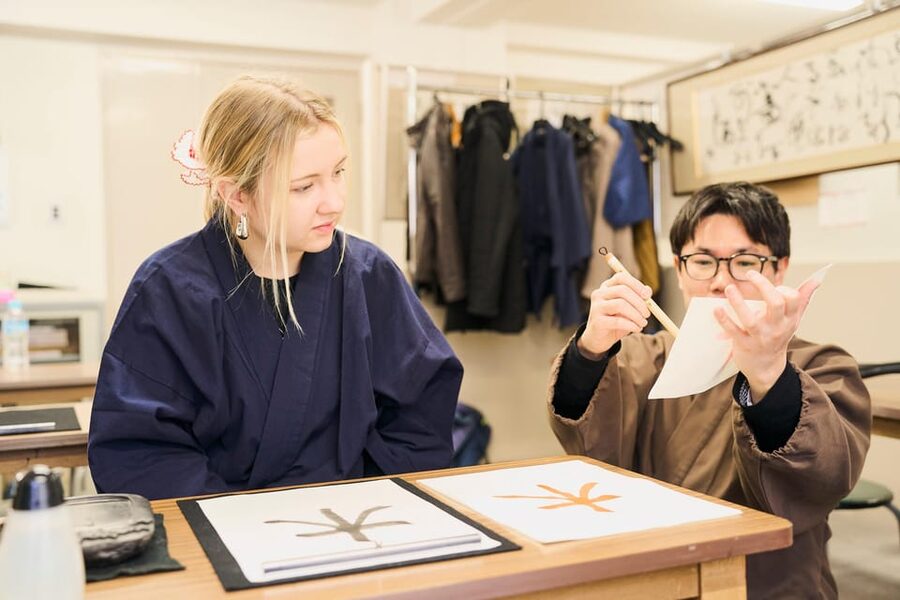
I would recommend this activity to you if you enjoy making things with your hands, want a quieter break from city sightseeing, or have a strong interest in Japanese writing. It also suits art lovers who want instruction from a real calligraphy teacher rather than a simple photo stop.
Families can consider it too. The workshop is designed to be enjoyable for children, and teaching sessions have included patient help for a toddler. Younger children may need close support, but the calm, guided format gives them a clear task.
Couples can choose matching or contrasting kanji, then decide if they want paper artwork or shirts. Solo participants may benefit especially from the small group format, since the teacher can spend more time correcting brush technique.
You may want to skip it if you dislike slow, careful activities or need a guaranteed polished product. Calligraphy requires patience, and the final result depends partly on your own practice. The instructor can guide your strokes, but no beginner should expect to write like a master after one class.
Practical details for a smooth visit
Bring the meeting address and map link with you, and look for the Local Guide Stars sign outside FamilyMart at the Okubo Station south exit. The activity is in Shinjuku, but the starting point is not described as a major attraction, so do not rely on spotting the workshop by chance.
The language of instruction is English through a live guide. The calligrapher may speak Japanese while the guide translates, as happened in sessions led by Sousen-sensei and supported by Mayuko. That arrangement gives you direct access to the teacher’s skill while keeping the lesson understandable.
Supplies used during the class are included. The original T-shirt is not. Decide in advance if you want the shirt, but it may be sensible to wait until you understand the process and see how comfortable you feel with the brush.
The activity is rated 4.9 from 105 ratings, with especially strong praise for the calm setting, patient teaching, English translation, ink-making, and personal attention. Names of individual guides vary, so do not book expecting a specific teacher unless the current booking details confirm it.
Should you book it?
Book this workshop if you want a souvenir with a story behind it. The strongest part is the complete process: preparing traditional ink, learning brush control, choosing meaningful kanji, and producing your own artwork with help from a professional calligrapher.
I would book the paper option first if price matters or if you prefer a more traditional keepsake. Add the T-shirt if you are comfortable paying extra and like the idea of carrying your imperfect but personal work home on your back.
For a calm two hours near Shinjuku, the $30 base price offers good value. Just arrive at the correct meeting point, allow for a beginner’s learning curve, and see the uneven brushstrokes as part of the souvenir rather than a mistake.
FAQ
Where does the calligraphy workshop meet?
The meeting point is the FamilyMart Okubo Station South Exit Store at 1-23-21 Hyakunincho, Shinjuku-ku, Tokyo, Japan.
How do I find the guide?
Look for a guide holding a sign that says Local Guide Stars.
How long does the activity last?
The workshop lasts two hours.
Is the workshop conducted in English?
Yes. The activity includes a live English-speaking guide who translates and explains the lesson.
What is included in the price?
The $30 price includes the English guide, calligraphy supplies used during the class, and your own artwork to take home.
Is the T-shirt included?
No. The original T-shirt is optional and costs extra.
What will I do during the workshop?
You will change into traditional Japanese workwear, grind a solid inkstick, practice brush techniques, transform your name into kanji, and create artwork. You can also write the kanji directly on a T-shirt.
How many people can join the class?
The group is limited to 10 participants.
Can children join the activity?
Yes. The workshop is designed to be enjoyable for children.
Can I cancel for a full refund?
Yes. You can cancel up to 24 hours in advance for a full refund.
Can I reserve now and pay later?
Yes. The reserve-now-and-pay-later option lets you book without paying immediately.
Just added around Tokyo
- Private Arrival Transfer : Narita International Airport to Central Tokyo City★ 4.5 · 12 reviews
- Narita Airport(NRT): Private Transfer to Tokyo/Yokohama 1-9pax★ 5.0 · 47 reviews
- Private Transfer from Narita Airport to Yokohama Port and City★ 4.5 · 17 reviews
- 3 Day Japan Highlights Tour: Tokyo, Mt.Fuji, Nara, Kyoto, Osaka★ 5.0 · 22 reviews
- [Narita Airport Terminals 1, 2] 40-60km Sawara Itako Historic Bike Tour★ 5.0 · 13 reviews
- Small Town in the Big City: Tasting Tokyo’s Kichijoji★ 5.0 · 195 reviews
- Small Town in the Big City: Tasting Tokyo’s Kichijoji★ 5.0 · 16 reviews
- The 10 Tastings of Tokyo With Locals: Private Street Food Tour★ 5.0 · 48 reviews
Tokyo Tours, compared.

Mt Fuji and Hakone 1-Day Bus Tour Return by Bullet Train
Read our review →

teamLab Planets TOKYO Digital Art Museum Entry Ticket
Read our review →
Mt Fuji & Hakone Cruise, Drum Show Bullet Train 1 Day from Tokyo
Read our review →
Sumo Show Experience with Chicken Hot Pot and a Photo
Read our review →
Shinjuku Food Tour (13 Dishes at 4 Local Eateries)
Read our review →
Tokyo Mt Fuji 5th St & Hakone Cruise Bus Tour w/Bullet Train
Read our review →
Flagship 2-Hours Official Street Go-Kart Tour – Tokyo Bay Shop
Read our review →Browse the lists this tour appears in