
Reviewed · TOKYO TOURS
Tokyo: Daikoku Car Meet Tour at Night with JDM Guides
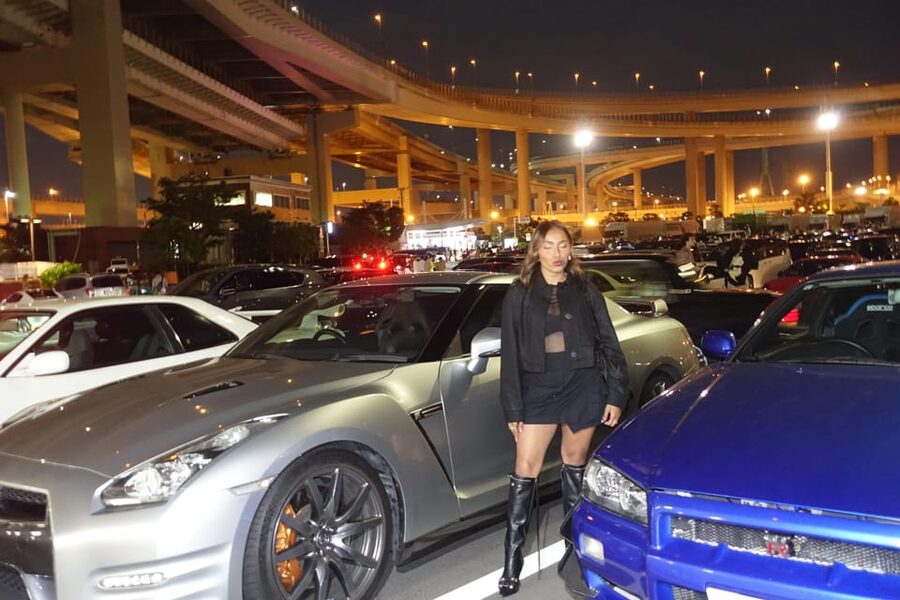
Tokyo’s famous Daikoku Parking Area is less a sightseeing stop than a glimpse into Japan’s car culture. You ride through Tokyo and Yokohama on the Bayside Line, cross the Rainbow Bridge, and arrive at a port-side meeting point where JDM cars may range from familiar classics to highly modified machines. The drive itself is part of the attraction, not just the time spent parked.
I like the way the tour puts you in a car rather than sending you to Daikoku by taxi, and I like the guides’ personal connection to the scene. Names such as JJ, Renon, Daiki, Mori, and Wangun OG appear often in the experience, with guides providing car talk, landmark pointers, and photo help. The main consideration is unpredictability: Daikoku can be quiet, closed by police, or affected by weather and traffic.
Key points at a glance
- Daikoku PA is the main event: You get about an hour at the parking area on many outings, with time to walk around and take photos.
- The ride matters: Tokyo highways, the Bayside Line, Rainbow Bridge, and Wangan-style routes form a moving part of the experience.
- The car is not guaranteed: You may ride a Subaru, Mazda RX-8, Toyota Crown, or another sports or JDM car. An R34, R35, RX-7, or Silvia is not included in the standard package.
- APIT adds a useful stop: On Monday through Thursday, the tour may visit APIT, a large car shop with parts, souvenirs, and engines on display.
- Conditions can change fast: Daikoku may have few cars, or police may close the area and send the scene elsewhere, such as Umihotaru PA.
- The best fit is clear: This suits car fans who enjoy the journey, conversation, and atmosphere as much as a guaranteed list of vehicles.
Why Daikoku PA matters to car fans
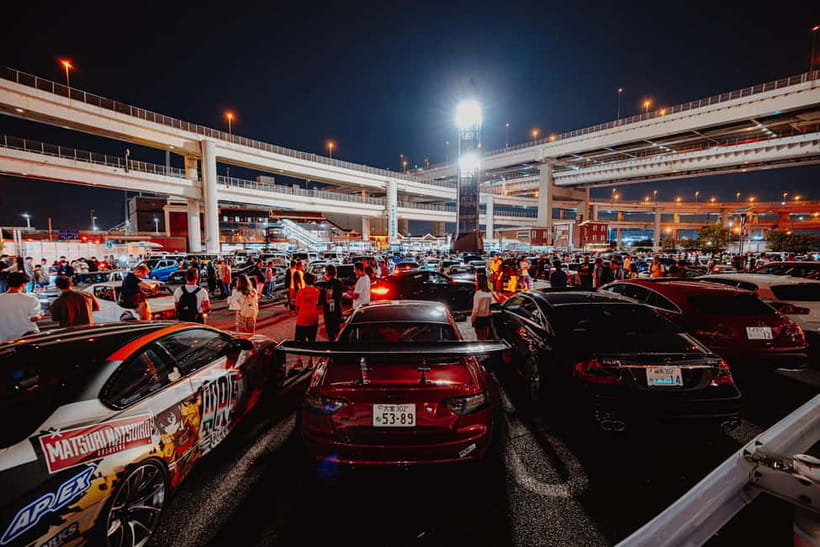
Daikoku PA is one of the best-known meeting places in Japan’s JDM scene. It sits in the industrial port area near Yokohama, reached by a network of expressways that can be confusing and difficult to use independently.
That setting gives the outing its special feel. You leave central Tokyo, pass bright towers and bridges, and follow broad highway routes toward the port. The city becomes more spread out, with elevated roads, warehouses, ramps, and dark stretches of water and pavement. It is a different view of Tokyo from the usual temples, shopping streets, and observation decks.
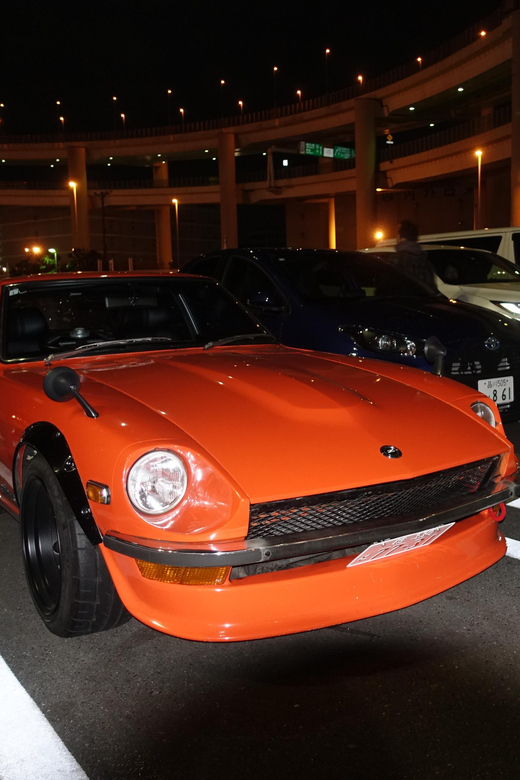
At Daikoku, you can walk around the parking area and look at the cars gathered that evening. The mix depends on the day. You might find modified Japanese cars, sports cars, exotic models, older icons, and ordinary vehicles belonging to local enthusiasts. Nobody can promise a particular model or a packed meeting.
That uncertainty is important. If you are booking only to see an R34 Skyline, RX-7, Silvia, or another specific car, the standard tour may disappoint. Those cars can appear, but the included ride specifically lists random JDM cars such as Subaru and RX-8, and it excludes rides in R34, RX-7, Silvia, and some special models unless you choose a VIP option.
More evenings out in Tokyo:
- Tokyo Night Foodie Tour in Shinjuku – Seasonal Sushi, Wagyu Beef
★ 5.0 · 1,161 reviews - Tokyo: Daikoku JDM Car Meet & Night Car Culture Tour
★ 4.8 · 626 reviews - Tokyo After 5: Authentic Japanese Food & Drink Night Tour
★ 4.5 · 560 reviews
The drive through Tokyo is half the tour
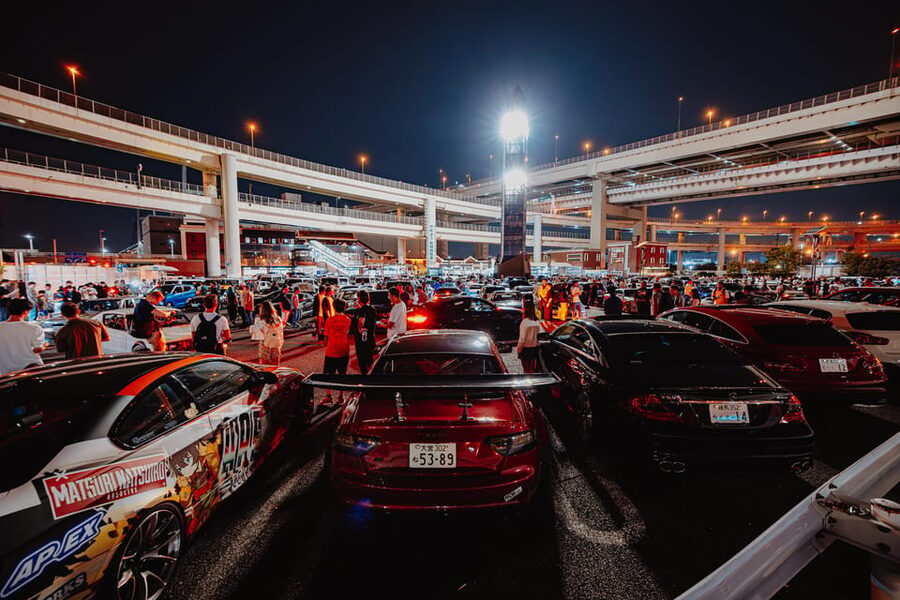
The tour lasts three hours, and roughly an hour is often spent at Daikoku itself. That leaves a good part of the evening for the drive there and back.
I would not treat this as wasted transport. The route through Tokyo’s expressway system is a key reason to book it. You may pass Tokyo Tower and cross Rainbow Bridge without stopping, while your guide points out landmarks and explains how the local car scene fits into the city.
The route also takes in the Bayside Line and popular driving roads associated with Tokyo’s underground car culture. Some people will recognize the atmosphere from games such as Tokyo Xtreme Racer or from Wangan Midnight. That does not mean the tour promises racing, and you should not expect illegal driving or a staged street-racing show. It means the roads, bridges, tunnels, and port scenery have their own appeal.
A few accounts describe seeing racing activity on the way back, but that is not a standard part of the experience. Your guide should drive safely, and the tour should be judged on the car meet and the city drive, not on any chance encounter.
The exact vehicle is assigned at random. The experience information lists Subaru and RX-8 rides, while individual outings have also used cars such as a Toyota Crown or Nissan Skyline. A few accounts mention an S15 and other special cars, but those are not a promise for every booking.
This is where expectations matter. You are paying to ride with a local car enthusiast and reach the meet, not to hire a particular supercar. If the exact vehicle is central to your plans, ask about the VIP package before booking.
Starting near Tokyo Station
The standard meeting point is in front of BAR STAND T at 1-5-1 Marunouchi, Chiyoda-ku, on the Tokyo Station side of the city. The cars are parked in front of the shop, and you should look for the guides near the custom cars.
Meeting times vary:
- Monday through Thursday: 7:30 PM
- Friday through Sunday: 6:00 PM
The earlier weekend start likely gives the group more time to reach the meeting area during popular evenings, but traffic can still affect the schedule. Pickup is also available near Shinbashi Station, with several listed drop-off areas including Shinbashi Station, Hibiyakoen, Shinjuku, Minato, and Shibuya.
If you arrange hotel pickup, wait outside five minutes before the scheduled time. Do not arrive late. One delayed participant was reported to have caused a long wait, cutting into the group’s time at Daikoku. That is a useful warning for everyone: Tokyo trains and stations can be confusing, so leave extra time and contact the operator if you are delayed.
You may share a car with other participants. Private groups are available, but the standard outing does not guarantee a private vehicle or a private ride.
APIT, engines, parts, and souvenirs
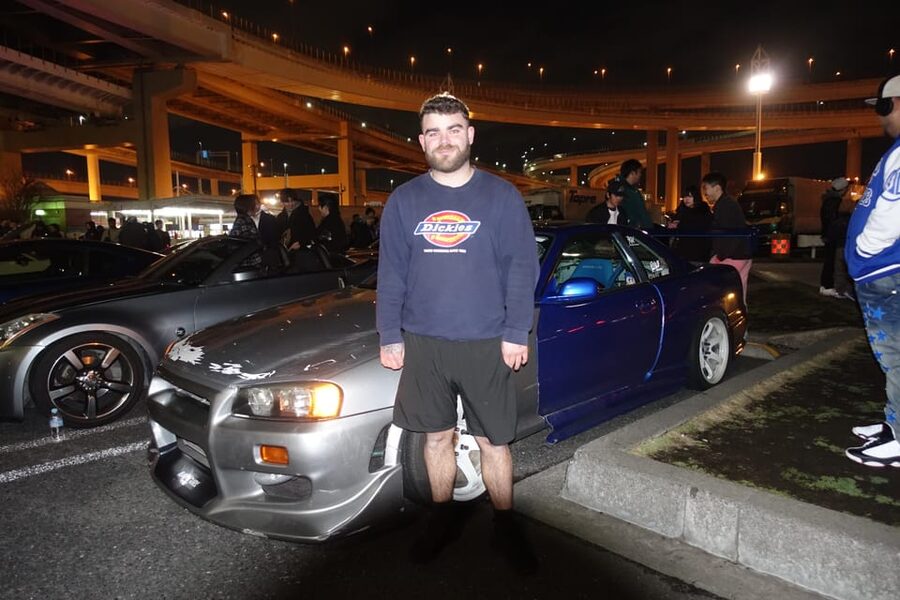
On Monday through Thursday, the route may include APIT, one of the larger car shops in the Tokyo area. The stop is not offered on Friday, Saturday, or Sunday.
APIT gives the tour a different angle. Daikoku is about people and cars gathered in one place. APIT is about the equipment behind the hobby. You can look at parts, browse souvenirs, and see actual engines on display. Even if you do not plan to buy anything, it helps explain how serious Japanese car culture can be.
The stop is especially useful if you enjoy details such as engine layouts, tuning parts, wheels, and accessories. It also gives you a chance to pick up a small car-related souvenir.
Do not build your plans around a long shopping visit. The experience information does not promise a fixed amount of time at APIT, and the stop is not included on the busiest Friday to Sunday schedule. If you book a weekend outing, you will generally be focused on the expressway drive and Daikoku.
A few more Tokyo half-days to weigh up
- Mt Fuji and Hakone 1-Day Bus Tour Return by Bullet Train
★ 5.0 · 26,383 reviews - 1-Day Tokyo Bus Tour
★ 5.0 · 14,250 reviews - Tokyo: TOKYO SKYTREE® Admission ticket
★ 4.5 · 11,192 reviews - Tokyo: teamLab Planets TOKYO Digital Art Museum Entry Ticket
★ 4.6 · 9,779 reviews
What your hour at Daikoku may look like
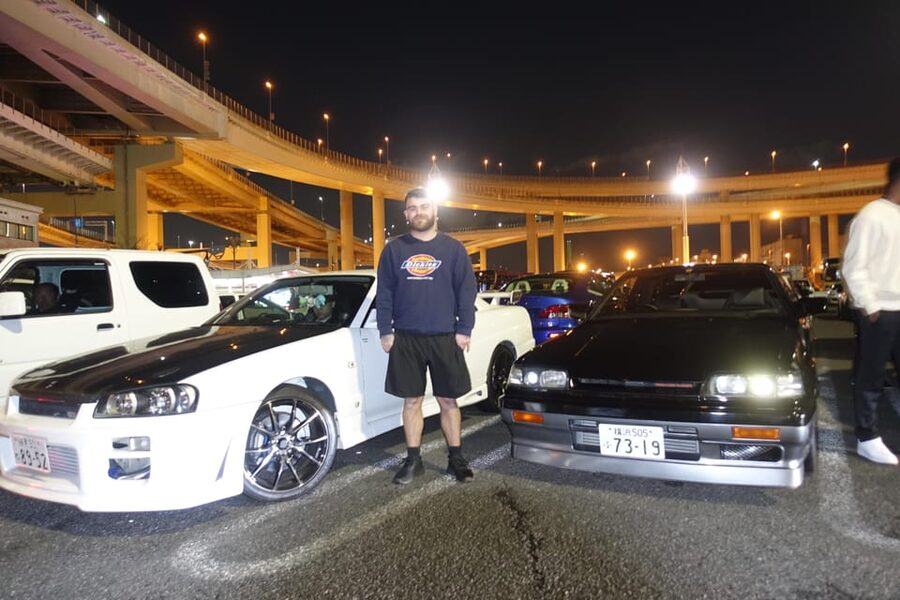
Once you reach Daikoku, you can get out, walk around, and take photos. A convenience store and restrooms are available at the parking area, and there are places to buy food, drinks, and small items such as car toys.
The guides can help with photos when requested during the tour. That is worth remembering if you are traveling alone or want a picture beside the group’s car. You should still bring your own camera or phone, and comfortable shoes are useful because you may spend time walking across the parking area.
The atmosphere depends heavily on the night. Fridays and weekends are often the safer choice if your priority is seeing a larger gathering, but even then there is no fixed roster of cars. Weather, police activity, holidays, and the time of day can change the scene.
Daikoku is also an operating parking area, not a theme park. The cars are owned by real people, and you should respect boundaries, avoid blocking vehicles, and ask before photographing people or entering a car. Interaction with local car owners is included, but that does not mean every owner will want a long conversation.
The tour gives you a chance to see the scene from the window as you arrive and to meet people connected to it. That local contact is a major part of the value. You are not only taking pictures of cars. You are seeing how a car gathering works in Japan and hearing about it from someone who follows the culture closely.
When Daikoku is closed or unusually quiet
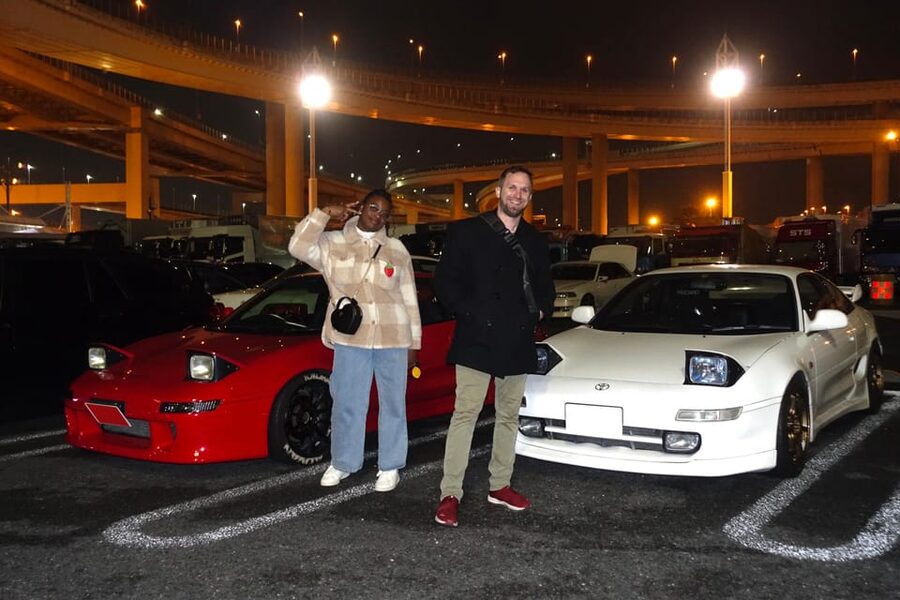
This is the largest risk, and the operator states it plainly. Daikoku PA may have very few cars, particularly when the weather is poor or the timing is slow. Police may also close the area.
One outing was diverted to Umihotaru PA after Daikoku was shut down. The replacement still offered unusual cars, including R34 and R35 Skylines, an NSX, and an RX-7 with a VeilSide body kit. Umihotaru is not the same experience as Daikoku, so you should view this as a practical backup rather than an equal substitute every time.
A changed route does not automatically mean the evening is poor. The tour’s value comes from the guide, the drive, and access to a car gathering that is difficult to reach on your own. Still, if you want a guaranteed Daikoku visit, no tour can honestly offer that.
Traffic can also cause delays of up to 30 minutes in rare cases. Pickup times and locations may shift because of road conditions, weather, or other unexpected problems. Keep your evening flexible rather than scheduling a timed dinner immediately after the tour.
The guides make the difference
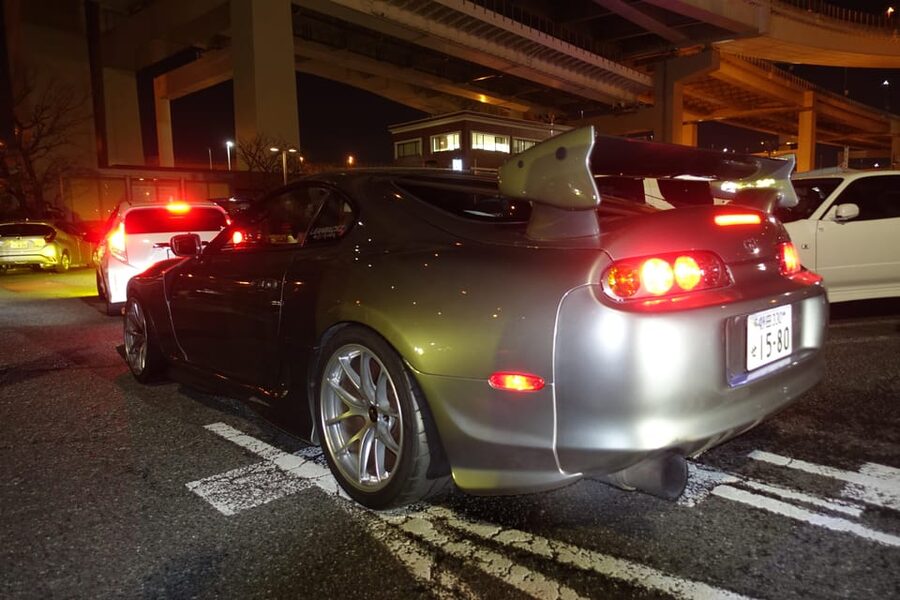
The guides are local car enthusiasts, and their personalities shape the experience. JJ is often praised for his humor and clear explanations of Tokyo’s car scene. Renon is described as friendly and well informed about local cars, while Daiki is noted for easy conversation and a warm manner.
Wangun OG, the owner, is also one of the named drivers. Some outings have included guides such as Mori, Kai, Ryosuke, Lennon, Senju, and Reno. English ability varies from guide to guide. Several guides speak very good English, while others use simpler English with translation help.
If you need highly fluent English, contact the operator before booking. That is not a minor point. The ride lasts three hours, and conversation is part of the experience, especially when the parking area is quiet.
A good guide can explain why a car is unusual, point out a good photo location, tell you about Tokyo’s roads, and help you understand the difference between a normal parking stop and a real meet. A weaker language match may make those conversations harder, even if the route itself remains enjoyable.
The listed rating is 4.6 from 193 ratings, which suggests a strong overall record but not a perfect one. The most consistent strengths are the guides, the fun of the drive, and the chance to reach Daikoku without trying to navigate the expressway system alone.
Is $160 a fair price?
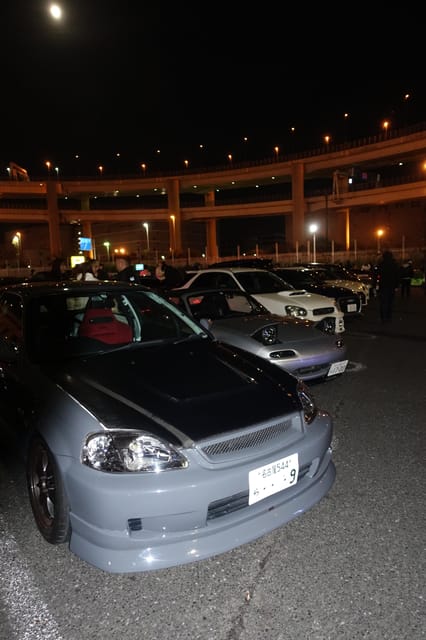
At $160 per person for three hours, this is not a cheap sightseeing ride. You are paying for a car, a driver, fuel, route planning, local access, and the guide’s time. The price also includes interaction with local car owners, photo help on request, and optional pickup and drop-off near Shinbashi Station.
For a car enthusiast, the value is easier to see. A normal Tokyo sightseeing bus will not take you through the Bayside Line to Daikoku in a sports or JDM car, and a taxi driver may not provide useful context about the scene. You also avoid the practical trouble of finding a legal route to a place that is not designed as a simple tourist attraction.
For someone who only wants a quick look at modified cars, the price may feel high. Daikoku itself can be quiet, your car is selected at random, and much of the outing is spent driving. You also pay separately for food and drinks.
I would book this as a special-interest experience, not as a general Tokyo tour. The strongest value comes when you care about Japanese cars, expressway culture, and talking with a local enthusiast. If you are bringing a partner or family member who is not into cars, the Tokyo views and unusual setting may still help, but the appeal will depend on how much they enjoy the ride.
Practical ways to get more from the night
Wear warm clothing. The port area can feel cool, and the tour runs at night. Comfortable shoes matter for walking around Daikoku.
Bring a camera, but do not spend the whole visit looking through it. The changing light, rows of cars, and highway views are part of the memory. Ask the guide for photo help during the tour if you want a picture of yourself with the car.
Do not bring alcohol or drugs. Baby strollers are not allowed, which may make this outing unsuitable for families traveling with very young children.
Try to book Friday, Saturday, or Sunday if seeing a larger meeting is your top goal. Choose Monday through Thursday if APIT and its engines, parts, and souvenirs interest you. The operator’s schedule means you cannot combine the weekend timing with the APIT stop.
Keep the evening open around the three-hour window. Traffic delays can happen, and a late participant can affect the whole group. Arrive early at the meeting point and confirm the exact pickup details if you are not meeting near Tokyo Station.
Cancellation is free up to 24 hours before departure, and you can reserve now and pay later. Those terms help if your Tokyo schedule is still changing, but they do not remove the normal uncertainty about weather, traffic, or the number of cars at Daikoku.
Should you book this Daikoku tour?
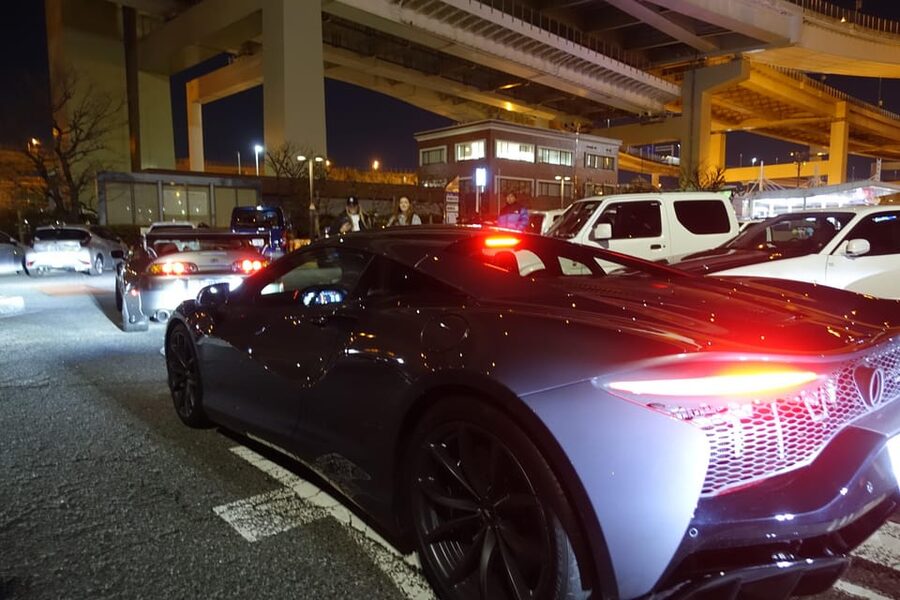
Book it if you want the full night out, meaning the drive, Tokyo landmarks, expressway views, guide conversation, and car meet together. It is a strong choice for fans of JDM cars, Japanese tuning, Wangan-style roads, and the culture seen in games and films.
Do not book it if you need one exact car, a guaranteed packed parking area, or a quiet private chauffeur. The standard ride is random, groups may share a car, English ability varies, and Daikoku can close or look unusually empty.
For the best odds, choose a Friday through Sunday departure, arrive early, wear warm clothes, and treat the car meet as a living scene rather than a scheduled performance. That mindset matches what this experience does best: it gives you a local guide, a memorable road journey, and a real chance to see Tokyo’s car culture up close.
FAQ
How much does the Daikoku car meet tour cost?
The tour costs $160 per person.
How long does the experience last?
The tour lasts three hours.
Where is the meeting point?
Meet in front of BAR STAND T at 1-5-1 Marunouchi, Chiyoda-ku, Tokyo. The cars are parked in front of the shop, and you should meet the guides near the custom cars.
What time does the tour begin?
The meeting time is 7:30 PM from Monday through Thursday and 6:00 PM from Friday through Sunday.
Is hotel pickup available?
Pickup is optional. Free pickup and drop-off are available near Shinbashi Station, and you should wait in front of your hotel five minutes before the scheduled pickup time if hotel pickup has been arranged.
What cars can I ride in?
The standard experience includes a random sports or JDM car. Examples include Subaru and Mazda RX-8. The exact car is not guaranteed.
Can I ride in an R34, RX-7, or Silvia?
Those cars are not included in the standard package. Riding in an R34, RX-7, Silvia, or other special JDM cars requires checking the VIP package.
Is APIT included on every tour?
No. The APIT stop is offered Monday through Thursday and is excluded on Friday, Saturday, and Sunday.
Can Daikoku PA be closed or have few cars?
Yes. Weather, time of day, police activity, and other conditions can affect the number of cars. If Daikoku is closed, the tour may use another location such as Umihotaru PA.
Can I cancel the booking?
You can cancel up to 24 hours in advance for a full refund. Reserve-now, pay-later booking is also available.
Just added around Tokyo
- Private Arrival Transfer : Narita International Airport to Central Tokyo City★ 4.5 · 12 reviews
- Narita Airport(NRT): Private Transfer to Tokyo/Yokohama 1-9pax★ 5.0 · 47 reviews
- Private Transfer from Narita Airport to Yokohama Port and City★ 4.5 · 17 reviews
- [Narita Airport Terminals 1, 2] 40-60km Sawara Itako Historic Bike Tour★ 5.0 · 13 reviews
- 3 Day Japan Highlights Tour: Tokyo, Mt.Fuji, Nara, Kyoto, Osaka★ 5.0 · 22 reviews
- Small Town in the Big City: Tasting Tokyo’s Kichijoji★ 5.0 · 195 reviews
- Small Town in the Big City: Tasting Tokyo’s Kichijoji★ 5.0 · 16 reviews
- The 10 Tastings of Tokyo With Locals: Private Street Food Tour★ 5.0 · 48 reviews
Tokyo Tours, compared.

Mt Fuji and Hakone 1-Day Bus Tour Return by Bullet Train
Read our review →

teamLab Planets TOKYO Digital Art Museum Entry Ticket
Read our review →
Mt Fuji & Hakone Cruise, Drum Show Bullet Train 1 Day from Tokyo
Read our review →
Sumo Show Experience with Chicken Hot Pot and a Photo
Read our review →
Shinjuku Food Tour (13 Dishes at 4 Local Eateries)
Read our review →
Tokyo Mt Fuji 5th St & Hakone Cruise Bus Tour w/Bullet Train
Read our review →
Flagship 2-Hours Official Street Go-Kart Tour – Tokyo Bay Shop
Read our review →Browse the lists this tour appears in