
Reviewed · TOKYO TOURS
Tokyo: Full Course Tour: Explore 15 Must-Sees & Hidden Gems
Tokyo does not reveal itself in one tidy neighborhood. This tour tackles the problem head-on, linking 15 major sights and local corners from Yoyogi to Asakusa in a single, fast-moving day. You begin among shrine forests and fashion streets, then pass through food markets, imperial avenues, electronics arcades, museum country, and old temple districts.
I like two things right away. First, the route gives you a useful first-day map of Tokyo instead of keeping you in one district. Second, every listed attraction is free to enter, while the small group, capped at seven, leaves room for questions and practical help. The tradeoff is clear: this is a 20,000-step day, with short stops and several train rides. You see a lot, but you do not linger long.
The day in five useful points
- Start at Yoyogi and finish in Asakusa: The route moves east across the city, ending at Asakusa Shrine rather than returning to the starting point.
- Sixteen listed stops, including a convenience store: The main sightseeing route covers shrines, markets, stations, parks, shopping streets, and major city districts.
- About 20,000 steps: Wear sporty shoes and easy-moving clothes. High heels are not suitable.
- Food is part of the day, but not part of the price: You buy lunch at Tsukiji, snacks along the way, and an optional izakaya dinner.
- Local guides make the route easier: Guides such as Yasuko and Michiko explain etiquette, transport, food, and daily life in English.
- You pay about $100 before food: The $90 tour price covers the guide and taxes, while metro and JR fares add about 1,500 yen, or roughly $10.
Why this Tokyo route works for a first day
Tokyo can feel like several cities stitched together by train lines. A shrine may sit behind a station, a market may occupy a few narrow lanes, and an enormous crossing may be only minutes from a quiet residential street. This tour helps you understand how those pieces fit.
You use the metro and JR trains between districts, then walk through each area. That is more useful than riding in a private vehicle, since you learn the basic habits you need for the rest of your trip: how to move through stations, how to behave on public transport, and where cash still matters.
The guide also explains Japanese customs and ordinary local life, not just the headline sights. That makes this a good orientation day. You can ask about restaurant etiquette, public transport, shrine behavior, and food choices while the information is still relevant.
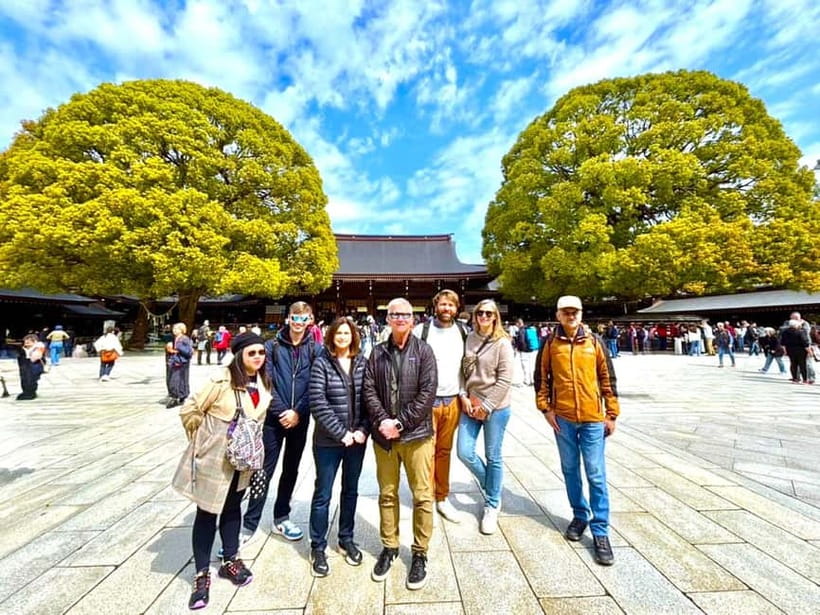
The group limit of seven is another practical advantage. You are not trying to hear a guide across a crowd, and the guide can keep an eye on the group during station changes. Several strong guide comments center on Yasuko’s clear English, good pace, and willingness to adjust to individual needs. Michiko also received special praise for helping a participant arrange a taxi back to the hotel after the day.
That said, a small group does not make the route gentle. The schedule is ambitious, and each stop has a job. If you want long museum visits, extended shopping, or an unhurried lunch, this is not the right format.
More Hidden Gems Walks in Tokyo
- 3h Tokyo E-Bike Tour: Hidden Gems, and Local Life with guide
★ 5.0 · 670 reviews - Tokyo: Custom Hidden Gems & Highlights Tour with Local Guide
★ 4.7 · 272 reviews - Tokyo: 3-hour Guided E-Bike Tour of the City’s Hidden Gems
★ 4.8 · 251 reviews
Yoyogi, Meiji Shrine, and Harajuku in the morning
Meet outside the west exit of JR Yoyogi Station, beyond the ticket gate. The exact meeting point matters here, so arrive early. The tour leaves on time, and late arrivals cannot join.
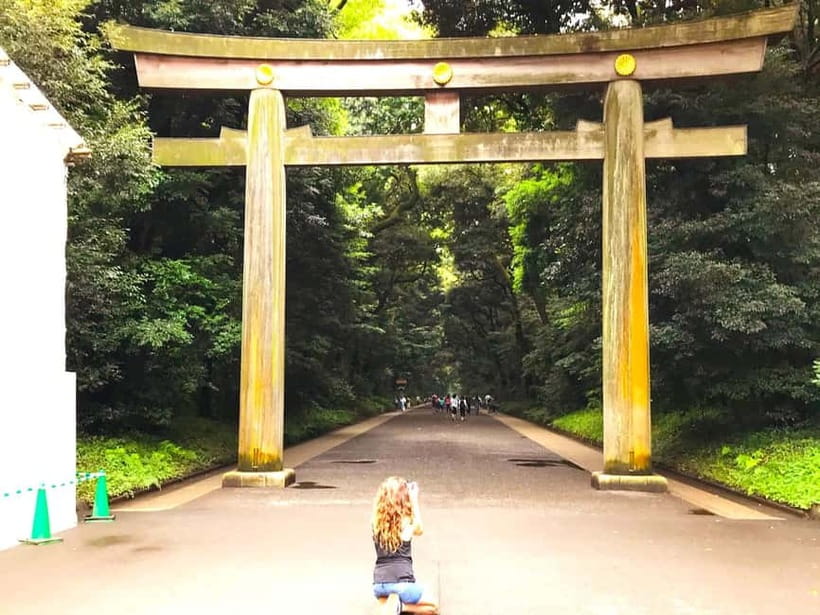
The first substantial stop is Meiji Jingu, reached from the Yoyogi area. Its wooded setting gives you an immediate change of pace from Tokyo’s traffic and station noise. The planned visit lasts about 30 minutes, enough to see the approach, understand basic Shinto customs, and take in the calm setting without turning the morning into a long temple visit.
Your guide can explain what to do at a shrine, how to behave at the entrance, and the difference between a Shinto shrine and a Buddhist temple. This practical background pays off later at Asakusa.
Harajuku follows, with another 30-minute stop. Fashion Street is the place for youth styles, kawaii culture, and colorful snacks. The short timing lets you see the main character of the district, but it is not enough for serious shopping. If Harajuku is high on your personal list, mark it for a return visit.
The tour also introduces convenience-store culture at Seven-Eleven. That may sound modest beside a famous shrine, but it is one of the more useful local details. Japanese convenience stores are part of daily life, and the guide can point out snacks and everyday food items you might otherwise pass without a glance.
Hachiko and Shibuya Crossing
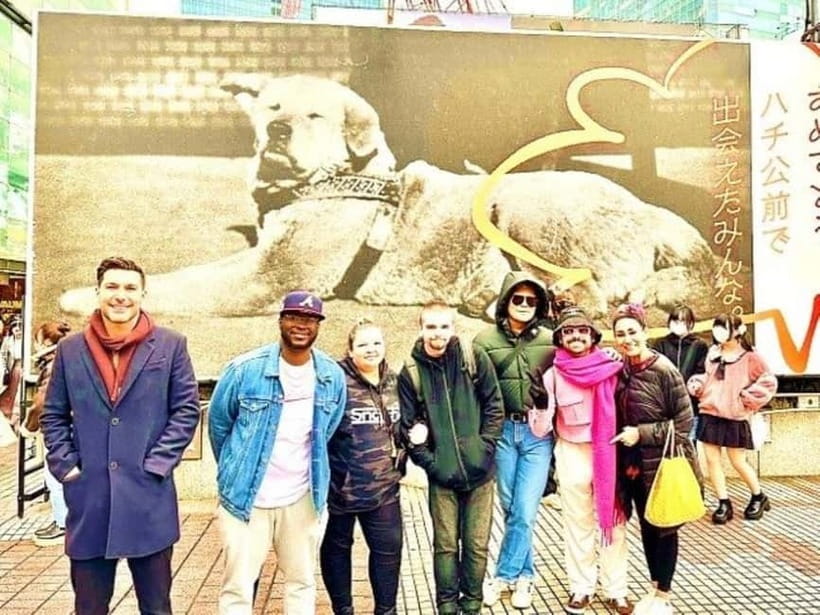
The route next heads to Shibuya for two compact stops. You spend about 10 minutes at the Hachiko Statue, where the guide tells the story behind Tokyo’s famous loyal dog. It is a quick photo and explanation, not a long stop.
Then comes Shibuya Scramble Crossing, also about 10 minutes. The point is to experience the scale and choreography of the crossing, then see it from a useful vantage point for photos. The guide can help you handle the flow of people and understand why this intersection has become such a familiar image of Tokyo.
These stops are brief by design. You get the classic Shibuya experience, but you will not have time for department stores, observation decks, or a long café break. I would treat this portion as an introduction, then return later if you want to shop or photograph the district at length.
A metro journey of roughly 30 minutes follows. Keep your transit card ready and stay close to the guide. The tour requires a pre-charged Suica, Pasmo, or Icoca card, and transportation is not covered in the $90 price.
Tsukiji Honganji and the Outer Market
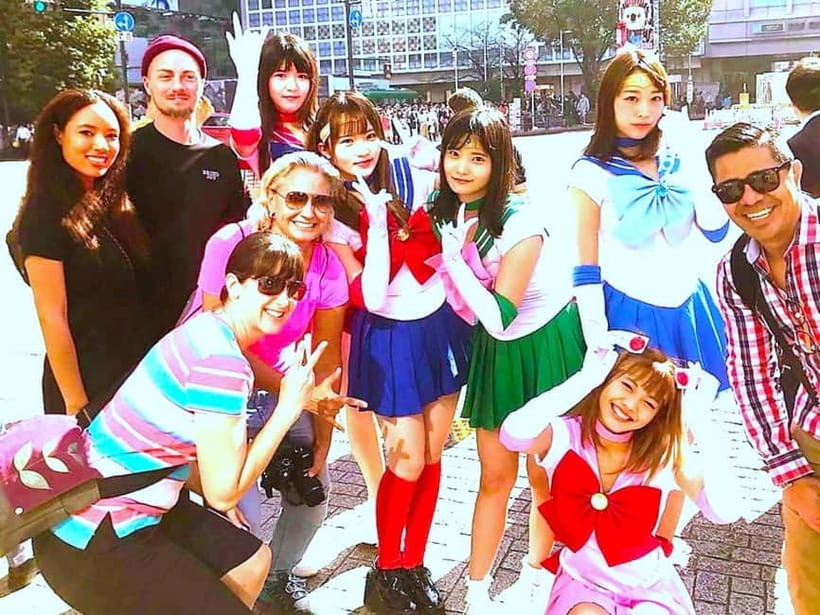
Tsukiji is where the day slows down slightly. First comes Tsukiji Honganji, a Buddhist temple with striking Indian-inspired architecture and stained glass. The planned visit lasts 30 minutes, which gives you time to look closely at the unusual exterior and interior details.
Then you get the longest scheduled stop of the day, about 90 minutes at Tsukiji Outer Market. This is the best part of the route for many people who care about food. The narrow market lanes offer seafood and other Japanese specialties, along with places to buy snacks or lunch.
Food is not included, so bring cash in yen. The information specifically warns that some shops and smaller food stops accept cash only. Vegetarian and vegan choices are available, but you should still tell the guide your needs early so the meal stop works for you.
The market is also where the tour feels least like a checklist. You have enough time to browse, ask questions, and decide what appeals to you. Still, 90 minutes passes quickly if you want a full meal and several tastings. Think of it as a guided introduction to Tsukiji, not a dedicated food tour.
More off-the-list walks in Tokyo:
- Private Mt Fuji Tour from Tokyo: Scenic BBQ and Hidden Gems
★ 5.0 · 146 reviews - Shibuya & Harajuku: Hidden Gems & Highlights Private Tour
★ 4.7 · 139 reviews - Tokyo: 3-Hour Bike or E-Bike Tour of City’s Hidden Gems
★ 4.7 · 81 reviews - Tokyo: Full Course Tour: Explore 10 Must-Sees & Hidden Gems
★ 5.0 · 35 reviews
Imperial Palace, Marunouchi, and Tokyo Station
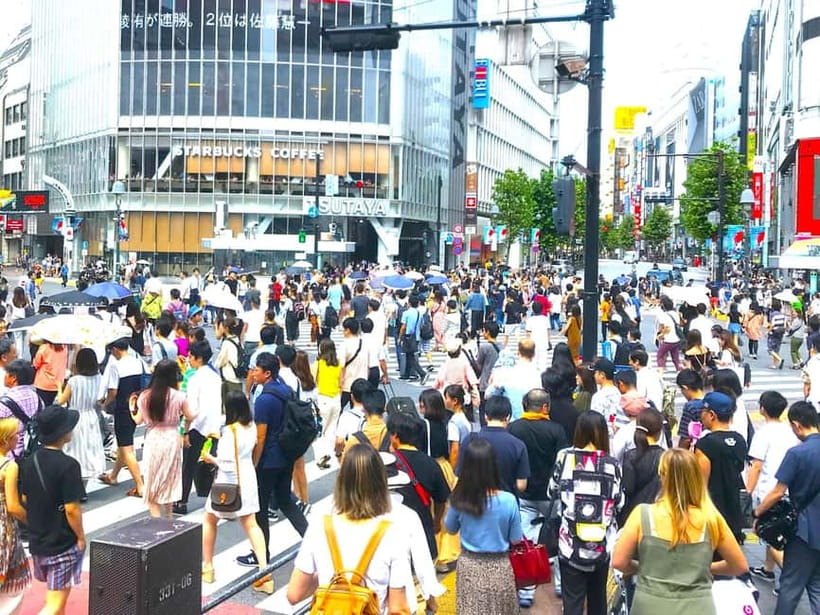
After Tsukiji, a short metro ride takes you toward the Imperial Palace. The palace grounds are connected with Edo Castle, and the route focuses on the former castle’s grounds and stone walls. The scheduled sightseeing time is only 15 minutes, so expect an outside overview rather than a broad palace tour.
Marunouchi follows for another 15 minutes. This district puts sleek office towers beside imperial-era surroundings, giving you a quick look at Tokyo’s business center. It is a useful contrast with Tsukiji’s market lanes and the old temple areas later in the day.
The nearby Tokyo Station square gets another 15 minutes. The red-brick station building is one of the route’s best architectural photo stops. You can admire the historic gateway while the guide explains its place in the modern city.
The limitation is time. The Imperial Palace, Marunouchi, and Tokyo Station are packed into a short sequence. I like the contrast, but I would not book this tour expecting detailed architectural commentary or time inside major buildings. The value is seeing how imperial grounds, corporate Tokyo, and a major rail hub sit side by side.
Akihabara and Ueno’s cultural stretch
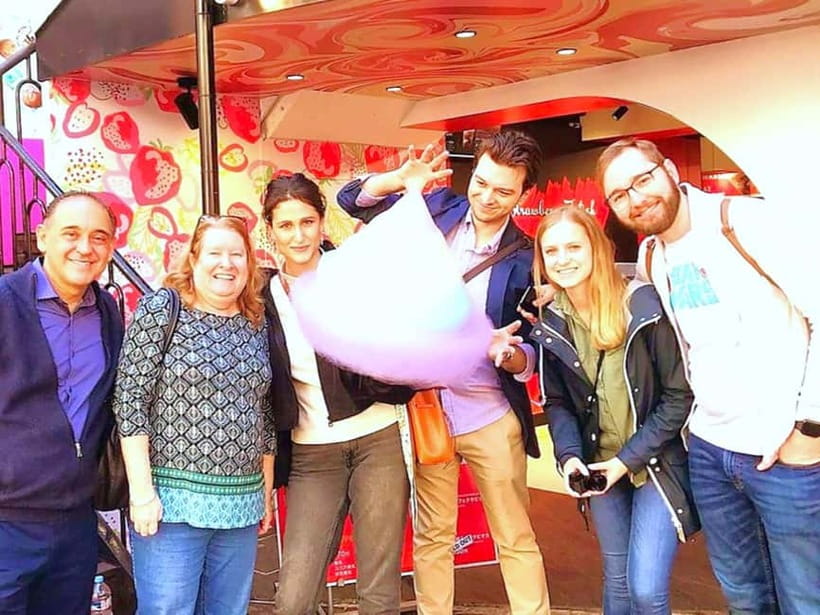
A roughly 10-minute train ride leads to Akihabara. The 30-minute stop introduces Tokyo’s center for anime, gaming, electronics, and Japanese pop culture. The area can be overwhelming, and a local guide is helpful for pointing out what you are seeing rather than leaving you to wander through a wall of signs.
Again, this is a sample, not a shopping expedition. If you collect games, figures, or electronics, you will likely want to return on your own with more time. The tour gives you orientation and a first look at the district’s character.
Another 10-minute train ride brings you to Ueno Park. The scheduled 30 minutes covers the park’s connection with museums and samurai-era history. It is described as a forest of art, so you get a sense of the cultural district even though museum admission and extended visits are not part of the plan.
This stop will appeal to you if you want more than neon and shopping. It also helps balance the day. Tokyo is not only shrines and skyscrapers, and Ueno shows a more cultural side of the city. The drawback is that 30 minutes is too short for a museum. Consider returning separately if art or Japanese history is a main interest.
Ameyoko and old Asakusa
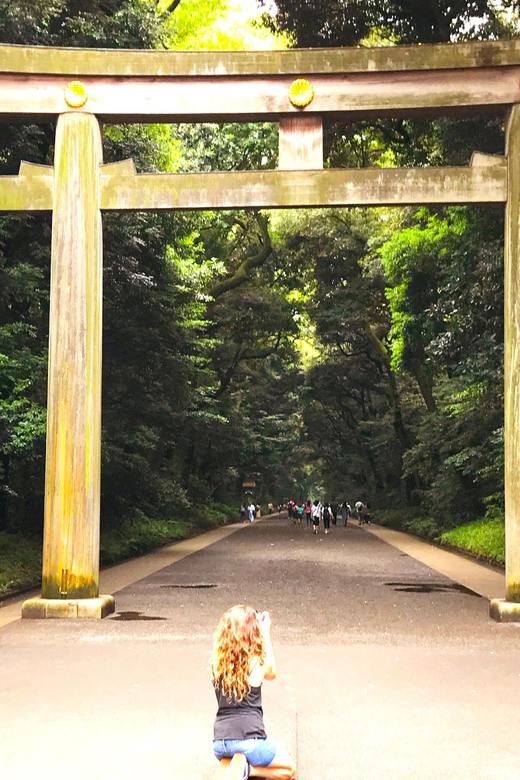
Ameya-Yokocho is a 15-minute stop after Ueno Park. Its market atmosphere and local food stands give you another contrast, this time with a more crowded, informal street scene. You may find snacks and small food shops here, but the schedule leaves little room for a full meal.
The final area is Asakusa, reached by train. Sensoji receives about 30 minutes. As Tokyo’s oldest temple, it is the main spiritual sight at the end of the route, and its setting gives you a strong sense of old Asakusa after a day spent among newer districts.
Asakusa Shrine, within the Sensoji grounds, gets another 10 minutes. The distinction between the Buddhist temple and Shinto shrine is a useful final lesson, especially after your morning visit to Meiji Jingu. The formal tour ends here rather than at a central Tokyo station, so plan your onward route from Asakusa.
There is also a planned goal celebration at a cozy local izakaya. Dinner is not included, and the supplied schedule identifies Asakusa Shrine as the finish point. Treat the izakaya portion as an optional way to continue the evening, and bring extra money for food and drinks.
What the $90 price really buys
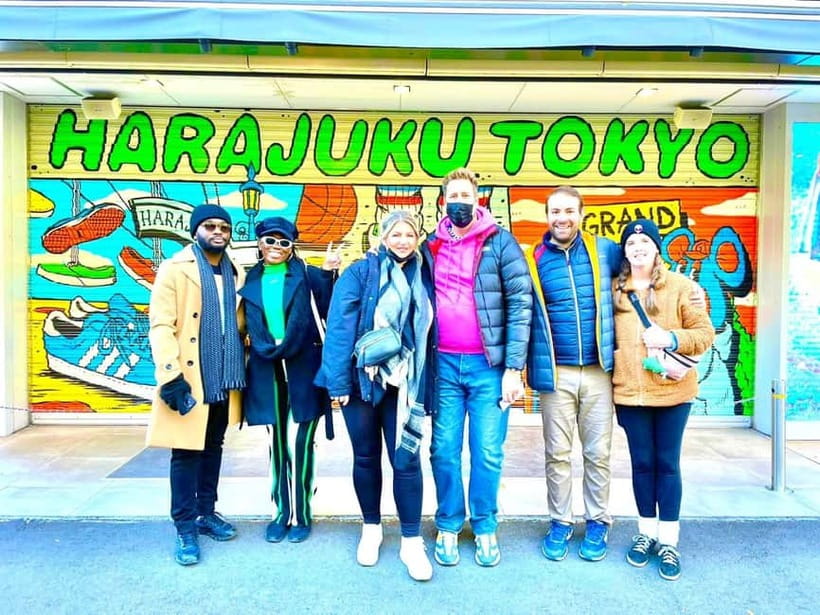
At $90 per person, the tour is not a cheap walking outing once you add around $10 for metro and JR fares, plus lunch, snacks, and dinner. Still, the calculation looks better when you consider what is included: a 10-hour day, a professional English-speaking guide, a group of no more than seven, and admission to all the listed attractions at no extra charge.
You are mainly paying for route planning and local explanation. Tokyo’s transport system is efficient but not always simple for a first-time visitor, especially when you are changing districts several times in one day. The guide keeps the day moving and adds context that is hard to get from a map alone.
I see the strongest value for a first visit lasting only a few days. You can use this day to learn the city, then return to the places that caught your interest. If you already know Tokyo well, the fast pace and broad route may offer less value than a focused neighborhood tour.
Food costs remain flexible. You choose what to eat at Tsukiji and along the route, which is good for different budgets and diets. Vegetarian and vegan options are available, but food remains your responsibility.
The walking and transport reality
This is a walking tour with train connections, not a bus tour. The full day covers around 20,000 steps, with repeated station transfers and outdoor sightseeing. Comfortable sports shoes are essential, and easy-moving clothes are strongly advised.
The route continues in rain, so carry an umbrella or raincoat. You also need a pre-charged Suica, Pasmo, or Icoca card. A loose plan to buy tickets as you go is not enough for this experience, since the transport requirement is specifically an IC card.
The tour is not suitable for children under 13, pregnant people, wheelchair users, people with back problems, people with a cold, or anyone with a low fitness level. Guests under 18 must have an adult, and children under 13 require a private tour. High heels, oversized luggage, baby strollers, and baby carriages are not allowed.
You must stay with the group. The guide cannot leave the party to search for someone who falls behind, so punctuality and attention matter. No alcohol is allowed during the tour, and late arrivals cannot join without a refund.
Guides, group size, and the human side
The guide is the main reason this experience can cover so much ground without feeling like a random race between stations. Guides are Japanese-born and raised, trained to high standards, and lead in English. You receive the guide’s name and photo after booking is confirmed.
Yasuko is specifically noted for excellent English, careful organization, a considerate pace, and the effort to learn about each person in the group. Those details matter on a long day. A guide who watches the group’s condition can make 20,000 steps feel manageable, even though the distance remains real.
Michiko is also praised for knowing the city’s small details and for taking personal care at the end of the day. That kind of help is especially useful if you are not confident with Tokyo transport or need to arrange a taxi after the tour.
The small group limit of seven supports conversation and flexibility. It does not guarantee a particular guide, though, so you should not book solely on the hope of getting Yasuko or Michiko.
Who should book this experience
I would choose this tour if you are visiting Tokyo for the first time and want a broad, practical introduction in one day. It suits an active solo visitor, a couple, or a small family with older teenagers who can keep pace.
It is also a good fit if you feel uneasy about Japanese etiquette, metro travel, or ordering food. The guide provides a useful local framework, and the route includes both famous sights and everyday settings such as Seven-Eleven and market streets.
I would skip it if your main goal is leisurely photography, long meals, museum time, or serious shopping. The 10-minute and 15-minute stops are enough for orientation, not depth. People with mobility limits, pregnancy, back problems, low fitness, or a cold should not book this format.
Cancellation is free up to seven days before the tour for a full refund. Check the starting time when booking, since availability changes.
Final call: a strong Tokyo orientation with a demanding pace
Book this tour if you want to see Tokyo’s major faces quickly and learn how to move through the city from a local English-speaking guide. The free admissions and small group improve the value, while the strong guide record, especially around Yasuko and Michiko, adds confidence.
Do not book it as a relaxed day. You will walk about 20,000 steps, eat on your own schedule at Tsukiji, pay for transport separately, and spend only short periods at several major sights. For an active first day, that is a fair trade. For a slow, focused exploration, choose fewer neighborhoods and more time.
FAQ
How long does the Tokyo full-course tour last?
The tour lasts 10 hours.
Where does the tour start?
It starts outside the west exit of JR Yoyogi Station, outside the ticket gate, at 1-chōme-34 Yoyogi, Shibuya City, Tokyo 151-0053.
Where does the tour finish?
The scheduled finish is at Asakusa Shrine.
How many people can join the group?
The group is limited to seven participants.
What language does the guide speak?
The live tour guide speaks English.
Are attraction entrance fees included?
Yes. All attractions listed for the tour are free to enter, and the professional guide fee and taxes are included.
Are transportation fares included?
No. Metro and JR train fares are separate and cost approximately 1,500 yen, or about $10.
Is food included?
No. Lunch at Tsukiji, snacks, and dinner at an izakaya are not included. Vegetarian and vegan options are available.
What should I bring?
Bring comfortable shoes, cash in Japanese yen, rain gear, and a pre-charged Suica, Pasmo, or Icoca public transport card.
Is the tour suitable for people with limited mobility?
No. The tour is not suitable for wheelchair users, people with back problems, pregnant people, or people with a low level of fitness. It involves about 20,000 steps.
Just added around Tokyo
- Private Arrival Transfer : Narita International Airport to Central Tokyo City★ 4.5 · 12 reviews
- Narita Airport(NRT): Private Transfer to Tokyo/Yokohama 1-9pax★ 5.0 · 47 reviews
- Private Transfer from Narita Airport to Yokohama Port and City★ 4.5 · 17 reviews
- [Narita Airport Terminals 1, 2] 40-60km Sawara Itako Historic Bike Tour★ 5.0 · 13 reviews
- 3 Day Japan Highlights Tour: Tokyo, Mt.Fuji, Nara, Kyoto, Osaka★ 5.0 · 22 reviews
- Small Town in the Big City: Tasting Tokyo’s Kichijoji★ 5.0 · 195 reviews
- Small Town in the Big City: Tasting Tokyo’s Kichijoji★ 5.0 · 16 reviews
- The 10 Tastings of Tokyo With Locals: Private Street Food Tour★ 5.0 · 48 reviews
Tokyo Tours, compared.

Mt Fuji and Hakone 1-Day Bus Tour Return by Bullet Train
Read our review →

teamLab Planets TOKYO Digital Art Museum Entry Ticket
Read our review →
Mt Fuji & Hakone Cruise, Drum Show Bullet Train 1 Day from Tokyo
Read our review →
Sumo Show Experience with Chicken Hot Pot and a Photo
Read our review →
Shinjuku Food Tour (13 Dishes at 4 Local Eateries)
Read our review →
Tokyo Mt Fuji 5th St & Hakone Cruise Bus Tour w/Bullet Train
Read our review →
Flagship 2-Hours Official Street Go-Kart Tour – Tokyo Bay Shop
Read our review →Browse the lists this tour appears in