
Reviewed · TOKYO TOURS
Tokyo: Kintsugi Art Repair Workshop
Kintsugi turns a broken bowl or cup into something worth displaying, tracing its cracks with gold instead of hiding them. In this 90-minute Tokyo workshop, you learn by doing, then carry home a small piece of Japanese craft.
I like the quiet setting and the small groups, limited to five people. I also like the practical format: all materials are supplied, the Nihonbashi shop is about 15 minutes by subway from Asakusa, and the finished work fits neatly into a day of sightseeing.
The main catch is time. This is a shortened workshop, not the full months-long lacquer process, and a large repair may not be finished in 90 minutes. If you bring your own pottery, read the size and damage limits carefully.
Key points at a glance
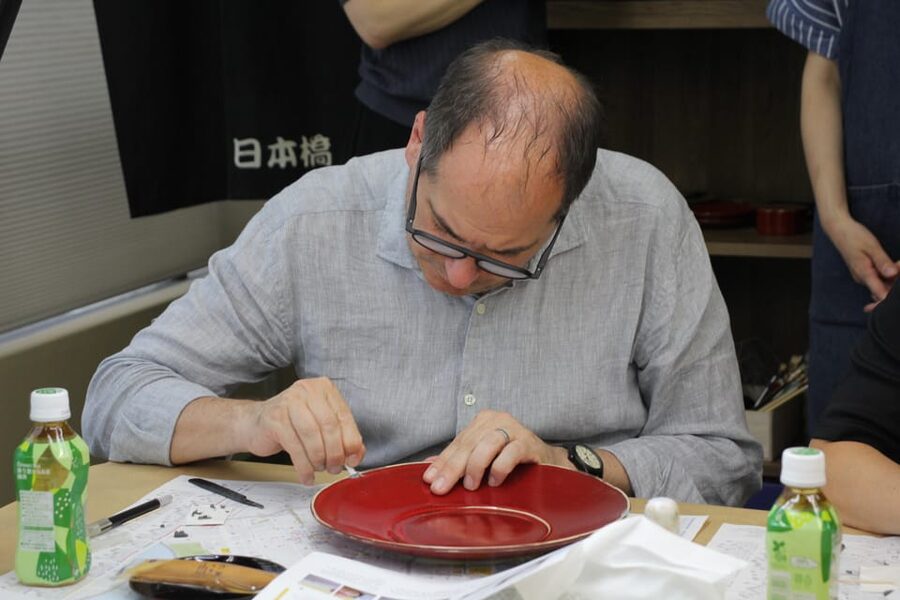
- Gold-highlighted repairs: Practice joining pieces, filling chips, sanding, and painting the repaired seams.
- Small, quiet groups: No more than five participants means close help at the worktable.
- English support: Instruction is offered in English, with interpretation available when needed.
- A handmade souvenir: Take home a ceramic piece you repaired yourself, mainly for decoration.
- Bring your own item, with limits: Ceramic vessels only, up to 15 centimeters wide and 15 centimeters tall, with one or two cracks.
- Easy to fit into Tokyo plans: The session lasts 90 minutes and is about 15 minutes from Asakusa by subway.
What kintsugi means at this Tokyo worktable
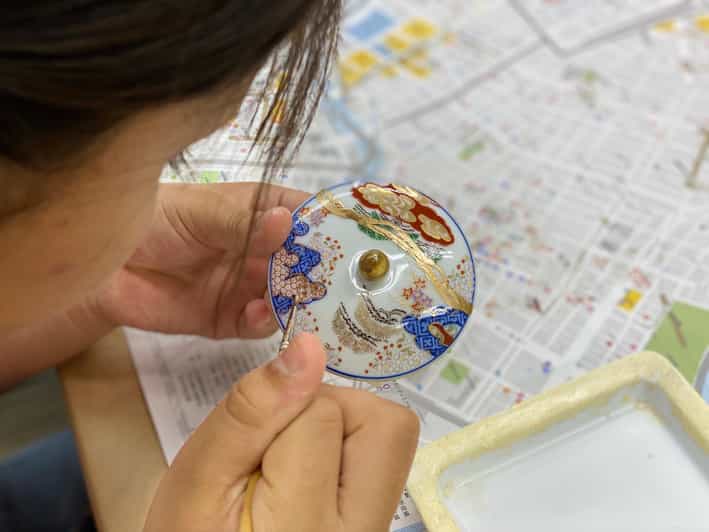
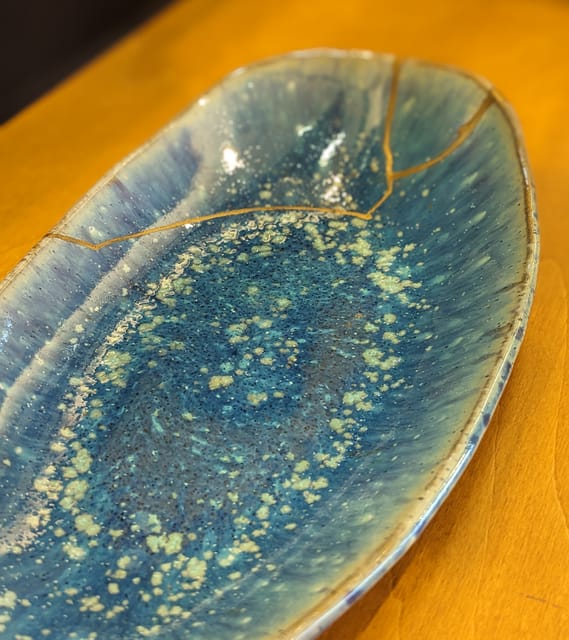
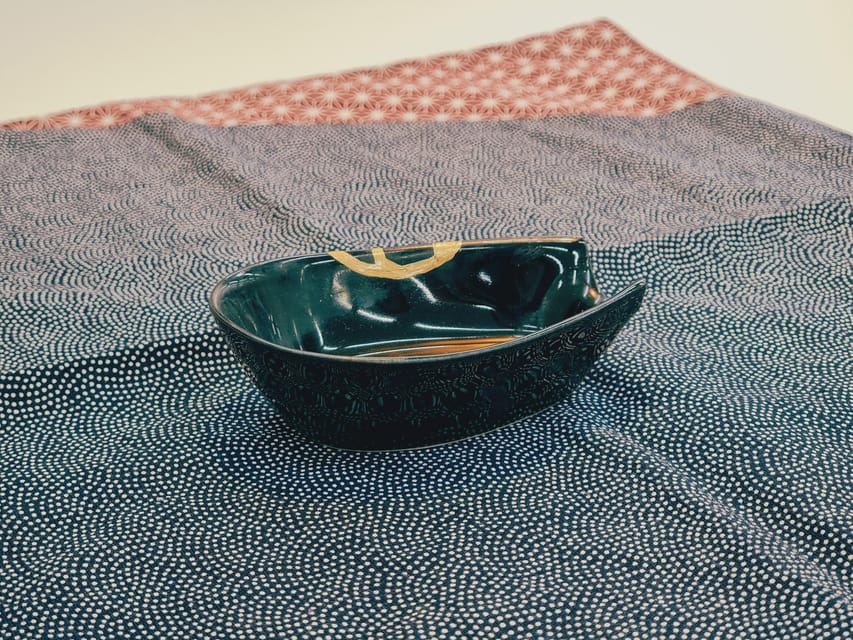
Kintsugi is the Japanese art of repairing pottery with lacquer and highlighting the joins with gold. The point is not to make a damaged object look new. The break becomes part of the object’s appearance, giving an ordinary bowl or cup a visible record of its past.
That idea gives this workshop more weight than a standard craft class. You are not simply decorating a blank souvenir. You are working with a repaired form, learning why the cracks are treated as part of the finished design.
The session introduces the main stages in a compact form. You may work with broken pieces, attach them, fill small gaps with putty, smooth the surface, and apply metallic color along the seams. This gives you a feel for the method without asking you to commit several weeks to a single object.
It is important to understand the difference. Traditional kintsugi can take about a month because layers of lacquer need time to cure. This Tokyo class offers a shortened version that gives you a finished item within the workshop format, making it suitable for a holiday schedule but less detailed than a long professional restoration.
More hands-on workshops in Tokyo:
- Sushi Making Tokyo Roll and Authentic Japanese Sushi Class
★ 5.0 · 3,971 reviews - Tokyo: Roll and Authentic Sushi Making Class in Asakusa
★ 4.9 · 1,957 reviews - Tokyo Shinjuku Chopsticks Making Class
★ 5.0 · 1,763 reviews
Entering Nihonbashi Mutoh Main Store
The meeting point is Nihonbashi Mutoh Main Store, in the Nihonbashi Mutoh Main Store building at 1-8-13 Nihonbashihoncho, Chuo City, Tokyo, postal code 103-0023. The shop is in the Nihonbashi area, and the activity information places it about 15 minutes by subway from Asakusa.
That location matters if you are building a full day around central Tokyo. You can place the workshop between sightseeing stops instead of giving up half a day for a craft lesson. Arrive at least five minutes early, though, since the class begins on time and the end cannot be extended for unfinished work.
The shop itself adds something to the visit. It carries kintsugi pieces, ceramic goods, lacquerware, tenugui, table linens, bento boxes, chopstick sets, and chopstick rests. You might want to allow a few extra minutes to browse, especially if you are looking for a small Japanese gift beyond the piece you make.
The setting is described as quiet and peaceful, which suits the careful work. This is not the sort of activity you rush through while chatting over a noisy group. The calm atmosphere lets you focus on small joins and brushwork.
Choosing your pottery and repair
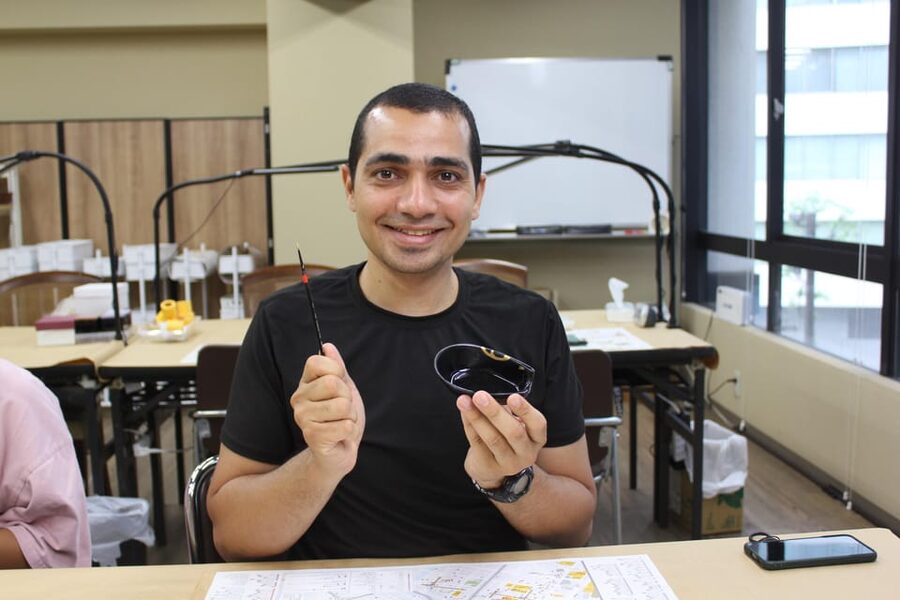
You can use a piece supplied for the workshop, and the instructors provide the required materials. Some sessions offer several pieces to choose from, so you may have a say in the shape or style of the item you repair.
You may also bring your own vessel, but the rules are quite specific. It must be ceramic, no more than 15 centimeters in diameter and 15 centimeters high, with one or two cracks. Chipped or cracked mug handles cannot be repaired.
That last point is easy to miss. A beloved mug may seem like the perfect object, but its handle is outside the repair conditions. If you bring something from home, choose a small ceramic bowl, cup, or similar vessel with a manageable break rather than a complicated heirloom.
The size limits are not just paperwork. A large crack, several breaks, or a deep chip may require more work than the class allows. The activity information warns that a repair may not be completed within 90 minutes, particularly when you bring your own item.
For most people, the supplied pottery is the safer choice. You get a predictable amount of work and a better chance of leaving with a completed object. Bring your own piece only if its sentimental value matters more to you than the risk of an unfinished repair.
The 90-minute process, step by step
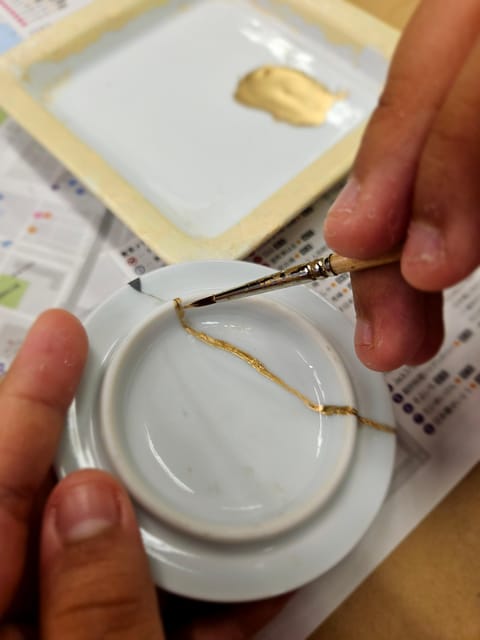
The workshop starts with an introduction to kintsugi and its place in Japanese craft. The explanation is practical rather than a long classroom lecture, so you quickly move toward the table and the materials.
You then work through the repair itself. If your piece is broken into sections, the first job is to fit and secure the pieces. This puzzle-like stage requires patience, since the final gold line will follow the shape of the join.
Next comes the filling and smoothing work. Putty can be used to fill larger gaps or chips, followed by sanding to make the surface neater. These steps are not glamorous, but they show why a good repair depends on preparation before any gold color appears.
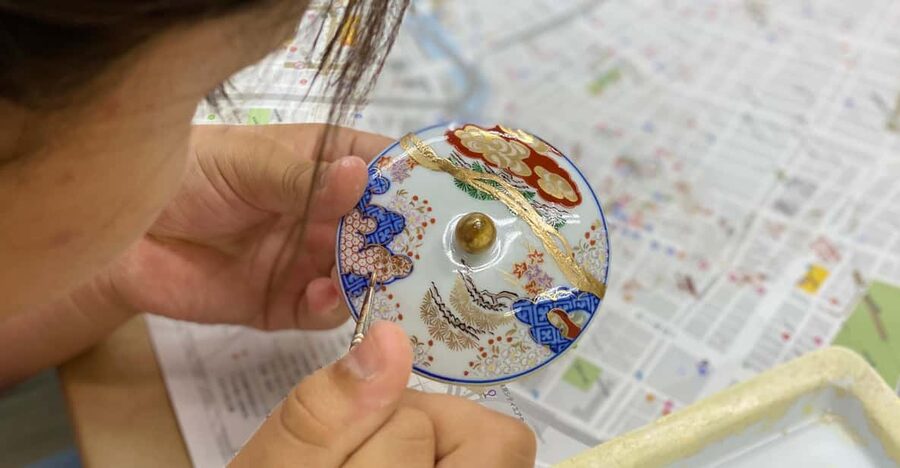
The final stage is the decorative one. You paint the repaired seams with a metallic finish, turning the damage into a visible design feature. The work is hands-on, but you are not left to guess your way through it. Instructors provide materials in small amounts and refill them as needed, which keeps the table orderly and reduces waste.
The process can vary slightly depending on your piece. A simple workshop bowl may move quickly, while a personal object with several broken sections can take the full session and still need more time. The instructors may help with difficult stages, but the goal is for you to take part rather than watch a demonstration.
Some participants have completed two pieces during a session, while others have repaired one personal object. That difference depends on the condition of the pottery and the pace of the group, so do not book this expecting a fixed number of finished pieces.
A few more Tokyo half-days to weigh up
- Mt Fuji and Hakone 1-Day Bus Tour Return by Bullet Train
★ 5.0 · 26,383 reviews - 1-Day Tokyo Bus Tour
★ 5.0 · 14,250 reviews - Tokyo: TOKYO SKYTREE® Admission ticket
★ 4.5 · 11,192 reviews - Tokyo: teamLab Planets TOKYO Digital Art Museum Entry Ticket
★ 4.6 · 9,779 reviews
English instruction and the small-group advantage
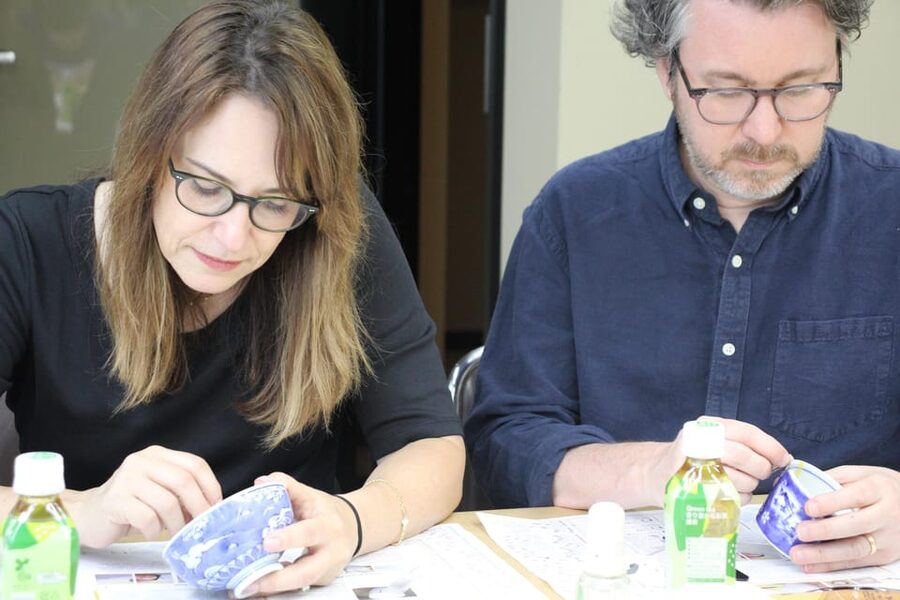
The class is limited to five people, and that is one of its strongest practical features. Kintsugi involves small movements, thin lines, and repeated checks of the surface. A crowded class would make individual guidance harder.
English instruction is provided, and the teaching arrangement can include a Japanese instructor working with an English interpreter. That setup can give you a closer look at the craft while still making the steps clear. In one reported session, two instructors guided a group of five, with one explaining in Japanese and another translating.
Instructor Hijiri receives particular praise for being patient, kind, and helpful. Other sessions have also included attentive teaching and clear explanations, so beginners should feel comfortable asking for help at each stage.
Do not expect a long technical seminar in English. The most useful learning happens at the worktable, as the instructor shows you how to handle each step. If the theory of kintsugi interests you, read a little about the art before arriving. That lets you spend the session watching the technique rather than trying to absorb every piece of background at once.
The small-group format also affects the mood. The class has been described as relaxing, almost meditative, and that makes sense: you sit quietly, repeat careful movements, and watch a rough break become a deliberate line. It is a good counterpoint to Tokyo’s faster pace.
What you take home, and how to use it
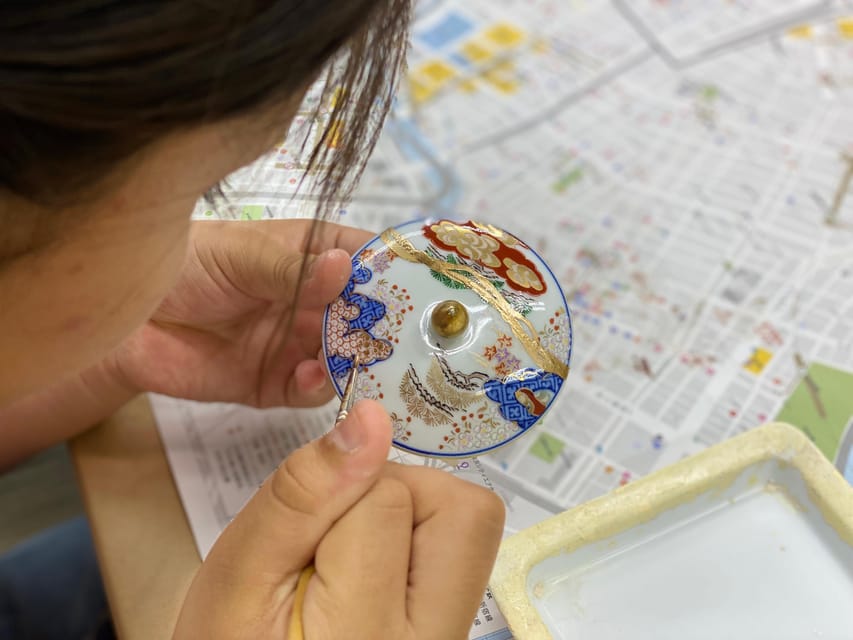
Your finished piece is included in the activity price, so the souvenir is not an extra purchase. The best part is that it carries your own work. Even if the line is not perfectly even, you will remember the repair process each time you see it.
The completed pottery is primarily decorative. It can hold dry food items, but it should not be treated as an all-purpose food vessel. The supplied information does not promise that it is suitable for liquids, wet food, or heavy daily use, so display it or use it for dry items rather than testing the repair.
Personal pieces may need additional curing time. One session involved repaired works being boxed carefully so they could cure for a week. If you bring something precious, ask the staff about the condition of your item before you begin and be prepared for it to require careful handling after the class.
The souvenir is small enough to pack more easily than many handmade purchases, though you should still protect it in your luggage. The shop can also give you a chance to buy other Japanese craft goods, but those purchases are separate from the $125 activity fee.
Is $125 a fair price?
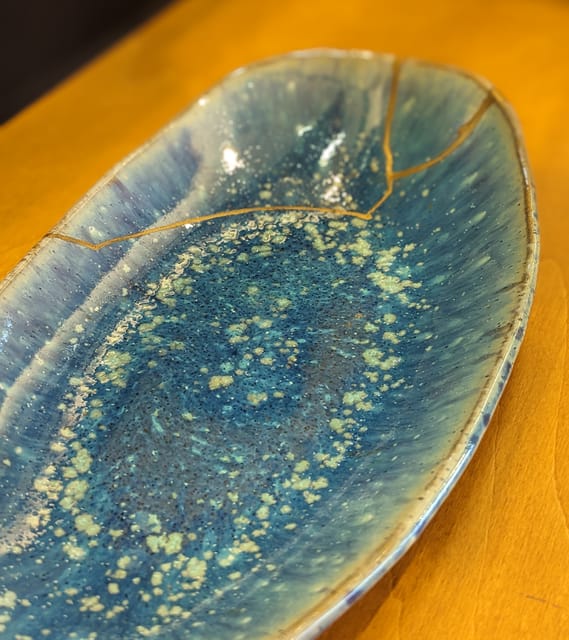
At $125 per person, this is not a bargain craft stop. You are paying for a professional instructor, a small group, materials, a guided cultural lesson, and a finished object. The price makes more sense if you value close instruction and want to make something yourself rather than simply buy a ceramic souvenir.
The 90-minute length helps the value calculation. You are not spending an entire day indoors, and the workshop can fit between major Tokyo sights. For a short visit, that convenience may matter more than finding the lowest-priced pottery class.
The small group also helps justify the cost. With a maximum of five participants, you have a better chance of receiving direct help when a piece does not fit or a painted seam needs correction. The fee is harder to justify if you mainly want a detailed study of traditional lacquer chemistry, since this class uses a shortened method and metallic paint rather than taking you through the full month-long process.
I would book it for the personal souvenir and the guided practice, not as a professional certification or a complete restoration course. You are buying a focused cultural activity with a take-home result.
Who will enjoy this workshop most
This class works especially well for adults and teenagers aged 13 and up who like making things with their hands. Minors must be accompanied by a guardian, and children under 13 cannot join.
It suits couples and friends who want a shared activity without losing a whole afternoon. It also suits solo visitors, since the five-person limit gives you a social setting without the feel of a large tour group.
You will get the most from it if you can work patiently and accept that handmade results are not factory-perfect. The work is careful rather than physically demanding, but you need to concentrate on small surfaces and follow directions.
It is less suitable if you want a fast, polished souvenir with no personal effort. It may also disappoint you if your main goal is a detailed historical lecture or a full traditional restoration. The class is about trying the craft, not mastering every stage of professional kintsugi.
Practical tips before you book
Wear comfortable clothes. You do not need to bring tools or other materials, since the activity fee covers what you use in class.
Arrive five minutes early, and plan your route before the day. The workshop starts promptly, and the staff cannot keep the room open after the scheduled finish for people who arrive late or work slowly.
If you bring pottery, check every condition before you leave home:
- Ceramic vessel only
- Maximum diameter of 15 centimeters
- Maximum height of 15 centimeters
- One or two cracks
- No chipped or cracked mug handles
I would choose the supplied pottery for a first visit. Bring your own item only when you are certain it fits the rules and you are comfortable with the possibility that a more complex repair may not be complete by the end.
Cancellation is flexible enough for most Tokyo itineraries: you can receive a full refund if you cancel at least three days in advance. Check available starting times when choosing your date, since the duration is fixed at 90 minutes.
My final take: book it for the hands-on souvenir
I would book this kintsugi workshop if you want a quiet, compact activity that gives you more than a shop-bought memento. The instructors provide patient, close guidance, the English support makes the process approachable, and the small group keeps the work personal.
I would skip it if you want a full traditional restoration course or need to repair a large, complicated, or non-ceramic object. For everyone else, the $125 price buys a memorable hour and a half in Tokyo, plus a piece whose gold lines mark the fact that you made it part of its next life.
FAQ
How long does the Tokyo kintsugi workshop last?
The workshop lasts 90 minutes. The class begins at the scheduled time and cannot be extended for unfinished work.
Where does the workshop meet?
It meets at Nihonbashi Mutoh Main Store, Nihonbashi Mutoh Main Store building, 1-8-13 Nihonbashihoncho, Chuo City, Tokyo, postal code 103-0023.
How far is the workshop from Asakusa?
The meeting point is about 15 minutes from Asakusa by subway.
Is the workshop taught in English?
English instruction is provided. Depending on the session, a Japanese instructor may work with an English interpreter.
What does the $125 price include?
The price includes the professional instructor, experience fees, all workshop materials, and a souvenir piece to take home.
Can I bring my own pottery to repair?
Yes, but it must be a ceramic vessel no larger than 15 centimeters in diameter and 15 centimeters in height. It should have one or two cracks. Chipped or cracked mug handles cannot be repaired.
Can I use the finished piece for food?
The completed piece can hold dry food items, but it is mainly intended for decorative use. The activity information does not describe it as suitable for liquids or general food use.
What is the minimum age?
The activity is for ages 13 and up. Minors must be accompanied by a guardian, and children under 13 cannot participate.
Just added around Tokyo
- Private Arrival Transfer : Narita International Airport to Central Tokyo City★ 4.5 · 12 reviews
- Narita Airport(NRT): Private Transfer to Tokyo/Yokohama 1-9pax★ 5.0 · 47 reviews
- Private Transfer from Narita Airport to Yokohama Port and City★ 4.5 · 17 reviews
- [Narita Airport Terminals 1, 2] 40-60km Sawara Itako Historic Bike Tour★ 5.0 · 13 reviews
- 3 Day Japan Highlights Tour: Tokyo, Mt.Fuji, Nara, Kyoto, Osaka★ 5.0 · 22 reviews
- Small Town in the Big City: Tasting Tokyo’s Kichijoji★ 5.0 · 195 reviews
- Small Town in the Big City: Tasting Tokyo’s Kichijoji★ 5.0 · 16 reviews
- The 10 Tastings of Tokyo With Locals: Private Street Food Tour★ 5.0 · 48 reviews
Tokyo Tours, compared.

Mt Fuji and Hakone 1-Day Bus Tour Return by Bullet Train
Read our review →

teamLab Planets TOKYO Digital Art Museum Entry Ticket
Read our review →
Mt Fuji & Hakone Cruise, Drum Show Bullet Train 1 Day from Tokyo
Read our review →
Sumo Show Experience with Chicken Hot Pot and a Photo
Read our review →
Shinjuku Food Tour (13 Dishes at 4 Local Eateries)
Read our review →
Tokyo Mt Fuji 5th St & Hakone Cruise Bus Tour w/Bullet Train
Read our review →
Flagship 2-Hours Official Street Go-Kart Tour – Tokyo Bay Shop
Read our review →Browse the lists this tour appears in