
Reviewed · TOKYO TOURS
Tokyo: Meiji Shrine Walking Tour — Shinto & Imperial System
The best part of this tour is the sudden quiet. A few steps from Harajuku’s shops and crowds, you enter a forest of roughly 100,000 trees, where birdsong replaces traffic. The walk then leads to Meiji Shrine, Japan’s most popular Shinto shrine, with a 12-meter torii made from 1,500-year-old Taiwanese cypress.
I like the practical guidance, especially learning how to approach a shrine respectfully, and I like the way the tour connects Meiji Shrine to Japan’s move from samurai rule to a modern imperial state. The main consideration is that this is an English-only walking tour, and the forest path and shrine grounds require a fair amount of walking.
Key points at a glance
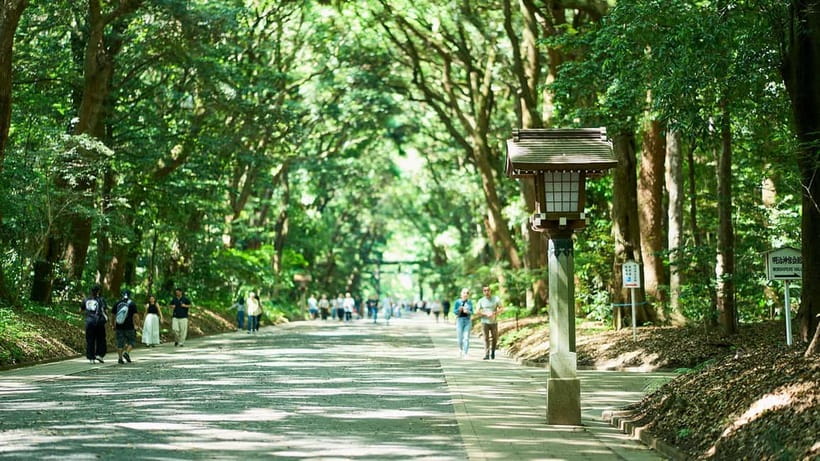
- A quiet forest in central Tokyo: The walk begins near Harajuku but quickly leaves city noise behind.
- A giant 12-meter torii: The main gate is made from a 1,500-year-old Taiwanese cypress.
- Shinto made understandable: You learn how to bow, where to walk, how to cleanse your hands, and how to offer a prayer.
- History beyond the shrine: The guide explains Emperor Meiji, Empress Shoken, the imperial system, and Japan’s transition toward modernity.
- Small groups of up to 10: The format allows time for questions, photos, and help with shrine customs.
- A gentle finish at Forest Terrace: Mori no Terrace provides a place to buy Japanese tea, light snacks, and small souvenirs.
Why Meiji Shrine works so well as a first Tokyo tour
Meiji Shrine gives you two very different Tokyo experiences in one short walk. You start at Harajuku Station, one of the city’s busiest urban areas, then follow a shaded path into a broad forest. That change is the point. You do not need to travel far from central Tokyo to find a place designed for quiet attention.
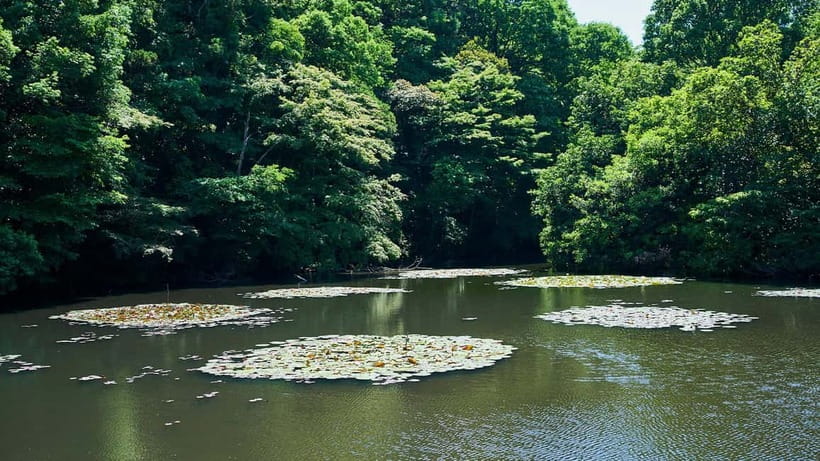
The forest is not untouched wilderness. It is part of the shrine setting, planted to create a lasting sacred woodland. Your guide can help you notice details you might otherwise pass without a second thought: the stone path, the tall gates, the place of worship, and the difference between a Shinto shrine and a Buddhist temple.
This tour also helps with a common first-visit problem. Meiji Shrine is easy to find, but its customs are less obvious. You may know that you should bow, wash your hands, or place a coin in an offering box, but not know the proper order. Guides such as Keiko, Yuuka, Yuki, Ayaka, and Nonoka have been praised for explaining these steps clearly and patiently.
At $23 per person, the tour is priced as a modest orientation rather than a full-day excursion. You are paying for an English-speaking guide, historical context, and practical help in a small group. If you only want a quick photograph at the shrine gate, you can visit independently. If you want to understand what you are seeing and feel comfortable taking part, the price is easier to justify.
More walking tours in Tokyo:
- Tokyo Tsukiji Fish Market Food and Culture Walking Tour
★ 5.0 · 3,184 reviews - Tokyo: Imperial Palace and Shogun Historical Walking Tour
★ 5.0 · 2,251 reviews - Tokyo: Shinjuku Local Bar and Izakaya Guided Walking Tour
★ 4.9 · 1,794 reviews
From Harajuku Station to the first torii
The meeting point is at or near Harajuku Station, though the exact point can vary by booking option. Check your confirmation carefully. The listed coordinates are 35.6700901, 139.7024662.
From the station, the walk reaches Meiji Jingu Ichino Torii, the first major shrine gate. This opening section is useful because it marks a clear change from ordinary city space to sacred grounds. Your guide introduces the shrine’s purpose and gives you the first basic rule: when walking through a torii, stay toward the side of the path.
The center line, called seichu, is traditionally reserved for the deities. You do not need to treat this as a nervous test of perfect behavior. A simple bow and a little awareness are enough, and your guide can show you what to do.
This early explanation sets the tone for the rest of the visit. Instead of rushing straight to the main building, you learn to read the approach as part of the shrine experience.
The sake barrels and the story behind them
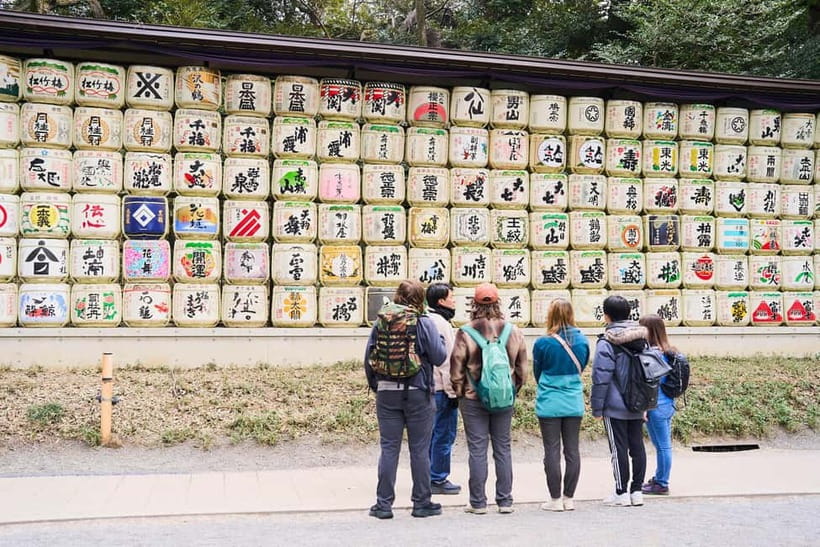
The next stops are the consecrated wine and sake barrels. They make good photo stops, but they are also a useful introduction to the relationship between religious institutions, tradition, and public life in Japan.
The barrels are displayed as offerings connected with the shrine. Your guide explains their role and the customs surrounding them. This is one of the small details that can make the visit more memorable. Without context, they are simply colorful barrels stacked beside a path. With context, they become part of the shrine’s ceremonial world.
The itinerary separates the consecrated wine barrels and the sake barrels into short stops. Expect only a few minutes at the second group, so this is not a long tasting session. The focus is interpretation, not drinking.
This part of the walk also gives your guide room to explain the difference between a Shinto shrine and a Buddhist temple. That distinction is especially useful if this is your first trip to Japan, since both may contain elaborate religious art, gates, and rituals but serve different traditions.
The giant cypress torii
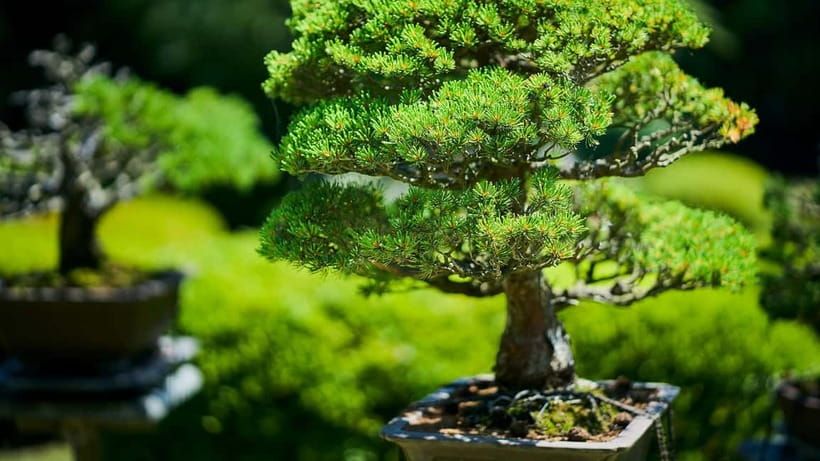
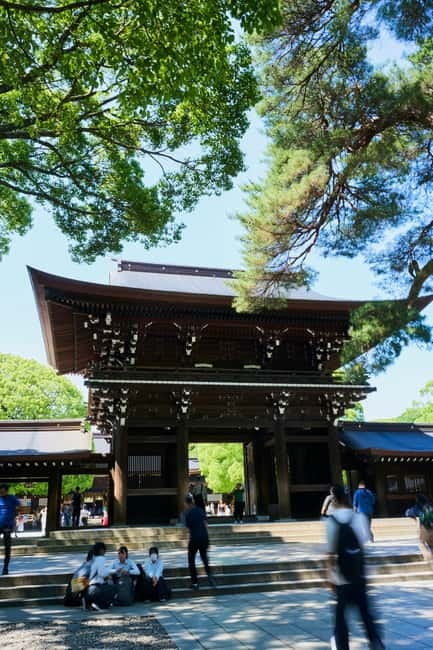
The Big Torii is the visual centerpiece of the approach. At 12 meters high, it has the solid, restrained power you expect from a major shrine gate. It was crafted from a 1,500-year-old Taiwanese cypress, a detail that gives the structure an unusual connection to time and distance.
Take a moment here before moving on. The gate is large enough to make the surrounding trees feel even taller, and it gives you a clear sense of the scale of Meiji Shrine. Your guide can also help with photographs, something several visitors specifically appreciated during the walk.
Again, walk near the edge rather than down the center. This is a simple custom, but it is one you can carry to other shrines during the rest of your Japan trip.
The path can feel especially calm in the shade, although the experience changes with the time of day and season. A busy Sunday may bring more people to the grounds, but the tree cover still creates a strong break from Harajuku.
A few more Tokyo half-days to weigh up
- Mt Fuji and Hakone 1-Day Bus Tour Return by Bullet Train
★ 5.0 · 26,383 reviews - 1-Day Tokyo Bus Tour
★ 5.0 · 14,250 reviews - Tokyo: TOKYO SKYTREE® Admission ticket
★ 4.5 · 11,192 reviews - Tokyo: teamLab Planets TOKYO Digital Art Museum Entry Ticket
★ 4.6 · 9,779 reviews
Poetry, emperors, and the Meiji era
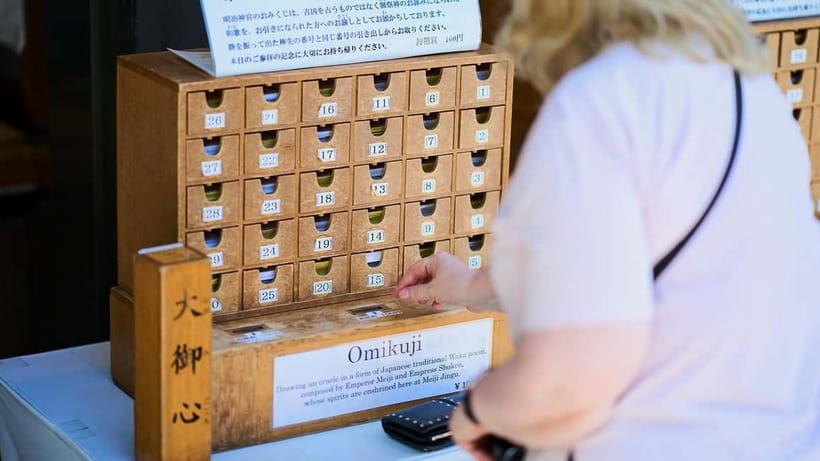
The tour’s history section centers on Emperor Meiji and Empress Shoken. Rather than treating the shrine as only a beautiful religious site, the guide explains how it fits into Japan’s imperial story and the transition from the samurai era to modern Japan.
The subject can be difficult to absorb from a plaque alone. Japan’s imperial system stretches back about 2,600 years in the traditional account, while the Meiji period marked a major transformation in the country’s political and social direction. A good guide connects those large ideas to the place in front of you without turning the walk into a lecture.
This is where the tour earns much of its value. You are not simply hearing dates and names. You are being shown why this particular shrine was built, why Emperor Meiji and Empress Shoken matter to its identity, and how the site continues to relate to Tokyo residents today.
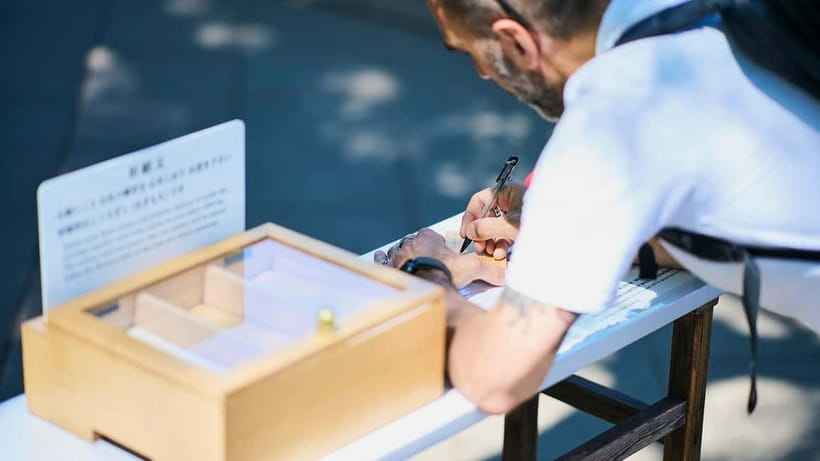
The poetry element gives the history a more personal touch. At the shrine, you can purchase an omikuji called Omigokoro, featuring poems written by Emperor Meiji and Empress Shoken. English translations are available, so you can understand the message rather than buying a paper slip you cannot read.
The poems are not a substitute for a full historical study, but they offer a direct connection to the people honored at the shrine. If you enjoy small cultural objects with a story behind them, this is one of the more distinctive purchases on the tour.
How the shrine visit actually works
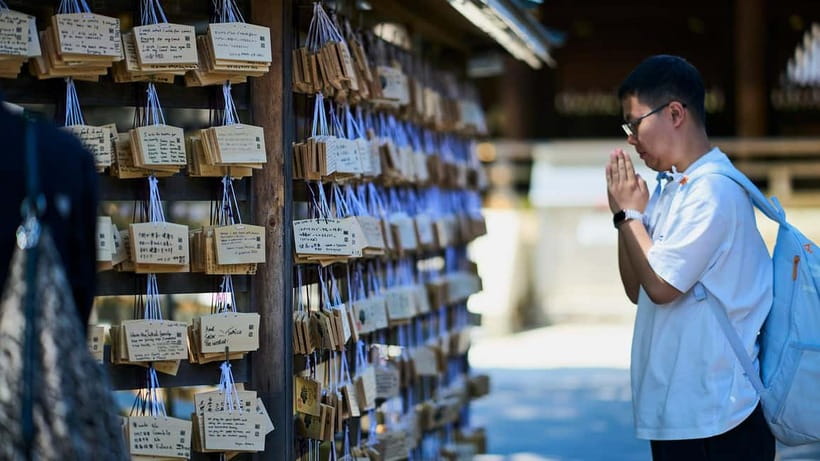
The main Meiji Shrine stop lasts about 45 minutes and combines guided sightseeing with free time and shopping. That balance is important. You get an explanation of what you are seeing, then time to approach the shrine at your own pace.
Your guide can walk you through the basic sequence of paying respects. This includes knowing how to enter the grounds, where to stand, and how to behave at the main shrine. One guide even provided coins for offerings when participants did not have any, while other guides helped visitors write wishes, handle fortunes, and take photos.
You can also purchase omamori, protective charms associated with different hopes and needs. The tour does not promise any special result from these charms. Their value here is cultural and personal: they give you a tangible reminder of the shrine and a way to take part in a familiar Japanese tradition.
The grounds can be active, and you might see ceremonies or a wedding, as some tour groups have. Such moments are not guaranteed, so treat them as a possible bonus rather than part of the scheduled experience. If a ceremony is taking place, your guide can help you watch without getting in the way.
This is also the point where you should ask questions. The small-group limit of 10 is useful because the guide can respond to different interests. If you are curious about Shinto practice, Japanese history, photography, or shrine etiquette, you have a better chance of getting a real answer than you would on a large bus tour.
Forest Terrace and Mori no Terrace
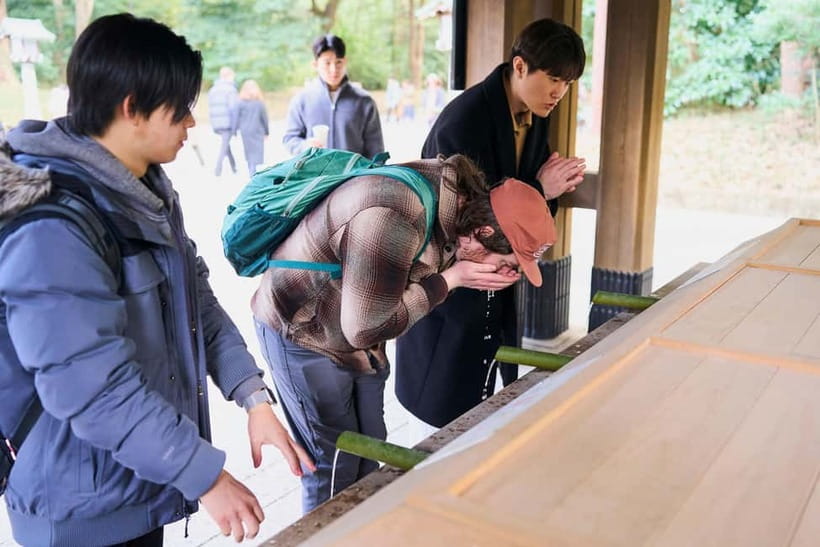
The final stop is Forest Terrace Meiji Jingu, including Café Mori no Terrace. After walking through the shrine grounds, this is a sensible place to pause, buy Japanese tea or a light snack, and enjoy the setting.
The café stop is about 15 minutes, so plan on a short break rather than a long meal. Food and drinks are not listed as included, so expect to pay separately for anything you order.
The gift shop offers a few souvenirs tied to the shrine’s natural and ceremonial themes. Eco-blocks made from fragrant Japanese camphor are a more unusual keepsake than a standard Tokyo trinket. You may also find miniature barrels of sacred sake, which make compact reminders of the earlier stop.
The tour returns you to Harajuku Station, with two possible drop-off locations listed around the station area. From there, you can continue into Harajuku, visit nearby shopping streets, or use the train network for your next stop.
The guides make the difference
The tour’s strongest feature is the guide. The experience depends less on admission access or special transportation and more on how well the person leading you explains customs and history.
Several guides are repeatedly praised for clear English, warmth, and patience. Yuuka is particularly good at combining background information with stories and practical help. Keiko is known for an upbeat manner and careful explanations. Yuki has guided private-feeling tours when only one person or a very small number attended, adjusting the walk to personal interests.
Ayaka has helped visitors understand how to enter shrines, where to find fortunes and amulets, and how to take part respectfully. Nonoka has been praised for placing the shrine within a wider introduction to Japanese culture, including the difference between haiku and waka. These details show the range of the guiding style you can expect, although the specific guide is not guaranteed.
One useful feature is the willingness to help with photographs. Guides have taken pictures for participants and sometimes carried old images showing what the area looked like before construction. Those touches are not the main reason to book, but they can make the visit feel more personal.
The English is generally described as easy to follow, but remember that Japanese-language support is not available through this activity. If you need Japanese interpretation, this is not the right choice.
Timing, pace, and practical tradeoffs
The advertised duration is 90 to 135 minutes. That flexible range likely reflects the group size, starting time, questions, and time spent at the shrine. You should allow the longer end of the estimate if you want time for photos, charms, fortunes, and the café.
The walk is not presented as strenuous, but it is still a walking tour through a large shrine approach. Wear shoes you can use comfortably for the full visit, and bring what you need for the weather. The forest offers shade, but it does not remove the need to prepare for Tokyo’s conditions.
A small group of up to 10 is a strong middle ground. You get more personal attention than on a large group tour, but you may still be sharing the guide with families, couples, or solo visitors with different interests. Occasionally, a booking may have only one participant, creating an almost private tour, but you should not count on that.
Morning departures can be appealing if you want a calmer start. One 9 a.m. Monday tour was especially convenient for seeing the shrine before the day became more active. Still, the available start times vary, so check the schedule that appears for your date.
Free cancellation is available up to 24 hours before the start time, and you can reserve now and pay later. Those policies are helpful if your Tokyo plans are still shifting. They do not change the basic need to arrive at the correct meeting point, since the exact location may vary by option.
Who should book this Meiji Shrine walk
I would choose this tour if you are visiting Japan for the first time and want a clear introduction to Shinto customs. It is also a good fit if you have already seen the shrine but felt you were missing the meaning behind the gates, barrels, poetry, and rituals.
Families may appreciate the short length and the guide’s help with practical details. Solo visitors can benefit from the social format and the possibility of more direct conversation. History fans will get the most from the sections on the Meiji era, the imperial system, and the shift from samurai society to modern Japan.
It is less suitable if you want a silent, private visit or prefer to set your own pace. You can visit Meiji Shrine independently, and doing so gives you more freedom to linger. You may simply miss the context and the confidence that comes from knowing how to behave.
The tour also is not designed as a broad Harajuku sightseeing tour. It begins and ends at Harajuku Station, but its main purpose is Meiji Shrine, Shinto, and imperial history.
Should you book it?
At $23, this is a good-value short tour for anyone who wants more than photographs. The forest and torii are impressive on their own, but the guide adds the practical layer that makes the visit easier: where to walk, how to offer a prayer, what the sake barrels mean, and how to understand an omikuji or omamori.
Book it if you want a friendly English-speaking guide, a small group, and a focused introduction to one of Tokyo’s most important shrines. Skip it if you are comfortable researching shrine etiquette yourself or want a completely independent visit.
For many people, this is an ideal early-Japan activity. It gives you customs you can use at other shrines, a basic framework for the Meiji period, and a peaceful first taste of Tokyo that begins only minutes from a major station.
FAQ
Where does the Meiji Shrine walking tour begin?
The tour begins at Harajuku Station, with two possible starting location options listed. The exact meeting point may vary depending on the option you book.
How long does the tour last?
The tour lasts between 90 and 135 minutes. Starting times vary, so check availability for your chosen date.
What language is the tour conducted in?
The tour is conducted in English only. Japanese-language support is not available.
How many people can join the tour?
The tour is limited to 10 participants, making it a small-group experience.
What is the price?
The listed price is $23 per person.
Does the tour visit the main Meiji Shrine?
Yes. The visit to Meiji Shrine includes guided sightseeing, free time, shopping, and time to take photos.
Will I learn shrine etiquette?
Yes. The guide explains customs such as walking along the edge of the path, entering through the torii, and paying respects at the shrine.
Can I buy charms or fortunes?
Yes. You can purchase omamori protective charms and the Omigokoro omikuji, which features poems by Emperor Meiji and Empress Shoken with English translations.
Is food included at Mori no Terrace?
Food and drinks are not listed as included. The tour includes a break at Café Mori no Terrace, where you can buy Japanese tea and light snacks.
Can I cancel for a full refund?
You can cancel up to 24 hours in advance for a full refund. The activity also offers a reserve-now, pay-later option.
Just added around Tokyo
- Private Arrival Transfer : Narita International Airport to Central Tokyo City★ 4.5 · 12 reviews
- Narita Airport(NRT): Private Transfer to Tokyo/Yokohama 1-9pax★ 5.0 · 47 reviews
- Private Transfer from Narita Airport to Yokohama Port and City★ 4.5 · 17 reviews
- [Narita Airport Terminals 1, 2] 40-60km Sawara Itako Historic Bike Tour★ 5.0 · 13 reviews
- 3 Day Japan Highlights Tour: Tokyo, Mt.Fuji, Nara, Kyoto, Osaka★ 5.0 · 22 reviews
- Small Town in the Big City: Tasting Tokyo’s Kichijoji★ 5.0 · 195 reviews
- Small Town in the Big City: Tasting Tokyo’s Kichijoji★ 5.0 · 16 reviews
- The 10 Tastings of Tokyo With Locals: Private Street Food Tour★ 5.0 · 48 reviews
Tokyo Tours, compared.

Mt Fuji and Hakone 1-Day Bus Tour Return by Bullet Train
Read our review →

teamLab Planets TOKYO Digital Art Museum Entry Ticket
Read our review →
Mt Fuji & Hakone Cruise, Drum Show Bullet Train 1 Day from Tokyo
Read our review →
Sumo Show Experience with Chicken Hot Pot and a Photo
Read our review →
Shinjuku Food Tour (13 Dishes at 4 Local Eateries)
Read our review →
Tokyo Mt Fuji 5th St & Hakone Cruise Bus Tour w/Bullet Train
Read our review →
Flagship 2-Hours Official Street Go-Kart Tour – Tokyo Bay Shop
Read our review →Browse the lists this tour appears in