
Reviewed · KYOTO TOURS
Full-Day Sightseeing to Kyoto Highlights
Kyoto’s famous sights are spread across the city, so this tour’s clever trick is to connect them by train, bus, and foot in one long day. You begin at Kyoto Station, reach the Arashiyama Bamboo Forest, continue to Kinkakuji, then work east through central Kyoto, Gion, and Fushimi Inari before returning to the station.
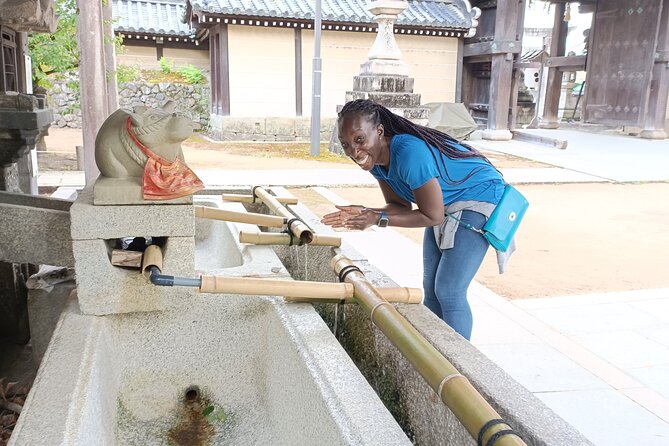
I like the small group limit of seven and the way the guides put local life beside temple facts. Indra, Maureen, Adella, Toshi, and Naomi are all named in the tour’s feedback, with special praise for clear English, humor, cultural explanations, patience, and help taking photos. You also get practical guidance on Kyoto’s transport system, which is useful on a first day.
The trade-off is simple: this is a busy sightseeing day, not a slow temple stroll. You will walk a lot, ride public transport several times, and spend only a limited period at each major stop. Add the ¥500 Kinkakuji entry fee and ¥1,510 for transportation to the tour price, and the total cost needs a careful look.
Key points to know before booking
- Seven-person maximum: A small group leaves more room for questions, personal attention, and help with photos.
- Seven major Kyoto stops: The route covers Arashiyama, Kinkakuji, Shijo Kawaramachi, Gion Shirakawa, Fushimi Inari, and Kyoto Station.
- A real walking day: The tour is not recommended if you have trouble walking, and it requires moderate physical fitness.
- Public transport is part of the lesson: Trains and buses help you cover more ground while showing you how Kyoto works.
- Local culture comes with the sightseeing: Guides explain Buddhism, Shinto, Geiko and Maiko culture, Japanese manners, and everyday quirks.
- Extra costs are clear: Pay ¥500 for Kinkakuji and ¥1,510 for public transportation, in addition to the listed $165.17 price.
A fast start from Kyoto Station to Arashiyama
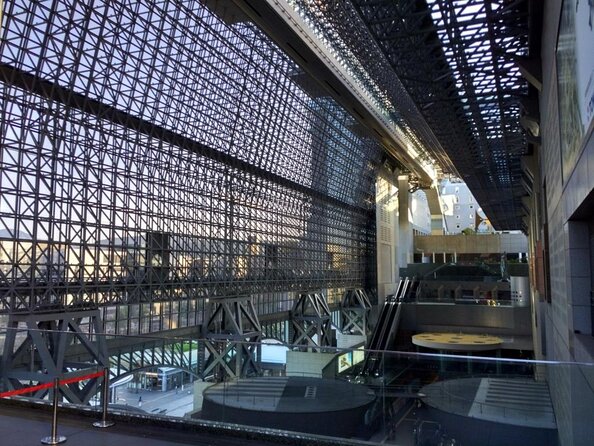
Meet at 8:30 am at the Starbucks Coffee beside Kyoto Tower Sando, on the left side of the main entrance area at Kyoto Station. After introductions and a basic explanation of the day, you board a train for Saga Arashiyama.
That opening ride matters. Kyoto is easy to admire and surprisingly awkward to cross, since its headline sights sit in different parts of the city. Learning the route with a guide can save you the trial and error of working out trains and buses on your own.
The tour is described as about 7 hours and 30 minutes, so the schedule has to keep moving. You should arrive ready for a full day outdoors, with comfortable shoes and enough energy for stairs, station passages, temple grounds, and city streets.
A few more Kyoto half-days to weigh up
- 5 Top Highlights of Kyoto Full Day Bike Tour (E-bike option)
★ 5.0 · 511 reviews - Full Day Biking Tour Exploring the Best of Kyoto
★ 5.0 · 498 reviews - Full Day Guided Tour to Kyoto and Nara from Osaka by Van
★ 5.0 · 420 reviews
Arashiyama Bamboo Forest, beautiful but busy
You have about an hour at the Bamboo Forest. The tall bamboo provides the day’s most instantly recognizable setting, and the guide uses the walk to talk about Japan, Japanese culture, and the ideas behind everyday behavior.
This is more useful than simply stopping for photographs. The tour aims to explain why people in Japan act as they do, including cultural quirks such as the limited number of public trash cans. Those small details can make the rest of your visit easier to understand.
The main limitation is time. Arashiyama contains more than the bamboo path, but this day gives you one focused visit before the group moves on. If you want a quiet, unhurried walk or extended time in western Kyoto, you will need a separate visit.
After the forest, you spend roughly 40 minutes using a bus or train toward Kinkakuji. That transfer is part of the day’s practical value, though it also adds to the pace. You are not being driven from one sight to the next. You are learning to move around Kyoto as people do.
Kinkakuji and the Golden Pavilion view
Kinkakuji, the Golden Pavilion, is the day’s main temple stop. You have about 40 minutes inside, and the ¥500 admission fee is not included.
The guide explains Buddhism in Japan and the temple’s story while helping you find the best places for photographs. The pavilion’s setting does much of the visual work, with the gold-covered structure reflected in the water. Your guide adds the meaning and context that a quick photo stop would miss.
Forty minutes is enough for a focused visit, but not enough for a leisurely exploration. Kinkakuji can be crowded, and the appeal here is the classic view rather than a long, quiet examination of every part of the grounds. I would think of this as a high-impact stop: visually important, efficiently handled, and worth the extra entry fee if you want Kyoto’s best-known temple images.
The schedule then sends you toward central Kyoto. The provided timing gives about an hour and 40 minutes for this portion, including the move onward. That sounds long on paper, but public transport and city walking take time, so you should not expect a relaxed break between sights.
Shijo Kawaramachi brings in everyday Kyoto
The 75-minute stop at Shijo Kawaramachi changes the mood. Instead of temple grounds, you explore one of Kyoto’s main shopping areas and a Japanese shopping arcade. Lunch takes place here, though the meal itself is not listed as included.
This is one of the tour’s useful contrasts. You see Kyoto as a living city, not only as a collection of shrines and temples. A shopping street shows you ordinary commerce, local movement, and the modern side of a historic destination.
The stop also gives you a chance to choose lunch according to your own taste, since no specific restaurant or meal is promised. That flexibility is good, but you should budget for food separately. The tour price covers the guide and walking experience, not lunch.
After Shijo Kawaramachi, the group walks across Shijo Bridge. The route then continues toward Gion Shirakawa, with around 15 minutes of walking listed as part of the transition. This is a pleasant way to move between areas, but it adds to the day’s physical demands.
Same base, a completely different sort of day:
- PERFECT KYOTO 1-Day Bus Tour
★ 5.0 · 13,518 reviews - Kyoto: Fushimi Inari, Kinkakuji, Bamboo Grove 1 Day Bus Tour
★ 4.8 · 4,316 reviews - Kyoto: Tea Ceremony in a Traditional Tea House in Kiyomizu
★ 4.9 · 3,519 reviews - Kyoto Geisha Walking Tour: Gion District & Hidden Gems
★ 4.7 · 3,273 reviews
Gion Shirakawa offers a quieter side of Gion
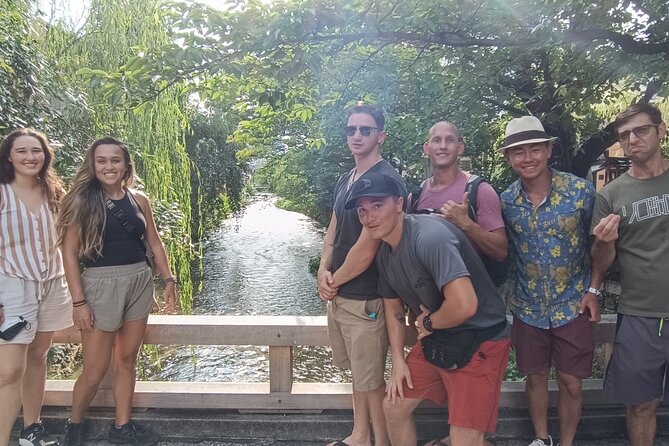
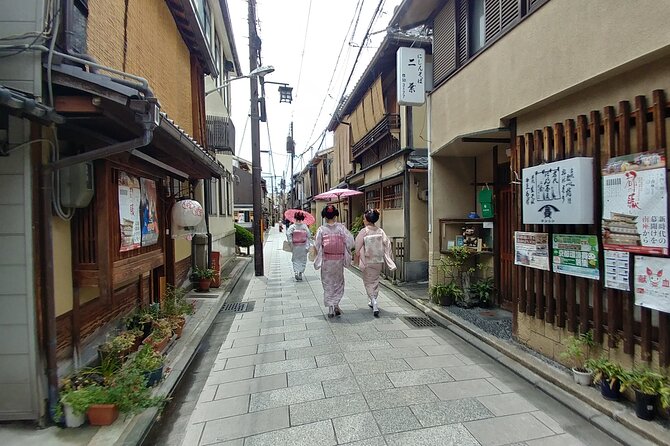
You spend about an hour in Gion Shirakawa, described as the quieter side of Gion. This is the part of the day that looks beyond the standard temple checklist.
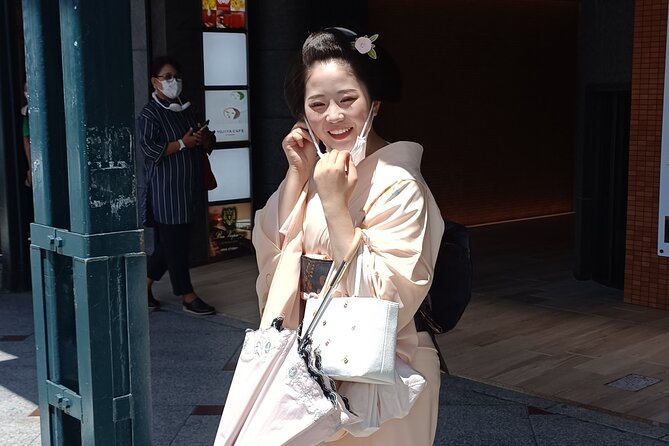
Your guide explains Geiko and Maiko culture, along with the role of Gion as an entertainment district. That context is important because the area is not a stage set. It is a working neighborhood connected to traditional arts, hospitality, and professional performers.
The route is especially good for visitors who want to understand the difference between seeing a Maiko and treating the neighborhood as a photo backdrop. The supplied information does not promise a Geiko or Maiko encounter, so you should not book the tour expecting one. The point is learning about their world and the area where they work.
Gion Shirakawa also gives the day some breathing room after the more crowded headline sights. Still, you remain on a fixed schedule, and the tour must continue to Fushimi Inari. If you want to linger for dinner or spend an evening in Gion, plan that separately.
Fushimi Inari ends the sightseeing with thousands of torii
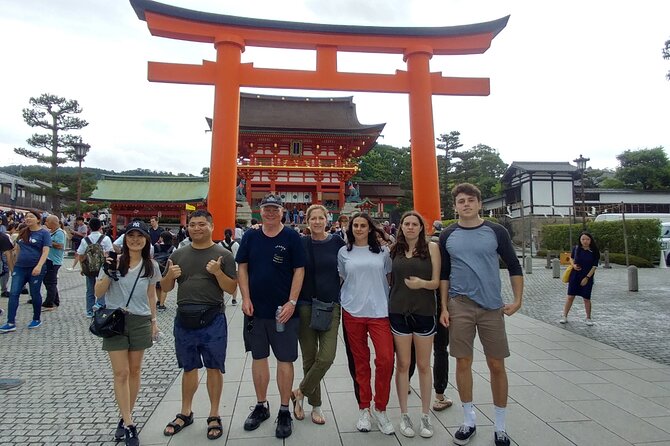
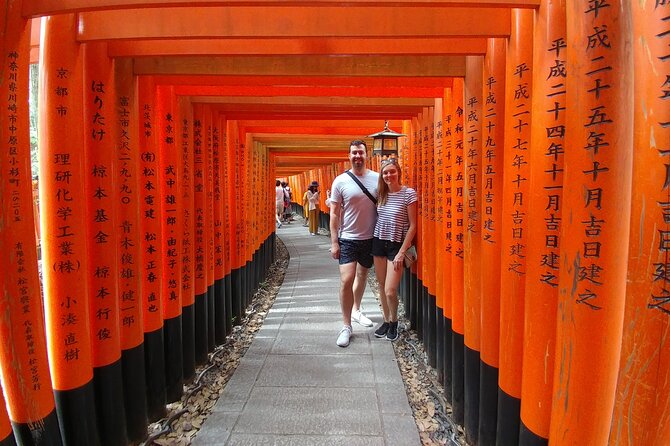
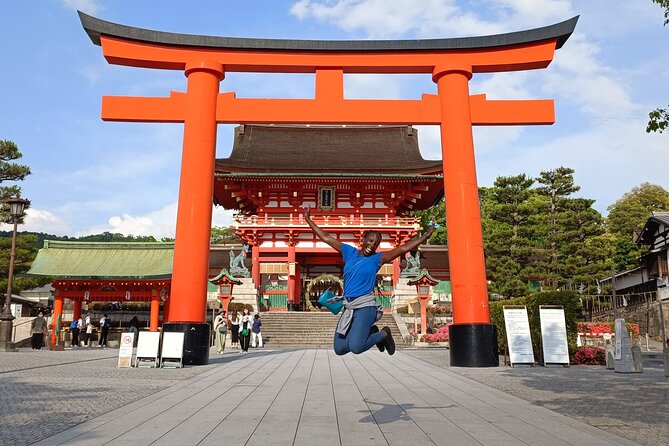
Fushimi Inari Taisha is the final major sight. You have about 50 minutes to explore the shrine and pass through its famous rows of vermilion torii gates.
The guide introduces Shinto, the shrine’s background, and the meaning of the place as you walk. This makes Fushimi Inari more than a quick tunnel of orange gates. You get a basic framework for understanding how Shinto differs from Buddhism, a useful distinction after visiting Kinkakuji earlier in the day.
Fifty minutes is enough to enter the torii route and experience the visual impact. It is not enough to walk the full mountain path, so keep your expectations in check. The tour gives you the signature section and an explanation of the shrine, rather than a complete hike.
Ending here works well. Fushimi Inari is one of Kyoto’s biggest draws, and its gates provide a strong final image. It can also be crowded, especially around the most photographed entrance areas, so staying close to the guide helps the group keep its schedule.
The return to Kyoto Station
The final leg uses the train back to Kyoto Station, with about 10 minutes listed for the ride before farewells at the original meeting point. This gives the day a clean finish and makes the tour convenient if you are staying near the station or using it as your transport hub.
The point of departure is easy to identify because it is beside Kyoto Tower Sando. You receive confirmation when booking, and the activity ends where it begins. A mobile ticket is available, which keeps the entry process simple.
The route’s public transportation cost is ¥1,510 per person. That is a meaningful extra amount, but it also reflects how much ground the tour covers. You are not paying only for admission to a few sites. You are paying for a guide who helps you connect distant districts by the city’s normal transport network.
What the guides add to the day
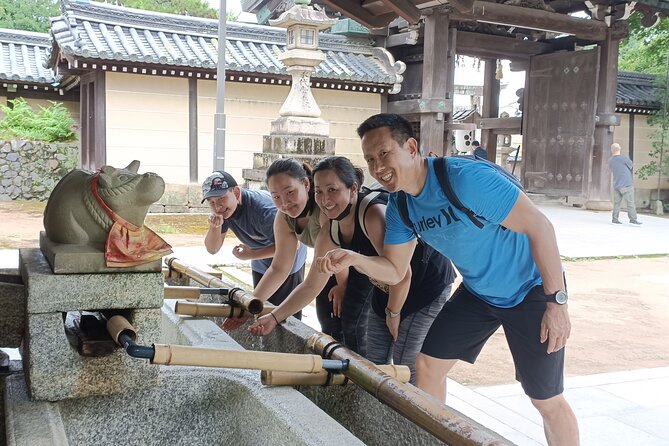
The guide is the heart of this experience. Indra receives repeated praise for his English, humor, cultural explanations, photography help, and ability to tell a story rather than list dates and facts. He is also described as attentive to solo visitors and willing to adapt to personal requests.
Maureen is praised for guiding people smoothly through buses and trains, keeping the day cheerful, and adjusting the pace for a very small group. Adella is described as bright, friendly, and strong on local history and customs. Toshi is noted for accommodating last-minute changes, while Naomi is praised for managing the transport-heavy route and making the explanations interesting.
You cannot choose a particular guide from the information provided, so treat those names as examples of the guiding style rather than a guarantee. The consistent pattern is clear: expect a guide who explains Japanese culture, answers questions, teaches useful phrases, and may help with group photographs.
That photo help is a valuable detail for solo visitors and couples. Several guide comments point to the habit of taking pictures for participants, but it remains a helpful gesture rather than a separately advertised photography service.
Is $165.17 a fair price?
At $165.17 per person, this is not a budget walking tour. Add ¥500 for Kinkakuji and ¥1,510 for public transportation, and remember that lunch is separate.
The value depends on how you use your time. If you have only one day in Kyoto, arranging Arashiyama, Kinkakuji, central Kyoto, Gion, and Fushimi Inari on your own would require route planning, fare decisions, and constant attention to the clock. Here, the guide handles the structure and adds cultural explanation while you focus on the city.
The small group limit helps justify the price. A maximum of seven allows questions and personal interaction that are harder to get on a large coach tour. On quieter dates, the group may be much smaller, and some bookings have operated with only one or two participants. That can feel close to a private tour, though you should not assume it will happen on your date.
I would call it good value for a first-time visitor who wants the major sights and cultural orientation in one day. It is weaker value for someone who prefers long visits, independent wandering, or a slow lunch. You are buying efficiency and guidance, not spare time.
Who should book this Kyoto day tour?
This experience suits you best if:
- You have only one day for Kyoto’s main sights.
- You want help with trains and buses.
- You prefer a small group rather than a large coach.
- You want cultural explanations along with photographs.
- You are comfortable walking for most of the day.
- You would like advice on Kyoto for the rest of your trip.
Solo visitors may find the personal attention especially useful, particularly if the group is small. Couples and friends also benefit from having someone take photos and explain the customs behind the places they are seeing.
It is less suitable if you have bad legs, limited walking ability, or want a gentle schedule. The activity is not recommended for pregnant people beyond the first trimester, and a moderate level of physical fitness is required. Service animals are allowed, and the route is near public transportation.
The experience requires good weather and a minimum number of participants. If poor weather or insufficient bookings cancel the tour, you are offered another date or experience, or a full refund. You can cancel for a full refund up to 24 hours before the start time, but late cancellations and changes are not accepted.
Should you book it?
Book this tour if your priority is to see Kyoto’s main sights efficiently and understand what you are looking at. Arashiyama, Kinkakuji, Gion, and Fushimi Inari make a strong first-day sweep, while Shijo Kawaramachi adds a useful look at ordinary city life.
Skip it if you want to spend half a day in one temple district or climb deep into the Fushimi Inari mountain trails. The schedule is packed, the walking is real, and the extra transport and admission costs push the final price above the headline figure.
For a first visit with limited time, I think the combination of a seven-person cap, public transport guidance, and culture-focused explanations makes this a practical choice. Go in with good shoes, an appetite for movement, and realistic expectations about how much time you will have at each stop.
FAQ
How long is the Kyoto highlights tour?
The activity lasts approximately 7 hours and 30 minutes.
What time does the tour begin?
The tour starts at 8:30 am.
Where do I meet the guide?
Meet at Starbucks Coffee at Kyoto Tower Sando, beside Kyoto Station. The meeting area is on the left side of the main entrance.
Where does the tour end?
The activity ends back at the original meeting point at Kyoto Station.
How many people can join the tour?
The stated maximum is seven participants.
Is Kinkakuji admission included?
No. Kinkakuji admission costs ¥500 per person and is not included.
Is public transportation included?
No. Public transportation costs ¥1,510 per person and is not included.
Is lunch included?
No lunch is listed as included. The group stops at Shijo Kawaramachi for lunch, which you pay for separately.
How much walking is involved?
This is a walking experience that also uses trains and buses. A moderate level of physical fitness is required, and it is not recommended for people with bad legs.
Can I cancel for a refund?
You can cancel at least 24 hours before the start time for a full refund. Cancellations or changes made less than 24 hours before the start time are not accepted.
Just added around Kyoto
- Kyoto: Zen Meditation at a Private Temple with a Monk★ 5.0 · 25 reviews
- Kyoto: Gion Geisha District & Sake-in-Hand Walking Tour★ 5.0 · 37 reviews
- Private Pewter Sake Cup Experience with a Kyoto Artisan★ 5.0 · 31 reviews
- Your Private Vacation Photography Session In Kyoto★ 5.0 · 110 reviews
- Private Guided Traditional Buddhist Cooking in Japan★ 5.0 · 16 reviews
- Kyoto Wagashi(Japanese sweets) Cooking Class near Fushimiinari★ 5.0 · 60 reviews
- Traditional Japanese Music show & Experience Tour in Kyoto★ 5.0 · 57 reviews
- Kyoto:Family-Friendly Kimono & Yukata Experience at WARGO★ 5.0 · 147 reviews
Kyoto Tours, compared.


Fushimi Inari, Kinkakuji, Bamboo Grove 1 Day Bus Tour
Read our review →
Tea Ceremony in a Traditional Tea House in Kiyomizu
Read our review →
Kyoto Geisha Walking Tour: Gion District & Hidden Gems
Read our review →

Gion Magical Night Walking Tour with Geisha Trivia
Read our review →
