
Reviewed · KYOTO TOURS
Authentic Knife Making Experience at a Blacksmith in Kyoto
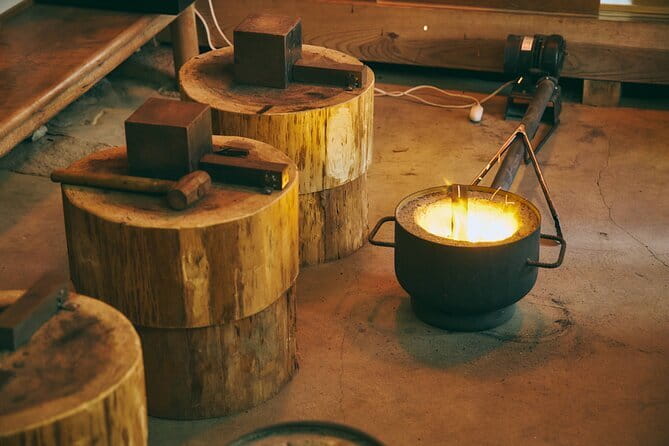
The hot steel is the star here. At Atelier NIN, you do not simply watch a blacksmith work. You hammer a heated billet, shape the blade, grind it, and take home a real Japanese knife. Daiki and the English-speaking instructors guide beginners without turning the class into a staged demonstration.
I like two things in particular: the small maximum of six keeps help close at hand, and the uniform, tools, and materials are provided. The roughly three-hour format also gives you a proper taste of forging without the five-plus hours and much higher cost of making a full-size cooking knife.
There are a few limits. Hammering and sanding take real effort, the workshop can feel tight, and finishing the blade demands care. The standard knife is only about 13 to 15 centimeters and has a simple iron handle, so this is a traditional starter project, not a custom chef’s knife.
Key points at a glance
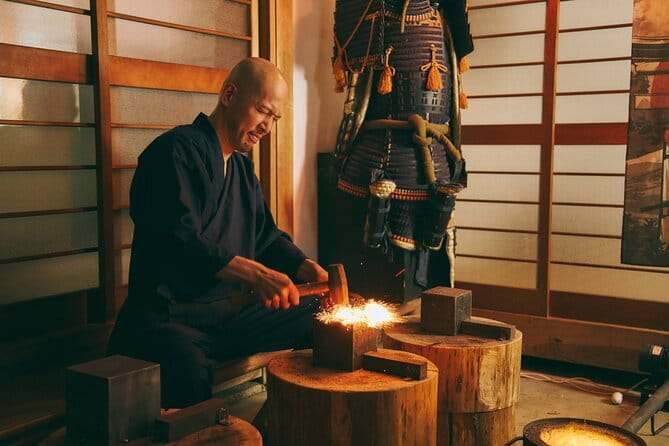
- You hammer the hot steel yourself: This is active blacksmithing, not a sit-back demonstration.
- Your finished knife is about 13 to 15 centimeters: It is a useful keepsake, but not a large kitchen knife.
- The process covers forging, grinding, sharpening, and polishing: You see how separate steps shape the final tool.
- Groups are limited to six people: That matters when you need help with a hammer, sanding belt, or blade angle.
- A traditional workshop uniform is supplied: You do not need to bring protective clothing.
- The studio is in Yase, outside central Kyoto: Allow time for public transport and the final walk through a residential area.
Why this Kyoto knife class feels different
Many craft activities give you a small task, then quietly let the staff finish the important work. This one gives you the hard middle section. You hammer a metal billet to flatten and shape it, then work on the blade with grinding equipment and sharpening tools.
That effort is part of the appeal. You learn why forging is central to Japanese kitchen knives, rather than simply buying a polished blade in a shop. The instructors step in when needed, but the finished knife still carries the marks of your hand.
The steel used is described as white paper grade steel, a material associated with Japanese knife making. You should not expect the clean precision of a professional bladesmith after one short class. You should expect a functional, personal object that shows where you learned.
The experience is also a good match for couples, families with older children, and anyone who enjoys making things with their hands. A 13-year-old has completed the activity successfully, and children can take part when they can follow safety instructions and handle the physical work. The class is not described as suitable for very young children.
A few more Kyoto half-days to weigh up
- PERFECT KYOTO 1-Day Bus Tour
★ 5.0 · 13,518 reviews - Kyoto: Fushimi Inari, Kinkakuji, Bamboo Grove 1 Day Bus Tour
★ 4.8 · 4,316 reviews - Kyoto: Tea Ceremony in a Traditional Tea House in Kiyomizu
★ 4.9 · 3,519 reviews
Reaching Atelier NIN in Yase
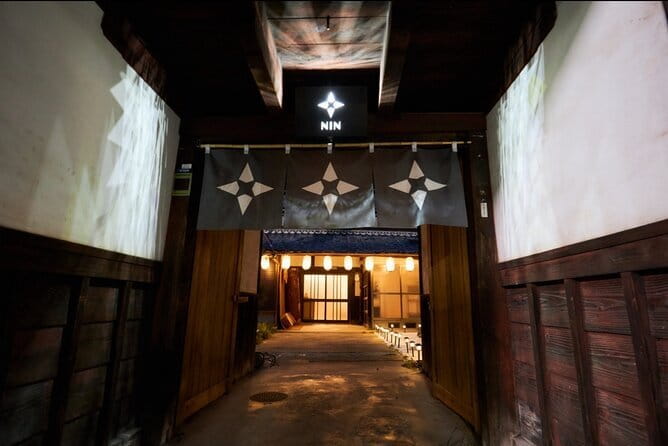
The address is studio NIN, 168-1 Yasenosechō, Sakyo Ward, Kyoto, 601-1254. This is not a central Kyoto workshop you can casually add between Nishiki Market and Gion. It is in the Yase area, on the city’s outer edge, and the journey is part of the outing.
Public transportation is available. One particularly useful detail is that the train serving the area may be a small one-car train, which adds a pleasant rural feel to the trip. From the station, you may face a fairly long walk. The studio is tucked into a residential area, so do not expect a large street-front sign or a busy commercial setting.
Plan your route before leaving central Kyoto. Phone service may be weak around the station, and you may not be able to pull up directions at the last moment. Save the address and route details in advance. This simple step can prevent a rushed arrival.
The itinerary information also names Rurikoin as a stop, but the supplied details do not explain a separate temple visit, admission, or sightseeing schedule. Treat the workshop at Atelier NIN as the main event, and confirm any Rurikoin arrangements before booking if that stop matters to your plans.
Changing into the traditional workshop uniform
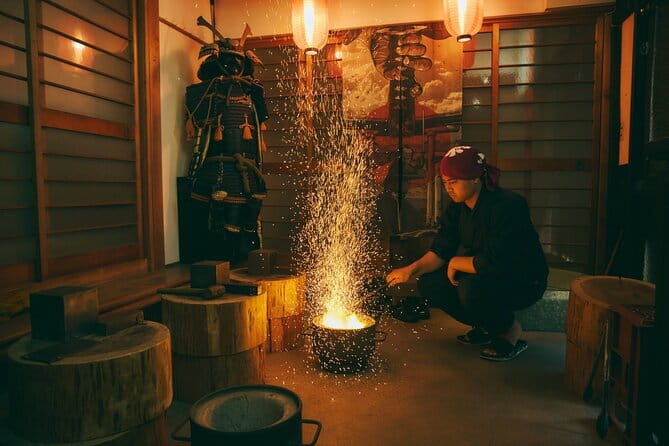
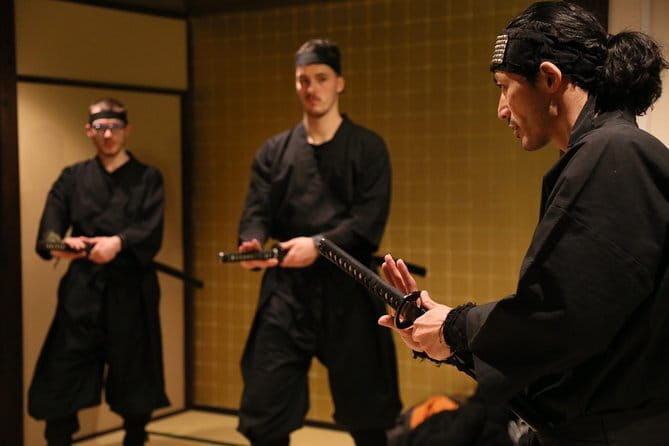
Your first task is to change into a traditional goldsmith-style outfit. This is not just a costume photo opportunity. It helps mark the shift from sightseeing mode to workshop mode, and it saves you from worrying about what to wear.
The uniform is included, as are the knife-making tools and an English guide. You do not need to source special protective clothes or bring materials from home.
Still, dress for movement and heat beneath the supplied clothing. The work includes repeated hammering and close work at grinding equipment. One account also raised a practical concern about footwear, especially after dropping a knife during the finishing work. Follow the staff’s instructions carefully and ask for a safety explanation before using any belt or grinder.
The workshop has toilets and water. Snacks are not included, so eat beforehand if you tend to get hungry during active activities. There is no private transportation included either.
Forging the blade with a hammer
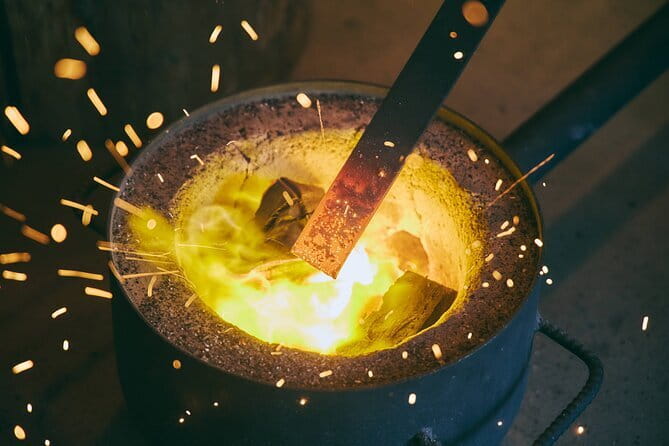
The forging stage is the part most people picture when they hear blacksmithing, and it takes a substantial share of the class. You use the provided tools to hammer and flatten the hot metal billet. The goal is to turn a basic strip of steel into the rough form of a knife blade.
This work is repetitive and physical. You will use your arms, pay attention to rhythm, and learn to make controlled strikes rather than simply hitting as hard as possible. The instructors show you how to use the tools safely and correct your technique when necessary.
That makes this a better choice for someone who wants participation, not just a craft souvenir. You should have a moderate level of physical fitness. The effort is manageable for many adults, but it is not effortless, and the heat and hammering can be tiring.
The small group size helps here. With no more than six people, an instructor can watch your technique and step in before a poor angle or uneven strike creates a larger problem. Daiki is singled out for being engaging and for helping quietly when assistance is needed.
You may choose a general knife design, but the class remains limited by its short format. A regular cooking knife usually requires more than five hours and costs more than $400 in the description provided for this experience. Atelier NIN keeps the class to about two and a half to three hours so more people can try forging at a lower price.
That comparison is important. You are not paying for a full custom kitchen knife made entirely by a master. You are paying for direct access to the process, instruction, equipment, and a finished short blade.
Same base, a completely different sort of day:
- Kyoto Geisha Walking Tour: Gion District & Hidden Gems
★ 4.7 · 3,273 reviews - Kyoto: Tea Ceremony Ju-An at Jotokuji Temple
★ 4.9 · 3,207 reviews - Kyoto: Gion Magical Night Walking Tour with Geisha Trivia
★ 4.9 · 2,393 reviews - Kyoto: 45-Minute Tea Ceremony Lesson Experience
★ 4.3 · 2,378 reviews
Grinding, sharpening, and polishing the metal
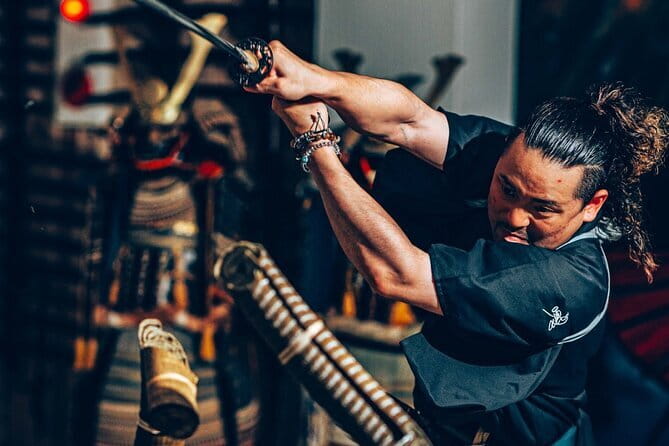
After forging, the rough blade needs much more work. You grind the surface, clean up the shape, and begin forming the edge. This is where patience matters more than brute strength.
The sanding belts require careful handling. One person found that more guidance about the equipment and blade angle would have helped. That is useful advice for you: before touching the belt, ask exactly where the blade should meet the abrasive surface and how to keep the angle steady.
A poor angle can affect the look and performance of the knife. Do not rush because another person has finished. Ask the instructor to check your position, especially if you have never used a sanding belt.
The class then moves into sharpening and polishing. You take part in these stages, while the staff may help with final corrections and finishing. The amount of instructor assistance can vary depending on your knife and technique, but the aim is a usable blade rather than a rough metal souvenir.
The finished knife is wrapped and placed in a gift bag. A small photo souvenir may also be provided. The result is compact and easy to keep, but remember that it is a real sharp knife. Handle it responsibly after collection.
What you take home
The standard knife measures about 13 to 15 centimeters. Because each piece is handmade, the size can vary according to the person making it and the time available.
The handle is made from iron using a simple traditional method. No wooden handle is included in the standard description. One experience account describes a wooden handle option costing ¥5,000, with the handle attached later at home. Since the details conflict, confirm the current handle choices and extra cost directly before you book.
The basic design is intentionally simple. That simplicity is part of its character, but it may disappoint you if you are expecting a polished Japanese chef’s knife with an elegant wood handle and professional showroom finish.
You also need to think about getting the blade home. A knife of this size may exceed carry-on restrictions, and checking it in luggage is the practical choice when flying. A participant specifically found that a checked bag was needed for the journey back to the United Kingdom. Pack according to your airline and destination rules, and do not put a sharp blade loose in your luggage.
Is the $158.52 price good value?

At $158.52 per person, this is not a cheap craft class. The price makes more sense when you count what is included: a small group, English guidance, a traditional uniform, tools, steel, instruction across several stages, and a finished knife to take home.
You are also paying for access to equipment you could not reasonably use in a normal Kyoto cooking class. The heat, hammering, grinding, sharpening, and polishing create a hands-on experience with more substance than a quick souvenir workshop.
The value depends on your goal. If you only want an inexpensive Japanese knife, buying one in Kyoto will likely be simpler and less costly. If you want to understand how a blade begins as heated steel and ends as a usable tool, the price is easier to justify.
The small group is another value point. A maximum of six is not a private lesson, but it is small enough for personal correction. That matters most during grinding, when a little instruction can protect both your knife and your fingers.
The activity has been booked more than 20 times in one recent week and carries a 4.8 rating from 53 ratings, with 94 percent recommending it. Those figures suggest strong demand, but they do not remove the practical drawbacks: it is strenuous, the space may feel tight, and your final shape depends partly on your own technique.
Who should book this experience
I would choose this for you if you enjoy working with tools, want a souvenir with a story, or have already spent enough time looking at Japanese knives in shops. It is particularly well suited to couples, families with older children, home cooks, chefs, and people who enjoy traditional crafts.
It also works well as a special Kyoto outing. The journey to Yase, the small train, and the residential setting make it feel separate from the city’s main sightseeing circuit. Allow enough time for the trip so you are not watching the clock during the class.
You should think twice if you dislike heat, repetitive arm work, or sharp equipment. This is not a relaxed cultural lecture. You are expected to hammer metal and use sanding equipment, and the physical effort is part of the experience.
Perfectionists may also need the right attitude. The staff can correct mistakes and help you produce a good result, but a handmade beginner’s knife will not look identical to a professional blade. The best souvenir is the one that shows you took part.
Practical details before you book
The activity lasts about three hours, although the workshop portion is described as roughly two and a half hours. It begins and ends at Atelier NIN, and private transportation is not included.
Confirmation is provided at booking. The group limit is six people, and an English guide is included. You need moderate physical fitness, and all materials and tools are supplied.
Free cancellation is available if you cancel at least 24 hours before the local start time. Cancellations or changes made inside that period are not refunded or accepted.
The knife is sharp and may need to go in checked luggage. Plan this before the class, not at the airport. Also save directions ahead of time, since the final approach may have limited phone signal.
Should you book Atelier NIN?
Book it if you want a real hands-on craft session and like the idea of earning your souvenir through sweat, hammering, and careful grinding. The strongest reasons to go are the active forging, patient English guidance, small group, and the satisfaction of taking home a knife you helped make.
Skip it if you are looking for a large chef’s knife, a fully polished professional finish, or a quiet activity requiring little effort. For the right person, the $158.52 cost buys much more than a blade. It buys three hours of learning how a useful Japanese object takes shape, one hammer strike at a time.
FAQ
Where does the knife-making experience take place?
It takes place at studio NIN, Atelier NIN, at 168-1 Yasenosechō, Sakyo Ward, Kyoto, 601-1254, Japan.
How long does the activity last?
The experience lasts approximately three hours. The workshop itself is also described as a two-and-a-half-hour format.
How large is the group?
The activity has a maximum of six participants.
Is an English guide included?
Yes. An English guide is included, and the instructors are described as speaking enough English to guide participants through the work. Daiki is named as one of the instructors.
What does the experience include?
It includes the workshop uniform, the tools used to make knives, the steel and other materials, and instruction in forging, sharpening, and polishing.
What size knife will I make?
The finished knife is approximately 13 to 15 centimeters. Since each knife is handmade, the final size can vary.
Does the knife have a wooden handle?
The standard description says the knife has a simple iron handle and does not include a wooden handle. One account describes a wooden handle option for ¥5,000, so confirm the current options and cost before booking.
Can I cancel for a full refund?
Yes, if you cancel at least 24 hours before the local start time. Cancellations made less than 24 hours before the experience are not refunded, and changes inside that period are not accepted.
Just added around Kyoto
- Kyoto: Zen Meditation at a Private Temple with a Monk★ 5.0 · 25 reviews
- Kyoto: Gion Geisha District & Sake-in-Hand Walking Tour★ 5.0 · 37 reviews
- Private Pewter Sake Cup Experience with a Kyoto Artisan★ 5.0 · 31 reviews
- Your Private Vacation Photography Session In Kyoto★ 5.0 · 110 reviews
- Kyoto Wagashi(Japanese sweets) Cooking Class near Fushimiinari★ 5.0 · 60 reviews
- Private Guided Traditional Buddhist Cooking in Japan★ 5.0 · 16 reviews
- Traditional Japanese Music show & Experience Tour in Kyoto★ 5.0 · 57 reviews
- Kyoto:Family-Friendly Kimono & Yukata Experience at WARGO★ 5.0 · 147 reviews
Kyoto Tours, compared.


Fushimi Inari, Kinkakuji, Bamboo Grove 1 Day Bus Tour
Read our review →
Tea Ceremony in a Traditional Tea House in Kiyomizu
Read our review →
Kyoto Geisha Walking Tour: Gion District & Hidden Gems
Read our review →

Gion Magical Night Walking Tour with Geisha Trivia
Read our review →
