
Reviewed · KYOTO TOURS
Oboro | Mindful Tea Ceremony in a 100-Year-Old Kyoto Teahouse
A candlelit matcha ceremony in a 100-year-old Kyoto teahouse offers something quite different from tea served at a café. You watch each movement, hear the meaning explained in English, and drink one carefully prepared bowl in a quiet room built for attention rather than speed. The tea tradition itself reaches back more than 1,200 years in Japan.
I like the small maximum of eight people, which keeps the setting personal, and I like the gentle translation by hosts such as Taku and Naoki. The welcome tea, sweets, organic green tea, and handmade candle also give the 50-minute session a pleasing sense of shape. The main consideration is timing: arriving more than 10 minutes late means you cannot join, and the short visit leaves little room for a broad lesson in tea history.
Key points to know before booking
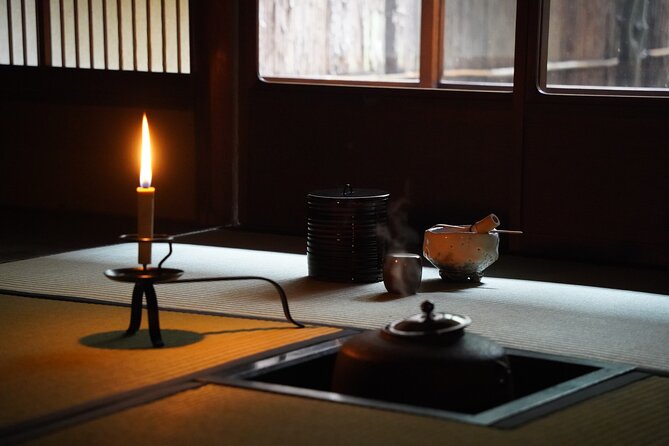
- Candlelit setting: The ceremony takes place in a softly lit, minimally decorated room instead of a busy café.
- Small group size: A maximum of eight people makes it easier to see the utensils and ask questions.
- English guidance: Taku, Naoki, and other hosts explain the ritual and translate its meaning.
- More than matcha: You begin with welcome tea and sweets, then watch the preparation of organic green tea.
- Mindful pace: The focus is on stillness, gratitude, sensory detail, and shared respect rather than strict performance.
- Short, well-defined visit: The activity lasts about 50 minutes and returns you to the same meeting point.
Entering Oboro’s 100-year-old Kyoto teahouse
Oboro is at 237 Nakaogawachō in Kyoto’s Kamigyo Ward, near public transportation. The experience begins and ends at this same point, so you do not need to arrange a separate ride afterward. I would still allow extra time to find the address, since the ceremony has a firm late-arrival rule.
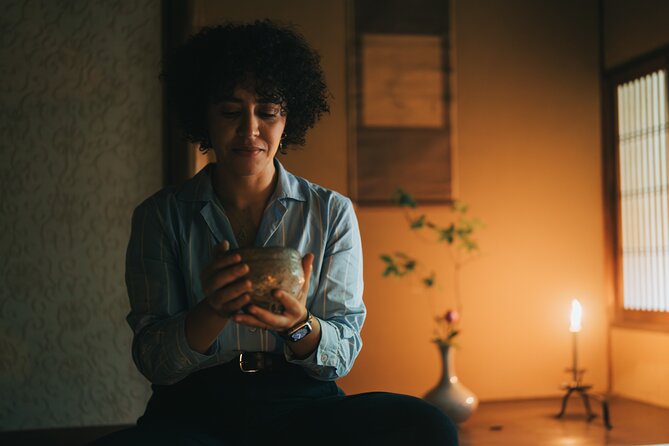
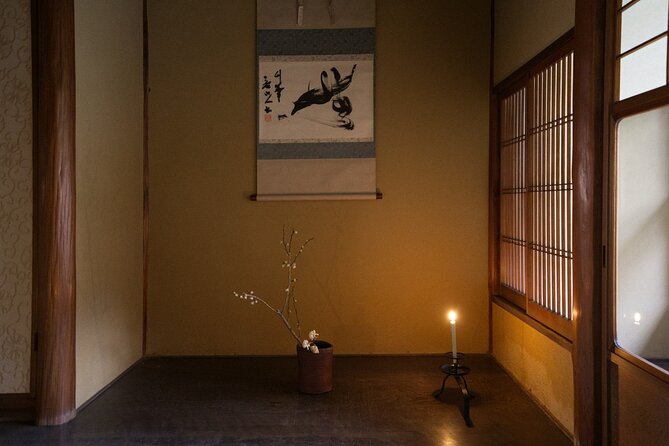
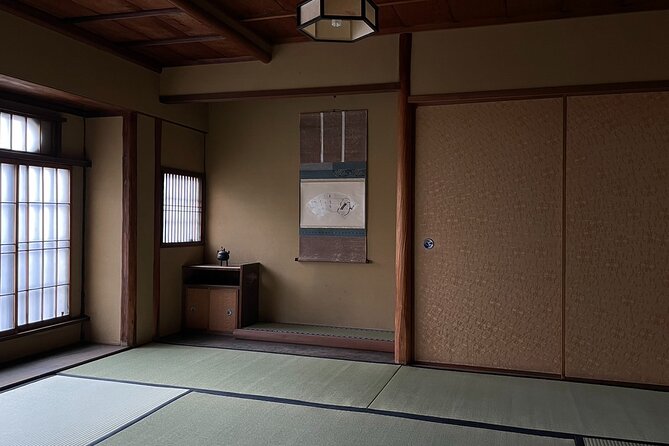
The setting does much of the work. Instead of bright café lights, you enter a softly lit room with handmade candles, minimal decoration, and gentle sounds. This stripped-back arrangement is not just a visual touch. It removes the usual noise of a sightseeing stop and gives you time to notice small things, such as the warmth of the bowl and the rhythm of the host’s movements.
That quiet mood is one of Oboro’s strongest features. The experience is designed as a pause from Kyoto’s busy streets, not as a lively cooking class or a rapid cultural demonstration. If you want a social activity with lots of conversation, this may feel restrained. If you want a calm hour between temples and shopping streets, the pace makes good sense.
More Tea Ceremonies in Kyoto
- Kyoto: Tea Ceremony in a Traditional Tea House in Kiyomizu
★ 4.9 · 3,519 reviews - Kyoto: Tea Ceremony Ju-An at Jotokuji Temple
★ 4.9 · 3,207 reviews - Kyoto: 45-Minute Tea Ceremony Lesson Experience
★ 4.3 · 2,378 reviews
The welcome tea and sweets ease you into the ritual
The session starts with welcome tea and sweets. This opening gives you a gentle transition from ordinary sightseeing into the more focused ceremony that follows. You are not expected to sit down and instantly understand every rule. The host begins by helping you settle into the room and pay attention to taste, sound, and movement.
The sweets matter for more than refreshment. They prepare your palate for the tea and add a small local food element before the matcha arrives. The exact sweet is not specified, so you should think of it as a modest seasonal treat rather than a full snack or dessert course.
This first stage is also a useful chance to ask questions. English translation is included, and the hosts are described as patient, polite, and willing to explain. Taku in particular is noted for speaking excellent English and for making the session both informative and entertaining. Naoki is described as a soft-spoken tea master, a good fit for the reflective tone of the room.
Watching every step of the matcha preparation
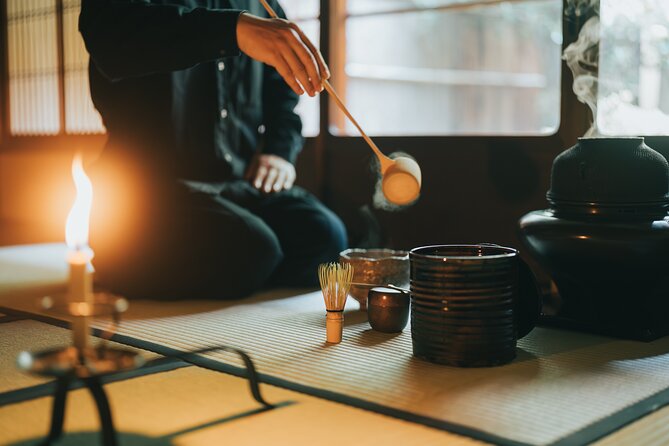
The heart of the experience is the preparation of the tea. The host cleans and arranges the utensils with care before whisking the organic green tea. You see techniques that are rarely displayed when matcha is served as a quick restaurant add-on.
This is where the ceremony becomes more than a drink. The cleaning of the tools, the handling of the bowl, and the measured whisking all show how Japanese tea practice gives value to preparation. The host serves the tea one bowl at a time, which keeps the attention on the person receiving it rather than turning the process into a group production line.
You may learn some basic etiquette and the place of tea in Japanese culture, although the 50-minute format cannot cover every school, rule, or historical period. The experience is best understood as an introduction through observation. You watch first, then taste, while the host explains what you are seeing.
The preparation is also a good reason to choose this activity even if you are not already a matcha fan. One person in a family may prefer black tea, while another enjoys matcha. The experience can accommodate different tastes, and one family found that a child especially liked the matcha. The central attraction is the ritual, not simply the flavor in your cup.
Drinking tea slowly, one bowl at a time
When your bowl arrives, the host encourages you to notice the details around it. You can pay attention to the tea’s subtle flavors, the warmth of the ceramic in your hands, and the candlelight in the room. This sounds simple, but the setting gives those small sensations more weight than they would have during a rushed café stop.
The matcha is described as very good, and the organic green tea adds an appealing point of difference. Still, tea preferences vary. Matcha has a distinct vegetal taste and a thick texture that some people enjoy and others do not. The ceremony does not require you to pretend otherwise. One review specifically notes that you can have black tea instead, making the experience more accessible to people who are unsure about matcha.
The ritual is presented with respect but not as a test. You do not need prior knowledge of tea etiquette to take part. The host guides you, translates the meaning, and allows the ceremony to feel shared rather than stiff. That balance is important. A highly formal presentation can leave first-time visitors worried about making a mistake. Oboro appears to place more weight on attention, courtesy, and quiet wonder.
Same base, a completely different sort of day:
- PERFECT KYOTO 1-Day Bus Tour
★ 5.0 · 13,518 reviews - Kyoto: Fushimi Inari, Kinkakuji, Bamboo Grove 1 Day Bus Tour
★ 4.8 · 4,316 reviews - Kyoto Geisha Walking Tour: Gion District & Hidden Gems
★ 4.7 · 3,273 reviews - Kyoto: Gion Magical Night Walking Tour with Geisha Trivia
★ 4.9 · 2,393 reviews
Why the small group of eight makes a difference
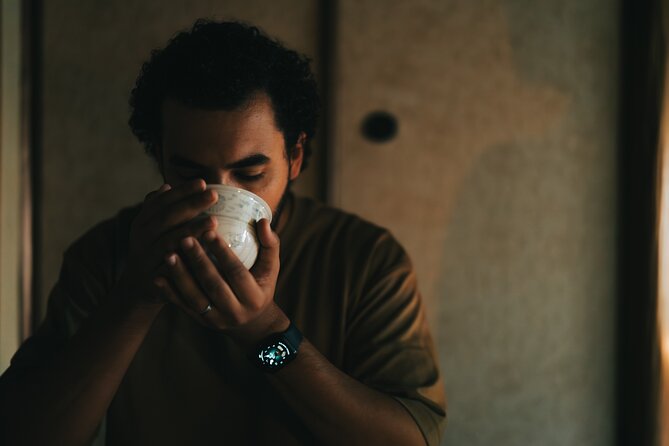
The maximum group size is eight people. That number is small enough for you to see the utensils and follow the host’s hands without standing at the back of a crowded room. It also leaves room for questions, especially when the host is explaining why a particular movement matters.
Small groups can change the mood of a cultural activity. You are less likely to feel like you are watching a stage show, and more likely to notice the ceremony as a shared room experience. Several bookings have included groups of six, with the whole group finding the setting easy to enjoy.
The tradeoff is that the atmosphere depends partly on the people booked for your session. A quiet group will suit the candlelit format best. If everyone wants a lively discussion, the ceremony may feel less meditative. Oboro’s design clearly favors calm observation over constant conversation.
The 50-minute length and the value at $45.98
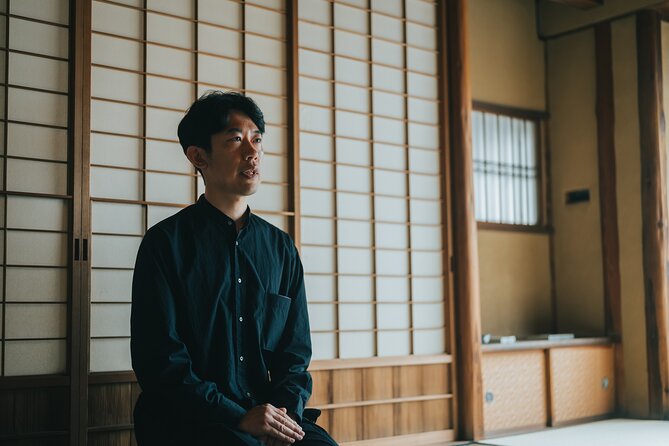
At $45.98 per person, this is not the cheapest way to taste matcha in Kyoto. You can find tea at a café for far less. The price makes more sense when you view it as a guided cultural experience in a historic house, with translation, sweets, a welcome tea, a prepared bowl of organic green tea, and a handmade candle included in the visit.
The short duration is part of the value. Fifty minutes is long enough to create a real pause in your day but short enough to fit between other Kyoto plans. You are not committing half a day to a formal lesson. This works well if your schedule includes temples, gardens, or museums and you want one quiet cultural activity rather than another large attraction.
I would not book it only for the amount of tea. You are paying for the setting, the host’s explanation, the careful demonstration, and the chance to take part in a ritual that is not normally shown in full at a restaurant. The handmade candle at the end is a small but thoughtful keepsake, tied to the experience’s theme of carrying calm into the rest of your day.
With 20 or more bookings reported in the previous month and a 4.9 rating from 19 ratings, demand appears steady. The available feedback is overwhelmingly positive, with a 100 percent recommendation figure. Those numbers do not guarantee that every session will suit every personality, but they support the idea that the basic format is working well.
The hosts make the cultural explanation accessible
The quality of the explanation is central here. Taku is praised for his English, clear instruction, and ability to keep the session interesting. Naoki is described as gentle and soft-spoken, while other hosts are noted for being friendly, patient, polite, and well informed about the ceremony.
That range matters because a tea ceremony can be difficult to understand if the host simply performs it without context. Translation helps you connect the practical steps to the larger ideas of respect, focus, gratitude, and presence. You are not left to guess why a utensil is cleaned in a certain way or why the host serves the tea with such care.
At the same time, translation does not turn this into an academic lecture. The activity remains visual and sensory. You learn by watching the movements, hearing short explanations, and tasting the result. I see this as a good choice for first-time visitors who want cultural context without a long classroom session.
The activity provider is Taku Okamoto. Since the specific host can vary, you should not assume that Taku will lead every scheduled session. The supplied details identify Taku and Naoki as hosts associated with the experience, and both fit the calm, explanatory style described.
Candlelight, stillness, and the real purpose of the ceremony
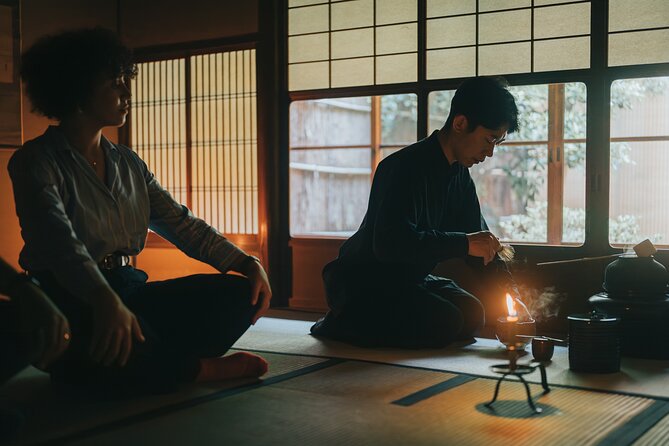
The most praised feature is the atmosphere. Words such as calm, peaceful, serene, reflective, and meditative come up repeatedly in the feedback. That consistency tells you what Oboro is trying to offer: not a flashy demonstration, but a quiet break in which ordinary actions receive full attention.
The handmade candles help create that mood. The lighting is soft, and the minimal room keeps your eyes on the host, the utensils, and the bowl. At the end, you receive a small handmade candle as a reminder of the stillness you found during the session.
This idea of mindfulness can sound abstract, but here it has a practical form. You sit still. You watch someone prepare tea. You hold a warm bowl. You taste slowly. For many people, that is enough to make the hour feel different from the rest of a packed Kyoto itinerary.
The peaceful tone is also the main reason I would not recommend this to everyone. If you want a dramatic performance, a large meal, or a chance to make matcha yourself throughout the session, the experience may feel too quiet. The emphasis is on observing and receiving the ritual, with the host doing the main preparation.
Practical details for planning your visit
Your mobile ticket is accepted, and confirmation is provided when you book. The activity is near public transportation, but no exact station or route is supplied, so check your map carefully before leaving. The address is in Kyoto’s Kamigyo Ward, and the return to the original meeting point simplifies the rest of your day.
Plan to arrive early. The instructions state that you cannot participate if you arrive more than 10 minutes after the start. This is stricter than a casual café reservation, and it makes sense because the ceremony is quiet and carefully timed. A late arrival would interrupt the room and leave you missing the opening tea or explanation.
The listed inclusions are coffee and/or tea and an English-speaking guide. Tips and gratuities are not included. The group can have no more than eight people.
Free cancellation is available if you cancel at least 24 hours before the start time. Changes or cancellations inside that window are not refunded or accepted. The activity may also be canceled if poor weather affects the session or if the minimum number of participants is not met. In those cases, you are offered another date or experience, or a full refund.
Who will get the most from Oboro
I would recommend this experience to you if you are visiting Kyoto for the first time and want a clear, gentle introduction to tea culture. It also suits anyone who has already seen major temples and needs a quieter activity that asks you to slow down.
Families can find it workable, especially because not everyone has to be a committed matcha drinker. Couples and small groups will appreciate the intimate room, while solo visitors can benefit from the English explanation and focused pace.
I would be more cautious if you have limited patience for sitting quietly, dislike the flavor or texture of green tea, or expect to prepare several bowls yourself. The host performs the main ceremonial work, and the experience is about observation, understanding, and tasting rather than hands-on instruction.
Should you book this Kyoto tea ceremony?
Book Oboro if you want a calm cultural pause, careful English guidance, and a setting that feels far removed from ordinary café service. The candlelit 100-year-old teahouse, small group, organic tea, sweets, and handmade candle give the $45.98 price a reasonable basis.
Skip it if you need a long, hands-on tea class or a full meal. For everyone else, especially first-time matcha drinkers, this is a thoughtful 50-minute introduction to the quiet art of Japanese tea. Arrive early, keep your expectations peaceful rather than theatrical, and let the ritual do the work.
FAQ
Where does the Oboro tea ceremony take place?
The meeting point is 237 Nakaogawachō, Kamigyo Ward, Kyoto, 602-0053, Japan. The activity ends back at the same meeting point.
How long does the tea ceremony last?
The experience lasts approximately 50 minutes.
How much does the experience cost?
The listed price is $45.98 per person.
Is an English-speaking guide included?
Yes. An English-speaking guide is included to translate and explain the ceremony.
How many people can join the activity?
The experience has a maximum group size of eight people.
What is included in the booking?
Coffee and/or tea and an English-speaking guide are included. A welcome tea, sweets, organic green tea, and a small handmade candle are also described as part of the experience.
Are tips and gratuities included?
No. Tips and gratuities are not included.
What happens if I arrive more than 10 minutes late?
You cannot participate if you arrive more than 10 minutes after the experience begins.
Can I cancel for a full refund?
Yes, if you cancel at least 24 hours before the scheduled start time. Cancellations or changes made less than 24 hours before the start are not refunded or accepted.
Just added around Kyoto
- Kyoto: Zen Meditation at a Private Temple with a Monk★ 5.0 · 25 reviews
- Kyoto: Gion Geisha District & Sake-in-Hand Walking Tour★ 5.0 · 37 reviews
- Private Pewter Sake Cup Experience with a Kyoto Artisan★ 5.0 · 31 reviews
- Your Private Vacation Photography Session In Kyoto★ 5.0 · 110 reviews
- Private Guided Traditional Buddhist Cooking in Japan★ 5.0 · 16 reviews
- Kyoto Wagashi(Japanese sweets) Cooking Class near Fushimiinari★ 5.0 · 60 reviews
- Traditional Japanese Music show & Experience Tour in Kyoto★ 5.0 · 57 reviews
- Kyoto:Family-Friendly Kimono & Yukata Experience at WARGO★ 5.0 · 147 reviews
Kyoto Tours, compared.


Fushimi Inari, Kinkakuji, Bamboo Grove 1 Day Bus Tour
Read our review →
Tea Ceremony in a Traditional Tea House in Kiyomizu
Read our review →
Kyoto Geisha Walking Tour: Gion District & Hidden Gems
Read our review →

Gion Magical Night Walking Tour with Geisha Trivia
Read our review →

Gion Geisha District Walking Tour – Stories of Geisha
Read our review →Browse the lists this tour appears in