
Reviewed · KYOTO TOURS
Osaka & Nara in 1-Day by Private Van with Local Expert Guide
Nara’s tame deer and Osaka’s neon-soaked streets make an odd but excellent pair. This private outing lets you move between them without figuring out train connections, station lockers, or city traffic. Guide Daiki drives, explains the temples and neighborhoods, and can adjust the day around your interests.
I like the door-to-door pickup and the freedom to choose one city or both. I also like the local angle: Daiki can point out back streets, suggest a ramen shop, help with photos, and explain how Osaka has changed. The main drawback is time. Six and a half to seven and a half hours is enough for highlights, not a slow, thorough visit to both cities.
Key points to know before booking
- Nara deer and Todai-ji fit naturally into the first part of the day, with about an hour at each main stop.
- Osaka adds castle views, neon districts, shopping arcades, and street food, giving you a fast taste of the city’s many sides.
- Daiki’s local knowledge is a major part of the experience, especially for food, side streets, customs, and photo stops.
- Pickup and drop-off can be arranged in Kyoto, Osaka, or Nara, and the two points do not need to be the same.
- The private vehicle saves time, but the route can still feel packed if you try to cover every listed stop.
- Todaiji admission and dinner are extra, while fuel, highway charges, parking, and the guide-driver are included.
One afternoon linking Nara’s deer with Osaka’s neon
The tour begins at 1 pm, a useful start time if you prefer a relaxed morning or have already spent the early hours in Kyoto. Daiki picks you up in Kyoto, Osaka, or Nara, then takes you through a private route shaped around your priorities.
You can visit both cities or concentrate on only one. That choice matters. Nara deserves quiet time around its temples and deer, while Osaka rewards an evening finish in Dotonbori, Shinsekai, or another entertainment district. Trying to cover every listed area gives you breadth, but not much lingering time.
The vehicle depends on your party size. A Nissan Serena serves groups of two to six, while a solo passenger may ride in a Mini Convertible. Both options provide air conditioning. The private setup is especially useful for anyone who tires easily, has limited time, or simply dislikes losing half a day to public transport and transfers.
The tour lasts roughly 6 hours 30 minutes to 7 hours 30 minutes. Traffic, the season, and your selected stops can change the pace. Small sites are not guaranteed, so treat the route as a flexible plan rather than a fixed checklist.
A few more Kyoto half-days to weigh up
- PERFECT KYOTO 1-Day Bus Tour
★ 5.0 · 13,518 reviews - Kyoto: Fushimi Inari, Kinkakuji, Bamboo Grove 1 Day Bus Tour
★ 4.8 · 4,316 reviews - 10 Must-see Spots in Kyoto One Day Private Tour (up to 7 people)
★ 5.0 · 1,108 reviews
Nara Park: close encounters with free-roaming deer
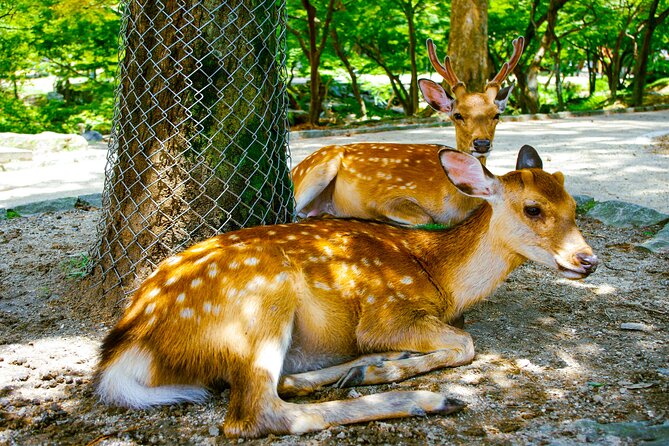
Nara Park is the emotional high point for many people. Deer wander through open parkland, temple grounds, roads, and wooded areas. They are accustomed to people and often come close, which makes the first encounter memorable even if you have seen plenty of animal parks elsewhere.
You have about an hour here. That is enough to see the deer, take photos, and get a feel for the park, but it is not enough for a long, unhurried walk through every temple path. Stay aware around the animals and follow local instructions, especially when feeding them.
The park can be busy, yet a private guide helps you use the time well. Daiki can explain the setting, point you toward the main sights, and help with photographs. The convenience of arriving by van also matters: you avoid making your own way from a station and can move on when the group is ready.
Nara is more than a quick animal stop. The park places the deer beside major Buddhist sites, old paths, gardens, and temple buildings. That contrast gives the first half of the tour its special character: nature, religion, and city history all occupy the same space.
Todai-ji: Japan’s giant Buddha in a giant wooden hall
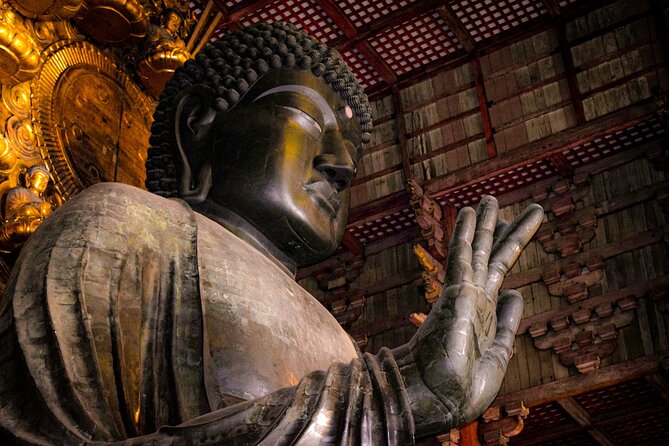
Todai-ji is the major cultural stop in Nara. The temple is famous for its enormous seated Buddha and its vast wooden hall. The building and statue give you an immediate sense of scale that photographs do not fully convey.
The planned visit lasts about an hour. Admission is not included and costs ¥800 per person. Bring this extra cost into your budget, especially if you are booking for several people.
Daiki’s role is important here. A large Buddhist temple can be hard to read without context, and the tour includes explanations of religion, customs, architecture, and the temple’s long place in Japanese life. You can look at the statue on your own, but a good explanation helps you understand why the building and Buddha matter.
The one-hour visit is sensible for a combined Nara and Osaka day. If Todai-ji is your main reason for coming to Nara, ask for more time and reduce the Osaka list. The route is customizable, so you do not have to accept every stop as written.
Yoshikien Garden and Nara’s quieter side
Yoshikien is a compact Japanese garden with several distinct areas, seasonal flowers, trees, and moss. The planned stop is only 15 minutes, so think of it as a quick pause rather than a full garden visit.
I like the inclusion because it changes the rhythm. After the open park and imposing temple, the garden offers a smaller, more delicate view of Japanese design. Seasonal conditions affect what you see, and the garden will not have the same look throughout the year.
The short visit also shows the tradeoff of the day. The tour can introduce you to several different settings, but each gets only a sample. If gardens are central to your interests, tell Daiki early. If you are more interested in Osaka food and nightlife, the brief stop may be just right.
The nearby bell tower, Todai-ji Shoro, receives about 10 minutes on the schedule. Its old bronze bell is presented as one of Japan’s great bells, and the stop adds another small piece of Nara’s religious setting without taking too much time from the main sights.
Same base, a completely different sort of day:
- Kyoto: Tea Ceremony in a Traditional Tea House in Kiyomizu
★ 4.9 · 3,519 reviews - Kyoto Geisha Walking Tour: Gion District & Hidden Gems
★ 4.7 · 3,273 reviews - Kyoto: Tea Ceremony Ju-An at Jotokuji Temple
★ 4.9 · 3,207 reviews - Kyoto: Gion Magical Night Walking Tour with Geisha Trivia
★ 4.9 · 2,393 reviews
Osaka Castle: a fast look at the city’s famous symbol
The Osaka Castle stop is scheduled for about 20 minutes. That makes it a photo and orientation stop, not a detailed castle visit.
The castle has been an important symbol of Osaka for more than four centuries, tied to samurai-era power and the story of the shogun who founded it. You can take in the exterior and surrounding grounds, with Daiki providing the background as you go.
A short stop works well if you want to see Osaka Castle but do not want to spend the afternoon inside a museum. If the castle interior is high on your list, speak up before the tour. The published timing does not leave room for a slow museum visit alongside Nara and the downtown districts.
The private van makes this kind of stop easy. You can arrive, take photos, hear the essential story, and continue without finding your way through a large station or retracing your route.
American Village and Osaka’s youth culture
American Village gives you a different Osaka from the castle and temples. The area is associated with younger Osaka, independent shops, nightlife, clubs, and live music venues. Its feel is compared with a mix of Tokyo’s Shibuya and Harajuku, though the point here is Osaka’s own local style.
This is one of the places where Daiki’s local perspective adds value. He can explain how the area fits into Osaka life and help you decide if you want to walk, take photos, shop, or move on.
The timing is flexible, and the area can be more useful in the evening than during a rushed daytime pass. If nightlife matters to you, ask to spend longer here. If you want food and classic Osaka signs, Dotonbori may deserve priority.
Dotonbori and Shinsaibashi after dark
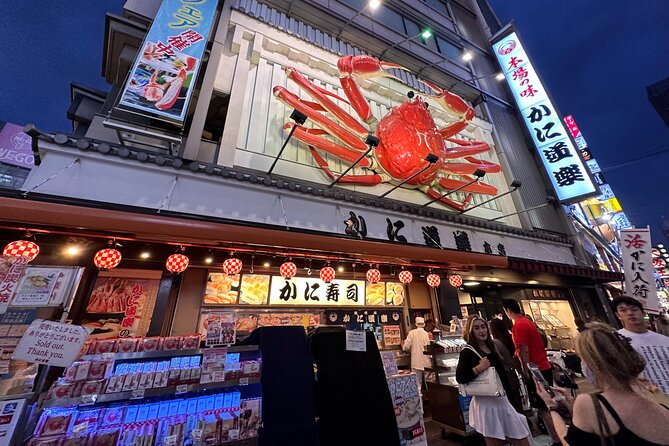
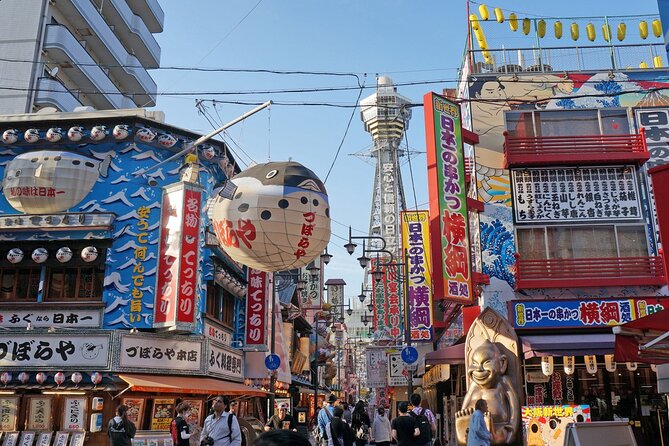
Dotonbori is Osaka’s famous entertainment district, packed with bright signs, riverside views, restaurants, and shopping. The running man sign is the area’s best-known visual marker, but the real pleasure comes from the concentration of people, food, lights, and noise along the canal.
The scheduled stop is about 15 minutes. That is enough for photographs and a quick look, but it is short for eating, shopping, and exploring the side streets. I would treat the listed time as a starting point and use your customization option to protect more time here if this is your first Osaka visit.
Nearby Shinsaibashisuji is a long shopping arcade. The tour allows only about five minutes at the Kita Shotengai portion, so you will get an impression of the crowds rather than a full shopping session. You may see the human flow compared with Shibuya Crossing, but the setting is different: this is a covered commercial street with shops stretching along the route.
The practical advantage of arriving with Daiki is that he can help you make choices. Osaka offers too many restaurants and snack stalls to sample at random in a short visit. He can suggest local food and help you find a place suited to your tastes.
Shinsekai and Tsutenkaku Hondori for street food
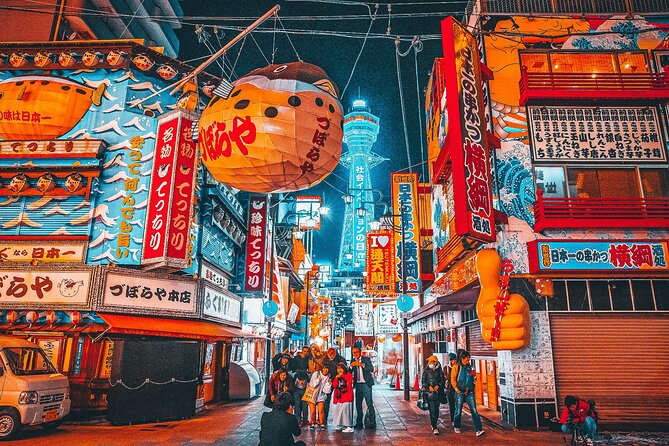
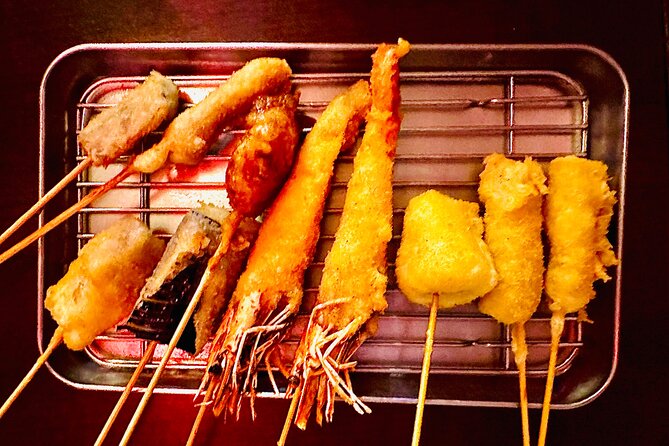
Tsutenkaku Hondori gives you a more old-fashioned Osaka mood. The street is linked with distinctive shops, friendly locals, bright billboards, and familiar Osaka dishes such as takoyaki, the hot octopus balls sold throughout the city.
The stop is planned for around 15 minutes. That is enough to see the signs and try a quick bite if the timing works, but do not expect a long meal here unless you choose to extend the visit.
The tour includes dinner time and a local restaurant guide, but the meal itself is not included. Several past outings ended at a ramen or other local restaurant selected with Daiki’s help. He has also ordered unfamiliar dishes for people who wanted to try something beyond the obvious choices.
That food guidance is one of the strongest reasons to choose a private tour. You still pay for dinner, but you avoid spending precious evening time comparing menus or settling for a place aimed only at tourists.
Electronics, anime, and Osaka’s less polished districts
The route can include an electronics and anime area described as Osaka’s answer to Akihabara. It is more concentrated than Tokyo’s famous district, making it useful for anyone interested in games, electronics, anime, or pop culture.
Another possible stop is Osaka’s red-light district. This is not a standard sightseeing area, and its adult businesses and unusual street scene may not suit every group. The description includes prostitutes in school-uniform costumes and traditional-looking houses, so you should tell the guide clearly if you want to avoid this part of the route.
The flexibility works both ways. You can request these districts if they fit your interests, or leave them out in favor of temples, food, shopping, or views. Families and visitors with limited time may prefer to skip the adult area. Adults curious about the city’s less polished side may find it an informative, if confronting, contrast with Dotonbori’s polished neon.
Why a private van can be worth the price
The advertised price is $300.61 per group of up to one, so check the final amount for your party before booking. The price includes a private air-conditioned vehicle, English-speaking guide and driver, fuel, highway fees, parking, and pickup and drop-off within Kyoto, Osaka, or Nara.
For a solo passenger, the per-person cost is high. For a small group sharing the vehicle and guide, the value improves quickly. You are paying for time, privacy, and a route that does not require you to master two city transport systems in one afternoon.
The ability to use different pickup and drop-off cities can also save money and hassle. For example, you can begin in Kyoto and finish in Osaka if that matches your plans, though the exact arrangement should be confirmed when you book.
The price does not cover lunch, dinner, customized extras, or the ¥800 Todaiji entry fee per person. The start time is 1 pm, so lunch is your responsibility before pickup. Dinner can be arranged as part of the day, but you pay the restaurant directly.
Who will get the most from this tour
I would choose this outing if you want to see both Nara and Osaka but have only one open day. It is also a good fit if you prefer a guide who can explain what you are seeing instead of simply dropping you at a landmark.
It suits couples, families, solo visitors, and small groups who value a private schedule. People with mobility concerns may appreciate the vehicle, although the temples, gardens, shopping streets, and park still involve walking. Service animals are allowed, and the activity is near public transportation if you need to continue independently afterward.
It is less suited to anyone who wants a slow temple day, a full castle visit, or hours of shopping. The route covers a lot, and the listed stop times are brief in several Osaka districts. You need to decide what matters most before the afternoon begins.
Communication with Daiki is another useful part of the experience. Direct questions before the day can help shape the route, and past outings included flexible hotel and cruise-port pickup arrangements. Confirm your preferred locations and any must-see stops ahead of time.
Should you book Osaka and Nara in one day?
Book it if your priority is efficient coverage with a personal guide. Nara Park, Todai-ji, Osaka Castle, Dotonbori, and local food create a strong first look at two very different places. Daiki’s local stories, safe driving, photo help, and restaurant advice add something a standard bus route cannot.
Choose a single-city version if you have already seen the main sights or want more time at each stop. For a first visit with only one free afternoon and evening, the combined tour makes good use of a difficult route.
The best approach is to identify two or three priorities and tell Daiki before pickup. Ask for longer at Todai-ji if Nara matters most, or protect more evening time in Dotonbori and Shinsekai if food and city life are your goal. With that small bit of planning, the tour offers a practical way to connect Nara’s calm temples with Osaka’s loud, colorful streets.
FAQ
Where can the tour pick me up and drop me off?
Pickup and drop-off are available anywhere in Kyoto, Osaka, or Nara cities. The pickup and drop-off points can be different.
What time does the tour start?
The listed start time is 1 pm.
How long does the experience last?
The tour lasts approximately 6 hours 30 minutes to 7 hours 30 minutes.
Can I visit only Osaka or only Nara?
Yes. You can choose a tour covering both cities or focus on just Osaka or just Nara.
What vehicle is used?
Groups of two to six use an air-conditioned Nissan Serena. A solo passenger may use a Mini Convertible.
Is admission to Todai-ji included?
No. Todaiji admission costs ¥800 per person and is paid separately.
Is dinner included?
Dinner time and local restaurant guidance are included, but you pay for the dinner yourself. Lunch is not included.
Can the itinerary change?
Yes. The itinerary can be adjusted to your interests, the season, and current conditions. Small listed sites are not guaranteed to be included.
Just added around Kyoto
- Kyoto: Zen Meditation at a Private Temple with a Monk★ 5.0 · 25 reviews
- Kyoto: Gion Geisha District & Sake-in-Hand Walking Tour★ 5.0 · 37 reviews
- Private Pewter Sake Cup Experience with a Kyoto Artisan★ 5.0 · 31 reviews
- Your Private Vacation Photography Session In Kyoto★ 5.0 · 110 reviews
- Private Guided Traditional Buddhist Cooking in Japan★ 5.0 · 16 reviews
- Kyoto Wagashi(Japanese sweets) Cooking Class near Fushimiinari★ 5.0 · 60 reviews
- Traditional Japanese Music show & Experience Tour in Kyoto★ 5.0 · 57 reviews
- Kyoto:Family-Friendly Kimono & Yukata Experience at WARGO★ 5.0 · 147 reviews
Kyoto Tours, compared.


Fushimi Inari, Kinkakuji, Bamboo Grove 1 Day Bus Tour
Read our review →
Tea Ceremony in a Traditional Tea House in Kiyomizu
Read our review →
Kyoto Geisha Walking Tour: Gion District & Hidden Gems
Read our review →

Gion Magical Night Walking Tour with Geisha Trivia
Read our review →

Gion Geisha District Walking Tour – Stories of Geisha
Read our review →Browse the lists this tour appears in