
Reviewed · KYOTO TOURS
Kyoto Gion Private Tour with a Local Guide – Geisha District
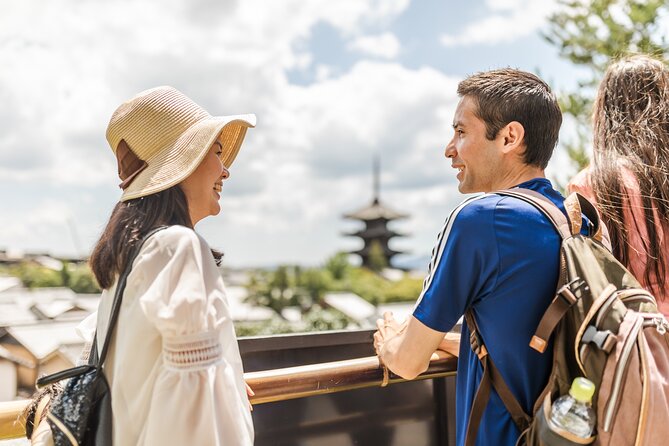
Gion is best understood on foot, one quiet lane at a time. This private tour takes you past wooden machiya houses, old teahouses, shrine gates, willow-lined streets, and the narrow passageways of Pontocho. The most important point is simple: you are learning about geiko and maiko culture in the district where it still exists, not watching a staged street show.
I like the one-to-one attention and the chance to shape the walk around your interests. I also like the route’s mix of places: Yasaka Shrine gives you spiritual context, Shinbashi Dori supplies classic Kyoto scenery, and Pontocho shows how the old entertainment quarter changes after dark. Guides including Emi, Brenda, Ai, and Milo have been praised for clear explanations and thoughtful adjustments.
The main caution is the expectation of seeing a geisha. That is never promised, and even local people may not encounter one. Gion can also be crowded, and the quality depends heavily on your assigned guide. A few bookings went badly because the guide did not arrive, so confirm the meeting details before setting out.
Key points to know before booking
- A private route through Gion: Your group has the guide to itself, with no strangers shaping the pace or questions.
- Geiko sightings are not guaranteed: The walk explains the district and its traditions, but it is not a geisha-spotting tour.
- Five strong locations: Gion, the area’s best-known traditional street, Yasaka Shrine, Shinbashi Dori, and Pontocho Alley form the main route.
- Flexible planning: A pre-tour questionnaire lets you request history, food, photography, local customs, or less familiar corners.
- Mostly walking: Public transport or a taxi may be used between sites, but those costs are extra.
- Good value for a small group: At $101.57 per person, the price makes more sense when shared by several people who want a custom introduction to Kyoto.
Why Gion makes a good first Kyoto walk
Kyoto can feel hard to read at street level. A wooden house may be a private home, a teahouse, a restaurant, or a business closed to casual visitors. A guide helps you notice the small signals without turning the neighborhood into a museum display.
Gion is one of Kyoto’s most traditional districts, known for cobbled lanes, paper lanterns, wooden facades, and its ties to geiko and maiko culture. The value of this walk is not simply seeing old buildings. You get an explanation of how the entertainment quarter works, why certain streets look as they do, and how to behave around working performers and private businesses.
I would book this early in your Kyoto stay. The guide can help you get your bearings, explain customs that may otherwise seem mysterious, and point out areas where you might return for dinner or another walk. Since the experience is booked around 75 days in advance on average, it is sensible to reserve ahead if your dates are fixed.
The private format matters here. You can ask what you really want to know, from the difference between a geiko and a maiko to the role of a teahouse, without waiting for a group to finish its questions. Families and small groups also benefit because the guide can adjust the pace and keep everyone involved.
More geisha-district evenings:
- Kyoto Geisha Walking Tour: Gion District & Hidden Gems
★ 4.7 · 3,273 reviews - Kyoto: Gion Magical Night Walking Tour with Geisha Trivia
★ 4.9 · 2,393 reviews - Kyoto: Gion Geisha District Walking Tour – Stories of Geisha
★ 4.7 · 2,187 reviews
Gion’s lantern-lit lanes and traditional houses
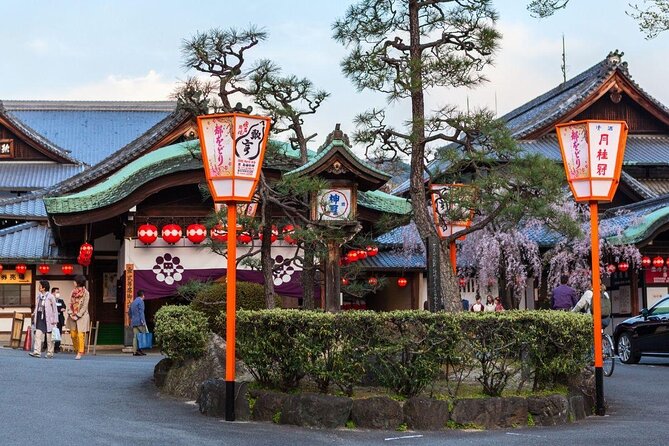
The walk begins in Gion, where narrow streets and traditional wooden machiya houses give the district its familiar Kyoto look. Your guide will point out teahouses and explain the role of the old entertainment area, including the customs that make it different from an ordinary shopping or restaurant quarter.
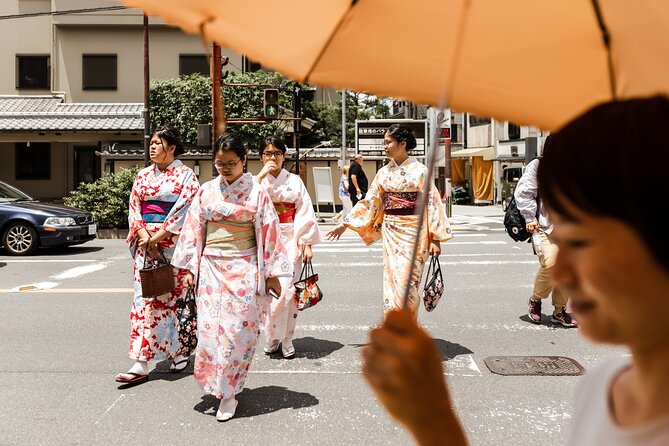
This is the part of the tour most closely linked to geiko and maiko culture. You may see a maiko or geiko moving between appointments, and one booking did include a maiko sighting, but you should treat that as luck rather than a feature you can purchase. The performers are working, not posing for photographs, so a respectful distance is essential.
I would use this section to ask direct questions. The questionnaire sent after booking gives you a chance to state your interests, but your guide can also respond to what catches your attention on the street. If you care about local etiquette, say so early. If you want photography advice, mention that too. One guide, Alexis, was especially appreciated for photography help, while other guides were praised for making the cultural details easy to follow.
Crowds are the drawback. Gion is famous, and its most recognizable lanes may be busy. If you want a quiet, reflective walk, ask about a daytime route or a less crowded starting time. One booking found the evening atmosphere less appealing than a daytime visit, so timing is not a minor detail.
The district’s best-known traditional street
The route includes Gion’s most famous street, lined with old ochaya, or teahouses, and well-preserved Edo-period architecture. The exact street name is not specified in the booking details, so confirm the final route with your host if a particular lane matters to you.
This stop is useful because the buildings alone do not tell the full story. Your guide can explain visual details and local markers that are easy to miss, then offer advice on authentic places to eat or continue exploring. Brenda, Ai, Milo, and several other hosts were praised for shaping the walk around personal interests rather than delivering a fixed speech.
You should not expect to enter the teahouses. The tour takes you past them and explains their place in Kyoto’s culture. That distinction protects the neighborhood’s privacy and keeps the experience realistic. If you want an indoor cultural performance, you may need a separate ticket. Attractions, food, and drinks are not included.
This is also a good point to discuss dinner. One guide helped make a restaurant booking, and another showed a group small places to eat in the area. Still, recommendations are not a substitute for included dining, and one poor experience with a suggested restaurant shows why you should ask for several options and explain your budget and food preferences.
Yasaka Shrine and 1,300 years of ritual
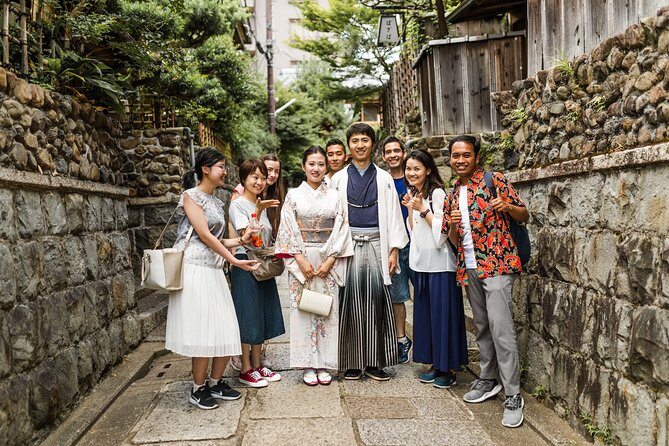
Yasaka Shrine sits between Gion and Higashiyama and has a history stretching back more than 1,300 years. It is central to major Kyoto festivals, so it adds a religious and civic layer to a walk that might otherwise focus only on entertainment culture.
I like this change of subject. Gion is often reduced to lanterns and geisha imagery, but Yasaka Shrine reminds you that Kyoto is also a living religious city. Your host can explain the shrine’s role and help you understand how Shinto spaces fit into everyday life.
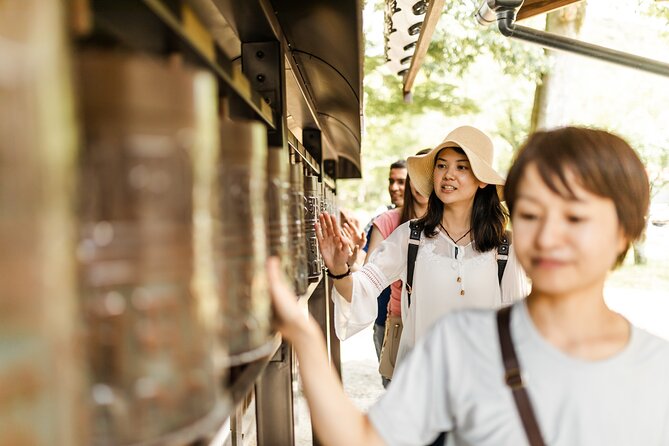
Allow time for questions here. A private guide can explain what you are seeing at your pace, instead of rushing through the gate, grounds, and ritual details. The walking route may also include other temples, shrines, gardens, or local corners if those match your questionnaire, but the exact additions depend on the plan you make with your host.
Keep in mind that admission tickets are not included. The supplied details do not list a separate fee for Yasaka Shrine, so ask your guide if any part of your custom route requires payment. You should also expect to walk through active sacred spaces with care. Dress and behavior should show respect, and photography rules may vary by location.
A few more Kyoto half-days to weigh up
- PERFECT KYOTO 1-Day Bus Tour
★ 5.0 · 13,518 reviews - Kyoto: Fushimi Inari, Kinkakuji, Bamboo Grove 1 Day Bus Tour
★ 4.8 · 4,316 reviews - Kyoto: Tea Ceremony in a Traditional Tea House in Kiyomizu
★ 4.9 · 3,519 reviews - Kyoto: Tea Ceremony Ju-An at Jotokuji Temple
★ 4.9 · 3,207 reviews
Shinbashi Dori and Tatsumi Bridge
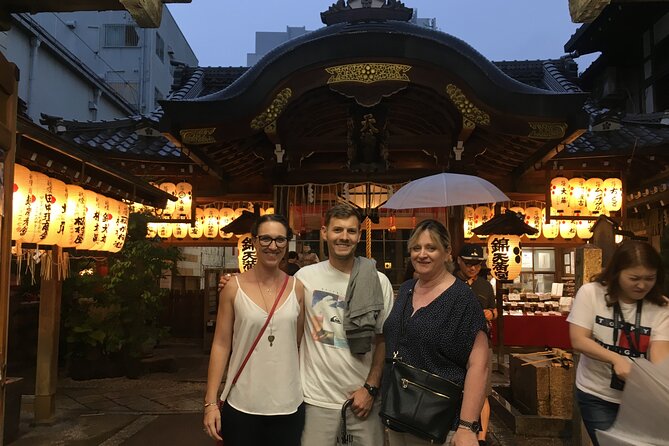
Shinbashi Dori is one of Kyoto’s prettiest streets, framed by willow trees and traditional facades. It offers the kind of scene many people picture when they think of old Kyoto, but the setting works best when you pause long enough to notice how the street, water, trees, and buildings fit together.
Tatsumi Bridge is a well-known photo stop with local importance. Your host can explain why it matters instead of treating it as a quick place to snap a picture and leave. If photography is high on your list, tell the guide before the walk. The private setup allows more time for pictures than a large group tour might permit, though the guide cannot control crowds or weather.
This section may be especially good in the morning, when the streets can feel calmer. The tour offers flexible start times, so you can request a time that suits your plans. Evening has its own appeal because lanterns and nightlife become part of the scene, but the experience is not automatically better after dark. One booking specifically preferred a daytime walk.
The route is not strenuous in the sense of a mountain hike, but it is a walking tour over city streets. Wear comfortable shoes and leave room in your schedule. If you have mobility concerns, discuss them with the host before the day of the tour. Most people can take part, and service animals are allowed.
Pontocho Alley after the old teahouses
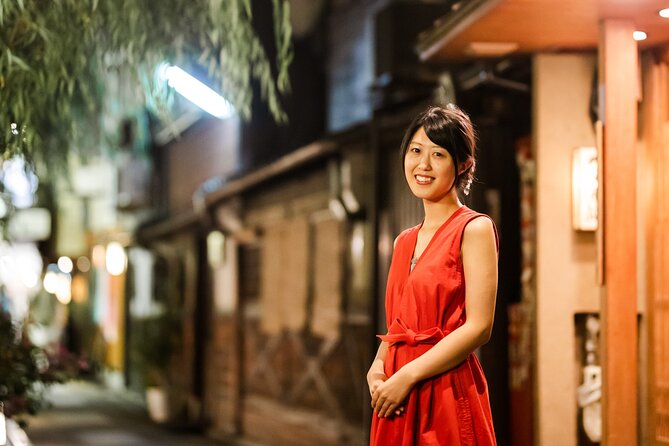
The tour ends in Pontocho Alley, a narrow passage known for traditional Kyoto character, intimate bars, and restaurants. It is one of Japan’s oldest nightlife areas, and it gives the walk a different mood from the quieter shrine grounds and willow-lined lanes.
Pontocho is a good final stop because it turns the tour into practical evening advice. Your host can explain the character of the alley, point out dining possibilities, and help you decide where to continue. Food and drinks are not included, so consider this a place to gather ideas rather than a built-in meal.
The official end point is back at the meeting point, Matsumoto Kiyoshi Kyoto Shijo Kawaramachi at 103-2 Hashimotocho. A customized plan may finish differently if you have another booking nearby. One group ended at the Gion Corner Geisha Show, and the guide helped them connect the walking tour with that reservation, but you should arrange and pay for any show separately.
Pontocho also has the same privacy issue as Gion. Bars and restaurants may be small, busy, or aimed at established customers. Listen to your guide’s advice, but ask about price and reservation needs before choosing a place. A personal recommendation can be useful, but it is still your decision.
What the private format is really worth
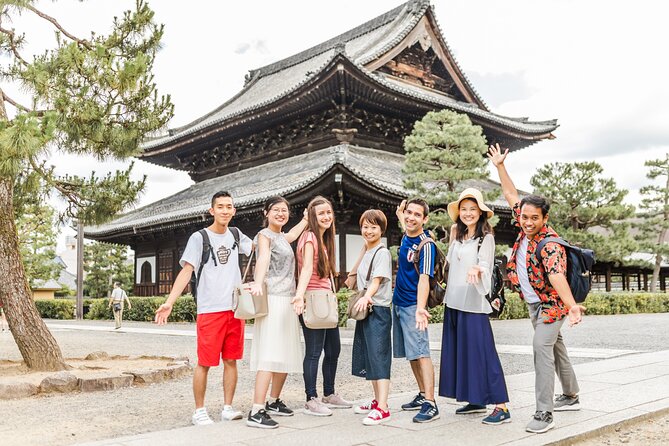
The price is listed at $101.57 per person. That is not a bargain for a short walk if you are alone and only want to see the main streets. For a family or small group, the calculation improves because the same guide and custom planning serve everyone.
I think the strongest value comes from the preparation. After booking, you receive a short questionnaire covering interests, preferences, and must-see places. You can then communicate directly with the host about the route and local suggestions. That is more useful than a generic walk if you want a particular balance of culture, food, history, photography, or local life.
The duration is about two to three hours. That is enough time for the main Gion sights, Yasaka Shrine, Shinbashi Dori, Tatsumi Bridge, and Pontocho, but the route may feel quick if you stop often for pictures or detailed questions. A flexible duration is offered, so confirm how long your booking includes and what an extension would cost.
The tour is private, but it is not a private vehicle tour. Walking is the main method, and public transport or local taxis may be used between locations at an added cost. Pickup is offered in some cases, including a guide meeting one person at a hotel, but the stated meeting point is the Matsumoto Kiyoshi shop. Confirm pickup rather than assuming it.
The guide makes or breaks the experience
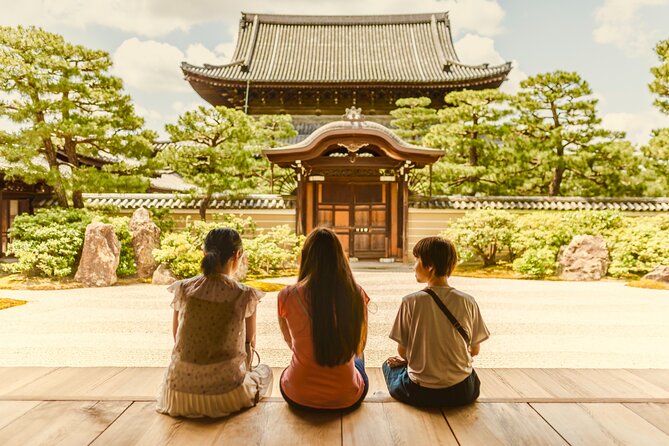
The strongest part of this tour is the person leading it. Emi was praised for impressive explanations, Olan for a relaxed and professional manner, and Nisa for keeping an entire family interested. Milo was especially effective at adapting the route for a group of five, while Toga, Kenta, Brenda, Ai, Ada, Michael, Kokoro, Tess, Kenya, and Alexis were all associated with useful personal attention in different ways.
That variety is encouraging, but it also reveals the risk. A private tour does not guarantee the same level of skill from every host. One booking described a pleasant guide who provided little specific information, and another left after an hour because the walk did not match the promised focus. Two separate bookings reported that the guide did not arrive, with no timely message.
I would protect yourself in three ways. Complete the questionnaire in detail, send a direct message confirming the meeting point and start time, and state plainly that you want cultural background rather than a simple stroll. If geiko culture is your main reason for booking, say that while understanding that a sighting cannot be promised.
The overall rating is 4.3 from 43 reviews, which fits the pattern: many excellent guide-led experiences, plus a small but serious concern about communication and consistency. If the company confirms promptly and your host answers specific questions before the tour, I would feel more comfortable proceeding.
Who should book this Gion walk?
I would choose this tour for a first visit to Kyoto, especially if you want context instead of a checklist of landmarks. It also suits families, couples, and small groups who prefer to set their own pace and ask plenty of questions.
It is a good match for you if you want:
- A private introduction to Gion and Pontocho
- Explanations of geiko, maiko, teahouses, shrines, and local customs
- Help finding places to eat after the walk
- A route adjusted to photography, food, history, or cultural interests
- A flexible start time and direct contact with a local host
I would hesitate if your sole goal is a guaranteed geisha encounter. No walking tour can promise that here, and expecting one may leave you disappointed. I would also compare other options if you want entry to a performance, a meal, or a vehicle, since those are not included.
Should you book it?
Book it if a private guide’s interpretation is worth more to you than a fixed sightseeing route. At $101.57 per person, the cost is easiest to justify for a small group that will use the questionnaire, ask questions, and make the most of the guide’s local advice.
Before paying, confirm the guide, meeting point, duration, pickup details, and your main interests. Ask for a daytime start if crowds or photography concern you, and treat any geiko sighting as a fortunate extra. With the right host, this can be a thoughtful introduction to Kyoto’s old entertainment quarter. Without clear communication, it risks becoming an expensive walk with too little substance.
Free cancellation is available up to 24 hours before the start time for a full refund. Changes or cancellations inside that window are not accepted, and the cut-off follows local Kyoto time.
FAQ
Where does the Kyoto Gion private tour start?
The stated meeting point is Matsumoto Kiyoshi Kyoto Shijo Kawaramachi, 103-2 Hashimotocho, Shimogyo Ward, Kyoto, 600-8011, Japan.
Where does the tour end?
The activity is scheduled to end back at the meeting point. A customized arrangement may differ, so confirm with your host if you need to finish near another attraction or reservation.
How long does the tour last?
The walking experience lasts approximately two to three hours. Flexible durations are available when booking, so confirm the length of your selected option.
Is transportation included?
No private vehicle is included. The tour is mainly on foot. Public transport or local taxis may be used between sites, with those costs discussed separately with your host.
Are food and drinks included?
No. Food and drinks are not included, and any restaurant costs are your responsibility.
Are attraction tickets included?
No attraction tickets are included. Ask your host if your preferred custom route involves an admission charge.
Will I definitely see a geisha or maiko?
No. The tour explains Gion’s geiko and maiko culture, but sightings are not guaranteed. A maiko sighting has occurred during a tour, but it should be treated as luck.
Can I cancel for a full refund?
Yes. You can cancel at least 24 hours before the experience start time for a full refund. Cancellations or changes made less than 24 hours before the start time are not accepted for a refund.
Just added around Kyoto
- Kyoto: Zen Meditation at a Private Temple with a Monk★ 5.0 · 25 reviews
- Kyoto: Gion Geisha District & Sake-in-Hand Walking Tour★ 5.0 · 37 reviews
- Private Pewter Sake Cup Experience with a Kyoto Artisan★ 5.0 · 31 reviews
- Your Private Vacation Photography Session In Kyoto★ 5.0 · 110 reviews
- Private Guided Traditional Buddhist Cooking in Japan★ 5.0 · 16 reviews
- Kyoto Wagashi(Japanese sweets) Cooking Class near Fushimiinari★ 5.0 · 60 reviews
- Traditional Japanese Music show & Experience Tour in Kyoto★ 5.0 · 57 reviews
- Kyoto:Family-Friendly Kimono & Yukata Experience at WARGO★ 5.0 · 147 reviews
Kyoto Tours, compared.


Fushimi Inari, Kinkakuji, Bamboo Grove 1 Day Bus Tour
Read our review →
Tea Ceremony in a Traditional Tea House in Kiyomizu
Read our review →
Kyoto Geisha Walking Tour: Gion District & Hidden Gems
Read our review →

Gion Magical Night Walking Tour with Geisha Trivia
Read our review →

Gion Geisha District Walking Tour – Stories of Geisha
Read our review →Browse the lists this tour appears in