
Reviewed · KYOTO TOURS
Authentic Kyoto Gion Geisha/Maiko Cultural Experience
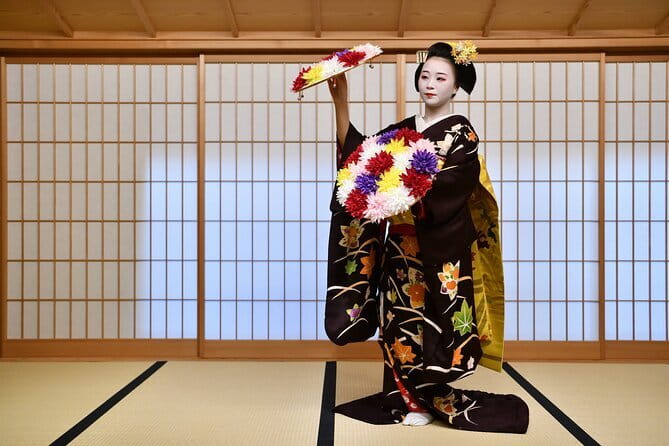
A maiko or geiko performance inside a Gion teahouse is the heart of this experience. You watch traditional dance and music, sip matcha, and ask questions through an English-speaking guide who explains what you are seeing. The small group, capped at 10, keeps the visit personal rather than turning it into a stage show.
I like the short walk along Hanamikoji Street, which gives you useful context before entering the teahouse. I also like the mix of performance, tea, sweets, conversation, and photos. The main consideration is the price, $155.22 per person, which is a serious spend for 90 minutes. You also cannot choose in advance between a maiko and a geiko.
Key points
- A real Gion teahouse setting: Sit in a carefully designed tatami room for the cultural program.
- Live traditional performance: Watch dance and music by a maiko or geiko, depending on the day.
- Direct questions are welcome: Your English-speaking guide translates and adds context.
- Small group of 10: The format allows closer conversation and better photo opportunities.
- Matcha and Japanese sweets: Tea, a flour-based sweet, dessert, and matcha ice cream may be served.
- Bring clean socks: Shoes come off, and wet feet, clothing, or bags must be dried before entering.
Why this Gion meeting feels different
Many people arrive in Kyoto curious about geisha culture but unsure how to encounter it with respect. This experience gives you a structured way in. You are not simply watching someone pass along a street or trying to guess what happens behind a closed teahouse door. You enter a tatami room, receive an explanation of proper behavior, watch a formal performance, and have time for questions.
The terms matter. A maiko is an apprentice geisha, while a geiko is an established geisha, particularly in Kyoto. The person present may be either one, and the choice depends on the day. That uncertainty is worth noting, but it also means the visit feels less like a fixed theater program.
The guide is central to the experience. English-speaking guides named Yuko, Yoshi, Youko, Tomato-san, and Tomonika have led sessions on different dates. The guide does more than translate words. You get help understanding the gestures, instruments, customs, and social rules that might otherwise pass too quickly.
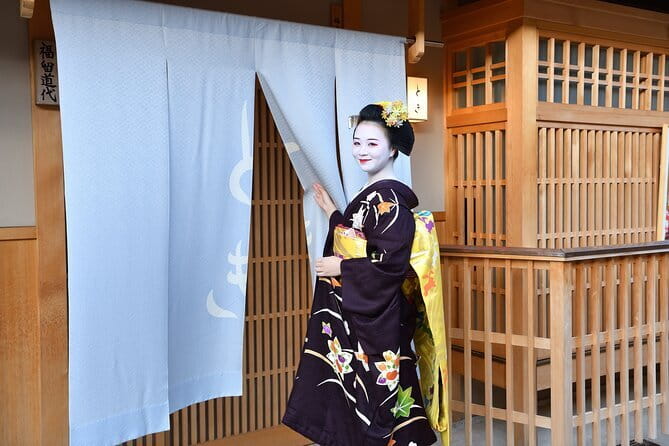
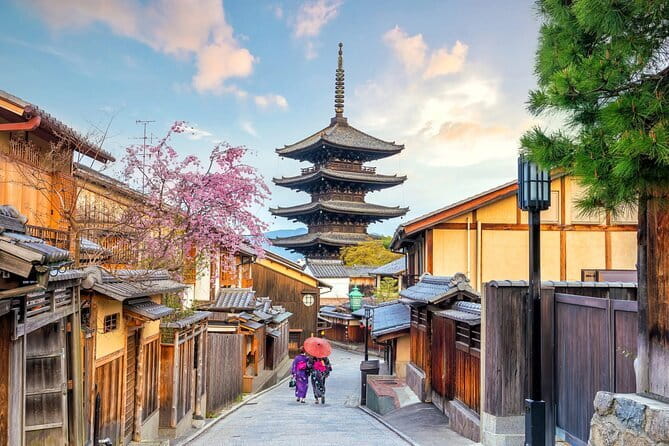
I especially like that the guide begins before the teahouse. A walk from Gion-Shijo Station through Gion helps you notice the traditional streets and the role Hanamikoji Street plays in the district. It is a short introduction, not a full neighborhood tour, but it gives the performance a clearer setting.
More geisha-district evenings:
- Kyoto Geisha Walking Tour: Gion District & Hidden Gems
★ 4.7 · 3,273 reviews - Kyoto: Gion Magical Night Walking Tour with Geisha Trivia
★ 4.9 · 2,393 reviews - Kyoto: Gion Geisha District Walking Tour – Stories of Geisha
★ 4.7 · 2,187 reviews
From Gion-Shijo Station to Hanamikoji Street
Meet at Gion-Shijo Station, at 1 Chome Miyagawasuji in Higashiyama Ward. From there, the guide leads you toward the teahouse, with about 15 minutes of walking through Gion.
This opening walk is useful because Gion can feel mysterious if you only see it as a collection of pretty lanes and wooden facades. Your guide points out details tied to local history and culture, including the atmosphere around Hanamikoji Street. You begin to understand that the teahouse visit belongs to a working cultural neighborhood, not a purpose-built tourist attraction.
Do not expect a long sightseeing walk. The route is mainly a transition from the station to the teahouse, and the walk is short. That suits you if you want to save your energy for the main event or have a busy Kyoto schedule.
The route also means you should plan around the meeting time. The experience lasts about an hour and a half, but the schedule is not simply 90 minutes seated indoors. Allow time to find Gion-Shijo Station and arrive ready for the group departure.
Entering the tatami room
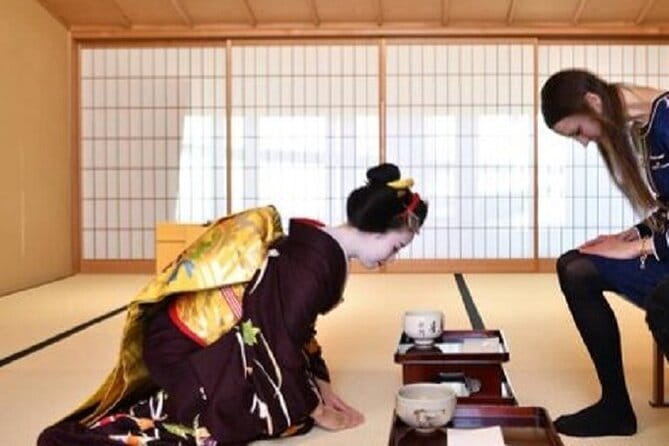
The teahouse portion lasts about an hour. You sit in a beautifully designed tatami room, where the setting itself helps explain Japanese hospitality. The room is clean and formal, and the atmosphere calls for a little care from everyone entering.
You must wear socks. Since shoes are removed, this is not a minor detail. On a rainy day, dry your feet, clothing, and bag with a towel before stepping onto the tatami. The request protects the room and helps preserve the calm, orderly setting.
You will also receive guidance on proper behavior. That matters because many visitors know little about teahouse etiquette, and it is easy to worry about making a mistake. The instructions make the visit more comfortable and help you approach the performers as artists and hosts rather than as photo props.
The group limit is 10 people. That is small enough for the guide to manage questions and translation without losing the room’s quiet mood. It also gives you a better chance to see the dance clearly and take photos without a large crowd between you and the performance.
Dance, music, and the art of attention
The traditional dance is the main reason to book this experience. Maiko and geiko dance with controlled movements, careful posture, and a strong sense of timing. The performance is not designed as a loud, fast entertainment show. You need to watch closely.
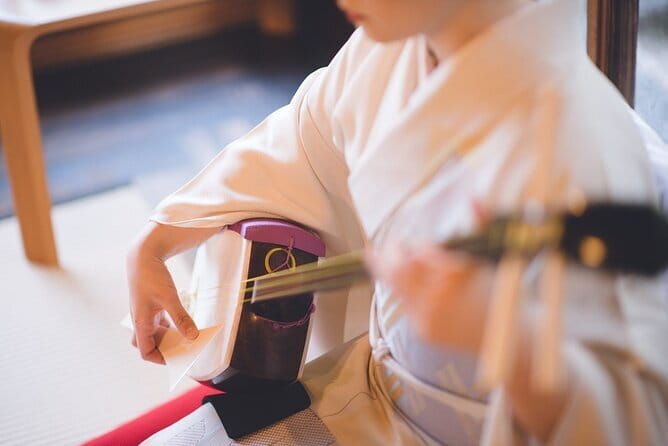
Music is part of the program as well. Depending on the day, the owner, a former geiko, may play an instrument. That detail adds another layer because you are seeing not only the dancer but also a connection to the teahouse tradition and the people who have worked within it.
The program can include two dances, though the exact presentation may vary. Your guide explains what is happening and translates comments or questions. Without that help, you might appreciate the beauty but miss the meaning behind the movements and the importance of the music.
This is also where expectations matter. The experience offers a glimpse into geisha culture, not a complete course on its history or a private evening of entertainment. The performance is short, and the program follows a set format. Its strength is the combination of access and explanation.
A few more Kyoto half-days to weigh up
- PERFECT KYOTO 1-Day Bus Tour
★ 5.0 · 13,518 reviews - Kyoto: Fushimi Inari, Kinkakuji, Bamboo Grove 1 Day Bus Tour
★ 4.8 · 4,316 reviews - Kyoto: Tea Ceremony in a Traditional Tea House in Kiyomizu
★ 4.9 · 3,519 reviews - Kyoto: Tea Ceremony Ju-An at Jotokuji Temple
★ 4.9 · 3,207 reviews
Conversation with a maiko or geiko
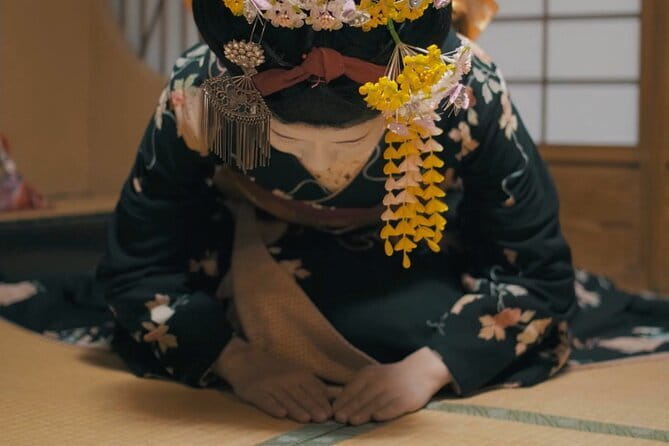
After or around the performance, you have time for conversation with the maiko or geiko and the teahouse owner. This is one of the most valuable parts for many visitors because you can ask direct questions rather than rely on popular images of geisha life.
The guide translates for you, so you do not need Japanese language skills. A good guide also keeps the exchange moving and makes sure the questions are clear and respectful. Yoshi, for example, has been praised for sharing personal insight into growing up in Kyoto and the traditions connected with geisha culture. Youko has also been noted for pointing out details in Gion that visitors could easily miss.
Do remember that the performer cannot be selected. You may meet a maiko, a geiko, or both, depending on the day’s arrangement. If your heart is set on one particular type, this is a real limitation. If you are open to learning from the person who is present, the format works well.
The conversation helps correct the distance between the public image of geisha and the people themselves. You can ask about the work, the performance, and the customs you have just seen. The guide’s translation is not just a convenience. It is what makes the exchange meaningful for English speakers.
Matcha, sweets, and a quiet tea moment
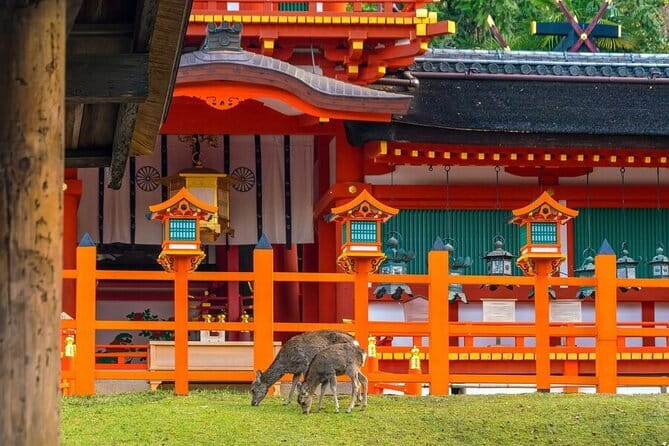
The tea portion gives the program a slower rhythm. You receive matcha as part of the experience, along with Japanese sweets. Details can include a flour-based sweet, tea, dessert, and matcha ice cream.
Do not confuse this with a long formal tea ceremony lesson. The information provided describes a ceremonial matcha experience within the teahouse visit. You will learn through watching and taking part, but the main focus remains the meeting, performance, and cultural explanation.
I like this combination because it connects what you see with what you do. The dance shows one form of discipline and presentation. Preparing and receiving tea shows another. Even a short tea service can make you notice manners, pacing, and the care given to small movements.
The sweets and ice cream also soften what might otherwise feel like a very formal hour. They are a pleasant part of the program, but I would not book the experience for food. The cultural access is what accounts for most of the price.
Photos without turning the visit into a spectacle
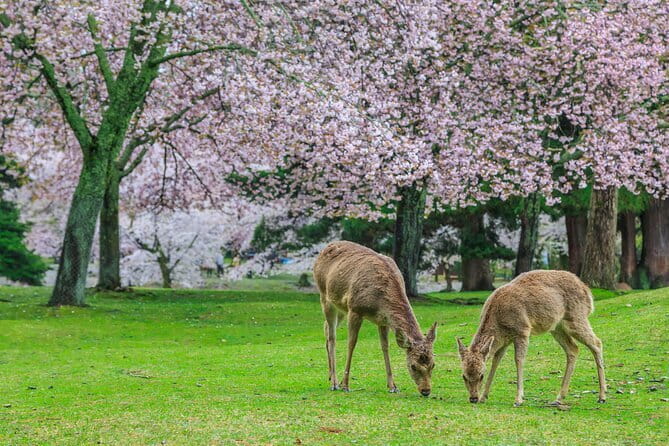
You are allowed to take photos during the experience, including photos of the maiko or geiko and photos with her. That makes this a good choice if you want a lasting record of the visit.
Still, the setting asks for restraint. Listen to the guide’s instructions and follow the teahouse rules. The best photos will come from paying attention first, then taking pictures at the proper time.
The small group helps here. With no more than 10 people, the room should be easier to manage than a large public performance. You have a better chance of getting a clear view, and the photo session can happen without the whole visit becoming a scramble.
The experience is especially appealing for a birthday or special Japan trip. One person described the chance to sit with a maiko and receive tea and sweets as a long-held dream. That kind of occasion can justify a higher price, provided you value personal contact more than a long sightseeing tour.
Is $155.22 a fair price?
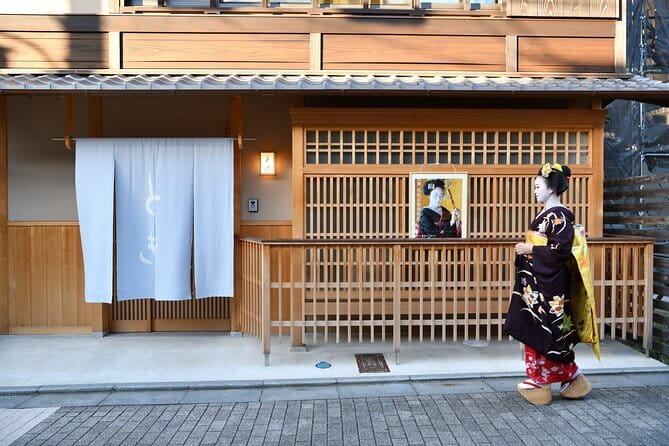
At $155.22 per person, this is not a budget activity. You are paying for access to a small-group teahouse setting, live traditional performance, English translation, tea service, sweets, and a guided introduction to Gion.
If you priced it only by duration, the cost might feel high. The visit lasts about 90 minutes, including the walk, and roughly one hour is spent at the teahouse. But ordinary sightseeing does not usually place you in this setting with a maiko or geiko, nor does it provide a direct question-and-answer session.
I see the value in the intimacy. A large show might give you more performance time, but not the same chance to ask questions or receive explanations tailored to an English-speaking group. The maximum of 10 is a meaningful part of what you are buying.
The value is weaker if you mainly want a cheap cultural show, a full neighborhood tour, or a long tea lesson. You should book this for access and context, not for quantity. It is a special-interest experience, and its price makes the most sense if geisha culture is high on your Kyoto list.
Who should book this experience?
I would point this toward adults and older children who are genuinely interested in Japanese arts, Kyoto customs, and the human stories behind geisha culture. It suits first-time visitors who want a respectful introduction and repeat visitors looking for something beyond temples and gardens.
It is also a strong fit for anyone who values questions and conversation. The direct exchange, made possible by the guide’s translation, is more important here than simply watching a dance.
The format may not suit very young children. Children aged 0 to 5 cannot join. Anyone under 18 needs written parental permission, and anyone under 15, or not yet enrolled in middle school, must attend with a parent or guardian.
You should also be comfortable sitting in a tatami room and following house rules. Wear socks, keep wet items dry, and expect a quiet, attentive setting rather than a casual entertainment venue.
Practical details before you reserve
The meeting point is Gion-Shijo Station, and the tour ends at the teahouse in Gion, in Gionmachi Minamigawa. Since the end point is different from the start, do not assume you will return to the station with the guide.
Confirmation arrives within 48 hours of booking, subject to availability. The minimum is two people. If that minimum is not reached 10 days before the scheduled date, the experience may be canceled for that date.
Book ahead if the timing matters. It is commonly reserved about 17 days before the date, which suggests that waiting until the last minute may limit your choices. Free cancellation is available until 24 hours before the start time. Within 24 hours, cancellations and changes are not accepted, and the payment is not refunded.
The experience is offered with a mobile ticket. Most people can participate, but the supplied details do not promise special arrangements for every mobility need, so ask the provider before booking if you have specific concerns.
Should you book the Gion maiko experience?
Book it if you want a personal, well-explained meeting with Kyoto’s geisha tradition and are willing to pay for a small group. The strongest elements are the live dance and music, the chance to ask questions through a skilled English-speaking guide, and the calm teahouse setting.
Skip it if $155.22 feels too high for 90 minutes, or if you want a longer tour with more general sightseeing. You also need to accept that the performer is assigned rather than chosen.
For the right visitor, this can be one of Kyoto’s most memorable cultural appointments. Wear socks, arrive ready to listen, and treat the setting with care. That is how you get the most from a short but unusually personal hour in Gion.
FAQ
Where does the experience begin?
It begins at Gion-Shijo Station, at 1 Chome Miyagawasuji in Kyoto’s Higashiyama Ward.
Where does the experience end?
The tour ends at the teahouse in Gion, in Gionmachi Minamigawa.
How long does the experience last?
The experience lasts approximately 1 hour and 30 minutes. About 15 minutes is spent walking from Gion-Shijo Station, followed by about one hour at the teahouse.
How many people can join?
The group has a maximum of 10 participants.
Will I meet a maiko or a geiko?
You will be accompanied by either a maiko or a geiko, along with a tea master depending on the day. You cannot select which one in advance.
Is an English-speaking guide included?
Yes. An English-speaking guide leads the walk, provides cultural context, and translates during the teahouse experience.
Is tea included?
Yes. The teahouse experience includes a matcha tea experience. Sweets, dessert, and matcha ice cream may also be served as part of the visit.
Can I take photos?
Yes. Photo taking is included, including opportunities to take photos during the experience and with the maiko or geiko.
What is the cancellation policy?
You can cancel for a full refund up to 24 hours before the experience’s start time. Cancellations or changes made less than 24 hours before the start time are not accepted and are not refunded.
Just added around Kyoto
- Kyoto: Zen Meditation at a Private Temple with a Monk★ 5.0 · 25 reviews
- Kyoto: Gion Geisha District & Sake-in-Hand Walking Tour★ 5.0 · 37 reviews
- Private Pewter Sake Cup Experience with a Kyoto Artisan★ 5.0 · 31 reviews
- Your Private Vacation Photography Session In Kyoto★ 5.0 · 110 reviews
- Private Guided Traditional Buddhist Cooking in Japan★ 5.0 · 16 reviews
- Kyoto Wagashi(Japanese sweets) Cooking Class near Fushimiinari★ 5.0 · 60 reviews
- Traditional Japanese Music show & Experience Tour in Kyoto★ 5.0 · 57 reviews
- Kyoto:Family-Friendly Kimono & Yukata Experience at WARGO★ 5.0 · 147 reviews
Kyoto Tours, compared.


Fushimi Inari, Kinkakuji, Bamboo Grove 1 Day Bus Tour
Read our review →
Tea Ceremony in a Traditional Tea House in Kiyomizu
Read our review →
Kyoto Geisha Walking Tour: Gion District & Hidden Gems
Read our review →

Gion Magical Night Walking Tour with Geisha Trivia
Read our review →

Gion Geisha District Walking Tour – Stories of Geisha
Read our review →Browse the lists this tour appears in