

Reviewed · KYOTO TOURS
Shamisen Discovery in Kyoto 【Group】
The best part of this Kyoto activity is that you do not just watch Japanese music being played. You sit down with a real shamisen, learn how to hold the instrument and bachi pick, then make your own sounds under the guidance of Jack, an instructor with more than 20 years of experience. The class is limited to five people, so help is close at hand.
I like the clear mix of culture and action: you get a short lesson on shamisen types and history, then spend most of the hour playing. I also like the friendly finish, a guided jam using five signature sounds of Japan, with tea or coffee to keep the mood relaxed. The main drawback is time. Sixty minutes goes quickly, especially if you want more than a first taste.
Key points
- Small class of up to five: You get personal help instead of trying to follow a large demonstration.
- Jack teaches more than technique: The lesson covers shamisen history, types, posture, scales, and playing style.
- You play during the first visit: The hour includes practice, free playing, and an instructor-led jam.
- Left-handed players are welcome: Lefty shamisen are available on request or at the lesson.
- Photos and a drink are included: You can take home a picture of yourself with the instrument, plus coffee or tea.
- A useful Kyoto pairing: The dojo is in Kita Ward, and one practical plan is to visit Kinkaku-ji in the morning before the class.
A real instrument, not a stage show
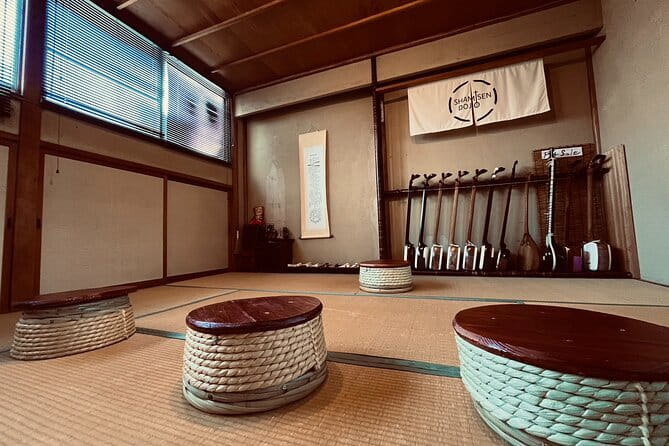
The shamisen is a traditional Japanese string instrument with a distinct, bright sound. At Shamisen Dojo, you get a chance to hold and play one rather than simply hear an expert perform. That difference matters. Even a simple note feels more memorable when you have learned the grip, the posture, and the basic movement yourself.
The class begins with an introduction to the instrument. Jack explains basic information such as the different types of shamisen and its place in Japanese music. This opening is concise, which is useful on a short activity. You get enough background to understand what you are holding without spending the entire hour in a lecture.
You also learn how to hold the shamisen and the bachi, the traditional pick. That may sound simple, but posture and hand position are central to making a controlled sound. The instructor can watch what you are doing and adjust your technique as you go.
The lesson suits beginners, including people with no musical background. At the same time, several past participants had played other instruments and found enough detail to keep the session interesting. The teaching can be adjusted to your starting point, so a musician and a complete novice should both have something to work on.
A few more Kyoto half-days to weigh up
- PERFECT KYOTO 1-Day Bus Tour
★ 5.0 · 13,518 reviews - Kyoto: Fushimi Inari, Kinkakuji, Bamboo Grove 1 Day Bus Tour
★ 4.8 · 4,316 reviews - Kyoto: Tea Ceremony in a Traditional Tea House in Kiyomizu
★ 4.9 · 3,519 reviews
The 60-minute lesson, step by step
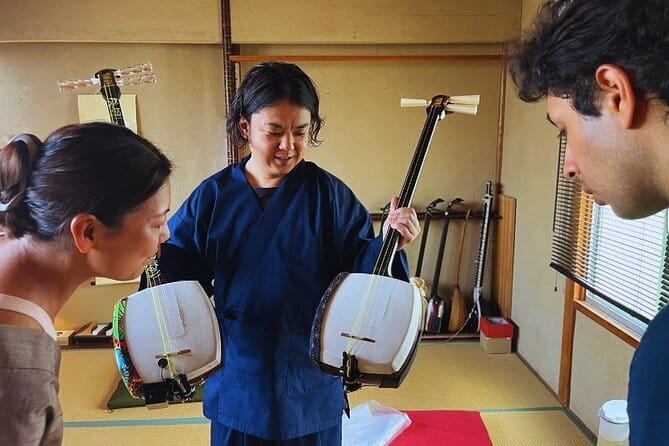
The exact pace depends on your group, but the hour follows a sensible path from context to practice.
First comes the cultural introduction. You hear about shamisen types and history, which gives the instrument a place in Japanese tradition rather than treating it as a novelty. Jack has more than two decades of experience, and his role is not just to hand you an instrument. He explains what you are doing and why.
Next comes the photo session. You can choose a shamisen to hold for pictures, giving you a simple souvenir of the visit. This part is brief, but it works well for couples, families, or friends who want a shared record of the activity. The instructor can take the photos, so you do not need to manage a tripod or ask another person to help.
The hands-on lesson follows. You learn basic shamisen playing techniques and work on proper form. The aim is not to turn you into a concert performer in one hour. It is to give you a clean first connection with the instrument and enough control to create recognizable sounds.
Jack introduces one shamisen scale. This is more useful than only strumming randomly because it gives you a small musical framework. You can begin to hear how notes relate to each other and use the scale when you make your own patterns.
There is also free time to play. This is where the small group helps. You can experiment, repeat a technique, and ask for correction without losing the instructor in a crowd. The limited group size, a maximum of five people, is one of the strongest practical reasons to choose this class.
The final section is a jam session. Jack provides accompaniment while you freely create melodies using the five signature sounds of Japan. Do not expect a polished ensemble piece. The point is to make music together, even if your first notes are tentative. Several participants managed to play through a song by the end of the hour, while others focused on exploring the sounds and rhythm.
Why the small group matters
A group class can sometimes feel like a compromise, but the five-person limit keeps this one personal. You are not paying for a private lesson, yet you have a much better chance of receiving direct guidance than in a large workshop.
This is especially helpful when learning the bachi. The pick, hand angle, and striking motion may feel unfamiliar at first. Small corrections can make a big difference, and Jack has room to give that attention. He also adapts to the people in front of him. Past sessions included a 17-year-old and a parent, couples, siblings, trained musicians, and people trying a string instrument for the first time.
The social side is part of the appeal. You can attend alone, but the activity also works well with a sibling, partner, child, or friend. Bringing someone along makes the free playing and closing jam more relaxed. If you attend with a partner who is less interested in music, the class still offers enough cultural explanation and hands-on time to keep it engaging.
One point to keep in mind is that group pacing is never fully yours. If another participant needs more time with the basics, the class may move more slowly than you would in a private session. If everyone picks up the technique quickly, you may wish the hour lasted longer. The format offers good value, but it is still an introductory class.
Jack’s teaching style
Jack is the named instructor at the Shamisen Dojo, and the teaching is a major part of the experience. He demonstrates the instrument, explains the background, and guides you through each stage without making the class feel stiff.
His approach is gentle and encouraging. That matters when you are trying an unfamiliar instrument in front of other people. The session is built so that you can make progress quickly, but there is no need to pretend you already know what you are doing.
Jack also plays for you. Hearing the shamisen in the hands of an experienced musician gives you a clearer idea of its range and character. It sets a useful goal without turning the lesson into a performance that leaves you sitting on the sidelines.
The strongest praise centers on his ability to adjust to each student. Musicians can ask about scales and musical structure, while beginners can focus on basic hand positions and sound. Participants have also described the lesson as inspiring, polite, and fun, which fits the format: you learn, but the class is not overly formal.
If you have a music background, tell Jack early. If you have never played a string instrument, say that too. The more he knows about your starting point, the more useful the short lesson can be.
Same base, a completely different sort of day:
- Kyoto Geisha Walking Tour: Gion District & Hidden Gems
★ 4.7 · 3,273 reviews - Kyoto: Tea Ceremony Ju-An at Jotokuji Temple
★ 4.9 · 3,207 reviews - Kyoto: Gion Magical Night Walking Tour with Geisha Trivia
★ 4.9 · 2,393 reviews - Kyoto: 45-Minute Tea Ceremony Lesson Experience
★ 4.3 · 2,378 reviews
Tea, photos, and the little extras
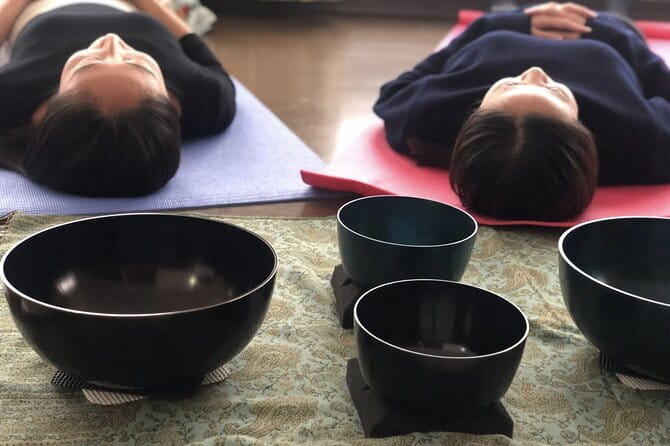
The included coffee, tea, or green tea is a small touch, but it helps set the right pace. A music lesson requires concentration, and a drink gives the hour a casual cultural feel rather than making it seem like a rushed skill test.
The photo session is also included, along with your shamisen rental. You do not need to bring an instrument. That keeps the activity simple for visitors who want to try shamisen without buying one or arranging a separate rental.
Left-handed players have access to lefty shamisen. This is worth noting when you book or arrive. Do not assume you must reverse the instrument or struggle with a standard setup. The availability of a left-handed option makes the class more welcoming to a wider range of students.
One participant who purchased a shamisen was offered free online lessons with it. That is not part of the standard class package, so you should not book this experience expecting a purchase or follow-up course. Still, it shows that the dojo can be a starting point for people who become serious about continuing.
Is $65.89 a fair price?
At $65.89 per person, this is not the cheapest one-hour activity in Kyoto. It is also not simply a sightseeing stop. The price includes the shamisen rental, instruction, the photo session, and coffee or tea. You are paying for direct teaching and access to an instrument that would otherwise be difficult to try during a normal Kyoto visit.
The small group improves the value. A class of up to five gives you a fair chance to receive personal help, ask questions, and play during the closing jam. If the group fills, you still have a more focused setting than a large cultural demonstration.
The value is strongest for people who want active participation. If you are curious about Japanese music, enjoy hands-on activities, or want a break from temples and crowded sights, the lesson offers something different. It is less compelling if you only want to hear traditional music, since a performance would give you more music and less practice.
You should also judge the price against your available time. One hour is efficient, but it limits how far you can go. You will learn a scale and basic techniques, not master the shamisen. Think of the fee as the cost of a guided first lesson and a cultural memory, not a full music course.
Where it fits into a Kyoto day
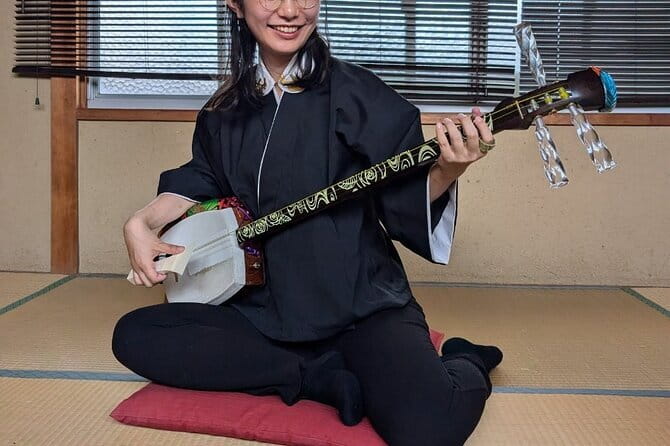
The meeting point is in Murasakino Nakakashiwanocho, in Kyoto’s Kita Ward, and the activity ends back there. It is near public transportation, but private transportation is not included, so you need to arrange your own way to the starting point.
The neighborhood setting can be a welcome change from Kyoto’s busiest sightseeing areas. One sensible plan is to visit Kinkaku-ji, the Golden Pavilion, in the morning and then continue to the shamisen lesson. This pairing connects a major Kyoto sight with a more personal cultural activity.
Allow enough time to reach the meeting point. The class lasts about 60 minutes, and arriving late would cut into the hands-on portion, which is the main reason to book. Since the location is in the north of the city, check your route before setting out, especially if you are fitting this between other reservations.
The activity is suitable for most people, and confirmation is provided at booking. A mobile ticket makes entry simple. You should still keep the meeting details easy to access on your phone, since the experience begins and ends at the stated meeting point.
Who will enjoy this most
I would recommend the class first to curious beginners. You do not need to read music or already play an instrument. The structure gives you a quick cultural introduction, basic instruction, time to experiment, and a shared musical finish.
It is also a strong choice for music lovers. If you play guitar, harp, piano, or another instrument, you may pick up the scale and patterns quickly. One participant who played harp found the connection between Japanese and other musical traditions especially meaningful. The one-hour format will not satisfy someone seeking advanced training, but it can open the door to further study.
Families with older children and teenagers can do well here. A 17-year-old and a parent found the activity highly enjoyable, and the practical format gives young people something to do rather than another lecture. The maximum group size also makes it easier for family members to receive help.
Couples and siblings are a natural fit. You can encourage each other, compare your first sounds, and share the photo session. Solo participants are welcome too, especially if you like meeting people through an activity rather than sitting through a guided talk.
You may want to skip it if your schedule is already packed with paid attractions and you do not enjoy trying new skills in a group. The lesson is friendly, but you will be asked to participate. Watching from the side is not the point.
Booking, cancellation, and practical notes
The experience is generally booked about 25 days ahead, so reserve early if your Kyoto dates are fixed. The class has a maximum of five participants, and that small capacity can limit last-minute availability.
Free cancellation is available up to 24 hours before the start time for a full refund. Changes or cancellations made less than 24 hours before the activity are not accepted for a refund, with cut-off times based on local Kyoto time.
Bring water if you prefer it, though coffee or tea is included. Wear something that lets you sit and move your arms comfortably. Most people can take part, and the class is near public transportation.
Should you book the Shamisen Discovery in Kyoto?
Book it if you want to do something in Kyoto that involves your hands, ears, and attention. The class gives you a genuine first lesson rather than a passive cultural display, and Jack’s patient teaching helps beginners make music quickly.
The best reasons to choose it are the five-person limit, the chance to learn a scale and basic technique, the guided jam, and the welcoming setup for left-handed players. The main caution is the short length. You will leave with an introduction, not mastery.
For a traveler who has already seen temples, gardens, and major city sights, this is a smart change of pace. At $65.89, it offers good value when you want personal instruction and a memorable connection to Japanese music. If that sounds like your kind of Kyoto souvenir, book it. If you want a longer or more advanced music lesson, look for a private or extended session instead.
FAQ
How long does the shamisen class last?
The course lasts approximately 60 minutes.
How many people can join the group?
The activity has a maximum of five participants.
Is a shamisen provided?
Yes. A shamisen rental is included in the course price.
Are photos included?
Yes. The experience includes a photo session while holding a shamisen, and the instructor can take photos of you playing.
Is tea or coffee included?
Yes. Coffee, tea, or green tea is included.
Can left-handed people take the lesson?
Yes. Left-handed shamisen are available for left-handed participants.
Just added around Kyoto
- Kyoto: Zen Meditation at a Private Temple with a Monk★ 5.0 · 25 reviews
- Kyoto: Gion Geisha District & Sake-in-Hand Walking Tour★ 5.0 · 37 reviews
- Private Pewter Sake Cup Experience with a Kyoto Artisan★ 5.0 · 31 reviews
- Your Private Vacation Photography Session In Kyoto★ 5.0 · 110 reviews
- Private Guided Traditional Buddhist Cooking in Japan★ 5.0 · 16 reviews
- Kyoto Wagashi(Japanese sweets) Cooking Class near Fushimiinari★ 5.0 · 60 reviews
- Kyoto:Family-Friendly Kimono & Yukata Experience at WARGO★ 5.0 · 147 reviews
- Private Cooking Class Udon in Kyoto Japan★ 5.0 · 23 reviews
Kyoto Tours, compared.


Fushimi Inari, Kinkakuji, Bamboo Grove 1 Day Bus Tour
Read our review →
Tea Ceremony in a Traditional Tea House in Kiyomizu
Read our review →
Kyoto Geisha Walking Tour: Gion District & Hidden Gems
Read our review →

Gion Magical Night Walking Tour with Geisha Trivia
Read our review →
