
Reviewed · KYOTO TOURS
Himeji Castle and Akashi Kaikyo Bridge Walking Tour from Kyoto
Himeji Castle is the star here, and rightly so. Its brilliant white walls, maze-like defenses, steep stairways, and wooden interiors offer a far better sense of old Japan than a quick photo stop. The tour then adds Akashi Kaikyo Bridge, a huge modern counterpoint reached by train.
I like the efficient rail travel, with the Kyoto to Himeji leg taking about 45 minutes, and I like having a guide explain the castle rather than simply handing you an entrance ticket. The seasonal buffet at Hotel Nikko Himeji is another practical touch. The drawback is the long day: you spend many hours on trains, and the walking can feel demanding.
Key points to know before booking
- Himeji Castle gets the best part of the day: Allow two hours for the grounds, interior, defenses, and steep wooden stairways.
- The tour uses non-reserved train seats: Seating is not guaranteed, especially when trains are busy.
- You will walk about 4 kilometers: Wear supportive shoes, and bring socks because shoes must be removed inside the castle.
- Lunch is a seasonal buffet: It includes Japanese and Western food, but special meal and allergy requests are not accepted.
- Akashi Kaikyo Bridge is an impressive second act: The Maiko Marine Promenade puts you 47 meters above the Akashi Strait, beneath the bridge roadway.
- Guide service changes partway home: An assistant helps you board in Kyoto, and the guide accompanies the group from Himeji until Osaka.
Why Himeji Castle makes this Kyoto day trip worthwhile
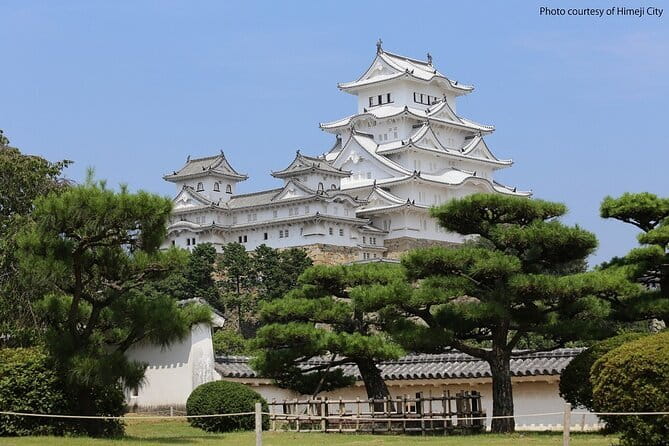
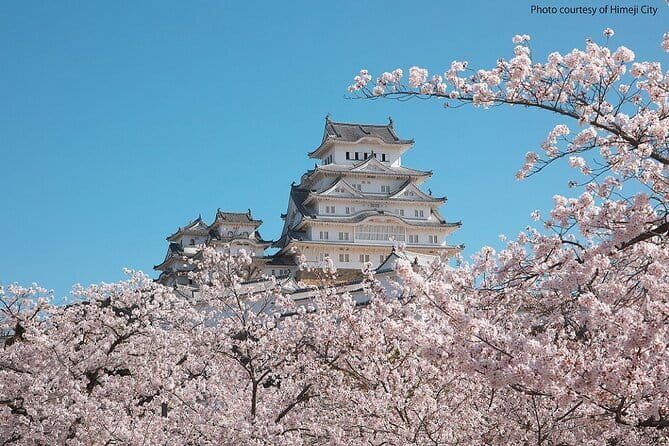
If you have time for only one castle in Japan, Himeji is a strong choice. The five-story complex is famous for its pale exterior, which resembles a white heron taking flight. That nickname, Shirasagi Castle, fits the building better than the plain name Himeji Castle.
The castle is not just a pretty keep. Its defensive layout is the main lesson. You walk through grounds designed to slow an attacking army, with walls, gates, turns, and narrow approaches making a direct assault difficult. A guide can point out how the structure worked, rather than leaving you to admire the rooflines without understanding them.
The two-hour visit covers both outside and inside areas. Inside, you remove your shoes and walk across wooden floors. Socks are recommended, and they are also more comfortable on the sometimes slippery boards. The stairways are steep, and some ceilings are low, so you should expect a physical visit rather than a gentle museum stroll.
The castle has been carefully preserved and recently renovated on the exterior. That bright white finish is one reason it photographs so well, but it can also make the site feel crowded and exposed on a busy day. One account describes long waits of up to two hours during a particularly busy visit. The schedule may not always allow the same amount of time for every room or garden, so timing and crowd levels matter.
More walking tours in Kyoto:
- Kyoto Geisha Walking Tour: Gion District & Hidden Gems
★ 4.7 · 3,273 reviews - Kyoto: Gion Magical Night Walking Tour with Geisha Trivia
★ 4.9 · 2,393 reviews - Kyoto: Gion Geisha District Walking Tour – Stories of Geisha
★ 4.7 · 2,187 reviews
Starting at Kyoto Station and taking the Shinkansen

The meeting point is the JTB Sunrise Tours Desk in the basement of AVANTI, near Kyoto Station. The tour starts at 8:30 am, with a short walk to the station before boarding the Shinkansen for Himeji.
The ride takes about 45 minutes. You use a non-reserved section, so a seat is not guaranteed. An assistant helps the group board at Kyoto, while the main guide joins the group from Himeji Station. This arrangement works well for the basic logistics, but you should arrive ready to follow instructions and move with the group.
Train travel is a big part of the value and a big part of the day’s cost. You avoid the stress of working out several long-distance rail connections, and the route is much faster than a local train. On the other hand, this is not a sightseeing coach tour with a guide chatting beside you the whole way. The train rides are transport time, and you may be standing during part of the journey.
The tour has a maximum of 15 people, which is small enough to make castle explanations easier to hear and group movement more manageable. Still, non-reserved seating can split people up on a busy train. Keep your ticket and follow the guide’s instructions closely.
Touring the White Heron Castle
From Himeji Station, the group walks toward the castle. The walk is roughly 1 kilometer each way, and this is where the tour’s physical side begins. The total walking distance for the day is about 4 kilometers, but the castle’s slopes, stairs, and uneven movement make it feel like more than a flat city walk.
Inside the castle, shoes are left at the entrance. You then climb wooden stairs through the keep, often in socks. The steps are steep, and the low ceilings require care, especially if you are tall or have limited mobility. This is not a good day for stiff shoes, slippery footwear, or a heavy bag.
The reward is a much clearer picture of how the castle was built and used. Your licensed English-speaking guide explains the architecture and the feudal period, while also helping the group find the best places for photographs. Guides assigned to this experience have included Sachiko, Tyco, Yuki, Saiko, and Gucchi. Their styles will naturally differ, and one poor experience specifically criticized fast walking and weak explanations, so the guide can make a real difference.
The strongest guide experiences described for this tour had a few things in common: clear English, useful historical detail, patience on the stairs, and attention to the group’s comfort. One guide suggested a cab from the station to reduce walking, which shows why it is worth telling your guide early if the pace is difficult. That option should not be treated as a guaranteed part of the tour, and any extra cost would need to be handled separately.
Take your time with the castle grounds. The main keep is the obvious target, but the outer defenses and garden areas help you understand the whole site. Koko-en Garden is associated with the castle area and was especially praised as a peaceful stop, but the exact order and amount of time available can change. The tour information gives two hours for Himeji Castle, so do not expect a long, unhurried garden visit on a crowded day.
A buffet lunch at Hotel Nikko Himeji
After the castle, lunch is served at Hotel Nikko Himeji. The meal lasts about 1 hour and 15 minutes and is buffet style, with both Japanese and Western dishes. The menu changes with the season.
This is a sensible choice for a packed day. You can choose your portion, try more than one style of food, and avoid losing time to a restaurant search in an unfamiliar city. Several positive accounts singled out the lunch as delicious, though the meal is best understood as a convenient included buffet rather than a special culinary tour.
There is an important limitation. Vegetarian meals, allergy-friendly meals, and other special meal requests are not accepted. If you have strict dietary needs, this is a serious point to consider before paying. The included lunch does not remove the need to plan for your own food requirements.
A few more Kyoto half-days to weigh up
- PERFECT KYOTO 1-Day Bus Tour
★ 5.0 · 13,518 reviews - Kyoto: Fushimi Inari, Kinkakuji, Bamboo Grove 1 Day Bus Tour
★ 4.8 · 4,316 reviews - Kyoto: Tea Ceremony in a Traditional Tea House in Kiyomizu
★ 4.9 · 3,519 reviews - Kyoto: Tea Ceremony Ju-An at Jotokuji Temple
★ 4.9 · 3,207 reviews
Seeing Akashi Kaikyo Bridge from below
After lunch, you board a JR Special Rapid Service or Rapid Service train from Himeji to Maiko. Again, the seats are non-reserved. The train ride takes you toward Kobe’s side of Akashi Strait, where the tour shifts from historic construction to modern engineering.
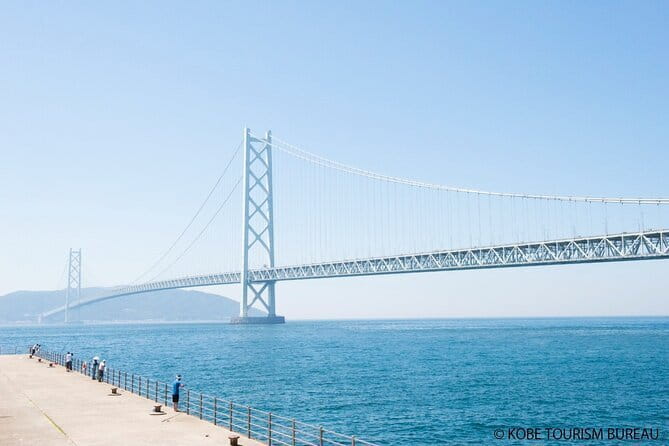
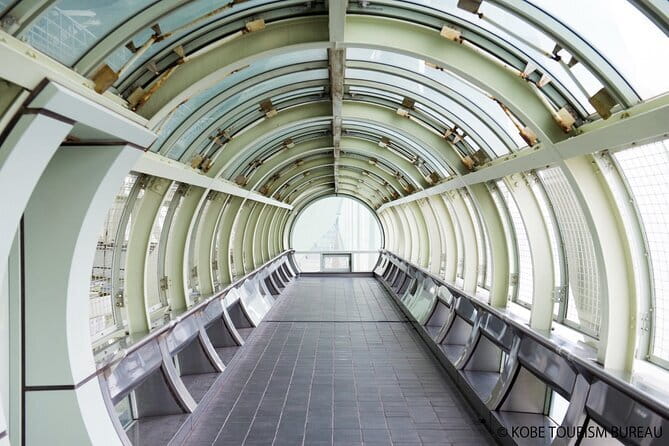
The bridge links Kobe with Awaji Island and spans 3,910 meters, or 12,828 feet. At the Maiko Marine Promenade, you walk beneath the roadway, about 47 meters above the water. Enclosed sections and glass floor panels give you views down toward the strait.
The Bridge Exhibition Center adds context about the structure and its scale. Then the promenade gives you the more immediate experience: the roadway overhead, the water below, and the bridge stretching across the strait. If Himeji Castle is about defensive design and feudal power, Akashi Kaikyo is about the reach of modern engineering.
The bridge stop lasts about 45 minutes. That is enough for a look, a few photographs, and a sense of the height, but not enough for a slow visit. Some people find it a memorable contrast to the castle. Others may see it as a filler after the main attraction. I would book this tour for Himeji first and treat the bridge as a worthwhile extra, not the central reason to go.
If glass flooring makes you uneasy, you can still appreciate the promenade without focusing on those sections. The enclosed walkway provides a safe viewing position, but the height is noticeable. Keep your belongings secure and follow the facility’s rules.
The long ride back to Kyoto
After Maiko, the group takes a local train back toward Kyoto. The listed travel time is about 90 minutes, and the tour ends at Kyoto Station around 6 pm.
There is a small logistical detail that matters. The guide’s service ends partway through the return journey at Osaka Station. You receive instructions for continuing to Kyoto, but you should be prepared to manage that final portion independently. The tour ends when you arrive at Kyoto Station, not when the guide remains with you for the entire ride.
The full experience lasts about 9 hours and 30 minutes. The stop-by-stop schedule adds up to much less because the remaining time is train travel. That is not a flaw in itself, since Himeji is far from Kyoto, but it changes how you should judge the tour. You are buying a guided full-day outing that handles transport, not a nine-hour sightseeing program.
What the $252.90 price really covers
At $252.90 per person, this is an expensive day trip. The price includes the castle admission, bridge-related admission fees, round-trip transportation, lunch, and a licensed national government English guide. Those pieces would take planning and several separate payments if arranged independently.
The value is strongest if you want structure. You do not need to work out the Kyoto to Himeji train, the walk to the castle, the Himeji to Maiko connection, the bridge visit, and the return route on your own. You also receive historical explanation and help keeping the day moving.
The value is weaker if you prefer to set your own pace. Himeji Castle can easily absorb a full morning, and the bridge visit is fairly short. Independent rail travel could give you more control over how long you spend at the castle, though you would need to arrange the transport, admission, and meal yourself.
The price also includes the risk of a packed schedule. If the castle has long queues or train congestion slows the group, the order of stops and arrival times can change. That flexibility is normal for a day dependent on public trains and major sights, but it means the printed timing is not a promise.
Who will enjoy this tour most
I would recommend this experience to a first-time Japan visitor who wants to see Himeji Castle without handling a complex rail day. It also suits people who enjoy history, architecture, and a guide’s explanation more than those who want a relaxed café-and-shopping outing.
You should be comfortable with:
- About 4 kilometers of walking
- Steep castle stairs and low ceilings
- Removing shoes inside Himeji Castle
- Non-reserved train seating
- A full day that begins at 8:30 am and ends around 6 pm
- Handling the final return journey after the guide leaves at Osaka
Families can join, but the age rules are specific. Anyone under 18 needs written parental permission. Anyone under 15, or not yet enrolled in middle school, must be accompanied by a parent or guardian.
The tour is near public transportation, but it is not described as an accessible program. The physical demands make it a poor fit if stairs, long walks, or standing on trains are difficult. Ask about your own needs before booking, since special meal requests are not accepted.
Should you book the Himeji Castle and Akashi Kaikyo Bridge tour?
Book it if Himeji Castle is high on your Japan wish list and you want an English-speaking guide to handle the day’s rail connections. The castle is exceptional, the guide can add useful context, and the bridge gives you a sharp change of mood and scenery.
Think twice if you dislike long train rides, crowded public transport, fixed schedules, or steep stairs. You may also prefer an independent Himeji visit if you want extra time for Koko-en Garden or a slower castle tour.
For the best chance of a smooth day, wear comfortable shoes, bring socks, arrive early at the Kyoto meeting point, and keep your schedule after 6 pm flexible. Cancellation is free up to 24 hours before the start time, but late cancellations and late changes are not refunded.
FAQ
How long does the tour last?
The experience lasts about 9 hours and 30 minutes. It starts at 8:30 am and ends around 6 pm at Kyoto Station.
Where does the tour start?
You meet at the JTB Sunrise Tours Desk in the basement of AVANTI near Kyoto Station, at 31 Higashikujō Nishisannōchō in Kyoto.
Is transportation included?
Yes. Transportation and other listed admission fees are included. The tour uses the Shinkansen from Kyoto to Himeji, then JR rapid or special rapid trains between Himeji, Maiko, and Kyoto.
Are train seats reserved?
No. The tour uses non-reserved seats, so seating is not guaranteed.
How much walking is involved?
The total walking distance is about 4 kilometers, or 2.5 miles. The route includes the walk to Himeji Castle, castle grounds, steep stairs, and the walk to the bridge area.
Do I need to remove my shoes at Himeji Castle?
Yes. Shoes must be removed inside the castle. Socks are recommended because you will walk across wooden floors.
Is lunch included?
Yes. Lunch is an included buffet at Hotel Nikko Himeji, with Japanese and Western food. The menu changes by season.
Can the tour provide vegetarian or allergy-friendly food?
No. Special meal requests, including vegetarian and allergy-friendly meals, are not accepted.
Does the guide accompany the group all the way back to Kyoto?
The guide accompanies the group from Himeji Station until Osaka Station. An assistant helps with boarding the Shinkansen in Kyoto, and instructions are provided for continuing to Kyoto after the guide service ends.
Just added around Kyoto
- Kyoto: Zen Meditation at a Private Temple with a Monk★ 5.0 · 25 reviews
- Kyoto: Gion Geisha District & Sake-in-Hand Walking Tour★ 5.0 · 37 reviews
- Private Pewter Sake Cup Experience with a Kyoto Artisan★ 5.0 · 31 reviews
- Your Private Vacation Photography Session In Kyoto★ 5.0 · 110 reviews
- Private Guided Traditional Buddhist Cooking in Japan★ 5.0 · 16 reviews
- Kyoto Wagashi(Japanese sweets) Cooking Class near Fushimiinari★ 5.0 · 60 reviews
- Traditional Japanese Music show & Experience Tour in Kyoto★ 5.0 · 57 reviews
- Kyoto:Family-Friendly Kimono & Yukata Experience at WARGO★ 5.0 · 147 reviews
Kyoto Tours, compared.


Fushimi Inari, Kinkakuji, Bamboo Grove 1 Day Bus Tour
Read our review →
Tea Ceremony in a Traditional Tea House in Kiyomizu
Read our review →
Kyoto Geisha Walking Tour: Gion District & Hidden Gems
Read our review →

Gion Magical Night Walking Tour with Geisha Trivia
Read our review →

Gion Geisha District Walking Tour – Stories of Geisha
Read our review →Browse the lists this tour appears in