
Reviewed · KYOTO TOURS
Full Day Hiroshima and Miyajima Tour by Bullet Train from Kyoto
The most powerful part of this 13-hour Kyoto day trip is the sharp contrast between Miyajima’s serene shrine and Hiroshima’s sobering Peace Memorial Park. You move from deer, sea views, and the famous torii gate to the Atomic Bomb Dome and museum in one carefully packed day.
I like the reserved bullet train seats, which remove much of the stress from a long independent outing. I also like having a guide for Hiroshima, where context matters and the museum’s displays can be difficult to absorb without explanation. The main drawback is time: Miyajima and Hiroshima both deserve more than this schedule allows, and the museum visit can feel rushed.
Key points to know before booking
- Two major sights in one day: Visit Miyajima and Hiroshima from Kyoto without arranging separate trains, ferries, buses, and admission tickets.
- Reserved Shinkansen travel: Round-trip bullet train transportation is included, with seating in either a standard car or Green Car, though exact seats may not be designated.
- Lunch is not included: You choose and pay for lunch on Miyajima, where oysters, Hiroshima-style okonomiyaki, and conger eel rice bowls are common choices.
- A serious afternoon: The Peace Memorial Museum and Atomic Bomb Dome require attention and emotional energy, not just quick sightseeing.
- Guide quality matters: Guides such as Masako, Azusa, Taeko Watanabe, Sato, Hiro, Akiko, and Marie have been praised for clear explanations, humor, and good organization, but the experience can vary by guide.
- A demanding timetable: The day starts at 7:30 a.m. and returns to Kyoto around 9 p.m., with a maximum group size of 40.
Why this Kyoto to Hiroshima trip works
Hiroshima is easy to reach from Kyoto by Shinkansen, but a self-guided day still involves several moving parts. You need to arrange the train, local transportation, ferry, shrine admission, museum entry, and return journey while keeping an eye on the clock. This tour handles those connections for you.
That convenience is the heart of the experience. The train ride takes about two hours each way, so a large part of your day is spent in transit. Still, the reserved seating and station assistance make the journey calmer than piecing it together at the last minute.
The tour also gives your day a clear shape. Miyajima comes first, offering a gentler introduction to the region. Hiroshima’s wartime history follows in the afternoon, when you visit the Peace Memorial Museum, park, monuments, and Atomic Bomb Dome.
I think this order works well emotionally. You begin with beauty and religious tradition, then move toward remembrance and peace. Just understand that the schedule is designed for coverage, not leisurely exploration.
More rail days around Kyoto:
- From Osaka: Sagano Train Ride and Kyoto Guided Day Tour
★ 4.3 · 180 reviews - Kyoto Railway Museum Admission Ticket
★ 4.3 · 23 reviews - Kyoto: Arashiyama Tour with optional Sagano Romantic Train
★ 4.7 · 18 reviews
Meeting at Kyoto Station at 7:30 a.m.
The official meeting point is the JTB Sunrise Tours Desk inside the basement level of Avanti, across from Kyoto Station’s Hachijo Exit. Staff walk you from the desk to Kyoto Station and help you reach the correct platform for the bullet train.
This is the first place where you should allow extra time. The meeting desk is downstairs inside Avanti, and it is not always obvious from the main station traffic areas. Directions can feel less clear than they should, so arrive early and locate Avanti before the 7:30 a.m. meeting time.
Once aboard the Shinkansen, you have a comfortable ride toward Hiroshima. The trip takes approximately one hour and 40 minutes according to the itinerary, with the full Kyoto to Hiroshima journey described as about two hours. The train portion is not guided sightseeing, but it gives you a chance to rest before the busy day begins.
The return trip uses the Shinkansen again, with arrival at Kyoto Station around 9 p.m. There is no hotel drop-off, so plan your evening route from Kyoto Station in advance.
Miyajima and Itsukushima Shrine: beauty with a tight clock
From Hiroshima, the group travels toward Miyajimaguchi by train or vehicle, then boards a boat for Miyajima. The crossing is one of the most pleasant transitions of the day, replacing city streets with open water and views toward the sacred island.
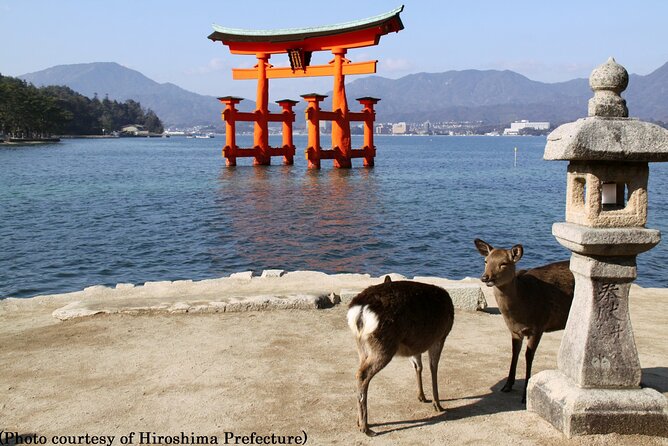
Miyajima is best known for Itsukushima Shrine, founded in the sixth century and admired for its Heian-period Shinden-zukuri design. Its large torii gate appears to float at high tide, creating one of Japan’s most recognizable views.
Admission to the shrine is included, as is the Miyajima visitor tax. Your guide introduces the shrine and its setting, then you have time for lunch and personal exploration.
The listed schedule allows about an hour on the island, although some accounts of the running tour describe around 80 minutes of free time. The overview also refers to roughly 45 minutes before lunch, so exact timing clearly depends on transportation, crowds, and the day’s conditions.
That uncertainty matters. You can see the shrine, take photographs, encounter the tame deer, and grab lunch, but you probably will not have time for a relaxed meal followed by extensive shopping or a longer walk around the island. If Miyajima is your main reason for booking, this may feel too brief.
The island’s food gives you a useful local choice. Oysters, Hiroshima-style okonomiyaki, and conger eel rice bowls are specifically associated with the area and available at many shops. Since lunch is on your own, keep the meal efficient. A long restaurant wait could cut into your only free time.
Some schedules use a boat back toward Hiroshima, while local transfers may involve a vehicle or train. The exact order can change with road conditions and congestion. That flexibility helps the operator keep the day moving, but it means you should not expect every departure time to follow the printed schedule precisely.
Hiroshima Peace Memorial Park and Museum
The afternoon shifts from scenic Japan to one of the country’s most serious historical sites. Hiroshima Peace Memorial Park was established after the Pacific War and now serves as a place of remembrance and a call for peace.
The Hiroshima Peace Memorial Museum presents the atomic bombing of August 6, 1945, its human cost, and the city’s recovery. The exhibits can include disturbing photographs and accounts of injury and death, so this is not a casual museum stop. Parents should consider the effect on younger children before booking.
The guide leads you through the museum and explains the events surrounding the bombing. This is one of the tour’s strongest reasons for existing. Signs and displays can tell you what happened, but a good English-speaking guide can help connect the exhibits to the wider story and answer questions as you move through the galleries.
The weakness is time. The scheduled museum visit is about one hour, and that hour may include entering, orienting yourself, and following the group through the main building. Several accounts of the experience describe the museum as rushed, with too little time to read everything.
Crowding and heat can make the problem worse. If the museum is busy, you may need to choose between reading carefully and keeping pace with the group. One practical strategy is to follow your guide through the main building first, then use any remaining minutes for the displays that matter most to you.
Some accounts indicate that you may be able to leave the organized portion and remain longer, but you would need to change your return Shinkansen ticket yourself. Do not assume this will be simple or available on every departure, so ask the guide before separating from the group.
A few more Kyoto half-days to weigh up
- 5 Top Highlights of Kyoto Full Day Bike Tour (E-bike option)
★ 5.0 · 511 reviews - Full Day Biking Tour Exploring the Best of Kyoto
★ 5.0 · 498 reviews - Full Day Guided Tour to Kyoto and Nara from Osaka by Van
★ 5.0 · 420 reviews - Nara Park, Osaka & Kobe from Kyoto Full Day tour
★ 5.0 · 207 reviews
The Atomic Bomb Dome and peace monuments
The Genbaku Dome, also called the Atomic Bomb Dome or Hiroshima Peace Memorial, is one of the few structures left standing near the bomb’s hypocenter. Its preserved remains are stark, especially after a day of viewing the museum’s personal accounts.
The tour allows approximately 40 minutes here. That is enough to see the dome, hear its story, and walk through nearby parts of the park. It is not enough for a slow visit to every monument.
Nearby, the Children’s Peace Monument is covered with paper cranes made by children. The Atomic Bomb Memorial Mound contains the ashes of about 70,000 victims, many of whom were unidentified or had no surviving relatives to claim them.
These sites reward quiet attention. You do not need a long lecture at every stop. The value comes from seeing the physical remains and memorials after the museum has given you the historical background.
The movement through the park may involve a vehicle or train, depending on the day’s plan. The guide’s job is to keep the group together and protect the return schedule, so listen carefully when meeting times are announced.
The guides can shape the entire day
The tour includes a National Government Licensed English Guide Interpreter during the Hiroshima portion. The best guides add much more than directions. They explain religious customs at Miyajima, put Hiroshima’s history into context, and keep a large group moving without making the day feel cold or mechanical.
Several guides have been singled out for different strengths. Masako has been described as attentive, energetic, and careful about safety. Azusa has combined humor with useful information and helped a family group of 12 enjoy a long day. Taeko Watanabe has been praised for giving practical advice, including suggesting that the main museum building come first.
Other named guides include Sato, Takeshi, Hiro, Akiko, Marie, and Miki. Their reported styles range from warm and funny to thoughtful and highly organized. This tells you something useful: guide assignment can make a big difference.
The less positive experiences point to two possible problems. English delivery may vary, and one group had trouble hearing because audio receivers did not work. Another guide was described as distant and difficult to engage with. Headset availability may also vary, so if hearing every explanation is important to you, ask about the audio equipment at the start.
The maximum group size is 40. That is not a small private tour, and it can affect how close you stay to the guide, how quickly you move through the museum, and how easy it is to ask questions. On the other hand, the staff support at Kyoto Station and the organized transfers are particularly useful with a group this size.
Is $399.71 good value?
At $399.71 per person, this is an expensive day trip. The price includes round-trip bullet train travel, local transportation, the Miyajima visitor tax, shrine and museum admission, and the English-speaking guide. Lunch is extra.
The train is the major value item. Booking a convenient round trip, securing seats, and connecting with Hiroshima transportation takes time and planning. You are paying for that organization as much as for the sightseeing itself.
The price makes more sense if you have only one day available for Hiroshima and do not want to manage the route alone. It makes less sense if you are staying in Hiroshima, have a flexible schedule, or want several hours in the museum and Miyajima shops.
Keep the unpaid costs in mind. You need to buy lunch, and dinner is not included. One guide reportedly pointed out a sushi restaurant before the return train, but that should be treated as a helpful suggestion, not part of the package.
I would call the tour good value for convenience, not for free time. You get a lot in one day, but you pay with a brisk pace.
Who should book this day trip?
I would recommend it most strongly to first-time visitors based in Kyoto who want to see Hiroshima but have no spare overnight. It is also a good fit for families and solo visitors who prefer clear transport arrangements and an English-speaking guide.
The tour suits you if:
- You want both Miyajima and Hiroshima in one day.
- You value reserved train seating and organized transfers.
- You want historical explanation at the Peace Memorial sites.
- You can manage an early start and a late return.
- You are comfortable with a group of up to 40 people.
I would hesitate if you are particularly interested in the museum. You may want two or three hours there, not one. I would also hesitate if Miyajima is your priority, since the island time is limited and lunch must fit into the same short window.
The emotional weight of the afternoon matters too. The museum is not a quick photo stop. Give yourself a little quiet time after the tour if possible, even though the return schedule may not allow much.
Practical details that affect your day
The experience lasts about 13 hours and 20 minutes. Start time is 7:30 a.m., and the group returns to Kyoto Station at around 9 p.m.
Transportation and admission costs listed as included cover the Shinkansen, local transfers, ferry or boat connections, shrine entry, museum entry, and visitor tax. Exact transport order and arrival times may change because of congestion or road conditions.
Children aged five and under may join free, but no bus seat is provided unless you book the child rate. Participants under 18 need written parental permission, and anyone under 15 or not yet enrolled in middle school must be accompanied by a parent or guardian.
Most people who can use public transportation can participate. The mobile ticket is convenient, but I would still save the confirmation where you can reach it quickly.
Free cancellation is available up to 24 hours before the start time. Changes or cancellations made inside that period are not accepted for a refund.
Should you book the Hiroshima and Miyajima tour?
Book it if you want an efficient, carefully organized introduction to two major Hiroshima-area sights from Kyoto. The reserved Shinkansen, included admissions, ferry connections, and guide support remove a great deal of planning. The combination of Itsukushima Shrine and the Peace Memorial sites also gives the day a memorable emotional arc.
Skip it if you want to linger. The museum, Miyajima, and the park all deserve more time than this packed schedule can provide. Independent visitors with an overnight stay in Hiroshima will have more freedom, but they will also take on the planning themselves.
For most Kyoto-based visitors with only one open day, I think this is a worthwhile, demanding excursion. Go in knowing that you are choosing breadth over depth, pack lightly, arrive early at Avanti, and save your appetite for a quick Miyajima lunch.
FAQ
How long does the tour last?
The tour lasts approximately 13 hours and 20 minutes. It begins at 7:30 a.m. and returns to Kyoto Station around 9 p.m.
Where does the tour begin?
You meet at the JTB Sunrise Tours Desk inside Avanti, on the B1F across from Kyoto Station’s Hachijo Exit. Staff then walk you to Kyoto Station for the bullet train.
Is lunch included?
No. Lunch is at your own expense on Miyajima. Local choices include oysters, Hiroshima-style okonomiyaki, and conger eel rice bowls.
Is bullet train transportation included?
Yes. Round-trip Shinkansen transportation between Kyoto Station and Hiroshima Station is included, with reserved seating in either a standard car or Green Car. Exact seats may not be designated.
Is a guide included?
Yes. A National Government Licensed English Guide Interpreter is included during the Hiroshima portion of the tour.
How much time is spent at Miyajima?
The schedule allows roughly one hour at Itsukushima Shrine and Miyajima, although the exact amount can vary. Timing may change because of transportation, congestion, and conditions on the day.
Can children join the tour?
Children aged five and under may join free of charge, but they are not given a bus seat unless booked under the child rate. Anyone under 15, or not yet enrolled in middle school, must be accompanied by a parent or guardian. Written parental permission is required for participants under 18.
Just added around Kyoto
- Kyoto: Zen Meditation at a Private Temple with a Monk★ 5.0 · 25 reviews
- Kyoto: Gion Geisha District & Sake-in-Hand Walking Tour★ 5.0 · 37 reviews
- Private Pewter Sake Cup Experience with a Kyoto Artisan★ 5.0 · 31 reviews
- Your Private Vacation Photography Session In Kyoto★ 5.0 · 110 reviews
- Private Guided Traditional Buddhist Cooking in Japan★ 5.0 · 16 reviews
- Kyoto Wagashi(Japanese sweets) Cooking Class near Fushimiinari★ 5.0 · 60 reviews
- Traditional Japanese Music show & Experience Tour in Kyoto★ 5.0 · 57 reviews
- Kyoto:Family-Friendly Kimono & Yukata Experience at WARGO★ 5.0 · 147 reviews
Kyoto Tours, compared.


Fushimi Inari, Kinkakuji, Bamboo Grove 1 Day Bus Tour
Read our review →
Tea Ceremony in a Traditional Tea House in Kiyomizu
Read our review →
Kyoto Geisha Walking Tour: Gion District & Hidden Gems
Read our review →

Gion Magical Night Walking Tour with Geisha Trivia
Read our review →

Gion Geisha District Walking Tour – Stories of Geisha
Read our review →Browse the lists this tour appears in