
Reviewed · KYOTO TOURS
Home style Ramen and Homemade Gyoza in Kyoto
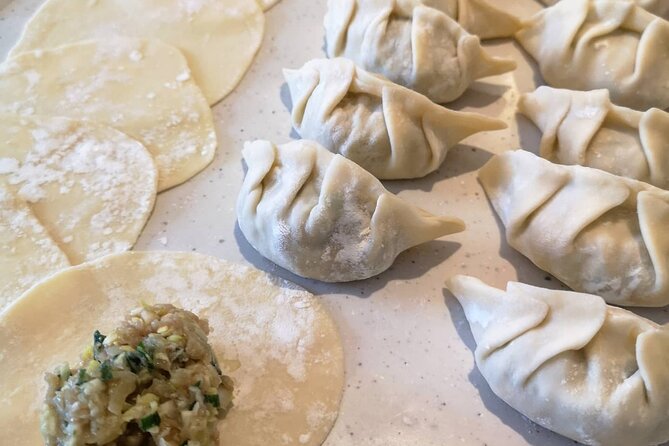
The best part of this Kyoto class is that you do not simply watch someone prepare ramen. You help make the soup, mix and roll gyoza wrappers from scratch, fold the dumplings, prepare cucumber pickles, and sit down to eat the finished meal in Nariko’s home. It is a practical look at Japanese home cooking, not a restaurant demonstration.
I like the small maximum of eight people, which gives Nariko time to guide each person through the knife work and dumpling folding. I also like that the recipes are useful after your trip, especially the family ramen soup recipe and the homemade gyoza dough. The main drawback is important: you do not make ramen noodles, and the soup uses dried fish, so this class cannot be vegetarian.
Key points about Nariko’s Kyoto kitchen
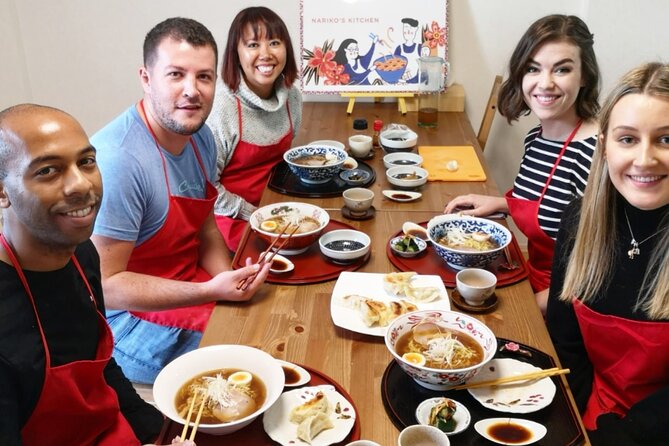
- A real home-cooking setting: You work in Nariko’s clean, purpose-built home kitchen rather than a large commercial cooking studio.
- Gyoza skins made by hand: The class includes mixing, rolling, and shaping the dumpling wrappers, a more hands-on task than using ready-made skins.
- Ramen soup from a family recipe: Nariko uses her mother’s recipe, with dried fish as part of the broth.
- More than two dishes: Along with ramen and gyoza, you prepare cucumber pickles and eat the meal you create.
- A compact, social class: The maximum group size is eight, with several classes reported at four to seven people.
- Useful for cooking at home: Recipes are shared after class, so you can try to recreate the meal after returning home.
What happens during the 3.5-hour cooking class
The class starts at 10:00 a.m. at 5-6 Matsugasaki Rokunotsubochō in Kyoto’s Sakyo Ward and finishes at the same place. The meeting point is near public transportation, and Nariko has met participants at the train station before walking with them to her home.
That short walk matters. You are not being dropped into an anonymous cooking school with a row of workstations. You are entering a private home and seeing how the setting shapes the food. The experience feels personal from the start, although the home setting also means space is limited and spectators cannot attend.
Nariko prepares the ingredients and demonstrates each step before you try it. You will not be expected to guess your way through the meal. The class is designed for people with different levels of cooking experience, and the small group allows her to slow down when a technique needs more attention.
The morning has a comfortable rhythm. You prepare ingredients, work on the broth and dumplings, make the pickles, and then cook and eat together. It is not a rushed race to produce lunch. At the same time, this is a genuine lesson, so you should expect to chop, mix, roll, fold, and clean as part of the process.
A few more Kyoto half-days to weigh up
- PERFECT KYOTO 1-Day Bus Tour
★ 5.0 · 13,518 reviews - Kyoto: Fushimi Inari, Kinkakuji, Bamboo Grove 1 Day Bus Tour
★ 4.8 · 4,316 reviews - Kyoto: Tea Ceremony in a Traditional Tea House in Kiyomizu
★ 4.9 · 3,519 reviews
Making ramen soup with Nariko’s mother’s recipe
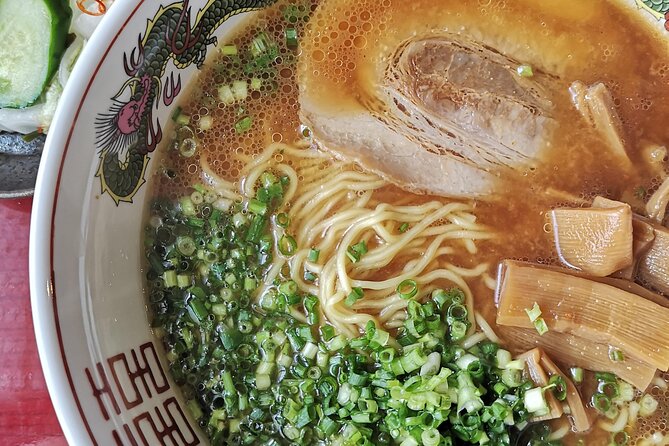
The ramen portion focuses on the soup, not the noodles. Nariko uses her mother’s recipe, and you help prepare the broth with simple ingredients. Dried fish is part of the soup, a common Japanese ingredient that adds savory flavor.
This is a useful distinction when you compare cooking classes in Kyoto. You will not learn how to stretch or cut ramen noodles here. Instead, you learn the part of ramen that is easier to repeat at home: building a flavorful soup and combining it with prepared ramen noodles.
That approach keeps the class within three and a half hours. Making ramen noodles from scratch would add a separate set of techniques, equipment, and waiting time. If your main goal is noodle production, this is not the right class. If you want a practical ramen meal that you can cook in an ordinary kitchen, the focus makes good sense.
The dried fish also creates the clearest dietary limitation. This class cannot make vegetarian ramen soup, and you should tell Nariko about any dietary restrictions before booking. She may be able to accommodate some needs, but she cannot remove dried fish and still provide the same ramen soup.
Rolling gyoza wrappers by hand
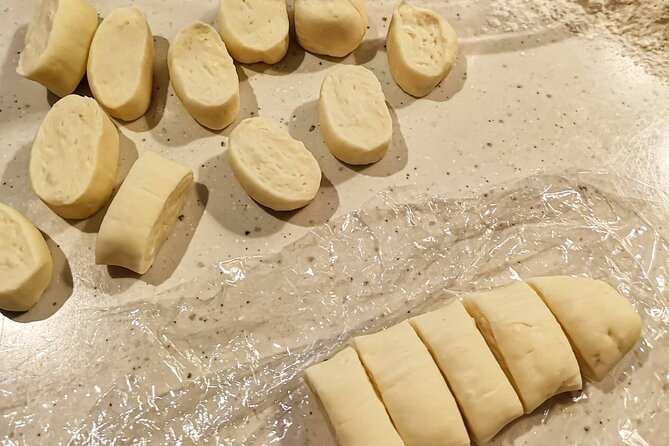
The gyoza lesson is the most distinctive part of the cooking session. You make the wrappers yourself rather than opening a package of ready-made skins. That means working with the dough, rolling individual rounds, and learning how thin and even the wrappers should be.
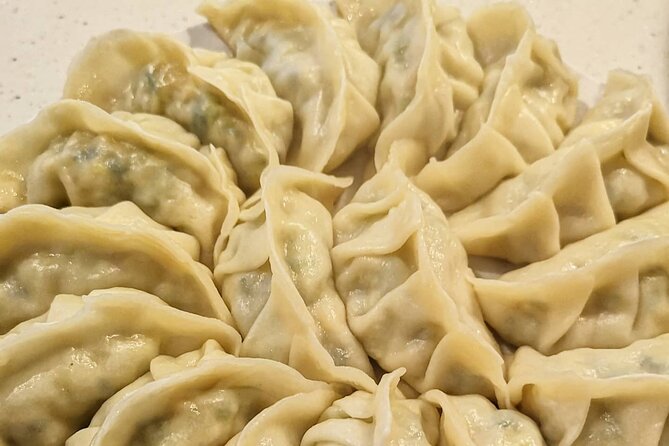
For many people, the folding stage is the moment when the class turns from a demonstration into a shared activity. Gyoza can look simple until you try to seal one neatly. Nariko demonstrates the method step by step, then gives you time to practice.
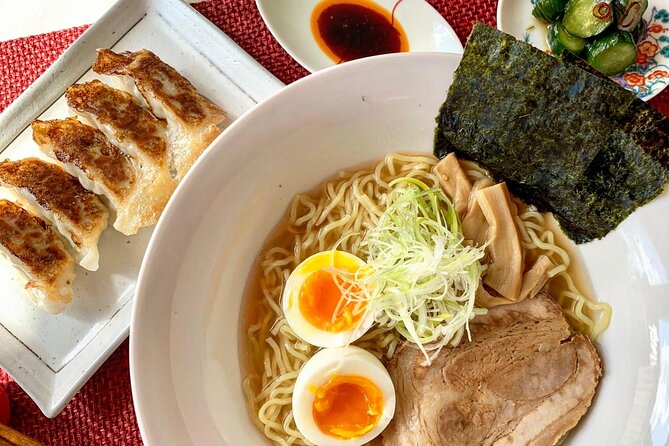
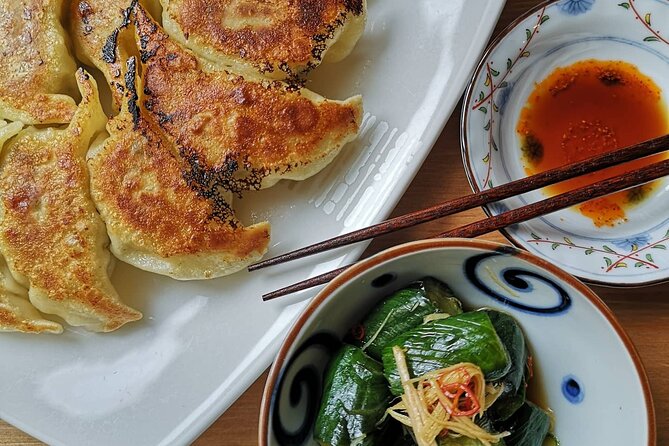
The dumplings are fried rather than boiled. That produces the crisp base many diners associate with restaurant-style gyoza, while the homemade skin gives you a better sense of how the dumpling is built. You will cook and eat your own batch, so imperfect folds are still perfectly useful lunch.
This is also where the class offers the strongest take-home value. Once you know how to make the wrappers, you are not tied to a specialty product from an Asian grocery store. You can adjust the filling later and use the dough method as a starting point.
Cucumber pickles and the finished meal
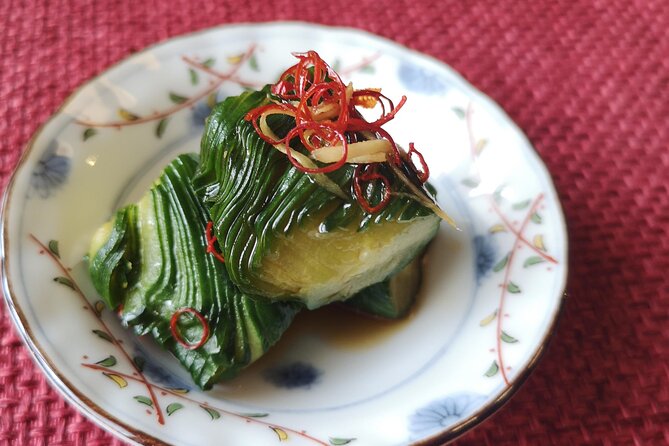
The cucumber pickles are a small part of the menu, but they add balance to the ramen and fried dumplings. They also give you another Japanese home-cooking technique without adding a complicated dish to the morning.
After the cooking is done, the food is arranged for a shared meal in the house. You eat the ramen, gyoza, and pickles you prepared, with enough food for the class to feel like lunch rather than a token tasting.
I like this ending because it gives the work a clear reward. You are not handed a plate while the instructor takes over the kitchen. You see how the separate ingredients become a complete meal, then have time to enjoy it and talk with the other people at the table.
The home setting adds a quiet, civilized feel. It is more intimate than a large group food activity, and the meal becomes part of the cultural exchange. Nariko is also personable and happy to talk about Japan while she teaches, so the conversation is not limited to measurements and cooking times.
Same base, a completely different sort of day:
- Kyoto Geisha Walking Tour: Gion District & Hidden Gems
★ 4.7 · 3,273 reviews - Kyoto: Tea Ceremony Ju-An at Jotokuji Temple
★ 4.9 · 3,207 reviews - Kyoto: Gion Magical Night Walking Tour with Geisha Trivia
★ 4.9 · 2,393 reviews - Kyoto: 45-Minute Tea Ceremony Lesson Experience
★ 4.3 · 2,378 reviews
Nariko’s teaching style and group size
Nariko is the central reason this class works. She explains techniques clearly, demonstrates before asking you to try them, and keeps the pace manageable. Her manner is patient and relaxed, which helps if your first dumpling looks more like a folded coin than a tidy crescent.
The group can include people from different countries and cooking backgrounds. The maximum is eight, while smaller classes of four have also taken place. A group of six or seven still feels social, but it should not feel like a mass-market workshop.
The small size is especially useful for knife work and gyoza shaping. You can ask questions, watch Nariko’s hands closely, and get help with a troublesome wrapper or seal. It also means every participant needs to take part. Spectators are not allowed because the kitchen has limited space.
The stated minimum age is over 10, and children must be able to use a knife. This is not a drop-in activity where a younger child can simply sit beside a parent. Families should plan on each participant taking an active role.
What the price includes in practical terms
The price is $118.92 per person for about three and a half hours. That is not a bargain meal, but it is more than a meal. You are paying for instruction, ingredients, use of a private home kitchen, a full lunch, cultural conversation, and recipes you can use later.
I would judge the value by asking what you want from a food activity. If you only want to eat ramen and gyoza, a restaurant will cost less and take less time. If you want a personal lesson, a small group, and the chance to make gyoza skins and soup yourself, the price is easier to justify.
The recipes matter here. They turn the experience into something you can carry home instead of leaving it as a pleasant memory. You still need to source ingredients and practice the techniques, but you leave with a realistic understanding of how the dishes are assembled.
The class is often reserved about 24 days ahead, so you should not treat it as a last-minute option during a short Kyoto visit. Confirmation arrives within 48 hours, subject to availability. Since the booking is non-refundable and cannot be changed, choose your date carefully before paying.
Who will enjoy this Kyoto cooking experience
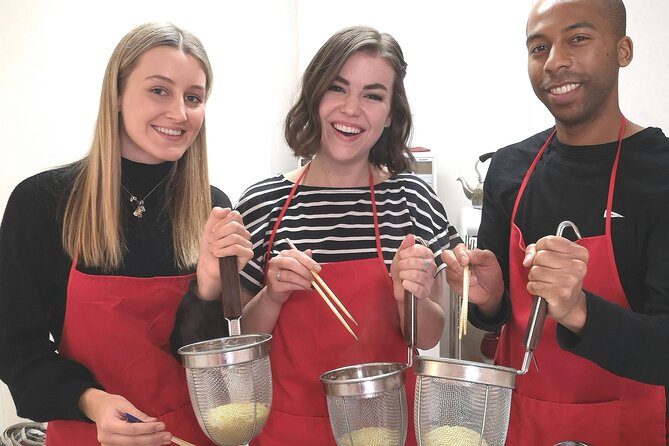
I would choose this class for couples, families with older children, solo visitors who enjoy meeting people, and anyone who wants a slower morning away from major sightseeing sites. It suits curious cooks, but you do not need advanced skills to take part.
It is particularly good for people who want a home-style view of Japan. Restaurant food tells you what a finished dish tastes like. This class gives you a sense of the basic motions behind it: preparing broth, handling dough, shaping dumplings, and balancing a meal with pickles.
Families should note the age rule and the knife requirement. The activity is not designed for spectators, so every person in your booking must be ready to participate and pay the per-person price.
This is less suitable for strict vegetarians, people with dietary restrictions that Nariko cannot accommodate, or anyone expecting to make ramen noodles. It is also not ideal if you want a very short activity between major sightseeing stops. The class takes most of a morning and ends back at the starting point.
Getting there and planning your morning
The meeting point is in Sakyo Ward at 5-6 Matsugasaki Rokunotsubochō, Kyoto, 606-0915. It is near public transportation, and the activity starts at 10:00 a.m.
Allow enough time to reach the neighborhood without rushing. Nariko has met participants at the station and walked with them to her home, but you should follow the confirmed meeting instructions for your date rather than assume a station pickup is always included.
Because the class ends where it begins, you can plan another Kyoto activity afterward, but leave yourself a little breathing room. You will have spent three and a half hours cooking and eating, and a relaxed schedule is a better fit than trying to sprint straight into a timed attraction.
The mobile ticket is convenient, but the key practical issue is the booking condition. Confirmation is subject to availability, and the experience may be canceled if its minimum number is not met. In that case, you are offered another date or experience, or a full refund.
The limitations you should know before booking
The phrase home-style ramen does not mean every part of the ramen is made from raw ingredients. The soup is prepared with Nariko’s family recipe, but the noodles are not made in class. One useful feature of the format is that it keeps the lesson focused and achievable, but some people may want a more technically demanding noodle-making workshop.
The class is not vegetarian because dried fish is used in the ramen soup. Inform Nariko about restrictions before booking, since she may or may not be able to adapt other parts of the meal.
Space is limited. Only paying participants can attend, and there are no spectators. This is a benefit for hands-on teaching, but it can be awkward if one member of a family wants to watch while others cook.
Finally, the experience is non-refundable and cannot be amended after booking. That policy is strict, so check your Kyoto schedule, group size, dietary needs, and age requirements first.
Should you book Nariko’s ramen and gyoza class?
I would book it if you want to learn dishes you can repeat at home and prefer a personal kitchen lesson to a polished food show. The strongest reasons are the small group, the homemade gyoza skins, the family ramen recipe, and the chance to eat a complete meal you helped prepare.
I would skip it if your priority is making ramen noodles, finding a vegetarian class, or keeping your morning free for sightseeing. At $118.92, the value depends on your interest in the process, not just the food.
For the right visitor, this is a warm and useful Kyoto experience. You leave with a full meal, a better sense of Japanese home cooking, and practical recipes rather than a souvenir that sits in a drawer.
FAQ
Where does the cooking class begin and end?
It begins at 5-6 Matsugasaki Rokunotsubochō, Sakyo Ward, Kyoto, 606-0915, and ends back at the same meeting point.
What time does the class start?
The class starts at 10:00 a.m.
How long does the experience last?
The cooking class lasts approximately 3 hours and 30 minutes.
Do you make ramen noodles in the class?
No. You make the ramen soup, but the ramen noodles are not made from scratch. You do make the gyoza wrappers from scratch.
Can vegetarians take this class?
No. The ramen soup uses dried fish, and the class cannot make the ramen soup without it.
What is the minimum age?
Participants must be older than 10 and able to use a knife.
How many people can join?
The class has a maximum of eight participants. Only people taking part in the class may attend because space is limited.
Just added around Kyoto
- Kyoto: Zen Meditation at a Private Temple with a Monk★ 5.0 · 25 reviews
- Kyoto: Gion Geisha District & Sake-in-Hand Walking Tour★ 5.0 · 37 reviews
- Private Pewter Sake Cup Experience with a Kyoto Artisan★ 5.0 · 31 reviews
- Your Private Vacation Photography Session In Kyoto★ 5.0 · 110 reviews
- Private Guided Traditional Buddhist Cooking in Japan★ 5.0 · 16 reviews
- Kyoto Wagashi(Japanese sweets) Cooking Class near Fushimiinari★ 5.0 · 60 reviews
- Traditional Japanese Music show & Experience Tour in Kyoto★ 5.0 · 57 reviews
- Kyoto:Family-Friendly Kimono & Yukata Experience at WARGO★ 5.0 · 147 reviews
Kyoto Tours, compared.


Fushimi Inari, Kinkakuji, Bamboo Grove 1 Day Bus Tour
Read our review →
Tea Ceremony in a Traditional Tea House in Kiyomizu
Read our review →
Kyoto Geisha Walking Tour: Gion District & Hidden Gems
Read our review →

Gion Magical Night Walking Tour with Geisha Trivia
Read our review →
