
Reviewed · KYOTO TOURS
Private & Custom KYOTO Walking Tour – your Travel Companion
Kyoto is not a city you can neatly tick off in one day, but this private tour gives you a useful advantage: you can shape the day around your own priorities. An English-speaking companion handles navigation and can help with tickets, restaurants, photos, and conversations with local vendors.
I like the private format for families and small groups, and I like the practical help with buses, trains, and planning. Guides such as Jinshi, Dalivanh, Karl, Femin, and Rio have each been praised for patience, flexibility, or helping with questions. The main concern is consistency: guide quality appears to vary, and the long list of possible sights is far too ambitious for eight hours.
Key points to know before booking
- A private group of up to five: You are not sharing the day with strangers, and the route can be adjusted to suit your interests.
- Eight hours, but many possible stops: The plan names 13 major sights, from Kinkakuji to Nijo Castle, yet seeing all of them properly would require more than one day.
- Transportation is not included: Your companion can help you use public transportation, but private vehicles, fares, and entrance tickets are extra.
- Strong practical support: The guide can assist with route planning, restaurant bookings, ticket arrangements, photographs, and local communication.
- Guide assignment matters: Several named guides received warm praise, while some guests reported guides with limited Kyoto knowledge or poor preparation.
- Best for first-time visitors: This suits people who want help getting around Kyoto without committing to a fixed group schedule.
What this private Kyoto day is really like
Think of this as a hired local companion rather than a formal, lecture-heavy sightseeing tour. You tell the guide what matters most, then work out a route for the day. That could mean temples and gardens, geisha districts, shopping, food, or a broad first look at Kyoto.
The private setup is especially useful if your group has mixed interests. One person may want Kinkakuji, another may want Nishiki Market, and someone else may care most about bamboo, shrines, or traditional streets. A flexible guide can help balance those wishes better than a fixed coach tour.
The service includes a personalized plan and assistance throughout the day. It does not include private transportation, meals, accommodation, or entrance fees. You are paying $265.82 per group of up to five, not per person. For five people, that is about $53 per person before transport and admission costs. For one or two people, the cost is much harder to justify unless you place a high value on personal help and route planning.
The eight-hour length sounds generous, but Kyoto spreads its major sights across the city. Fushimi Inari is in the southeast, Kinkakuji is in the northwest, and Arashiyama lies farther west. Add traffic, train or bus transfers, queues, walking, and meal time, and you quickly see why you should choose a small number of priorities.
More walking tours in Kyoto:
- Kyoto Geisha Walking Tour: Gion District & Hidden Gems
★ 4.7 · 3,273 reviews - Kyoto: Gion Magical Night Walking Tour with Geisha Trivia
★ 4.9 · 2,393 reviews - Kyoto: Gion Geisha District Walking Tour – Stories of Geisha
★ 4.7 · 2,187 reviews
Kinkakuji and Kiyomizu-dera: two very different temple experiences
Kinkakuji, the Golden Pavilion, is one of Kyoto’s most instantly recognizable sights. The upper floors of this former shogun’s retirement villa shine above a pond, with carefully arranged trees and water framing the view.
The planned stop is only about 30 minutes, which is enough for the main view and a walk through the grounds, but not enough for a slow visit. Admission is extra. Ask your companion to explain the building’s connection to Ashikaga Yoshimitsu and to help you arrive at a time that fits the rest of the day.
Kiyomizu-dera offers a completely different setting. Its famous wooden stage projects from the main hall above the hillside, giving you a dramatic view across the surrounding area. The temple complex also has lanes, smaller shrines, and steep approaches.
The suggested 45-minute visit gives you the central experience, but the area can take longer if you want to explore at an easy pace. Admission is not included. Wear comfortable shoes, since this part of Kyoto involves slopes and uneven walking.
Sannenzaka, Ninenzaka, and Yasaka Shrine
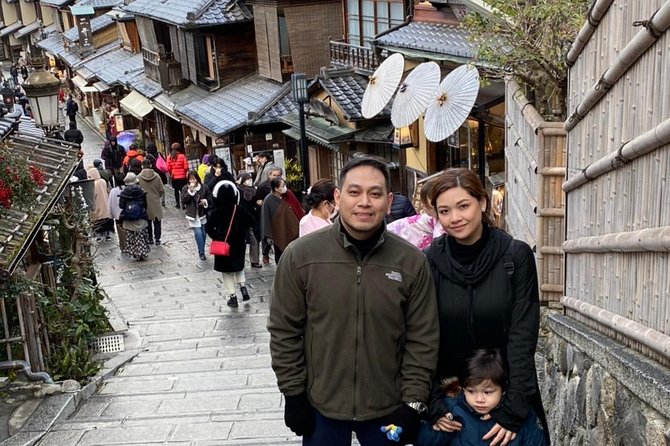
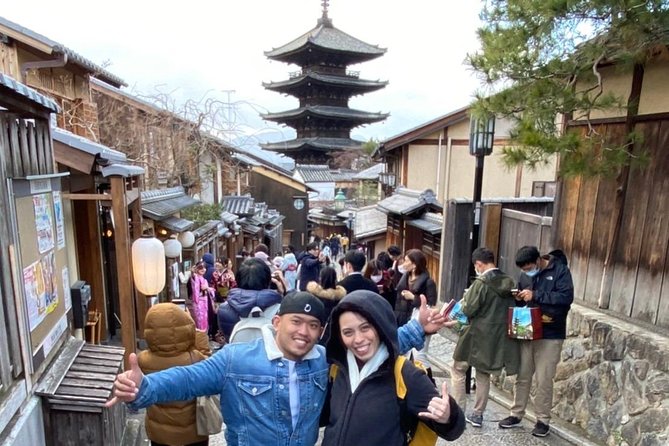
Sannenzaka and Ninenzaka are preserved hillside districts near Kiyomizu-dera. Their traditional buildings, tiled roofs, tea shops, souvenir stores, and narrow lanes create one of Kyoto’s most recognizable old-town scenes.
This is a good place to slow down. You can browse local goods, stop for a snack, or ask your guide to explain what you are seeing. The streets are attractive, but they can feel crowded and commercial, so keep your expectations realistic. You are seeing a carefully maintained historic shopping area, not an untouched village.
Yasaka Shrine sits near Gion and is tied to the famous Gion Matsuri, held every July. The shrine is free to enter, though the tour information marks admission as not included, so confirm the current arrangements with your guide. Thirty minutes works for a first look, but a festival-focused visit would need a different plan.
Fushimi Inari, where timing matters most
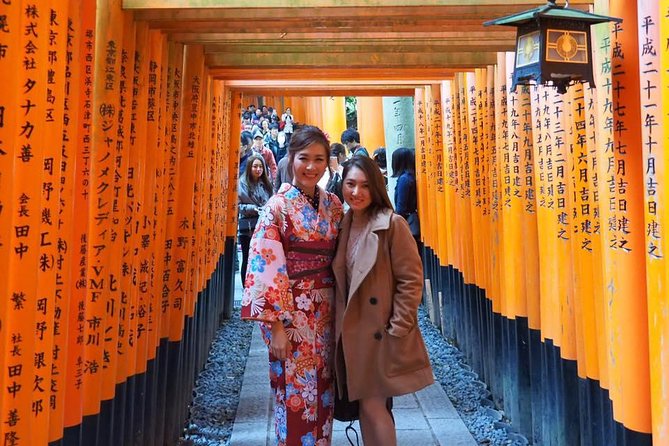
Fushimi Inari Taisha is known for its long runs of vermilion torii gates climbing the wooded mountain behind the main shrine buildings. It is one of Kyoto’s most memorable walks, but the full route is much longer than the 15-minute stop listed in the plan.
That short visit lets you see the entrance and begin the torii-gate path. It does not give you time to walk far up the mountain. If Fushimi Inari is one of your main reasons for booking, say so clearly before the day begins and give it more time.
This is one of the strongest examples of why the private format can help. A guide can tell you how much time remains, point out the practical route, and adjust later stops. If you are trying to cover all 13 places, Fushimi Inari will become a quick photo stop rather than a meaningful visit.
A few more Kyoto half-days to weigh up
- PERFECT KYOTO 1-Day Bus Tour
★ 5.0 · 13,518 reviews - Kyoto: Fushimi Inari, Kinkakuji, Bamboo Grove 1 Day Bus Tour
★ 4.8 · 4,316 reviews - Kyoto: Tea Ceremony in a Traditional Tea House in Kiyomizu
★ 4.9 · 3,519 reviews - Kyoto: Tea Ceremony Ju-An at Jotokuji Temple
★ 4.9 · 3,207 reviews
Arashiyama, bamboo, and Tenryu-ji
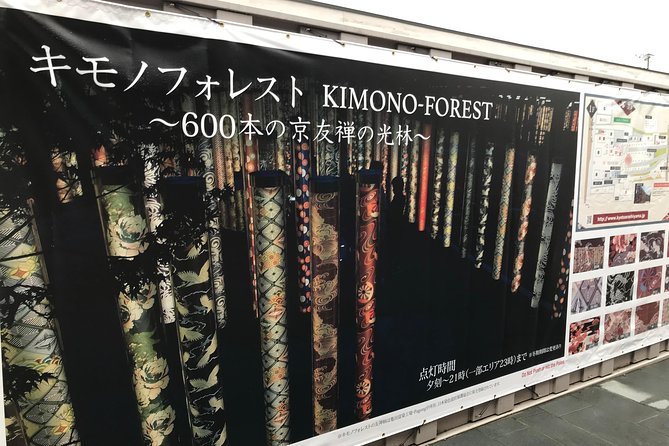
Arashiyama is one of Kyoto’s major sightseeing areas, known for temples, shrines, river views, and its famous bamboo grove. The tour allows about an hour here, including the Bamboo Forest and Tenryu-ji.
That is a useful introduction, but it is still brief. The bamboo path itself is not a long walk, yet the area includes much more than the grove. Tenryu-ji, one of Kyoto’s major Zen temples, adds a garden and a strong cultural focus. Admission is extra.
Arashiyama is also far from several eastern and northern Kyoto sights. Pairing it with Kiyomizu-dera, Fushimi Inari, and Kinkakuji in one day creates a demanding schedule. I would choose Arashiyama only if bamboo and Tenryu-ji rank high on your list, then drop several other stops.
Nishiki Market and Gion for food and local atmosphere
Nishiki Market is a narrow, five-block shopping street often called Kyoto’s kitchen. More than 100 shops and restaurants line the route, offering food products, prepared snacks, kitchen goods, and other local specialties.
The planned 40 minutes is enough to walk through and sample a few things, though it is not enough for a relaxed food tour. Ask your guide about ordering and local etiquette, especially if you are unsure which foods are ready to eat and which are intended for later use.
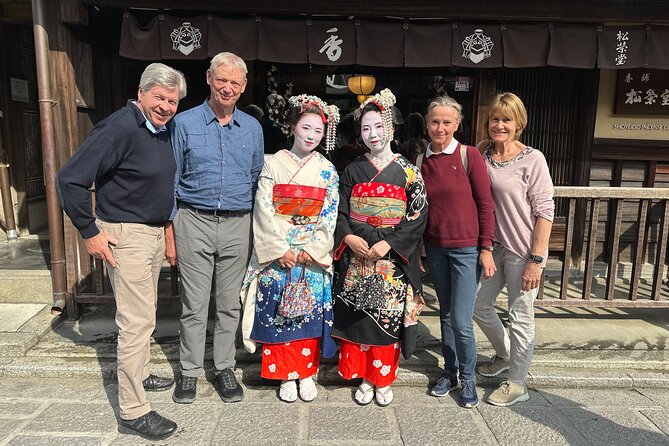
Gion is Kyoto’s best-known geisha district, with traditional wooden facades and lanes that connect the area to Yasaka Shrine. The proposed 30-minute stop gives you a quick look. It will not provide a full understanding of the district, but it can fit well after Sannenzaka and Yasaka Shrine because those areas are close together.
Use courtesy here. Keep to public streets, do not block entrances, and do not treat people in the neighborhood as photo subjects. A private companion can help you understand where photography is appropriate, but basic respect remains your responsibility.
Ginkakuji and the eastern temple route
Ginkakuji, the Silver Pavilion, was built by Ashikaga Yoshimitsu’s grandson, Ashikaga Yoshima, on the opposite side of Kyoto from Kinkakuji. Despite its name, the pavilion is not covered in silver. Its appeal comes from the temple grounds, garden design, and the quiet contrast with the Golden Pavilion.
The planned visit takes about 30 minutes, with admission extra. Ginkakuji can pair naturally with Eikando and other eastern Kyoto sights, but it does not fit efficiently with Arashiyama and Kinkakuji on the same day.
If you prefer gardens and temple grounds to famous photo stops, tell your guide. A day centered on Ginkakuji, Eikando, Kiyomizu-dera, and Sanjusangendo will feel more coherent than a citywide dash.
Sanjusangendo and the Kyoto Imperial Palace
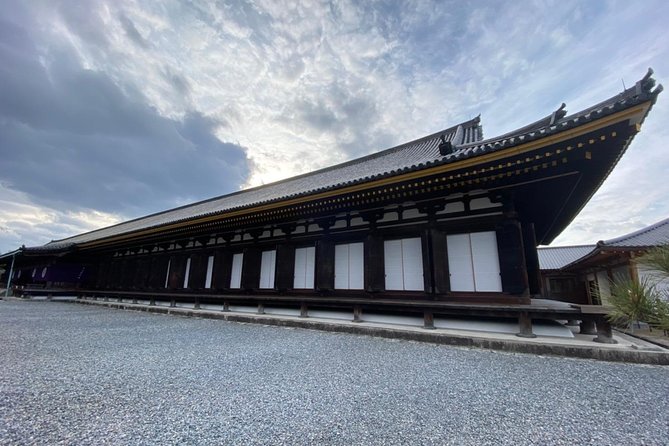
Sanjusangendo is famous for its 1,001 statues of Kannon, the Buddhist figure associated with mercy. The long temple hall gives the visit a different mood from Kyoto’s outdoor gardens and colorful gates. The suggested 30 minutes is enough for a focused visit, with admission extra.
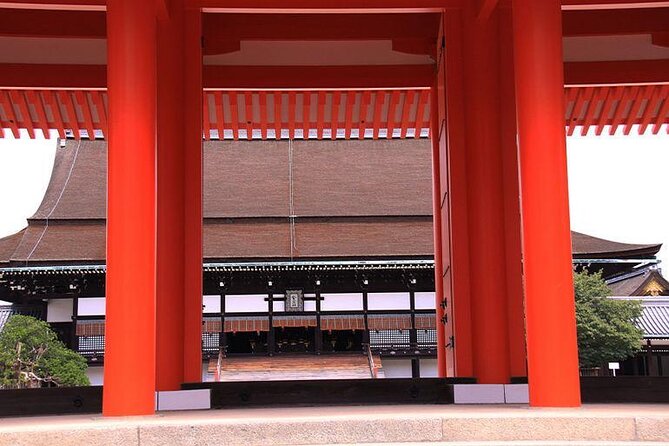
The Kyoto Imperial Palace was the residence of Japan’s Imperial Family until the capital moved to Tokyo in 1868. It sits in a spacious park and offers a change of pace from compact temple lanes.
The palace grounds are free according to the tour details, and the planned visit is 30 minutes. That works for a brief orientation, but you may want more time if you care about palace buildings, gardens, and the wider park.
Nijo Castle and Eikando
Nijo Castle was built in 1603 as the Kyoto residence of Tokugawa Ieyasu, the first shogun of the Edo period. Its palace buildings were completed later by his grandson Iemitsu. The castle gives you a look at political power, court life, and defensive design rather than religious Kyoto.
Allow about 45 minutes in the proposed schedule, with admission extra. That is a quick visit for a site with palace rooms, grounds, and the famous nightingale floors, which make a sound when walked on. If Nijo Castle is a priority, protect its time.
Eikando, formally Zenrinji, belongs to the Jodo school of Buddhism and is known especially for its autumn colors. Its 45-minute stop makes sense for a temple-and-garden route, particularly in fall. Admission is extra, and the temple is just north of Nanzenji, making it more practical to visit with other eastern sights than with Arashiyama.
The guide can make or break the day
The best part of this experience is the human help. Jinshi received praise for making a full day enjoyable, while Dalivanh was specifically appreciated for adapting to a group’s list and guiding them through bus and train travel. Karl was credited with combining temples, shrines, and local interests, and Femin was praised for handling a child’s questions with patience and a friendly manner. Rio was described as patient with older clients.
Those details point to the right expectation. You are hiring someone to help you function in Kyoto, not just to point at buildings. The guide may help with photographs, local communication, restaurant bookings, tickets, and public transportation.
But guide assignment is a real consideration. Some clients encountered guides who seemed underprepared or unfamiliar with Kyoto. One replacement guide was described as a college student, and another complaint involved a guide who had only recently arrived in Japan. The company may not provide the same level of formal cultural training with every companion.
Before the tour, send a short list of your top three priorities. Ask who will guide you, how much experience that person has in Kyoto, and which admissions or transport costs you should expect. Those questions can prevent a mismatch.
Transport, walking, and the true cost
Private transportation is not included. The guide can help you navigate buses and trains, as Dalivanh did for one group, but you pay your own fares. The day also involves substantial walking, stairs, temple approaches, and uneven surfaces.
The activity is near public transportation, and most people can participate according to the supplied information. Still, the pace should be discussed in advance if anyone in your group has limited mobility or needs frequent breaks.
Entrance fees are extra at Kinkakuji, Kiyomizu-dera, Tenryu-ji, Ginkakuji, Sanjusangendo, Nijo Castle, and Eikando. Meals are also extra. The advertised price is therefore the guide fee, not the total cost of the day.
Pickup is offered, and the activity ends back at the meeting point. The operating hours shown are broad, from 6:00 a.m. to 10:00 p.m., Monday through Sunday, but confirm your actual start time and pickup details when booking.
The cancellation policy is strict: the experience is non-refundable and cannot be changed for any reason. Do not book until your date and group plans are firm.
Who should book this Kyoto experience?
I would consider this tour for a first visit, a family group, older relatives who want help with transportation, or a small group with a clear wish list. It is also useful if language barriers make restaurant bookings, ticket purchases, or public transit feel stressful.
I would not choose it for a slow, specialist temple tour unless you confirm the guide’s background and set a narrow route. I would also hesitate if you expect a formal historian or a polished, fixed program. The companion model can be warm and helpful, but the experience may depend heavily on the person assigned.
The strongest plan is to select three or four nearby areas. For example:
- Kinkakuji, Nijo Castle, and the Imperial Palace for northern and central Kyoto
- Kiyomizu-dera, Sannenzaka, Gion, Yasaka Shrine, and Sanjusangendo for eastern Kyoto
- Fushimi Inari, Gion, and Nishiki Market for shrines, food, and central streets
- Arashiyama, Tenryu-ji, and nearby western Kyoto sights for a focused half-day
Trying to visit every named stop will leave you with hurried photographs and little time to appreciate any place.
Should you book it?
Book this private Kyoto tour if flexibility and practical assistance matter more to you than a guaranteed expert lecture. The price can be fair for a group of five, especially when the guide helps with buses, trains, restaurants, photographs, and a difficult first day in Kyoto.
Book with care. Ask about your guide’s experience, trim the wish list, and budget for transport and admission fees. If you want a flexible companion and can accept some uncertainty in guide quality, this can be a useful way to get oriented. If you want deep site interpretation and a tightly managed sightseeing route, choose a more specialized guide service.
FAQ
How long is the Kyoto private tour?
The experience lasts approximately eight hours.
How many people can join the private tour?
The private price covers one group of up to five people.
Is pickup available?
Yes, pickup is offered. The activity ends back at the meeting point.
Is the tour conducted in English?
An English-speaking guide or travel companion is provided.
Is private transportation included?
No. Private transportation is not included, though the companion can assist with itinerary planning and public transportation.
Are entrance fees included?
No. Entrance fees are not included. Admission is listed separately for several temples and Nijo Castle.
Are meals included?
No. Breakfast, lunch, dinner, and other meals are not included.
Can the itinerary be customized?
Yes. The tour is designed around a personalized itinerary, and you can select sights based on your interests.
Which Kyoto attractions can be visited?
Possible stops include Kinkakuji, Kiyomizu-dera, Sannenzaka and Ninenzaka, Yasaka Shrine, Fushimi Inari, Arashiyama, Nishiki Market, Gion, Ginkakuji, Sanjusangendo, the Kyoto Imperial Palace, Nijo Castle, and Eikando.
Can I cancel or change the booking?
No. The experience is non-refundable and cannot be changed for any reason.
Just added around Kyoto
- Kyoto: Zen Meditation at a Private Temple with a Monk★ 5.0 · 25 reviews
- Kyoto: Gion Geisha District & Sake-in-Hand Walking Tour★ 5.0 · 37 reviews
- Private Pewter Sake Cup Experience with a Kyoto Artisan★ 5.0 · 31 reviews
- Your Private Vacation Photography Session In Kyoto★ 5.0 · 110 reviews
- Private Guided Traditional Buddhist Cooking in Japan★ 5.0 · 16 reviews
- Kyoto Wagashi(Japanese sweets) Cooking Class near Fushimiinari★ 5.0 · 60 reviews
- Traditional Japanese Music show & Experience Tour in Kyoto★ 5.0 · 57 reviews
- Kyoto:Family-Friendly Kimono & Yukata Experience at WARGO★ 5.0 · 147 reviews
Kyoto Tours, compared.


Fushimi Inari, Kinkakuji, Bamboo Grove 1 Day Bus Tour
Read our review →
Tea Ceremony in a Traditional Tea House in Kiyomizu
Read our review →
Kyoto Geisha Walking Tour: Gion District & Hidden Gems
Read our review →

Gion Magical Night Walking Tour with Geisha Trivia
Read our review →

Gion Geisha District Walking Tour – Stories of Geisha
Read our review →Browse the lists this tour appears in