
Reviewed · KYOTO TOURS
Kiyomizu Temple and Backstreets of Gion, Half Day Group Tour
Kiyomizu-dera is the star here, but the real pleasure is the walk that leads to it and away from it. You climb through Kyoto’s old Higashiyama lanes, pass the photogenic Yasaka Pagoda, pause at small shrines, and finish among the wooden machiya houses of Gion. It is a smart way to see several major sights without spending half the day studying a map.
I like the small maximum of eight people, which gives the guide room to answer questions and adjust the pace. I also like the mix of grand places and quiet corners: Kiyomizu-dera and Kennin-ji provide the major cultural weight, while Yasaka Kōshin-dō and the backstreets add color and a more personal feel.
The main consideration is simple: this is a walking tour with uphill sections, steep historic streets, and possible crowds around Kiyomizu-dera. Wear good shoes, allow some flexibility at the end, and do not schedule a tight appointment immediately afterward.
Key points at a glance
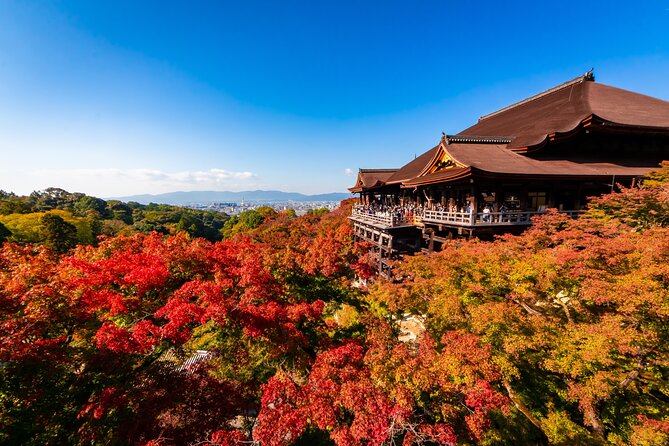
- Kiyomizu-dera in about one hour: Learn the temple’s cultural and religious importance while enjoying one of Kyoto’s best-known views.
- A downhill route through old Kyoto: Sannenzaka and Ninenzaka connect the temple with shops, wooden houses, snacks, and classic street scenes.
- Small-group attention: The tour has a maximum of eight people, with a format that can be adjusted to your interests.
- A useful religion lesson: Compare Buddhist sites such as Kiyomizu-dera and Kennin-ji with Shinto shrines along the route.
- Kennin-ji offers a calm finish: Kyoto’s oldest Zen temple gives you quiet rooms and grounds after the busy Higashiyama streets.
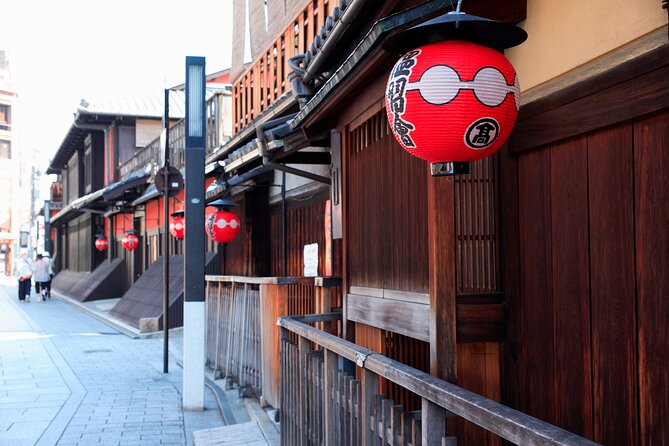
- Gion comes last: The walk ends at Hanamikoji, where traditional machiya houses and teahouses frame one of Kyoto’s most famous districts.
Why this four-hour Kyoto walk works
Kyoto can be hard to approach on your own. The city’s best sights are spread across different neighborhoods, and the small lanes around Higashiyama can become crowded enough to slow you down. This route solves part of that problem by linking several sights in a logical order: meet near the Kyoto Ceramic Center, walk uphill to Kiyomizu-dera, then make your way through the old streets toward Gion.
You get a strong first look at Kyoto’s temples, shrines, traditional buildings, and religious customs in one morning or afternoon. The route is not just a procession from one photo stop to another. A good guide can explain what you are seeing, point out differences between Buddhist and Shinto practice, and help you understand why these places matter.
The experience is described as a private, customizable walking tour, while the booking information also gives a maximum of eight people. In practical terms, expect a small group rather than a large coach outing. That matters in narrow lanes and temple grounds, where a big party can become awkward quickly.
Guides named in recent tour experiences include Mitsuhiko, Mika, Takuma, Kiyoto, and Toshi. The strongest pattern is a guide who explains clearly, keeps the walk organized, and adjusts to the group. Kiyoto, in particular, has been noted for tailoring the walk to personal interests and offering answers to wider questions about Japan. A guide such as Takuma or Mika can also make the religious and historical material feel lively rather than like a school lecture.
More geisha-district evenings:
- Kyoto Geisha Walking Tour: Gion District & Hidden Gems
★ 4.7 · 3,273 reviews - Kyoto: Gion Magical Night Walking Tour with Geisha Trivia
★ 4.9 · 2,393 reviews - Kyoto: Gion Geisha District Walking Tour – Stories of Geisha
★ 4.7 · 2,187 reviews
Starting at the Kyoto Ceramic Center
The meeting point is in front of the Kyoto Ceramic Center, officially listed as the Kyoto Ceramic Art Association Official Shop and Gallery, at 583-1 Yūgyōmaechō in Higashiyama Ward. The opening stop is brief, about ten minutes, and admission is free.
This is mainly a practical meeting point, not a major sightseeing stop. Arrive ready to walk, with your mobile ticket available and your guide easy to identify. Since the area is near public transportation, it is a reasonable place to begin, but you should still allow time to reach it. Kyoto’s transit system is useful, yet the last part of a journey can involve walking through busy streets.
From here, the route moves toward Kiyomizu-dera. The direction is important. You are not simply being dropped at the temple entrance, then sent off alone. The approach through Higashiyama helps you see how the temple is tied to the surrounding neighborhood.
Kiyomizu-dera and the famous wooden stage
The tour allows about one hour at Kiyomizu-dera, with admission included. That is enough time for an informed visit, though not enough to inspect every corner at leisure.
Kiyomizu-dera is one of Kyoto’s most important Buddhist temples and a UNESCO World Heritage Site. Its fame comes partly from its dramatic setting and partly from its long religious importance. The name means Pure Water Temple, and the guide’s explanation helps connect the buildings, rituals, and beliefs rather than treating the temple as a scenic platform alone.
The temple is among Kyoto’s most visited sights, so timing and local direction matter. The paths can be crowded, especially near the best-known viewpoints and approach streets. A guide who knows how to move through the area can save you time and help you focus on the details instead of simply following the crowd.
You will want comfortable shoes here. The temple visit includes walking, standing, and some uphill movement before and around the site. The reward is a sweeping view over Kyoto, along with a closer look at one of the city’s most recognizable religious buildings.
Do not expect a slow, private temple meditation. Kiyomizu-dera is a major public sight, and the atmosphere can be busy. The value of the visit comes from having context and direction. You see the famous place, but you also learn how it fits into Kyoto’s religious life.
Sannenzaka and Ninenzaka on foot
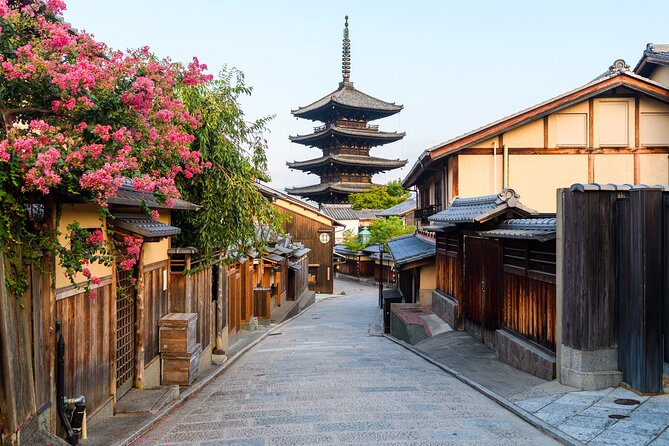
After Kiyomizu-dera, the route spends about 30 minutes on Sannenzaka and Ninenzaka. These are historic stone-paved streets leading down from the temple area.
Sannenzaka, or Three-Year Slope, is the longer and steeper of the two. Ninenzaka, or Two-Year Slope, is somewhat gentler. The names give you a small taste of Kyoto’s fondness for linking places with old beliefs and stories, and your guide can add meaning to what might otherwise look like a pleasant shopping street.
This is one of the best parts of the walk for seeing traditional wooden buildings. The streets are lined with shops, food stalls, and small businesses, so there is a chance to sample Japanese snacks or pause for a quick purchase. One guide-led experience included snack sampling, which is a useful reminder that the route is not purely formal sightseeing.
The drawback is crowding. These lanes are narrow and popular, and stopping in the middle for photos can block foot traffic. Keep your group together and follow your guide’s lead. If you have a strong interest in shopping or snacks, mention it early. The tour is described as customizable, but four hours goes quickly.
A few more Kyoto half-days to weigh up
- PERFECT KYOTO 1-Day Bus Tour
★ 5.0 · 13,518 reviews - Kyoto: Fushimi Inari, Kinkakuji, Bamboo Grove 1 Day Bus Tour
★ 4.8 · 4,316 reviews - Kyoto: Tea Ceremony in a Traditional Tea House in Kiyomizu
★ 4.9 · 3,519 reviews - Kyoto: Tea Ceremony Ju-An at Jotokuji Temple
★ 4.9 · 3,207 reviews
A garden pause and the Yasaka Pagoda view
The route also includes a Japanese garden near Kiyomizu-dera, described as a peaceful place with ponds, traditional wooden bridges, and carefully arranged plants. The supplied timing does not give this stop a separate duration, so think of it as a short pause rather than a long garden visit.
That pause can be welcome after the temple and slopes. Kyoto’s gardens reward quiet attention: water, bridges, plants, and open space offer a different kind of beauty from the crowded streets. Your guide can help you notice the design rather than rushing you through it.
The Yasaka Pagoda is another memorable sight along this section. This five-story pagoda is one of Kyoto’s most recognizable landmarks and a favorite subject for photographs in the Higashiyama area. It is closely linked with the surrounding temples and old streets, so seeing it on foot gives you a stronger sense of place than viewing it only from a distant road.
The pagoda is a visual stop rather than a separately timed interior visit. Keep your expectations clear: the attraction is the building, the street setting, and the chance to understand its place in the district.
Two small shrines with very different purposes
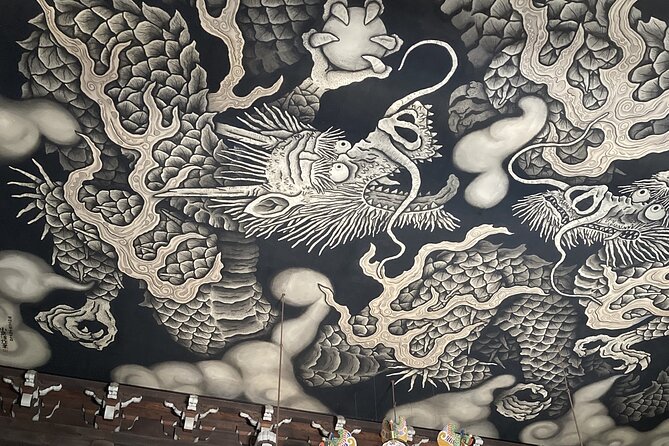
Yasaka Kōshin-dō receives about ten minutes, with no admission charge. This small traditional temple is dedicated to Koshin, a guardian deity associated with protection from illness and misfortune.
The site is famous for its colorful kukurizaru, small round charms shaped like tied-up monkeys. The bright display gives the stop a playful look, but the belief behind it is more serious. The charms represent restraint and the setting aside of distracting desires. Ten minutes is enough to see the temple and hear the basic explanation without making the visit feel padded.
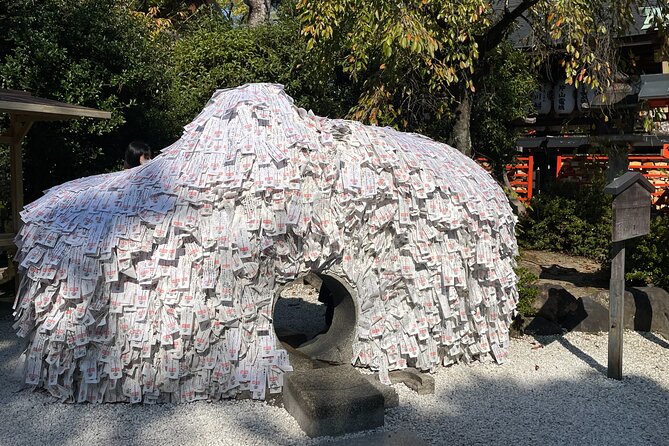
Next comes Yasui-Konpiragu, also known as a place for cutting negative relationships and forming positive ones. It is a Shinto shrine, and its unusual ritual gives the stop a very different character from the large Buddhist temples earlier in the walk.
The shrine can attract long lines for the ritual, so the exact pace may depend on conditions. The tour includes about ten minutes here, which should allow an introduction and a look at the site. If you have a personal interest in Japanese folk beliefs, this is a particularly useful stop. It shows that Kyoto’s religious life is not limited to grand temples and formal ceremonies.
Together, these two places help you compare different kinds of devotion. One is a small temple with distinctive charms. The other is a shrine known for a direct, personal wish. Both are compact, memorable, and easy to overlook if you are walking alone.
Kennin-ji, Kyoto’s oldest Zen temple
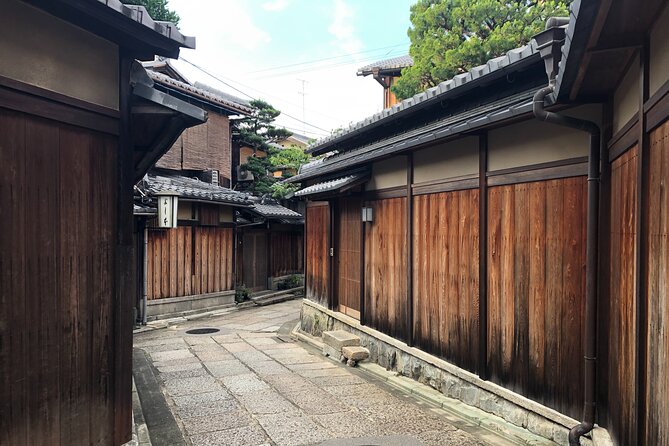
The tour sets aside about 50 minutes for Kennin-ji, with admission included. Founded in 1202, Kennin-ji is described as Kyoto’s oldest Zen temple.
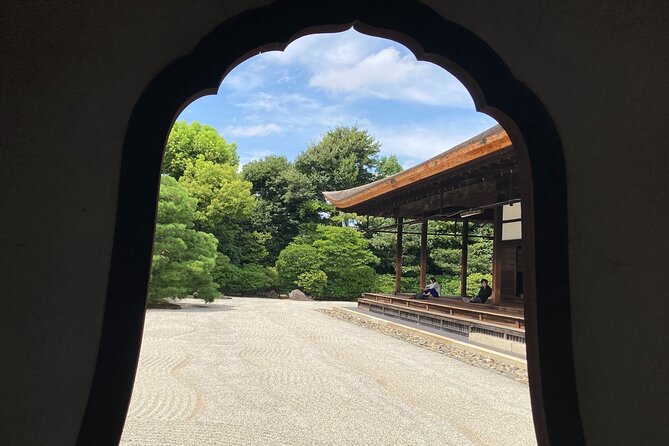
After the busy streets around Kiyomizu-dera, the temple grounds offer a calmer change of pace. Despite its central location, Kennin-ji has spacious grounds and a more measured atmosphere. This is where the tour’s Zen Buddhism theme gets its clearest treatment.
The Dharma Hall is an important feature, and the temple’s rooms and gardens give the guide room to explain Zen ideas through architecture and space. You are not just looking at another old building. You are learning how a Zen temple uses simplicity, order, and controlled views to shape the experience of the visitor.
Fifty minutes is a useful amount of time here. It gives you enough space to listen, look around, and enjoy the quiet without turning the stop into a rushed photo call. Admission is included, which makes the tour easier to budget.
If you are mainly interested in shopping or street photography, Kennin-ji may feel slower than the earlier sections. I see that as a strength for most people, since the temple provides balance. The route would be a blur of crowds and storefronts without a pause like this.
Finishing through Gion and Hanamikoji
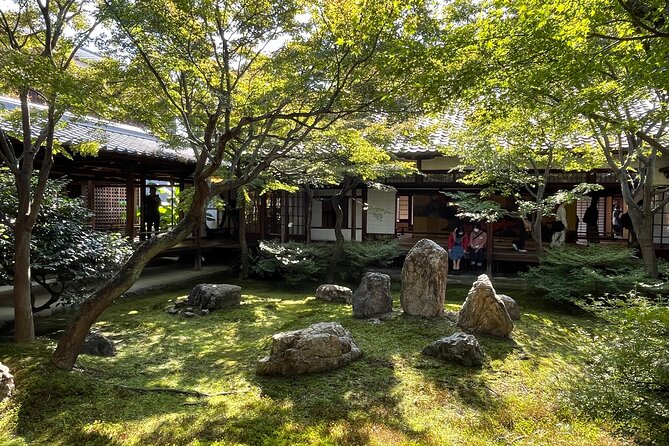
The walk ends in Gion at 571 Gionmachi Minamigawa, near Hanamikoji. Gion is Japan’s largest geisha district, and Hanamikoji is its best-known street.
Traditional wooden machiya houses line the route, along with teahouses, shops, and restaurants. The buildings give this part of Kyoto a distinct sense of continuity, but you should remember that Gion is also a living neighborhood and working district. Walk quietly, respect private entrances, and do not treat the street as a stage.
Ending here makes practical sense. You finish near one of Kyoto’s most recognizable areas, with time to continue exploring on your own, find a meal, or return to public transportation. The stated end point is specific, but the tour warns that the finish can be delayed. Do not book a train, dinner reservation, or other fixed appointment immediately afterward unless you leave plenty of room.
The Gion finish also gives the guide a chance to explain how the district relates to Kyoto’s traditional arts and entertainment culture. You see more than old facades. You get a basic understanding of why the area has such a strong place in the city’s image.
What the $59.45 price buys you
At $59.45 per person, this is not the cheapest way to walk around Higashiyama. You can visit many Kyoto streets and shrines on your own for little or no cost. The price makes sense if you want help with direction, historical context, temple etiquette, and time management.
Admission to Kiyomizu-dera and Kennin-ji is included. Several smaller stops, including Yasaka Kōshin-dō and the opening point, are free anyway. The real cost is for the guide’s time and the structure of the route.
For a first visit to Kyoto, that can be good value. In four hours, you cover Kiyomizu-dera, the two historic slopes, a garden area, Yasaka Pagoda, two smaller religious sites, Kennin-ji, and Gion. Doing the same route alone is possible, but you would need to research the order, find each entrance, interpret what you see, and manage the crowded streets.
The value is weaker if you already know Higashiyama well or prefer to move at your own speed. You may want longer at Kiyomizu-dera, more time for shopping, or a quiet hour in one garden. This tour is best for a strong introduction, not for a slow specialist visit.
Walking conditions, group size, and planning tips
The tour lasts about four hours and takes place rain or shine. You should wear comfortable walking shoes, especially because Sannenzaka is steep and the route includes uphill walking near Kiyomizu-dera.
Most people can participate, but the physical demands should not be ignored. The streets can be crowded, the paving is uneven in places, and there are several hours of movement with standing at temple and shrine stops.
A maximum of eight people is a real advantage. It is easier to hear the guide, stay together, ask questions, and adjust the pace. Families can also benefit from the flexible format. One guide has been praised for adapting the walk to children’s pace and interests, so tell your guide at the start if younger members need shorter pauses or extra time.
The tour has free cancellation up to 24 hours before the local start time. Changes or cancellations inside that window are not accepted for a refund. Confirmation arrives when you book, and the mobile ticket is convenient for a walking experience.
Who should book this Kyoto tour?
I would choose this walk for a first-time visitor who wants Kyoto’s major Higashiyama sights explained in one compact outing. It also suits solo visitors who want a reliable route and someone to answer questions, families seeking a flexible pace, and anyone curious about the difference between Buddhist temples and Shinto shrines.
It is especially useful if you are making a short visit to Kyoto or arriving from Tokyo for the day. One solo visitor used the tour to cover the main sights efficiently, and that is exactly where the format works best.
I would hesitate if you dislike hills, crowds, or fixed group pacing. Independent visitors who want long shopping stops or extended photography time may find four hours too structured. The route is busy, and the end time can shift.
For most people, I would book it near the start of a Kyoto stay. The guide can help you get your bearings, explain customs you will encounter elsewhere, and point you toward food or other sights. Some guides have also shared meal recommendations or continued the conversation over ramen afterward, though that is not part of the stated tour.
Final verdict: a strong first look at Kyoto
Book this tour if you want a well-planned walk through Kyoto’s most famous eastern district, with enough cultural explanation to make the temples and shrines meaningful. The combination of Kiyomizu-dera, old slopes, small shrines, Kennin-ji, and Gion gives you a lot in four hours.
The strongest reasons to go are the small group, the flexible guiding style, and the route’s balance between famous sights and less obvious stops. Just wear solid shoes, expect crowds, and keep your schedule afterward open. At $59.45, it is a fair buy for a first Kyoto orientation, especially when you value local guidance more than complete independence.
FAQ
How long does the Kiyomizu Temple and Backstreets of Gion tour last?
The tour lasts approximately four hours.
How much does the tour cost?
The listed price is $59.45 per person.
What is the maximum group size?
The tour has a maximum of eight participants.
Where does the tour begin?
It begins in front of the Kyoto Ceramic Center, also called the Kyoto Ceramic Art Association Official Shop and Gallery, at 583-1 Yūgyōmaechō in Kyoto’s Higashiyama Ward.
Where does the tour end?
The tour ends at 571 Gionmachi Minamigawa in the Higashiyama Ward, near Gion and Hanamikoji.
Is admission to the temples included?
Admission to Kiyomizu-dera and Kennin-ji is included. The listed stops at the Kyoto Ceramic Center and Yasaka Kōshin-dō have no admission charge.
Is this a walking-heavy experience?
Yes. The route includes uphill walking to Kiyomizu-dera and steep historic streets such as Sannenzaka and Ninenzaka. Comfortable walking shoes are recommended.
Does the tour operate in bad weather?
Yes. The tour takes place rain or shine.
What is the cancellation policy?
You can cancel up to 24 hours before the experience start time for a full refund. Cancellations or changes made less than 24 hours before the start time are not accepted for a refund.
Just added around Kyoto
- Kyoto: Zen Meditation at a Private Temple with a Monk★ 5.0 · 25 reviews
- Kyoto: Gion Geisha District & Sake-in-Hand Walking Tour★ 5.0 · 37 reviews
- Private Pewter Sake Cup Experience with a Kyoto Artisan★ 5.0 · 31 reviews
- Your Private Vacation Photography Session In Kyoto★ 5.0 · 110 reviews
- Private Guided Traditional Buddhist Cooking in Japan★ 5.0 · 16 reviews
- Kyoto Wagashi(Japanese sweets) Cooking Class near Fushimiinari★ 5.0 · 60 reviews
- Traditional Japanese Music show & Experience Tour in Kyoto★ 5.0 · 57 reviews
- Kyoto:Family-Friendly Kimono & Yukata Experience at WARGO★ 5.0 · 147 reviews
Kyoto Tours, compared.


Fushimi Inari, Kinkakuji, Bamboo Grove 1 Day Bus Tour
Read our review →
Tea Ceremony in a Traditional Tea House in Kiyomizu
Read our review →
Kyoto Geisha Walking Tour: Gion District & Hidden Gems
Read our review →

Gion Magical Night Walking Tour with Geisha Trivia
Read our review →

Gion Geisha District Walking Tour – Stories of Geisha
Read our review →Browse the lists this tour appears in