
Reviewed · KYOTO TOURS
Kyoto Early Bird Walking Tour
Kyoto’s most famous sights are far more pleasant before breakfast, and this early-morning route makes that simple. You meet at Kyoto Station, then reach Fushimi Inari, Kinkaku-ji, and Arashiyama before the day’s crowds gather. It is an ambitious half-day, not a slow wander.
I like two things here: the timing protects your visit to places that can feel packed by midmorning, and a private guide handles the trains and buses between three widely separated parts of Kyoto. Guides such as Akiko, Kaz, Sumiko, Miho, Tomoko, and Makoto have also been praised for explaining Japanese history and culture, helping with photographs, and adjusting the pace when needed.
The tradeoff is clear: you cover a lot of ground in about five hours, with quite a bit of walking and public transport. You will need comfortable shoes, an early start, and enough energy to keep moving. Kinkaku-ji’s ¥500 admission and about ¥1,220 in transport costs are extra.
Key points at a glance
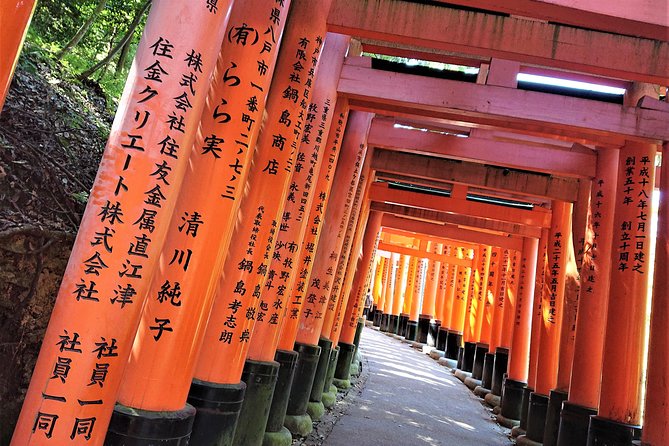
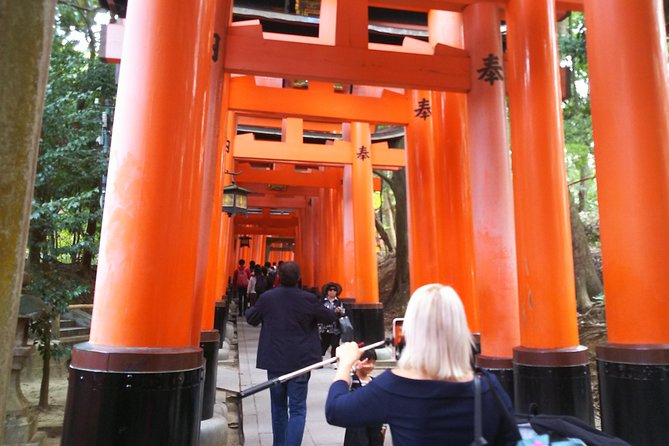
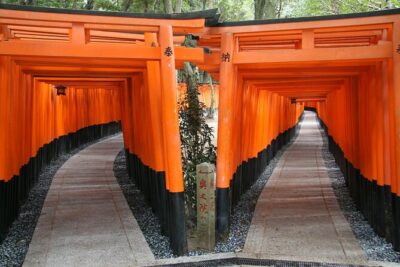
- Fushimi Inari before the crowds: Walk beneath the vermilion torii gates while the shrine is still relatively quiet.
- Kinkaku-ji at opening time: See the Golden Pavilion and its pond in softer morning light, with admission paid separately.
- Arashiyama before midday: Reach the bamboo forest before the busiest part of the day and the warmer temperatures.
- Private group format: Only your party joins the activity, so guides can respond to questions, children, breaks, and small route changes.
- Fast but useful transport help: The guide leads you through Kyoto’s trains, buses, and stations instead of leaving you to work out each connection.
- A full afternoon remains: The tour ends back at Kyoto Station around noon, leaving time for more temples, food, shopping, or rest.
Why an early start matters in Kyoto
Kyoto’s big-name sights are not secrets. Fushimi Inari, Kinkaku-ji, and Arashiyama all draw large numbers of people, and the difference between an early visit and a late-morning visit can be substantial. I like this tour because the schedule is built around that fact instead of treating the crowds as an unavoidable nuisance.
The first departure is from Kyoto Station in the early morning. That may be a challenge after a long flight, but it can work well if you are awake with jet lag. One family described the pace as fast but manageable, especially because the guide took care of the best routes between sites located on opposite sides of Kyoto.
The tour lasts about five hours and 15 minutes, though the listed itinerary gives roughly an hour at each main stop. The remaining time is used for transport and moving between the sites. This is important: you are not getting three leisurely temple visits. You are getting a focused introduction to three major Kyoto sights before noon.
More walking tours in Kyoto:
- Kyoto Geisha Walking Tour: Gion District & Hidden Gems
★ 4.7 · 3,273 reviews - Kyoto: Gion Magical Night Walking Tour with Geisha Trivia
★ 4.9 · 2,393 reviews - Kyoto: Gion Geisha District Walking Tour – Stories of Geisha
★ 4.7 · 2,187 reviews
Starting at Kyoto Station with a private guide
The meeting point is the Kyoto Station Building at 901 Higashishiokōjichō. Station buildings can feel confusing, especially first thing in the morning, so the guide’s ability to identify the meeting spot matters. Makoto, for example, sent photographs of the meeting point in advance and introduced himself before the tour, a useful touch for anyone worried about finding the group.
Because this is a private activity, only your group participates. That gives the morning a more personal feel than a large coach or walking group. It also allows some flexibility. One guide changed the order slightly at a family’s request, while others checked regularly about water, toilets, and general comfort.
You should still expect a set plan. The three attractions are spread across Kyoto, so the guide must keep the group moving to finish around midday. The private format does not turn the outing into a casual stroll, but it does mean you can ask questions and speak up if the pace or route needs a small adjustment.
Fushimi Inari and its tunnel of torii gates
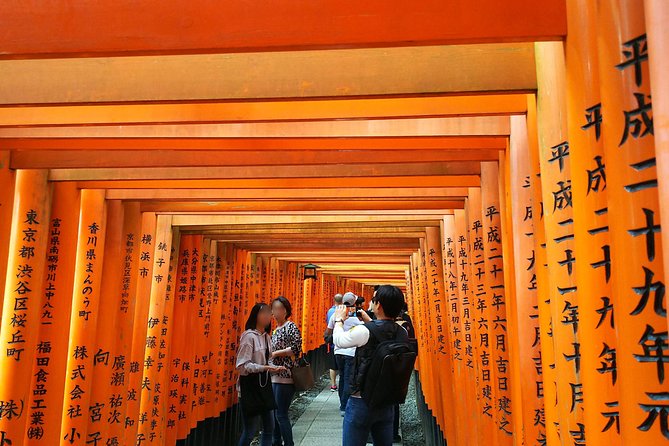
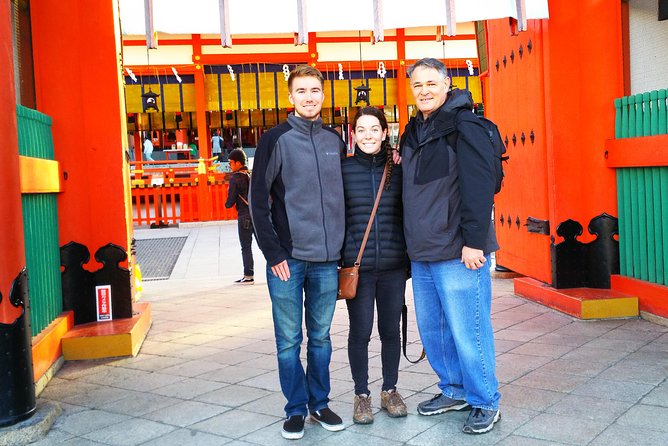
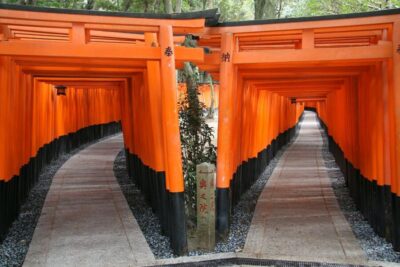
Fushimi Inari-taisha is the most atmospheric first stop. Its famous path passes through thousands of vermilion torii gates, donated by worshippers in thanks for good fortune connected with the deity honored here. The gates form a striking tunnel, with glimpses of the shrine grounds and wooded slopes between them.
You spend about an hour here, with no admission charge. The early timing is especially valuable at Fushimi Inari because the path is narrow in places, and large numbers of people can make the experience feel more like a queue than a pilgrimage route.
Your guide can explain the Shinto setting, the meaning of the torii, and how to behave respectfully at the shrine. The guides are also familiar with good photo positions, which helps when you want a picture without stopping in the middle of the walkway. Akiko was singled out for taking photos of couples and families, and Makoto was praised for knowing the most useful spots for photographs.
The main limitation is that one hour only gives you an introduction. Fushimi Inari’s paths continue far beyond the most photographed gates, but this tour does not offer time for a long climb through the entire mountain area. If hiking deep into the shrine grounds is your main goal, you may prefer to visit separately.
Kinkaku-ji in the morning light
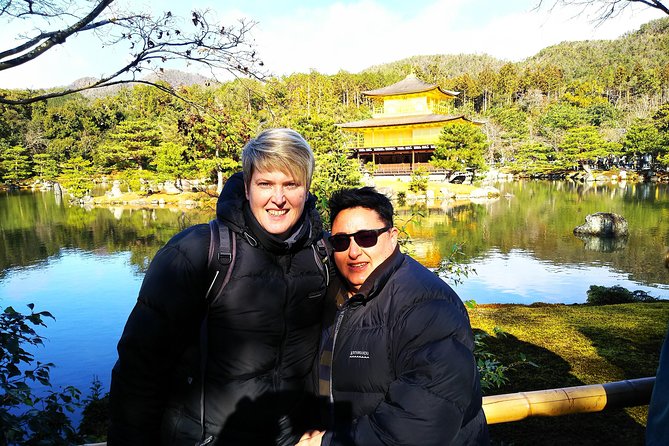
Next comes Kinkaku-ji, the Golden Pavilion, where the building’s gilded exterior reflects in the pond. The temple is connected with Zen Buddhism and samurai-era culture, and its setting makes it one of Kyoto’s most recognizable sights.
Admission is not included, so budget ¥500 per person. You have about an hour at the temple, entering soon after it opens. That timing is one of the tour’s strongest features. The grounds can fill quickly, and the morning light often gives the pavilion a clean, bright appearance across the water.
I would keep your expectations realistic. Kinkaku-ji is a famous viewing experience rather than an intimate, empty temple visit. You follow the established visitor route and see the pavilion from the outside. You do not enter the Golden Pavilion itself. Still, arriving early gives you a better chance to pause, take in the reflection, and hear your guide explain the site without competing with a heavy midday crowd.
The guide adds value here because the building’s beauty is easy to appreciate but its religious and cultural setting is less obvious. Guides including Kaz, Sumiko, and Hiro have been praised for explaining Buddhist and Shinto ceremonies, Japanese history, and the meaning behind the places you see.
A few more Kyoto half-days to weigh up
- PERFECT KYOTO 1-Day Bus Tour
★ 5.0 · 13,518 reviews - Kyoto: Fushimi Inari, Kinkakuji, Bamboo Grove 1 Day Bus Tour
★ 4.8 · 4,316 reviews - Kyoto: Tea Ceremony in a Traditional Tea House in Kiyomizu
★ 4.9 · 3,519 reviews - Kyoto: Tea Ceremony Ju-An at Jotokuji Temple
★ 4.9 · 3,207 reviews
Arashiyama’s bamboo forest before the heat
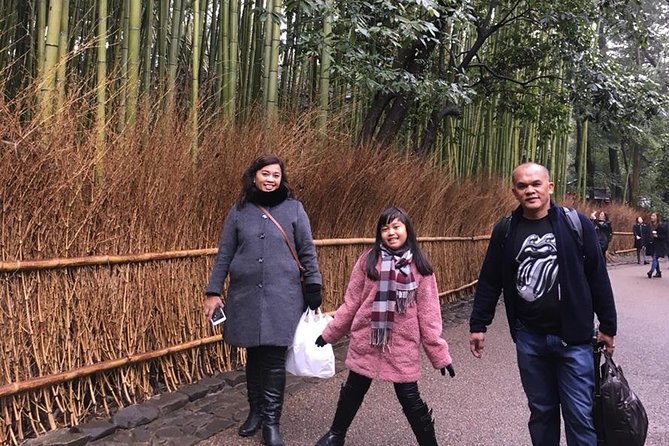
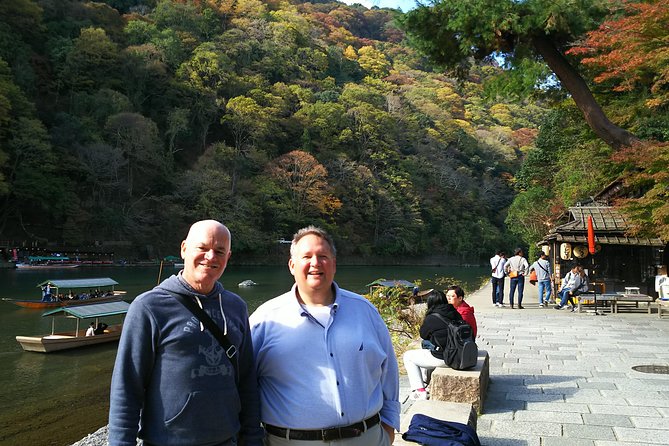
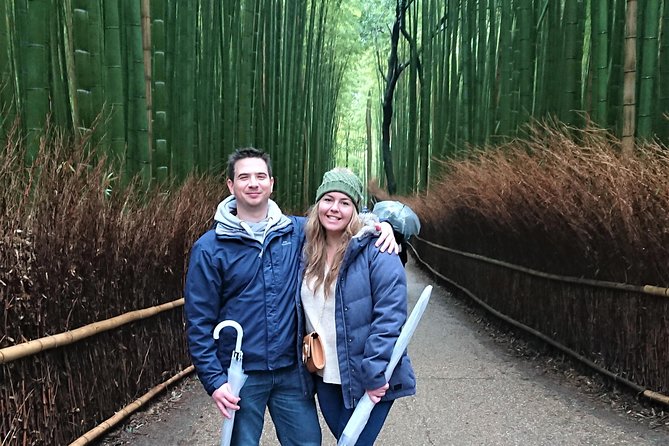
The final main stop is Arashiyama, best known for its tall bamboo grove. The path through the grove can feel cool and shaded in the morning, with the breeze moving through the bamboo overhead. The tour aims to reach it before the midday rush and before temperatures rise.
The bamboo forest is free to visit, and the scheduled time is about an hour. That is enough for a walk through the main grove and a chance to enjoy the change of mood after the gold and vermilion of the first two stops. I like the order because the morning progresses from a shrine to a temple and then to a natural setting.
Arashiyama is also the stop where crowd control matters most. The grove is not a secluded forest trail. Its central path is popular, and the experience can become stop-and-go later in the day. An early visit improves the atmosphere, but it cannot guarantee solitude.
You may also want more time in Arashiyama than this itinerary allows. The wider area has additional sights, but the tour focuses on the bamboo forest. If you hope to explore the district at length, eat lunch there, or visit several nearby temples, plan another visit. The advantage of this tour is that you see the signature grove early, then return to Kyoto Station with the afternoon free.
Public transport is part of the experience
The tour uses Kyoto’s public transportation network, with about ¥1,220 per person listed as an extra cost. You will ride trains, buses, or both as the guide takes you between locations. This is not a private car tour, and that distinction affects both price and pace.
I see the transport help as one of the clearest reasons to book. Fushimi Inari, Kinkaku-ji, and Arashiyama are not close together, and a first-time visitor can lose valuable time checking routes, finding platforms, or working out transfers. Several guides were praised for keeping connections on track and helping groups avoid wrong turns.
An IC card such as Suica can make the morning easier. One family arrived with charged cards ready for local trains, buses, and vending machines. The tour information does not state that an IC card is supplied, so you should arrange your own payment method or be ready to pay the required fare directly.
The transport element also explains the brisk rhythm. Even with a good guide, stations and vehicles take time. You should be ready to walk between stops, stand on public transport if necessary, and rejoin the schedule promptly.
Walking, weather, and comfort
The tour calls for a moderate level of physical fitness and quite a bit of walking. Comfortable shoes are essential. You will walk through shrine and temple grounds, along the bamboo path, and through stations and streets while changing transport.
Kyoto summers can be hot, even during a morning that begins pleasantly. Bring water, and consider a sun umbrella in summer. The bamboo grove may feel cooler, but much of the day involves open paths and pavement.
The experience requires good weather. If poor weather causes cancellation, you are offered another date or a full refund. Rain does not automatically make the tour impossible, but wet conditions can make walking less comfortable and reduce the appeal of outdoor photography.
The supplied information says the activity is accessible for people with limited eyesight and limited mobility, but it also warns of substantial walking. I would discuss your specific needs with KAMNAVI Tours before booking, especially because public transport, shrine paths, and temple grounds may present different challenges. Pets and animals are allowed, while the activity is not recommended for people with heart conditions.
The guides make the difference
The strongest part of this experience is not simply the route. It is the human help along the way. The guide does more than point toward the next gate. You can expect explanations of Japanese history, Shinto practices, Buddhist traditions, and the cultural meaning of each place.
Akiko received repeated praise for her warmth, clear explanations, attention to children, and photography. Kaz was appreciated for making history accessible and even chatting with children about Studio Ghibli films. Sumiko was noted for arriving with a printed agenda, knowing good photo spots, and answering questions throughout the morning.
Miho was praised for arranging an earlier start when the usual early times had sold out, while Makoto contacted guests before the tour, watched the weather, and kept checking on breaks. Hiro helped a group find a pharmacy, showing the practical value a private guide can provide when a small need comes up.
Guide assignments are not guaranteed in the information provided. You may be led by Akiko, Kaz, Sumiko, Miho, Tomoko, Makoto, Megumi, Emiko, Naoko, Miko, Toshi, or another KAMNAVI Tours guide. The repeated praise for different guides suggests a broad team strength, but you should not book on the assumption that one named guide will definitely be available.
Is the $105.45 price good value?
At $105.45 per person, this is not the cheapest way to see Kyoto’s major sights. You also pay about ¥1,220 for public transport and ¥500 for Kinkaku-ji admission. Food and drinks are not included.
The value comes from the private format, route planning, early access timing, and cultural explanation. If you are comfortable navigating Kyoto and already know the train and bus system, you can visit these places independently for less. You would need to plan carefully, start early, and accept responsibility for timing.
For a first morning in Kyoto, I think the price can make sense. You see three major attractions, learn how the city connects, and finish around noon. Families, first-time visitors, and people with limited time may get more from this than from trying to solve the route alone.
Group discounts may improve the cost for larger parties, though the available information does not give the discount amount. Since only your group participates, families can also benefit from not having to fit into a stranger’s pace or interests.
Who should book this Kyoto morning tour?
I would choose this tour if you want a strong first look at Kyoto and care more about seeing major highlights efficiently than spending a whole day at one district. It suits people who appreciate clear explanations and do not want to lose time with public transport directions.
It is also a good fit for families. Guides have helped with children, taken family photographs, and adjusted small parts of the route. The private setting makes it easier to ask for a pause or explain what your group needs.
I would think twice if you dislike early mornings, have limited stamina, or want a slow photographic walk. Arashiyama alone can fill several hours, and Fushimi Inari rewards a longer climb if you have the time. This tour gives you breadth, not depth.
What to bring and how to prepare
Arrive ready to walk and keep your payment options organized. A charged IC card can be convenient, though it is not included. Bring water, comfortable shoes, sun protection in summer, and rain protection if the forecast is unsettled.
Allow room in your schedule before the start. The meeting point is Kyoto Station, and you do not want to begin the morning searching through the station at the last moment. Confirmation arrives at booking, and free cancellation is available up to 24 hours before the start time. Changes or cancellations inside that window are not accepted for a refund.
The tour ends back at the meeting point around noon. That makes it easy to continue with lunch or another Kyoto activity, but remember that you will already have spent a very active morning on your feet.
Should you book the Kyoto Early Bird Walking Tour?
Book it if you want to see Fushimi Inari, Kinkaku-ji, and Arashiyama in one carefully timed morning, especially on a first Kyoto visit. The early start is the real selling point, and the guide’s help with transport and cultural context adds practical value.
Skip it if you want to explore each area slowly or prefer the lowest possible cost. For everyone else, this is a smart way to get your Kyoto bearings, beat some of the day’s worst crowds, and preserve the afternoon for your own discoveries.
FAQ
Where does the Kyoto Early Bird Walking Tour start?
It starts at the Kyoto Station Building at 901 Higashishiokōjichō, Shimogyo Ward, Kyoto, 600-8216, Japan.
Where does the tour finish?
The activity ends back at the Kyoto Station meeting point.
How long does the tour last?
The tour lasts approximately five hours and 15 minutes and is scheduled to finish around noon.
Which attractions are included?
The route includes Fushimi Inari-taisha Shrine, Kinkaku-ji Temple, and the Arashiyama bamboo forest.
Is Kinkaku-ji admission included?
No. The Kinkaku-ji admission fee is listed as ¥500 per person and must be paid separately.
Are public transportation fares included?
No. Public transportation costs are listed separately at about ¥1,220 per person.
Is this a private tour?
Yes. Only your group participates in the activity.
What should I wear?
Wear comfortable shoes because the tour involves quite a bit of walking. Bringing water is also advised, particularly in summer.
Can I cancel for a full refund?
You can cancel at least 24 hours before the experience start time for a full refund. Cancellations or changes made less than 24 hours before the start are not accepted for a refund.
Just added around Kyoto
- Kyoto: Zen Meditation at a Private Temple with a Monk★ 5.0 · 25 reviews
- Kyoto: Gion Geisha District & Sake-in-Hand Walking Tour★ 5.0 · 37 reviews
- Private Pewter Sake Cup Experience with a Kyoto Artisan★ 5.0 · 31 reviews
- Your Private Vacation Photography Session In Kyoto★ 5.0 · 110 reviews
- Private Guided Traditional Buddhist Cooking in Japan★ 5.0 · 16 reviews
- Kyoto Wagashi(Japanese sweets) Cooking Class near Fushimiinari★ 5.0 · 60 reviews
- Traditional Japanese Music show & Experience Tour in Kyoto★ 5.0 · 57 reviews
- Kyoto:Family-Friendly Kimono & Yukata Experience at WARGO★ 5.0 · 147 reviews
Kyoto Tours, compared.
Fushimi Inari, Kinkakuji, Bamboo Grove 1 Day Bus Tour
Read our review →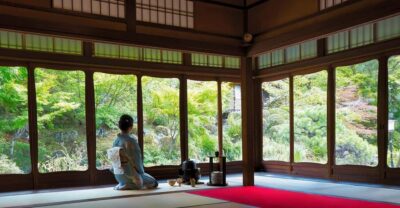
Tea Ceremony in a Traditional Tea House in Kiyomizu
Read our review →
Kyoto Geisha Walking Tour: Gion District & Hidden Gems
Read our review →
Gion Magical Night Walking Tour with Geisha Trivia
Read our review →
Gion Geisha District Walking Tour – Stories of Geisha
Read our review →Browse the lists this tour appears in