
Reviewed · KYOTO TOURS
Kyoto Early Riser Golden One-Day Walking Tour
Kyoto’s biggest challenge is not finding beautiful places. It is fitting them together without wasting half your day on buses and wrong turns. This private eight-hour tour tackles the famous sights in one sweep, from Fushimi Inari’s red gates to the Golden Pavilion and Nishiki Market. I like the personal guide and the chance to use Kyoto’s trains, subway, bus, trolley, and taxi system instead of seeing the city through a tour coach window.
I also like the early start, which gives you a better chance at calmer paths at Fushimi Inari and Arashiyama. The main drawback is simple: this is a lot of ground in one day. You should expect plenty of walking, transfers, stairs, crowds, and a fairly brisk pace, even though the guide can adjust breaks and the order of stops to suit your group.
Key points at a glance
- Five major Kyoto stops in one day: Fushimi Inari, Arashiyama, Ryoanji, Kinkakuji, and Nishiki Market cover shrines, gardens, temples, food, and old Kyoto streets.
- A genuinely private format: Only your group takes part, so your guide can answer questions, adjust rest stops, and shape the day around your interests.
- Public transport is part of the experience: You may use trains, subway, buses, trolley, and taxi, with the guide helping you understand how Kyoto gets around.
- Guide quality is central: Guides including Tomoko, Keiko, Meg, Hiro, Kazuo, and Toshi have been praised for clear explanations, humor, patience, food suggestions, and help with mobility.
- Extra costs matter: The listed price is $119.30 per person, but public transport, Ryoanji admission, other temple fees, and meals are separate.
- Best for first-time visitors: It works especially well if you have one full day in Kyoto and want the major sights handled without planning every connection yourself.
Why this route works for a first day in Kyoto
This tour gives you a broad introduction to Kyoto rather than a slow study of one district. In eight hours, you move from Shinto worship at Fushimi Inari to bamboo groves, Zen gardens, a glittering temple, and a food market.
That variety is the main appeal. You are not spending the whole day looking at similar temples. Each stop has a different mood and purpose, and the guide supplies the links between them. At Fushimi Inari, you learn about donated torii gates and the deity connected with good fortune. At Ryoanji, the focus shifts to Zen design and quiet observation. At Nishiki, Kyoto becomes practical and edible.
The private setup also changes the feel of the day. You can ask why a custom matters, pause for a photograph, request a food recommendation, or take a break without holding up a large group. Several guides have helped people with train and bus routes, and Tohru even used a mix of train, subway, bus, trolley, and taxi during the day. That makes the tour useful beyond its sightseeing value because you finish with a better sense of how to move around Kyoto.
More walking tours in Kyoto:
- Kyoto Geisha Walking Tour: Gion District & Hidden Gems
★ 4.7 · 3,273 reviews - Kyoto: Gion Magical Night Walking Tour with Geisha Trivia
★ 4.9 · 2,393 reviews - Kyoto: Gion Geisha District Walking Tour – Stories of Geisha
★ 4.7 · 2,187 reviews
Starting early at Fushimi Inari
The day begins at Kyoto Station Building, at 901 Higashishiokōjichō in Shimogyo Ward. From there, the first major stop is Fushimi Inari-taisha Shrine.
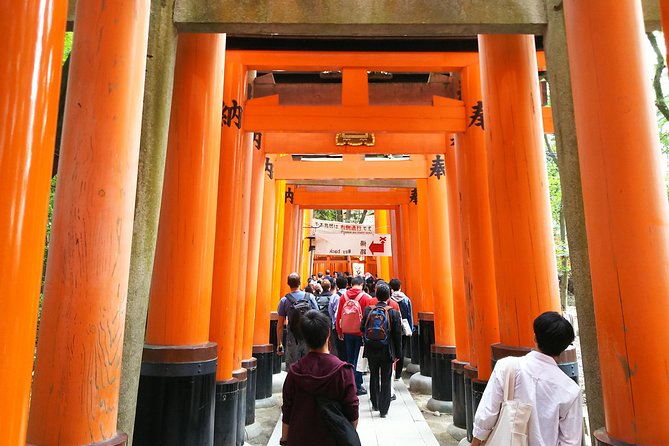
The shrine is famous for its long tunnel of vermilion torii gates. Worshippers donated these gates to show thanks for good fortune, so the path is not merely a photogenic corridor. It is also a record of devotion and gratitude. Your guide can give that visual experience some cultural meaning rather than leaving you with only a collection of red-gate photographs.
The scheduled visit lasts about one hour, with no admission charge. That is enough time to enter the torii-lined route and get a taste of the shrine, but not enough for a long climb through the entire mountain complex. This is an important point for planning. If you picture spending several hours hiking Fushimi Inari, this tour will feel too short. If you want a strong introduction before moving on, the timing makes sense.
An early start is a smart choice here. Fushimi Inari is one of Kyoto’s best-known sights, and its narrow paths can become crowded. The tour does not promise an empty shrine, but arriving early gives you a better chance at a calmer beginning.
Wear shoes that can handle uneven paths and a full day on your feet. The tour requires moderate physical fitness, and the total walking matters more than any single stop.
Arashiyama’s bamboo path and the cost of fame
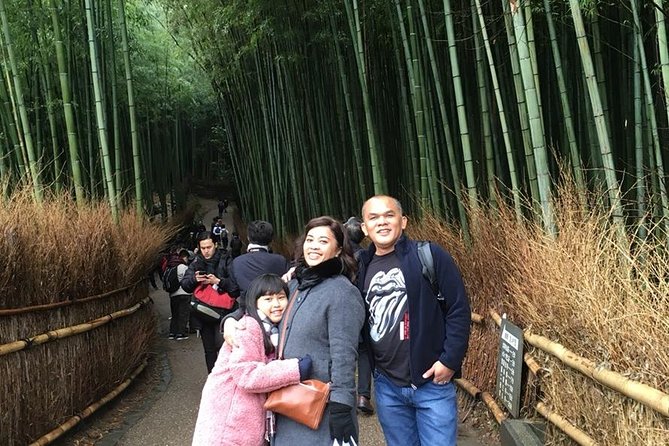
Next comes Arashiyama, with about one hour and ten minutes set aside for the renowned bamboo forest. The bamboo’s pale green color and filtered light create a striking change from the vermilion gates at Fushimi Inari. When the stalks move in the breeze, the sound is part of the experience.
The forest is beautiful, but it is not a private nature walk. Arashiyama is one of Kyoto’s most popular areas, so you should expect other people and a limited amount of quiet. The short visit keeps the day moving, but it also means you will see the signature section rather than exploring every corner of the district.
I like the contrast between Fushimi Inari and Arashiyama. One is shaped by repeated human offerings and religious color. The other depends on height, light, and the soft movement of bamboo. A guide can help you notice those differences instead of rushing from one photograph to the next.
The tour does not list an admission fee for the bamboo forest stop. You should still expect walking between transport points and the path itself. If you need frequent rests, say so early. Guides such as Hiro, Satomi, Meg, and Fujihara have been praised for adjusting the pace, providing breaks, or helping people manage hot weather and knee trouble.
Ryoanji and the discipline of the rock garden
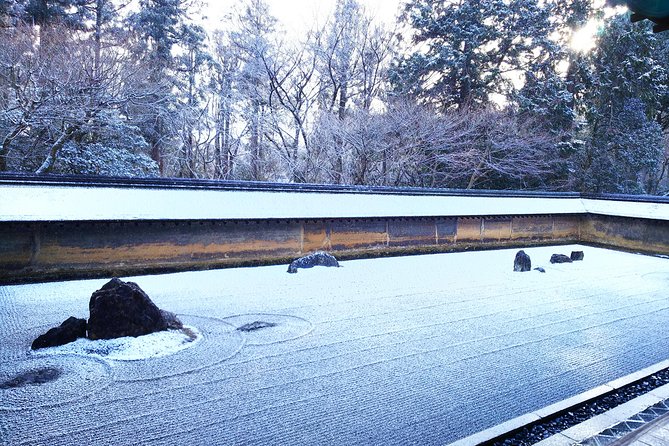
Ryoanji Temple receives about 50 minutes. This UNESCO World Heritage Site is home to Kyoto’s famous Zen rock garden, a spare arrangement of rocks set in white gravel.
The garden is small and simple by design. That can surprise people who expect a large temple garden after seeing its worldwide reputation. Its value is in the controlled composition and the invitation to sit, look, and decide what you see. The garden was once praised by Queen Elizabeth II, which helped push it further into the international spotlight.
Ryoanji admission is not included. The supplied cost is ¥1,100 per person. Public transport is also separate, listed at ¥1,670 per person for the day. Meals are not included either, so keep those additions in mind when you compare the headline tour price with your actual spending.
Fifty minutes is a reasonable introduction, but it is not a long contemplative visit. The schedule is designed to show you the main feature and keep the full route on track. If Ryoanji is the place you most want to study, a separate visit would let you slow down. If you have limited time, the guide’s explanation helps you understand why the garden matters before you move on.
A few more Kyoto half-days to weigh up
- PERFECT KYOTO 1-Day Bus Tour
★ 5.0 · 13,518 reviews - Kyoto: Fushimi Inari, Kinkakuji, Bamboo Grove 1 Day Bus Tour
★ 4.8 · 4,316 reviews - Kyoto: Tea Ceremony in a Traditional Tea House in Kiyomizu
★ 4.9 · 3,519 reviews - Kyoto: Tea Ceremony Ju-An at Jotokuji Temple
★ 4.9 · 3,207 reviews
Kinkakuji, Kyoto’s golden image
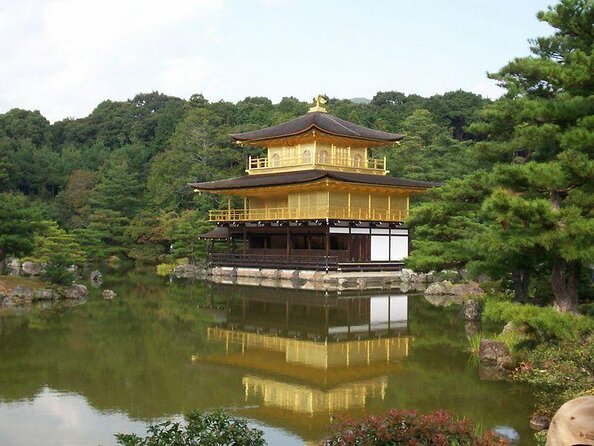
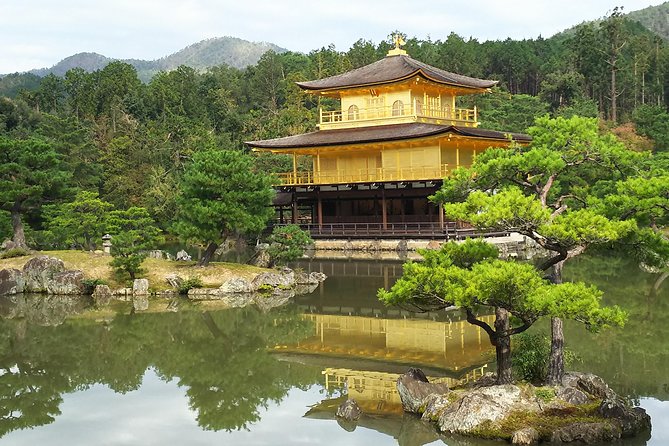
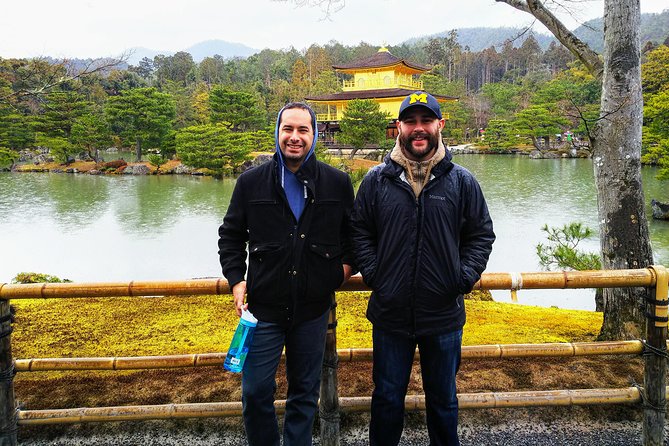
Kinkakuji, also called the Golden Pavilion, gets another 50 minutes. This is the picture that many people carry home from Kyoto: a gilded pavilion reflected beside its pond, surrounded by carefully kept grounds.
The building’s fame can work against it. The grounds are popular, and the viewing route tends to keep people moving. Still, the sight is worth the crowd. The gold catches the light, and the surrounding gardens give the visit more depth than a quick stop for a building photograph.
The tour description calls Kinkakuji a Zen temple and an icon of samurai culture. Your guide can help place the pavilion within Kyoto’s religious and political story, which makes the visit more satisfying than simply checking off the city’s most recognizable building.
Admission is not included, and no exact Kinkakuji fee is provided in the tour details. Check the current fee when you book or arrive, and keep cash or a suitable payment method available. Since meals and transport are also extra, the advertised $119.30 price should be treated as the guide and tour service cost, not the full cost of your day.
Nishiki Market, where Kyoto gets edible
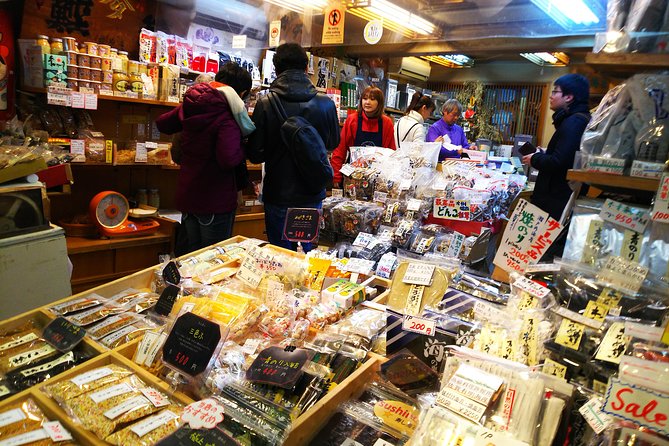
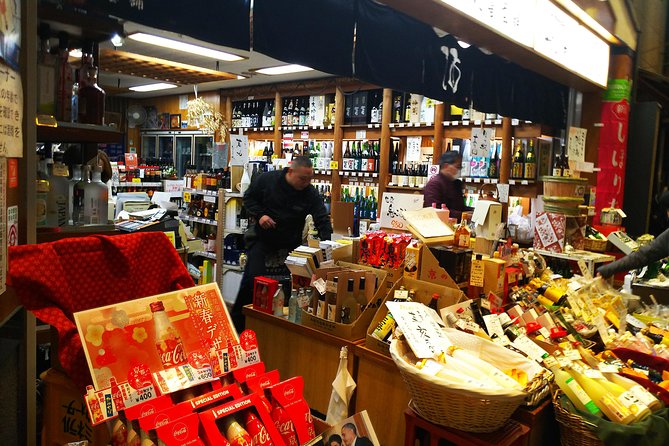
The final stop is Nishiki Market Shopping District, with about 40 minutes. The market runs along a roughly 390-meter street with 126 shops and has served Kyoto residents for 400 years.
This is a welcome change of pace after temples and gardens. You can look at Kyoto vegetables, pickles, and other local foods, and you may have opportunities to taste some items. The market is a good place to ask your guide what you are seeing, how a food is used, or which small purchase makes sense as a souvenir.
Forty minutes is enough for a walk and a few tastes, but not a full meal crawl. Lunch is not included, and the schedule may leave you choosing between a proper sit-down meal and quick sampling. Several guides have recommended local restaurants, sushi bars, and conveyor-belt sushi. Tomoko arranged a sushi lunch for one group, while Kazuo helped with a local sushi experience and translation during shopping. Those personal suggestions may be one of the most useful parts of the day.
If food matters greatly to you, tell your guide at the start. The private format makes that request more realistic than it would be on a fixed group tour, but the five-stop schedule still limits how long you can linger.
What the private guide adds
The guide is the heart of this experience. The route itself is easy to find online. The value comes from having a local person explain the sites, handle connections, and make small decisions that keep the day from becoming a logistical puzzle.
Tomoko has been especially praised for energy, clear explanations, help with transport, and arranging lunch. Keiko has taken photographs, recommended food, and adjusted the experience to personal interests. Meg has been described as patient and caring, including helping someone with a knee injury find lifts or escalators. Kazuo, a retired English teacher, has helped people understand local transport, culture, and shopping.
Other named guides include Sumiko Yoshikawa, Toshi, Hiro, Satomi, Masa, Chie, Hironori, Fujihara, Tohru Shimigaki, Naoko, Yuka, Michiko, Matsumoto, and Nozomi-san. The individual guide is assigned by the operator, so you may not receive a particular person. If one guide’s style matters to you, you can ask about availability, but do not assume a request is guaranteed.
The strongest pattern is flexibility. Guides have given extra rest stops during August heat, helped people with injuries, answered questions at each site, offered restaurant advice, and made families feel comfortable using public transport. That is a real advantage over a large group with a fixed pace.
Transport, walking, and the pace of the day
This is not a coach tour. Public transport is part of the day, and the listed fare is ¥1,670 per person. Depending on the route and conditions, you may use a train, subway, bus, trolley, or taxi.
That can be more interesting than riding in a private vehicle. You get a practical look at daily Kyoto, and a good guide can show you how the system works. Tohru’s use of several transport types helped people feel more prepared to get around on their own later.
The tradeoff is time spent navigating stations, platforms, streets, and transfers. Add the walking at five busy sights and you have a full physical day. The tour asks for moderate fitness, and the description is candid about quite a bit of walking.
The experience can work for people with limited mobility, but you should discuss your needs in advance. One guide adjusted a route for a knee injury and checked for lifts or escalators. That is encouraging, but it does not turn the day into an easy-access outing. Crowds, stairs, uneven paths, and long distances may still be part of the route.
Comfortable shoes are essential. In hot months, carry water and expect the need for breaks. One August tour continued successfully because the guide paid close attention to rest needs. Heavy rain has also been managed, but poor weather can lead to cancellation, a new date, or a full refund.
The real value of $119.30
At $119.30 per person, this tour is not the cheapest way to see Kyoto’s headline sights. You also pay ¥1,670 for public transport, ¥1,100 for Ryoanji, other applicable temple admission, and your meals.
The price makes more sense if you value time and ease. Planning Fushimi Inari, Arashiyama, Ryoanji, Kinkakuji, and Nishiki Market on your own means checking routes, allowing for transfers, handling ticket machines, watching the clock, and deciding where lunch fits. A private guide removes much of that work.
For a family or small group, the private format can also compare well with several separate tickets on a group tour. Group discounts are available, though the exact savings are not specified. Since only your party participates, you are paying for guidance that can be tailored to your pace and interests rather than for a seat in a large fixed group.
I would book it for a first Kyoto visit with only one full day. I would not book it if your main goal is slow temple study, long photography sessions, or an unhurried food tour. This is a smart highlights day, not a leisurely neighborhood ramble.
Who should choose this Kyoto day tour?
You are a strong match if you:
- Have one full day in Kyoto and want the major sights
- Prefer a private guide to independent route planning
- Want cultural explanations, not just directions
- Like using local trains and buses
- Need the flexibility to ask for breaks or adjust interests
- Want help choosing lunch or understanding market foods
- Are comfortable walking for much of an eight-hour day
You may want another plan if you dislike public transport, have difficulty with stairs and long walks, or want to spend most of a day in one area. Arashiyama alone can fill a relaxed morning, and Fushimi Inari rewards a longer climb if you want to go beyond the main path.
The tour begins and ends at the Kyoto Station meeting point. Confirmation is received when you book, and mobile tickets are supported. Free cancellation is available up to 24 hours before the start time. Changes or cancellations inside that window are not accepted for a refund, and the local cutoff time applies.
Should you book it?
Book this tour if you want maximum coverage with minimum planning. Fushimi Inari, Arashiyama, Ryoanji, Kinkakuji, and Nishiki Market give you a strong first look at Kyoto’s religious sites, gardens, scenery, and food culture.
The tour earns its price through the guide’s help with transport, timing, explanations, meals, photographs, and rest breaks. Just budget for transport, temple fees, and food, and accept that the day will be active. For a first-time visit or a short stay, that is a fair trade. For a slower, more reflective Kyoto experience, choose fewer sights and spend more time in each.
FAQ
How long does the Kyoto Early Riser Golden One-Day Walking Tour last?
The tour lasts approximately eight hours.
Where does the tour begin and end?
It starts at Kyoto Station Building, 901 Higashishiokōjichō, Shimogyo Ward, Kyoto. The activity ends back at the meeting point.
Is this a private tour?
Yes. Only your group participates in the activity.
Which sights are included in the route?
The route includes Fushimi Inari-taisha Shrine, Arashiyama, Ryoanji Temple, Kinkakuji Temple, and Nishiki Market Shopping District.
Are transport, temple tickets, and meals included?
No. Public transport is listed at ¥1,670 per person, Ryoanji admission is ¥1,100 per person, and meals are not included. Other entrance fees may also be separate.
How much walking is involved?
Quite a bit of walking is involved, and participants should have a moderate level of physical fitness.
Can I cancel for a full refund?
Yes, if you cancel at least 24 hours before the experience start time. Cancellations made less than 24 hours in advance are not refunded. If poor weather causes the operator to cancel, you can receive a different date or a full refund.
Just added around Kyoto
- Kyoto: Zen Meditation at a Private Temple with a Monk★ 5.0 · 25 reviews
- Kyoto: Gion Geisha District & Sake-in-Hand Walking Tour★ 5.0 · 37 reviews
- Private Pewter Sake Cup Experience with a Kyoto Artisan★ 5.0 · 31 reviews
- Your Private Vacation Photography Session In Kyoto★ 5.0 · 110 reviews
- Kyoto Wagashi(Japanese sweets) Cooking Class near Fushimiinari★ 5.0 · 60 reviews
- Private Guided Traditional Buddhist Cooking in Japan★ 5.0 · 16 reviews
- Traditional Japanese Music show & Experience Tour in Kyoto★ 5.0 · 57 reviews
- Kyoto:Family-Friendly Kimono & Yukata Experience at WARGO★ 5.0 · 147 reviews
Kyoto Tours, compared.


Fushimi Inari, Kinkakuji, Bamboo Grove 1 Day Bus Tour
Read our review →
Tea Ceremony in a Traditional Tea House in Kiyomizu
Read our review →
Kyoto Geisha Walking Tour: Gion District & Hidden Gems
Read our review →

Gion Magical Night Walking Tour with Geisha Trivia
Read our review →

Gion Geisha District Walking Tour – Stories of Geisha
Read our review →Browse the lists this tour appears in