
Reviewed · KYOTO TOURS
Kyoto Early Riser Platinum One-Day Walking Tour
Kyoto’s biggest sights are spread across the city, but this early-start private tour links six of them in one long day. You begin at Fushimi Inari’s red torii gates, move through Arashiyama and the Golden Pavilion, then finish with shrines, a geisha district, and Nishiki Market.
I like the personal pace, since guides such as Gigi, Fuji-san, Seiya, and Meg have helped visitors shape the day around their interests. I also like the chance to use Kyoto’s buses and subway with a local, seeing ordinary neighborhoods between major sights. The catch is clear: eight hours and a lot of public transport can feel rushed, especially around Arashiyama.
Key points to know before booking
- Six major Kyoto stops in one day: Fushimi Inari, the Bamboo Forest, Kinkakuji, Kitano Tenmangu, Kamishichiken, and Nishiki Market.
- An early start helps: You reach the most photographed sites before the day is at its hottest and busiest.
- Private means flexible: Only your group participates, so you can ask questions and adjust the pace within the fixed route.
- Expect extra costs: The listed price is $130.79 per person, with admission and public transportation paid separately.
- Public transit is part of the day: Budget ¥1,700 per person for transport and be ready for crowded, imperfect connections.
- Plan for plenty of walking: The tour is not stroller accessible, though it is listed as suitable for people with limited mobility and limited eyesight.
A six-stop introduction to Kyoto
At $130.79 per person, this is not a bargain sightseeing bus. It is a private day with a guide, which changes the value equation. You are paying for help with the route, local explanation, transit, photos, food suggestions, and the freedom to ask for more detail when something catches your interest.
The tour lasts about eight hours and begins at Kyoto Station Building. It returns to the same meeting point, a useful arrangement if you are staying near the station or want a known finish after a busy day.
You should also add the listed ¥500 admission fee and about ¥1,700 per person for public transportation. The exact attraction charge is not broken out in the details, but Kinkakuji is the clear paid stop. The rest of the listed visits are free. That makes the full day cost more than the headline price, yet the private format can make sense for a first visit when you want help making sense of Kyoto’s wide spread.
More walking tours in Kyoto:
- Kyoto Geisha Walking Tour: Gion District & Hidden Gems
★ 4.7 · 3,273 reviews - Kyoto: Gion Magical Night Walking Tour with Geisha Trivia
★ 4.9 · 2,393 reviews - Kyoto: Gion Geisha District Walking Tour – Stories of Geisha
★ 4.7 · 2,187 reviews
Fushimi Inari before the crowds
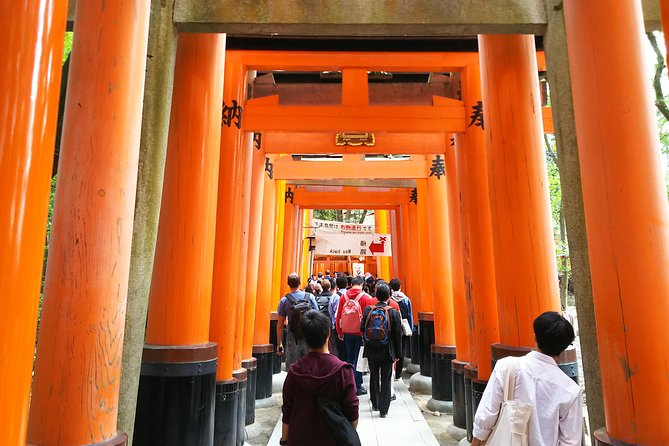
The day opens at Fushimi Inari-taisha Shrine, one of Kyoto’s most instantly recognizable sights. Thousands of vermilion torii gates form long corridors up the wooded slopes behind the shrine. Each gate was donated by a worshipper or business in thanks for good fortune, so the path is also a record of devotion and gratitude.
You have about an hour here. That is enough to walk beneath a strong stretch of gates and take photographs, but not enough for a full climb to the upper mountain areas. This is an important expectation to set. Fushimi Inari is much larger than the famous first section, and a short visit gives you the signature view rather than the whole shrine complex.
An early arrival is especially valuable here. The red gates are striking at any hour, but the narrow passageways become harder to enjoy when packed with people. Your guide can also explain the difference between the shrine buildings and the torii trail, rather than leaving you with a quick photo stop and no context.
Arashiyama’s Bamboo Forest and the cost of crossing Kyoto
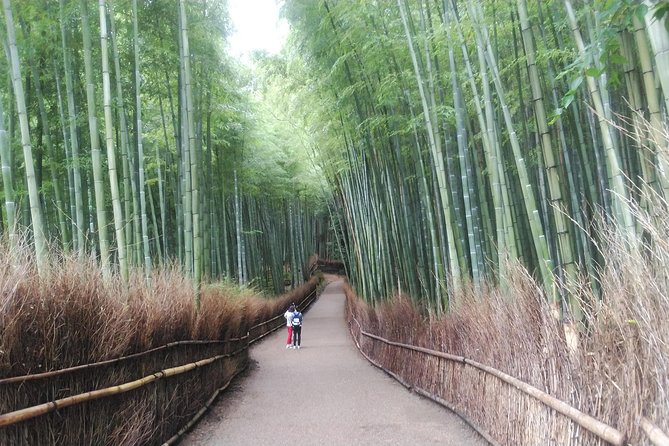
The next major stop is Bamboo Forest Street in Arashiyama, with about 70 minutes set aside. Tall bamboo trunks rise on both sides of the path, and the light changes as the leaves move overhead. The sound is part of the appeal: wind through the leaves and the gentle creak of the stalks give this short walk a calm feel, even when the path is busy.
The drawback is the route between Fushimi Inari and Arashiyama. Kyoto’s famous sights are not arranged in a neat circle. Public transportation can be crowded, and the connections are not always direct. One visitor found the transit time tedious and felt it cut into sightseeing. That criticism is fair, and you should choose this tour with open eyes.
Still, using buses and trains with a guide has a practical upside. You do not have to work out every transfer alone, and you see pieces of Kyoto between the headline stops. One guide was praised for making transit part of the experience, allowing the group to walk through local neighborhoods instead of moving only between tourist zones.
The 70-minute stop is enough for the bamboo path and some nearby time, but Arashiyama can easily fill half a day on its own. If the bamboo is your main reason for visiting Kyoto, you may prefer a slower tour focused on this district. If you want a broad first look at the city, the shorter visit is a reasonable trade.
Kinkakuji, Kyoto’s Golden Pavilion
Kinkakuji Temple receives about 50 minutes. The gold-covered pavilion sits beside a pond and is one of Kyoto’s most famous images. Its appearance is polished and theatrical, but the setting is also tied to Zen temple tradition and the era of samurai culture.
Admission is not included, so allow for the extra ¥500 fee listed for the tour. The visit is built around viewing and photographing the pavilion rather than spending a long period exploring every part of the grounds. That suits a first visit, especially if you want to see Kyoto’s best-known sights in one day.
Your guide can help you look past the postcard view. The pavilion itself is the obvious focus, yet the surrounding garden gives the stop much of its appeal. The 50-minute timing keeps the day moving, though anyone who likes gardens, architecture, or quiet reflection may wish for more time.
This is also one of the places where an early schedule helps. Kinkakuji is popular throughout the day, and a private guide may help you keep your visit focused instead of wandering without a plan.
A few more Kyoto half-days to weigh up
- PERFECT KYOTO 1-Day Bus Tour
★ 5.0 · 13,518 reviews - Kyoto: Fushimi Inari, Kinkakuji, Bamboo Grove 1 Day Bus Tour
★ 4.8 · 4,316 reviews - Kyoto: Tea Ceremony in a Traditional Tea House in Kiyomizu
★ 4.9 · 3,519 reviews - Kyoto: Tea Ceremony Ju-An at Jotokuji Temple
★ 4.9 · 3,207 reviews
Kitano Tenmangu and the meaning of a schoolchild’s prayer
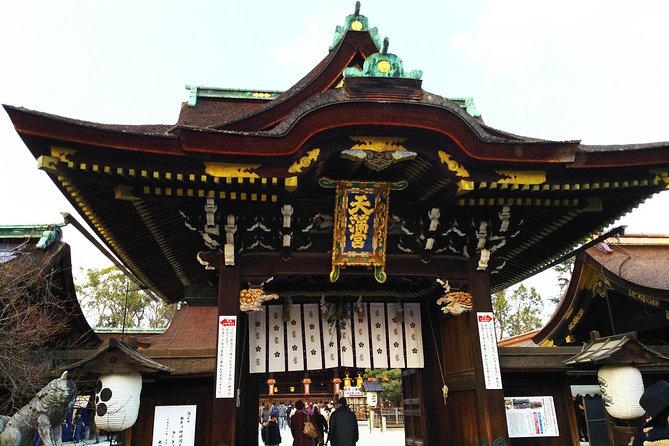
Kitano Tenmangu Shrine is a shorter stop, about 30 minutes, but it adds a different side of Kyoto. Built in 945, the shrine honors Sugawara no Michizane, regarded as the deity of academic success. Students come to pray for good examination results, giving the shrine a purpose that remains easy to understand today.
You will see a working place of worship, not simply another historic backdrop. That makes the guide’s explanation useful. A good guide can show you how this shrine fits into Japanese religious life and why school examinations bring so many families here.
There is no admission charge listed for Kitano Tenmangu. Half an hour is enough to see the main features and hear the basic story, though it is not a deep visit. Think of it as a meaningful pause between the larger attractions.
Kamishichiken, Kyoto’s oldest geisha district setting
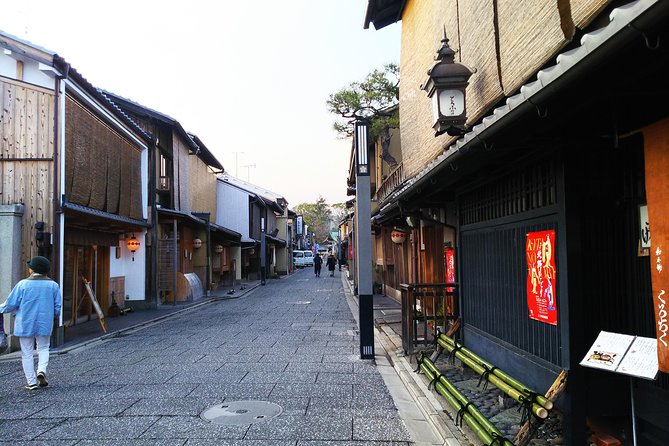
Just beside Kitano Tenmangu is Kamishichiken, one of Kyoto’s five hanamachi, or geisha districts. The tour allows about 25 minutes for the area and the Kamishichiken Kaburenjo Theatre.
This stop gives you a look at a traditional entertainment district without treating it as a stage show. Kamishichiken has fewer geisha houses and fewer geiko and maiko than some of Kyoto’s better-known districts, which can make the atmosphere feel less showy. You should not book this tour expecting a guaranteed performance or a scheduled meeting with a geiko or maiko. The value is in seeing the district’s streets and learning how these neighborhoods function.
The short stop works well after the shrine because the two locations are next to each other. There is little wasted movement, and the contrast is useful: Kitano Tenmangu shows religious tradition, while Kamishichiken points to Kyoto’s performing arts culture.
Nishiki Market for the final taste of Kyoto
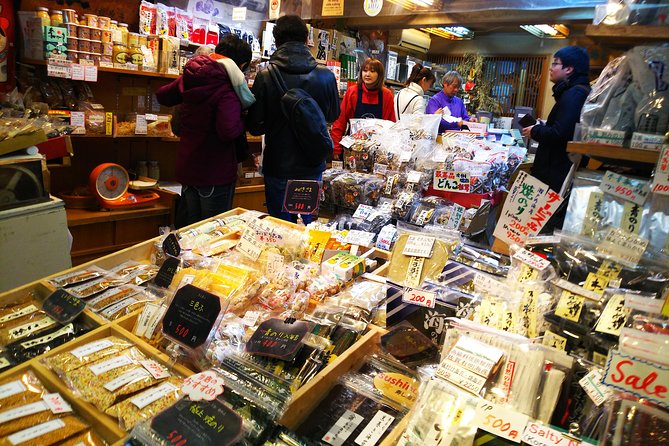
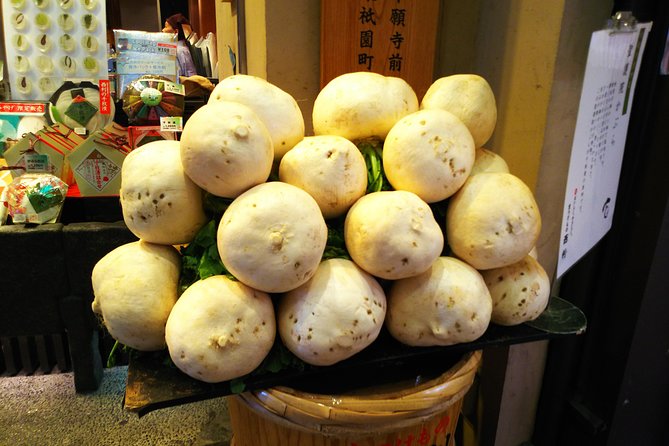
The final sightseeing stop is Nishiki Market, with about 40 minutes for shopping and tasting. The market runs along a roughly 390-meter covered street and has about 126 shops. It has served Kyoto residents for around 400 years, selling local vegetables, pickles, seafood, prepared foods, and small edible specialties.
This is the best place on the route to turn explanation into lunch or a snack. The guide can point out Kyoto vegetables and pickles, help you understand what you are seeing, and suggest places to eat. One guide arranged a particularly well-liked lunch, while another helped the group find a meal that became a highlight of the day.
Forty minutes is enough for a first pass, but Nishiki can feel tight if you want to browse every stall. It is also a market, not a quiet museum. You need to stay aware of other shoppers and keep moving when the passage narrows.
A private guide is useful here because you can say what you actually enjoy. If you want sweets, pickles, seafood, or a sit-down meal, explain that early. The tour does not promise a meal or tastings as an inclusion, so food is your own expense.
What the private format really adds
Only your group takes part, and that matters most during transit and at the market. You can ask why a shrine matters, stop for a photograph, or request more detail about Japanese culture without waiting for a large group to catch up.
The strongest guide experience depends on the person assigned. Gigi was praised for arranging lunch, taking photographs, keeping the pace comfortable, and making extra effort to match personal interests. Fuji-san was praised for covering everything the group wanted and adding scenic places. Seiya helped make the bus and subway rides feel useful, while Meg prepared hand warmers on a cold morning.
These details point to the real strength of the tour: a thoughtful guide can turn a demanding route into a more personal day. They also show why you should tell the guide your priorities at the start. With six stops, you cannot give every place equal time.
The private setup does not remove Kyoto’s transit problems. Buses and trains can still be crowded, and connections can still take longer than expected. It simply means you have a local person helping you handle them.
Price, pace, and practical comfort
The $130.79 price buys a professional guide and a private experience, not admissions, meals, or transit. Add ¥500 for admission and ¥1,700 for public transportation per person, plus anything you eat at Nishiki Market. For a solo visitor, the cost is substantial. For a family or small group, the private format may offer better value because the experience is shared only by your party.
Group discounts are available, so check the final total for your party rather than judging the per-person figure alone. Mobile tickets make access simple, and confirmation is provided when you book.
You will walk quite a bit. Comfortable shoes matter, and you should be ready for stairs, shrine paths, market lanes, and transfers. The experience is listed as accessible for people with limited mobility and limited eyesight, but it is not stroller accessible. Animals are allowed according to the general information, while the details also say it is not suitable for pets, so clarify this point before booking if it affects you.
The tour requires good weather. If poor weather forces cancellation, you are offered another date or a full refund. You can cancel for a full refund up to 24 hours before the start time, but late cancellations and late changes are not accepted.
Who should book this Kyoto day
I would choose this tour for a first visit when you want the city’s best-known cultural sights in one day and do not want to plan every train, bus, and walking leg yourself. It also suits families and small private groups that value a flexible guide more than the lowest possible price.
It is a good match for people who want Japanese culture explained in context. Fushimi Inari, Kitano Tenmangu, Kamishichiken, and Nishiki Market each show a different part of Kyoto, while Kinkakuji and the bamboo forest provide the visual highlights.
I would hesitate if you dislike public transportation, want long quiet visits, or are mainly interested in Arashiyama. The route covers a lot of ground, and the bamboo forest may deserve its own half-day. You should also think twice if walking for much of eight hours sounds tiring.
The overall rating is 4.7 from 24 ratings, with 92 percent recommending the experience. That points to a strong private guiding product, but the lower score tied to transit and the rushed feel around Arashiyama should not be ignored.
Should you book it?
Book it if you want an efficient first-day orientation with a private guide, early access to major sights, useful local explanations, and help finding lunch or taking photographs. Tell your guide your top two priorities, since the schedule cannot give every stop equal weight.
Skip it if you prefer to explore slowly, avoid buses and trains, or want to spend a full day in one district. At $130.79 per person before transport, admission, and food, this is best value when the private attention and route planning save you time and stress.
FAQ
How long does the Kyoto Early Riser Platinum One-Day Walking Tour last?
The tour lasts approximately eight hours.
Where does the tour start and finish?
It starts at Kyoto Station Building, 901 Higashishiokōjichō, Shimogyo Ward, Kyoto. It ends back at the same meeting point.
Is this a private tour?
Yes. Only your group participates in the activity.
Which attractions are included in the route?
The route includes Fushimi Inari-taisha Shrine, Bamboo Forest Street, Kinkakuji Temple, Kitano Tenmangu Shrine, Kamishichiken Kaburenjo Theatre, and Nishiki Market Shopping District.
Are admission fees included?
No. An admission fee of ¥500 per person is listed separately. The tour information identifies Kinkakuji as the stop with admission not included.
Is public transportation included?
No. Public transportation costs are listed separately at ¥1,700 per person.
Is the tour suitable for people with limited mobility or eyesight?
The activity is listed as accessible for people with limited mobility and limited eyesight. It involves quite a bit of walking and is not stroller accessible.
Can I cancel for a refund?
You can cancel at least 24 hours before the local start time for a full refund. Cancellations or changes made less than 24 hours before the start are not accepted.
Just added around Kyoto
- Kyoto: Zen Meditation at a Private Temple with a Monk★ 5.0 · 25 reviews
- Kyoto: Gion Geisha District & Sake-in-Hand Walking Tour★ 5.0 · 37 reviews
- Private Pewter Sake Cup Experience with a Kyoto Artisan★ 5.0 · 31 reviews
- Your Private Vacation Photography Session In Kyoto★ 5.0 · 110 reviews
- Private Guided Traditional Buddhist Cooking in Japan★ 5.0 · 16 reviews
- Kyoto Wagashi(Japanese sweets) Cooking Class near Fushimiinari★ 5.0 · 60 reviews
- Traditional Japanese Music show & Experience Tour in Kyoto★ 5.0 · 57 reviews
- Kyoto:Family-Friendly Kimono & Yukata Experience at WARGO★ 5.0 · 147 reviews
Kyoto Tours, compared.


Fushimi Inari, Kinkakuji, Bamboo Grove 1 Day Bus Tour
Read our review →
Tea Ceremony in a Traditional Tea House in Kiyomizu
Read our review →
Kyoto Geisha Walking Tour: Gion District & Hidden Gems
Read our review →

Gion Magical Night Walking Tour with Geisha Trivia
Read our review →

Gion Geisha District Walking Tour – Stories of Geisha
Read our review →Browse the lists this tour appears in