
Reviewed · KYOTO TOURS
Kyoto Rickshaw Tour
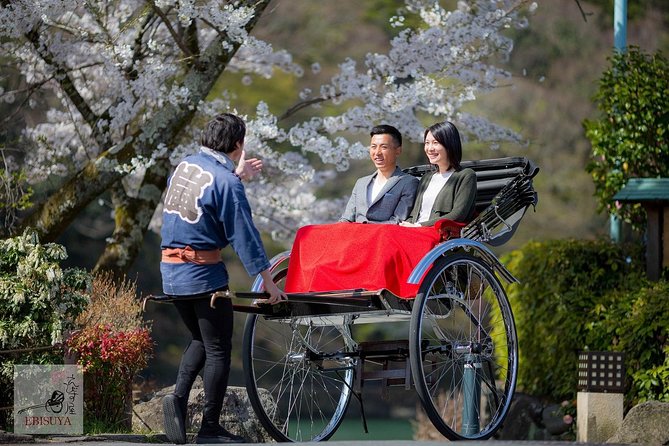
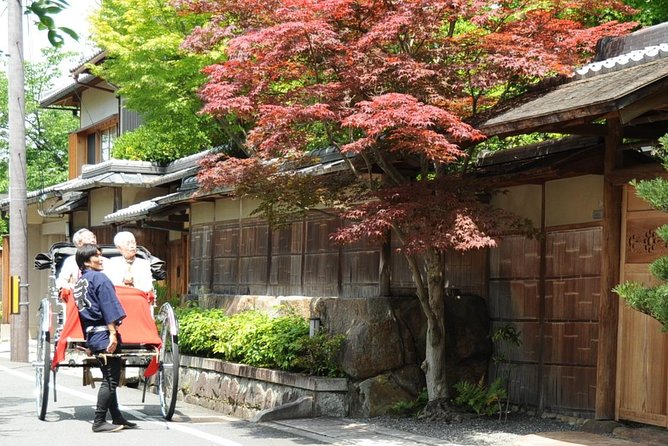
Kyoto’s old streets make much more sense from a rickshaw. You glide through Higashiyama’s narrow lanes, past wooden townhouses, stone paving, shrines, and temple gates, while your driver handles the hills and points out details easy to miss on foot. Guides such as Fumi, Hina, Yoshi, Kai, Kanta, and Kota are praised for their English, humor, local stories, and impressive strength.
I like the flexible route and the chance to shape the ride around your interests. I also like the practical sightseeing: your driver can stop for photos, explain customs at a shrine, and show you quieter corners of Gion without asking you to navigate every crowded lane yourself.
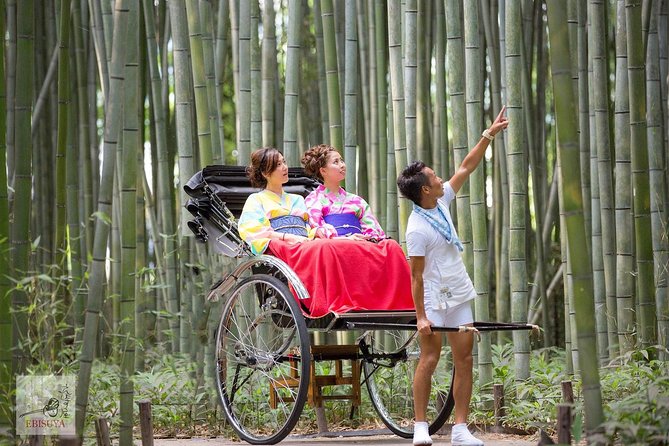
The main catch is the seat. A rickshaw is only 29.1 inches, or 74 centimeters, wide, so two adults may find it snug. Short tours also cannot cover every listed sight, and the famous Arashiyama Bamboo Forest is not included at this Higashiyama branch.
Key points to know before booking
- See old Kyoto without walking every step: The ride covers historic lanes, temple approaches, shrine districts, and parts of Gion while your driver pulls the rickshaw.
- Choose your pace: Tours run from about 30 minutes to 3 hours, with longer rides offering more stops and room for a customized route.
- Expect strong, engaging guides: Fumi, Hina, Yoshi, Kai, Kanta, Kota, Daichi, and others are praised for clear English, local knowledge, humor, and photography.
- Plan carefully for two adults: Each rickshaw holds a maximum of two adults, but the 74-centimeter width can feel tight for larger passengers.
- Start and finish in Higashiyama: The meeting point is Ebisuya Higashiyama Rickshaw at 483 Shimokawaracho, and the ride returns there unless you arrange another drop-off.
- Do not book this for Arashiyama: The voucher works only at the Kyoto Higashiyama branch and does not include the bamboo forest.
Why a rickshaw works so well in Higashiyama
Higashiyama is one of Kyoto’s best areas for a first look at the city. Its old wooden buildings, stone alleys, temples, shrines, and gently rising streets give you the Kyoto many people hope to find. The trouble is that the area can be tiring. The prettiest lanes are often uphill, crowded, or spread farther apart than they appear on a map.
A rickshaw solves part of that problem. You sit high enough to see over some of the street activity, and your driver does the hard work. You can focus on rooflines, gates, gardens, and passing details instead of checking your phone for directions.
I would not treat this as a substitute for walking all of Kyoto. It is better as an introduction, a relaxed overview, or a useful option when someone in your group cannot manage long stretches on foot. One rider used the experience after unexpectedly needing a wheelchair and found it a good way to continue seeing the city. That makes the ride especially useful for mixed-mobility groups, though the company should be told about your needs before booking.
The private format also matters. Only your own group rides together, so you can ask questions and request photo stops without keeping pace with strangers. The route is customizable, but the amount you can cover depends heavily on the time you choose.
A few more Kyoto half-days to weigh up
- PERFECT KYOTO 1-Day Bus Tour
★ 5.0 · 13,518 reviews - Kyoto: Fushimi Inari, Kinkakuji, Bamboo Grove 1 Day Bus Tour
★ 4.8 · 4,316 reviews - Kyoto: Tea Ceremony in a Traditional Tea House in Kiyomizu
★ 4.9 · 3,519 reviews
What you see on the Higashiyama route
The exact route depends on your tour length and interests, but the usual sights are drawn from Kyoto’s best-known traditional districts. Here is what each part offers.
The Ebisuya Higashiyama starting point
You meet at the Ebisuya Higashiyama Rickshaw stand at 483 Shimokawaracho in Kyoto’s Higashiyama Ward. The location is near public transportation, and the activity returns to the same point at the end.
Arrive ready to go. The company states that a delay of 10 minutes or more results in automatic cancellation, and any late arrival cuts into your ride time. That is a serious rule for a short 30-minute booking, where even a few minutes matter.
Higashiyama’s historic lanes
The first reward is the ride itself. You travel along old cobblestone streets and through lanes lined with traditional wooden buildings. This is the part that gives the experience its sense of place. Kyoto is not only about entering a temple; it is also about seeing how the streets around those temples have kept their older shape.
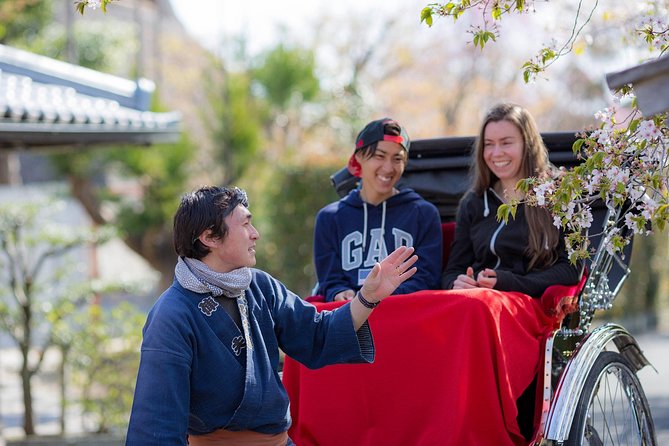
Your driver can explain local customs, folklore, and the meaning of places along the way. Drivers such as Kanta and Kota are praised for answering questions in clear English, while guides including Fumi and Hina are noted for adding warmth and humor to the ride.
The rickshaw offers a good angle for photographs, too. Several guides are praised for taking pictures and finding special paths or less crowded spots. Do not assume every guide will follow the same route, but do ask if photography matters to you.
Same base, a completely different sort of day:
- Kyoto Geisha Walking Tour: Gion District & Hidden Gems
★ 4.7 · 3,273 reviews - Kyoto: Tea Ceremony Ju-An at Jotokuji Temple
★ 4.9 · 3,207 reviews - Kyoto: Gion Magical Night Walking Tour with Geisha Trivia
★ 4.9 · 2,393 reviews - Kyoto: 45-Minute Tea Ceremony Lesson Experience
★ 4.3 · 2,378 reviews
Gion and the geisha district
The route enters the traditional geisha district, where wooden townhouses and refined facades line the streets. You may spot a geisha or maiko, but this is never guaranteed, and it is important to behave respectfully if you do. The best value here is not a celebrity sighting. It is seeing the district’s architecture and learning about the customs tied to it.
Gion can feel confusing on foot because its prettiest lanes connect with ordinary streets, restaurants, shrines, and temple grounds. A local driver gives you an easy first orientation. After the tour, you can return to the streets that caught your eye and explore them more slowly.
Small bridges and traditional streets
A small bridge in the traditional district appears among the possible stops. These modest features are often what make the ride memorable. You get a brief pause from the main roads and a better sense of how water, lanes, and old homes fit together.
The experience is strongest when you let the guide tell the story of the setting rather than treating each stop as a checklist. On a short ride, you may pass through more places than you stop at. On a two or three-hour booking, you have more time for photos and questions.
Gardens and temple grounds
The route may include a beautiful temple with a garden, as well as a larger, more imposing temple. The supplied information does not guarantee entry to every temple, so ask your guide which sites are included in your chosen duration and whether admission costs extra.
One two-hour ride included a stop at Kennin-ji Temple for an additional fee. That is a useful clue about how customization works: a longer ride can allow extra temple time, but special admissions or added stops may cost more.
If gardens are a priority, say so at the start. A 30-minute ride cannot cover all the listed locations, and even a 70-minute tour may need to favor a few carefully chosen streets and temple areas.
Yasaka Shrine
Yasaka Shrine is the large shrine in the Gion area and a natural landmark for this ride. Its broad grounds and familiar gates give you a strong sense of the link between Gion and Higashiyama.
The shrine is particularly worth visiting around New Year. You can schedule the rickshaw ride before or after your visit, but do not expect the ride itself to replace time spent exploring the shrine grounds. A guide may explain customs and point out details, while you can return later for a slower visit.
Picking the right duration
The price begins at $39.79 per person, and the tour offers roughly 30 minutes to 3 hours. Since the price can vary by duration and booking details, think of the options as different experiences rather than simply buying more minutes.
Thirty minutes
A half-hour ride is a quick taste of old Kyoto. It suits you if you have a tight schedule, want a memorable introduction before visiting temples on foot, or need a light activity between other plans.
The tradeoff is coverage. You cannot expect to see every Higashiyama and Gion landmark in half an hour. Choose this only if you are happy with a scenic ride through a small part of the district.
Seventy minutes
The 70-minute option is a sensible middle choice. It gives you enough time to travel through Gion, stop for photos, and hear explanations without taking up a large part of your day. One ride of this length focused on Gion’s Buddhist temples and Shinto shrines and was described as fun, interesting, and romantic.
For many first-time visitors, this is likely the best balance. You get more than a novelty ride, but you still have time afterward to visit a temple, eat, or explore on foot.
Two hours
Two hours gives the experience room to breathe. You can ask for a more varied route, stop at several areas, and spend more time with your guide. A two-hour ride covered shrines, temples, picturesque streets, and a temple visit with an extra admission charge.
This is the duration I would consider for a first full introduction to Higashiyama, especially if someone in your group tires easily. It also works well for families because you are not rushing from one photo stop to the next.
Three hours
A three-hour booking is best for people who want the rickshaw to be a major part of the day. It allows more distance, more conversation, and a stronger chance of including several areas. One group enjoyed the ride enough to add another three hours, while another three-hour outing focused closely on Kyoto’s streets and history.
Still, three hours in one narrow seat is a long time. Consider booking separate rickshaws if two adults may feel cramped, and ask in advance what route the operator can realistically cover.
The guides make or break the ride
The drivers do much more than pull a vehicle. They provide the running commentary, answer questions, suggest viewpoints, walk with you to certain shrine areas, and often take your photos.
Fumi is praised for vivid stories, humor, and extraordinary stamina. Hina is noted for patience and careful attention to comfort. Yoshi appears repeatedly as a friendly, strong guide and a talented photographer. Kai is praised for pulling two tall adults for 90 minutes while keeping up a lively commentary.
Other praised guides include Kanta, Kota, Shuhei, Moto, Daichi, Su, Fuji, Dairhic, Riyu, Makoto, and Motu. The consistent pattern is clear: the personal guide is a major part of the value. English ability can vary by individual, but the overall experience is designed around an English-speaking local guide.
You can improve the ride by arriving with two or three questions. Ask about shrine customs, the geisha district, local folklore, or the differences between Buddhist temples and Shinto shrines. A private tour gives you a better chance to shape the conversation.
Comfort, seating, and family details
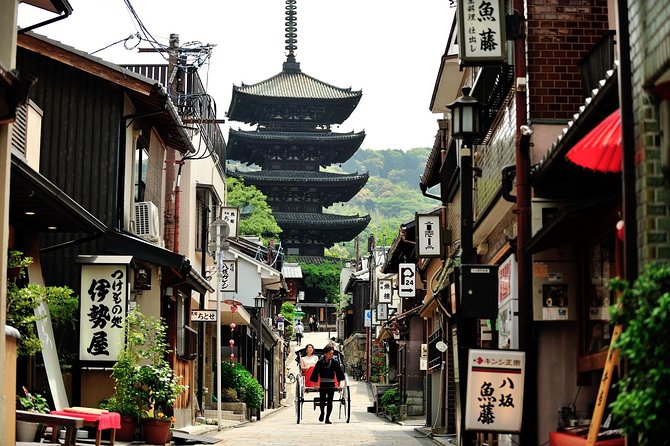
Each rickshaw carries up to two adults. The seat is 29.1 inches wide, or 74 centimeters, and the company specifically recommends booking one rickshaw per passenger if you may find two people uncomfortable side by side.
This is not a minor detail. Two average-size adults may fit, but larger passengers should plan for individual rickshaws. If two people in your party want to ride at the same time but do not fit in one rickshaw, an extra vehicle must be booked in advance. Availability of another English-speaking guide cannot be guaranteed if you wait until the day of the tour.
Children aged 6 and over pay the adult rate. Children aged 5 and under may sit on an adult’s lap, with one child per adult. Up to two young children can ride with two adults, but if a child uses one of the two rickshaw seats, that child must be booked as an adult.
The ride can be a good family activity because the guides work hard to engage different ages. Teenagers who began unsure about what a rickshaw was ended up laughing with their guides and talking about the experience afterward. Keep expectations realistic, though: this is an open-air ride, not a climate-controlled vehicle.
What the price gives you
At $39.79 per person, the starting price is reasonable for a private ride with an English-speaking guide, especially if you choose a short or medium duration. You are paying for transport through difficult streets, local explanation, a private group setting, and often help with photographs.
The value becomes stronger when the rickshaw replaces a separate orientation tour. Instead of spending your first hours wondering how Gion, Yasaka Shrine, and Higashiyama fit together, you get a moving introduction and can then choose where to return.
Food, drinks, hotel pickup, and drop-off are not included. Temple admission may also be extra, as shown by the optional Kennin-ji stop. A different finishing point can carry an additional drop-off fee payable on the day, so the return to the meeting point is the simplest plan.
Group discounts are available, which may help families or larger parties. Remember that larger groups may need multiple rickshaws, and each vehicle requires its own guide and space.
Weather, timing, and booking advice
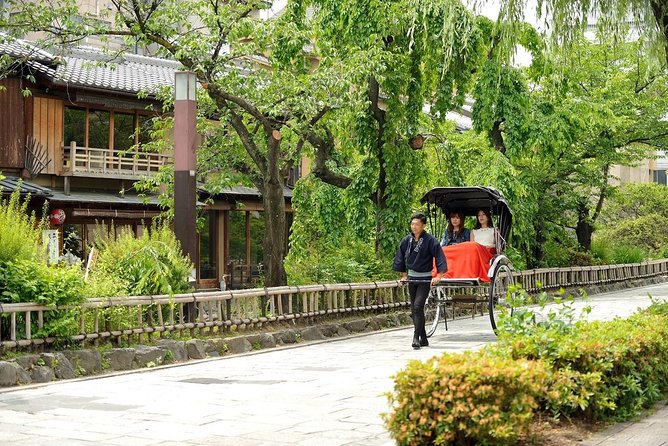
The activity notes say the rides operate rain or shine, while the cancellation terms also say the experience requires good weather and may be canceled for poor conditions. Because those statements do not fully match, check the operator’s current weather policy before you book, especially during a rainy period.
You receive confirmation at booking, and mobile tickets are accepted. The meeting point is near public transportation, but you should still allow extra time to find the stand in the busy Higashiyama area.
Free cancellation is available up to 24 hours before the local start time for a full refund. Changes made later are not accepted, and a cancellation within 24 hours is not refunded. Rescheduling requests sent after 5 p.m. the day before cannot be accommodated.
Who should book this Kyoto ride?
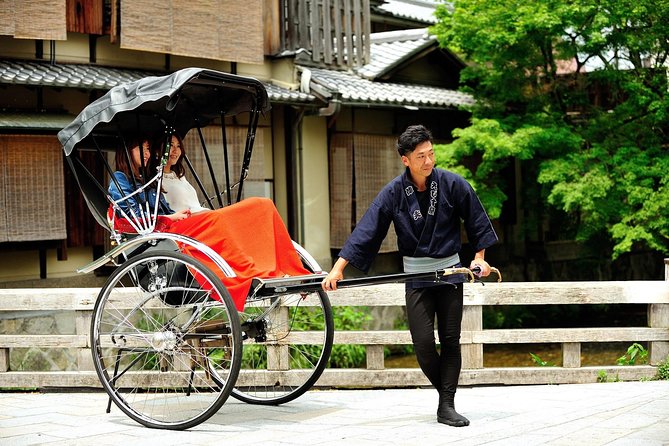
I would recommend it most strongly for:
- First-time visitors who want a quick sense of old Kyoto
- Couples looking for a relaxed and scenic activity
- Families who want a private outing with an engaging guide
- People who cannot manage long walks or steep streets
- Photographers who want help finding good angles and getting group pictures
- Anyone interested in Gion, wooden townhouses, shrines, and temple districts
It may be less suitable if you want a full walking tour with long temple visits, dislike open-air rides, or expect to see Arashiyama’s bamboo forest. This branch does not include that forest, and the ticket cannot be used at the Arashiyama branch.
Should you book the Kyoto Rickshaw Tour?
Yes, if you want an easy and personal introduction to Higashiyama and Gion. The strongest reasons are the private format, the local guides, the flexible route, and the chance to see old streets without spending the whole morning climbing hills.
Choose 70 minutes for a balanced first look, two hours for a fuller route with temple and photo stops, and 30 minutes only for a brief sampler. Book separate rickshaws for adults who may find the 74-centimeter seat tight, and confirm any special temple stop or alternate drop-off before the day of the ride.
The experience is not the cheapest way to move around Kyoto, but it offers something ordinary transport cannot: a guide who pulls you through the city, points out the details, and helps the old quarters feel connected rather than scattered.
FAQ
Where does the Kyoto Rickshaw Tour start?
It starts at Ebisuya Higashiyama Rickshaw, 483 Shimokawaracho, Higashiyama Ward, Kyoto, 605-0825, Japan.
Where does the tour finish?
The activity normally ends back at the meeting point. A different finishing location may be possible for an additional drop-off fee payable on the day.
How long is the rickshaw ride?
Available durations range from approximately 30 minutes to 3 hours. Shorter tours cannot cover every landmark on the possible route.
Is the Arashiyama Bamboo Forest included?
No. This activity does not include the Arashiyama Bamboo Forest, and the ticket is valid only at the Kyoto Higashiyama branch.
How many people can ride in one rickshaw?
A maximum of two adults can ride in one rickshaw. Up to two children aged 5 and under may ride with two adults, with each child sitting on an adult’s lap.
Can children join the tour?
Yes. Adult pricing applies from age 6. Children aged 5 and under may sit on an adult’s lap, subject to the seating rules.
Can I cancel for a refund?
You can cancel at least 24 hours before the local start time for a full refund. Cancellations made less than 24 hours before the start time are not refunded, and late changes are not accepted.
Just added around Kyoto
- Kyoto: Zen Meditation at a Private Temple with a Monk★ 5.0 · 25 reviews
- Kyoto: Gion Geisha District & Sake-in-Hand Walking Tour★ 5.0 · 37 reviews
- Private Pewter Sake Cup Experience with a Kyoto Artisan★ 5.0 · 31 reviews
- Your Private Vacation Photography Session In Kyoto★ 5.0 · 110 reviews
- Private Guided Traditional Buddhist Cooking in Japan★ 5.0 · 16 reviews
- Kyoto Wagashi(Japanese sweets) Cooking Class near Fushimiinari★ 5.0 · 60 reviews
- Traditional Japanese Music show & Experience Tour in Kyoto★ 5.0 · 57 reviews
- Kyoto:Family-Friendly Kimono & Yukata Experience at WARGO★ 5.0 · 147 reviews
Kyoto Tours, compared.


Fushimi Inari, Kinkakuji, Bamboo Grove 1 Day Bus Tour
Read our review →
Tea Ceremony in a Traditional Tea House in Kiyomizu
Read our review →
Kyoto Geisha Walking Tour: Gion District & Hidden Gems
Read our review →

Gion Magical Night Walking Tour with Geisha Trivia
Read our review →
