
Reviewed · KYOTO TOURS
Kyoto and Nara Day Trip from Kyoto
Kyoto’s finest imperial and shogun-era sights meet Nara’s giant Buddha and famous deer in one long, carefully packed day. You’ll visit Nijo Castle, Kinkaku-ji, and the Kyoto Imperial Palace in the morning, then ride south to Todai-ji and Kasuga Shrine in Nara.
I like the simple logistics: admission fees, transport, and an English-speaking guide are covered, so you can focus on the temples instead of train connections. I also like the range of sights, from gold leaf and palace gardens to a huge bronze Buddha and deer wandering through a park. The catch is the pace. With five major stops over 10 to 11 hours, you’ll see a lot, but you won’t have time to linger everywhere.
Key points to know before booking
- Five major cultural stops: Nijo Castle, Kinkaku-ji, Kyoto Imperial Palace, Kasuga Grand Shrine, and Todai-ji.
- A full day on the move: The tour starts at 8:20 a.m. and ends at Kyoto Station around 6:30 p.m.
- Strong English guidance: Guides such as KC, Momo, Yuki, Miyuki, Tammy, Yoshito, and Etsuko have been praised for clear explanations, humor, and careful timekeeping.
- Lunch is optional: Pick a Western-style set meal, an Indian thali, or no lunch. Special dietary requests are limited.
- Comfortable transport: Air-conditioned bus travel saves you from arranging several trains and local connections.
- Expect plenty of walking: Nijo Castle requires shoes to be removed, and Nara’s sites involve a long walk between the bus area and the sights.
Why this Kyoto and Nara day trip works
Kyoto and Nara are close enough to combine, but planning both cities in one day can be awkward. Kyoto’s sights spread across the city, while Nara’s temples and park require their own local connections. This tour takes care of the movement by bus and gives you a guide to explain what you are seeing.
That matters most if this is your first visit to Japan. You get a broad introduction to imperial Kyoto, the Tokugawa shogunate, Buddhist temple design, Shinto worship, and Nara’s long association with deer. You will not become an expert in one day, but you will understand how several parts of Japan’s past fit together.
The tradeoff is clear. This is a sampler, not a slow temple day. Your time is set at roughly 50 minutes at Nijo Castle, 45 minutes at Kinkaku-ji, 40 minutes at the Imperial Palace, one hour at Kasuga Shrine, and about 70 minutes at Todai-ji. Traffic and crowds can change the order and arrival times, too.
Still, the plan has good variety. You are not looking at five similar buildings. You move from a fortified shogun residence to a gold-covered pavilion, then to an imperial compound, a lantern-filled shrine, and one of Japan’s most imposing Buddhist halls.
A few more Kyoto half-days to weigh up
- PERFECT KYOTO 1-Day Bus Tour
★ 5.0 · 13,518 reviews - Kyoto: Fushimi Inari, Kinkakuji, Bamboo Grove 1 Day Bus Tour
★ 4.8 · 4,316 reviews - 10 Must-see Spots in Kyoto One Day Private Tour (up to 7 people)
★ 5.0 · 1,108 reviews
Starting at Kyoto Station
The meeting point is the JTB SUNRISE TOURS DESK in the basement of AVANTI, near Kyoto Station. The listed start time is 8:20 a.m., so allow time to find the correct building and basement desk. Kyoto Station is large, and one of the practical complaints about this tour has been that the meeting point can be hard to locate if you do not know the station.
The tour ends at Kyoto Station at about 6:30 p.m. There is no hotel drop-off on the Kyoto start and end option. You will make your own way back to your accommodation, which is easy enough if you are staying near the station, but worth planning if you are tired after a long day.
The group can include up to 40 people. Seats may not be assigned, so arrive ready to follow the guide’s instructions. The air-conditioned bus is a major help here. Kyoto’s summer heat, winter chill, and long stretches between sights can make a self-guided day tiring before you even reach Nara.
Nijo Castle and the world of the shoguns
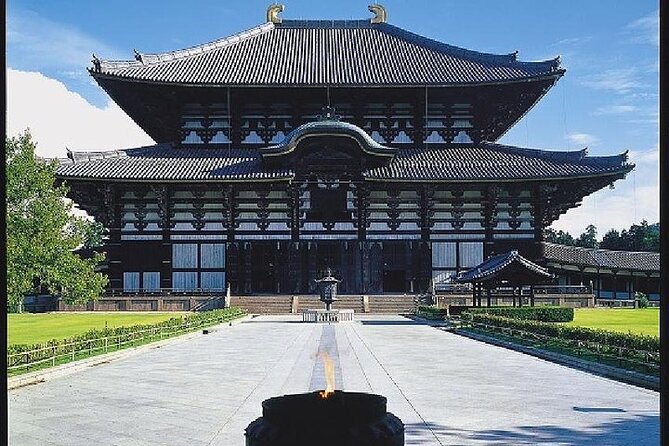
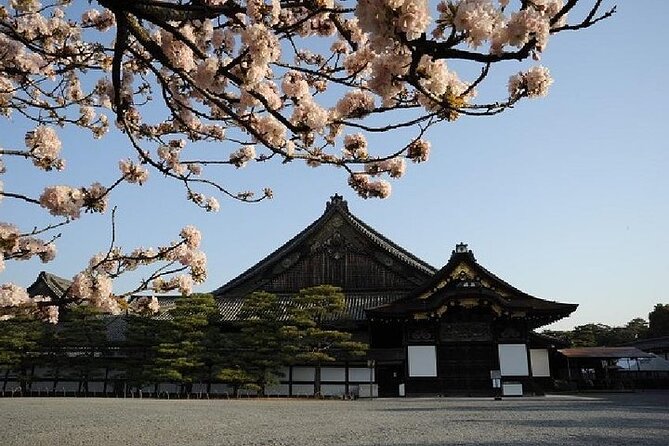
Nijo Castle is a fine first stop because it gives the day a strong historical opening. Completed in the early 1600s, it served as lodging for the Tokugawa shogun in Kyoto and helped protect the nearby Imperial Palace.
The castle’s appeal comes from contrast. Its outer presence is formal and restrained, while the interior has elaborate carvings and decorative details. You will remove your shoes before entering the palace areas, so wear socks and practical footwear.
The scheduled visit is about 50 minutes. That is enough to see the key rooms and appreciate the decoration, especially with a guide pointing out how the building functioned. It is not enough for a slow, detail-by-detail inspection of every feature.
I like this stop because it gives you a useful frame for later sights. Kyoto was not only a city of emperors and monks. It was also a place where military rulers exercised power, hosted formal visits, and watched over the imperial capital.
Nijo Castle has some walking and standing, and the shoe-removal rule makes slip-on footwear a smart choice. Keep your belongings manageable, since the morning moves on quickly.
Kinkaku-ji and the Golden Pavilion
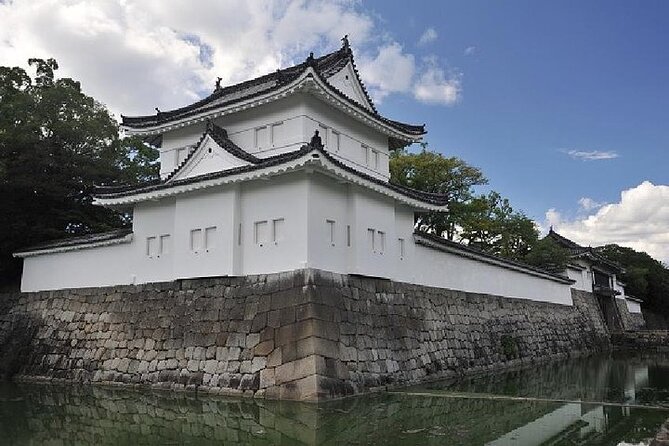
Kinkaku-ji, often called the Golden Pavilion, is the day’s most instantly recognizable sight. The three-story wooden structure is covered in thin layers of gold leaf and sits beside a pond in a carefully arranged garden.
Your visit lasts around 45 minutes. The main task is simple: follow the path, find a clear view of the pavilion, and take your photographs before continuing through the garden. The setting is highly photogenic, but the short stop can feel brisk if you want to study the grounds or wait for a quieter moment.
The pavilion is a religious site, not just a pretty building. Its changing use and reconstruction are part of the story, and a good guide can explain the Buddhist setting and the meaning behind the design. Guides such as KC, Momo, and Yuki have been praised for making these explanations easy to follow without turning the day into a lecture.
Kinkaku-ji is also where the tour’s popularity becomes most obvious. Expect a well-known sight with many people wanting the same photo. Keep close to the group and listen for the return time. A late departure here can affect every stop after it.
Same base, a completely different sort of day:
- Kyoto: Tea Ceremony in a Traditional Tea House in Kiyomizu
★ 4.9 · 3,519 reviews - Kyoto Geisha Walking Tour: Gion District & Hidden Gems
★ 4.7 · 3,273 reviews - Kyoto: Tea Ceremony Ju-An at Jotokuji Temple
★ 4.9 · 3,207 reviews - Kyoto: Gion Magical Night Walking Tour with Geisha Trivia
★ 4.9 · 2,393 reviews
Kyoto Imperial Palace and its formal grounds
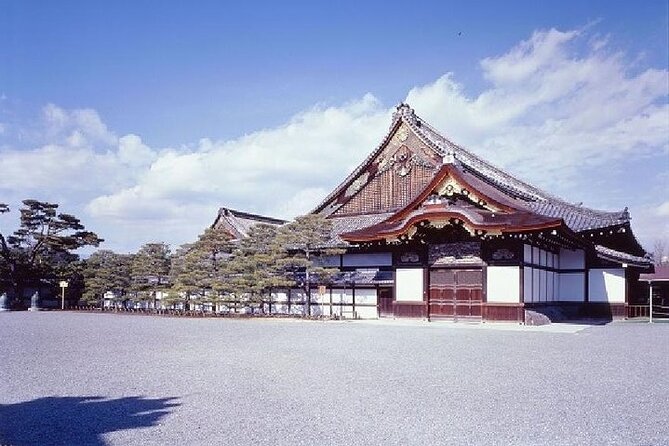
The Kyoto Imperial Palace offers a change of mood. Where Nijo Castle reflects military authority, the palace recalls the imperial court. Kyoto served as the emperor’s residence until roughly 150 years ago, and the grounds include the Shishin-den, an important building for state ceremonies.
The scheduled visit is 40 minutes, with admission listed as free. You’ll see the grounds and key exterior views rather than having unlimited time to wander. The palace can feel less immediately dramatic than Kinkaku-ji, but it adds essential context to the city’s political past.
This is a good place to pay attention to proportions and ceremony. The broad spaces and formal buildings communicate a different kind of power from the defensive character of Nijo Castle. I like that the morning includes both sites rather than presenting Kyoto as only temples and gardens.
The Imperial Palace is closed on Mondays, on the following day when Monday is a public holiday, and on some days with an Imperial Household Agency event. In those cases, the tour visits Kitano Tenmangu Shrine instead. If the closure falls on the 25th, the alternative is Nishi Hongan-ji Temple. No refund is provided when an alternative site is used.
Nijo Castle also has seasonal closure dates: Tuesdays in January, July, August, and December, December 26 through January 3, and the following day when Tuesday is a holiday. Ryoan-ji Temple replaces it when needed.
The road to Nara and the lunch choice
After the Kyoto visits, the bus heads south toward Nara. This is your main rest period, though road conditions and congestion can affect the schedule. The ride also gives the guide time to explain more about Japanese culture and the connection between religion, government, and the early capital at Nara.
Lunch depends on the option you choose when booking. The Western-style choice is a set menu. A vegetarian request must be made in advance, and same-day changes are not accepted. The Indian thali is vegetarian and includes three curries, vegetable pakora, yogurt, naan or roti, rice, salad, and one non-alcoholic drink.
The two lunch choices are served in separate dining areas, and you cannot switch between them on the day. Halal, gluten-free, and other meal requests are not available. If you choose no lunch, you are responsible for finding food during free time in the Kyoto Station area, so this option may not fit the day’s schedule as neatly as the included meal.
One practical point deserves attention: if someone in your party has a severe allergy or plans to bring separate food, confirm exactly how the meal will be handled before booking. The supplied information says unused meals are not simply interchangeable, and a meal cannot be changed on the day.
Todai-ji and Nara’s Great Buddha
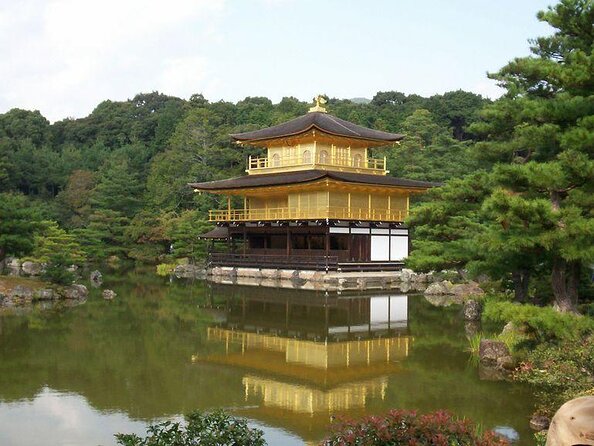
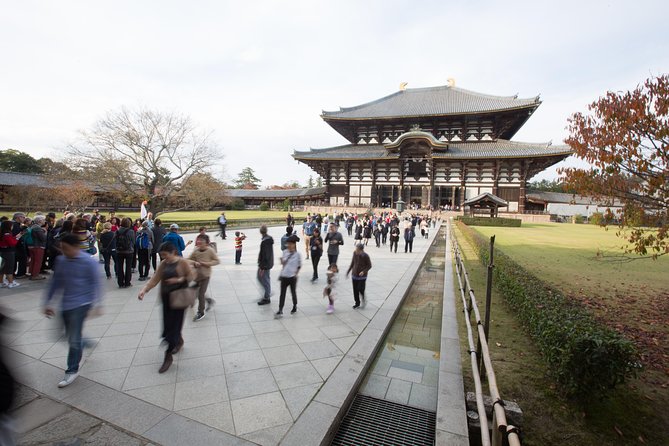
Todai-ji is the grand centerpiece of the Nara portion. Its main hall is one of the world’s largest wooden structures, and inside you’ll see the enormous bronze Great Buddha. The building’s size is impressive before you even consider the statue within it.
You have about 70 minutes here. That gives you time to enter the hall, see the Buddha, take in the scale of the structure, and follow the guide’s explanation. This is one of those places where a short stop still makes an impact because the main sight is so powerful.
Todai-ji is also a useful reminder that ancient Japan’s religious buildings were public expressions of authority and devotion. The complex is part of the UNESCO World Heritage listing connected with Nara’s historic monuments.
The walk around Nara can be tiring late in the day. You may be moving on foot between the bus area, Todai-ji, Kasuga Shrine, and the deer park, so comfortable shoes are more important than stylish ones. If you have limited walking ability, ask about the route before booking. The tour is described as suitable for most people, but it is not a seated sightseeing experience.
Kasuga Grand Shrine and its lanterns
Kasuga Grand Shrine brings a different religious setting. It is a Shinto shrine from the Nara period, designated as a World Heritage Site, and is known for more than 3,000 lanterns lining its grounds and interior areas.
The visit lasts about one hour. The lanterns give the shrine a distinct atmosphere, while the surrounding woods and paths provide a quieter contrast to Todai-ji’s huge hall. The shrine’s connection with deer is also important: the deer of Nara Park are regarded as messengers of the shrine.
From January 2025, the schedule includes entry to the Main Sanctuary special visit area. That access can be withdrawn for events or operational reasons. If the area cannot be entered, the Kasuga Taisha Museum or Todaiji Museum is used instead, with no refund for the change.
This is a stop where the guide’s explanations add real value. The differences between Buddhist temples and Shinto shrines can be confusing at first, especially when both appear in the same day. A well-organized guide can show you what to notice without asking you to remember a stack of difficult names.
Nara Park and the deer
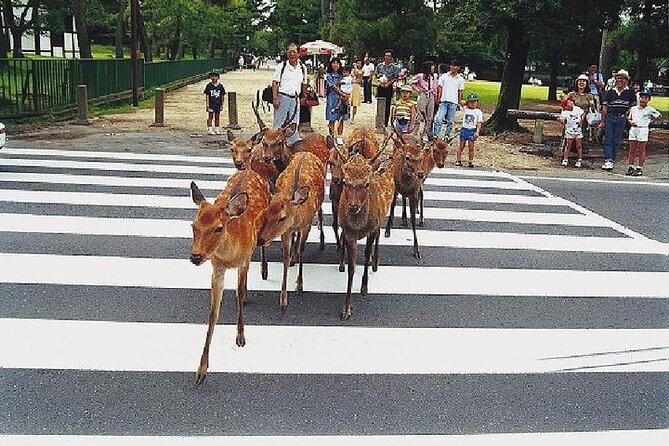
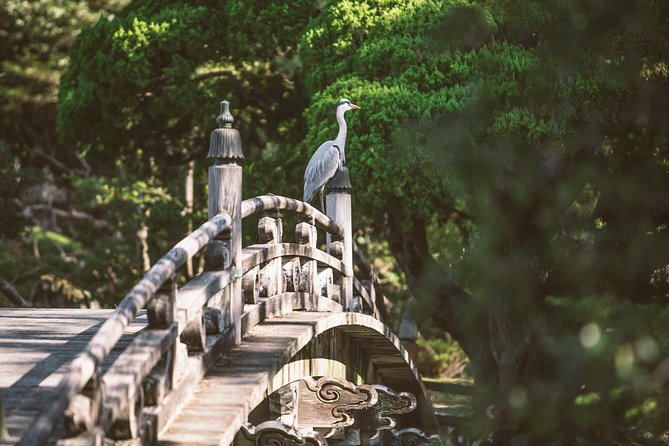
The day finishes in Nara Park, including the section known as Deer Park. The deer roam freely, which makes this more than a standard photo stop. You’ll see them around the paths and open areas near the religious sites.
The deer are accustomed to people, but they are still animals. Guides have warned that some can be pushy or aggressive, especially around food. Keep your hands and belongings under control, follow local instructions, and do not assume every deer wants to be petted.
The park is a welcome change after several formal buildings. It gives you room to look around and experience one of Nara’s most distinctive features. The drawback is time. The Nara portion is already full, and some people would prefer more free time here rather than a tightly managed final walk.
The route may involve a long walk to and from the bus station. That matters more at the end of a 10 to 11-hour day, particularly for children or anyone who tires easily.
Guide quality and the human side of the tour
The guide can shape this experience more than any single monument. The strongest guide names associated with the tour include KC, Momo, Yuki, Miyuki, Tammy, Yoshito, and Etsuko. The qualities repeatedly praised are clear English, humor, strong subject knowledge, patience, and firm but polite timekeeping.
That last quality is important. A group tour works only when everyone returns to the bus on time. Guides have been praised for reminding people without making the day feel harsh or rushed. They also help with photos and questions, which is useful when you are trying to understand unfamiliar customs while keeping up with the group.
There have been isolated concerns about communication with the company after a passenger had to leave early, and one complaint about sick passengers on the bus. Those issues do not describe the sightseeing itself, but they are worth keeping in mind. If you have health concerns, ask questions before departure and bring whatever personal precautions you need.
Is $194.85 a fair price?
At $194.85 per person, this is not the cheapest way to see Kyoto and Nara. The value comes from what is bundled together: a full day of transport, an English-speaking licensed guide, admission fees, and, if selected, lunch.
Trying to reproduce the same route by public transport would require several train or bus connections, admission purchases, navigation between spread-out sights, and careful timing. You could spend less by choosing fewer locations and moving at your own pace. You would also spend more effort and risk missing a connection or arriving at a temple after its opening hours.
I see the price as fair for a first-time visitor who wants structure and broad coverage. It is less attractive for someone who already knows Kyoto, dislikes group schedules, or wants long stretches of quiet time at each site.
Free cancellation is available up to 24 hours before the start time. Changes or cancellations inside that window are not accepted for a refund. Confirmation arrives within 48 hours of booking, subject to availability.
Who should book this day trip?
I would choose this tour if you have limited time in Kyoto and want a strong first look at both cities. It suits English-speaking visitors who value explanations, prefer air-conditioned transport, and would rather not manage a complex day of local travel.
It also fits families and mixed-age groups reasonably well, since most people can participate and children up to age five may join free without a bus seat or lunch. If a young child needs a seat or meal, book the child rate. Anyone under 18 needs written parental permission, and anyone under 15 or not yet in middle school must be accompanied by a parent or guardian.
I would think twice if you want a slow, reflective day. The schedule is full, the group can reach 40 people, and every stop has a fixed time. You should also reconsider if long walks, stairs, shoe removal, or a late return to Kyoto will be difficult.
Final verdict: a smart first look, not a slow Kyoto day
Book this experience if your priority is seeing the major sights efficiently, with context and transport handled for you. The mix is excellent: shogun power at Nijo Castle, gold and gardens at Kinkaku-ji, imperial ceremony, Nara’s Great Buddha, Shinto lanterns, and free-roaming deer.
Skip it if you already have several Kyoto days and would rather spend half a morning at one temple. At $194.85, you are paying for convenience, admissions, and a guide, not personal freedom. For a first visit, that trade is sensible. Just wear good shoes, arrive early at the AVANTI meeting point, choose your lunch carefully, and accept that this is a fast but rewarding introduction.
FAQ
How long is the Kyoto and Nara day trip?
The experience lasts approximately 10 to 11 hours. It starts at 8:20 a.m. and the Kyoto start and end option finishes at Kyoto Station around 6:30 p.m.
Where does the tour start?
The meeting point is the JTB SUNRISE TOURS DESK in the basement of AVANTI near Kyoto Station, at Higashikujō Nishisannōchō 31, Minami Ward, Kyoto.
Where does the tour end?
The tour ends at Kyoto Station. Hotel drop-off is not provided, so you will return to your accommodation on your own.
Is lunch included?
Lunch is included only if you select a lunch option when booking. You can choose a Western-style set menu, an Indian thali, or no lunch.
Can the tour accommodate vegetarian meals?
Vegetarian meals are available with advance notice for the Western-style lunch. The Indian thali option is suitable for vegetarians. Halal, gluten-free, and other meal requests are not available.
What happens if Kyoto Imperial Palace or Nijo Castle is closed?
If the Imperial Palace is closed, the tour visits Kitano Tenmangu Shrine, or Nishi Hongan-ji Temple when the closure falls on the 25th. If Nijo Castle is closed, Ryoan-ji Temple is visited instead.
Is the tour suitable for children?
Children up to five years old may join free, but they do not receive a bus seat or lunch unless booked under the child rate. Participants under 18 need written parental permission, and anyone under 15 or not yet in middle school must join with a parent or guardian.
Just added around Kyoto
- Kyoto: Zen Meditation at a Private Temple with a Monk★ 5.0 · 25 reviews
- Kyoto: Gion Geisha District & Sake-in-Hand Walking Tour★ 5.0 · 37 reviews
- Private Pewter Sake Cup Experience with a Kyoto Artisan★ 5.0 · 31 reviews
- Your Private Vacation Photography Session In Kyoto★ 5.0 · 110 reviews
- Private Guided Traditional Buddhist Cooking in Japan★ 5.0 · 16 reviews
- Kyoto Wagashi(Japanese sweets) Cooking Class near Fushimiinari★ 5.0 · 60 reviews
- Traditional Japanese Music show & Experience Tour in Kyoto★ 5.0 · 57 reviews
- Kyoto:Family-Friendly Kimono & Yukata Experience at WARGO★ 5.0 · 147 reviews
Kyoto Tours, compared.
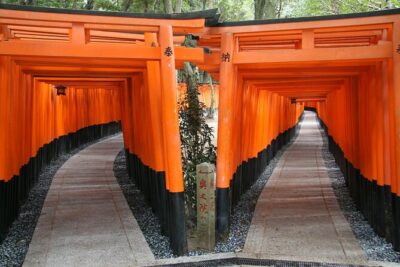
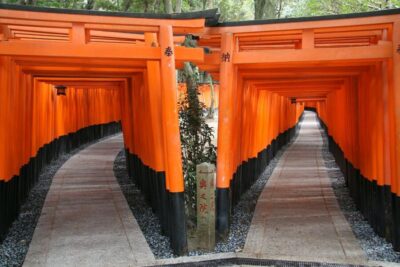
Fushimi Inari, Kinkakuji, Bamboo Grove 1 Day Bus Tour
Read our review →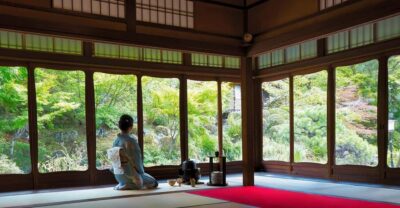
Tea Ceremony in a Traditional Tea House in Kiyomizu
Read our review →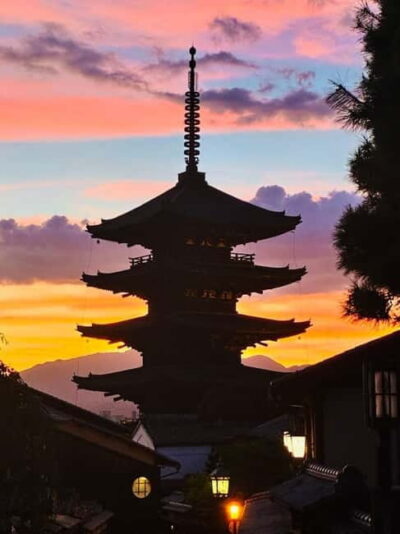
Kyoto Geisha Walking Tour: Gion District & Hidden Gems
Read our review →
Gion Magical Night Walking Tour with Geisha Trivia
Read our review →
Gion Geisha District Walking Tour – Stories of Geisha
Read our review →Browse the lists this tour appears in