
Reviewed · KYOTO TOURS
Let’s make only one original onigawara in the world
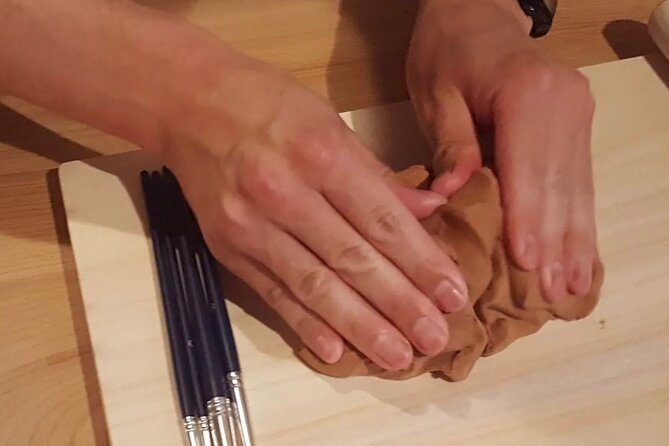
Kyoto has no shortage of souvenirs, but few are made by your own hands. In this workshop, you shape a small onigawara, the fierce clay guardian once placed at the ends of Japanese roof ridges. I like that the final piece is not pulled from a shop shelf, and I like that instructor Yuya breaks a tricky sculpture into simple steps that beginners can follow. The main catch is that shipping costs extra, and you will not take the finished tile home that day.
The workshop lasts about two hours, though some sessions run closer to three when everyone works carefully. You use wet soil, so wear clothes that can get dirty. The usual class has no more than five people, making it a good choice if you want patient guidance rather than a crowded craft demonstration.
Key points to know before booking
- Make a real clay guardian: Build your own demon-faced onigawara from a lump of clay, using a method designed for beginners.
- Learn the roof tile’s purpose: The workshop explains how these ornaments helped protect Japanese buildings from evil and rainwater.
- Work with artisan Yuya: Clear, step-by-step instruction makes the project manageable even if you have never touched clay.
- Expect a delayed souvenir: Your piece must dry and be fired in a kiln before it can be shipped to your home.
- Budget for postage: Shipping is not part of the $89.17 price, and the cost is paid separately.
- Plan for a hands-on class: Soil is part of the process, and an apron is not included.
Why an onigawara makes a better souvenir than another trinket
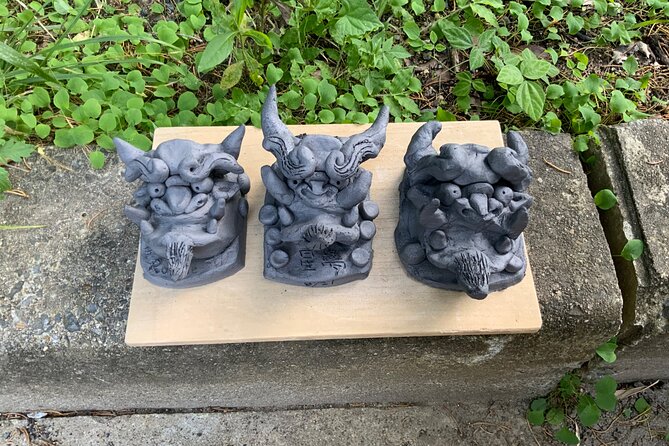
An onigawara is a roof ornament with a demon, ogre, or gargoyle-like face. You see these tiles at the ends of the main roof ridge on temples and traditional buildings. Their job was practical as well as symbolic: they helped deal with rainwater and were believed to guard the building against evil.
That small bit of context changes the class. You are not simply shaping an amusing monster. You are making a compact version of an object tied to Japanese architecture, folk belief, and the craft of roof-tile production.
The finished piece is also personal in a way a mass-produced charm cannot be. Everyone follows the same basic construction method, yet the faces and shapes turn out differently. One person may create a snarling guardian, while another produces something softer, stranger, or delightfully lopsided.
That is part of the appeal. You are not being judged on perfect symmetry. The goal is to create an original demon with your own hands.
A few more Kyoto half-days to weigh up
- PERFECT KYOTO 1-Day Bus Tour
★ 5.0 · 13,518 reviews - Kyoto: Fushimi Inari, Kinkakuji, Bamboo Grove 1 Day Bus Tour
★ 4.8 · 4,316 reviews - Kyoto: Tea Ceremony in a Traditional Tea House in Kiyomizu
★ 4.9 · 3,519 reviews
Arriving at 瓦工房 You家 in Higashiyama
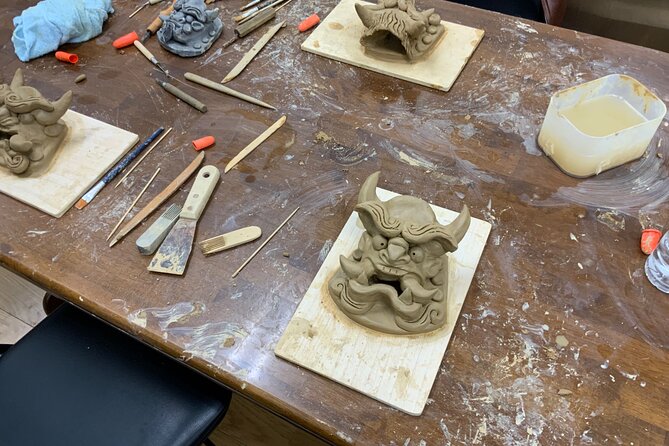
The regular meeting point is 瓦工房 You家, also written as kawarakoubouyouya, at 373-2 Yamazakichō in Kyoto’s Higashiyama Ward. The workshop ends at the same place.
The location is near public transportation, but the supplied information does not specify a particular station or walking time. I would check the exact meeting instructions before setting out, especially if you are fitting this class between temple visits.
This is a working craft setting rather than a grand cultural attraction. That matters. You are going to a place connected with tile making, not a staged show built around a quick photo opportunity. The setting helps the activity feel direct and practical.
For larger groups, the arrangement changes. Groups of five or more are accepted, and groups can be as large as 40 people, but the location will change for those bookings. The regular format has a maximum of five participants, so ask for the group arrangement if you are booking a reunion, school group, or large family party.
The first lesson: why Japanese roofs have demon faces
Yuya begins by explaining kawara, the traditional roof tiles of Japan. The key idea is simple: these carved tiles sit near the roof ridge, where they help channel water and add a protective symbol to the building.
The demon face is not just decoration. Its fierce expression gives the roof a guardian, almost watchful, quality. That makes the object especially meaningful in Kyoto, where rooflines, temples, and traditional buildings are such a large part of the city’s visual character.
This introduction is short enough to keep the class moving, but useful enough to make you notice onigawara afterward. Several participants have compared their finished pieces with real examples around Kyoto. That is a good way to extend the lesson: look up at temple roofs and traditional buildings during the rest of your visit.
You also hear why the craft is difficult in its traditional form. The instructor uses a procedure he developed to make the project possible within a short class, including for children and people who consider themselves clumsy with their hands.
That is an important distinction. You are not learning every stage of professional roof-tile production in two hours. You are learning a workable version of the process that lets you complete a recognizable demon tile.
Turning a lump of clay into a guardian
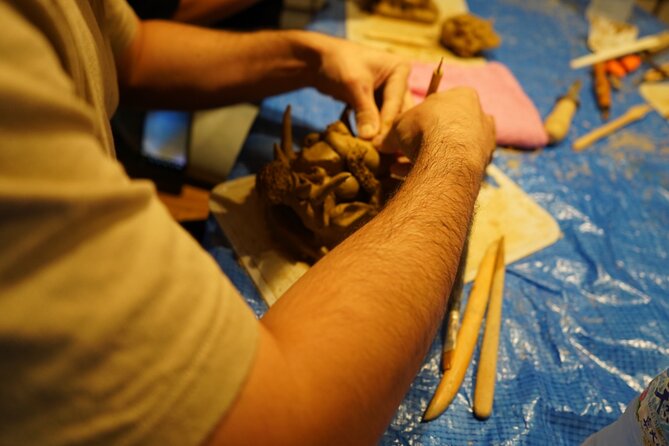
The project is built step by step. Yuya demonstrates each part, then lets you shape your own clay. The method uses a set sequence of pieces and forms, but you decide how your demon looks.
You may begin with little confidence. A finished onigawara can look complicated, with a strong face and layered details. The instruction reduces it to manageable tasks, so you can concentrate on one feature at a time rather than worry about the entire sculpture.
This is where Yuya’s teaching style matters most. He is described as patient, encouraging, and clear in English. He gives suggestions to improve the form without taking over the work. If you are slower than the rest of the group, the class can allow extra time so you can finish.
The workshop works for complete beginners, including children and teenagers. It also leaves room for someone with more artistic confidence to add a personal twist. The basic recipe gives the project structure, while the final expression remains yours.
Do not expect every stage to look successful. Clay can appear misshapen before the details come together. The useful advice is to trust the process and keep following the instructions. Several finished pieces that initially seem rough become convincing once the face and other elements are added.
The pace can be fairly brisk. One adult group of six needed close to three hours, and a novice working alone took about three hours. The advertised duration is approximately two hours, so avoid scheduling a tight appointment immediately afterward.
Same base, a completely different sort of day:
- Kyoto Geisha Walking Tour: Gion District & Hidden Gems
★ 4.7 · 3,273 reviews - Kyoto: Tea Ceremony Ju-An at Jotokuji Temple
★ 4.9 · 3,207 reviews - Kyoto: Gion Magical Night Walking Tour with Geisha Trivia
★ 4.9 · 2,393 reviews - Kyoto: 45-Minute Tea Ceremony Lesson Experience
★ 4.3 · 2,378 reviews
What makes the small class format valuable
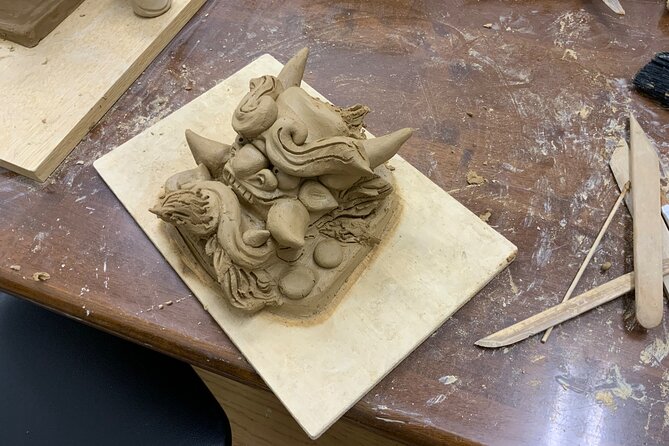
The regular class maximum is five people. That is a strong point for a craft lesson because Yuya can watch how you are handling the clay and step in when a shape needs help.
A smaller group also lets you ask questions. The atmosphere can feel more like an artisan showing you a personal craft than a large class moving people through stations.
Private-feeling sessions can happen when only one booking is scheduled. The class is not necessarily cancelled just because attendance is low, which is useful if you are planning around a fixed Kyoto itinerary. A couple may receive more individual attention, while a family or small group can work side by side and compare how different each demon becomes.
There is one detail to clarify if your party is larger. The standard activity has a five-person maximum, while larger bookings can be accepted at another location. Confirm the setup before paying if your group exceeds five.
The waiting period: drying, firing, and delivery
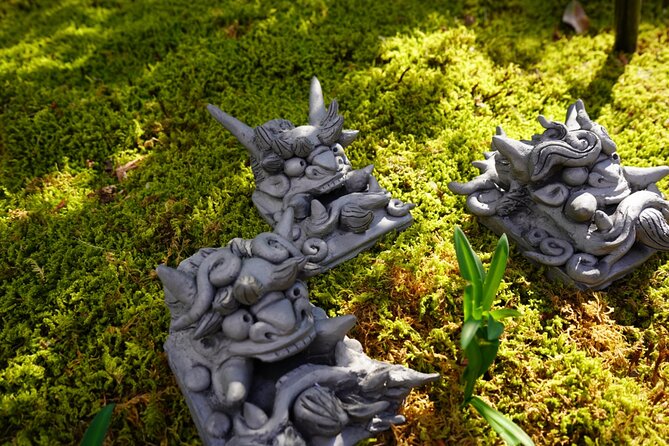
You do not leave with the completed ceramic piece. After the class, the clay needs time to dry before firing. The supplied information gives a drying period of about one month in one account, with firing and curing taking place afterward.
The timing varies in the information provided, so plan for a wait of several weeks rather than a precise delivery date. The instructor fires the work in a kiln at the factory, then ships it to your home.
This delayed finish is both a benefit and a limitation. You avoid carrying a fragile ceramic object through the rest of your Japan trip. You also get a small surprise in the mail later, which can bring the trip back to mind.
The drawback is cost and uncertainty. Shipping is not included in the $89.17 activity price. Postage is paid separately, in cash, and the amount is determined at the end of the class. Since every person who makes a piece will need it shipped to see the final fired result, I would bring cash and ask about the expected shipping charge before starting.
The finished work has arrived safely for participants who used the delivery service, but you should still provide a reliable home address and understand that the final object cannot be inspected or packed into your luggage at the workshop.
Is $89.17 a fair price?
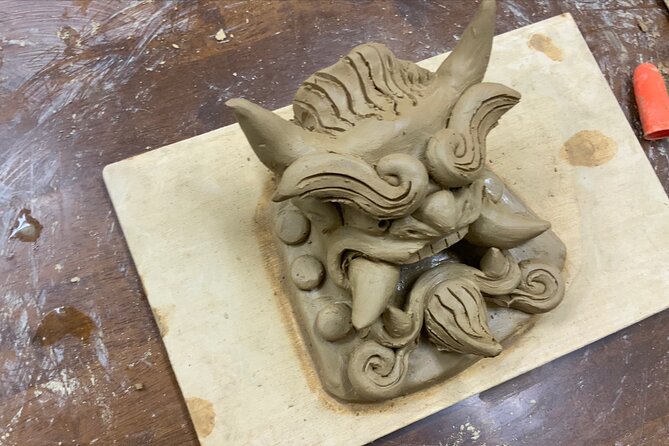
At $89.17 per person, this is not a bargain souvenir stop. You are paying for instruction, clay, kiln firing, and a guided cultural activity rather than for a finished object alone.
I think the value is strongest if you care about making something yourself. The class gives you a story to attach to the souvenir: you learned what onigawara do, shaped the face, watched the form develop, and waited for the kiln to finish the job.
The price also compares better with other paid craft activities if you value small groups and personal help. A larger workshop might cost less, but it may not offer the same amount of direct guidance. Here, Yuya’s patient demonstrations are a central part of what you are buying.
Still, factor in shipping. The published fee does not cover postage, and the exact charge is not stated in advance. A group discount is available, but the amount is not specified, so ask for the current terms when booking.
Bottled water is included. An apron is not, and clothing protection is your responsibility.
The practical details that shape your visit
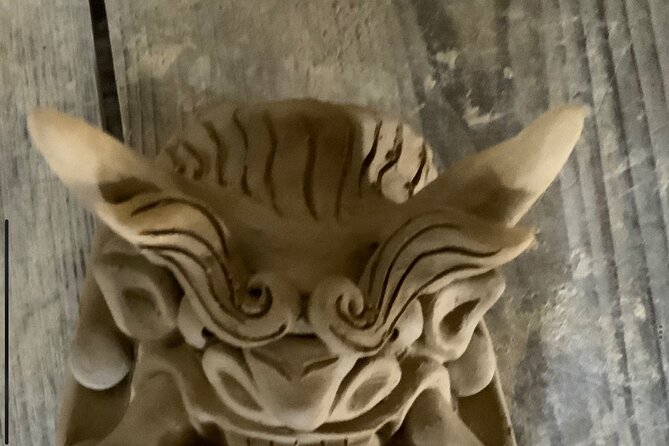
Wear older or washable clothing. The process uses soil, and even careful hands can make a mess.
Allow more than the stated two hours if you can. The standard estimate is approximate, and careful sculptors may need nearly three hours. That extra margin also keeps you from rushing the face, which is the part that gives each demon its personality.
The workshop is near public transportation, accepts mobile tickets, and allows service animals. Most people can participate, including children and beginners. The available information does not give a specific age minimum, so check directly if you are bringing very young children.
You can cancel for a full refund up to 24 hours before the start time. Cancellations or changes made less than 24 hours ahead are not accepted for a refund, with cut-off times based on Kyoto local time.
If you have luggage with you, storage may be available at the workshop, but I would confirm this before relying on it. One session provided a place for luggage, yet that should not be treated as a guaranteed feature for every booking.
Who will enjoy making an onigawara?
I would put this high on the list for families with artistic teenagers. The project is active without being physically demanding, and each person can create a different result from the same basic instructions.
It also suits adults who want a break from temple and shrine visits. Kyoto sightseeing involves plenty of walking, and sitting down for a quiet creative session can reset your pace.
First-time clay workers are welcome. You do not need a pottery background, and Yuya’s instructions are designed to make a complicated-looking object achievable. People who are hard on themselves about their artistic skills may find the process especially satisfying because the piece improves as its parts come together.
The class is less suitable if you need a finished souvenir immediately, dislike getting dirty, or have a strict schedule after the workshop. It is also not the best match if you want a formal lecture on Japanese ceramics. The focus is making one small guardian, with cultural context woven into the hands-on work.
A souvenir with a face and a story
The best reason to book is the combination of craft and meaning. You learn why demon-faced roof tiles appear on Japanese buildings, then make your own version instead of simply photographing one.
Yuya’s instruction is the thread holding the class together. He explains the techniques in simple stages, speaks clear English, and offers help without erasing your personal choices. That balance lets children, nervous beginners, and more confident sculptors work in the same room.
The final object may not be perfectly polished. That is part of its charm. Your demon will carry your decisions, your mistakes, and the shape of your hands.
Should you book this Kyoto workshop?
Book it if you want a personal souvenir, enjoy making things, and can wait several weeks for kiln firing and delivery. It is particularly well suited to families, teenagers, couples, and anyone who wants a quieter activity between Kyoto’s major sights.
Skip it if you need to keep your luggage light but do not want to pay separate shipping, or if your schedule leaves no room for a class that may run beyond two hours. Wear washable clothes, bring cash for postage, and leave time for the piece to dry, fire, and reach your home.
For the right kind of visitor, this is a memorable Kyoto purchase because you do not merely buy the guardian. You make it.
FAQ
How long does the onigawara workshop last?
The activity is scheduled for approximately two hours. Some sessions take closer to three hours, especially when participants work slowly or need extra time to finish their sculptures.
Where does the workshop begin and end?
The regular meeting point is 瓦工房 You家, kawarakoubouyouya, at 373-2 Yamazakichō, Higashiyama Ward, Kyoto, 605-0841, Japan. The activity ends back at the same meeting point.
What is an onigawara?
An onigawara is a traditional Japanese roof tile ornament, often shaped with the face of a demon or ogre. These tiles are found near the ends of the main roof ridge and have been used to guard buildings from evil and rainwater.
Do I take the finished tile home after the class?
No. The clay piece is fired in a kiln at the factory after the workshop and then delivered to your home.
Is shipping included in the activity price?
No. Shipping costs are separate from the experience fee. The available information states that postage is paid separately, in cash, at the end of the class.
Is clay experience required?
No. The instructor’s procedure is designed so children, beginners, and people who feel clumsy with their hands can make an onigawara.
What should I wear?
Wear clothes that can get dirty because the activity uses soil. An apron is not included.
How many people can join a regular class?
The regular workshop has a maximum of five participants. Larger groups of five or more can be accepted, with a different location for group bookings, and groups may be accommodated up to 40 people.
Is bottled water included?
Yes. Bottled water is included in the experience fee.
Can I cancel for a full refund?
Yes, if you cancel at least 24 hours before the scheduled start time. Cancellations or changes made less than 24 hours before the start are not accepted for a refund.
Just added around Kyoto
- Kyoto: Zen Meditation at a Private Temple with a Monk★ 5.0 · 25 reviews
- Kyoto: Gion Geisha District & Sake-in-Hand Walking Tour★ 5.0 · 37 reviews
- Private Pewter Sake Cup Experience with a Kyoto Artisan★ 5.0 · 31 reviews
- Your Private Vacation Photography Session In Kyoto★ 5.0 · 110 reviews
- Private Guided Traditional Buddhist Cooking in Japan★ 5.0 · 16 reviews
- Kyoto Wagashi(Japanese sweets) Cooking Class near Fushimiinari★ 5.0 · 60 reviews
- Traditional Japanese Music show & Experience Tour in Kyoto★ 5.0 · 57 reviews
- Kyoto:Family-Friendly Kimono & Yukata Experience at WARGO★ 5.0 · 147 reviews
Kyoto Tours, compared.


Fushimi Inari, Kinkakuji, Bamboo Grove 1 Day Bus Tour
Read our review →
Tea Ceremony in a Traditional Tea House in Kiyomizu
Read our review →
Kyoto Geisha Walking Tour: Gion District & Hidden Gems
Read our review →

Gion Magical Night Walking Tour with Geisha Trivia
Read our review →
