
Reviewed · KYOTO TOURS
Kyoto, Osaka, Nara Private Tour by Car English Driver Guide
This private car tour tackles Japan’s major cultural sights without making you decode train maps or squeeze onto crowded buses. You get about 10 hours with a vehicle, driver, Wi-Fi, and pickup, all for $660.51 per group of up to six. That can be good value for a family or small group, especially with luggage or limited time.
I like the point-to-point convenience and the freedom to adjust the day. Drivers named Hassan, Khan, Virk, Malik, and Sankalpa have been praised for punctual pickups, patience, photos, and useful suggestions such as Kyoto’s Monkey Park. The main caution is clear: some drivers act more like chauffeurs than full historical guides, so confirm expectations before you pay.
Key points to know
- One city works best: Kyoto, Osaka, or Nara can each fill a full day.
- Up to six people share one price: The cost makes more sense for families and small groups.
- Hassan and other drivers receive strong praise: Helpful, punctual service is a common strength.
- The Kyoto plan is packed: Eight listed stops at roughly one hour each leave little room for traffic, meals, or long temple visits.
- Entry fees and food are extra: The price covers transport, tolls, fuel, Wi-Fi, and the driver-guide service.
- Guiding quality varies: You may receive site explanations and photos, or mainly transport between stops.
What the $660.51 private day actually gives you
The core product is simple: your own air-conditioned vehicle for about 10 hours, with private transportation for your group of up to six. Pickup is offered, and the listed price includes fuel, highway tolls, Wi-Fi, meet and greet, and an English-speaking driver described as an in-person guide.
That bundle has real value in the Kyoto, Osaka, and Nara area. Sites are spread out, roads can be slow, and a private vehicle saves you from repeatedly finding stations, platforms, bus routes, and lockers. If six people share the cost, the price works out to about $110 per person. For two people, it is a much more expensive choice than public transport, but you are paying for time, privacy, and door-to-door movement.
The important distinction is the word guide. The experience is sold with a driver-guide, but the service delivered can depend on the individual assigned. Some drivers, including Hassan, Khan, and Virk, have been praised for recommendations, photos, flexibility, and good English. Other accounts describe a polite, safe driver who dropped passengers at sights and waited in the car, offering little information.
I would book this as a private sightseeing transfer with guiding potential, not as a guaranteed specialist-led history tour. If temple stories, religious customs, and detailed explanations are the main reason you are booking, ask the provider in writing what the driver will do at each stop.
More private driver days in Kyoto:
- Explore Kyoto | Private Tour – Local English Driver(guide option)
★ 4.5 · 203 reviews - Kyoto Private 6 hour Tour: English Speaking Driver Only, No Guide
★ 5.0 · 88 reviews - Kyoto Private Day Tour with English-Speaking Driver from Kyoto
★ 4.5 · 85 reviews
Choose Kyoto, Osaka, or Nara, not all three
The advertised choices are Kyoto, Osaka, and Nara. Each has enough to fill the day, and the schedule makes most sense when you choose one destination.
Trying to combine two or three cities is a different proposition. The provider specifically notes that a same-day Kyoto, Nara, and Osaka plan can spend much of the day on the road, especially with pickup in Osaka. One account describes a day that began late after vehicle trouble and left only enough time for Fushimi Inari and one Nara temple.
You should also treat the hour-by-hour plans as a menu, not a promise that every stop will receive a full, relaxed hour. Traffic, parking, opening times, weather, meals, and walking distance all affect the day. Ask the driver to help rank your top three or four sights before departure.
That planning conversation is where this experience can become much better. A flexible driver can help you avoid wasting time on a stop you care less about, or suggest an extra place. One family especially enjoyed Monkey Park after Hassan recommended it, even though it was not on their original list.
Kyoto: an ambitious route through temples and old streets
The Kyoto plan lists eight stops, each with about one hour:
- Arashiyama
- Kinkakuji Temple
- Kiyomizu-dera Temple
- Fushimi Inari-taisha Shrine
- Gion
- Sanjusangendo Temple
- Ginkakuji Temple
- Nishiki Market Shopping District
This is an excellent list of Kyoto highlights, but it is a very full day. You will be moving across the city rather than lingering at every site. If you want quiet temple gardens, detailed explanations, or time for a proper meal, cut the list.
Arashiyama and the bamboo forest
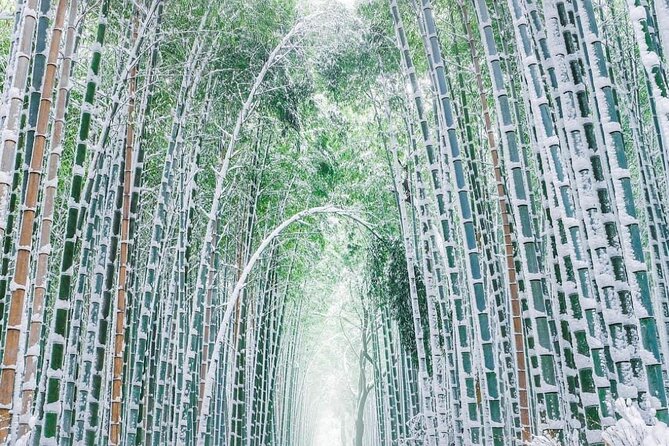
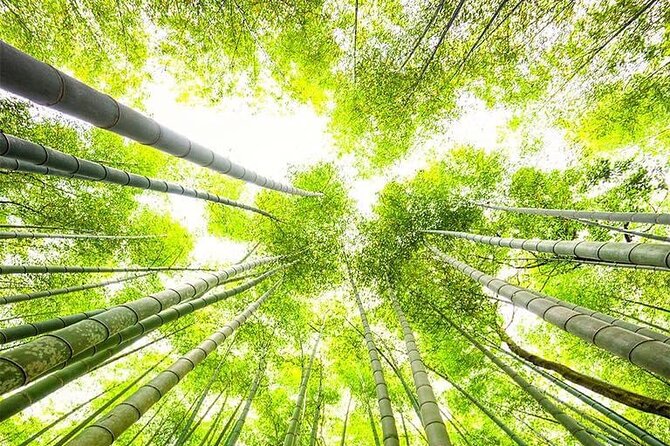
Arashiyama is one of the most requested Kyoto areas on this route. The bamboo forest supplies the famous tall green corridor, while the nearby bridge gives you a pleasant walking view and a change from temple interiors. The area also connects with Monkey Park, which may be added if time allows.
Do not treat the bamboo grove as a quick photo stop if it is a priority. You need time to leave the vehicle, walk, take photographs, and return. Ask where the driver will meet you, since the most attractive streets are pedestrian areas and the car cannot follow you through them.
A few more Kyoto half-days to weigh up
- PERFECT KYOTO 1-Day Bus Tour
★ 5.0 · 13,518 reviews - Kyoto: Fushimi Inari, Kinkakuji, Bamboo Grove 1 Day Bus Tour
★ 4.8 · 4,316 reviews - Kyoto: Tea Ceremony in a Traditional Tea House in Kiyomizu
★ 4.9 · 3,519 reviews - Kyoto Geisha Walking Tour: Gion District & Hidden Gems
★ 4.7 · 3,273 reviews
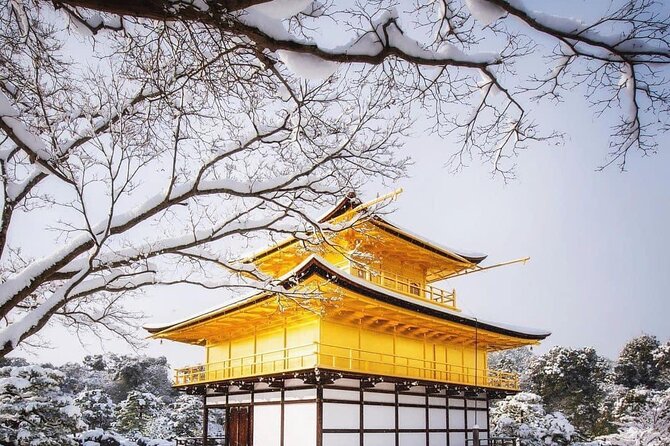
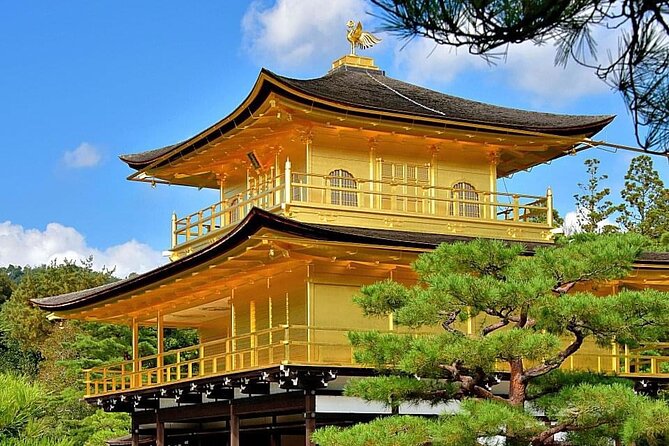
Kinkakuji, the Golden Pavilion
Kinkakuji is a fast, visually rewarding stop. Its gold-covered pavilion sits beside a pond, making it one of Kyoto’s most recognizable views. The visit is primarily a walk through the grounds, so an hour can work, though crowds and photography may slow you down.
Entry is not included. Carry some Japanese yen or confirm accepted payment methods before the day begins. The driver may take you to the entrance, but do not assume he will walk the full grounds and explain every building.
Kiyomizu-dera and the hillside approach
Kiyomizu-dera brings a large temple complex, elevated views, and a lively approach through the historic Higashiyama area. This stop often takes more effort than its one-hour estimate suggests because you may walk uphill from the vehicle drop-off.
If you want time for nearby lanes, shops, and photographs, Kiyomizu-dera should be one of your day’s top priorities. It is also a good place to ask the driver for a clear meeting point. Parking restrictions can affect how close the vehicle gets.
Fushimi Inari-taisha and the torii gates
Fushimi Inari is known for its long rows of orange torii gates. You do not need to walk the entire mountain route to enjoy the shrine, but you should decide in advance how far you want to go. An hour is enough for the lower section and photographs, not for a full climb.
This is another stop where a driver’s local timing advice could help. The site is open around the clock, but the rest of your itinerary may not be. If Fushimi Inari is essential, tell the driver not to let earlier stops consume its time.
Gion, Sanjusangendo, Ginkakuji, and Nishiki Market
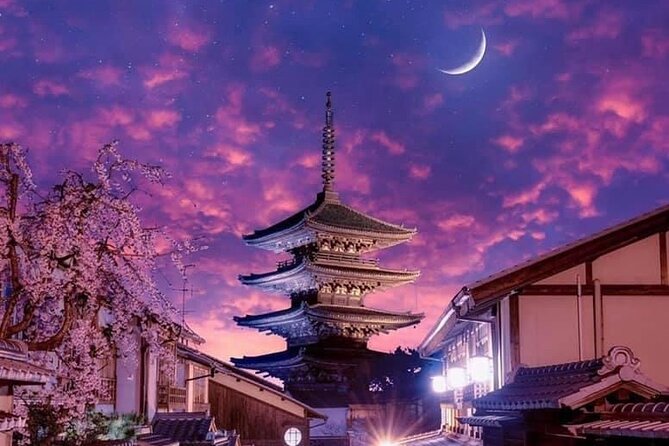
Gion is best understood as a walk through traditional streets, not a single monument. You may enjoy the atmosphere and old wooden buildings, but the vehicle will only get you near the area. Respect private homes and avoid blocking narrow lanes for photographs.
Sanjusangendo is known for its long hall and rows of Buddhist figures. Ginkakuji, the Silver Pavilion, is valued for its garden and restrained design rather than silver decoration. Nishiki Market is your food and shopping stop, but meals and purchases are extra, and market visits can easily expand beyond the planned hour.
I would not attempt all eight Kyoto stops unless your goal is a broad first look. A stronger day might pair Arashiyama, Kinkakuji, Kiyomizu-dera, and Fushimi Inari, or focus on eastern Kyoto with Kiyomizu-dera, Gion, Sanjusangendo, Ginkakuji, and Nishiki Market.
Nara: deer, temples, shrines, and open space
The Nara plan includes:
- Nara Deer Park
- Todai-ji Temple
- Todai-ji Nigatsudo
- Wakakusayama Hill
- Horyu-ji Temple
- Kasuga Taisha Shrine
- Shinyakushiji Temple
- Naramachi street
Nara is a strong choice for families and anyone who wants a day with more walking outdoors. Deer Park and the temple precincts can be combined naturally, while Horyu-ji is a farther-reaching addition that may make the schedule tight.
Deer Park and Todai-ji
The deer are the obvious draw, and feeding them can be a memorable experience. Use care around food and follow local instructions, since these are wild animals, not tame pets. The park also gives children room to move after a series of indoor or religious sites.
Todai-ji contains one of Japan’s best-known great Buddha halls. It is a major sight, so allow time to appreciate the scale rather than treating it as a quick photograph. Entry is extra, as are any deer crackers or food you purchase.
Nigatsudo and Wakakusayama Hill
Nigatsudo offers a quieter temple setting near Todai-ji, with views over the area. Wakakusayama Hill adds open scenery and a break from the main temple route, but walking time matters. Ask how far the vehicle can approach and how much walking is expected.
The plan’s eight stops again require choices. Deer Park, Todai-ji, Kasuga Taisha, and Naramachi make a sensible central Nara day. Adding Horyu-ji and Shinyakushiji may be worthwhile if those sites matter to you, but you should not expect every stop to receive an unhurried visit.
Kasuga Taisha, Shinyakushiji, and Naramachi
Kasuga Taisha is known for its shrine paths and stone and bronze lanterns. Shinyakushiji is a smaller temple choice, useful if you want to move beyond Nara’s most famous address. Naramachi gives you old-town streets, small shops, and a more everyday feel.
Several families have valued Nara for its mix of nature, shrines, gardens, and child-friendly stops. If you have children, tell the driver their ages and energy levels. The service has handled groups with children ranging from nine to twenty, but the day still needs sensible pacing.
Osaka: castles, markets, and city views
The Osaka plan includes:
- Osaka Castle
- Shitennoji Temple
- Dotonbori
- Sumiyoshi Taisha Shrine
- Sakai City Hall Observatory
- Daisen Park
Osaka gives you a mix of landmark views, religious sites, food streets, and city neighborhoods. Dotonbori is the natural food stop, but your meal is not included. Osaka Castle and Sumiyoshi Taisha provide the strongest sightseeing anchors, while the Sakai observatory and Daisen Park make the day more spread out.
At Osaka Castle, check exactly what is included in your visit. The general tour price does not cover entry fees, rides, or attractions inside any site. Dotonbori is primarily a walking and eating area, so your driver will likely drop you near it and arrange a meeting place.
Shitennoji and Sumiyoshi Taisha offer a quieter counterpoint to central Osaka. Daisen Park adds greenery and space, while the Sakai City Hall Observatory provides a high view if conditions are suitable. Since the itinerary covers several districts, traffic can shape the day more than you expect.
What the drivers do well, and where the service falls short
The strongest part of the experience is practical help. Positive accounts describe early arrivals, clean vehicles, safe driving, luggage assistance, flexible timing, and useful recommendations. Hassan is repeatedly praised for patience, photography, cherry blossom suggestions, lunch help, and adjusting plans to suit families. Khan contacted one group through WhatsApp two days before pickup, reviewed the route, and arrived early at the hotel.
That is exactly the kind of service a private car tour should provide. You can spend your energy seeing Japan instead of managing every transfer.
The weak point is interpretation. Several accounts describe drivers who knew the route but did not enter the sights or explain their significance. One driver answered questions with little useful detail, while another spoke limited English. A polite driver is valuable, but polite transport is not the same as a fully guided tour.
There was also one serious missed-pickup complaint, with the provider explaining that the driver became ill and contact failed. The company said a full refund was processed. Another bad day involved a vehicle breakdown and a much-delayed replacement. These incidents appear to be exceptions, but they matter when you have only one day in Kyoto.
Weather and parking can also change the service. During heavy rain, parking restrictions reportedly kept a driver from walking into some places with the group. If entering every site with a guide is important, ask how bad weather and no-parking zones will be handled.
Timing, comfort, and the cost of entry
The 10-hour length is generous on paper, but it includes driving. Kyoto traffic, transfers between cities, and parking can consume a large part of the day. Start with your highest-priority sight and keep at least one flexible hour rather than filling every minute.
The air-conditioned vehicle matters in Japan’s hot or rainy seasons, and onboard Wi-Fi lets you check maps, messages, and opening information. Private transport is also helpful for older family members or groups that want to stay together.
The $660.51 price includes the vehicle, fuel, highway tolls, Wi-Fi, pickup, and driver-guide service. It does not include meals, drinks, temple or shrine admission, or ride fees. For six people, that is a reasonable convenience charge. For one or two people, compare it with rail and taxi costs, especially if you plan to visit only central Kyoto.
The tour is best value when you use the car for distant stops, have a tight schedule, or need door-to-door service. It is weaker value if you want a slow day, plan to walk most of the time, or expect a certified specialist guide.
Who should book this private car tour?
I would consider it for a family, a group of friends, cruise passengers with one free day, or anyone carrying luggage between hotels. It also suits people who want to set the pace and avoid public transport.
It is a good fit if your priorities are comfort, flexibility, and coverage. You can ask for photo stops, adjust the route, and request suggestions. The private format means nobody outside your group controls the schedule.
I would hesitate if you care most about detailed explanations at every temple. In that case, book a dedicated walking guide or confirm in advance that your assigned driver will accompany you inside the sites. Also avoid combining Kyoto, Osaka, and Nara in one day unless you accept a fast, road-heavy schedule.
Should you book it?
Book this tour if you want a comfortable private vehicle and a flexible day for up to six people. Choose one city, rank your top sights, and contact the provider before departure about the driver’s English, guiding role, entry fees, pickup point, and final drop-off.
For the best chance of a good day, request a clear itinerary and confirm whether the driver will enter each attraction. Hassan, Khan, Virk, Malik, and Sankalpa have all been associated with positive service in individual experiences, but the assigned driver is not guaranteed.
My call: a useful private transport and sightseeing service, with uneven guiding. It can be a smart way to cover Kyoto, Osaka, or Nara in limited time, but it is not the safest choice for anyone expecting a full expert-led tour.
FAQ
How long does the tour last?
The tour lasts approximately 10 hours.
How many people can join the private tour?
The vehicle and private tour price cover a group of up to six people.
Can I choose Kyoto, Osaka, or Nara?
Yes. The experience offers a choice of a Kyoto day tour, Osaka day tour, or Nara day tour.
Can I visit Kyoto, Osaka, and Nara in one day?
The provider advises choosing one location for the full day. Combining Kyoto, Nara, and Osaka can result in much of the day being spent driving, with fewer sightseeing stops.
Is hotel pickup available?
Pickup is offered, and the service includes meet and greet. Confirm the exact pickup location when booking.
Is an English-speaking driver included?
Yes. The price includes an English-speaking driver described as an in-person guide. The amount of historical explanation and whether the driver enters attractions can vary, so confirm this before the tour.
Is Wi-Fi available in the vehicle?
Yes. Wi-Fi is listed as available onboard.
Are fuel and highway tolls included?
Yes. Gas, fuel costs, and highway toll tax are included in the tour price.
Are admission tickets and meals included?
No. Food, drinks, entry fees, and ride fees are not included.
What is the cancellation policy?
You can cancel at least 24 hours before the experience start time for a full refund. Cancellations or changes made within 24 hours are not refunded or accepted.
Just added around Kyoto
- Kyoto: Zen Meditation at a Private Temple with a Monk★ 5.0 · 25 reviews
- Kyoto: Gion Geisha District & Sake-in-Hand Walking Tour★ 5.0 · 37 reviews
- Private Pewter Sake Cup Experience with a Kyoto Artisan★ 5.0 · 31 reviews
- Your Private Vacation Photography Session In Kyoto★ 5.0 · 110 reviews
- Private Guided Traditional Buddhist Cooking in Japan★ 5.0 · 16 reviews
- Kyoto Wagashi(Japanese sweets) Cooking Class near Fushimiinari★ 5.0 · 60 reviews
- Traditional Japanese Music show & Experience Tour in Kyoto★ 5.0 · 57 reviews
- Kyoto:Family-Friendly Kimono & Yukata Experience at WARGO★ 5.0 · 147 reviews
Kyoto Tours, compared.


Fushimi Inari, Kinkakuji, Bamboo Grove 1 Day Bus Tour
Read our review →
Tea Ceremony in a Traditional Tea House in Kiyomizu
Read our review →
Kyoto Geisha Walking Tour: Gion District & Hidden Gems
Read our review →

Gion Magical Night Walking Tour with Geisha Trivia
Read our review →

Gion Geisha District Walking Tour – Stories of Geisha
Read our review →Browse the lists this tour appears in