
Reviewed · KYOTO TOURS
Ikebana Traditional Japanese Art of Flower Arranging
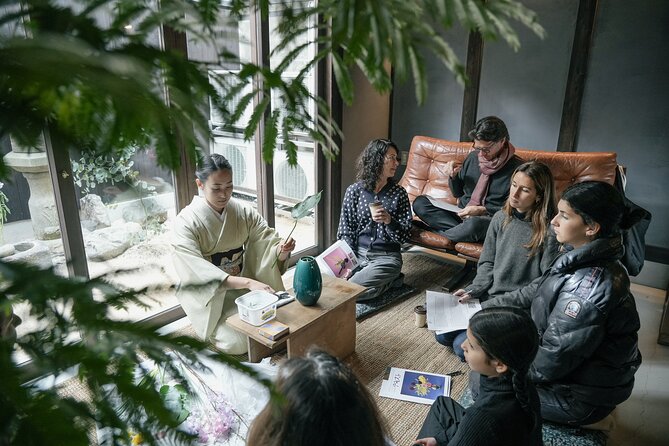
Ikebana turns a handful of cut flowers into a small study of balance, space, and nature. In this Kyoto class, Mana introduces the meaning behind living flowers, demonstrates two traditional styles, then gives you time to make your own arrangements in a quiet Japanese home.
I like the small group limit of six, which gives you room to ask questions and receive help. I also like the practical side: you learn how to care for cut flowers so they may last up to two weeks, rather than leaving with a pretty arrangement that fades in a day.
The main consideration is the short 90-minute format. It offers a pleasant introduction, but anyone hoping for a full lesson on ikebana schools, rules, and centuries of development may want a longer class.
Key points to know before booking
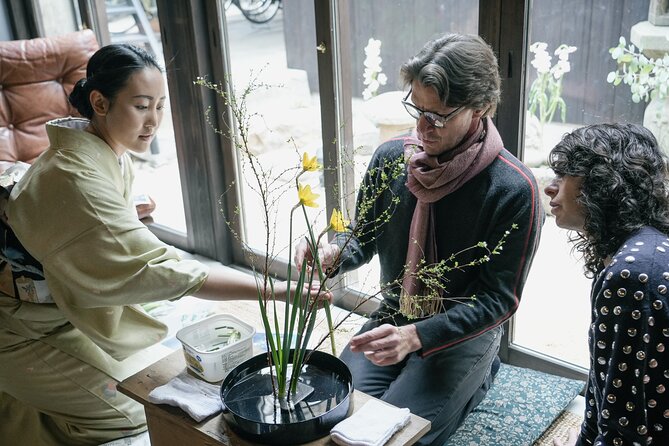
- Two beginner-friendly styles: Mana teaches and demonstrates Nageire and Moribana.
- Hands-on from the start: You watch the technique, then create your own arrangements with guidance.
- Seasonal flowers: The materials change with the time of year, giving each class a natural Kyoto feel.
- A calm setting: The class takes place at a Kyoto address in Kamigyo Ward, described as a typical Japanese house.
- Small group size: No more than six people can join, a useful advantage for a craft that needs individual feedback.
- 90 minutes for $72.26: The price is reasonable if you value instruction and a personal activity, but less so if you only want a quick floral souvenir.
What the Kyoto ikebana class is really about
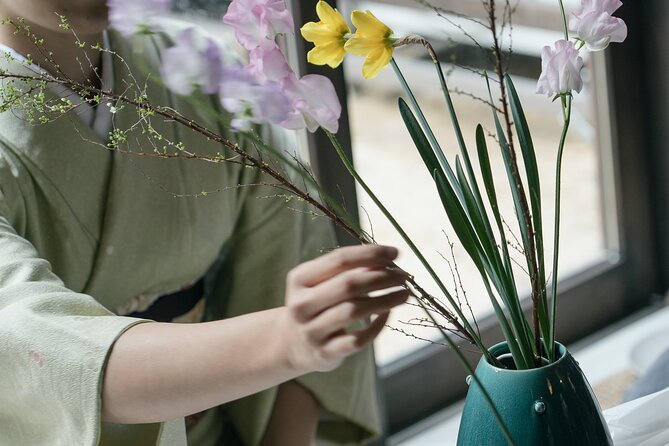
Ikebana is not simply flower arranging in the Western sense. The aim is to give freshly cut flowers a new life by respecting each stem’s natural character. A branch may bend, a blossom may face sideways, and an empty space may matter as much as the flowers themselves.
That idea gives the class more substance than a standard craft workshop. You are not just filling a vase. You are learning to notice line, height, angle, balance, and the relationship between flowers and open space.
The class also introduces the Japanese aesthetic of wabi-sabi. In plain terms, this means finding beauty in restraint, irregularity, and the passing nature of things. You may work with a flower that is not perfectly straight or a branch that has an unusual shape. Instead of forcing it into place, you learn to use what makes it distinctive.
I like this approach because it keeps the activity connected to nature. You are asked to pay attention to what the flowers are doing, rather than making every piece look identical.
A few more Kyoto half-days to weigh up
- PERFECT KYOTO 1-Day Bus Tour
★ 5.0 · 13,518 reviews - Kyoto: Fushimi Inari, Kinkakuji, Bamboo Grove 1 Day Bus Tour
★ 4.8 · 4,316 reviews - Kyoto: Tea Ceremony in a Traditional Tea House in Kiyomizu
★ 4.9 · 3,519 reviews
Meeting Mana in a Kyoto home
The meeting point is at 3481 Tanbayacho, Symphony Kitano Higashi, in Kyoto’s Kamigyo Ward, postal code 602-8287. The address is near public transportation, but you should allow time to find the exact building and arrive without rushing.
The class ends at the same meeting point. That makes the outing easy to fit into a day of sightseeing, especially if you plan it between visits elsewhere in northern Kyoto. The experience is not a moving tour, so you do not need to keep track of several stops or arrange a separate return journey.
The setting matters. This is held in a Japanese home rather than a large commercial studio. That can make the experience feel more personal and gives the lesson a closer link to ordinary Japanese living spaces. It also means you should expect a compact, intimate setting rather than a broad room with a large demonstration stage.
Mana teaches in English and guides the class through the process. Her instruction combines the philosophy of ikebana with practical steps, which is important for beginners. The activity works best when you listen closely during the demonstration, then ask questions while making your own piece.
The opening lesson: flowers with a new life
The class begins with an introduction to the central idea of ikebana, often translated as living flowers. Fresh flowers are treated as living material, not just decoration. Their direction, shape, and natural movement help determine how they are placed.
This opening section gives you a useful way to look at the materials before you start cutting or arranging. You begin to see that a tall stem can provide structure, while a smaller blossom may offer a focal point. An apparently empty area can keep the arrangement light and balanced.
The philosophical side is one of the class’s strongest features, but the amount of background you receive depends on your expectations. The format is designed as a practical introduction, not an academic survey of ikebana. If you want detailed coverage of the different schools, formal rules, and long development of the art, the lesson may feel brief.
That is not necessarily a fault. Many people want a clear activity they can enjoy during a Kyoto visit, and the class gives you enough context to understand why the technique looks the way it does.
Watching two arrangements take shape
Mana demonstrates two arrangements before you work on your own. The styles are Nageire and Moribana, both useful starting points for beginners and important forms in modern ikebana practice.
Nageire uses a more upright, natural-looking style. The arrangement is placed in a tall container, and the flowers and branches often appear to rise with a sense of movement. The effect can look simple, but the angles and support of each stem require care.
Moribana creates a lower, wider arrangement. The materials are gathered in a shallow container, producing a broader composition. This form gives you a different lesson in proportion and spread, since the flowers are not simply rising from a tall vase.
Seeing both styles in one class is a real advantage. You can compare a taller, more vertical design with a lower, more open one. The contrast helps explain why ikebana is not one fixed look.
Mana’s demonstrations are meant to be followed step by step. Watch the way she handles the stems, considers their natural direction, and builds balance gradually. Do not focus only on the finished arrangement. The useful lesson is in the decisions made along the way.
Same base, a completely different sort of day:
- Kyoto Geisha Walking Tour: Gion District & Hidden Gems
★ 4.7 · 3,273 reviews - Kyoto: Tea Ceremony Ju-An at Jotokuji Temple
★ 4.9 · 3,207 reviews - Kyoto: Gion Magical Night Walking Tour with Geisha Trivia
★ 4.9 · 2,393 reviews - Kyoto: 45-Minute Tea Ceremony Lesson Experience
★ 4.3 · 2,378 reviews
Making your own seasonal arrangement
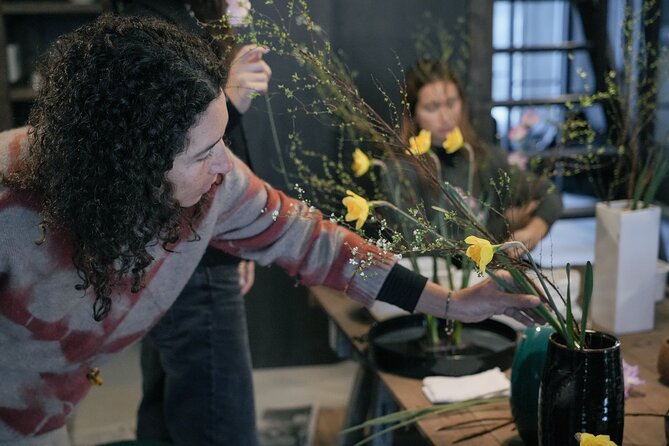
After the demonstrations, you get to create your own pieces. The flowers are seasonal, so the materials may change depending on the time of year. That keeps the activity tied to the present moment and gives you a more authentic connection to Japanese flower culture.
This is where the small group becomes valuable. A maximum of six participants leaves more room for personal help than a large class would. You can work at your own pace, ask for advice, and adjust the arrangement as you go.
You should not expect to produce a perfect professional arrangement immediately. Ikebana depends on judgment, and beginners need time to understand how much space to leave, which stem should lead the composition, and when to stop adding material.
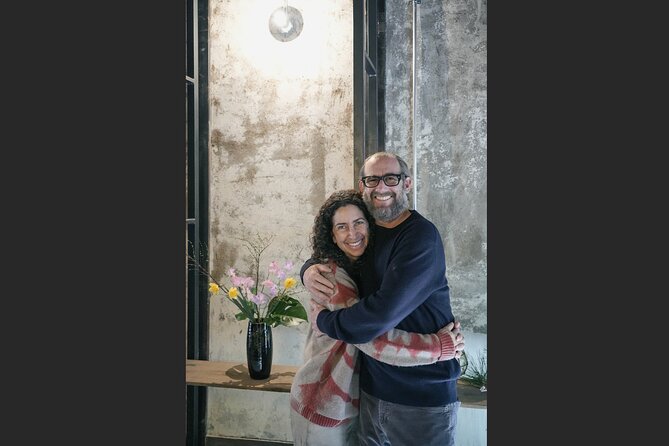
The class is flexible enough for couples or friends to enjoy together. Each person can make individual choices, so the activity does not become a test of who can copy the demonstration most closely. The goal is to understand the principles and make thoughtful use of the flowers in front of you.
I especially like that the process encourages quiet concentration. You have to look carefully at the flowers, make a decision, and then reconsider it. That gives the session a mindfulness element without turning it into a formal meditation class.
Flower-care tips that extend the value
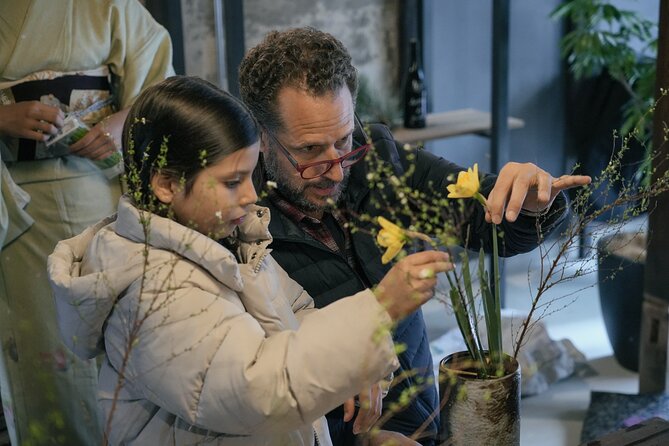
A useful part of the lesson is learning how to keep the flowers fresh. With proper care, the flowers may last for up to two weeks. That makes the activity more than a short-lived holiday project.
The exact care advice is part of the class, so pay attention when Mana explains how to maintain the arrangement. The value here is practical: you can apply the same habits to flowers at home after your Kyoto visit.
This also changes how you think about cut flowers. Ikebana treats them as living material that deserves attention, and the care instructions reinforce that idea. Instead of making the arrangement and forgetting it, you learn to keep observing it as it changes.
The two-week figure should be understood as a possible result, not a guarantee. Flower type, freshness, room conditions, and care all affect how long an arrangement lasts. Still, even a shorter life fits the wabi-sabi idea that beauty is temporary.
How much background will you receive?
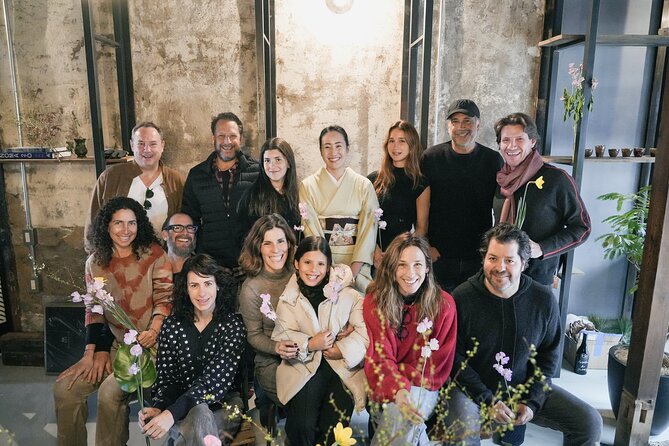
The class gives you the main concepts and two working styles, but the 90-minute schedule sets limits. One possible weakness is that you may want more time for the history of ikebana, the different schools, and the basic rules behind each form.
That concern is worth considering before booking. If your main goal is cultural context, ask yourself how much time you want spent listening compared with making. This experience places a strong emphasis on demonstration and practice.
For many people, that balance is sensible. A long lecture can be hard to absorb during a busy Kyoto visit, while a short explanation followed by hands-on work is easier to remember. You leave with a physical example of what you learned and a clearer sense of how the principles function.
Mana has explained that Nageire and Moribana are important beginner styles, and teaching both gives the session a clear structure. The class is not trying to cover every branch of ikebana. It gives you two distinct ways to work with flowers and enough theory to see why the arrangements differ.
Price, timing, and group size
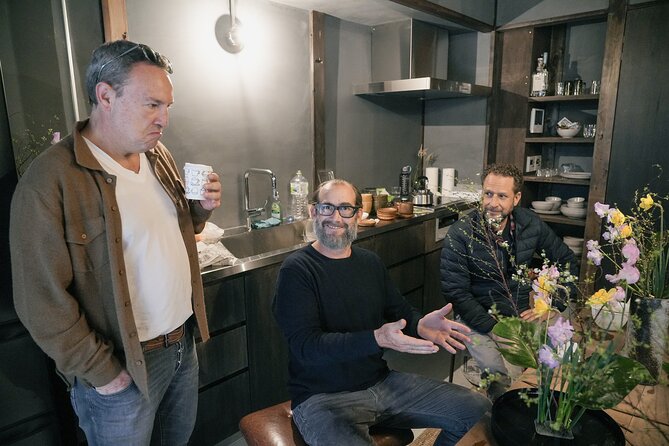
The listed price is $72.26 per person for approximately one hour and 30 minutes. That is not the cheapest flower-arranging activity you will find, but the comparison should include the instruction, seasonal materials, Japanese setting, and the chance to make your own arrangements.
I would consider it fair value if you want a focused cultural activity with an English-speaking expert. The small group cap also matters. A six-person maximum can make personal instruction possible, which is worth more than a low price in a craft where small adjustments affect the final result.
The value is weaker if you only want a quick demonstration or a simple floral souvenir. You are paying for the ideas behind ikebana, the chance to practice two styles, and advice that may help your flowers last at home.
The experience is commonly booked about 30 days ahead, so it is sensible to reserve early if it fits your Kyoto schedule. Confirmation is provided at booking, and the ticket is mobile, which keeps the practical side simple.
Free cancellation is available if you cancel at least 24 hours before the start time. Cancellations or changes made within 24 hours are not refunded or accepted. Since the class has limited places, check your Kyoto timetable before committing.
Who will enjoy this most?
I would recommend this class to anyone who wants a slower, more thoughtful activity between temple visits, shopping, and sightseeing. It suits first-time participants because the instruction begins with the basics and includes demonstrations before you work alone.
It is also a good choice for couples, friends, and solo participants who enjoy making something with their hands. You do not need prior ikebana experience, and most people can take part.
The class may appeal to photographers and design-minded people, though the focus is on making arrangements rather than photographing a formal display. It also suits anyone interested in Japanese ideas of simplicity, balance, and seasonal awareness.
You may want to choose another activity if you need a full historical lecture, advanced training, or a longer session with several schools and techniques. The short format gives you a taste, not professional certification.
A note about meeting carefully
One reported problem involved participants who did not find the meeting point and could not reach the provider. That appears to be an isolated warning rather than a feature of the activity, but it is still practical advice: check the exact Kyoto address, confirm your route, and arrive early enough to identify the building.
Because the class begins and ends at the same place, getting there is the main logistical task. The mobile ticket is convenient, but it does not replace checking the address in advance.
Should you book the Kyoto ikebana class?
Book it if you want a small, hands-on cultural experience rather than another sightseeing stop. Mana’s English instruction, demonstrations of Nageire and Moribana, seasonal flowers, and flower-care advice give the 90 minutes a clear purpose.
I would book this for a first introduction to ikebana, especially if you like quiet creative activities and want something you can continue at home. I would hesitate only if your priority is detailed history or advanced technique, since the time is short and the lesson centers on practice.
At $72.26, the class earns its price through personal instruction and the intimate setting. Arrive prepared, watch the demonstrations carefully, and give yourself time to find the meeting point. If you do that, this can be one of the more personal ways to spend an hour and a half in Kyoto.
FAQ
Where does the ikebana class take place?
The meeting point is 3481 Tanbayacho, Symphony Kitano Higashi, Kamigyo Ward, Kyoto, Japan, postal code 602-8287. The class ends back at the same location.
How long does the experience last?
The class lasts approximately one hour and 30 minutes.
How much does the class cost?
The listed price is $72.26 per person.
Who teaches the class?
The class is taught in English by Mana, an ikebana instructor and expert.
Which ikebana styles are included?
The class introduces and demonstrates the Nageire and Moribana styles.
How many people can join?
The activity has a maximum group size of six participants.
Can I cancel for a refund?
You can cancel for a full refund up to 24 hours before the experience start time. Cancellations or changes made less than 24 hours before the start time are not accepted or refunded.
Just added around Kyoto
- Kyoto: Zen Meditation at a Private Temple with a Monk★ 5.0 · 25 reviews
- Kyoto: Gion Geisha District & Sake-in-Hand Walking Tour★ 5.0 · 37 reviews
- Private Pewter Sake Cup Experience with a Kyoto Artisan★ 5.0 · 31 reviews
- Your Private Vacation Photography Session In Kyoto★ 5.0 · 110 reviews
- Private Guided Traditional Buddhist Cooking in Japan★ 5.0 · 16 reviews
- Kyoto Wagashi(Japanese sweets) Cooking Class near Fushimiinari★ 5.0 · 60 reviews
- Traditional Japanese Music show & Experience Tour in Kyoto★ 5.0 · 57 reviews
- Kyoto:Family-Friendly Kimono & Yukata Experience at WARGO★ 5.0 · 147 reviews
Kyoto Tours, compared.


Fushimi Inari, Kinkakuji, Bamboo Grove 1 Day Bus Tour
Read our review →
Tea Ceremony in a Traditional Tea House in Kiyomizu
Read our review →
Kyoto Geisha Walking Tour: Gion District & Hidden Gems
Read our review →

Gion Magical Night Walking Tour with Geisha Trivia
Read our review →
