
Reviewed · KYOTO TOURS
KYOTO: Private Tea Ceremony in Hidden Townhouse (Kid-Friendly)
Kyoto’s tea culture gets a friendly, hands-on treatment in this private 45-minute ceremony at a tucked-away townhouse. You watch how matcha begins on the tea plantation, grind tea powder with a stone mill, then make your own cup under guidance from Yuki or the host. I like the personal setting and the chance to do more than sit and watch. I also like that children can take part without the formality of a large group ceremony.
The main trade-off is time. Forty-five minutes passes quickly, so this is an introduction rather than a full lesson in tea history or etiquette. At $51.24 per person, it makes the most sense if you value private attention, hands-on preparation, and a calm family activity over a longer cultural tour.
Key points
- Stone-milled matcha: See and take part in turning tea leaves into fine powder.
- Private townhouse setting: Only your own group participates, with no large class around you.
- Hands-on preparation: Make and taste your own matcha, then try a matcha latte.
- Short film about tea plantations: Get a quick look at where matcha begins before making it.
- Child-friendly format: Children are welcome, and the private setup allows a more flexible pace.
- Photo time included: You have room to capture the ceremony without rushing straight away.
A quiet Kyoto introduction to matcha
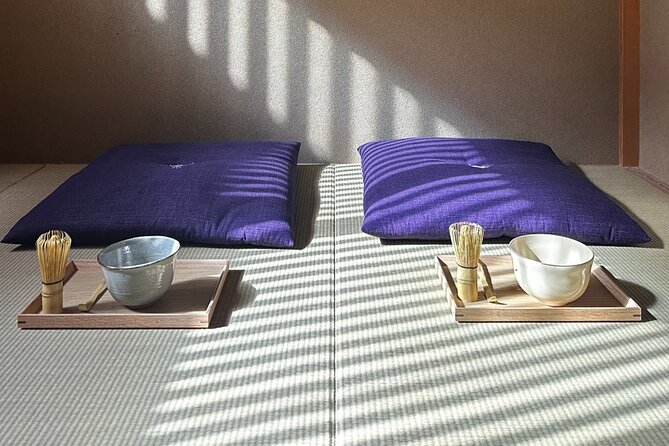
This experience gives you a compact look at several parts of Japanese tea culture in one sitting. You are not simply handed a bowl of matcha and asked to pose for a photo. The session links the source of the tea, the work of grinding it, the ceremony itself, and the final tasting.
That order matters. Matcha is made from powdered green tea, so the powder is part of the drink rather than a leaf that gets strained out. Seeing the tea plantation footage and then using a stone mill helps connect the finished bowl to the work behind it.
The setting is a private townhouse at WOM-Way of Matcha, at 863-41 Jurakucho in Kyoto’s Kamigyo Ward. The address is specific, so check it carefully before setting out. The experience starts and ends at the same place, which is useful when you are planning the rest of your day.
The host named in one of the available comments is Yuki, described as polite, friendly, and informative. That personal touch fits the format well. Since the booking is private, you can ask questions and receive help without competing with a room full of other participants.
More Tea Ceremonies in Kyoto
- Kyoto: Tea Ceremony in a Traditional Tea House in Kiyomizu
★ 4.9 · 3,519 reviews - Kyoto: Tea Ceremony Ju-An at Jotokuji Temple
★ 4.9 · 3,207 reviews - Kyoto: 45-Minute Tea Ceremony Lesson Experience
★ 4.3 · 2,378 reviews
What happens during the 45-minute session
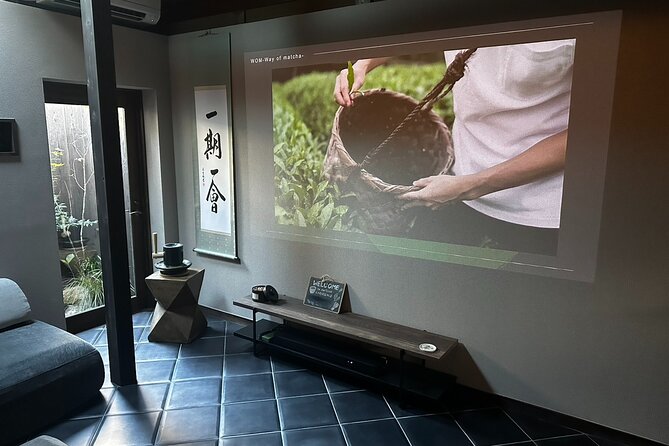
The experience follows a clear four-part sequence. You begin with footage of tea plantations, move to stone milling, watch a demonstration, and then make and taste your own tea.
The short film provides a visual starting point. It is not a substitute for a full tea-growing tour, but it gives you useful context before you handle the matcha yourself. If you are visiting with children, this opening can help explain why the powder looks and tastes different from ordinary brewed green tea.
Next comes stone milling. You make matcha powder with a stone mill, an appealing part of the session because it shows the physical work behind the smooth green drink. This is also the most unusual feature for many first-time visitors. You get to see that matcha is not just green tea placed in a bowl. It is carefully ground into powder before it is whisked with water.
The demonstration follows. Watch the host prepare tea step by step, including the basic motions and order of the ceremony. The supplied details do not promise an extensive lesson in formal tea-school rules, so I would think of this as a practical introduction rather than advanced training.
After watching, you make your own cup. This is where the private format pays off. The host can give your group direct help, and you can ask for clarification as you go. The activity also includes tasting and making a matcha latte, giving you a softer option if the more traditional tea has a strong or unfamiliar flavor.
Why the private format matters
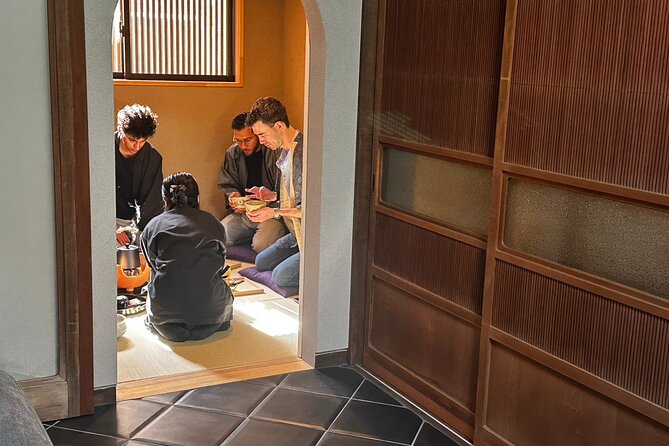
A private booking changes the mood of a short cultural activity. In a large group, you often need to follow the guide’s pace and wait for your turn. Here, only your group participates, so the host can focus on your questions and adjust explanations for adults and children.
That does not mean the session is completely unstructured. The timeline is set, and 45 minutes is still a tight window. But private attention can make a short lesson feel more useful, especially if someone in your group has never prepared matcha before.
The private format also helps with family travel. Children may want to touch the equipment, ask basic questions, or make a latte instead of drinking a strong cup of matcha. A private room is more forgiving than a formal group setting if attention wanders or the children need a little extra time.
The available rating is 4.9 from 20 reviews, with 100 percent recommending the experience. The most praised points are the host’s kindness, careful explanations, and the relaxed feel of taking part in a traditional ceremony in a private setting. Those are the qualities I would value most here, since the activity depends heavily on the person guiding it.
The stone mill is the hands-on highlight
The stone-milling portion gives this ceremony more substance than a simple demonstration. You are shown how matcha powder is made, then take part in the process yourself.
Do not expect to produce a large supply of tea in a few minutes. The value is in understanding the method and feeling the connection between the raw tea and the bowl in front of you. It is a small task, but a memorable one, especially for children who enjoy seeing how food and drink are made.
You also learn a preparation technique that you can recreate at home. The exact equipment you use at home is not specified, and you should not assume you will leave with a mill or tea-making kit. Still, the basic lesson can help you repeat the process with suitable matcha and a whisk after returning home.
This part may be less exciting for someone who wants only a polished cultural performance. If you prefer to sit back and take photographs, the hands-on work could feel like a small obligation. For most people comparing short Kyoto activities, though, it adds a useful reason to choose this ceremony.
Same base, a completely different sort of day:
- PERFECT KYOTO 1-Day Bus Tour
★ 5.0 · 13,518 reviews - Kyoto: Fushimi Inari, Kinkakuji, Bamboo Grove 1 Day Bus Tour
★ 4.8 · 4,316 reviews - Kyoto Geisha Walking Tour: Gion District & Hidden Gems
★ 4.7 · 3,273 reviews - Kyoto: Gion Magical Night Walking Tour with Geisha Trivia
★ 4.9 · 2,393 reviews
Watching the demonstration, then making your own
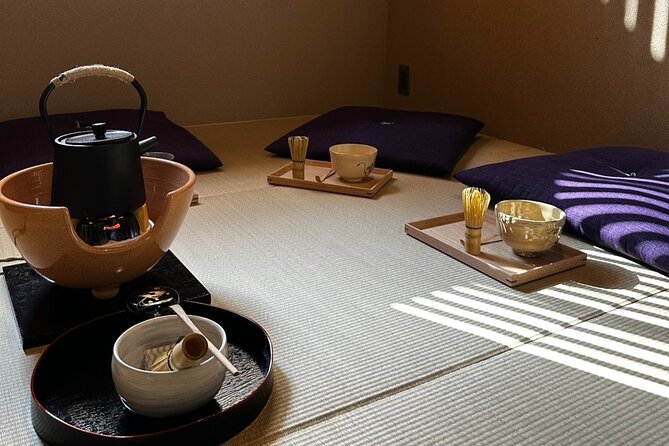
The demonstration gives you a chance to see the process before trying it. That is helpful because matcha preparation can look simple until you have to do it yourself. The host shows the sequence, and then you repeat the key steps with support.
The experience is designed to be approachable rather than intimidating. You do not need prior knowledge of tea ceremony customs. The host’s role is not only to perform the ritual, but also to explain it and help your group prepare tea.
The tasting is an important part of the session. Matcha has a distinct flavor, and making the drink yourself gives you a better sense of how the powder, water, and whisking work together. The matcha latte offers another way to enjoy the ingredient, particularly for children or anyone who finds straight matcha too intense.
You should view this as a sample of tea culture rather than a complete education. There is no stated promise of a long historical lecture, a traditional meal, or an extended lesson in Japanese aesthetics. Its strength is that you see, handle, make, and taste matcha in a single visit.
A sensible choice for families
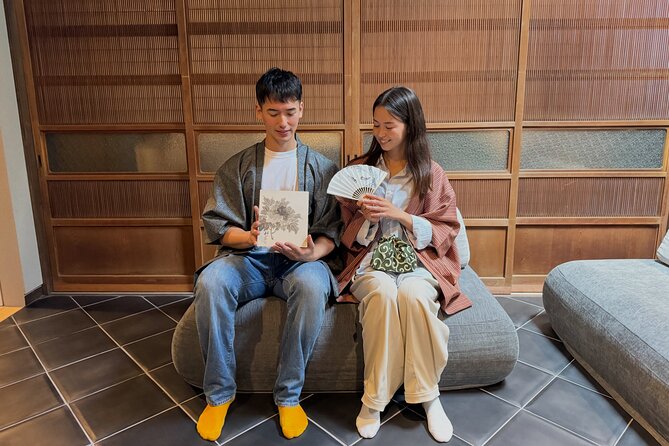
The activity is explicitly suitable for families with children. That does not mean every child will enjoy every minute, but the private arrangement gives you more room to make the session work for your group.
The film and stone mill provide visual and practical elements, while the latte adds a familiar tasting option. Children can also take part in preparing the tea instead of sitting quietly through a long formal performance.
Parents should keep the short duration in mind. The experience lasts about 45 minutes, so it is unlikely to become tiring. At the same time, the schedule leaves limited room for extended breaks or a slow introduction if your group arrives late.
The private setting may also help children feel comfortable asking questions. A host who can explain things directly to your family is a better match for young participants than a large group where the guide must keep moving.
Photos without turning the ceremony into a photo stop
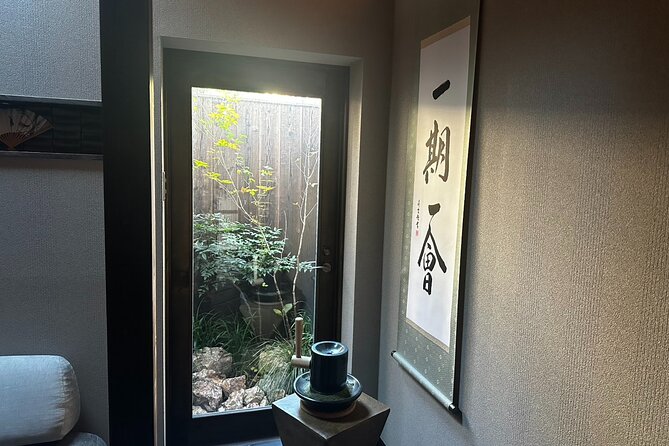
You have time to take photographs during the experience. That is useful because a tea ceremony has several visual moments: the townhouse setting, the matcha powder, the stone mill, the preparation, and the finished drink.
The activity is not described as a dedicated photo session, so you should not expect professional portraits or a photographer. The practical advantage is simply that you are not pushed out the door the moment you finish your tea.
A private group also makes casual photos easier. You can focus on your own experience rather than trying to avoid a crowd in the background. Be respectful during the demonstration, and follow the host’s lead about when to pause for pictures.
Is $51.24 per person good value?
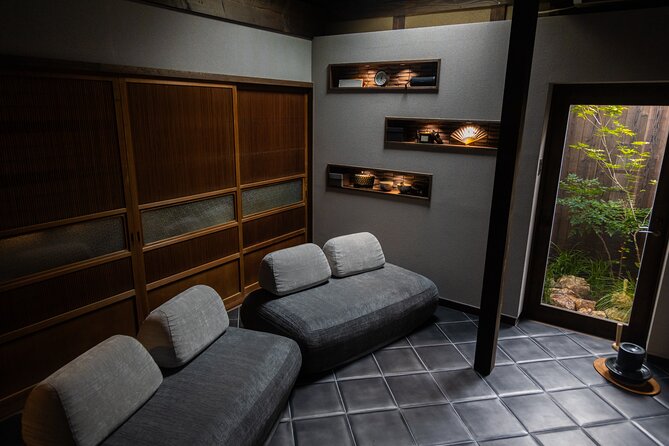
At $51.24 per person, this is not the cheapest way to drink matcha in Kyoto. You can find a cup of green tea for much less. The comparison is not really between this experience and a café visit, though. You are paying for a private host, a townhouse setting, stone milling, a demonstration, hands-on preparation, tasting, and a matcha latte within one short appointment.
The value is strongest for couples, families, or small private groups who want a guided cultural activity without committing to a long tour. The direct attention matters more when someone in your group has questions or when children need a little help.
The value is weaker if you already know how to prepare matcha or mainly want a formal, extended tea ceremony. The 45-minute duration limits how much history and etiquette can be covered. You are buying access and participation, not an in-depth course.
The fact that the activity had five or more bookings in the previous month suggests it is a relatively focused experience rather than a large-scale attraction. That suits people looking for a quieter appointment, but it also means you should not expect a broad entertainment program or many extra activities beyond the stated sequence.
Location, timing, and practical details
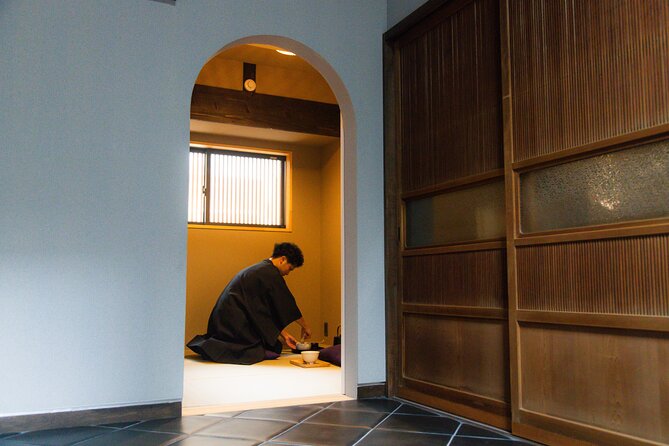
The meeting point is WOM-Way of Matcha, at 863-41 Jurakucho, Kamigyo Ward, Kyoto, 602-8156, Japan. The activity ends back at this same meeting point.
Because the venue is described as a hidden townhouse, allow time to locate the address and avoid arriving at the last second. The supplied information does not state the nearest station, walking time, or transport directions, so check your route separately before leaving.
Your confirmation arrives at the time of booking, and the ticket is mobile. Keep the booking information available on your phone when you arrive.
Free cancellation is available if you cancel at least 24 hours before the local start time. Cancellations made less than 24 hours before the start are not refunded, and changes inside that same period are not accepted. That rule is worth noting if your Kyoto schedule may shift.
Who should book this tea ceremony?
I would recommend it to families, first-time visitors to Japan, couples who prefer private activities, and anyone who wants to learn by doing. It also suits a busy Kyoto itinerary because the appointment takes about 45 minutes and begins and ends at one location.
The session is a good fit if you want a cultural activity that feels personal but does not require a full day. The film, stone mill, demonstration, tasting, and latte give you several stages rather than one repeated action.
I would be more cautious if you want a long, formal ceremony with detailed instruction in every aspect of tea etiquette. The available information points to a short and friendly introduction. That is its appeal, but also its limit.
Should you book the WOM-Way of Matcha experience?
Book this experience if you want a private, hands-on introduction to matcha in Kyoto. The stone milling and latte-making add useful variety, and the family-friendly setup makes it easier to include children.
Skip it if your main goal is an extended ceremonial performance or a deep study of tea traditions. At $51.24 per person, the price is justified by personal attention and participation, not by length. For most visitors seeking a calm cultural break with a practical takeaway, it offers a focused and worthwhile 45 minutes.
FAQ
How long does the private tea ceremony last?
The experience lasts approximately 45 minutes.
How much does the experience cost?
The listed price is $51.24 per person.
Where does the tea ceremony take place?
It takes place at WOM-Way of Matcha, 863-41 Jurakucho, Kamigyo Ward, Kyoto, 602-8156, Japan.
Is this a private activity?
Yes. Only your own group participates in the activity.
Are children allowed to join?
Yes. The experience is designed to be family-friendly, and children are welcome.
What activities are included?
You watch footage of tea plantations, make matcha powder with stone milling, watch a tea ceremony demonstration, prepare your own tea, taste it, and make a matcha latte.
Where does the activity end?
The activity ends back at the meeting point.
Is a mobile ticket available?
Yes. The experience includes a mobile ticket.
What is the cancellation policy?
You can cancel for a full refund up to 24 hours before the experience start time. Cancellations or changes made less than 24 hours before the start are not accepted, and the amount paid is not refunded.
Just added around Kyoto
- Kyoto: Zen Meditation at a Private Temple with a Monk★ 5.0 · 25 reviews
- Your Private Vacation Photography Session In Kyoto★ 5.0 · 110 reviews
- Kyoto: Gion Geisha District & Sake-in-Hand Walking Tour★ 5.0 · 37 reviews
- Private Pewter Sake Cup Experience with a Kyoto Artisan★ 5.0 · 31 reviews
- Private Guided Traditional Buddhist Cooking in Japan★ 5.0 · 16 reviews
- Kyoto Wagashi(Japanese sweets) Cooking Class near Fushimiinari★ 5.0 · 60 reviews
- Traditional Japanese Music show & Experience Tour in Kyoto★ 5.0 · 57 reviews
- Kyoto:Family-Friendly Kimono & Yukata Experience at WARGO★ 5.0 · 147 reviews
Kyoto Tours, compared.


Fushimi Inari, Kinkakuji, Bamboo Grove 1 Day Bus Tour
Read our review →
Tea Ceremony in a Traditional Tea House in Kiyomizu
Read our review →
Kyoto Geisha Walking Tour: Gion District & Hidden Gems
Read our review →

Gion Magical Night Walking Tour with Geisha Trivia
Read our review →

Gion Geisha District Walking Tour – Stories of Geisha
Read our review →Browse the lists this tour appears in