
Reviewed · KYOTO TOURS
SHIRAKAWA Japanese Culture Experiences with private English staff
Kyoto’s best cultural experiences are often found away from its famous temples. Here, you spend three hours in Furukawacho Shopping Arcade, a lantern-lit local shopping street where residents shop, cook, and go about daily life. You choose two practical Japanese arts: knife sharpening, obanzai cooking, or calligraphy.
I like the direct contact with local work and food, and I like having a private English-speaking staff member with your group. The main catch is that your first-choice workshop is not guaranteed, and the activity accepts only groups of two to six people.
Key points at a glance
- Three useful choices: Pick two from knife sharpening, obanzai cooking, and calligraphy.
- A real neighborhood setting: Furukawacho Shopping Arcade is described as the local kitchen and a base of daily life.
- Private English support: One English-speaking staff member attends the workshops with your group.
- A named local cook: Chef-owner Nishimura of Kyo-gohan Nishimura leads the obanzai session.
- A small-group format: The experience is limited to two to six participants, with no outside group joining.
- Plan ahead: It is booked about 39 days in advance on average, and workshop availability can affect your choices.
Furukawacho Shopping Arcade gives the lesson a local setting
The meeting point is Furukawacho Shopping Arcade in Kyoto’s Shirakawa area. The arcade’s theme is Retro and Modern, and lanterns hang from the roof, giving the covered street a distinct old-fashioned feel.
That setting matters. You are not being taken to a generic classroom made for visitors. The arcade functions as a shopping and food center for local residents, so the workshops connect to everyday Kyoto life. The experience begins at Furukawashuzo, at 546-1 Furukawachō in Higashiyama Ward, and ends back at the same meeting point.
You should expect a compact neighborhood experience rather than a full sightseeing tour. There is no private transportation included, but the meeting point is near public transportation. You will need to make your own way there and back.
The activity lasts about three hours. Since you select two workshops, the schedule depends on your combination. Knife sharpening and calligraphy each take about 90 minutes, while obanzai cooking takes about 70 minutes. The shorter cooking session leaves some time for moving between activities, but you should still treat the full three hours as reserved.
A few more Kyoto half-days to weigh up
- PERFECT KYOTO 1-Day Bus Tour
★ 5.0 · 13,518 reviews - Kyoto: Fushimi Inari, Kinkakuji, Bamboo Grove 1 Day Bus Tour
★ 4.8 · 4,316 reviews - Kyoto: Tea Ceremony in a Traditional Tea House in Kiyomizu
★ 4.9 · 3,519 reviews
Choose two workshops that match your interests
You can choose two of the three options. You are asked to send your preferred choices by message, and availability may determine what you actually receive. If your chosen workshop cannot be arranged, the prepaid amount is refunded to the card used for payment.
That refund condition is useful, but it does not remove the need to plan carefully. If one workshop is the main reason you want this experience, check availability before treating your booking as final. The activity is non-refundable if you cancel or request a change, so this is not a good choice for a loose, last-minute itinerary.
Knife sharpening with a 26-year artisan
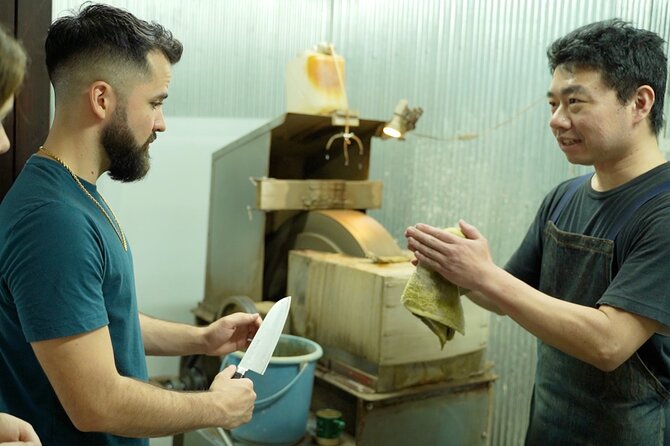
The knife workshop lasts 90 minutes and takes place at a store that specializes in sharpening cutting tools on a whetstone. An artisan with 26 years of experience teaches you how to sharpen knives properly.
This is the most practical choice of the three. You are not simply watching a demonstration. You learn a skill connected to Japanese cooking and household life, then leave with a better understanding of how a whetstone works and why proper sharpening matters.
I like the lasting value here. A calligraphy scroll is a memorable object, but knife sharpening can change how you handle cooking tools long after Kyoto. It also offers a look at a specialized craft that most sightseeing schedules skip.
The limitation is that this option may appeal less if you do not cook or have little interest in tools. The supplied details do not say that you take a knife home, so do not book it expecting a souvenir knife or a specific finished product. The clear promise is instruction from an experienced sharpening artisan.
Obanzai cooking with chef-owner Nishimura
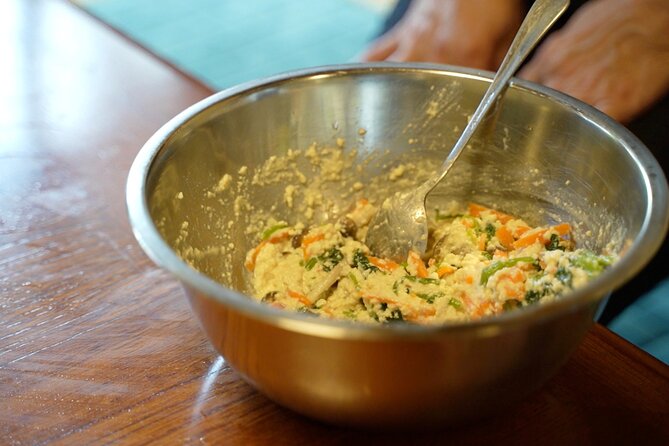
Obanzai is a Kyoto term for home-cooked dishes made from recipes passed down through families. This 70-minute workshop is led by chef-owner Nishimura of Kyo-gohan Nishimura, an obanzai shop in the arcade.
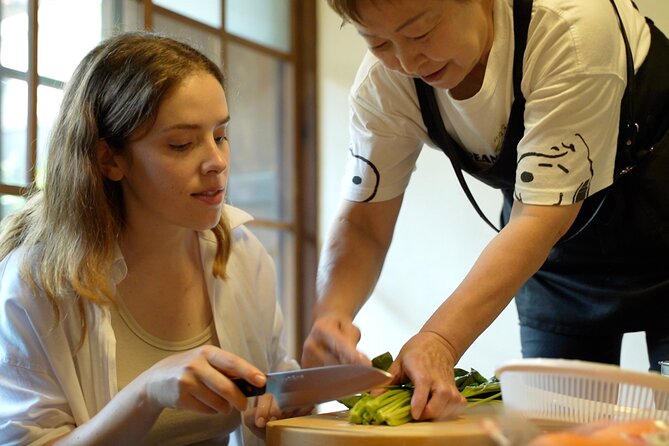
The session begins with shopping for ingredients at stores in Furukawacho Shopping Arcade. You then cook obanzai dishes with Nishimura, using a family recipe. That sequence is important. You are not simply placed in a kitchen with ingredients already measured out. The shopping stop shows how the food connects to the arcade and to ordinary meal preparation.
For many people, this will be the most social and accessible option. Food gives you an easy way to understand Kyoto culture without needing prior knowledge of Japanese writing or cooking tools. You also get the useful context of seeing where the ingredients are bought before preparing the dishes.
The session is only 70 minutes, so do not expect a large cooking course or a long meal. The supplied details also do not promise a full recipe booklet, a take-home dish, or a particular menu. What you can count on is ingredient shopping and cooking obanzai with the chef-owner.
Same base, a completely different sort of day:
- Kyoto Geisha Walking Tour: Gion District & Hidden Gems
★ 4.7 · 3,273 reviews - Kyoto: Tea Ceremony Ju-An at Jotokuji Temple
★ 4.9 · 3,207 reviews - Kyoto: Gion Magical Night Walking Tour with Geisha Trivia
★ 4.9 · 2,393 reviews - Kyoto: 45-Minute Tea Ceremony Lesson Experience
★ 4.3 · 2,378 reviews
Calligraphy and your own hanging scroll
The calligraphy lesson lasts 90 minutes. You learn the shape of kanji and how to use a brush, ink, and suzuri, the inkstone used in traditional calligraphy.
After instruction, you practice writing with a brush. You can ask the instructor how to write the kanji for your name, then complete your own hanging scroll. This gives the workshop a clear finish and a personal keepsake.
I like this choice for first-time visitors because it combines cultural explanation with a finished object. The scroll is not just something you buy in a shop. You create it during the lesson, with guidance on the form of your name.
Calligraphy also suits people who prefer a quieter activity. Unlike knife sharpening, it does not depend on an interest in cooking. Unlike obanzai, it does not involve shopping and food preparation. The tradeoff is that the result depends on your brush control, so your scroll may look more personal than polished.
Private English support keeps the activities clear
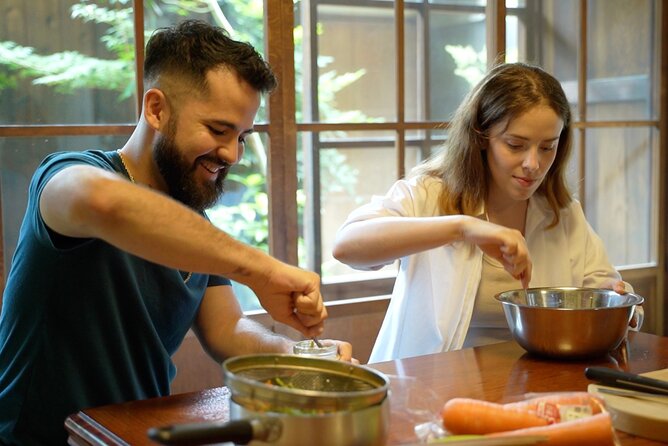
An English-speaking staff member attends each group at all workshops. That is a major part of the price because the activities involve instruction, not just observation.
You will need to understand the artisan’s technique, the chef’s directions, or the calligraphy instructor’s explanations. The private staff member gives your group a direct point of support rather than placing you in a larger mixed audience.
The experience is limited to two to six people, and only your group participates. That makes the format useful for families, couples, or a small group of friends who want to ask questions freely. It also means solo visitors cannot book this activity on their own under the stated conditions.
The information does not name the English-speaking staff member. It does identify chef-owner Nishimura and describes the knife teacher as an artisan with a 26-year career. Those details give the workshops a stronger connection to local practitioners, rather than a general cultural presentation delivered by an unnamed performer.
Why the small arcade setting adds value
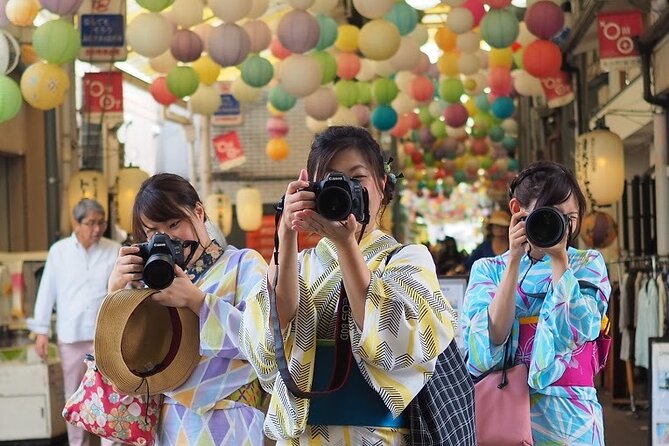
Furukawacho Shopping Arcade is presented as the kitchen of the neighborhood and a base for local life. That helps explain why the three workshops fit together.
Knife sharpening belongs to the working side of cooking. Obanzai shows how ingredients become everyday family dishes. Calligraphy connects to traditional writing and personal expression. None of these activities is limited to a quick photo stop.
The arcade itself also gives you a different view of Kyoto. Large temples and famous lanes show the city’s public face. A shopping arcade shows how a neighborhood supports daily routines. The lanterns add atmosphere, but the more important feature is the working setting around the workshops.
You should keep your expectations realistic. This is not a broad tour of the Shirakawa area, and the supplied plan lists only Furukawacho Shopping Arcade as the stop. The cultural value comes from the chosen workshops and their local setting, not from a long list of sightseeing landmarks.
Is $98.53 a fair price?
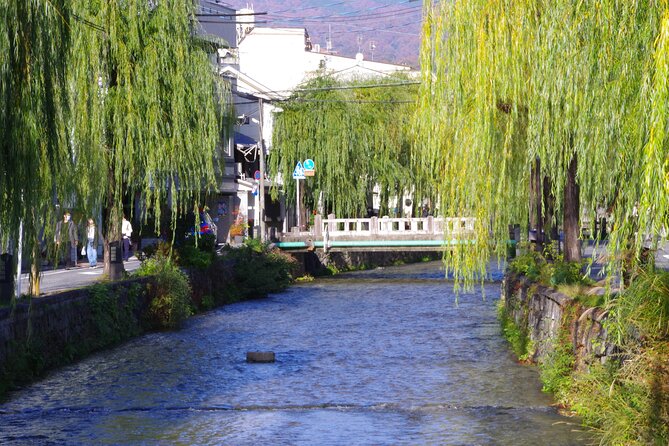
At $98.53 per person, this is not a cheap activity, especially since you must book for two to six people. But the price covers two workshops, private English support, and instruction from local specialists.
The value depends on how much you want to participate. If you only want to watch a demonstration, the cost will feel high. If you want guided practice, a private format, and a cultural activity that connects to daily Kyoto life, the price is easier to justify.
Obanzai includes shopping for ingredients before cooking. Calligraphy includes the materials and the creation of a hanging scroll, according to the activity description. Knife sharpening offers instruction from an artisan with 26 years of experience. Those elements make the fee more substantial than a short talk or a standard group class.
Group size also changes the calculation. For a family or group of friends, private English support can be worthwhile because everyone participates together. For two people, the per-person cost remains the same, but the private setting gives you more room for questions and individual help.
The activity is booked about 39 days in advance on average. That suggests you should reserve it early if the arcade setting and workshop combination fit your plans. Confirmation is stated as arriving within 48 hours, while the general notes say you will be contacted by email or message within three business days after payment. Allow for that short confirmation period before finalizing the rest of your day.
Who should choose each combination?
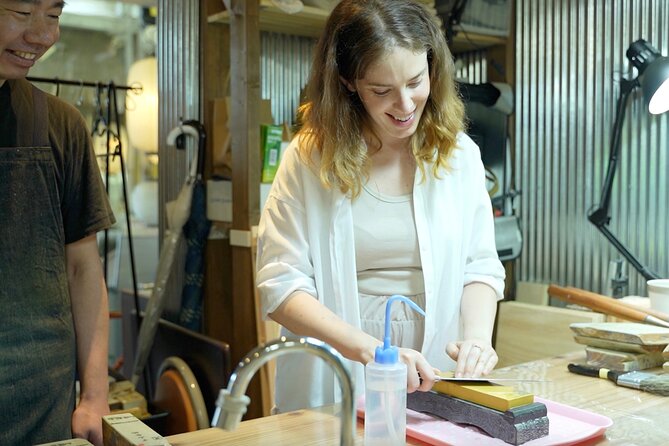
For a food-focused visit, choose obanzai plus knife sharpening. Both activities connect directly to cooking, but they approach it from different angles. One takes you through ingredients and recipes, while the other focuses on maintaining a cutting tool.
For a keepsake-focused visit, choose calligraphy plus obanzai. You get a handmade hanging scroll and a food experience tied to a Kyoto chef-owner and local shopping arcade.
For a quieter cultural session, choose calligraphy plus knife sharpening. This pairing avoids the ingredient-shopping and cooking portion while giving you two hands-on lessons with very different techniques.
Families should note the two-person minimum and six-person maximum. The private structure can work well for a small family group, but the activity details do not state a minimum age or specific child arrangements. Ask before booking if young children are part of your group.
This is also a good fit for repeat visitors to Kyoto who have already seen major temples and want an activity based on local skills. First-time visitors can enjoy it too, especially if you want something beyond landmark photographs.
Practical details before you pay
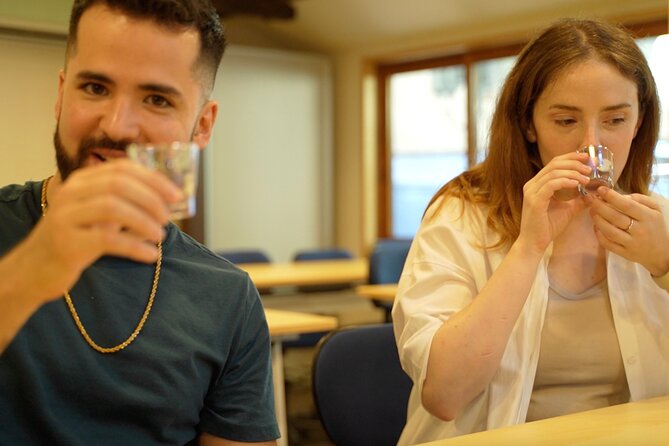
Bring the booking information on your mobile device, since the experience uses a mobile ticket. Meet at Furukawashozo, the listed starting point at Furukawacho Shopping Arcade, and return there at the end.
Send your preferred two workshops by message after booking. Do not assume your first choices are secured until availability is confirmed. If one cannot be arranged, the prepaid fee is refunded to the original payment card.
Transportation is not included. The meeting point is near public transportation, so plan your route in advance and allow enough time to find the arcade.
Most important, read the cancellation terms before paying. The experience is non-refundable and cannot be changed for any reason. A workshop that cannot be provided because of availability is treated differently, with a refund stated for that case, but your own cancellation does not qualify.
Should you book this Kyoto experience?
Book it if you want hands-on local culture, private English assistance, and a small setting where you make, cook, or maintain something. The strongest choices are obanzai for food lovers, calligraphy for a personal keepsake, and knife sharpening for people who value a practical craft.
Skip it if you want a flexible booking, a sightseeing route, or a large choice of dates and activities. The two-to-six-person rule, non-refundable terms, and uncertain workshop availability require more planning than a casual attraction.
For the right group, $98.53 buys more than three hours on a schedule. It gives you a closer look at the working culture of one Kyoto shopping arcade, with two activities taught through direct practice.
FAQ
Where does the experience take place?
It takes place at Furukawacho Shopping Arcade in the Shirakawa area of Kyoto, starting and ending at Furukawashozo, 546-1 Furukawachō, Higashiyama Ward, Kyoto, 605-0026, Japan.
How long does the activity last?
The experience lasts approximately three hours.
How many people can participate?
The activity accepts groups of two to six people. It is a private activity, so only your group participates.
Which workshops can I choose?
You can choose two of three options: knife sharpening, obanzai cooking, and calligraphy.
Is transportation included?
No. Private transportation is not included. The meeting point is near public transportation.
What happens if my preferred workshop is unavailable?
You may not receive your first-choice workshop if reservation availability does not allow it. In that case, the prepaid fee is refunded to the credit card used for payment.
Just added around Kyoto
- Kyoto: Zen Meditation at a Private Temple with a Monk★ 5.0 · 25 reviews
- Kyoto: Gion Geisha District & Sake-in-Hand Walking Tour★ 5.0 · 37 reviews
- Private Pewter Sake Cup Experience with a Kyoto Artisan★ 5.0 · 31 reviews
- Your Private Vacation Photography Session In Kyoto★ 5.0 · 110 reviews
- Private Guided Traditional Buddhist Cooking in Japan★ 5.0 · 16 reviews
- Kyoto Wagashi(Japanese sweets) Cooking Class near Fushimiinari★ 5.0 · 60 reviews
- Traditional Japanese Music show & Experience Tour in Kyoto★ 5.0 · 57 reviews
- Kyoto:Family-Friendly Kimono & Yukata Experience at WARGO★ 5.0 · 147 reviews
Kyoto Tours, compared.


Fushimi Inari, Kinkakuji, Bamboo Grove 1 Day Bus Tour
Read our review →
Tea Ceremony in a Traditional Tea House in Kiyomizu
Read our review →
Kyoto Geisha Walking Tour: Gion District & Hidden Gems
Read our review →

Gion Magical Night Walking Tour with Geisha Trivia
Read our review →
