
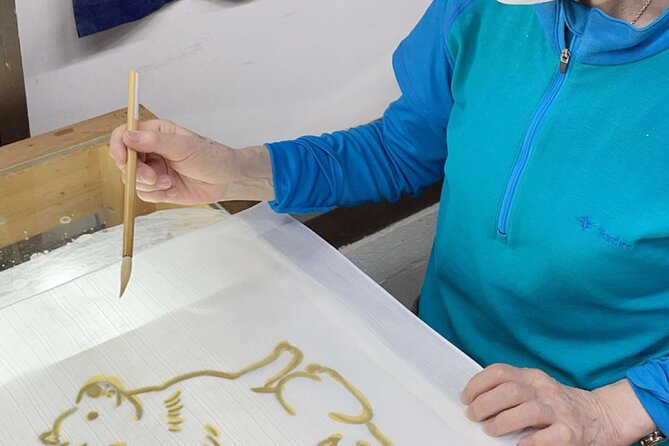
Reviewed · KYOTO TOURS
Roketsu dyeing experience: M course Roketsu Dyeing Experience
Roketsu dyeing lets you make a real Kyoto souvenir instead of buying one. You choose the fabric item, pick or sketch a design, paint with melted wax, and let the workshop handle the bucket dyeing. The finished piece is ready to take home that day, usually within 90 to 120 minutes.
I like the calm, hands-on pace and the fact that you get genuine creative control. I also like the warm help from the owner and his mother, Yoko, who guide beginners without rushing them. The main consideration is communication: English is limited, so demonstrations and gestures do much of the teaching.
Key points
- Make your own wearable or decorative souvenir: Choose a T-shirt, tote bag, hanging banner, or another available fabric item.
- Select from many stencil designs: You can use the workshop’s patterns or bring your own sketch for a more personal result.
- Try real wax-resist bucket dyeing: You paint melted wax onto the fabric before it is dyed, revealing the finished pattern afterward.
- Plan extra time for detailed designs: Simple work may fit the advertised 90 to 120 minutes, while intricate pieces have taken around three hours.
- Enjoy a small family-run studio: The owner and his mother, Yoko, provide patient, practical guidance throughout the process.
- Take your work home the same day: You do not need to arrange shipping or wait until the end of your trip.
Why this Kyoto craft workshop is worth your time
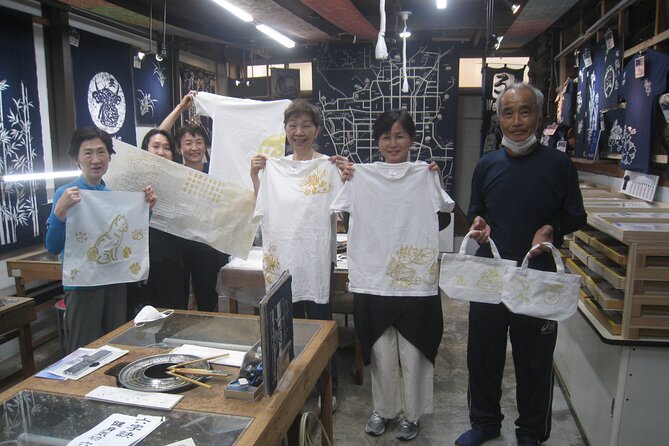
Kyoto is full of temples, gardens, markets, and long walks. This activity gives you something different: a quiet block of time in which your hands, rather than your camera, do the work.
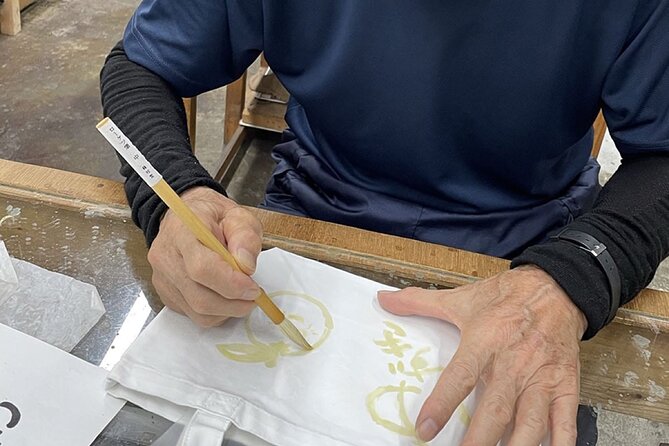
Roketsu dyeing uses a wax-resist method. You apply wax to areas that should remain protected, then the fabric is dyed. When the process is complete, the pattern appears against the colored cloth. The appeal is not perfect factory precision. Small variations make each piece your own.
You can choose a design from the studio’s large collection of stencils, or create something from your own sketch. That makes the workshop suitable for both confident artists and people who usually say they are not artistic. The instructors can show you how to get a strong result, and you can decide how much of the final design you create yourself.
The finished item also has more meaning than a standard souvenir. You made it in Kyoto, using a local craft technique, and you can wear it, use it, or display it at home.
A few more Kyoto half-days to weigh up
- PERFECT KYOTO 1-Day Bus Tour
★ 5.0 · 13,518 reviews - Kyoto: Fushimi Inari, Kinkakuji, Bamboo Grove 1 Day Bus Tour
★ 4.8 · 4,316 reviews - Kyoto: Tea Ceremony in a Traditional Tea House in Kiyomizu
★ 4.9 · 3,519 reviews
Arriving at Roketsu73 in western Kyoto
The meeting point is Roketsu73, at Nishikyōgoku Umazukachō in Kyoto’s Ukyo Ward. The workshop is outside the city’s main sightseeing core, so you should allow time to reach it by public transportation. The location is near public transportation, but the supplied details do not give a precise station, route, or walking time.
That out-of-center setting is both a plus and a drawback. You get a break from the busiest sightseeing zones and a look at a working local studio. On the other hand, this is not an activity you can simply squeeze between two central Kyoto temples without checking your route and schedule.
A mobile ticket is provided, which is useful when you are moving around Japan without printed paperwork. Confirmation is sent within 48 hours of booking, subject to availability, so do not leave the reservation until the last minute if your schedule is tight.
The activity returns to the same meeting point. It is not a tour that carries you onward to another attraction.
Choosing your fabric item and design
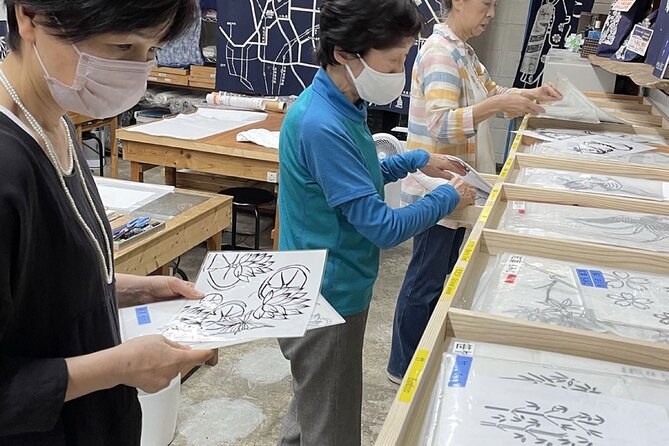
The first creative decision is what you want to dye. Available choices have included T-shirts, tote bags, and hanging banners. The exact selection can vary, so think about how you will use the piece after the trip.
A T-shirt is the most practical choice if you want something wearable. A tote bag packs easily and can be used at home. A hanging banner makes a more decorative souvenir and gives you a larger area for a detailed design.
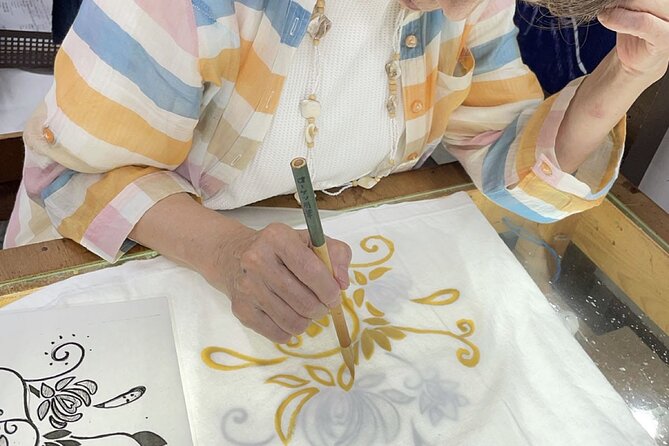
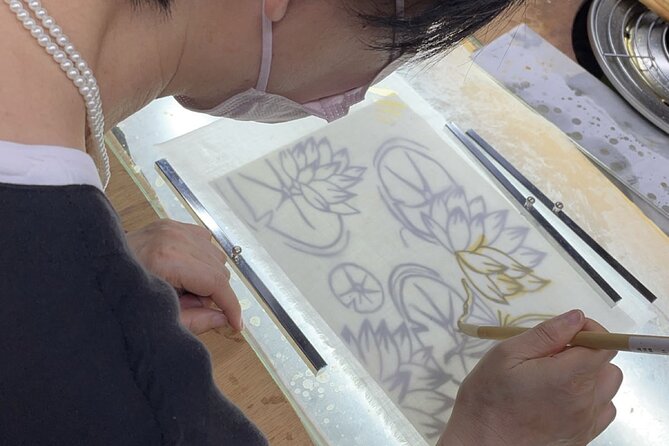
Next comes the pattern. The studio has dozens, and some descriptions refer to hundreds of stencils. You can combine designs, adjust your layout, or draw freehand. If you already have a sketch, bring it along. The workshop can help turn an original idea into a fabric design, though the result will naturally depend on your drawing and the dyeing process.
I suggest making your design decision before you arrive if you know you tend to overthink creative choices. If you want the full craft experience, take your time with the stencil selection. Families and groups may need extra time simply because everyone chooses something different.
The workshop also provides a small practice run on a scrap of cloth. This is an important step. It lets you see how the wax is applied before you commit to your T-shirt, bag, or banner.
Painting wax onto the cloth
Once you have chosen your item and pattern, you begin applying melted wax. This is the part where the activity feels most personal. You are not just watching an artisan work. You are making the marks that will shape the final design.
The owner and Yoko demonstrate the process and help you as needed. Their guidance is especially useful if you are unsure how much wax to apply or where to place it. You can work freehand or follow the chosen stencil.
The pace is gentle. You are not expected to finish instantly, and the staff have allowed people to continue when their designs became more detailed than planned. A straightforward pattern may take about an hour and a half. Intricate drawings have extended the visit to roughly three hours.
That flexible pace is a major strength for families. Parents and children can work at different speeds, and a child does not need advanced art skills to take part. One family with four teenagers spent several hours working on T-shirts and a banner, with everyone producing a finished item.
The language barrier can make a few instructions less clear. The staff speak limited English, so you may need to watch closely, copy the demonstration, and ask for help through simple words or gestures. The process is hands-on enough that most people can follow along, but this is not the right choice if you need long English explanations at every step.
Same base, a completely different sort of day:
- Kyoto Geisha Walking Tour: Gion District & Hidden Gems
★ 4.7 · 3,273 reviews - Kyoto: Tea Ceremony Ju-An at Jotokuji Temple
★ 4.9 · 3,207 reviews - Kyoto: Gion Magical Night Walking Tour with Geisha Trivia
★ 4.9 · 2,393 reviews - Kyoto: 45-Minute Tea Ceremony Lesson Experience
★ 4.3 · 2,378 reviews
The bucket dyeing reveals the pattern
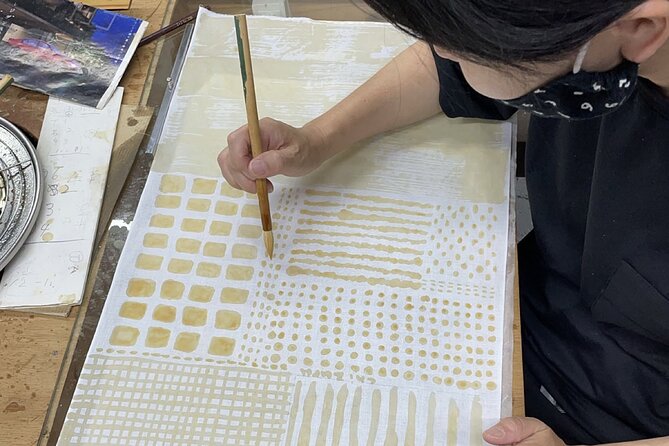
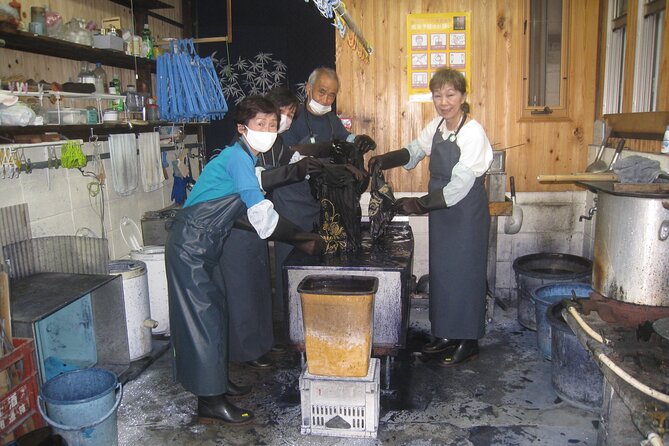
The defining part of this experience is the bucket dyeing. The cloth is dyed after the wax has been applied, and the protected areas create the final pattern. This gives you the satisfying surprise of seeing your design change from a wax-covered drawing into a finished textile.
The workshop handles the dyeing stage while you follow the process. The experience is described as a full bucket-dyeing session, not just a quick decorative activity. That matters if you want to understand more of the craft rather than simply decorate a ready-made item.
The final result may not look exactly like your original sketch. That is part of the method. Dye movement, wax coverage, and hand-painted lines create differences from one piece to the next. You should approach the work as a craft, not a precision printing service.
This is also why the activity works well for beginners. You do not need professional drawing ability to create something attractive. The stencil collection gives you a reliable starting point, and the staff can step in when you need assistance. At the same time, experienced artists have enough freedom to create something more personal.
Your finished Kyoto souvenir
One of the best practical features is that you can take the completed item with you on the day. You do not need to return later or arrange delivery. That makes the workshop easier to fit into a shorter Kyoto visit.
Pack the finished fabric with some care for the rest of your trip. The supplied information does not specify special packing instructions, so ask the staff if your piece needs particular treatment before you place it in your luggage.
The result can serve several purposes:
- A T-shirt becomes a wearable reminder of Kyoto.
- A tote bag is useful during the rest of your trip and at home.
- A hanging banner gives you something to display.
- An original sketch can become a personal piece rather than a standard tourist design.
I especially like the chance to make a souvenir that records your own choices. Two people using similar stencils can still produce different work, and the finished object carries the memory of the afternoon.
Why the two-hour format works well
The listed duration is approximately two hours, with a working range of 90 to 120 minutes. That is long enough to feel like a proper craft session but short enough to fit into a sightseeing day.
Still, treat the timing as a guide rather than a hard finish. Your design controls the schedule. If you choose a simple pattern and work quickly, you may finish near the shorter end. If you draw freehand or combine many stencils, plan for more time. Detailed work has taken about three hours, and the staff have not pressured participants to stop.
I would avoid booking this immediately before a train, meal reservation, or timed attraction. The activity ends back at the meeting point, and you will need additional time to travel onward.
The workshop can hold up to 30 participants. That is the stated maximum, not a promise that every session will be full. A larger group could feel less private, but the practical nature of the craft means you are focused on your own work. If you want a quieter session, booking ahead is sensible.
The price and what you receive
At about $25.77 per person, this is a strong value for a Kyoto activity that includes instruction, materials, the dyeing process, and a finished item to take home. The price is especially fair if you compare it with the cost of buying a quality handmade textile without making it yourself.
The value is not only in the object. You also receive time with local craftspeople, a chance to try a technique you may not encounter elsewhere, and a slower change of pace from sightseeing. That can be welcome after several days of temples and walking.
Check what fabric choices are included when you book, since the supplied details do not list separate prices for each item. If you have a specific target, such as a banner instead of a T-shirt, confirm availability in advance.
Free cancellation is available if you cancel at least 24 hours before the start time. Cancellations made less than 24 hours ahead are not refunded, and late changes are not accepted. Poor weather can also affect the activity. If the workshop cancels for that reason, you are offered another date or a full refund.
Who should book this experience
I would recommend Roketsu dyeing to several kinds of visitors:
- Families looking for an activity that keeps children and teenagers involved.
- Couples who want matching or complementary souvenirs.
- Solo visitors who enjoy quiet, practical creative work.
- Craft lovers interested in Japanese textile techniques.
- Sightseers who need a rest from walking and guided commentary.
- Anyone who wants a souvenir with a personal story.
You do not need to be good at drawing. The stencil options and staff guidance make that clear. You should, however, enjoy making decisions and working with your hands. If you dislike open-ended creative tasks, the choice of patterns may feel less relaxing.
The workshop is also a good fit for visitors who want a less polished, more local setting. It is not presented as a large entertainment attraction. Its appeal comes from the family-run feel, the working studio, and the chance to make something under the guidance of people who practice the craft.
Service animals are allowed, and most people can participate. The activity is near public transportation. Other accessibility details are not provided, so contact the provider if you have specific mobility or support needs.
My call: book it if you want a souvenir you made yourself
I would book this experience if you have room for a two-hour creative break in Kyoto. The price is reasonable, the finished item is ready the same day, and the activity suits a wide range of ages and skill levels.
Book it with extra time if you want a complex design. Also expect limited English and rely on demonstrations as much as spoken instruction. That is the main drawback, but it does not prevent most participants from following the process.
Skip it only if your Kyoto schedule is packed, you need a tightly timed activity, or you prefer polished shopping over hands-on craft. For everyone else, Roketsu dyeing offers a useful change of pace and a personal piece of Kyoto that you can actually wear or display.
FAQ
How long does the Roketsu dyeing experience take?
The activity takes approximately two hours, usually around 90 to 120 minutes. More intricate designs can take about three hours.
Where does the experience begin and end?
It begins at Roketsu73, Nishikyōgoku Umazukachō, Ukyo Ward, Kyoto, 615-0885, Japan. The activity ends back at the same meeting point.
What can I make during the workshop?
Available items have included T-shirts, tote bags, and hanging banners. The exact selection may vary, so confirm the options when booking.
Can I bring my own design?
Yes. You can bring your own sketch and create an original work. You can also choose from the workshop’s stencil designs.
Do I need drawing or craft experience?
No. The workshop provides demonstrations and guidance, and the stencil selection helps beginners create a finished piece.
Can I take the finished item home the same day?
Yes. The completed work can be taken home on the day of the activity.
What is the cancellation policy?
You can cancel at least 24 hours before the start time for a full refund. Cancellations or changes made less than 24 hours before the activity are not accepted for a refund. If poor weather causes the provider to cancel, you are offered another date or a full refund.
Just added around Kyoto
- Kyoto: Zen Meditation at a Private Temple with a Monk★ 5.0 · 25 reviews
- Kyoto: Gion Geisha District & Sake-in-Hand Walking Tour★ 5.0 · 37 reviews
- Private Pewter Sake Cup Experience with a Kyoto Artisan★ 5.0 · 31 reviews
- Your Private Vacation Photography Session In Kyoto★ 5.0 · 110 reviews
- Private Guided Traditional Buddhist Cooking in Japan★ 5.0 · 16 reviews
- Kyoto Wagashi(Japanese sweets) Cooking Class near Fushimiinari★ 5.0 · 60 reviews
- Traditional Japanese Music show & Experience Tour in Kyoto★ 5.0 · 57 reviews
- Kyoto:Family-Friendly Kimono & Yukata Experience at WARGO★ 5.0 · 147 reviews
Kyoto Tours, compared.


Fushimi Inari, Kinkakuji, Bamboo Grove 1 Day Bus Tour
Read our review →
Tea Ceremony in a Traditional Tea House in Kiyomizu
Read our review →
Kyoto Geisha Walking Tour: Gion District & Hidden Gems
Read our review →

Gion Magical Night Walking Tour with Geisha Trivia
Read our review →
