
Reviewed · KYOTO TOURS
Stunning Private Tea Ceremony: Camellia Garden Teahouse
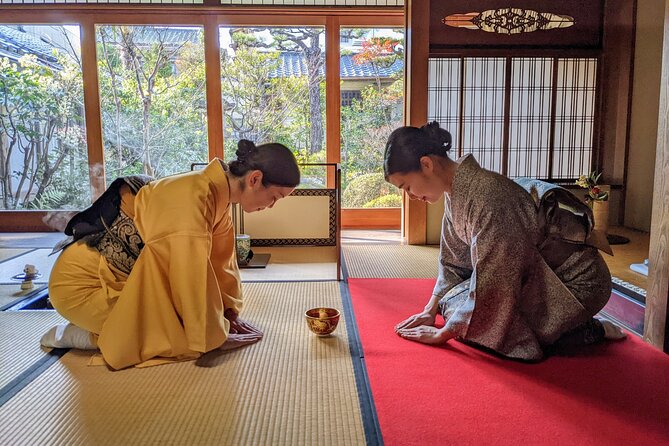
Kyoto’s tea ceremony can feel formal and hard to enter on your own. At Camellia Garden Teahouse, you get a private hour in a 100-year-old house across from Ryoan-ji, with a garden as your backdrop. Your host explains the ritual, serves matcha and seasonal sweets, then lets you make your own bowl.
I like the quiet setting and the one-party format. You do not share the room with strangers, so you can ask questions freely and take your time with the movements. I also like the practical teaching: you handle the whisk, scoop, and bowl instead of only watching.
The main consideration is the price, $118.60 per person for about an hour. That is a serious cost for a short activity, and kimono rental is not available at this location. Still, the privacy and calm setting make it a better fit than a large, rushed ceremony if you want personal attention.
Key details before you book
- A private ceremony across from Ryoan-ji: Only your party takes part, in a house linked to the famous temple.
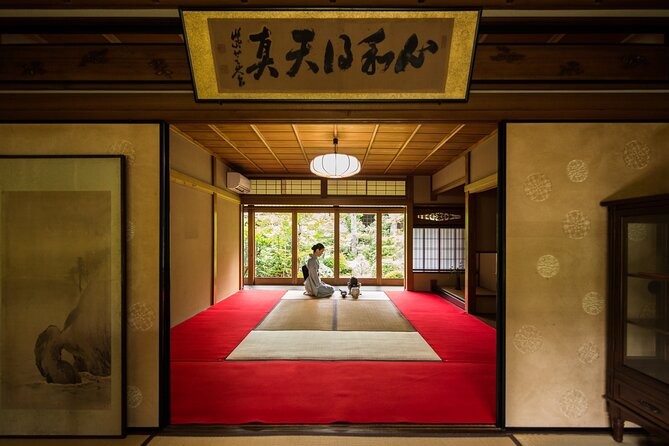
- Two garden views: You begin in a sofa room overlooking the front garden, then move to the tearoom facing the main garden.
- You make your own matcha: Tea bowls, scoops, and whisks are provided, so this is a hands-on lesson.
- Seasonal sweets included: You receive sweets from one of Kyoto’s well-regarded confectioners before the ceremony.
- Chairs are available: You can take part without sitting on the floor, a useful comfort detail.
- A focused one-hour visit: The compact format works well for a Kyoto itinerary, but the price is high for the duration.
A quiet tea house beside Ryoan-ji
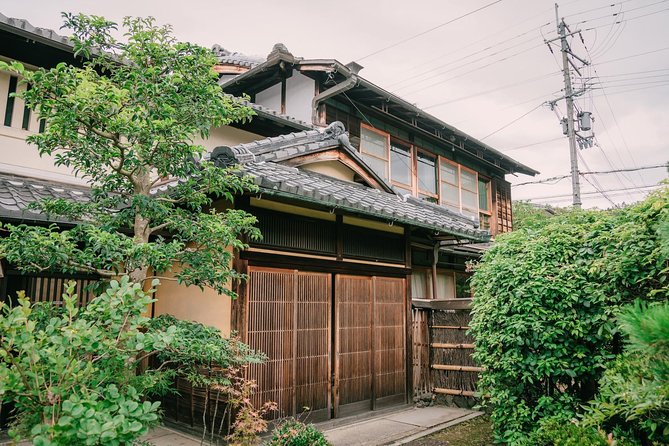
The location gives this experience much of its appeal. Camellia Garden Teahouse sits at 18 Ryōanji Ikenoshitachō, directly across the road from Ryoan-ji. You are not entering a generic activity room in a shopping district. You are stepping into an old property with two traditional Japanese gardens and a long connection to the temple nearby.
That setting matters because tea ceremony is about attention as much as tea. The garden, the room, the utensils, and the host’s movements all help slow the hour down. You may already have spent the day walking through Kyoto’s temples and streets. This gives you a quieter pause without asking you to commit half a day.
The house is designed for privacy. Only your own party participates, which changes the mood considerably. In a shared class, you might feel self-conscious while learning how to hold the whisk or turn the bowl. Here, you can ask basic questions, repeat a movement, or simply watch without worrying about a larger audience.
You should not expect a grand performance hall or a large-scale cultural show. The attraction is the small room, the garden view, and the direct contact with the person leading the ceremony. That makes it especially suitable for couples, families, and small groups who want a personal introduction to Japanese tea culture.
More Tea Ceremonies in Kyoto
- Kyoto: Tea Ceremony in a Traditional Tea House in Kiyomizu
★ 4.9 · 3,519 reviews - Kyoto: Tea Ceremony Ju-An at Jotokuji Temple
★ 4.9 · 3,207 reviews - Kyoto: 45-Minute Tea Ceremony Lesson Experience
★ 4.3 · 2,378 reviews
Starting with tea culture and seasonal sweets
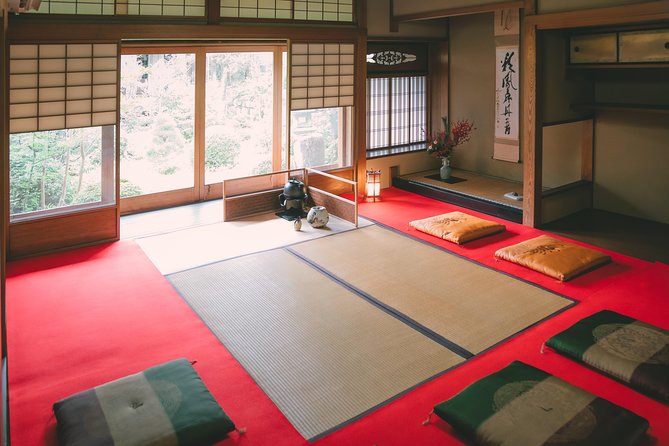
Your session begins in a sofa room overlooking the front garden. This is a useful choice for an introduction because you can settle in before the more formal part of the ceremony begins. The host explains the history and culture surrounding tea, along with the ideas behind the rituals you are about to see.
The pace appears to be conversational rather than academic. Yumiko, one of the hosts, is described as friendly and clear in English, and she takes time to answer questions. Another person who led the experience was praised for embodying the calm spirit of the ceremony. The staff’s ability to explain the meaning behind each action is important here. Without context, a tea ceremony can look like a series of precise hand movements. With context, those movements begin to make sense.
You also receive seasonal sweets from one of Kyoto’s renowned confectioners. These are not just a snack before the tea. Japanese tea ceremony traditionally pairs a sweet with bitter matcha, allowing the flavors to balance one another. The sweets served here include mochi according to the available feedback, and they were a clear highlight for several people.
This first section is also a good time to ask questions. You can ask about matcha, the utensils, the order of the ceremony, or the meaning of a particular gesture. Since the session is private, you are not competing with a roomful of people for the host’s attention.
Watching the ceremony in the main tearoom
After the introduction, your host moves you into the tearoom. The main garden forms the backdrop while you watch an authentic tea ceremony being performed. This change of room gives the visit a clear rhythm: introduction first, ceremony second, hands-on practice third.
The ceremony is precise, but the experience does not require you to know the etiquette in advance. You are there to observe and learn. Watch how the host handles the tea scoop, prepares the matcha, and uses the whisk. The details are small, so the private format helps you see what is happening.
You will then be served tea. Matcha has a strong, grassy taste that can surprise people who are used to ordinary brewed tea. The seasonal sweet helps soften that bitterness. If you are new to matcha, this is a more useful introduction than simply ordering a green tea drink in a café because you learn how the powder, bowl, whisk, and serving ritual fit together.
The atmosphere is meant to be tranquil. One hour can pass quickly here, especially if you enjoy quiet cultural activities. The tradeoff is that this is not an extended lesson in tea school. You receive an accessible introduction rather than professional-level training.
Making your own bowl of matcha
The most valuable part for many people is the chance to prepare matcha themselves. Tea bowls, tea scoops, and bamboo whisks are supplied. Your host demonstrates the technique, then guides you as you make your own bowl.
This hands-on step turns the ceremony from something you watch into something you remember. You learn that the whisk is not simply stirred like a spoon. The movement, the amount of powder, and the way the tea comes together all require care. You do not need perfect technique. The point is to understand the process and take part in it.
I like that the activity includes time for questions and photographs after the tea is served. You are not pushed out of the room the moment you finish your bowl. That extra time lets you clarify a detail or capture the garden and tea utensils, provided you follow the host’s guidance.
The practical lesson also gives families and first-time visitors something to do. Children old enough to follow instructions may find whisking more engaging than sitting through a formal demonstration. Older adults may appreciate the chance to participate at their own pace.
Same base, a completely different sort of day:
- PERFECT KYOTO 1-Day Bus Tour
★ 5.0 · 13,518 reviews - Kyoto: Fushimi Inari, Kinkakuji, Bamboo Grove 1 Day Bus Tour
★ 4.8 · 4,316 reviews - Kyoto Geisha Walking Tour: Gion District & Hidden Gems
★ 4.7 · 3,273 reviews - Kyoto: Gion Magical Night Walking Tour with Geisha Trivia
★ 4.9 · 2,393 reviews
Floor seating, chairs, and clothing notes
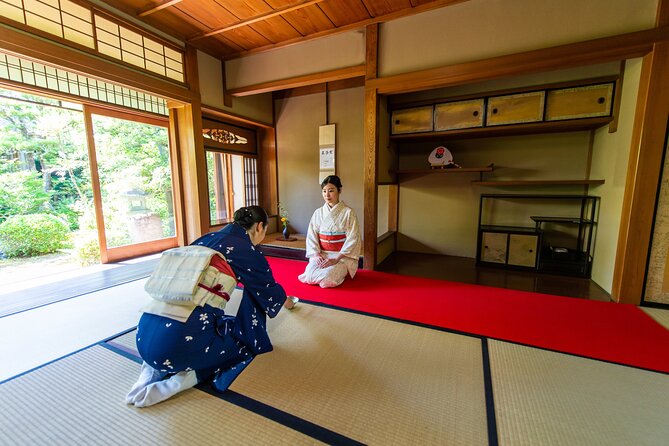
Traditional tea rooms often involve sitting on the floor, which can be uncomfortable if you have stiff knees, mobility limits, or simply are not used to the position. Chairs are available during this ceremony, so tell the host what you need. This detail makes the experience more welcoming without changing the basic character of the visit.
The information about kimono requires care. A dedicated kimono dresser is mentioned, but kimono rental is also listed as not available at this location. Do not book this activity expecting to rent a kimono on-site. If wearing one is important to your plan, confirm the current arrangement before booking rather than assuming the dresser means rental is included.
Service animals are allowed, and the teahouse is near public transportation. The meeting point is the teahouse itself, and the activity finishes there. You should allow enough time to find 18 Ryōanji Ikenoshitachō, especially if you are combining the ceremony with a visit to Ryoan-ji.
What the $118.60 price gets you
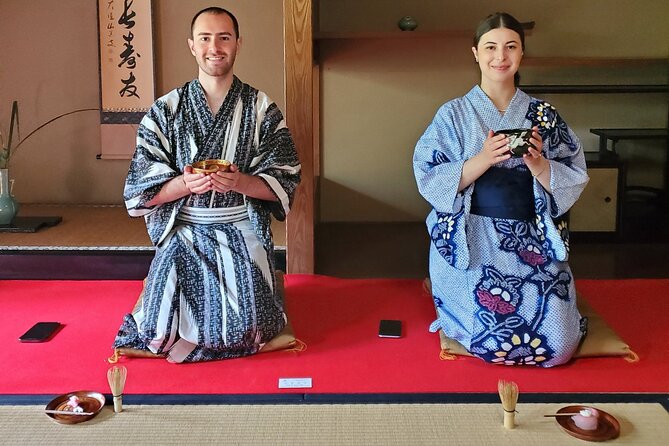
At $118.60 per person, this is not a budget tea tasting. You are paying for more than a cup of matcha: a private room, a garden setting, a host-led explanation, seasonal sweets, a performed ceremony, and your own chance to prepare tea.
The price makes the most sense when privacy matters to you. A couple celebrating a special occasion, a family wanting a calm cultural activity, or a small group with many questions may find the personal format worth the extra cost. You are not paying for a long itinerary. You are paying for access to a quiet house and undivided attention during a carefully structured hour.
For a solo visitor, the cost may feel harder to justify unless tea ceremony is a major interest. A larger shared class could offer better value if your main goal is simply to taste matcha and learn the basic steps. This private format is strongest when you want the setting and the one-on-one feel as much as the tea itself.
Group discounts are available, which may improve the value for a party booking together. Check the final price for your group before you commit. The activity also uses a mobile ticket, making it easy to keep the booking on your phone.
How the one-hour schedule feels
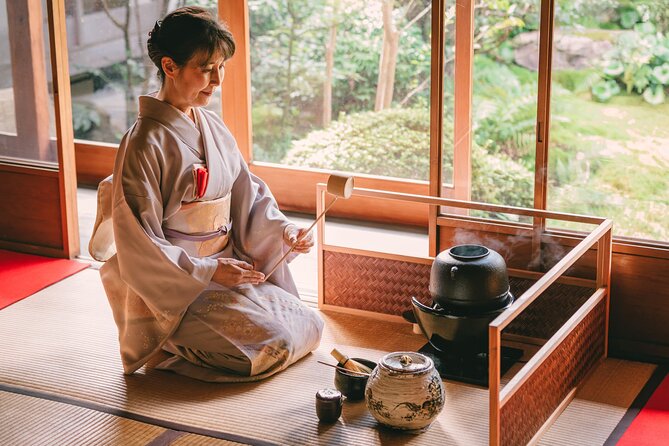
The visit follows a simple sequence:
- You arrive at the teahouse and receive an introduction in the sofa room.
- You learn about tea culture and enjoy seasonal sweets.
- You move to the tearoom overlooking the main garden.
- You watch the host perform the ceremony.
- You drink the prepared matcha.
- You make your own bowl using the provided utensils.
- You ask questions and take photographs before returning to the meeting point.
The one-hour length is a strength if your Kyoto schedule is tight. You can fit it around temple visits without losing a full morning or afternoon. It is also long enough to include both explanation and participation.
The limitation is obvious: you will only get a taste of the subject. If you want a long lesson covering several schools of tea, detailed etiquette, or repeated practice, this is not that kind of program. Think of it as a polished cultural introduction in a special setting.
The experience requires good weather. If poor weather causes a cancellation, you are offered another date or a full refund. You can cancel for a full refund up to 24 hours before the start time, but cancellations or changes made inside that window are not refunded or accepted.
Who will enjoy this most
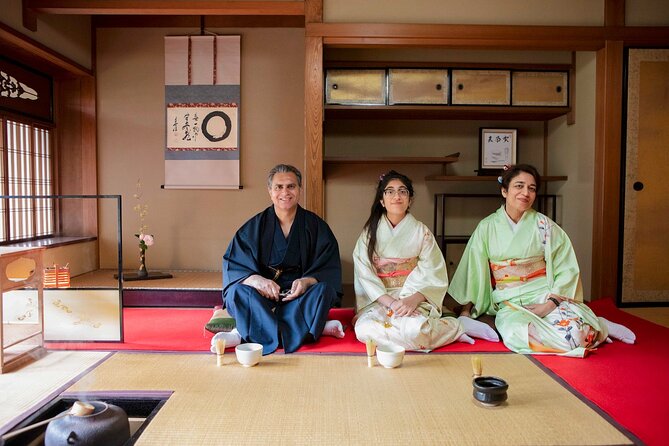
I would recommend this to you if you want a calm, intimate Kyoto experience rather than another crowded attraction. It suits people who value atmosphere, personal explanations, and a chance to try the activity themselves.
It is also a good choice for first-time visitors who are curious about matcha but do not know the rules of tea ceremony. The host explains what is happening, so you are not left guessing when to move, drink, or handle the bowl.
Families can benefit from the private setup because the host can respond to different ages and questions. Couples may like the quiet garden setting, while small groups can use the time to learn together without strangers in the room.
You should think twice if you dislike bitter tea, have no interest in ritual, or are searching for the lowest possible price. The experience is gentle and welcoming, but it remains a formal cultural activity. Its value depends on your interest in the setting and the tradition, not just the drink.
Is Camellia Garden Teahouse worth booking?
I would book this if you want a private introduction to Japanese tea ceremony in a traditional setting near Ryoan-ji. The strongest reasons are the peaceful house, the garden views, the chance to make your own matcha, and the ability to ask questions without a larger group around you.
I would skip it if you only want a quick taste of matcha or need a longer activity for the price. At about an hour, it is compact and relatively costly. But for a special morning or afternoon in western Kyoto, this is a focused way to slow down and connect a drink with the rituals behind it.
The perfect plan is to pair it with time around Ryoan-ji, while leaving enough space to arrive calmly. Book at least 24 hours ahead if your schedule may change, and remember that kimono rental is not available at this location.
FAQ
Where does the tea ceremony take place?
It takes place at Tea Ceremony Camellia GARDEN, 18 Ryōanji Ikenoshitachō, Ukyo Ward, Kyoto, 616-8003, Japan. The teahouse is across the road from Ryoan-ji.
How long does the experience last?
The tea ceremony lasts approximately one hour.
Is the activity private?
Yes. Only your party participates in the activity.
What is included?
Tea bowls, tea scoops, and tea whisks are provided so you can make your own bowl of matcha. Seasonal sweets are also served during the introduction.
Can I sit on a chair instead of the floor?
Yes. Chairs are available for people who prefer not to sit on the floor.
Is kimono rental included?
No. Kimono rental is not available at this location.
Is the experience available in English?
The available information identifies Yumiko as a host who explains the ceremony in English. Other host details may vary.
What is the cancellation policy?
You can cancel up to 24 hours before the start time for a full refund. Cancellations or changes made less than 24 hours before the start time are not accepted or refunded. If poor weather causes the activity to be canceled, you are offered another date or a full refund.
Just added around Kyoto
- Kyoto: Zen Meditation at a Private Temple with a Monk★ 5.0 · 25 reviews
- Kyoto: Gion Geisha District & Sake-in-Hand Walking Tour★ 5.0 · 37 reviews
- Private Pewter Sake Cup Experience with a Kyoto Artisan★ 5.0 · 31 reviews
- Your Private Vacation Photography Session In Kyoto★ 5.0 · 110 reviews
- Private Guided Traditional Buddhist Cooking in Japan★ 5.0 · 16 reviews
- Kyoto Wagashi(Japanese sweets) Cooking Class near Fushimiinari★ 5.0 · 60 reviews
- Traditional Japanese Music show & Experience Tour in Kyoto★ 5.0 · 57 reviews
- Kyoto:Family-Friendly Kimono & Yukata Experience at WARGO★ 5.0 · 147 reviews
Kyoto Tours, compared.


Fushimi Inari, Kinkakuji, Bamboo Grove 1 Day Bus Tour
Read our review →
Tea Ceremony in a Traditional Tea House in Kiyomizu
Read our review →
Kyoto Geisha Walking Tour: Gion District & Hidden Gems
Read our review →

Gion Magical Night Walking Tour with Geisha Trivia
Read our review →

Gion Geisha District Walking Tour – Stories of Geisha
Read our review →Browse the lists this tour appears in